Cenobic Marvels

Among the most explicitly religious of horror movies, Clive Barker’s Hellraiser series exploits biblical themes and tropes to blur distinctions between sacred and sacrilege. Not a fan of gratuitous gore, I began watching the series after reading Douglas Cowan’s Sacred Terror. Cowan utilizes this particular series to illustrate how deeply the religious mythology may reach, awaiting the fourth installment before finally having an explanation. Curious, I have been making my way through slowly. October seems a good time to consider the unsettling aspects of human nature, so I watched the third installment, Hell on Earth, this weekend.
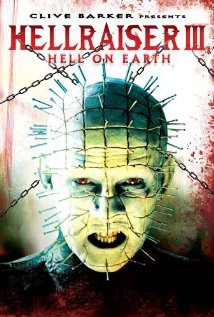
Funnily, I do not find Pinhead particularly evil. Perhaps that is the intent. His eyes seem too kind to be a true villain. As the leader of the demonic Cenobites, he leads the curious down the path of exploration to ultimate destruction and, appropriately enough, Hell. The Hell presented throughout the films, however, is the true desire of the victims. They stumble upon a puzzle box, but when it is opened the curious find themselves trapped. The very use of monastic ideals as emblematic of Hell is surely a commentary on the futility of self-inflicted means of grace. Does not the flagellant at some level enjoy the pain? Where is the religious value in that? In Hellraiser III, Joanne runs to a Catholic church for help with Pinhead in pursuit. As any horror fan knows, the church is never a haven against evil. Pinhead makes himself a parody of the crucifixion while a helpless priest tries to defend God.

Horror films are a remarkably successful genre. At least one aspect of the appeal is the unabashed use of religion. Conditioned by the old films such as Dracula, the early twentieth century taught us that the church kept us safe—crucifixes always used to work against vampires! By the end of the century that vision had shifted. The church of the early twentieth century was a preserve of male power, a place where men made the rules and abused the rules and no one questioned them. As the century progressed, we became wiser. And more vulnerable. By the dawn of the new millennium, when such movies as Hellraiser III were being filmed, the security of the cloister had itself become a source of fear. October is the season of reflection on the transience of summer and ease. Perhaps it is also the season to reflect on how our perceptions of religion are ever shifting as winter wends its way toward us once again. And Mr. Barker will be standing there to remind us that we each create our own Hell.
Fearsome Fish

It must be October. As I was looking up a word on Dictionary.com, I noted one of their “the hot word” features entitled, “Scientists discover a fish they name ‘dracula.’” The fish, which is native to the eastern part of Asia, was discovered in 2009 but is just now starting to draw attention. The name apparently derives from its fangs. Vampires, however, have their ancient origins in creatures that draw the life force from humans. In the ancient world the “life force” could take different forms: blood, breath, and even semen. Soon a whole array of life snatchers populated the ancient mind – incubi, succubae, Lilith, demons, and any of a number of other contenders for the human essence. The fear of being drained is a very ancient one indeed.

While in my adjunct office at Montclair yesterday I met a colleague. We discussed the visit of the exorcist to campus that I missed but he attended, and while discussing the mythology class we both teach he mentioned how vampire movies make use of mythic themes. I have been using this information from the beginning for my class, but I was fascinated that another part-time instructor would latch onto the same film motif as I did to illustrate modern myth. The vampire is such a part of our culture that people often forget its religious origins.

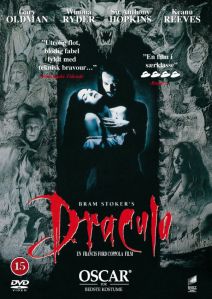
I attended a public performance of a two-man play at a local library this week. The play was a conversation between Edgar Allan Poe and Bram Stoker. Naturally, vampirism played a strong element in the single-act show. While Poe and Stoker were not contemporaries, they did both share an awareness of how religion tied in with the macabre. The Frank Ford Coppola movie Bram Stoker’s Dracula makes this connection explicit as an enraged Vlad Tepes stabs a cross in his chapel with his sword, starting a flow of blood that he greedily drinks.

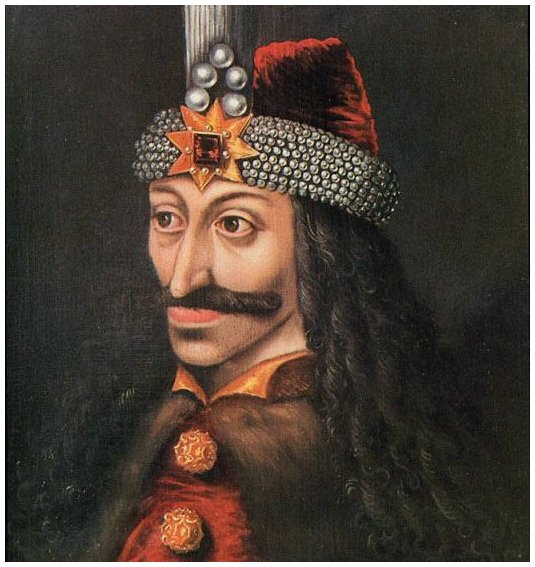
Vlad Tepes on a good day

We’ve just crossed into mid-October and I already find myself surrounded with vampires. It is characteristic of religion to deal with our deepest anxieties, and the more we reflect on vampires the deeper we find they reside in the religious sensibilities of both fish and phantom.


Dark Night of the Ark

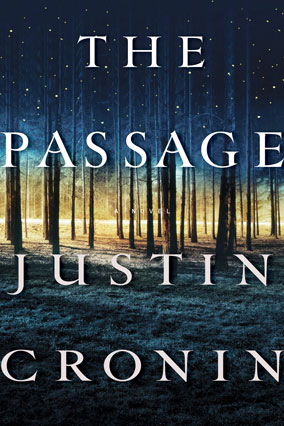
Vampires continue to be the rage of the age. My own interest began back in the days of Bram Stoker, Bela Lugosi, and Barnabas Collins. Stoker’s Dracula is one of the earliest novels I remember reading. Dark Shadows was a regular, gloomy fixture of 1960s daytime programming, and black-and-white vampire movies were often available on Saturday afternoons on commercial television. I have not kept pace with the current fetishism surrounding our toothy friends, but I did read Justin Cronin’s new novel, The Passage. I didn’t know the book featured New Age viral vampires, but they do make for a compelling story.

What particularly captured my attention in Cronin’s work, however, was the crossover between religious and monstrous themes. I have mentioned this connection previously, so I was glad to see confirmation that religion still features in monster stories. The religious element comes in the form of a virus developed by the military to create super-soldiers (a theme X-File affectionados might find familiar) that ultimately goes awry. The result is a girl who is part of a project named Noah; she lives the tremendous lifespan of the biblical hero without the debilitating effects of old age. She is also the ark by means of which humanity might survive the ordeal. The novel is apocalyptic and yet vaguely hopeful. It is also very difficult to lay aside for too many minutes at a time.

The tie-in of Noah and vampires is a novel one. The point of comparison is longevity – those who imbibe the blood of others do not age and wither as mere mortals do. Noah’s survival is a matter of grace (or science in the case of the novel). The last mortal to breech the two-and-a-quarter century mark (thank you, Terah), Noah is symbolic of those who stand out as examples of righteousness in a wicked world. It was refreshing to see the theme so creatively rendered by Cronin. The biblical flood is a kind of prepocalypse, a foreshadowing of what might recur if evil prevails. The Passage has left me strangely sentimental for both vampires and ark-builders alike.


The Life Is in the Blood

Finally, after a couple of decades, I got around to watching Francis Ford Coppola’s Bram Stoker’s Dracula. As viewers know to expect of a Coppola film, the cinematography is stylish and artistically exaggerated. It has been even more years since I’ve read Stoker’s novel, the book that gave birth to the modern vampire, but I am pretty sure that the many oblique references to the Bible count among the film’s innovations. Coursing like an artery through the movie is the phrase “the blood is life,” taken from Leviticus 17. I’ve posted earlier concerning the biblical outlook that life is equated with breath, and so it is. The Bible does not always remain consistent on this point — natural enough for a book with multiple authors living centuries apart. Blood and breath obviously share crucial functions in maintaining life.

Stoker

Ancient peoples believed in a world peopled with unusual, quasi-supernatural beings, including blood-drinkers and nocturnal baby-snatchers. Theirs was a world of harsh realities where death was more closely observed than it tends to be in many parts of the world today. The fascination, often coupled with religious underpinnings, continues to engage our imagination today, as can be seen in any given Halloween season or on el Día de los Muertos.

Whether el chupacabra or Bela Lugosi, the fascination with mythical creatures of the night that thrive on the life-source of others is a concept never far from religionists. No matter how many stakes we pound through undead hearts, the unholy bloodsuckers continue to show up in our theaters and on YouTube. A childhood penchant for Dark Shadows books has recently been reactivated in the restless gray-matter in my head. As the days grow shorter and shadows become an increasing element of daily experience, I marvel at how the human imagination parodies our daily experiences, dressing them up in fanciful garb to parade about with the other ghosts of October. What is perhaps even more unusual is that money is still to be made in this business of selling the parasite. How else can we explain Buffy and all her cohort? The life is indeed in the blood.