Opposites Distract

In the current political climate—and not just in the United States, as Brexit reminds us—opposites seem to be the order of the day. The middle ground seems to have fallen out as those frantic for turning back the clock to a day that never really ever existed make their voices louder and more strident. After seven millennia of progress, the apogee of mankind—and let’s be explicit that we mean rule by white men—was reached in “the greatest generation” and the happy days that followed in the 1950s. Those of us born to protest for an even greater idealism have, by our very nature, disrupted the smooth calm that fictitiously prevailed through the first half of the last century. In a new millennium the ghosts of the last century dictate policy. Would I have felt safer then?

The more I ponder this stark dualism, the more it seems that the origin is religious. In its most recent iteration that religion is branded as Christianity, but in actual fact the dualism goes much deeper than that. The adjective “Manichaean” has become popular with writers who discern a certain black and whiteness to our outlook. Mani wasn’t the first dualist in history. In fact, he was somewhat late to the game. We don’t know much about Zarathustra, or Zoroaster as the Greeks called him, but we do know that he set out to devise a new religion. His outlook was one that saw the world as opposites. For every good god there had to be a bad god. There was a struggle that would result in either going to a heaven or a hell. Just about every religion that has developed ever since has shared his conflicted outlook.

DSCN2077

As political pundits bellow more like hippopotami than elephants, trumpeting that those who are different are not to be trusted, we’ve come once again into a dualistic world. Pluralism and globalization are not without their critics. Technology, however, has ensured that they will continue apace. Some governments have tried to “switch off” the internet. Those on the other side of the Berlin Wall didn’t want the truth of what was happening on the other side to be known. They had invented a dualism that was protected with rifles and threats. The problem is things aren’t as simple as the Manichaeans would have us believe. Ours is a world of beautiful, glorious complexity. It takes religion, it seems, to make such a wonderful chaos into something far too simple to match reality.
NDEs

I love science. Like many young boys, I was probably enticed to science through science fiction. While I didn’t follow science to a career, I used it to study religious texts. Those who’ve never undertaken the challenge of trying to figure out what something written thousands of years ago—on clay!—really says may be surprised to learn just how much science is involved. Nevertheless, as comforting as reductionism may be, something just doesn’t feel right about it. Science is how we explain and understand our world, and it does a spectacular job of it. The problem arises when science becomes what Stephen Jay Gould called a “magisterium.” Magisteria have all the answers. Yes, science explains how matter and energy work and interact, but it has yet to explain satisfactorily what it feels like. Most days I feel like the person I’ve become accustomed to show to the world. That person is very much like every other—being born, eating, breathing, dying. Medical science can explain most of it, but what about the parts it can’t?

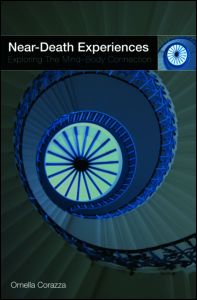
I just finished reading Ornella Corazza’s Near-Death Experiences: Exploring the Mind-Body Connection. I remember when the craze about this hit in 1981 with the release of the movie Life After Life. I was fascinated and terrified by it. Since a materialistic view of science dismisses anything that has the residue of spirits or souls, the phenomenon of the resuscitated dead reporting seeing their bodies from above, shooting through tunnels into the light, and sometimes meeting the dead (or God), were explained as last nano-second hallucinations as the brain prepared to shut down or reboot (upon resuscitation). That’s that. The answer, however, didn’t satisfy everyone. What about those cases where the dead person reported, in detail, what happened in other rooms, or things they couldn’t have seen in their own room, had they been conscious? Corazza takes these considerations seriously and tries to understand what may be going on. Obviously, her explorations will not convince a reductionist, but they may give pause to some of us.

What makes her approach so interesting is that Corazza takes into account an alternative way of looking at consciousness. While the facts of science are, by definition, universal, the contexts within which those facts are viewed are not. Having spent considerable time with Japanese scientists exploring consciousness, eastern ideas of the body inform her research. In the western world we have an easy familiarity with the Cartesian dualism of body and soul that does not fit into other worldviews. Corazza takes the interesting step of asking what if we apply an eastern paradigm of the body (one that understands soul as body, and not just in a materialistic sense) and apply it to the question of Near Death Experiences. The results are mind-stretching. I feel as if my consciousness got up from months of laziness and ran a marathon (or at least a 5-K). It’s a bit winded and parts of it are starting to ache a little. No reductionists need worry, however, because in that worldview none of this exists.


Ezekiel’s Equinox Paradox

Like the great celestial wheels of antique imagination, the seasons continue their wearisome roll across the earth. On a day long marked as a holiday among those more closely attuned to nature than most modern people in developed nations, we face the beginning of autumn. Change is in the air and already the gray skies that have predominated the eastern seaboard over weeks since Irene seem to have winter on their minds. Changes always call to mind how the human mind tends to divide what it sees into categories. The Bible is one place that this tendency is crucial. The whole scheme behind clean and unclean comes down to the need to make discrete that which nature shamelessly blends. When it comes to deity, the party line has always been (at least in the monotheistic religions) that God is like one of us. We can’t imagine human very well without gender, and so God becomes a guy. Notwithstanding protests to the contrary, early religions did take that distinction literally; divinity and masculinity were of a piece.

This fact makes it all the more intriguing when the Bible itself offers a few passages that call this orthodoxy into question. A few verses explore the trope of God as female, but they quickly back away and revert to the male God when taking on more literal terms. Hebraic culture was monistic, not dualistic. God as “spirit” was not really a possibility in the Hebrew Bible. God as a big man fits the picture better. One of the voices that claims dissent is that of Ezekiel. No surprise there—Ezekiel has been analyzed as everything from a dreamer to a dropper. Ezekiel’s understanding of God, however, is deeply imbued with temple imagery. Ezekiel was a priest without a sanctuary, and so his view of God suffered from temple vision. Nevertheless, the strange account of Ezekiel’s vision of Yahweh coming to Babylonia that opens his book demonstrates a startling lack of clarity when it comes to divine gender.

When two people meet, as psychologists have long noted, the first bit of information they attempt to discern is gender. Perhaps it’s the old fight or flight reflex from our reptilian brains, or maybe it is the opportunistic mating behavior that so obviously characterizes our species, but we are very uncomfortable when we can’t make a gender assignment. It is the whole premise behind Saturday Night Live‘s old sketch of “It’s Pat.” When Ezekiel first espies God he describes the deity in terms of glowing metal. But notice that he begins, “And I saw as the colour of amber, as the appearance of fire round about within it, from the appearance of his loins even upward, and from the appearance of his loins even downward, I saw as it were the appearance of fire, and it had brightness round about” (1.27). Beginning at the loins the prophet looks the deity up and down and concludes God is like fire. This image does not long survive the vision, for Ezekiel quickly reverts to masculine imagery for God. Even in the face of evidence that God is not gendered, the faithful must make him so, for the age-old appurtenance of male superiority suffers immeasurably without the camaraderie of God.


Thus Spake Zarathustra

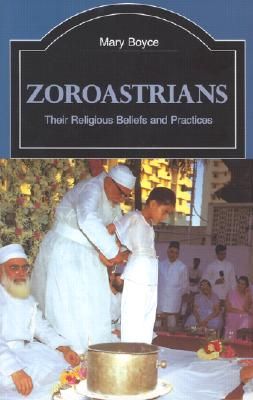
Preparing for another round of my annual course on Ancient Near Eastern Religions, I have been brushing up on Zoroastrianism. For this I generally first turn to Mary Boyce’s standard introduction, Zoroastrians: Their Religious Beliefs and Practices. The book was written in the 1980s and is showing its age a bit, but it remains a seminal introduction to a religion whose humble position among world belief systems belies its overwhelming impact. A strange fact about the religion is that many of its main tenets have been summarily dismissed by the more politically influential religions of antiquity while its secondary features have been dramatically embraced. The classic example is dualism.

Zoroastrianism was founded on a dualistic principle: Ahura Mazda was the entirely beneficent, good creator, while Angra Mainyu was the powerful principle of evil. This cosmic struggle tapped deeply into all aspects of life, leading to the beliefs in two afterlife realms (which evolve into Heaven and Hell), two very powerful entities (that become the God versus Satan paradigm), and two dispensations (present age as opposed to future age, the ultimate source of the apocalypse). Indeed, it would be difficult to recognize Christianity without Heaven and Hell, the Devil, or the final judgment. Boyce carefully traces the earliest evidence for Zoroastrianism back to its formative period and offers detailed explanations for each aspect. Beyond this, however, Zoroastrianism became a forgotten faith, an abandoned parent.

It is a fact that religions evolve. Many believers like to trust that they have the straight information directly from the founder’s mouth and that their brand is the authentic brand of faith. All religions, however, if they survive long enough, change to meet the needs of present-day adherents. Again, Zoroastrianism is instructive. Believing in the sacred nature of fire, during the industrial revolution the use of fire for profane work, such as running a steam engine, was considered inappropriate. How were Zoroastrians then to keep up with society without softening their stance on the secular use of fire? The struggle was real and has never been fully resolved. The same exercise could easily be applied to other religions as well. Until the Zoroastrian-inspired apocalypse arrives, religions will have to adjust to continual societal change and accept that quantity of belief does not affect quality.