Simple Arithmetic?

Arithmetic progressions.  They can boggle the mind.  I think I’ve noted before—I’ve been doing this so long that it’s difficult to be sure—that the exponential increase of ancestors is astounding.  We have two parents but by the time we add ten greats to the grandparents we’ve got a crowd larger than the small town I grew up in.  Typical of a child of an alcoholic, I have no idea of what normal is, but I’ve had a rare and precious gift more than once in my life, and that has been finding that I had hidden family.  My father, unable to afford child support, made his way back to his family to survive.  Nobody in my household knew that he’d done that.  In fact, I had no idea he had siblings and I had unknown cousins.  It was a gift to discover that just as I was graduating from high school.  My mother encouraged me to stay in touch with them.  That was the reason behind my recent brief trip to South Carolina.

A few years back I learned that I had a cousin on my mother’s side that nobody in my family knew of.  People drift apart, even in families, and some people have to be rediscovered.  Call it redemption.  That’s what it feels the most like.  This cousin made the effort to travel across the country, in part to see me.  Kinship is like that.  Families feel for each other.  Being long apart can raise questions of motivation.  It’s awkward when, due to circumstances, you can’t see someone for some time.  I have a half-sibling in that boat and have recently re-connected.  I can only say that it feels like being a prodigal coming home.

I suppose that in a perfect world families would have no dysfunctional members, and everybody’d live next to each other in harmony and good will.  Right, Pangloss?  Economic circumstances would never force someone to live near where jobs might be found, and nobody would ever marry someone from another state, let alone half-way across the country.  And marriages sometimes double the arithmetic progressions, sometimes perhaps triple or more.  Families are complex and complicated, in reality.  I’ve seen pain in more eyes, and heard it in more voices than I would care to.  And I have a very difficult time letting such things go.  Charlie Bucket, according to Tim Burton’s version, says that families make you feel better in an imperfect world.  A world in which family reunions take place with individuals not being notified.  A world in which arithmetic progressions are mere fictions. Never in a perfect world like ours.

Fragility

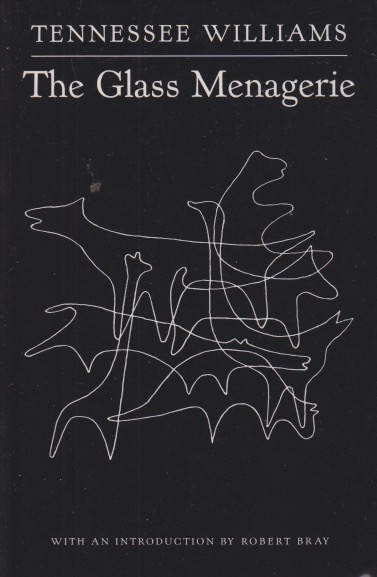
Who doesn’t like a play?  Since I’ve been reading many lengthy novels this year I like to intersperse them with some shorter pieces of literature.  Many of us are assigned plays in high school English class.  For those of us from non-literary families, these may be the only plays we’ll encounter in our youth.  Shakespeare and Arthur Miller ran the entire gambit for my high school career, but I’ve done some exploring on my own since then.  I’d heard quite a bit about Tennessee Williams’ The Glass Menagerie over the years, but I’d never read it.  I found a used copy at a book sale and so my excuse for not reading it was at an end.  Unlike when I read A Streetcar Named Desire, I really had no idea what to expect.  Dysfunction, it seems, spurs creativity.

I suspect the play is well enough known that my musings about its symbolism and impact wouldn’t add much to the discussion.  (Besides, I suspect few English teachers read this blog.)  My particular edition, however, comes with the essay “The Catastrophe of Success,” written by Williams after he found fame.  It reminded me a bit of a speech Ursula K. Le Guin gave late in her career, after receiving an award.  Both writers note that money drives far too much of what we consider creativity.  Williams notes in his essay that success leads to pampering and pampering is good for no one.  His description of staying in a hotel is a familiar one—poorly paid employees treat paying guests as if they were wealthy, cleaning up after them and tidying other people’s messes.

As many critics have noted, Williams grew up in a dysfunctional family and drew heavily on that for his fiction.  Another aspect, perhaps related to that, was the sense of pressure on his writing.  In his essay he mentions that writing grew more difficult when life was easy.  I often think about this myself.  My fiction suffered a bit when the pressure of the daily commute to New York ceased.  I had to catch an early bus and I was determined to get some writing done every day.  That was the origin of what now seems to be my permanent early wakefulness.  That pressure of knowing I had a very limited amount of time before I had to be showered, dressed, and at the bus stop, led to a tremendously creative output.  I see from my limited experience of reading Williams that I still have much to learn from those whose experience has become a lesson.


Devil or Con?

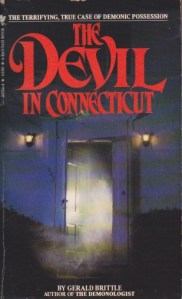
You can’t believe everything you read.  That’s one of the first tenets of critical thinking.  This whole process is about how to get to the truth, and in a materialistic world that truth can’t involve anything supernatural.  These were my thoughts upon finishing Gerald Brittle’s The Devil in Connecticut.  Controversy accompanied Ed and Lorraine Warren’s investigations and some of the people involved in these cases have later claimed the extraordinary events didn’t happen.  Others claim that the Warrens offered them to make lots of money by selling their stories.  The effect of reading a book like this is a blend of skepticism and wonder.  Among their fans the Warrens are held in the highest regard.  Anyone who begins to look into their work critically ends up frustrated.

So when I put this potboiler down—it is a compelling read—I went to the internet to find out more.  Then I realized what I was doing.  Using the internet?  To find the truth?  It’s a vast storehouse of opinion, to be sure, but what with fake news and alternative facts who knows what to believe anymore?  I found websites debunking the whole case as a hoax.  Others, naturally, claim the events really happened.  Both kinds of web pages have the backing of someone in the family involved.  It’s a pattern that follows the Warrens’ work.  In one of the many books I’ve read about them they claim to have ten books.  If my math is right this was number ten.  Even that remains open to doubt.

The word “hoax” seems a bit overblown.  Dysfunctional, maybe, but hoax?  Reading Brittle’s account it’s clear there were some issues in this family.  Having grown up in a working class setting, I’m aware such scenarios are extremely common.  Accusations were made that this was an attempt to spin gold from straw.  The nearly constant stress of blue collar families makes that seem less far-fetched than a stereotypical devil showing up in a modern house because a satanic rock band placed a curse on the family.  Lawsuits—the most avaricious of means for determining facts—apparently prevented a movie deal and have even made this book a collector’s item.  Somebody, it seems, is making money off the story.  As after reading the other nine books, the truly curious are left wondering.  My skepticism kicked in early on, but then again, I’ve always liked a good story.