Two Roads Divergent

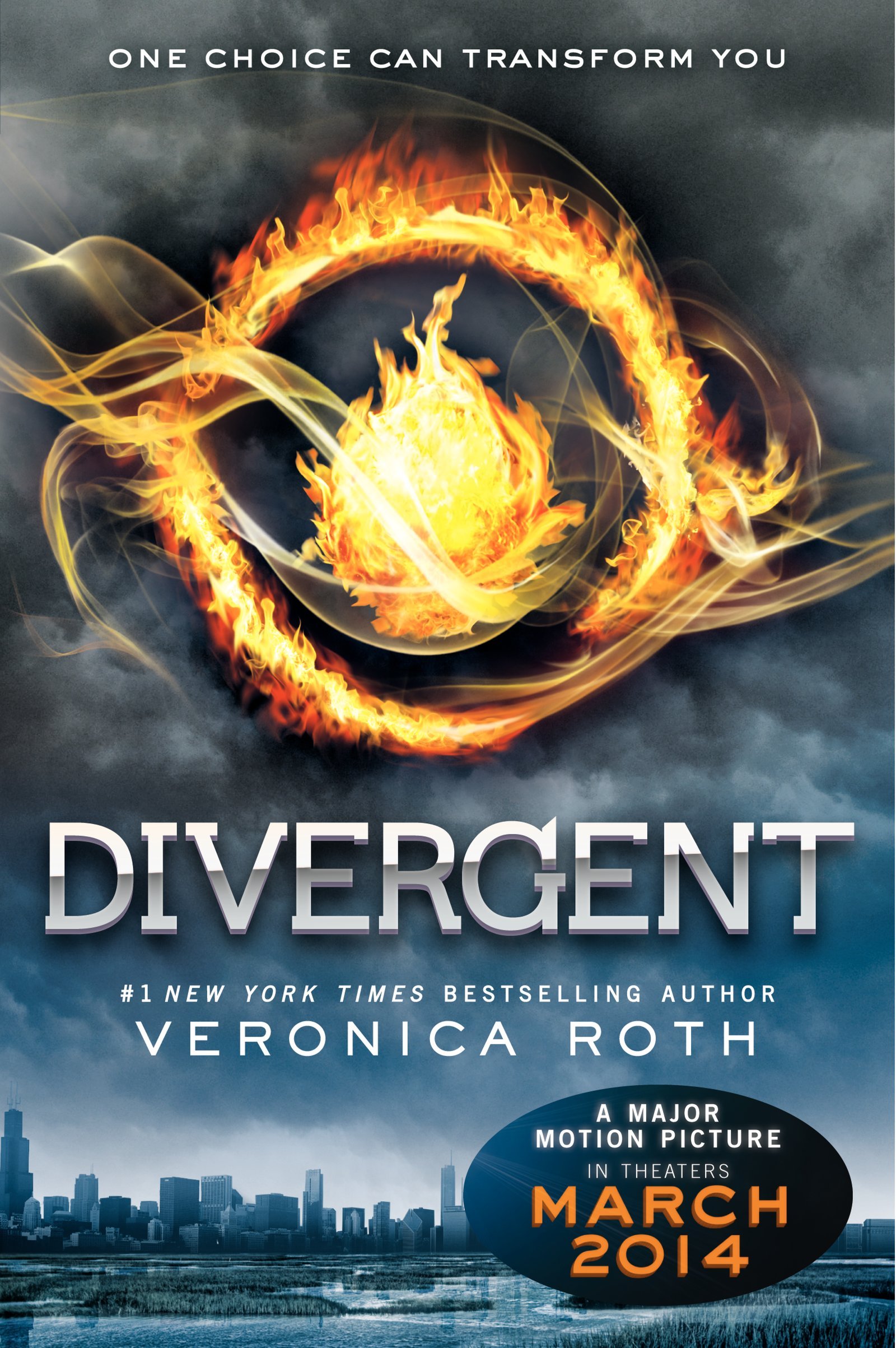
DivergentOne of the most hopeful signs for culture is the quality of young adult fiction on the market. Since I’m now in the book industry, Publisher’s Weekly is required reading. I always take a look over the fiction lists as well as the non, and over the past several months a couple of “teen fiction” books have been near the top for regular bestseller lists as well as for demographic-specific ones. (That is, adults seem to be reading them too.) One of those books is Divergent by Veronica Roth. While movie tie-ins certainly don’t hurt, as many of us opine, it is difficult to do justice to a complex story on screen. Divergent is one of those books that stays with you after you’ve closed the cover, and that suggests to me that something deeply meaningful is going on. What about dystopias is so compelling?

I’m not indulging in any spoilers to say that Divergent is a dystopia. Set at an indeterminate time in the future, civilization still exists—at least in Chicago—as society has fallen into five factions: Dauntless, Erudite, Candor, Amity, and Abnegation. Each group has its own beliefs as to why civilization collapsed, based on philosophical dispositions. Abnegation, the self-deniers, are the leaders of government. And clearly, the idea of Abnegation is a form of quasi-monastic Christianity. In fact, among the factions, Abnegation is the only one that seems to mention God. The other groups, stressing bravery, intellect, honesty, and peacefulness, don’t really have much need for the divine. To deny oneself, however, requires a powerful motivation. Even the protagonist’s name, Beatrice, is taken from its favored status among early Christians. I know little of Veronica Roth, but I have to wonder whether Dante is in the background here.

In the acknowledgements to the novel, Roth first gives thanks to God. As a high school convert to Bible-based Christianity, I suppose that’s only natural for a writer who is, at the moment, only twenty-five. Writers for young adults often have their religion close to the skin. Stephanie Meyer’s Mormonism translates into moral vampires. Orson Scott Card provides Ender Wiggin with values from the same faith tradition. People are, despite the logical implications, inherently religious. That doesn’t prevent Divergent from being a page-turner. Full of action and personal development, the first book of Roth’s trilogy bristles with self-sacrifice and belief in something better to come. Even if it’s a world we have to make ourselves. And like most human enterprises, it comes out as a well-meaning dystopia that underscores the value of reading for us all.

Voting Vicissitudes

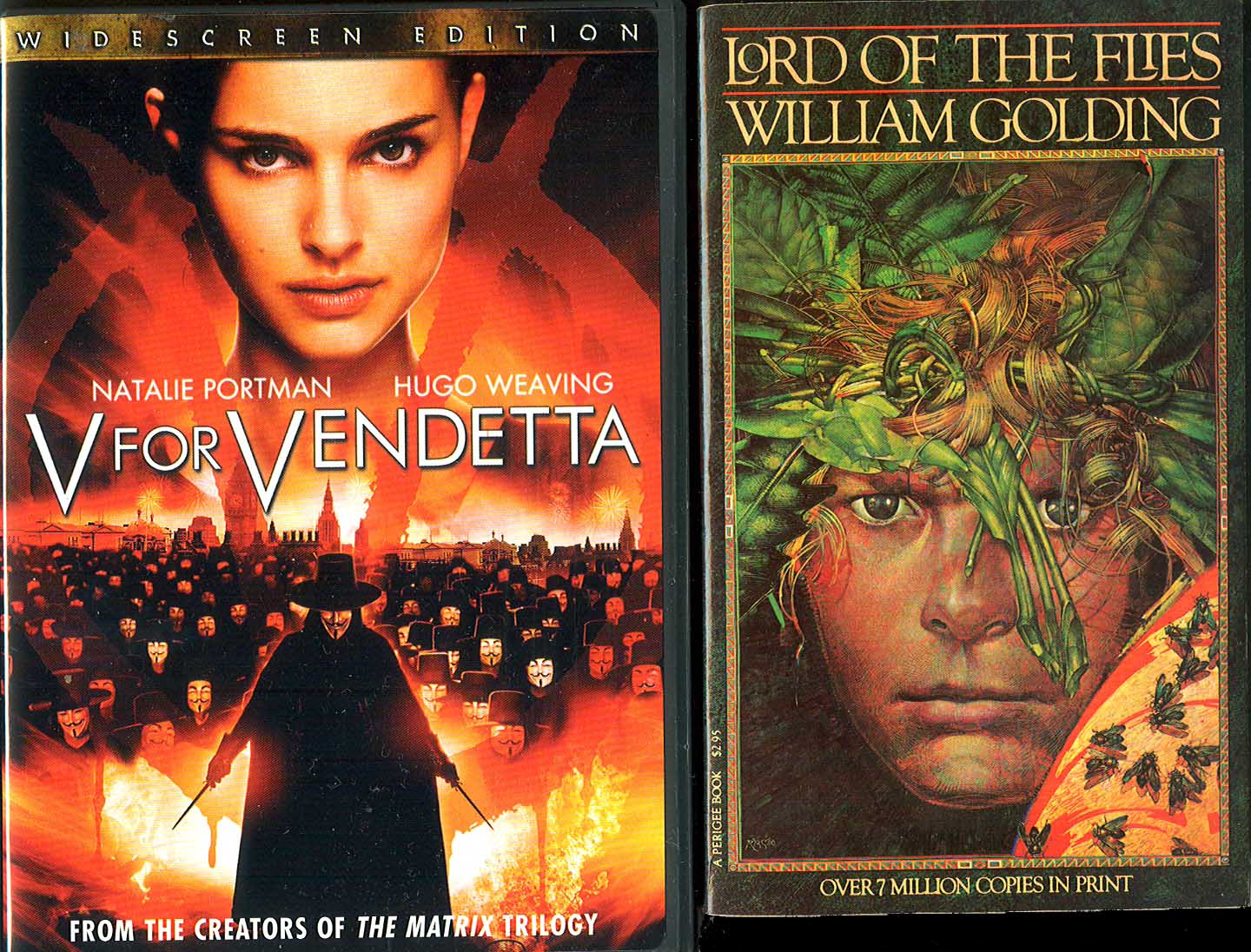
“Remember, remember, the fifth of November, the Gunpowder Treason and plot. I know of no reason, why the Gunpowder Treason, should ever be forgot.” Election day fell on November fifth, and as I watched V for Vendetta again, I was reminded how true it rings. Religious leadership takes over government, the common person becomes an enemy of the state, and criticism is treason. Tea, anyone? I’ve always had a soft spot for dystopias, but the world of V is entirely too plausible at times. I have watched rational people transformed by fear and the certainty of religious dogma into those who will do what they are told without question. The movie always gives me a profound hope that the human spirit is larger than the powers that be. V can also stand for Vote.

I cast my ballot knowing that a vote against a governor who enjoys the bully image was indeed close to a lost cause. People are enamored of power. In my deepest Jedi dreams, however, I know that the most powerful moment in Star Wars is when Obi Wan turns off his light saber to allow himself to be struck down. There is a power, one upon which entire religions are premised, in the self-sacrificial act. It’s not that I have anything against Parliament; I saw it just this past year and enjoyed the experience in a way that Guy Fawkes could perhaps not have appreciated. As Evey says, “this country needs more than a building right now. It needs hope.” I guess we can hold on another four years. V can also stand for five.

“He’s a deeply religious man and a member of the conservative party. He has completely single-minded convictions and has no regard for the political process. Eventually, his party launches a special project in the name of ‘national security’.” So V tells Finch concerning a dictator who could be wearing any number of political masks in our world. We hand power over to those who encourage our fears rather than those who inspire our imagination. Camelot died in 1963. It is not so difficult to imagine a world so much better than the one we’ve constructed, but plutocracy does prevail when people do not take the implications of their religion seriously. When we only glance at the surface, the deeper message gets lost in the mythology of it all. November fifth is a myth that still has the potential to change the world. If we would allow it.

VoteV


No Singing Matter

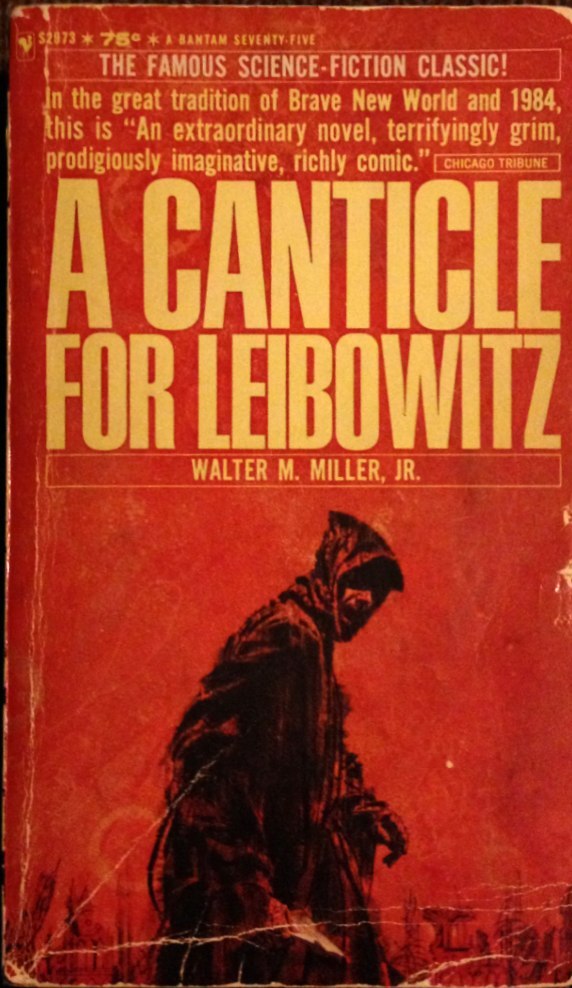
Canticle for LeibowitzA Canticle for Leibowitz, by Walter M. Miller, Jr., is one of those books that I read years ago, and when I picked it up again found that I remembered very little of it. I suppose this is one of the hazards of extensive reading—some important things get lost in the noise. I recall having read A Canticle for Leibowitz when I was a grad student at Boston University, and I remembered the detail of a grocery list being taken for holy writ in a post-apocalyptic world where, in a strange reincarnation, monks have once again become the guardians of knowledge. Little else remained. Perhaps part of the reason is that the book requires more experience with the church than I had in those days. One might suppose a seminarian would have about as much ecclesiastical experience as one might need. Not so. It did teach me, however, to read provocative books.

Like most dystopias, there is a deep bleakness to A Canticle for Leibowitz. In the light of recent developments in the papacy, the book is remarkably prescient. In the final pages of the final section, a radiation-sick woman and her young child, in constant pain, seek the government sponsored euthanasia camp. Abbot Zerchi, however, condemns this as a sin against God. Doctrine takes the place of compassion, and only moments later the final atomic strikes wipe the abbot and his monks off the earth forever. Yet there are monks on a spaceship, ensuring that any future planets will have the same uncompromising doctrine planted there as well. For a book published in 1959, it sounded incredibly contemporary. Miller’s anger still echoes throughout. The church builds societies that destroy themselves. A cycle of futility.

I wonder what the result would be if more people read such stories. It is, of course, easy enough to shut out any implications we don’t like and claim it is all a silly piece of fiction. The problem is that Miller is not too far off base. Our civilization does own much to its religious institutions. Those institutions sometimes have considerable trouble relinquishing control when society finds its grounding in science and technology. It is difficult to believe divine proclamations from above in the age of the space telescope. Yet, even so, we still elect to power politicians who look back millennia for the instructions on how to treat those of other genders or races. To do so, as Miller recognized, is to begin building bombs all over again. And even old Ecclesiastes declared that there is, in a Leibowitzian twist, nothing new under the sun.


Dystopian Dreams

Hunger_gamesOne of the most terrible stories in the Bible is the slaying of the firstborn of Egypt. Of course, depending on your point of view, this was either a necessary evil or an act of wanton cruelty by a deity with anger issues. Still, it ends with a bunch of dead children. Then, as if that weren’t enough, a horrible reprisal comes at the birth of the child of the main character, with Herod slaughtering the innocents in Israel. And let’s not forget the very source of Kierkegaardian angst, the knife poised above a bound Isaac by his completely believing father. More recent, less literary examples could add poignancy and reduce the distance: Columbine, Newtown, Virginia Tech—the murder of children is beyond the farthest reaches of perversion into a realm that no longer classifies as human. I think the Bible might agree with me there. So it was with some trepidation that I read Suzanne Collins’ The Hunger Games, at the urging of my daughter.

Although written for a young adult readership, The Hunger Games is a classic dystopia with a dark future and repressive government mandating the killing of twenty-three children every year, just to make a point. Deftly combining teenage angst with the bleakness that just about any future-based novel seems to hold, Collins spins a sad but engrossing tail. Dystopias have grown in popularity since some of the earlier, Cold War exemplars such as 1984 and Fahrenheit 451. The number of dystopian novels grows every year. I suppose if I were an elected official I might cast a worried eye towards the increasing number of exposés of a society where consumers read so many books of the future gone awry. I know many intelligent, sober people who seriously wonder if we’ve already shifted onto that track. Tomorrow is only an extension of today.

Dystopias are among the most biblical of literary genres. The Bible itself is a bit of a dystopia. Consider the framing of a perfect world ending up with the original apocalyptic tale, the Apocalypse, or Revelation. It only ends well for 144,000. In-between there are pages and pages, chapters and chapters of oppression, violence, and suffering. Paradise gone bad. That’s the essence of the dystopia. Although Collins doesn’t make any overt biblical or religious references in The Hunger Games, the very genre she chose can’t escape the biblical bounds laid out for it. And besides, long before the year both Collins and I were born, the Bible had already set its vision for our society. And that vision, to our everlasting trembling, includes the massacre of innocents.


Firelands

BayardFirelandsPiper Bayard has been a long-time blogging buddy of mine. She’s kind enough to comment on many of my posts and even kinder to like even more. Piper recently published her novel Firelands, and she sent me a copy that I began reading right away. My schedule this entire month has been unfriendly to literacy, but I was always glad to have a few minutes to read a few more chapters of an intriguing post-apocalyptic future. What’s more, Piper is keenly aware that religion is behind much of politics—a point she boldly makes by constructing a dictatorship based around a miracle-claiming prophet-king who oppresses those who don’t believe—the Seculars, or “Secs.” Interestingly, Piper decided on the name Josephites for the religious rulers, and there are dark undertones here for those who know their religious history. As an unabashed fan of allegorical writing, I saw quite a lot here that was, well, apocalyptic, in the literal sense of the word.

In a misogynic future, the Josephites, who dwell in cities, burn many women for various heretical crimes in autos-da-fé entitled Atonements. These human sacrifices ensure fertility and also help to explain the trials of life in a post-cataclysmic world. The protagonist, Archer, has to not only survive, but to try to save her cousin, a grandchild of the eponymous Joseph, from the flames. The Josephites live in a society of thinly rooted but strongly mandated religion. There is an underground of true Christians, and Archer, although a Sec, acts with more compassion than any of the Josephites, except perhaps her cousin. In a world that has lost its bearings, religion both undergirds and undermines a dystopian society where differences of faith have come to define everyone’s role in a harsh world. (Those who have ears to hear, let them hear.)

In this world where heaven is a fiery hell, I realized that Archer was more familiar than she first seemed. A female warrior, she opens the book by tracking a large stag to feed her starving people. Nevertheless, it took me many chapters to realize that she was a hypostatic Artemis, the goddess of the hunt. No wonder she couldn’t convert to the standard religion! Her example leads the way toward a renewable and sustainable future, in touch with nature, while the “religious” in their urban environment are dying on the vine as they appear to thrive. This is a world where old gods are more authentic than an enforced religion that few believe and that only rules through fear. There is much more I could say about Piper’s fascinating book, but I want you to read it for yourself. Visit Piper’s website for more information, and support the work of an author who really has something to say!


Bonfire of Vanity

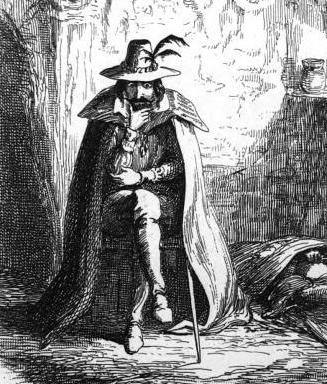
“Remember, remember the fifth of November, the gunpowder, treason and plot…” V for Vendetta is movie that gets me every time. It is not that I want to see venerated buildings destroyed, but I do want change. Very badly. When visiting Occupy Wall Street last week, I saw protestors wearing Guy Fawkes masks, made popular by the movie V for Vendetta. Verily, I had to smile. We may remember the Gunpowder Plot and how the victorious forces of the monarchy stopped Guy Fawkes just in time, but how often do we remind ourselves that the story revolves around religious liberty? Finding their religion outlawed, Guy Fawkes and his co-conspirators tried, in a very unorthodox way, to make a very valid point: conscience cannot be legislated. Indeed, in the movie, the political powers claim that it is “Godlessness” that has led to the villainy, the decline of society. In fact, however, it is that the vices of the rich and powerful have turned them against their voiceless commoners; vanity has led to this dystopic future.

Once more we find ourselves at vespers on Bonfire Night with wealth firmly in place, political, religious, and economic powers secure. And many cold, hungry, and without a vestige of hope. I’m not sure there is a solution to this problem, but if religion has taught any lesson of value at all, it is that we must try. We must venture to make the situation better. Even those who wallow in the status quo want growth and development, albeit for themselves, claiming it only a venial sin. If the human race is not to go extinct, ossified before its computer screens, iPhones, and televisions, we must use our voices. We must stand, and it is vital that we stand together.

“An idea can change the world,” V tells Evey near the beginning of the film. Once the leaders of the government take military control, the freedom of expression is soon vanquished. Books are not to be found, visual art is considered dangerous. Questioning those in power is the very stuff of treason. In my short time I have seen us coming dangerously close to that mentality and calling it visionary. When people are afraid they will close in around the virile leadership of guns and violence. But fear may be vanquished in another way. When we recognize that we are part of something greater, when we relinquish what is “rightfully” ours to help others, when we join in that great collective called humanity, fear itself will vanish. It is not just vaunted Wall Street that must be occupied. No buildings have to vacillate and fall. We must Occupy our Minds, for rage as they might, the wealthy and powerful cannot control a venerated idea. “Remember, remember, the fifth of November…”

Villain or visionary?


No Sanctuary, No Renewal

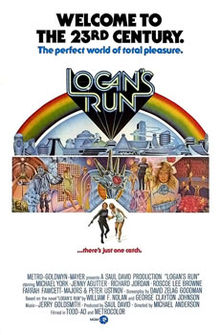
My penchant for dystopias won out over what many would suggest is good sense and I rewatched Logan’s Run for the first time since the 1970s this weekend. Dystopias, of course, are the antonyms to the religio-political utopias that seemed possible to dreamers of the Enlightenment. Since those optimistic times power structures in society have grown ossified and privilege has been entrapped in enclaves of excess wealth, both religious and secular. Seeing the film as a teenager I am certain I missed the savage social commentary in Logan’s Run. Despite its weaknesses, the movie still carries an unexpected punch, given subsequent developments. The premise, for those unfamiliar, is that in the twenty-third century life is ease and hedonism until you reach thirty. To control overpopulation those losing the bloom of youth are euthanized in a religious ceremony to be “renewed.” Logan discovers there is no renewal and, the mythology fractured beyond repair, begins his eponymous run.

In a society just beginning to come to the realization that population trends were leading toward the elderly outnumbering the young, film-makers and novelists were trying to predict where human nature might lead. Movies like Soylent Green, Rollerball, and even The Stepford Wives dealt with issues of potential population pressures. One thing they share in common: the prognosis isn’t positive. 1984 came and went, and savvy politicians learned that control may easily be blended with religious sensibilities. Hot-button issues that have little to do with government (defining marriage, deciding which gender has the right of self-determination, declaring biologists in default of creationist fantasies) easily deflect attention from the serious issues of ensuring a healthy economy and providing reasonable care for those who are actually now alive. Spending too much time gazing into the future can be counterproductive.

Logan heard rumors of a place called “sanctuary” where the aging are free from the draconian enforcements of society. He takes his lady (dystopias are nothing without a love interest) and flees to discover this idealistic place. There is no sanctuary. Outside the safe, hermetically sealed domes of society is a ruined civilization. It is a world full of possibilities, but practically devoid of people. Finding only one survivor, the only option is to convince the police state he fled that all of this is a lie. Religions too, often rely on offers of sanctuary. Some who believe may find it while others will not. Logan’s Run (now being remade) may not have been the most convincing dystopia, but in bringing ethic and myth together in a world of unheard suffering, it may have read the pulse of society better than several of its more fondly received exemplars.


Religion Underground

Imagine a world where the affluent live in lofty houses and the poor, working class citizens trudge to long, dreary, factory shifts in order to keep the system working from their underground world. Although it’s not exactly post-recession America, it is not too hard to imagine. On my final day of vacation from relative unemployment, I watched Metropolis for the first time. A 1927 silent film, this movie of a dystopian world run by an unsympathetic ruling class is experiencing somewhat of a revival. Panned by early critics, the film is now often categorized as a classic of the silent era. It was also the most expensive silent movie ever filmed. Shot in Germany between the two world wars, the story follows a surface dweller who has fallen in love with a troglodyte. It even has robots.

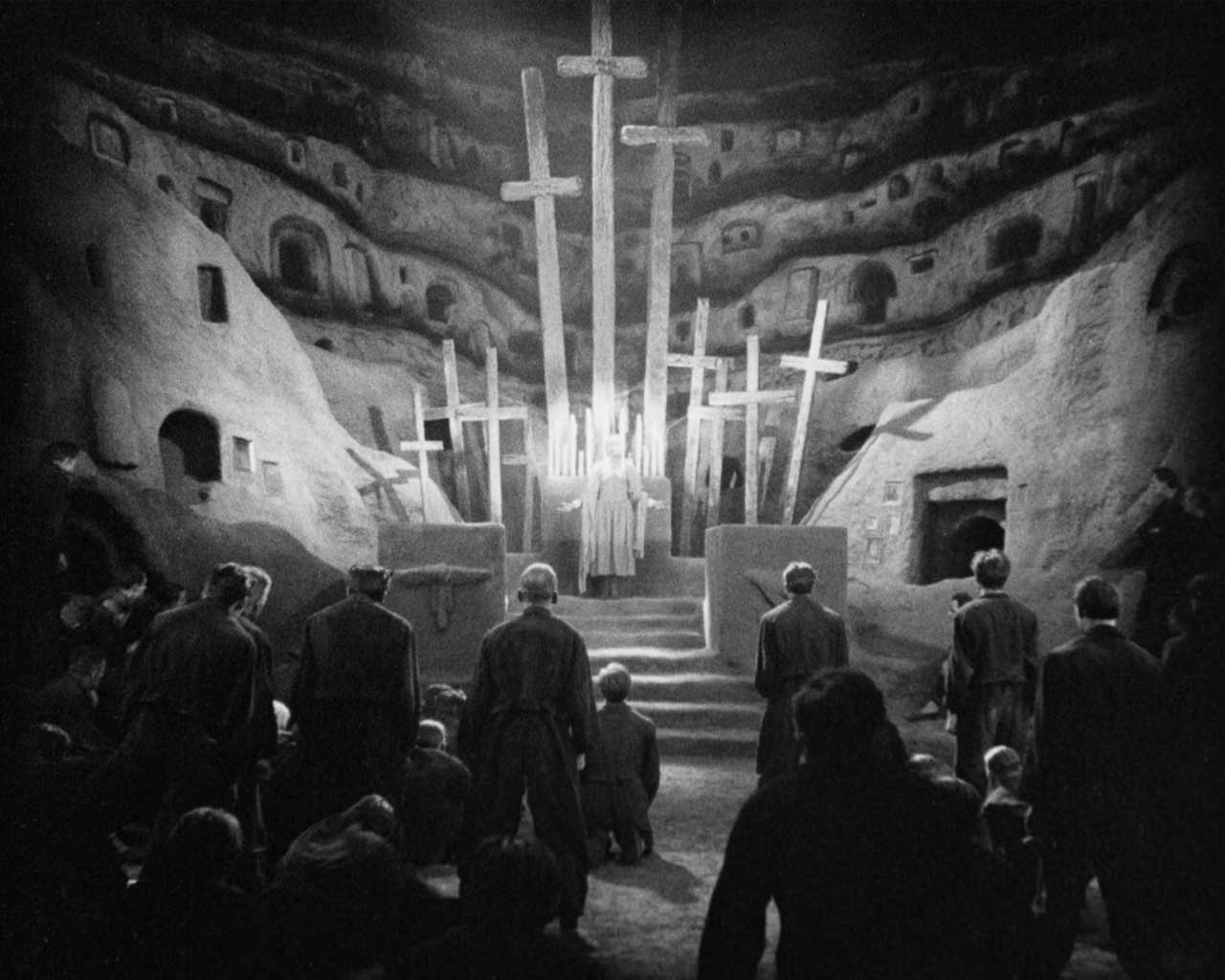
This Fritz Lang film fits in this blog because of its many biblical references and themes. Freder, the protagonist, falls in love with Maria, a working-class preacher among the underground laborers. Following Maria to the underworld, Freder sees the gargantuan machinery that runs the lives of the poor, and when workers die in an accident he calls out “Molech!” Molech, the putative god of child sacrifice in the Hebrew Bible, is shown as a fiery factory door consuming the forlorn men who dutifully march inside. Maria, however, teaches love and patience in suffering. In an underground cathedral she is the sole cleric long before most denominations recognized women as ministers. She compares the skyscrapers of the rich to the tower of Babel and insists that a mediator will come. With its strange blend of Christian and communist themes, this film made a significant impact in its time.

In our own day of entrepreneurship with faux-Christian backing it goes unnoticed that the Christianity of the first century was what might be called communistic. According to the book of Acts, early Christians keep their goods in common to ensure that everyone had what they needed. Among the disciples, Judas kept the common purse. What marked these early Christians as exceptional in the eyes of their earthly overlords was the concern that they had for one another—selfishness had no part in their religion. When Christianity became the religion of empire the lure of worldly goods distorted it almost beyond recognition. Christian industrialists built the tower of Babel with its leering Molech beneath the surface of the ground. Judas, it seems, has become the ideal role model for such a religion.

Maria's underground cathedral


Stobor and Dogs

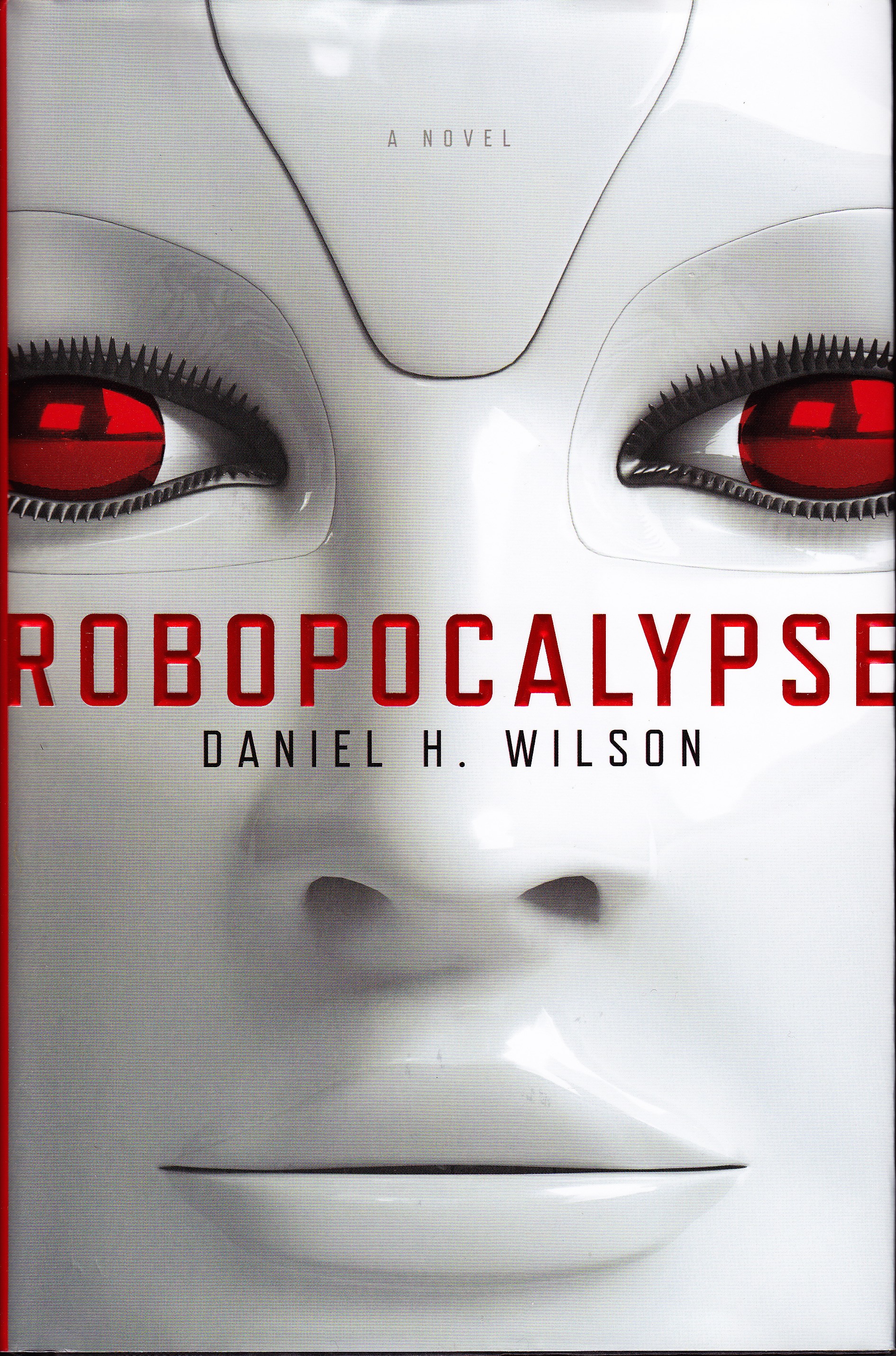
Having spent seventeen hours on public transit of various sorts yesterday, I had plenty of time to read. My chosen book for this trip was Daniel H. Wilson’s Robopocalypse. In my recent reading spate of dystopia novels Wilson’s vision seems more likely than others and thus perhaps a bit scarier. An obvious reason for this is that much of our tax money goes toward military projects that are, naturally, secret. A large part of Robopocalypse deals with military robots gone feral. Well, not really feral. The robots are controlled by a mastermind computer virus. In the first chapter this robot overlord declares to its creator, “I am your god.”

That statement is probably, metaphorically, true already. We live in a world where culture would change irrevocably without our current technology. Without it even fewer people would be reading the words I daily post here. Without it industry would shift into reverse back to the days of Thomas Edison or Eli Whitney. Present-day culture would be unrecognizable. Although not the best-written novel I’ve read, Wilson’s story does raise a salient issue—at some point the tool becomes the master of its user. For many years those who loudly proclaimed the superiority of Homo sapiens declared that we were the only tool-making animals. Subsequent observation has, of course, proven that to be inaccurate. Nevertheless, once knowledge of tools is acquired a trajectory is set. We lose a little bit of control.

Has technology replaced God? For some it clearly has. God is a symbol of comfort and meaning. As I watch thumbs busily texting away on planes, trains, automobiles—and especially in the middle of lectures—I realize that this altar of technology boasts many worshippers. There are very few scenarios where advanced technology is not present, like an omniscient being. Thankfully we have a few more years before Raymond Kurzweil’s artificial brain comes online. We should use those few remaining years to prepare ourselves for either an epiphany or an apocalypse. When the slaves become the masters, we are firmly in the territory of dystopia, at least from a human perspective.


Black and What?

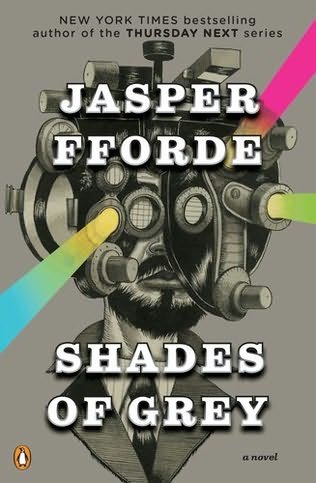
Dystopias are not all of the same stripe, or, in this case, color. Jasper Fforde’s Shades of Grey is perhaps the most colorful look at a bleak future I have ever read. The premise, funny and strangely serious, is that in the distant future color perception ability determines social rank. A cast of odd characters who see predominantly only one color vie for superiority while keeping to the rules of the founder of this society. The hilarious results often carry profound consequences. Those who live within this highly stratified culture fear those who do not, including a mysterious group known as the monochrome fundamentalists. The founder of the social order, Munsell, has achieved god-like status and his writings have the force of scripture.

This dystopia reflects, whether intentional or not, the social impact of many religions. Reading about the prefects, the political leaders of this culture, is like reading about the clergy who mistake spiritual guidance for power. The transition from pastor to politician is simple enough among social creatures like ourselves: we need those with persuasive powers to make decisions in accord with our best interests. Prefects and priests, however, are both eminently corruptible (let us say nothing of politicians) and evolution favors those who look out for themselves. The trick is to make others buy it.

Fforde’s dismal future includes Leapbacks where useful technology from the past is discarded in order to make people more compliant. In a world where color is a rare commodity, a modern usage of the rainbow seems apropos. Everything we are learning from psychology and biology—sciences still in their youth—suggests that sexual orientation is deeply ingrained, more so that just preferences or likes. The mainstream religions, however, have actively discriminated against those who are aware of their deepest needs. I know many excellent, caring individuals who’ve been kept from the ministry because of their orientation. Others who are clearly deleterious to the church climb to positions of power based on their approved sexual appetites. And society falls into lockstep with them. I don’t know Jasper Fforde’s political views, but along with him I would suggest that the ability to see shades of gray might be the best thing for any society, whether in the distant future, or especially, in the present.


Literary Floods

Oryx and Crake ends with a cliffhanger. I read the book at the suggestion of a friend and found a dystopia that simply continues along present trends. Naturally I had to read the second part, Margaret Atwood’s The Year of the Flood. I had picked up this book first, not realizing that there was a previous novel, because I supposed the eponymous flood to be that of Noah. I was not disappointed on that score. In keeping with her strong biblical awareness, Atwood has given readers the creation in Oryx and Crake, and the deluge in The Year of the Flood. Set in the same forlorn future, those who survive the pandemic described in the first book seek to survive in a world where most of the people are gone. Many of the survivors, as we learn in the second installment, are former members of an alternative religion, God’s Gardeners. This quasi-cult, led by Adams and Eves, prepares for the waterless flood (pandemic) by caching Ararats—supply stores—around the broken-down city they inhabit. As in Genesis these Noahs and Mrs. Noahs are replications of Adam and Eve.

Not only is Atwood an engaging author, she supports the green causes advocated by her books. This is a more honest form of religion than most sharply chiseled theologies that do nothing to improve the lot of a suffering world. Academic religionists like to tell us exactly what God is like while shrugging shoulders over the destruction of everything he putatively made. In Atwood’s world, those who believe in God express it through care of their planet. As always, however, they are the modest voices easily drowned out by the unconscionable greed of the powerful. In the words of John Dickinson from the musical 1776, “Don’t forget that most men with nothing would rather protect the possibility of becoming rich than face the reality of being poor.” Rare is the person willing to take the higher road and set aside his or her own wants for the benefit of others.

Ethics, at one time, meant seriously considering the implications of what we do. With the morals of our “leaders” it is pretty difficult to hold to that illusion any longer. Yesterday I sat through another round of ethics training and learned nothing that I hadn’t learned in Sunday School as a child. Be nice to others, don’t use them for your own advantage, help those who need assistance. It really isn’t that hard. Newt Gingrich with his highly unethical treatment of his ex-wife, Anthony Weiner’s peccadilloes, Sarah Palin’s revisionist reality—these scarcely inspire confidence. The flood is upon us. I think I might rather live in a world the Margaret Atwood would envision, as long as she was there too, to show us how to survive.


Garden of Nede

Dystopias fit the Zeitgeist of the twenty-first century a little too well. The level of disillusionment has soared since the administration of Bush the Less when an unprecedented degree of ridiculousness tempered every political decision filtering out of a Washington that has become a little too religious. So it is that the genre of the dystopia is strangely therapeutic. I first became aware of Margaret Atwood because of an introduction to the Bible that pointed out the misuse of Holy Writ in her classic The Handmaid’s Tale. An allegory that demonstrates the power of religion to reduce women to mere reproductive objects is frightening enough in itself, let alone the post-optimistic view of a future of endless possibilities gone bad. Now that I’ve finished her more recent Oryx and Crake, I see that her outlook has grown more bleak, if more believable.

Like most dystopias, Oryx and Crake is filled with religious and biblical allusions. A society that does not know its Bible is easily manipulated by it. The book has been out long enough that I won’t worry about spoilers – does any dystopia end well? The basic idea is that the eponymous Crake of the title has tried to replicate Eden with genetically improved human beings. To prevent them from entering a world filled with human-inflicted suffering, he devises a way to wipe out the world’s population, leaving these innocents to carry on a genetically modified human gene pool. One survivor of the old days, Snowman (Jimmy), has to explain to these innocents what their world is about. He concocts a myth where Crake becomes a new god. Although Crake tried to modify the brains so that the “bundle of neurons” that make up God are gone, the new generation stubbornly develops a rudimentary religion.

Is it possible for humans to build a better future? I have never been swayed by the perverted notion of total depravity; people are quite capable of doing good. Our great ape cousins demonstrate that it is within our genes to produce a harmonious society. Although religions have motivated some extremely noble behavior in the past, they have also introduced heinous distortions of anything of which it might be said “behold, it was very good.” Atwood has offered us a world to ponder seriously. It is a world where humans play God and end up rotting under an unforgiving sun. Perhaps if politicians were more literate and less religious we might be able to counteract our partial, self-inflicted depravity.


Tale of Two Anarchies

While snowbound over the weekend, I reread William Golding’s Lord of the Flies. I recalled a profound sense of awe from when I read it the first time in college, when students are invincible and optimistic. The second reading was still rewarding, but the message seemed darker, more true-to-life. Children on an isolated island devising their own schemes of democracy cannot repress the deep urge for self-advancement. When it comes to working together for the common good or promoting one’s own will, the latter wins out and seeks to destroy all dissenters. Anarchy becomes their natural state.

A few weekends ago I finally got around to watching V for Vendetta, the Wachowski Brothers’ dim and hopeful dystopia where individual conviction wears away at a conformity that benefits the privileged class. Recasting Guy Fawkes as a hero, albeit a tragic one, is a bold move in the post 9/11 world. The anarchy here leads to a rule by consent, the oppressed rising up as one to say “no more.” Even V is dead so there is no one to lead.

Better together?

Anarchy is a frightening prospect. Most people feel more comfort in the rule of law. One time I joined a discussion my brother-in-law was having with some friends on the rule of law. They were suggesting that if rule of law could be brought to bear on the Middle East then the seemingly continual crisis there might terminate. I disagreed from the far end of the table, not close enough to hear the whole conversation. My rationale is that the utter conviction of religion trumps the rule of law. Rule of law assumes all are equal, but religion in a monotheistic theater always assumes only one is right, and therefore superior. All others must submit. Problem is, many monotheistic religions feel the same way. We see it in the extreme power structure of the Religious Right in this country. Who is willing to say maybe the rule of law is superior to the rule of God? Watching the graceful anarchy of V, and reading the disturbing anarchy of Lord of the Flies, sometimes even the most stalwart free-thinker wishes everyone would bow to the rule of law.