Take a PAAS

Like so much of life, PAAS Easter Egg coloring kits were the result of an accident. To be more specific, a chemical accident in New Jersey, something which is far from rare. This particular accident, however, had a fortuitous side-effect: the brightly colored (but not radioactive) Easter Egg dye that many of us associate with childhood. Around 1880 Newark druggist William Townley spilled colored dye onto his suit, leading him to individually package holiday colors, according to a story in the New Jersey Star-Ledger. That individual packaging allowed for a full set of egg colors to be sold together and the PAAS brand was soon launched.

The idea of coloring Easter Eggs, like so many Christian traditions, likely has pagan roots. Eggs were a sign of new life with the coming of spring in many cultures (although boiling the poor things rather defeats the purpose). Christians adopted the egg as a resurrection symbol—the chick pecking out of its shell was like the resurrected Jesus bursting from the tomb, albeit somewhat less dramatically. Watching a newborn chick hatch is an emotional experience. At the 4-H Fair, standing around the incubator in the chicken tent, you can see wobbly, uncertain, tiny birds tentatively trying to assess this strange new world that is colder and somehow more compelling than life in the shell had ever been. The mighty son of God they’re not, but they are much more like us, looking for answers and taking small steps until they’re more certain of what they face.

DSCN4483

The coloring of eggs has origins lost in antiquity. Nobody’s quite sure why it was done beyond the fact that they look nice. Romans ate eggs as part of their spring celebrations, and Christians came up with a story to explain colored eggs. The legend claims that Mary Magdalene, in trying to convince the emperor of the truth of the resurrection, turned eggs from white (or brown, as they likely were in those days) to red in her open hands. This proof, however, failed to convince the Caesar. What seems certain is that pagans liked coloring eggs so this provided a new source of evangelism to the Christians who assimilated the practice. Like Christmas, the Easter Egg has become a thoroughly cultural symbol—since Easter comes on a Sunday employers aren’t obligated to give the day off, so everyone can celebrate. Children hunt eggs on the White House lawn and we can still expect everyone to be in the office on Monday morning. Resurrection, after all, can only reach so far.

The Spice of Religion

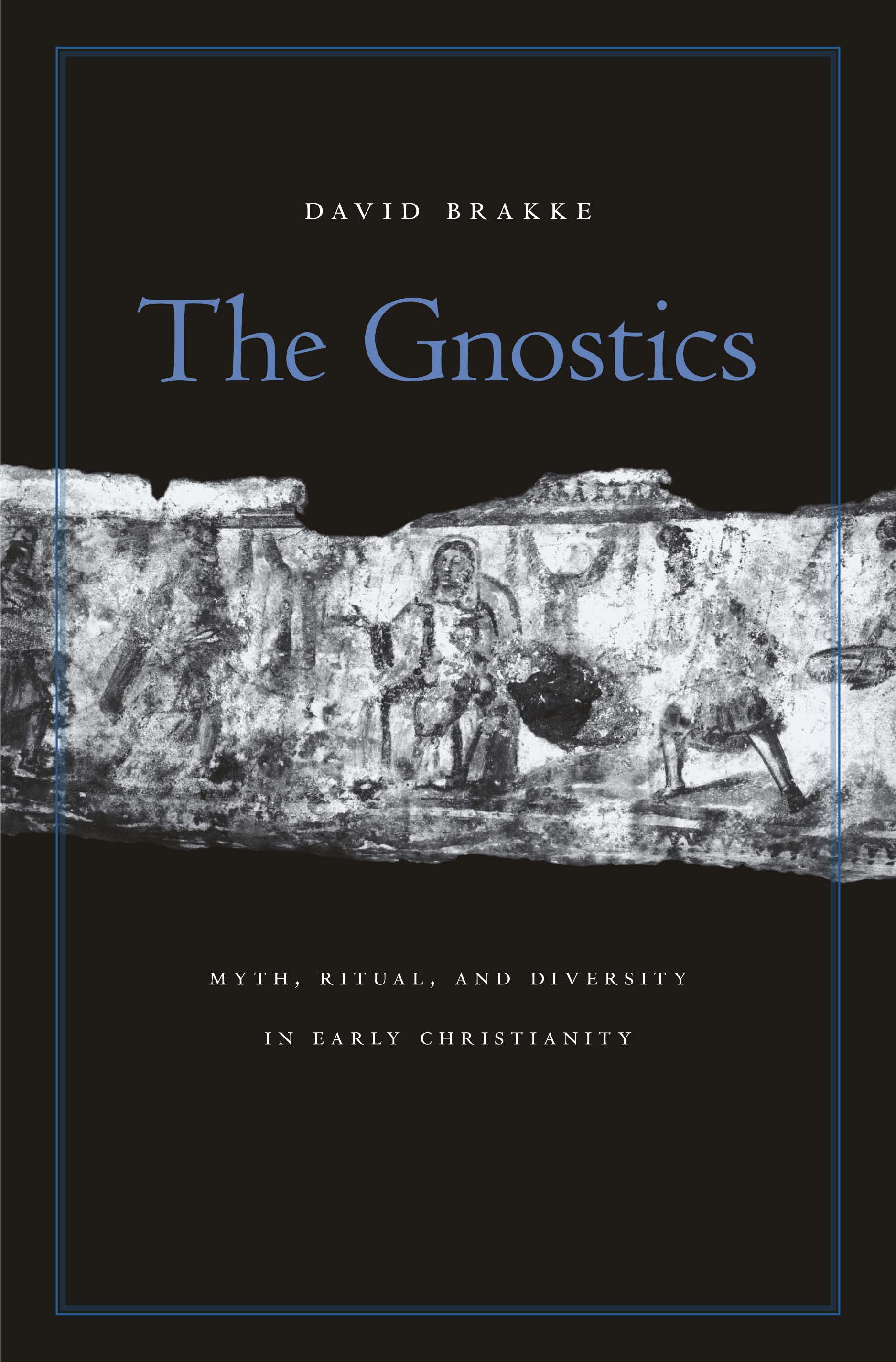
BrakkeGnosticsI haven’t really forgotten about the Bible. It has been such an integral part of my life that I couldn’t escape it if I tried. Going into religious studies, however, I feared New Testament studies. You see, having gotten a taste of historical criticism with good old J, E, P, and D, I was afraid what might happen if I looked Q a little too closely in the face. We now know, however, that the New Testament was just as redacted as the “Old,” and that there wasn’t a single variety of Christianity, even in the first century. I just finished David Brakke’s The Gnostics: Myth, Ritual and Diversity in Early Christianity. Brakke admits right up front that some will see him as not being radical enough, but since middle-of-the-road is a comfortable place to be, I found his introduction in the realm of the little bear, just right. The old story, perhaps originating with Irenaeus of Lyon, is that Christianity began as a monolithic faith and then came along these spoil-sports like the Gnostics and soon nobody could keep the truth straight any more. This is, of course, an over-simplification.

Religions are constantly shifting. As Brakke points out, there was no definitive Christianity when Christianity was still Jewish. Paul never calls himself a Christian, and he was, by his own declaration, Jewish. His interpretation of Jesus varies greatly from that of the eponymous John, of Gospel and Epistle fame. No, there never was a single Christianity. Probably from the very beginning there were Gnostics too. And, again with Brakke, they would have supposed they were following what was to become Christianity as well. Same world, different worldviews. They were not sinister and plotting, any more than other varieties of Christians were sinister and plotting. They were trying to live out lives in accordance with what they thought life was all about.

It has become clear over the last several decades that Christianity never really did unify into a single belief system. Constantine certainly gave it his best shot, but Christianity had spread beyond the bounds of the Roman Empire already, and heterodoxy was rife. No account of Late Antiquity can be honest without noting all the fighting going on among true believers about who was a, well, true believer. Really. Tensions existed early between eastern and western brands of Christianity and schisms became as common as missals. Nobody was really able to put Christianity back together again. In fact, this Humpty Dumpty never was an uncracked egg. I’m afraid I’m taking liberties with Brakke here, but the basic truth remains. Christianity came in its own 57 varieties, most of which didn’t blend very well. The Gnostics come out looking pretty good. That is especially the case when the proto-orthodox start gathering stones. In such a case, it is perhaps time to read the Gnostic scriptures to get a little perspective.