Eclipsing the Earth

We need a new word.  One for the high an eclipse brings you.  I’m finding myself having difficulty coming down from it.  It seems so mundane to have to do something as ordinary as work after experiencing totality.  We only caught very brief glimpses of the moon over the sun through small breaks in the clouds, but we did get to experience totality.  How do you come down from that?  The next day we had a several-hour drive to get home so that we could all be at work yesterday morning.  What could be more ordinary than that?  And the eclipse happened on a Monday, not an unusual day for a holiday.  Only it wasn’t a holiday, but a “vacation day.”  So was the driving day.  At my age you need a day to recover from all the driving too.

Several friends have posted their amazing photos and videos of the event, so I’ve decided to “release” my video to the wild.  A few explanatory notes: we were in upstate New York, on the shore of Lake Ontario.  It was chilly and we were bundled up (we came home to 80-degree temperatures, which was quite a shock).  The video may seem to have not much happening for the first couple of minutes and this is because electronic cameras tend to “even out” the light (film photography is much better).  When I started filming this it was getting dusky but the phone smilingly tried to make it look like normal daylight.  That wasn’t the case.  (Be patient—drama takes time to build!)

It occurred to me that many people (who had clearer skies) thought totality was all about the moon over the sun.  I take a more Buddhist approach.  The Buddha admonished not to mistake the hand pointing at the moon for the moon itself.  The real experience of an eclipse is what is going on down here on earth.  My video shows how the sun faded, and then went completely dark and back again in a matter of minutes.  My experience of this was quite a spiritual one.  If I’d been looking up I very well might have missed it all.  In other words, being in a cloudy situation, totality was an opportunity to take in what was happening on earth, in real time.  There is a lesson in this.  Life tends to deceive us into thinking the most important thing is the peripheral one.  Experiencing an eclipse is all about being, and living, on earth. 

Eclipse 2024

Eclipses.  They’re fully explainable.  Or are they?  Yesterday’s solar eclipse, with totality within driving distance of many Americans, led to an inexplicable need to see it.  April, we’re told, is the cruelest month and upstate New York is known for its “ever-changing skies.”  I admit I was skeptical.  Together with some friends we arranged to meet near the umbra, in Penn Yan, and to drive from there to totality up on Lake Ontario.  As is typical in New York, the day started out fair, with a few high clouds.  It was chilly, but this is April.  Our destination: Fair Haven Beach State Park.  The location was nice; we arrived early and found a good spot.  The clouds, however, were willful and wanted to remind us, like last week’s earthquake, that we’re not really in charge here.

As the day went on—totality for us was 3:20 p.m.—more and more people came into the park.  To its credit, with what must be a limited state budget, it absorbed many eclipse seekers without any trouble.  By 3:00 the cloud cover was heavy-ish.  Our friends had heard a sponsored eclipse speaker, however.  Totality was nothing like even 99%.  This would be of a different magnitude, even with clouds.  I remember three previous eclipses.  One in school with the pin-hole method where you really don’t see anything, one in Wisconsin after teaching one morning at Nashotah House, and the 2017 which I saw in midtown Manhattan.  None of this prepared me for totality.  Around 3:18 it started to look dusky.  We could catch glimpses (but no photos) of the crescent sun.  Within seconds it was completely dark.  It was another of those transcendent earthly things, like the earthquake three days earlier.

Perhaps I’m getting old enough to realize that you can’t really describe such feelings.  Maybe I’m getting sensible enough to understand such things are called ineffable for a reason.  All the planning, worrying, anticipating, was for this moment.  Yes, there were clouds overhead, but the park was full of cheering people.  They too had come here for something extraordinary and to my surprise I found tears in my own eyes.  I captured no photos of stunning clarity, but I had experienced something I’d heard about since childhood but had only glimpsed in the most crude of facsimiles before.  We were able to experience a kind of rebirth that comes only after night.  Conditions weren’t ideal, but are they ever?  And an encounter with the numinous always comes on its own terms.

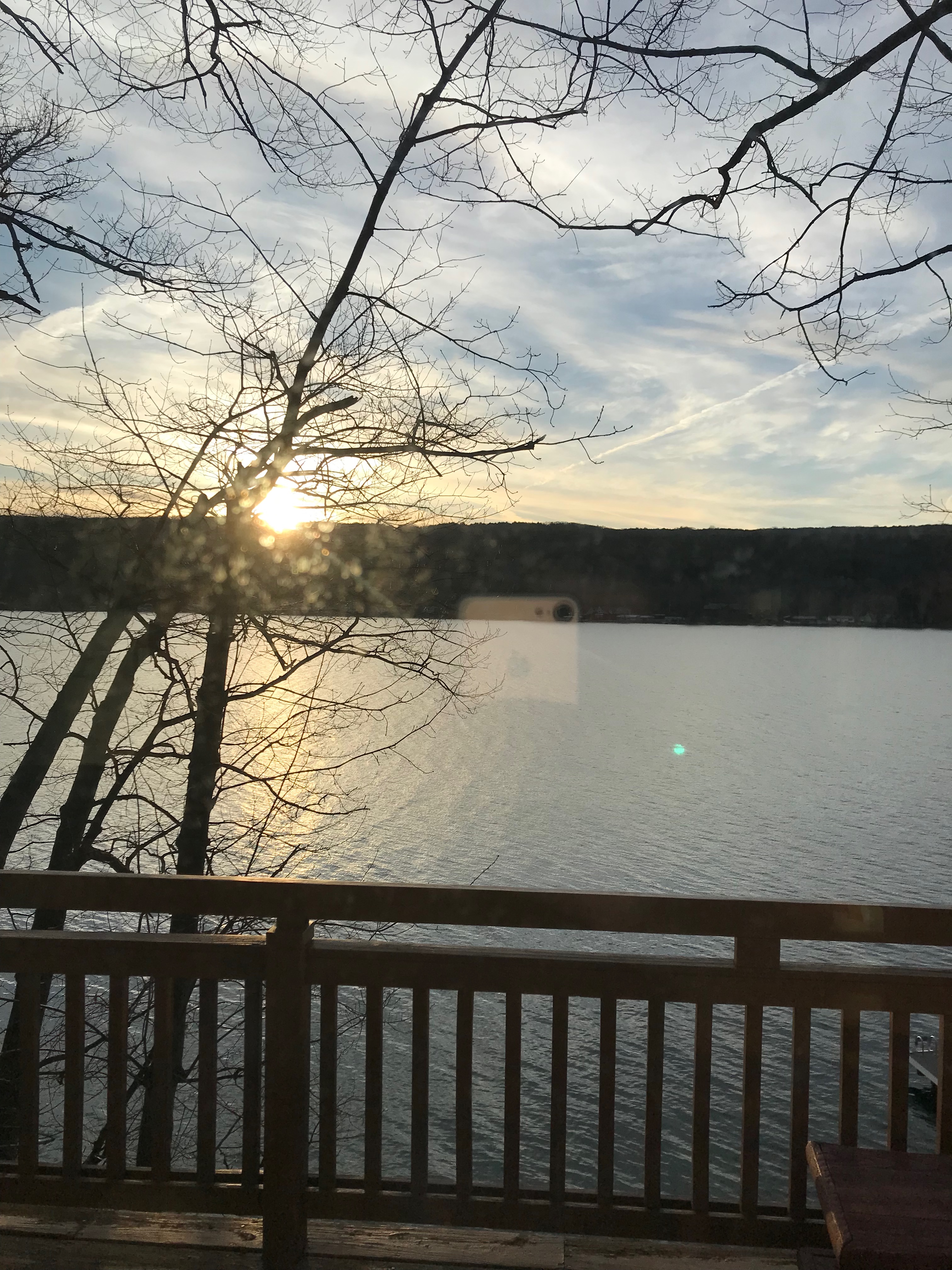
The sun, hours before being eclipsed

A Kind of Lunacy

I can never keep track of the vernal equinox. Actually, I have the same problem with the autumnal equinox and both solstices. I think it’s because when I was growing up I thought they always came on the 21st of the month. That’s a nice, regular interval. Our months, however, are not natural. Were they to follow the moon (whence we get the word “month”) they would be about February length. The moon’s phases, however, do not keep to human time. In actuality, a month is approximately 29.53 days. Various emperors throughout history added days to their months, making our jumble of 365.25 days a mix of mostly 31-day periods, with some being 30, and February alone holding out at 28. Or 29, depending. All of which is to say, I didn’t realize spring was here until the day was mostly over. Here in the northeast it was snowing, and the celestial dome was occluded. That was a shame since it was also the day of a solar eclipse. I consoled myself by realizing that even if it had been sunny I was in the wrong location to see the eclipse, so I wasn’t missing much.

DSCN3762

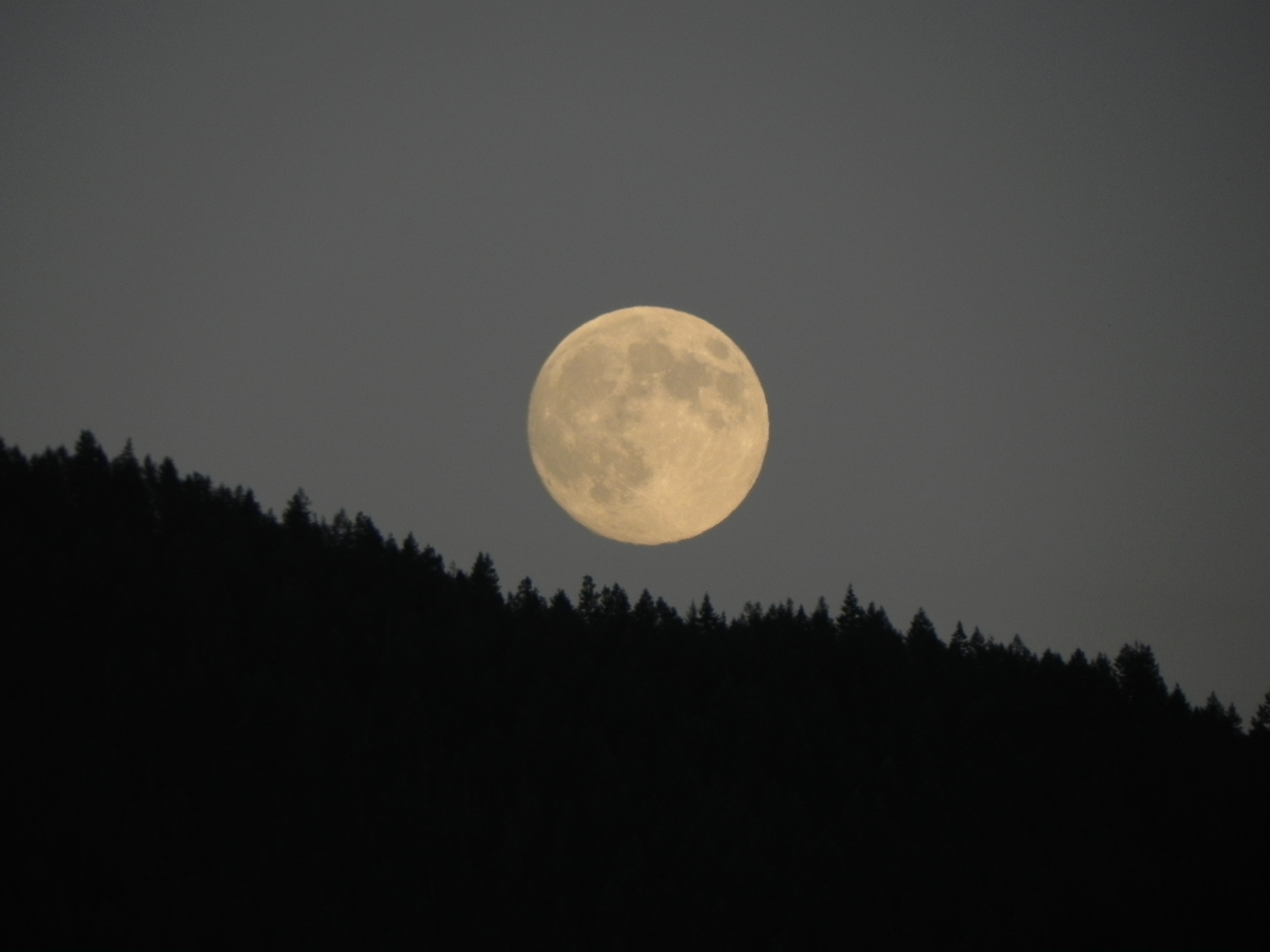
So spring subtly appeared this year. Not only was the day an eclipse day, for some, it was also a “supermoon” day. That is to say, the moon was at its closest point to earth at the time, making the eclipse a truly spectacular one, if you could see it. All of these astronomical machinations on the event that sets the date for Easter has developed a new kind of mythology. According to The Guardian, some minority of clergy have seen this event as initiating the apocalypse. Of course, eclipses are by their nature local events. The vernal equinox occurs every year, and the first Sunday following the first full moon of the equinox will be Easter. We get a supermoon (or perigee-syzygy of the Earth-Moon-Sun system) about every 14 months, so this is hardly rare. But then, the moon has always been the locus of mythology.

Ancient peoples knew the phases of the moon intimately. As the main source of non-artificial light at night, it was a boon to those without electricity, or even gaslight. Without physics to provide a mechanism, stories developed to explain the ever-changing status of our nearest neighbor. Some of those tales took on religious elements, and many religious calendars remain lunar. The vernal equinox, however, is a solar event. From now on the days will get longer until the summer solstice, a day of celebration and mourning, as we move back into the days of declining light. Each of these celestial events comes with its own religious freight, and it seems, dissenting clergy notwithstanding, that so it shall carry on for many moons to come.