Recession Value

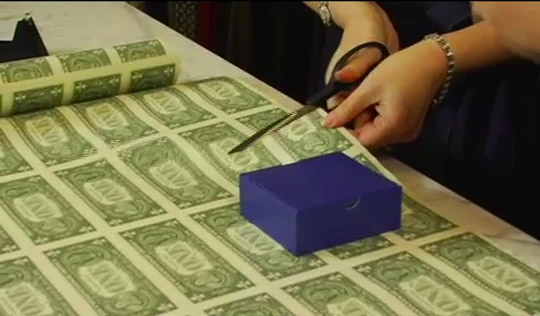
While reading about recessions (am I getting old, or what?), I suddenly got the creepy feeling that our entire lives are unduly influenced by those who think they know what they’re doing.  Financially, that is.  The Great Depression and the Great Recession were both times of economic hardship because the rules capitalism put in place defined us as being in an era of lowered GDP, or gross domestic product.  Why?  Because there were no jobs.  Why?  Those who hold the purse strings (capitalists) had pulled them shut with all their might.  Then, like magic, depression and recession end and everyone tries to get back to business as normal.  To me this seems utterly ridiculous.  They call economics the dismal science for a reason, after all.  The fact is the rules are made by us.

Society is very complex.  This is one reason that people should really think hard about who they’ll vote for.  Leaders who think it’s all simple inevitably lead to disaster.  If I could, I would switch the world economy away from capitalism.  If I were president and were to try this, it would be a very, very slow process.  It would take generations.  Why?  Because this is a complex system.  Sudden changes don’t last.  Of course, to people who believe the universe took only six earth days to create and that a big flood wiped out all the dinosaurs (or maybe some were on the ark), complexity is anathema.  Of the devil.  Well, as they say, the devil’s in the details.

Image credit: I forgot where I found this; if anyone recognizes it please let me know!

And so we suffer through depressions and recessions.  To those of us with feet on planet earth, it doesn’t feel like much has changed.  We still need to sleep and eat and all that, but some “experts” are telling us why we have to pay more at the grocery store or at the fuel pump, and why those at the top of the pyramid seem to be all right, no matter what happens to the rest of us.  And we let it carry on.  Economic systems are simply a reflection of what people value.  The things we value most cost the most (it’s called supply and demand, AKA capitalism).  The most expensive material thing I own is my house, and truth be told, it’s mostly owned by the bank.  But the most valuable actual thing I own is my mind.  It can’t be bought.  And one thing it keeps on telling me is that all of this business about recessions and whatnot is rather silly.


Work for Good

You learn a lot as a primary caregiver.  Since dealing with a family cancer diagnosis last year I joined a local support network for caregivers.  Three things I’ve learned: healthcare is very uneven, we ended up in a good facility, and finding a social worker on your own is very difficult.  I see lots of messages on the support boards from people in poor facilities that can’t find the help they need.  I know what social workers do—I had several friends who majored in social work in college—but in this age of all the information in the world at your fingertips, just try to find a social worker!  I was trying to find a website to suggest to a person on my board who didn’t know where to turn.  Searches bring up links to places trying to sell you their services to find a social worker.  Are we really that callous?  

People tend not to try to find a social worker unless they really need one.  Many people, I suspect, wait until they feel pretty desperate.  This is not when you need some salesperson trying to sell you something.  Medical care can be very expensive—devastatingly so—and there are professionals out there who specialize in helping you get through such things.  Why are they so difficult to find?  I tried government sites that seem more interested in telling you how to become a social worker than how to find one.  If we’re in such a state that we don’t have enough social workers why don’t we pay them more?  Here’s a hint, most politicians could stand a salary cut.  My college friends all said they knew it didn’t pay well, but social work was a way to help people. Saints still walk among us.

We have the means to help everyone.  What we lack is the will.  We continue to let capitalism and the hope of individual wealth run our economy.  Economy means nothing without people.  And we have many people who are willing to receive less personally to help others get by.  Why do we have to hide them behind a pay wall?  What does that say about us?  We’ve been fortunate.  Our medical facility immediately put us in touch with a social worker.  If, however, you end up where healthcare choices are limited, or don’t know how to find a social worker on your own, the internet’s not a great resource, unless you want to pay someone to help you find help.  What have we become?


Simple Arithmetic?

Arithmetic progressions.  They can boggle the mind.  I think I’ve noted before—I’ve been doing this so long that it’s difficult to be sure—that the exponential increase of ancestors is astounding.  We have two parents but by the time we add ten greats to the grandparents we’ve got a crowd larger than the small town I grew up in.  Typical of a child of an alcoholic, I have no idea of what normal is, but I’ve had a rare and precious gift more than once in my life, and that has been finding that I had hidden family.  My father, unable to afford child support, made his way back to his family to survive.  Nobody in my household knew that he’d done that.  In fact, I had no idea he had siblings and I had unknown cousins.  It was a gift to discover that just as I was graduating from high school.  My mother encouraged me to stay in touch with them.  That was the reason behind my recent brief trip to South Carolina.

A few years back I learned that I had a cousin on my mother’s side that nobody in my family knew of.  People drift apart, even in families, and some people have to be rediscovered.  Call it redemption.  That’s what it feels the most like.  This cousin made the effort to travel across the country, in part to see me.  Kinship is like that.  Families feel for each other.  Being long apart can raise questions of motivation.  It’s awkward when, due to circumstances, you can’t see someone for some time.  I have a half-sibling in that boat and have recently re-connected.  I can only say that it feels like being a prodigal coming home.

I suppose that in a perfect world families would have no dysfunctional members, and everybody’d live next to each other in harmony and good will.  Right, Pangloss?  Economic circumstances would never force someone to live near where jobs might be found, and nobody would ever marry someone from another state, let alone half-way across the country.  And marriages sometimes double the arithmetic progressions, sometimes perhaps triple or more.  Families are complex and complicated, in reality.  I’ve seen pain in more eyes, and heard it in more voices than I would care to.  And I have a very difficult time letting such things go.  Charlie Bucket, according to Tim Burton’s version, says that families make you feel better in an imperfect world.  A world in which family reunions take place with individuals not being notified.  A world in which arithmetic progressions are mere fictions. Never in a perfect world like ours.


Hard to Say

There’s no easy way to say this, so I probably shouldn’t try at all.  Still, I feel compelled to.  You see, I’ve sat on admissions committees and I’ve written my fair share of letters of recommendation.  The former (admissions committees) have a difficult kind of calculus to compute.  Schools need students and their tuition money—this is, after all, the capitalist way.  (Yes, there are alternatives, but boards of trustees have severe deficits of imagination.)  Some schools get around this by being elitist.  Generally they have endowments of very old money and can weather all but the most severe of storms.  Such universities are in the minority and so the rest, and various small colleges, need to compromise from time to time.  Money or integrity?  You cannot serve both God and mammon.

At the graduate level this becomes even trickier.  Grad students bring in more money, and getting into grad school used to (and here’s the difficult part) require what some admissions folks secretly call “special intelligence.”  The paperwork and in-person interview reveal it clearly—this candidate (not always from a privileged background) displays a canniness that suggests they might really have a truly unusual ability to reason things out.  This is someone who should be admitted for advanced work.  But if you apply that principle not only will you be called “elitist,” you’ll also run out of lucre.  The solution is simply economic—let those who don’t have this kind of special intelligence in.  I have seen Ph.D.s after names from schools that I had no idea offered doctoral-level research.  And they legitimately call themselves “Doctor.”

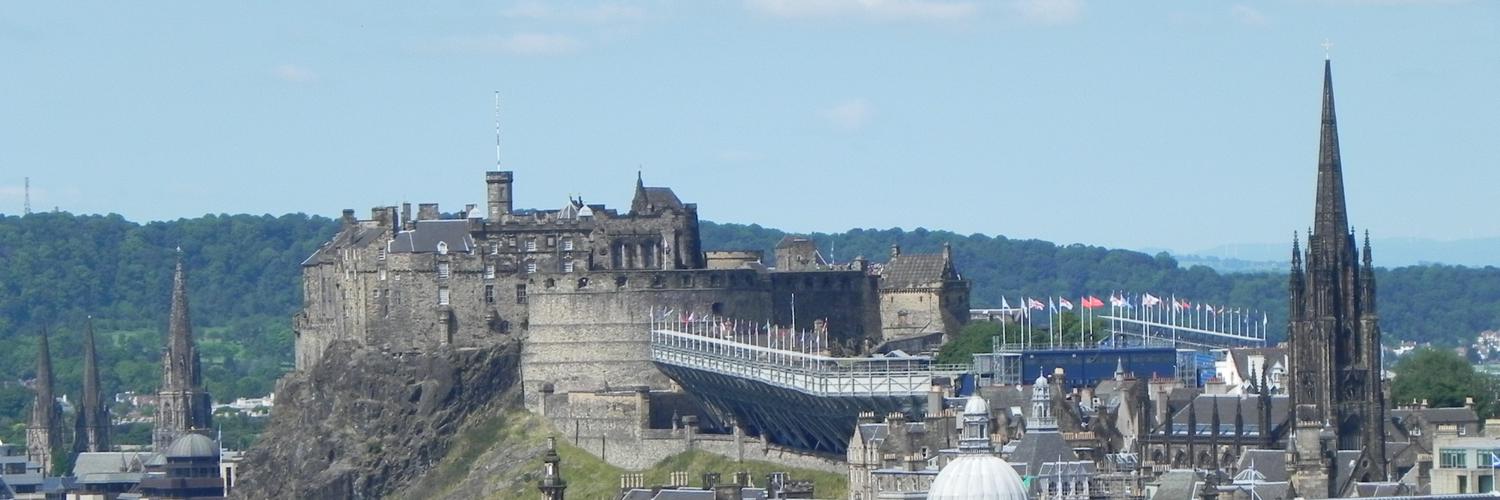
When choosing a grad program—go ahead, call me elitist, but then interview me and see that it’s not true—I knew it had to be at a world-recognized research institution.  I ended up at Edinburgh, and my bubble was already deflated when I told family from western Pennsylvania and they supposed I was going to Edinboro College (now Edinboro University of Pennsylvania), located maybe 50 miles from where I grew up.  I had been accepted at Oxford and Cambridge, however, neither of them could offer scholarships to a penniless Yank, but the famously frugal Scots were far more generous.  And let’s face it, Scotland is more exotic than England.  You have to admit that much.  Of course, the deciding factor was, in my case, money.  You have to wonder if there’s any possible way of escaping it.  From all appearances, mammon wins.


Human Capital, Are You?

Human capital.  Is there any more demeaning phrase?  Those in positions of political authority like to use the term.  To grow the economy, to people the military, to ensure the GDR Almighty surpasses each and every idol, we have to ensure the correct placement of our human cattle.  Oh, I mean capital.  I was recently reading about our rivalry with China.  The expert I was consulting noted that it all comes down to human capital.  With populations shrinking, this is annoying to those who want to measure nation against nation, back to back.  In China, it’s said, your fate is determined at a fairly young age.  And that made me wonder about late bloomers.  Like yours truly.  To see me up through at least fourth grade nobody would’ve supposed I was Ph.D. material.  (Considering how this all worked out, maybe they were right.)

Humans, if we’re honest, mature at different rates.  Some of us take decades to learn what we’re good at.  This may be a problem endemic to the poor—kids who are raised by parents that are uneducated and don’t even know about things like after-school classes and clubs to enhance the experience of growing up.  Or if they do know about them, can’t afford them.  They raise their children to be blue collar in mentality.  Of course, capitalism relies on this.  You need human capital to collect garbage and dig ditches.  To people the military.  I often wonder how many of these folks might’ve been (and still could be) hidden geniuses.  You see, when I grew up working as a janitor in my middle school, during the summers, I listened to the hourly employees as they talked.  It wasn’t all about women and alcohol.  No, some of them were untrained philosophers.  I learned that I wasn’t the only human capital that thought deep thoughts while running a floor stripper.

The very concept of human capital ensures that some potentially world-changing kids will be overlooked and slotted where “society needs them.”  If we would educate ourselves more our world could become a more equitable and pleasant place for the 99 percent.  Instead, we keep the capitalist machine fed, nations comparing one another’s capabilities.  China may use balloons creatively, but we can be assured that all developed nations are surveilling their neighbors, assessing how they’re using their human capital.  All I know is that I grew up destined to work as a janitor, but the thoughts in my head wouldn’t stop.  And one mentor, who worked for a church, decided to show me the way.  How I wish I could help others escape, but there’s some comfort in being part of a machine.

Which bit are you?

Just Being

You know, I sometimes resent being forced to be something I’m not.  In these days of tolerance and letting people be themselves, the bullies have taken over, forcing the rest of us to clean up their messes.  Take politics, for instance.  I have no interest in it.  From the beginning of this nation to the present the political inbreeding has been obvious.  Wealthy families presuming that riches mean you know how to govern—since the beginning they have set the tone.  Voting is always important, but how can you be anything else when you need to be a constant political activist just to assure politicians are actually doing their jobs?  I’m no micromanager—in fact I’m okay with just getting by.  Still, I feel compelled to spend my time keeping an eye on corrupt politicians.  How are you supposed to write books?  Imagine what we could accomplish if they’d just do their job!

Or consider business.  It’s tax season.  Every New Year marks the time when you need to keep track of what you spend on what because accountants, backed by politicians, can’t keep their noses out of other people’s money.  You want to eat?  Find a place to sleep out of the incessant rain?  Then you have to play the capitalist game.  There’s no opt out short of heading under the bridge and going through trash cans for your next meal.  Those of us who are creative don’t really impose our wills on others.  You don’t like what I write?  Don’t buy my book.  (And I speak with authority on this particular point!)  Nobody forces you to look at art.  (Although they do force you to listen to music in many stores, even if you’d rather shop in silence.  This, I think, is a business decision.)

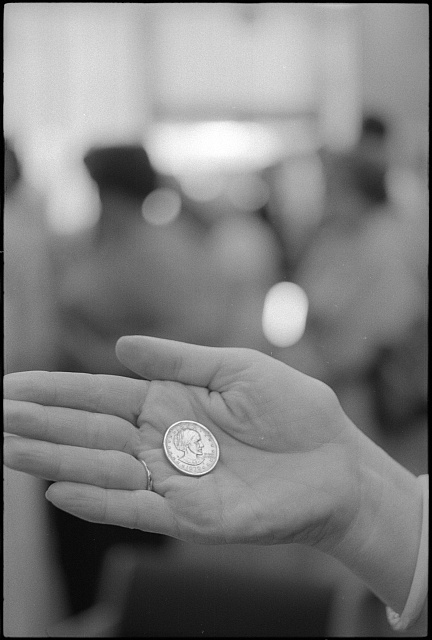
Image credit: Warren K. Leffler, public domain, via Library of Congress

One of the reasons a monastic vocation appealed to me even as a young Protestant was that I need time to think things through.  To contemplate.  To try to make sense of all of this.  I’m not motivated by money or power.  I want to be with others who just want to be.  I’m not lazy and I don’t mind being productive.  It’s just that, well, can’t things not be about money for a while?  Can’t politicians just act like actual adults with a moral center for a time?  The religious leaders who managed to do this were quickly commodified.  In this cloud-smitten winter I’m in the mood for lament.  Some of us want to live authenticly, but those with power and money simply won’t allow it.


Sunk Costs

The other day, in a fit of post-holiday tiding up, my wife found something that she couldn’t reach to put away.  As I took the thing and dutifully began to return it to its high cubbyhole, I realized that it was something we no longer needed.  Now, we’re very careful about not just throwing things away—this attitude of disposability has led to far too many landfills and rampant pollution.  So what was this thing?  It’s a dryer vent brush. After a couple years in our house, and with the awareness that the previous owners clearly ignored things like lint build-up in dryer vents, I purchased this brush to weasel in through the outdoor vent and try to get as much lint out as I could.  The old dryer died a couple years later, and we bought a more environmentally friendly heat-pump dryer.  Heat pumps require no vents, so the brush, in its high cubby hole, had simply been forgotten until it got in the way of something else.

This is an example of a “sunk cost.”  Economists, those purveyors of the dismal science, tell us never to worry about sunk costs since you can’t get your money back.  I suppose this is the impetus behind yard sales.  We’ve always been careful with money—we have to be—so purchases like this brush are calculated to meet a current need.  An investment.  Looking around, I see a number of sunk costs—there’s an extraneous office chair just a few feet from me at the moment, made superfluous when Gorgias Press moved offices and gave away office furniture that wouldn’t fit into the new place.  That’s the chair I’m sitting in at the moment.  The other, cheaper chair, however, is still functional.  Something’s telling me a yard sale might not be a bad idea.

But do I want neighbors to see the things we’ve accumulated over the years (and there seem suddenly to have been so many years)?  Some of the stuff obviously could have a future life.  The dryer vent brush was only used for a couple of cleanings and still has much life left, for an inanimate object.  Much of the technology that we’ve sunk money into would serve only as museum pieces, however.  And those costs tend to be much higher.  We try very hard to reduce, reuse, and recycle.  We give books away to little free libraries, if it’s clear they’ll never be opened again in this house.  But I can’t help wonder if sunk costs are a plague of capitalism and consumerism.  There’s got to be a better way.  And while I’m pondering it, I have a funky blue brush to use for scratching my head.


Being Sapiens

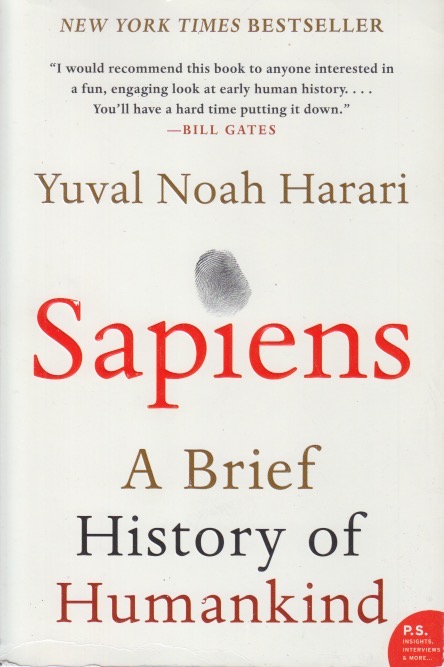
Sometimes you need some distance to appreciate an object.  A telescope may be required if it’s a distant subject, like a rare comet (if the skies aren’t perpetually cloudy).  At other times a microscope is more helpful.  Yuval Noah Harari Sapiens: A Brief History of Humankind made a pretty big splash a few years back.  Big name people, who presumably don’t have the time to get into the historical weeds—and yes, it’s quite overgrown out here—blurbed the book and it made it onto the New York Times Bestseller list.  It’s not a little book, and like most such works it’s  a synthesis that historians approach with trepidation.  Such projects occasionally make great observations, like the astronomer with her telescope.  But those who look up from their microscopes often say, “well, that’s not exactly right.”

How do you summarize 2.5 million years or so?  You have to be very selective and you have to keep backing up to pick out the things that help this story make sense to you.  Harari (my autocorrect keeps wanting to make him Harris, which sort of fits his overall thesis) divides human history into four parts, generally revolutions: the cognitive revolution, the agricultural revolution, the unification of humankind, and the scientific revolution.  Along the way he tries to pick out the major developments.  One of them, of course, is religion.  While some of the details are overstated, his big picture here is helpful to read.  Religion has helped us, but it’s also hurt us.  Perhaps the latter more than the former.  For this we need a microscope.

His part on science and the economy was both insightful and disturbing.  I don’t believe, for example, that capitalism is necessary for advancement.  We too quickly claim that socialism doesn’t work without ever really giving it a fair trial.  Instead we let wealthy industrialists come up with new ways to keep us entertained and compliant while they handle all the money—leave it to the big boys.  The future comes to resemble them.  And we’ve seen where that gets us.  Summarizing a big book like this that covers many thousands of years isn’t a straightforward or easy task, just as trying to pick out the highlights of our history can’t be.  Part of the problem is that we’re still in the middle of it.  Things may happen—the Covid-19 pandemic is a notable example—that change the course of the river.  Since this book was published before that happened, who’s to say that things might not turn out quite differently than anticipated?  This is a provocative book, but I need to get back to my microscope.


First Images

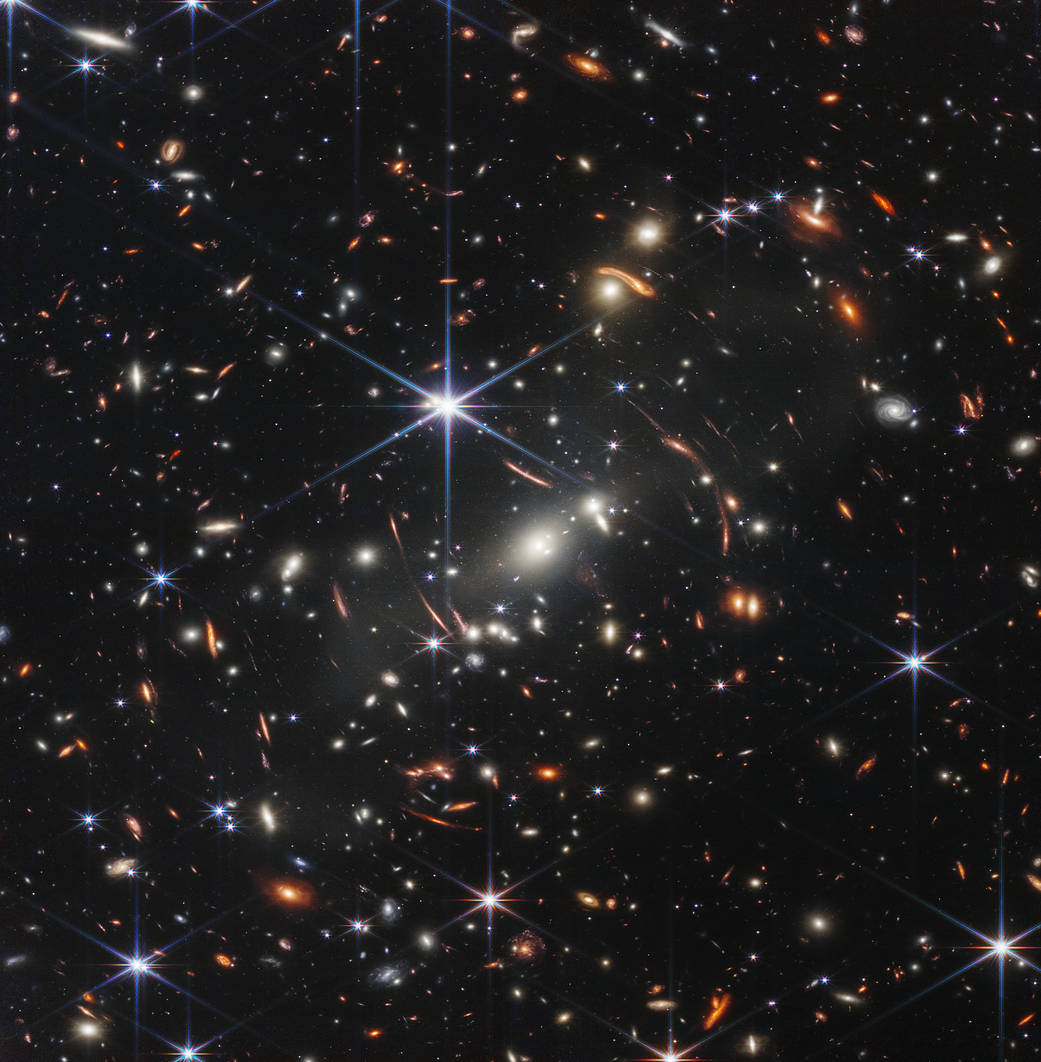
I awoke to an image from the James Webb Space Telescope.  Looking at the universe at it was 4.6 billion years ago is a humble and terrifying experience.  Our universe is so incredibly vast and we are tiny.  As we on this planet bicker and kill and destroy, out there something truly wondrous looms.  Those tiny pinpricks of galaxies.  Our own galaxy so massive that we can’t comprehend it.  Our own midsize star large enough to hold more than a million earths.  Our own planet big enough that no human being can see it all in a lifetime.  What in the world are we fighting for?  This image is just a patch of sky about the size of a grain of sand held at arm’s length.  How many grains of sand would it take to fill the visible sky?

Many people argue that such things are a waste of money.  Yes, there are very real, human-created problems right here on earth.  The siren call of space, however, has the potential to save us.  If we look into that immense universe just out there and realize that we are part of something larger than ourselves, we can stop fighting and hating and electioneering.  Keep looking up instead.  Costs, after all, are relative.  Our entire economic system is arbitrary.  We decide what’s valuable and what’s not.  We make rules that allow individual human beings to control the lives of countless others based on nothing more than agreed-upon principles.  Food could be freely distributed.  Medicine could be given to the sick.  What’s required is perspective.  If looking at the universe doesn’t provide perspective, what can?

I often wonder about life in those distant galaxies.  Given the sheer numbers it’s practically impossible that life evolved only here.  We’re told that teleological thinking is wishful and naive, but looking at the way life behaves I have to wonder if that’s true.  Life may be seeking goals.  If it is, than intelligence may be among them.  We’ve got billions of years and billions of lightyears to work with.  And when I look at the headlines I find those of the James Webb Space Telescope to be the most hopeful of all.  Galaxies are all about possibilities.  Stars being born where the outcomes may be better than one gender assuming it’s better than another.  Or that the “right to bear arms” means  stockpiling assault rifles to kill others in a fit of pique.  No, this money’s not wasted if only people might listen and pay attention to the stars.


Blood Money

The overdose crisis is very real and very sad.  Even so I couldn’t help being stopped and shocked by how economics was brought into it in a recent New York Times article.  Lab-made drugs are cheaper, so dealers pass on the savings to users.  Does anyone else see the problem here?  Isn’t the real drug capitalism?  Or take the Republican acceptance of violence as a legitimate political tool, also highlighted in a recent Times article.  Their blind followers think it’s about saving unborn babies but anyone who’s studied politics knows it’s about the money.  If you can distract the electorate with an emotional issue you can pick their pocket at the same time.  Capitalism smiles on the wealthy.  And only on the wealthy.

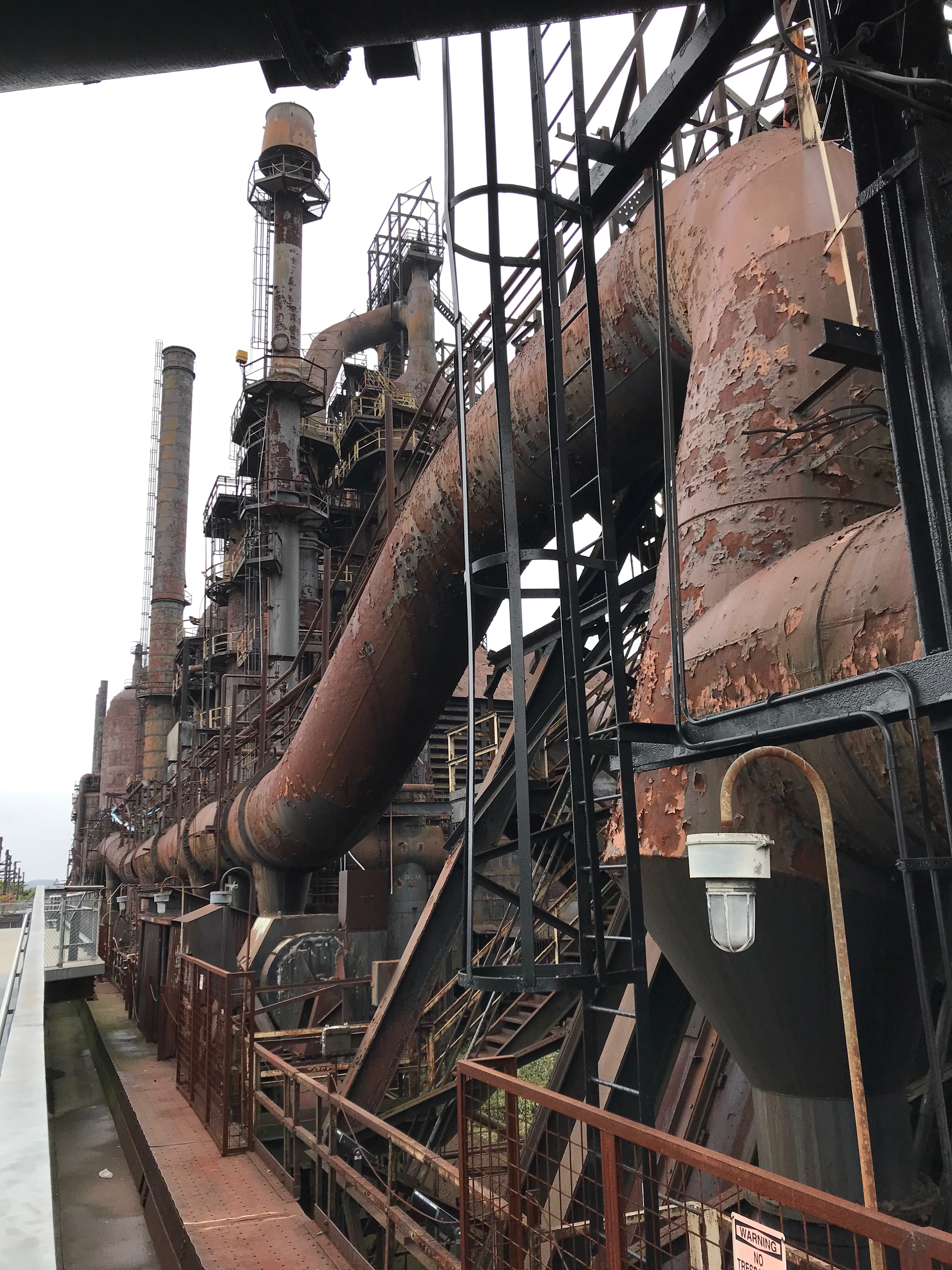
I’m not naive enough to suppose we can do without the dismal science, but the more I learn of economics, the more dismal the dismal science becomes.  I was recently reading about the ranching industry in early American expansion and the amount of power concentrated in those who raise animals for slaughter would make the most bloodthirsty of gods smile.  Indeed, Europeans coming to a new country wanted to make it in the image of their lives back home (they were largely successful).  Especially those who raised specially bred varieties of sheep, goats, and cattle.  Since grazers and browsers require a lot of land, the American west appealed to them.  Although big beef and big dairy produce more environmental problems than most big industry does, we let economics make the decisions.  And in economics the big and the selfish always win.

Photo by Tanner Yould on Unsplash

A bit of wisdom comes from the musical 1776 where John Dickinson explains in “Cool, Cool, Considerate Men” that the common person will always vote for those who preserve the (near impossibility) of becoming rich, the myth of capitalism.  The average person lives each day not worrying that they will be struck by lightning.  Those who are often believe it isn’t likely and remain out in a storm.  What are the chances of a poor person actually becoming rich?  In this economic system?  Don’t go outside in a lightning storm.  Americans have been taught to retch at the word socialism despite the fact that it works extremely well in most of Europe.  Instead we proliferate guns and drugs on the free market model and wonder what could possibly go wrong.  Yes, there really is an elephant in the room.  And we’re burying far too many people because of it.


Shopping Screed

Capitalism is insidious.  Those of us with modest incomes—and I’m quite aware that many, many people are poor—are constantly being bombarded with new schemes to get us to pay a little each time for something that used to be free.  Look, I realize the economy was hit by the pandemic.  We’re all paying for it.  Still, even basic stores you’ve used your whole life now want you to sign up for schemes that will only cost you a dollar each time and which never really pay anything back.  The one that’s got me thinking about this is a drug store.  Like it’s a surprise that you’ve decided to buy something at a drug store.  They get you to sign something you vaguely understand as you’re trying to rush out the door with your prescription and then they send you daily emails telling you how great it’s going to be.

And surveys—the endless surveys!  They sound more neurotic than I actually am.  Did we do this right, and could we have done it better?  It’ll only take a quarter hour of your time.  Each time you stop in.  And please do that daily.  The last time I did one of these surveys for the promise of a prize worth $90, I ordered their version of a fit-bit as my prize.  I’m curious how many steps I take in a day and no, I don’t carry my phone with me everywhere.  The “prize” arrived late and when I charged it up and turned it on (it came with no instructions readable in my native language) it worked for a total of literally 3 seconds before the screen died a pixelated death.  Now that same company wants me to answer surveys weekly and pay an extra dollar each time I come in.  It’s enough to make me want to use the other drug store, but they’ll probably do the same.

The thing is it’s not just pharmacies.  All the stores are doing it.  You shopped here once?  Look what else we’ve got!  Some of us shop for what we need.  We live on a budget.  If you’re going to start charging me for the privilege of shopping at your establishment I’ll have to start going somewhere else.  The items on offer for promotional plans are things I just don’t buy. If you want me to spend more, then reframe your economics and pay me more.   And I don’t have money to just give away.  Have you even taken a look at your last heating bill (thanks Mr. Putin)?  I’ll come to the store again as long as it’s free to shop there and it has something that I actually need.

Photo by Bruno Kelzer on Unsplash

True Value

It’s a funny idea, net worth.  (Who says Capitalism isn’t a religion?)  We decide what people are worth by what corporate executives and small-minded economics determine what they will be paid.  We seem to think entitled, essentially worthless, inheritors of ancestral money are of more value than the workers who actually fuel the economy.  Economics is called the “dismal science” for more than one reason.  This system can’t help but to make individuals question their self worth, which, according to Capitalism, is different from net worth.  (Net requires taking the cost of goods into account, and is less than the list worth.)  And you must never tell anyone your net worth.  Why do we still hold to this system that future historians will see as just as archaic and cruel as feudalism?

Photo by Sharon McCutcheon on Unsplash

Nashotah House could hardly have claimed to be competitive with salaries.  Still, to those hired the title “professor” indicated you were a cut above many other professions.  Certainly above most clergy, the future cohort of which you were teaching.  Even so, it took a dozen years in publishing for me to reach the salary level at which I was asked to leave said seminary.  Net worth?  I tend to think of it as idol worship.  Many well-meaning colleagues congratulate me on my LinkedIn work anniversary.  None ask “How are you doing there?”  None wonder “Have you yet caught up with your net income of 2005?”  We’re all too busy bowing at the altar of the Stock Exchange.

People are worth far more than money.  For some, money, and only money (which is a symbol only), is worth having.  Some run for president on that very platform.  Holding up a Bible they’re careful that it doesn’t fall open to the place where it says love of money is the root of evil.  There is no such thing as evil in the religion of Capitalism.  Except Communism.  Interestingly enough, the New Testament advocates for a form of communism, but Acts is easily overlooked on the way to Leviticus.  I tend to stop about half-way between, at that comfortably uncomfortable book of Ecclesiastes.  It’s there that we read that all is vanity.  Money is merely a symbol of what we value.  Looking at what those who’ve devoted their lives to it have done with it, net worth sends me back to the cynical old preacher wondering about the meaning of it all.  It seems an appropriate place for the musings of a mere editor aware that his colleagues are valued much more by this “Christian” society.  I think the “net” in net worth should be cast much further.


You Have the Right to Remain

It’s strange sitting in a meeting where you’ve written a book on the topic under discussion and nobody knows about it.  This is one of the problems of publishing with an academic press.  Books get lost and buried.  Maybe the other way around.  A problem we academic editors frequently run into is that authors tend to think a book is a book.  Publishers recognize several different kinds of books, well represented among them those that are destined for the “library market.”  You can tell them by the way they’re priced.  Now I must confess that I’m behind the times in this regard.  I still tend to think twenty dollars is a lot to pay for a book.  I say this even though my job, day after day, includes pouring over book budgets to see how an academic book can be made not to lose money.

It costs a lot of money—most of it overhead—to produce a book.  In order not to run a publisher bankrupt, it needs to sell enough copies to cover its costs.  Library market books are priced that way because they are expected to sell only to libraries.  Certainly, if they were priced lower some academics would buy them, but the truth is not many academics do.  I realize I was an outlier when I was in the academy.  Without a research budget I would spend my own money on a book priced a hundred dollars if I really needed it for my research.  I was aware, even at that time, that others seldom did this.  As an academic colleague once told me, “I like to buy shoes.”  And let’s face it, there are just too many books out there to buy.  “Publish or perish” has more than one meaning.

So I’m sitting in a meeting where the topic of discussion is something on which I’ve written a book.  My opinion is not asked—my book is priced for the library market and I know it—so I don’t really expect it to be.  The question is whether general readers will find the subject compelling.  Speaking strictly for me I’m pretty sure they will.  I signed my contract for Nightmares with the Bible before I knew the series would be priced for the library market.  That designation also indicates minimal marketing.  What publisher is going to try to push a book that costs that much when they know individuals can’t afford it?  So I sit in the meeting and keep my mouth shut.


Story Over

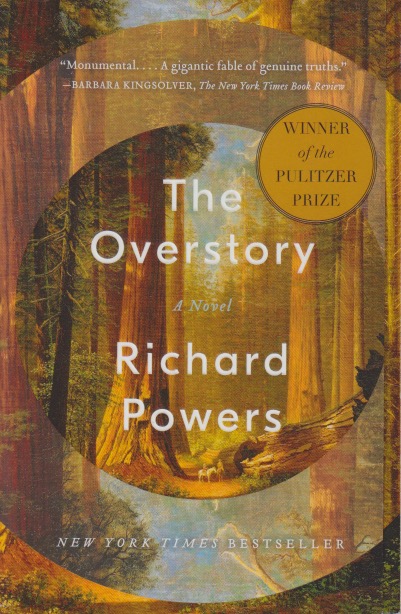
Despite my penchant for speculative fiction I tend to read a lot of what’s usually categorized as literary fiction.  These tales don’t fit into any genre and are often colored with realism.  More than one person had recommend Richard Powers’ The Overstory, not least the Pulitzer Prize committee.  In the style of novels these days it’s pretty long and that meant I had to build up the courage (and time) to get to it.  I support the environment.  I have a great respect for trees and try to support conservation any way I can.  The Overstory is, however, a bleak vision of what we’re doing to the planet and to other living beings.  It certainly helps to have read Peter Wohlleben’s The Hidden Life of Trees first.  It helps to know the main premise of the novel is based on non-fiction.  There may be spoilers below.

The first part of the book, Roots, introduces us to the various characters—most of whom will interact in the remaining pages.  Most of them are marked by tragedy in their lives and come to realize the longevity of trees has a perspective that can make sense of what, to our lifespans, seems inexplicable.  Several, but not all, of them end up in a conservation group trying to defend old growth redwoods from the insatiable greed of lumber companies and politicians.  The novel ends happily for none of them.  Trees, however, have the ability to outlive us.  While we cause real damage, they have the ability to regenerate, but in ways that none of us will live to see.  Trees see beyond the short, tragic lives we lead, into what may be a more hopeful future.

The other sections of the book, Trunk, Crown, and Seeds, follow events chronologically as the people age.  Some notable deaths among the group have a great impact on the small coterie of those protecting trees.  An unfeeling state and the corporate nature of laws are clearly on display.  They serve the will of those who can’t, or won’t, think differently about the world and our place in it.  Although the novel doesn’t ever cite the source, one of the eco-heroes finds a verse from Job to be of tremendous consolation: “For there is hope of a tree, if it be cut down, that it will sprout again, and that the tender branch thereof will not cease.”  I was glad to see the connection made, but the book left me emotionally exhausted.  With speculative fiction at least you can escape the real problems of this world for awhile.


Wondering about Fall

I’m not a professor, but I play one on—no, wait—wrong commercial.  I’m not a professor, but I used to be.  Now as the spring semester, which ended remotely, is winding down all over schools are asking what they should do in the autumn.  Should the fall semester—the great migratory event of the human species—be virtual or actual?  We know the coronavirus will still be lurking out there, and we know that colleges mix people from all over the world, which is one of the real essentials of education.  I try to picture myself teaching to a classroom of masked faces.  I try to envision frat parties with social distancing.  I try to imagine the dining halls where students are packed in closely together, handling knives, forks, and spoons that others have touched.  I think and shudder.

I know some younger folks.  They tend to trust certain internet personalities because they seem smart.  I’ve even occasionally asked what the qualifications of such personalities were only to receive an “I don’t know” answer.  This is among educated viewers.  Don’t get me wrong.  I don’t have my diplomas on the wall behind me.  I never even had them framed.  They’re still in the tubes.  I had to show my Ph.D. diploma to two recent employers even though I was hired by universities without ever having to unroll it.  That was back in the day when you could have face-to-face interviews.  Back when a bona fide degree from a world-class research university meant something.  Now economics are being weighed against wisdom.  It’s not a fair fight.

There’s a reason economics is called “the dismal science.”  With Malthusian overtones, we increase to the point of stressing our resources.  A disease breaks out and quickly spreads through our dense populations, but not our denser individuals.  We don’t want to be seen as uneducated, but there’s the great god Mammon to consider.  Funny thing is, back when I was still teaching schools like Rutgers had a difficult time getting tenured professors to train for online courses.  Why put yourself through the trouble when your job is already secure?  They trained adjuncts such as myself instead.  There was, to put it in economic terms, already a demand for online education.  But there are campuses to be maintained, and there’s only so much you can do at home with your own chemistry set.  And so we face the summer wondering how it will end.  It’s time for some critical thinking, but that’s above my pay scale.