Existential Searching

Maybe you too have noticed that the internet—more specifically search engines—water everything down.  I search for a lot of weird stuff, and when I type in specifically worded search terms and phrases, Ecosia (which I tend to use first) and Google both try to second-guess what I’m looking for.  Also, they try to sell me things I don’t want along the way.  It’s no surprise that the web was commercialized (what isn’t?) but it does make it difficult to find obscure things.  I don’t pretend to know how search algorithms work.  What I do know is that they make finding precisely what you’re looking for difficult to find.  Even when you add more and more precise words to the search bar.  Tech companies think they know what you want better than you do.  In this day of people stopping at the AI summary at the page top, I still find myself going down multiple pages, still often not finding what I was asking about.

I’m old enough to be a curmudgeon, but I do recall when the web was still new finding a straightforward answer was easier.  Of course, there are over 50 billion web pages out there.  Although we hear about billionaires all the time on the news, I don’t think any of us can really conceive a number that high.  Or sort through them, looking for that needle in a haystack, from Pluto.  That’s why I use oddly specific search terms when letting the web know what I want.  The search engines, however, ignore the unusual words, which bear the heart of what I seek.  They wash it out.  “Oh, he must want to buy breakfast cereal,” it seems to reason.  “Or a new car.”

Our tech overlords seem to have their own ideas of what we should be searching for.  As a wanderer with a penchant towards paper books and mysticism, I suspect they really have no idea what I’m trying to do.  Mainly it is to find exactly what I’m typing in.  They often ask me “did you mean…?”  No.  I meant what I asked and if it doesn’t exist on the worldwide web maybe it’s time I wrote a post about it.  It may take the web-crawlers and spiders quite some time to find it, I know.  50 billion is a lot of pages to keep track of.  Some of my unusual posts here are because I can’t find the answer online.  If your search engine scrubs obscure sites, however, you might just find it here.

Search Your Engines

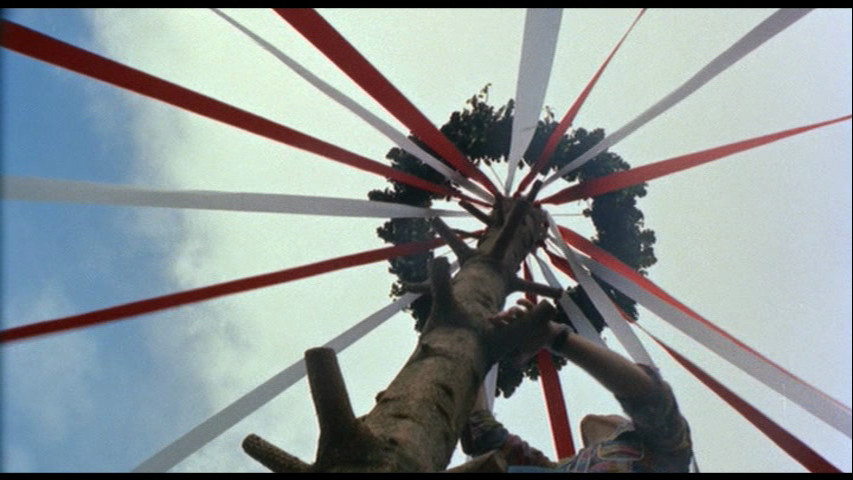
It’s been fascinating to watch.  We tend to think things appear instantaneously on the internet, and sometimes they do.  Book announcements, however, are less prone to that.  The Wicker Man, my book for the Devil’s Advocates series, was first announced to the world (apart from me) on Oxford University Press’s website because they distribute books by Liverpool University Press.  It took several weeks before it appeared on LUP’s site (I’m projecting here, it still hasn’t showed up there).  Like an anxious father, I checked every few days to see if word was getting out.  After about two weeks it showed up on Barnes and Noble’s website, but not Amazon or Goodreads.  Then it appeared on ecampus, a textbook seller.  Days later it appeared on Amazon’s site in Spain only.  Word gets out slowly.

Some things hit immediately, of course.  Everyone in the world knows about them seconds after they happen, whether they should or not.  Some young folks, who grew up with the internet, are having trouble letting go of the, well, troubles of the world that jet through the 24/7 news cycle.  Books by unknowns travel much more slowly.  Of course, I’ve been trying to reinvent myself.  In as far as I’m known, I’m known as an ancient Semitic goddess scholar.  (The ancient part is correct, in any case.)  I turned to writing about religion and horror about a decade ago and if web searches mean anything, my most searched book seems to be Holy Horror.  That makes sense since Nightmares with the Bible is so expensive that I can’t afford additional copies even with the author discount.  The Wicker Man will be up near forty dollars, but that’s cheap these days.  At least it will be paperback.

Maybe I have been checking more than I let on, but I’ve also noticed something else odd.  Ecosia, the tree-planting search engine, comes up with more results (based on the ISBN) than Google does.  That astonished me.  Google apparently isn’t as good at searching as it would have us believe that it is, at least for obscure information.  (In my case, very obscure.)  Ecosia even outperformed Bing.  With this internet full of stuff, you’re obviously missing out if you don’t use multiple search engines.  Yahoo added yet one more site with the book.  I’m wondering when the actual publisher, or Amazon’s main site, will catch up.  Giants do move slowly, I guess.  Maybe once the cover image is released…


Naming Conventions

Okay, I confess.  Every now and then I do it, but then, a lot of people do.  Perhaps because I’m trying to figure out who I really am, or perhaps because I’m looking for any reviews of my books, I search for myself online.  Various search engines (I prefer Ecosia) bring up different websites near the top, generally those with large numbers of hits.  I was surprised to find a website that gives away lots of personal information, even in the description so you don’t have to click on it.  One bit that caught my attention about myself was where it said “Steve also answers to Steve A. Miller.”  That’s incorrect.  My mother’s second husband was a Miller.  He never adopted us.  One thing that kids fear, however, is being teased and the name “Wiggins” came in for quite a bit of teasing in rural Pennsylvania.  We started using “Miller” since both our mother and stepfather used that name.

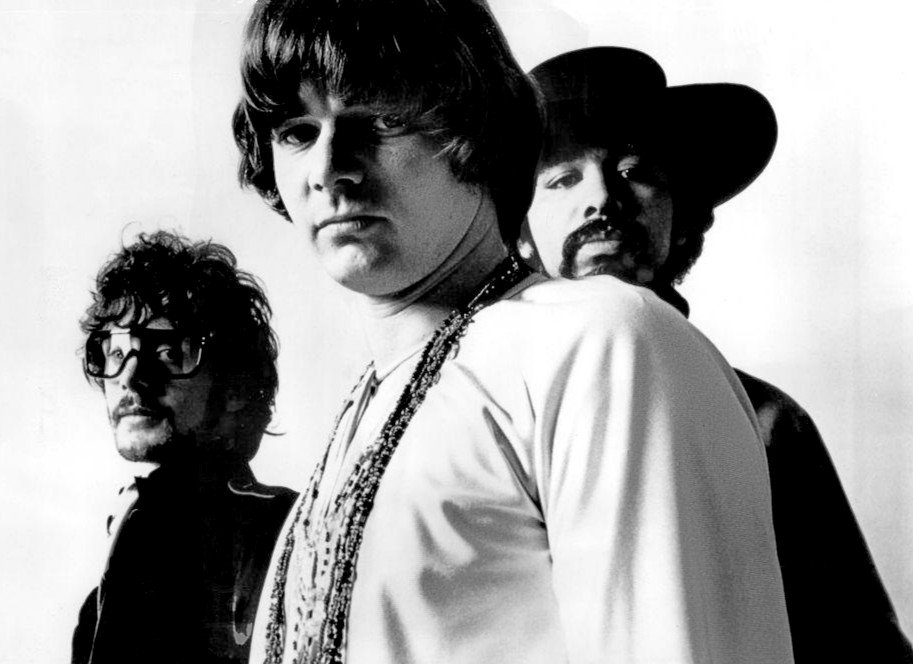
What is it with the singers? Photo credit: Capitol Records, public domain via Wikimedia Commons

Of course, I only later found out that “Steve Miller” was an up-and-coming pop artist at the time.  That singled me out for more teasing.  It didn’t help that I didn’t like Steve Miller’s musical style.  I still don’t.  I kept the name Miller up through seminary.  When I was preparing for ordination I was also rediscovering who I was.  A wise minister I knew told me that since there were two names out there for me, I’d need to nail down one to keep.  Although we’d only recently officially changed names to Miller, my brothers and I had to officially change them back to our birth names.  In a way perhaps inconceivable today, as I recall it, we simply introduced ourselves at our new schools (we had to move after the wedding) as “Miller.”  We registered for Social Security under that name, and nobody batted a lash.  Maybe we talked with an inexpensive lawyer at some point?

Only as an adult did I feel that my birth name was my heritage.  I suppose some of those who friend me on social media, who knew me in high school or college, wonder who “Steve Wiggins” is.  They only knew me as “Miller.”  Changing names is a pain.  I can understand, and support women who want to keep their “maiden” names.  It confuses our dowdy society even now, but one thing about marriage is that it generally involves two individuals.  But then I glanced down at the next entry.  This person, apart from living in a state where I’ve never resided, had even the same middle name as me.  Who’s the joker now?  I don’t answer to that name any more. And no, I didn’t find any reviews.


Eureka?

It’s weird to feel yourself becoming a curmudgeon.  Especially when it’s about technology.  Someone asked me the other day if I could send an audio file of something I’d recorded.  I stopped doing podcasts because I lost track of the server that had been hosting the files.  My “inbox was full” or some such nonsense—they’re just electrons, folks.  I’m already paying for the space to host this blog and one thing I know about audio files is they take up lots of space.  My laptop reminds me of that every time it wants to update.  Well, I recorded the requested audio file and wanted to send it along.  I couldn’t find it.  Now, I’m one of those people who started using Apple computers because they were intuitive.  You could easily guess, or reason out, where things were.  It’s not that way anymore.

I had to do a web search (use Ecosia!  They plant trees for your searches!) for where Macs store your audio recordings so that I could send it.  Buried deeply in a directory that has a nondescript name that you’d never possibly guess (it’s as if someone were to assign you Concluding Unscientific Postscript during a game of book-title charades), the helpful site said, you’ll find it.  It’s in your “Library.”  Well sir, Mac had decided that you no longer needed to navigate your way to your Library and that directory was hidden.  Another Ecosia search—more trees—and I learned that you could do a special preference tweaking (it only took four or five steps) so that your computer would display your own Library and you could find your renamed file that you’d created.

Back in the day (here’s the curmudgeon part) when you had to swap discs—floppies—and the computer had the memory capacity of a Republican senator, you knew which disc had your files.  To access them, you simply inserted the disc.  Later they were stored on the hard drive itself and the directory told you right where you’d find them.  Now who knows where your created content is stored—out there on a cloud somewhere, I hear.  That doesn’t help when a friend asks you to send a file.  I had no idea where it even was.  It’s job security for the tech sector, to be sure.  At least it helped me to plant some trees along the way.  Back in the day we used to say you can lose sight of the forest for the trees.  It works, it seems, the other way around as well.