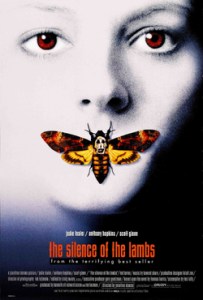
Silence Fright

the_silence_of_the_lambs_poster

One of my first publications was a letter to the editor. The newspaper was The Scotsman, Edinburgh’s daily. We’d been hearing on the BBC that a new movie, The Silence of the Lambs, had inspired Milwaukee serial killer Jeffrey Dahmer in his gruesome habit of cannibalism. For whatever reason, the Dahmer case had a real fascination for the British. My letter, a rather young attempt to promote an important cause, suggested that such movies could be very dangerous. In the many years since then I’ve read quite a bit about horror films and their effects on people and have come to the conclusion that they don’t cause the crimes. The reasons are much more complex than simply watching a movie since most people who see them don’t “go and do likewise.” When I told friends in Edinburgh that I’d found a teaching job in Wisconsin they said “hopefully not near where that cannibal lived.” Of course Nashotah House is not far from Milwaukee.

My personal embargo of The Silence of the Lambs ran up against my current research project, which involves horror movies. Thinking it over in what I hope is a rational way, I decided that I needed to see my bête noire. Besides, while living in Wisconsin I had learned about Ed Gein, the local serial killer who’d inspired Psycho, a movie I had seen with no ill effects while in college. Movies are as much a part of life as cars and taxes and all kinds of things that impact our ways of thinking. I was surprised at how well done Silence is and the number of references it had spawned that I had missed for the past couple of decades. It won’t be my favorite film, but I’m not afraid of it any more.

The concept of relying on a criminal to catch a criminal is a classic theme, of course. And since the release of this movie some which are much worse have come across the silver screen. We play our anxieties out for all to see. Hannibal Lecter, the cultured killer, is an ambivalent character—a savior criminal. There’s a strange comfort in knowing he has the knowledge to save lives as much as he has the desire to take them. In fact, there’s an element of the divine in that. The capricious nature of a power that has the ability to give and to take is one with which religions constantly deal. Yes, The Silence of the Lambs is a scary movie. The reasons, however, lie more with implications than with imitations.
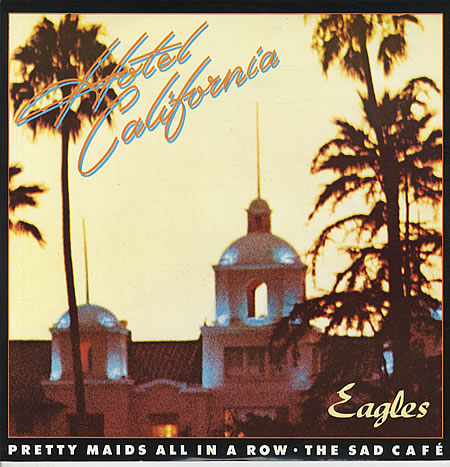

Hotel Nowhere

HotelCalifornia1977. I was in junior high school and I wore my hair long. I hadn’t yet donned the cross that I carried through my high school years with a constant fear of Hell on my back, but I did listen to the radio. The haunting song “Hotel California,” by the Eagles, scared me. There was something lurking there—something undefined and yet compelling. Cults were in the news, and after the People’s Temple suicide a year later, we were all pretty well convinced that the song was based on fact of some sort. Religious analysts concluded that the song referred to everything from the Antichrist (“they just can’t kill the beast”) to a New Religious Movement that had taken over a western mission (“we haven’t had that spirit here since 1969”). Members of the Eagles, when asked, said their intentions were to expose the darkness of the music industry as idealistic hippies came of age and realized, yes, it’s just business. Still, I shivered.

Nashotah House used to be on the frontier. Although it is only 30 miles from Milwaukee, it could still feel terribly isolated less than two decades after the Eagles had flown. Indeed, there were sotto voce suggestions that “Hotel California” should be the official seminary hymn. “You can check out any time you like, but you can never leave.” The nights could be very dark in the Wisconsin woods, and for those attuned to some of the more honest aspects of a religion based on exclusion this didn’t seem too far to stretch. “Hotel California” came forcefully back to mind reading about Oneiric Hotel in Wired. (Mentioning Wired makes me look smart.) The Oneiric Hotel is a lucid-dreaming device by artist Julijonas Urbonas, the kind of thing Wired finds newsworthy. The story mentions that Urbonas’s previous project—called Euthanasia Coaster—was designed to kill its passengers.

Now my mind checks into Bates Motel. I know Psycho is set in Arizona, but the desert southwest is terra incognita to an easterner, and besides, it’s just a metaphor. It looks like California to me. I saw Psycho as a college student, and was rather afraid to watch it while at Nashotah House. Indeed, the night I moved to campus I found a dog-eared script from a play about a murderous maid at the seminary left on my coffee table. “This could be Heaven or this could be Hell.” Psycho, it is asserted, was based on the macabre case of sociopathic killer Ed Gein who had roamed these self-same woods of Wisconsin, and who had died less than a decade earlier just down the road in Madison. There was, I knew, a psychiatric hospital just across the small lake that the campus bordered. We don’t call them cults anymore, but we all know what we’re talking about. There are indeed places that you can never check out, even if you leave.