An EAP

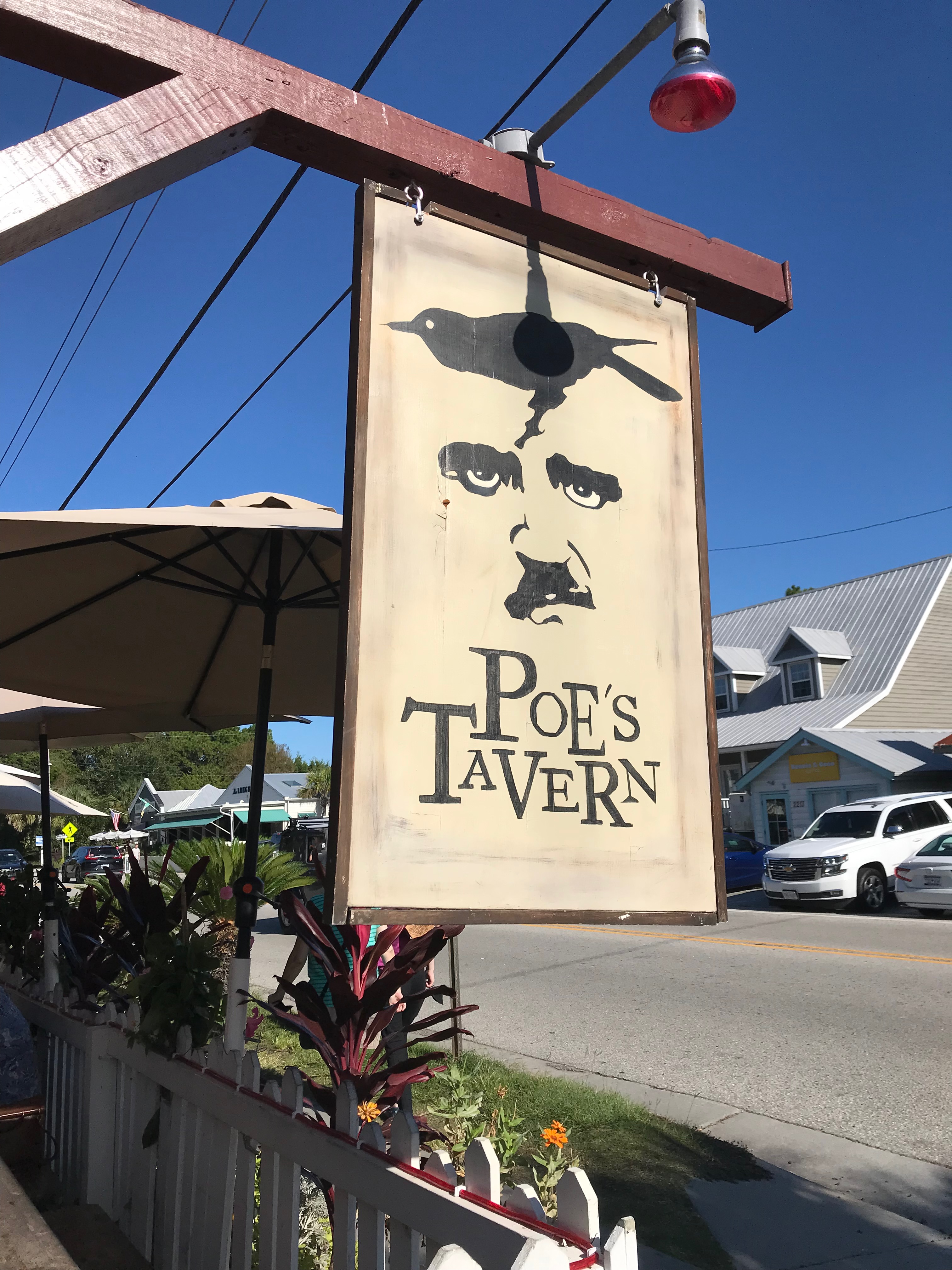
It may be superstitious, but one of the best ways to assure something else going wrong is to say, “I need something to go right just now.”  This year, since June, has been that way.  In the midst of dealing with everything, small moments of joy slip away—moments we want to hold onto during trying times.  One of the touristy things we did in Charleston—or Sullivan’s Island, more precisely—was to visit Poe’s Tavern.  We knew we had to grab a bite to eat there since Charleston is one of the many places to lay claim to America’s iconic writer.  Poe was stationed at Fort Moultrie, perhaps a mile from the modern tavern, in his short-lived military days.  His story “The Gold Bug” is set on the island, and it’s rumored “Annabel Lee” was about a girl he met in Charleston.  We’d wandered around the fort and were shortly to meet family for the gathering that drew us here.  But first we went to see Poe.

Poe himself never ate here—the establishment only dates back to 2003 (opened April 24)—but it participates in the mythology of Edgar Allan Poe.  We have followed Poe—who lived and died as a writer—along the east coast.  My family has visited his birthplace in Boston, his home in Philadelphia, his college dorm room in Charlottesville, his grave in Baltimore, and his Sullivan’s Island home at Fort Moultrie.  There are many more places to visit, and although much of this is mythology, that makes it no less real.

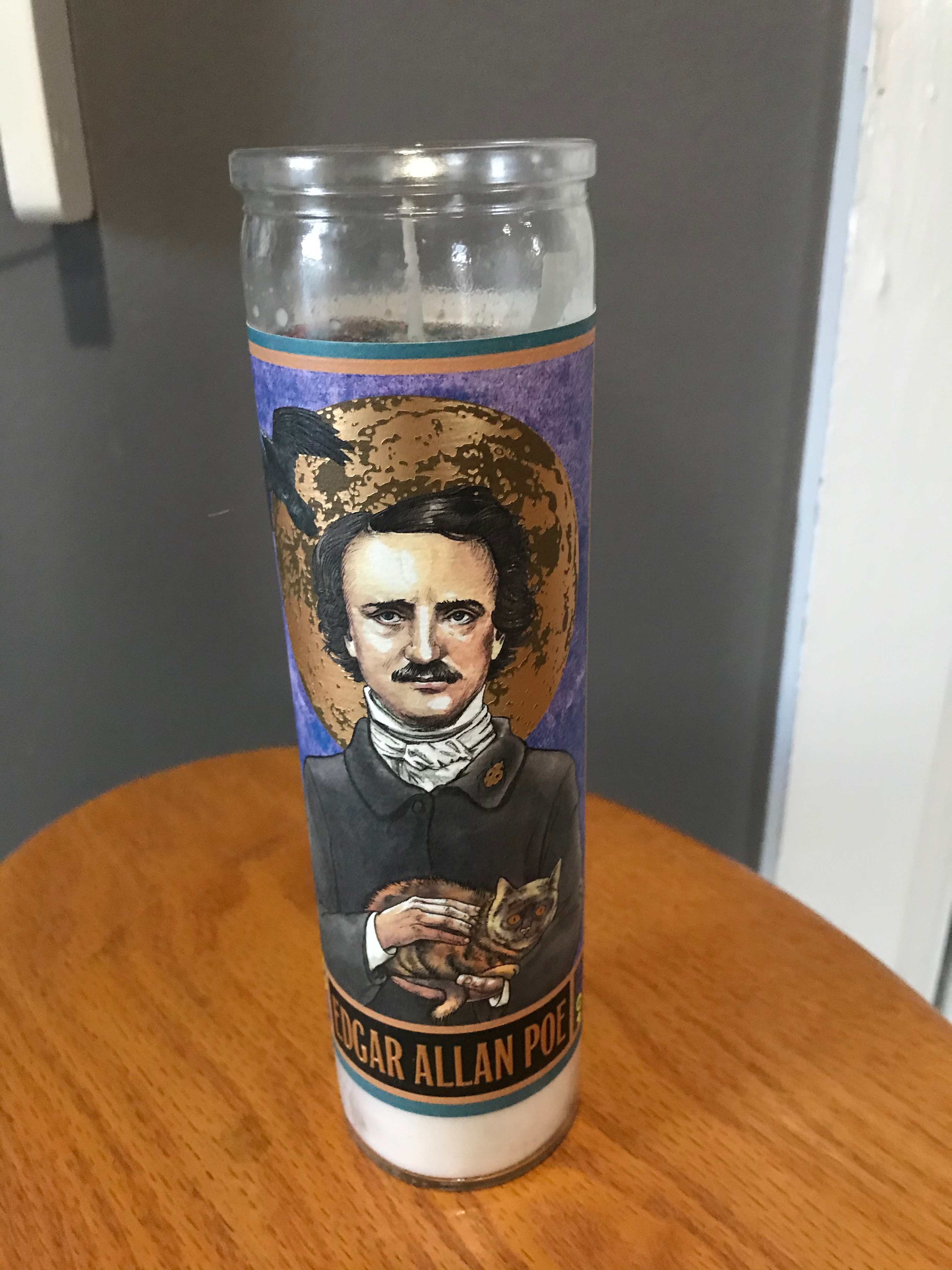
Poe is a controversial figure.  Both the anonymous peer reviewer and a named reviewer objected to my use of Poe in Nightmares with the Bible.  What they perhaps misunderstand is that books are deeply personal effects.  Something few understood about even my academic books is that they were intended as somewhat artistic pieces.  Holy Horror and Nightmares with the Bible are bookends, carefully crafted to go together (and both priced beyond the reach of regular readers, and not marketed at all).  Poe may well be the most recognizable American writer, largely because of an image that has taken hold.  The Poe Tavern has Poe-themed artwork throughout and it participates in that image.  It was crowded already around 4 p.m. when we stopped in for a nosh on a Sunday afternoon in October.  Such drawing power speaks to the mystique of Poe all these many years after his short life and strange death.  And of the fascination he holds for those of us who wish to write, driven by the same bug.


Poe’s Charleston

The first thing that came to mind, apart from family, when I learned we were coming to Charleston, is Edgar Allan Poe.  I learned about Poe from my brother at a young age and he may be the earliest author I recognized.  Over the years I’ve visited his birthplace memorial in Boston, his college dorm room in Charlottesville, his house in Philadelphia, and his grave in Baltimore.  I did visit Richmond a quarter century ago, but I had a migraine that day and couldn’t think straight.  When I heard “Charleston,” I immediately recalled that Poe had been here.  He was stationed at Fort Moultrie on Sullivan’s Island, not far from where we’re staying.  As in many cities that Poe called home, he’s become a favorite son of Charleston.  I knew we wouldn’t be able to see all the haunts—I don’t think the larger family shares my fascination—but we got a start before the reunion began.

The first stop was the most tenuous.  Rumor has long had it that Annabel Lee, of Poe’s last complete poem, is buried in the cemetery of the Unitarian Church.  The cemetery is renowned for its flora, which are kept largely untrimmed to match original wishes.  It proved an atmospheric place even on a sunny day.  Then it was a trip to Fort Moultrie itself, where Poe would’ve wandered as a young man.  The thick walls and largely subterranean emplacement would’ve been impressive in the days before modern warfare.  In fact, with the large military presence here, war seems an accepted fact of life.  We didn’t have time to find the Edgar Allan Poe Library, but we were honored to eat in his presence at Poe’s Tavern.  This spot makes it into travel books not because Poe ate here, but because its decor is all Poe-themed.

This journey has been a voyage of discovery.  Our first night in Charleston I had probing dreams about my father.  They actually began a couple days before our flight.  Like Poe, my father had a problem with alcohol.  Like Poe, I never really knew him personally.  Although Joseph Campbell’s overblown, I believe he’s right that the hero’s journey is the search for the father.  Critics sometimes complain that they don’t understand my integration of Poe in my nonfiction books on horror films.  My only defense is that something deeply personal is going on.  This odyssey began over half a century ago, in my childhood, and coming here, I knew that I had to meet the man and claim my heritage.


Ravens and Autumn

In need of some diversion, and seeking some way to celebrate the equinox, we made our way to Mount Gretna.  With a population of less than 300 souls, Mount Gretna is remote and an area of natural beauty.  But that’s not why we’re here.  Each year the Mount Gretna Theatre—housed in an open-air playhouse—puts on an Edgar Allan Poe performance in the autumn.  I’m not sure if it’s always titled “Nevermore,” but it is this year.  And it’s a fine evening for an outdoor performance.  The show is a walking tour of seven Poe vignettes.  A guide starts the evening by telling us a murderer is on the loose and Dupin (for Poe invented the detective story genre) warns us to trust no one.  I’m thinking this will be a murder mystery, but the first vignette is adapted from “The Fall of the House of Usher.”  My favorite short story, I smile at the choice.

The next venue—we’re walking around the parameter of the playhouse now—is from “The Masque of the Red Death,” which has taken on new significance with Covid.  These, by the way, are single actor vignettes.  We’re then led to a saucy woman who performs “The Black Cat” with a subtle humor.  As she’s led away, a madman leads us to a corner of the building where he retells “The Telltale Heart,” and you begin to realize just how much Poe wrote about revenge and guilt and murder.  We’re then led to the only two-person vignette for a retelling of “A Cask of Amontillado.”  A haunted young man crying “Lenore” next recites “The Raven,” from which the evening takes its name.  The final vignette is the only unfamiliar one in the lot, based on Poe’s humorous—if politically incorrect—stories, “How to Write a Blackwood Article,” and “A Predicament.” (Set in Edinburgh, no less.)

It’s a beautiful September night in a delightful wooded setting.  The fact that it takes some effort to get here is part of the draw.  The actors clearly enjoy themselves and the stories are told in such a way that it doesn’t matter that we’ve read them all before.  Once back home, I learn that the playhouse is in a borough founded by the Chautauqua Society.  I think how times have changed and that it was quite a world that supported adult education institutes.  Chautauquas are found around at least the rural parts of the country.  Founded by a Methodist minister, Chautauqua was a wholesome competitor to Vaudeville, offering entertainment as well as education.  I feel I’ve been both educated and entertained as we climb back in the car in a Pennsylvania night on the eve of the autumnal equinox.


End the Stigma

I’ve been a lifelong fan of Edgar Allan Poe.  I bought books about him (and by him) from a young age, fascinated by a person who expressed himself so beautifully in the face of trauma.  Of  a different era, and mindset, was Rod Serling, creator of The Twilight Zone.  Another childhood hero of whom I made the assumption of some trauma.  One thing interesting about both of these influential writers is that relatives have written about them claiming that they weren’t as haunted as they seemed.  I wonder, however, if they write such things because we still, we are still stigmatizing trauma.  We’re great victim-blamers.  Perhaps it’s because we want to distance ourselves from the scary forces at play.  We fear that unhappy master, whom, in Poe’s words, “Unmerciful disaster followed fast and followed faster.”  We don’t want to attract such things to ourselves.

Reflecting on my father recently—I didn’t know him well at all—I was thinking about his experience in the Korean War.  I don’t know what happened to him there and I never had the opportunity to ask him about it.  But I do believe that, like Rod Serling, he may have been traumatized by combat.  War leaves trauma in its wake.  Few, I suspect, come out of such situations without deep scars that haunt them the remainder of their lives.  And still we fight.  I knew, already at a young age, that I could never be a soldier.  This despite growing up with G. I. Joe.  Some of us spend our lives trying not to harm others.  Trauma follows on from that since the world has its share of unmerciful disasters.

There are those who claim Poe wasn’t the experiencer of doom and gloom about which he wrote so eloquently.  He lost those close to him to disease.  Even now there are many stigmatized diseases.  That’s one of the reasons employers are insistent that conditions suffered by employees not be revealed.  Our whole medical privacy mindset plays into the stigmatizing those who face illness.  Tuberculosis was only one of many widespread diseases during Poe’s life, and it’s still widespread in parts of the world because companies like Johnson & Johnson and Danaher price gouge the well-understood cures to maximize profits.  And we blame the victims.  I return to Poe at intervals in my life.  I also watch episodes of The Twilight Zone.  And I think of my father.  There is trauma in the world, and some of it, at least, is preventable.  We must stop blaming the victims.


Finally, Therapy

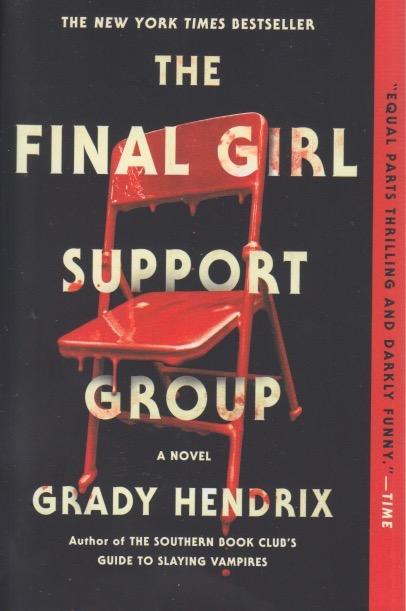
Like religion and horror, humor and horror can also get along well.  As an aesthetic, it’s not for everyone, but Grady Hendrix does it well.  It took some convincing for me to read The Final Girl Support Group.  I’d read one of Hendrix’s nonfiction books and was impressed, and that led me to his fiction.  It also demonstrates how an academic might actually be able to make a difference.  As you might guess, the novel features “final girls” from several fictional events, made into fictional movies, who get together for therapy.  It’s a funny idea and yet it’s not.  Hendrix clearly wants women to be treated fairly, but he’s also clearly a horror fan.  It’s sometimes a tricky balance to hold.  He does it pretty well in this novel.

The idea of a “final girl” comes from Carol Clover’s crossover academic book, Men, Women and Chain Saws.  This is the book that introduced the concept to the world.  As with most analytic concepts it’s only an approximation.  Clover noted the way that, in slasher films, the only survivor tends to be the virginal girl who doesn’t join in substance abuse.  Since the slasher genre is usually first credited to John Carpenter’s Halloween (Hendrix suggests in his acknowledgments that it’s Psycho), I’ve always wondered because Laurie Strode does take a toke in the car and we’re not really told much about her dating life.  I’m not a big fan of sequels, so maybe I’m missing something.  In any case, slashers have never been my favorites, and as sexist as it might sound, Poe’s observation about threats to beautiful women is something the “final girl” relies heavily upon.

The novel itself is pretty gripping.  I’m not going to put any spoilers here.  I was reluctant to read it but I’m glad that I did.  It’s classed as “horror” because of the theme but there’s definitely a lot of literary finesse as well.  It’s the kind of thing that doesn’t really seem to be deep, but upon reflection, it has more to say than you think it does.  The resolution of the novel is messy.  I suppose that’s one thing that makes it literary.  The characterization is amazing well done.  I had trouble keeping track of the back stories of all the final girls but that’s part of the fun.  While there are definitely horror moments, Hendrix never lets you forget that you are supposed to be laughing too.  It’s a fine balance and he manages to hold it together throughout while giving agency to final girls.


Living Through Writing

I’ve perhaps lived too long to be a great writer.  Of course, most of my fiction remains unpublished, much of it read and rejected by editors younger than myself.  I can’t help but notice that Poe died at forty and Robert Louis Stevenson at forty-four.  Emily Brontë at thirty.  All of them today considered literary geniuses, they caught publishers’ attention back when they weren’t such juggernauts as they are today.  Even the humble online literary magazine gets too many submissions and the editors advertise their quirky tastes.  Not that I’m any Poe, Stevenson, or Brontë.  I wonder if their awareness of the greater likelihood of dying young might’ve fueled their work.  Perhaps at a subconscious level.  I know, for example, that the pressure created by having to start work early leads to some of my own best writing, knowing, as I do, that time is limited.

Shortness of time is a great motivator.  One thing authors require is time, however.  If you roll out of bed, scarf down breakfast, then logon to work (how the world has changed!), you may have time at the end of the day but I’m so exhausted by work that I simply can’t produce anything at night.  I have to do my writing before the worries and pressures of work kill the inspiration.  I mean that literally—I can feel it dying as the worries of those seeking tenure, and the issues with which they surround themselves, suck the very vitality of my mind.  Serve and protect.  And although I’m not exactly old, I’m not young either.  I’ve outlived many and, to my way of thinking, it’s because I’m here for a reason.  It seems to have to do with writing.

You see, writing is a main identifier.  I was asked to take a survey recently by a group that wanted to identify people’s main sources of self-identity.  They asked about things like gender, race, sexual-orientation.  The usual suspects.  The survey wasn’t crafted, however, by a writer.  If it had been they’d have known that that is a category unto itself.  Those of us who write know that we are writers, whether published or not.  Whether famous or not.  It’s more than a profession—it’s an identity.  Sometimes we have to keep it quiet since those who hire others want the categories that identify themselves by to be race or gender or social status.  The writer may not be motivated by money.  Many work well but may not identify fully with their “job.”  They may, in fact, be watching the time slipping away and wish they were writing instead.


The Romantics

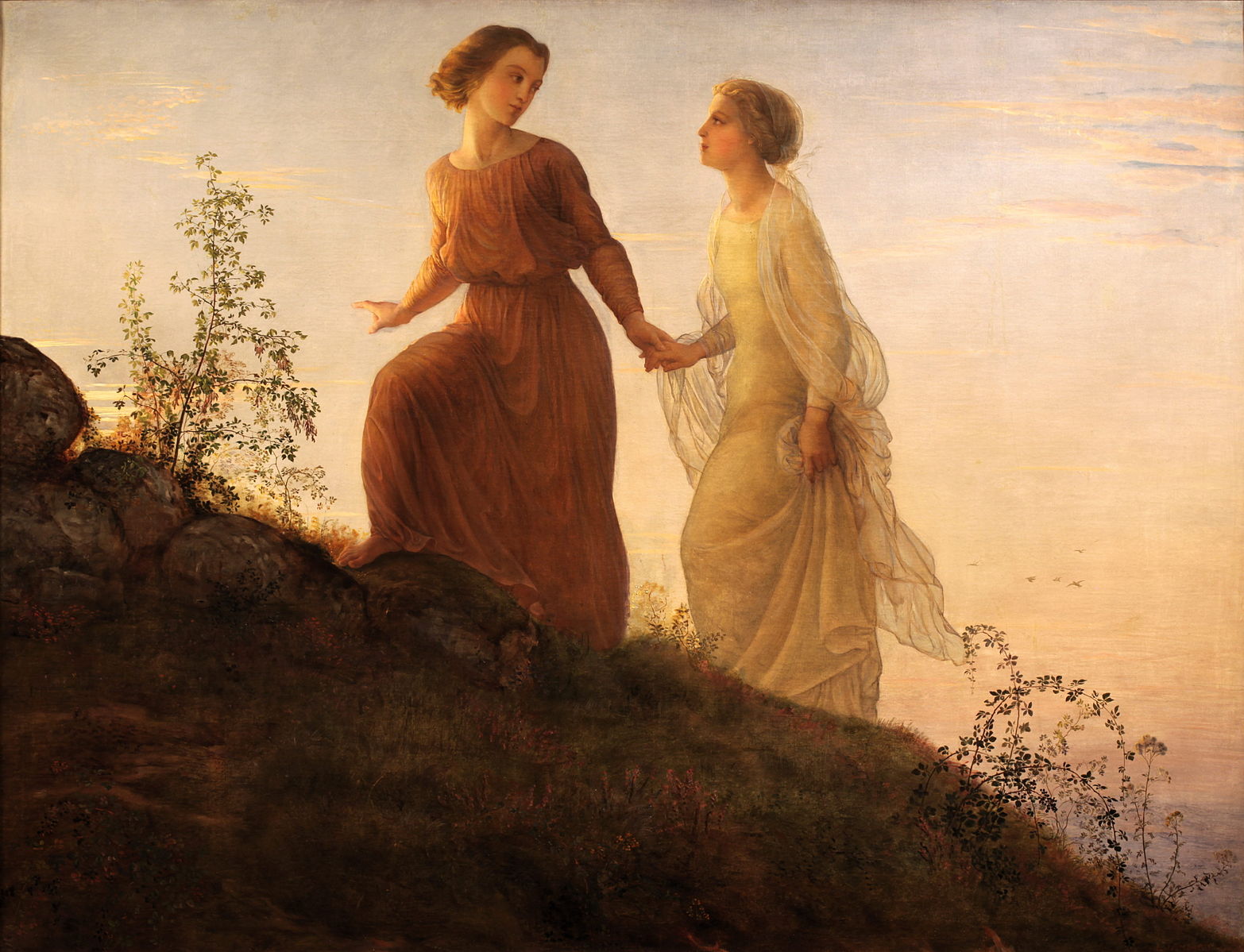
It takes one to know one—or so they used to say.  My current preoccupation has me learning about the Romantics.  This isn’t the same as “romance,” although both words derive from the Old French for “verse narrative.”  Novel, in German, is Roman.  In any case, Sir Walter Scott cordially embraced Washington Irving when the latter arrived unannounced at Abbotsford.  Reading the account in Irving’s own words, it sounds like a bromance, and some modern interpreters—inclined as they are to look for genital contact—have suggested Irving, a lifelong bachelor, might’ve been a homosexual.  Although there’s nothing wrong with that, I do wonder if it misunderstands the language of the Romantics.  To borrow a sentence from Andrew Burstein (more to come anon): “This had to do with intimacy, not sex as we understand it.”

I recently gave a talk about Herman Melville’s spiritual orientation.  I mentioned his close friendship with Nathaniel Hawthorne.  During the discussion period the question of whether they might’ve been lovers was raised.  I’d read this before.  I don’t know what went on in Melville’s bedroom—it’s none of my business—but I think the Romantics were all about intimacy.  We’re now familiar with the genre of bromance.  Guys, usually two, pairing off for pursuits of significance to both of them.  Or two women. I think of all the great same-sex pairings throughout literary history and wonder where we’d be without them.  Since our culture has long demonized sex, our mind is constantly creeping between the sheets.  Who touched whom?  Where and when?  Isn’t intimacy enough any more?  Where’s the Romance?  I’m no prude, but I wonder if we misread sex and the Romantics.

Louis Janmot, Poem of the Soul – On the mountain, public domain (via Wikimedia Commons)

The Romantic Movement produced the culture I taught myself living in a run-down house with no spending money.  I borrowed recordings—actual records—of Beethoven symphonies from the library that I had to listen to with headphones because nobody else wanted to hear that kind of thing.  I read Poe.  I read about Poe.  Gothic, a subset of Romanticism, became my muse.  I had no intimate friends with which to share this.  Not until seminary—that place where such unusual, unspoken things occur.  Of course I was in Boston, the most Romantic of American cities with New Bedford to the south and Salem to the north.  To the east the boundless ocean.  We still read the Romantics.  We still read about them.  I can’t help but think we might misunderstand them.  Yes, Irving and Scott were together “from morning to night,” but thinking back to my own Romantic ideals as a teenager, I suspect they just talked.  Intimately.


This Way

The more I get to know myself—pleased to meet you, sir—the more I realize that my childhood was cobbled together from small but repeated exposures to my favorite things.  I knew Dark Shadows from watching a limited number of episodes and reading a limited number of cheap novels.  I knew Alice Cooper from just two of his albums.  And I knew Ray Bradbury from a couple collections of his short stories.  No doubt this is in part because we weren’t exactly affluent and I found my books, by chance, at Goodwill.  I had no way of collecting Bradbury’s oeuvre, and besides, I was trying to get to know Edgar Allan Poe as well.  I knew Bradbury as a short story writer, and that’s still how I primarily think of him.

I felt compelled to read Something Wicked This Way Comes recently.  Since I’m used to Bradbury the short story author, it felt overdrawn to me.  I know this is heresy.  Great horror writers point to this novel as highly influential and inspirational.  Maybe if it were read closer to when I was born, when it was published.  Too many long paragraphs, especially early on, contain almost abstract descriptions without clear actions, leaving me confused.  Once the story got underway it was quite good.  As someone who writes, I know the dilemma of trying to freeze poetry into prose, and to make a coherent story from thousands of separate impulses.  Believe me, I know.  These days such things are edited out and stories become as thin as Bradbury’s Skeleton Man.  I guess I’m just out of practice.

The plot is great, but it feels so 1950s.  So boy/male oriented.  So American.  I suppose I attended my fair share of carnivals as a kid.  We didn’t go often, and I never knew one to settle on the edge of our small town.  And although we were free to ride our bikes or run as far as we cared to, home was never that far away and, I knew, there were scary things in the ubiquitous woods.  Ray Bradbury’s short stories were likely the main source behind my own early attempts at fiction.  Even today I’ll be scribbling along and think, “this is kind of like Bradbury.”  But I always have his short work in mind.  There are some great parts in Something Wicked, and it does build the tension toward the end.  Still, when it’s said and done I’ll be thinking of Bradbury’s short stories and how they formed my own nostalgia, even if only in little fragments.


Pitfalls

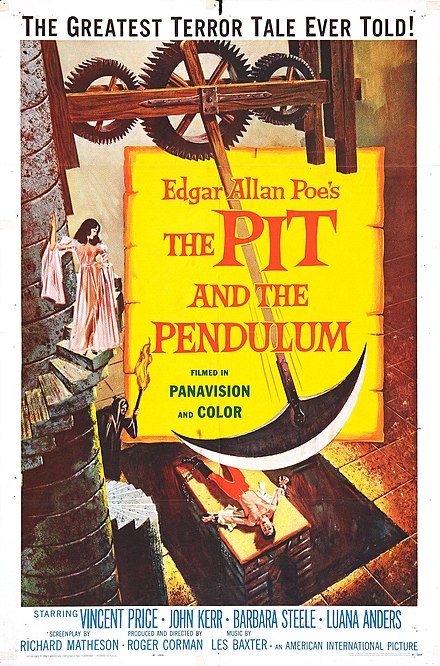
While watching Roger Corman’s The Pit and the Pendulum, it occurred to me that these movies have improved with age.  The series of American International Pictures’ Corman Poe productions do manage to capture a mood.  One of the reasons, I suppose, is that Vincent Price was an able, often underrated, stage performer.  No, these aren’t like modern movies.  They’re clearly fictional and the backdrops are pretty obviously fake and it always seems to be thunder-storming outside. They are going for a mood, and for those who watch films for the feelings they generate, this can work.  Although based—very loosely—on Edgar Allan Poe, The Pit and the Pendulum was screen-written by Richard Matheson, an able novelist in his own regard.

The Poe story hinges on the terror of the slowly descending pendulum and it has been used and reused in various guises over the years in everything from horror films to James Bond movies.  Corman’s Poe movies often set trends.  For example, in the backstory to Pit and the Pendulum, Nicholas’ (Price) father was a member of the Inquisition.  He kept a personal torture chamber in his basement—well, he lived in a castle, after all.  One of the victims of his father was Nicholas’ mother, an event the young Nicholas witnessed.  A very similar scenario, with even some similar shots, occurs in Tim Burton’s Sleepy Hollow.  I’m sure it must occur elsewhere as well, but in making a narrative of the story, this is my own unprofessional observation.

Yes, Corman is often over the top.  His films know they’re for entertainment purposes.  He’s not above camp and gimmicks.  The strange juxtaposition, in my own case, is that movies are meaningful.  Ninety-minutes to a couple of hours relieved from the constantly pressing demands of work and trying to maintain some sort of social life.  (And yard work.)  In ancient times, I suspect, myths served a similar purpose.  They still do.  Our myths have become more Technicolor over the years and have evolved from celluloid to pixels.  Their function has also evolved from escapism to a location of meaning.  On a recent weekend on my own I ended up watching five movies, feeling guilty between times for not painting the porch or doing that plastering that’s requiring attention in the attic.  The movies, however, give meaning to these other more mundane tasks such as work or housekeeping.  They’re not literally true, I know, but we need not disparage Roger Corman for stating the obvious.  Myths entertain as well as inform.


Aging Writers

The fact that V. C. Andrews didn’t have any success as a novelist until her late fifties (a benchmark that has already slipped for me), gives me hope.  Another thing I didn’t realize about Cleo Virginia Andrews is that she was confined to a wheelchair.  She didn’t want that fact advertised and she didn’t want peoples’ pity.  She wanted to write.  Many of the books published under her name were ideas she had but that were only brought to fruition by others after her death.  She became a legacy.  Writers are fascinating people.  I only recently learned that Anne Rice was transgender.  I had assumed from her public persona something that I had taken for granted.  Gender is a complex thing, no matter how loudly religions shout.  The sheer number of people born intersex should make that obvious.

Writers express the human experience.  Some perspectives aren’t really considered worth pursuing, as I know from personal experience.  But learning about writers’ lives always gives me hope.  There are those whose lives will always contain mystery—was Washington Irving homosexual or just inept with women?  What really happened to Edgar Allan Poe in Baltimore?  Who was Homer, really?  No matter how much those of us inclined to write do so, there are still huge swaths of life that are left off the page.  (Much of it boring, spent at work, or mowing the lawn.  I try to imagine Herman Melville on a riding mower, but I just can’t do it.)  Writing successfully involves a publisher or agent willing to take a chance on you.  But if you’re old enough to be a one-hit wonder (sorry John Kennedy Toole), they don’t see dollar signs down the road, so move on down to the next door, please.

I had a novel under contract a decade and a half ago.  It never materialized, so don’t look for it.  My nepenthe consists of learning about writers, whether one-hit wonders or not.  I can still look to the Frank McCourts, Laura Ingalls Wilders, and Harriet Doerrs of the literary world.  For most writers it’s the story of what happened before success that is the most compelling part.  Especially those who were older and just kept on trying.  Some had to die, ironically, before the world realized they had something important to say.  You can’t blame the world.  The world’s busy.  But the fact is nobody would remember what it was like if somebody hadn’t bothered to write it down.  So we continue to chronicle the human experience.


Lovecraft’s Palace

So, to see Witchfinder General I had to buy a set of Vincent Price movies.  Complex copyright deals mean that not everything can be streamed—there’s a movie I’ve been waiting months to see because Amazon Prime says “not currently available in your area.”  That word “currently” tells you that it’s a rights issue.  In any case, that box of Price movies contained a few goodies I’d never seen and had wanted to.  And one that I hadn’t heard of: The Haunted Palace.  Legendary producer Roger Corman had Price star in a variety of Edgar Allan Poe adaptations.  (Witchfinder General wasn’t one of them.)  Corman wanted to make an H. P. Lovecraft movie, but the studio insisted it stay within the identity of this Poe series.  This movie is an adaptation of Lovecraft’s “The Case of Charles Dexter Ward,” but titled after a Poe poem, “The Haunted Palace.”

Suffice it to say, I knew little of this before I sat down to watch it.  I didn’t know, for example, that this was the first big-time movie based on Lovecraft’s Cthulhu mythos.  I didn’t realize it would involve the Necronomicon and perhaps the first, blurry—to preserve the sanity of viewers—view of maybe Cthulhu.  The movie doesn’t specify which of the Old Gods is kept in this pit, so it could be Yog-Sothoth instead.  You see, as a child I watched some of the movies in this series.  They would’ve had to have been the ones showing on television, likely on Saturday afternoon.  The one that I clearly recall, and remember thinking “that’s not how it goes!” was The Raven.  And as a child I had never been exposed to H. P. Lovecraft.

Some of us have our own brand of cheap or free entertainment.  The small number of friends I had growing up didn’t care to read.  My family wasn’t literate, and most high school teachers couldn’t suggest much to a kid who’d somehow found Poe and liked what he read.  As I’ve said before, Goodwill was my bookstore.  I discovered Lovecraft on the internet during a lonely stretch of teaching at the University of Wisconsin, Oshkosh.  Like many visionaries, Lovecraft didn’t achieve fame in his lifetime, but is now considered a bizarre American treasure.  The Cthulhu mythos is everywhere.  Even my auto-suggest is quick to fill in his name as I type.  The Haunted Palace isn’t a great movie—this is Roger Corman—but it’s a pretty good movie.  And its history in the cinematography of Lovecraft makes it worth part of a Saturday afternoon.


Various Plagues

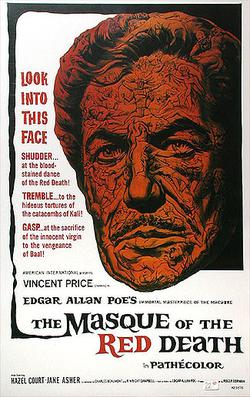
At the encouragement of a friend I watched Roger Corman’s version of Poe’s The Masque of the Red Death.  As I’ve mentioned from time to time lately, making short fiction into movies requires padding.  Poe’s tale is easily summarized: Prince Prospero and his wealthy friends attempt to socially distance themselves during the plague of the red death.  During a masquerade, one of the characters is the red death and they all succumb.  Getting about 90 minutes out of this was something to which Corman was well suited.  The interesting thing, and the reason my friend, I suspect, recommended it, is that Corman did so theologically.  Vincent Price’s Prospero is cruel to others to make them face reality.  He’s also, and not unrelatedly, a worshipper of Satan.

When the red death breaks out in a small village, Prospero holes up in his castle where he tries to win over a local girl that has caught his attention.  He’s drawn to her not only for her beauty, but for her faith.  Francesca believes in the goodness of God as strongly as he believes that Satan will welcome him.  The film is further padded out by blending it with Poe’s story “Hop-Frog.”  Despite the Corman hallmarks of quick production and low budget, this adaptation draws much from conflicting religious views.  In fact, this story centers on them.  Granted, this was in the sixties, but the ideas still resonate these decades later.  Rumors of Satanism still spread panic and spark the same kinds of discussions.

Interestingly, the film ends up suggesting that death is stronger than Satan.  And that justice dictates that at least some of the faithful will survive.  Those dedicated to their faith, their family, and their friends make it through alive.  Death specifically lets them go.  Prospero, however, seals his fate by his selfishness.  Apparently his explanations of his motives do him no good.  Death doesn’t condemn him for his devotion to Satan.  The treatment of his fellow humans, it seems, is the ultimate measure used.  Some would argue that theology is best left to theologians, but it seems to me that we all work with the same data.  Philosophers attempt to convince based on the power of their reason.  Theologians try the same, but there’s always something external and unknowable in the equation.  How you know this unknown is on the basis of sacred texts and sacred tradition, as well as reason.  Why does it seem unlikely that writers and directors might have something to add to the conversation?


Falling Usher

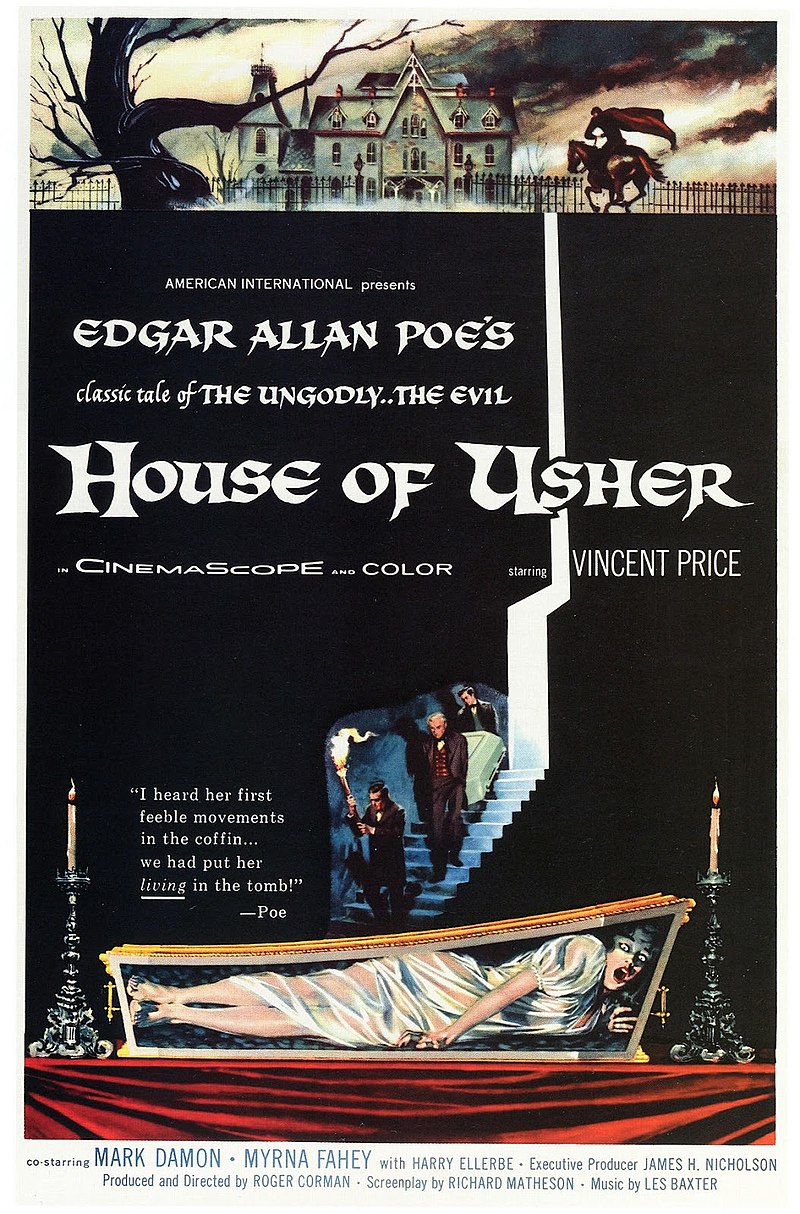
Roger Corman is a name well known to film buffs.  The producer of many low-budget, obviously cheaply filmed movies shot over a matter of days, his early career was prolific.  Often working in genre films, he directed horror (among other projects), occasionally drawing on Edgar Allan Poe.  The problem of adapting a short story to a length required for cinema release could be solved in a number of ways, but padding out the story was common.  I had only a few minutes to watch a horror movie over the weekend, so I pulled out a Vincent Price collection I’d bought some time ago.  A number of them are Corman films and I may have seen them when I was younger, but if so the path recall is completely eroded.  I decided to watch The Fall of the House of Usher.

This story by Poe remains my favorite for its sheer moodiness and imagery.  The premise is brief and the action little.  I knew Corman would have had to have changed quite a bit.  It turns out that he’d brought Richard Matheson in as the writer.  Many films can be made or broken by the writer.  While it doesn’t improve on Poe it is certainly a watchable effort that develops a mood in its own right.  The low budget is evident, but despite that the story is a slow build using many of Poe’s famous concerns such as premature burial and isolation in dangerous locations.  While not scary in the same way as modern horror, and stretched out by a dream sequence and overture, it nevertheless works.

Given my particular angle on horror, I noticed the introduced religious aspects.  While identification is difficult due to the lack of focus, there seem to have been two large, iconic Bibles in the story.  Indeed, the Ushers have a private chapel in which Roderick prays over his dead (?) sister.  The curse of the Ushers has to do with family evil that is being punished, causing Philip Winthrop to quote the Bible in his denial of the passing down of divine wrath.  The paintings of the Usher ancestor as Roderick explains this are the scariest part of the movie.  Not all Corman adaptions of Poe work well, but with the ministrations of Matheson and the rich ground for development from the original story, this is an atmospheric contribution to early horror.  And it works if you only have a few minutes on a busy weekend for your favorite avocation.


Quiet Company

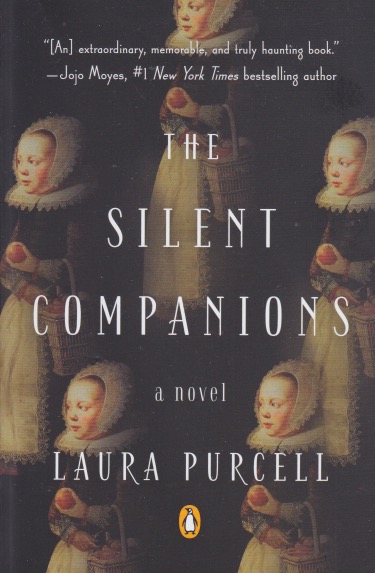
Even as a lifelong fan of speculative fiction, some of the most effective horror is that where a reader is kept guessing.  One of the acknowledged masters of this is Henry James, whose The Turn of the Screw is considered a classic.  There are perhaps too many writers active today to predict who will be considered authors of classics a century or two down the road—writing has to take a long view.  Nevertheless Laura Purcell’s The Silent Companions is, in this reader’s opinion, quite effective.  And ambiguous.  I’m on the constant lookout for gothic novels that work and this is one that surely does.  I’ll try not to give spoilers here, but I do recommend it for those who want a gothic atmosphere.  It is also genuinely scary.  A great deal of this is because the reader is never quite sure what has happened.

The eponymous companions are decorative curios purchased to impress royal visitors in the seventeenth century.  Life-like cutouts of people, they are silent.  Throw in an old, sprawling house in need of repair and a widow who had abusive parents and who’s inherited resentful servants and you’ve got a recipe for an eerie atmosphere.  The novel splits its time between the nineteenth and seventeenth centuries, focusing on the former.  Elsie Bainbridge is a protagonist with many secrets, and not a few skeletons in her closet.  The house she inherited also has a past that included accusations of witchcraft and cruel masters interested in self-promotion.  Told from the point-of-view of the women in a patriarchal society, there is an authenticity to the victimhood even of strong women.

It would be difficult to tell too much of the plot without giving away some of the creepier moments.  There’s a lot going on here and although it’s not a short book it doesn’t drag the reader down with filling too many gaps.  It’s also a novel that allows imagination to outstrip rationality.  Good speculative fiction will do that.  Even some of Poe’s work makes the reader wonder just what is happening—is this in the mind of the observer or is it objectively real?  Think “The Tell-Tale Heart.” Literature takes us into such places and gothic literature does so with more shadows and ambiguity.  Throw in some betrayals, and keep a few well-placed secrets and the recipe is in place for a creepy novel that will keep you reading.


Sacred Sites

The sacred is hard to define.  Calling it “holy”is only to pass the buck, and I can’t get beyond the feeling that we need something more up-to-date than Rudolf Otto.  Something that takes into account what the religious world looks like in the next century.  No matter which direction we turn we run into undefinable words—numinous, heightened, transcendent.  Wonderful words that fail to capture the essence of the experience.  This has been on my mind because I’ve been thinking about sacred spaces.  No matter how secular we may be, we all know such places exist.  They may be places significant to large numbers of people, or to a set of one.  Perhaps there are many kinds of sacred spaces and many ways that they may be made so.

The place where a significant event in life took place, for good, is recorded in that way our brains have of switching into slow-motion, high-attention mode.  Were we not so secular we might say something spiritual was going on.  Pilgrimage sites worldwide are often associated with what’s interpreted as a religious event.  Those of us who weren’t there at the time feel compelled to visit.  To breathe the air of that place.  To linger in wonder.  Is there something still there?  I tried desperately to feel this when I visited the Church of the Holy Sepulcher in Jerusalem.  It was difficult with so very many other people there.  I went alone and I was thinking maybe something might happen.  Like what happened to me at the Church of All Nations next to Gethsemane.

As I was pondering this, many such sites came to mind.  The birthplaces or living spaces of great writers have always drawn me into such a reverie.  Standing in Poe’s house in Philadelphia, knowing that one of the world’s iconic writers saw these same walls, walked these same floors, but for him it was likely ordinary.  For the rest of us it’s something more.  Yet I’m no closer to defining it.  Thinkers like Otto had professions that included unstructured thinking time.  Many of us don’t have that luxury.  We feel the urge but the clock for our 925 keeps inexorably ticking, like the beating of the heart beneath the floorboards that make a place sacred.  Many of these places are far too personal to write about in a public place.  They await someone with the time and inclination to think on these things to give us to words to define them.