Cthulhu You Knew

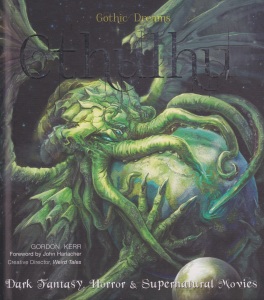
Humans tend to be visually oriented.  Arresting images stop us cold, causing us to focus on what we’re seeing.  As a tween I could be transported by large, lavishly illustrated, full-color books of other worlds.  While these went the way of Bradbury, I still sometimes recollect scenes that stopped me in my young tracks, making my juvenile mind wonder, what if…?  As an adult I realize “coffee table” books are heavy and a pain when you’re moving.  Printed on specialized paper, they have more heft than your mass-market paperback, or even most academic tomes.  Nevertheless, Gothic Dreams Cthulhu was a book that carried me, like a time-machine, back to my younger years.  Unlike in those days, however, I read the text as well as lingered over the images.  And I wondered about Cthulhu.

You see, I didn’t know about Lovecraft as a child.  The only reading regularly done in my family was Bible-oriented.  I discovered science fiction and gothic literature as a tween and, living in a small town, had no one to guide me in my choices.  Rouseville (the town pictured in the background on this website) had no public library.  My reading was left to my own, uninformed devices.  I discovered Cthulhu through my long fascination with Dagon.  I’d pitched Dagon as my dissertation topic, but settled on Asherah instead.  While teaching religion at the University of Wisconsin Oshkosh, I discovered Lovecraft, and Cthulhu, through Dagon.

Gordon Kerr, the author of Gothic Dreams Cthulhu, might be forgiven his hyperbole about H. P. Lovecraft.  Lovecraft was not a great writer—that’s not intended as any kind of slight, I hasten to add.  Classically, however, he didn’t have the level of literary finesse of Edgar Allan Poe, for example.  Still, Lovecraft created credible worlds.  His was a life of imagination—one might almost say divinity.  He was a creator.  Cthulhu has become a cultural icon.  With the magic of the internet bringing a writer still obscure to international attention, many people who never read horror fantasy nevertheless know who Cthulhu is.  Or they think they do.  As Kerr explains, the descriptions by Lovecraft himself are spare, thus the variety of ideas represented in the delicious artwork on every page of this book.  As Lovecraft earns more academic attention, surely others will notice the religious potential of the Great Old Ones that were, in their time, gods.  A guilty pleasure read, to be sure, Gothic Dreams Cthulhu fits well into this serious world of chaos we’ve created for ourselves.


False Memory

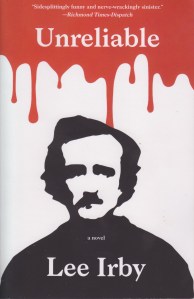
One of the reasons our recent loss of books hit me so hard is that each volume contains memories.  Among the more disturbing developments of memory studies in recent years is the fact that what we remember has a tendency to be unreliable.  In other words, our narratives about ourselves contains a good deal of fiction that we remember as fact.  Even if we write down our impressions shortly after an event, such scribbles are just that—impressions.  Lee Irby explores this dynamic in his novel Unreliable.  Now, since the narrator may be the most unreliable I’ve ever read, I don’t want to give away too much.  Irby knows what it’s like to be a professor (something that some of us share with him) and he has a good sense of Edgar Allan Poe.  It’s one of those books that touched on a number of things in my own life.  I think.

First of all, this was an impulse buy at Buffalo Street Books in Ithaca, New York.  I soon discovered why they stocked it.  Edwin Stith, the narrator, teaches at a fictional college in Ithaca.  The story, however, is set in Richmond, Virginia, where Prof. Stith has gone for his mother’s second wedding.  With characters compellingly drawn, he meets his new step-family, runs into an old-girlfriend, and tries to both avoid and hook up with a student of his that he’s dating, more or less.  He claims from the start, however, that we shouldn’t believe him.  The largest part of the story takes place over one feverish day following a very late arrival in town, with plenty of Poe references sprinkled throughout the tale.

Apart from the Ithaca and former professor connections, the book also mentioned, rather spookily, meeting a girl from Slippery Rock University—a rather obscure school from my old neighborhood.  I had dated a Slippery Rock co-ed who’d proved about as unreliable as our narrator, so this single, brief reference managed to jump-start some of my own memories, reliable or not.  Our pasts, along with the books we read, make us who we are.  I’ve lost track of how many times I’ve thought of a scene I’d supposed I’d forgotten from a book I’ve read years ago.  Just the other day I recalled, completely out of of the blue, apropos of nothing, a scene from a Doc Savage novella I’d read as a tween.  Was it a reliable memory?  I have no way to judge, I guess.  And that’s the scary part, as I’m sure Poe would’ve agreed.


The Maelstrom

Some monsters can’t be destroyed. Today is Edgar Allan Poe’s birthday. Poe had his demons, for sure, but the twentieth century took personal fear and made it universal. Atomic bombs and mutually assured destruction were concepts any of us born since World War II have lived under our whole lives. Kids in the 1950s were drilled in schools about what to do in case of nuclear attack. We didn’t have such drills in the ’60s, but the Fallout Shelter sign was still quite familiar and frightening in its frankness. There are people out there that want you dead, and we tend to elect them to positions of power. Duck and cover. It’s all in vain.

Then came peace. Ever so briefly. When I started seeing newspaper articles about what to do in the event of a nuclear attack—not in my childhood, but just this week—I shuddered. We’ve apparently made no progress at all. When we’re all decaying corpses glowing eerily in the night there’ll be no point in figuring out who’s to blame. A species as endlessly inventive as our own spends its time and resources on distrusting, hating the other. “They” might get what’s ours. The acquisitive mind trembles. You see, there’s no end to the things you can own. As long as anyone else owns anything you can always hope to get it for yourself. Say you read the Bible and evangelicals will forgive you daily for breaking the tenth commandment. Just don’t let those foreigners have it.

Poe imagined nightmare worlds. Most of his stories, however, were on the individual level. Our monsters, on the other hand, are international in scale. Radioactive fallout with its slow decay and devastating effects on frail flesh may be the stuff of good horror, but they make for decidedly poor governance. Perhaps it’s no wonder that this comes up under a president who ran on a platform of hatred. Last weekend the people of Hawaii lived through fearful moments that were all too believable with the incompetent pretender of Pennsylvania Avenue. A man who can’t keep his tweet shut and who gets away with offenses that would easily impeach a democrat. I grew up watching Godzilla, the famed radioactive dinosaur, rising from the oceans to remind us of the consequences of atomic sins. For the too brief era of Clinton we felt that the world might be safe at last from such monsters. Problem is, some monsters just can’t be destroyed.


Reading Preferences

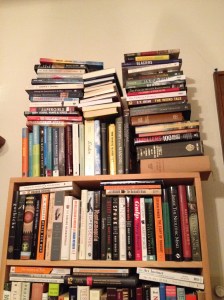
How do you decide on a favorite author? The question has been looming in my head as I’ve been reading through old novels on my shelves. It’s a question that strikes me whenever I walk into a bookstore. You see, my parents weren’t readers. As a child my literature was selected from the book table at the local Goodwill. I had no literary advice of ancestral pedigree. Teachers had assigned some books I’d liked, but nothing that really grabbed me. How was I to go about finding a favorite author? My favorite novel, hands down, was discovered in seminary. Moby-Dick is, to my way of thinking, the perfect novel. But I’ve never read anything else Melville wrote. I’d discovered Edgar Allan Poe as a child, but he was no novelist. Who suggested these books on my shelf?

Among those responsible was a young woman I knew when I was in college. She was in high school, but she’d grown up in an educated family and she was passionate about her authors. Thomas Hardy and Kurt Vonnegut, Jr. Were among her favorites. I was startled to realize that among the books I found myself reading as 2017 draws to a close were both Hardy and Vonnegut. A blast from the past. Then, of course, my wife has suggested many books to me. We still read together—a practice we started as newlyweds (today commemorates the start of that status, by the way, which occurred 29 years ago today). There’s an intimacy involved in sharing books.

For the past few years I’ve been participating in Modern Mrs. Darcy’s reading challenge. Since it involves only a dozen books it’s seldom a problem to finish it. We go to our local independent bookstore and seek advice. I encounter writers unfamiliar to me. I still struggle, however, with that favorite author question. As I lay down each book I say to myself—was that the best I’ve ever read? Maybe the point is that there is no favorite author. If I were to sit down and try to list everything I’d ever learned from the fiction I’d read, I’d never stand again. The list would be endless. The lingering longing after closing a book, feeling as if I’d just had an intimate evening with the author, requires a certain literary promiscuousness. I enjoy many authors in many different ways. More often than not, they have changed my life. I look forward to the reading challenge of 2018. No matter the disappointments of politics and human folly, I’ll have good books to read as the world wobbles onward with no particular goal in mind.


Literary License

Whenever I orient myself to a new place, I tend to do so by the writers who’ve lived there. As a family we used to take “literary trips” to visit locations associated with famous writers. While in the Midwest it was often Laura Ingalls Wilder, and once, Mark Twain. Here in the east there has been considerable diversity. Several locations associated with Edgar Allan Poe have informed our travel plans. H. P. Lovecraft (although, to be honest, we always had other reasons to be in Providence) naturally followed on from Poe. We visited the property of Edna St Vincent Millay in Austerlitz, New York, and later in the same trip Sleepy Hollow, to find the haunts of Washington Irving. Famous writers can be found in just about any major city and many small towns. Now that Ithaca is in our regular orbit, I’ve begun to consider the implications.

Carl Sagan is probably the most well-known of the city’s past celebrities. His premature death added an almost Gothic element to his fame. Certainly among the sphere of his fellow academics known for fiction is Vladimir Nabokov. An entomologist by trade, Nabokov turned to writing and teaching. His lasting renown in this field was for the novel he tried to burn before it was published, Lolita. Before I knew Ithaca would be in my future, and indeed, before I knew that Nabokov was either a former resident or an entomologist, I read the novel. It’s a challenging book. Humbert Humbert is as flawed a protagonist as one might find, and any character guilty of child molestation is difficult to read even in the protection of fiction. Perhaps that’s why the novel won such acclaim. The experience of men and women who read it, I suspect, is very different. It’s a novel of moral urgency.

In perhaps a more innocent time, E. B. White attended Cornell. Apart from The Elements of Style, his book-length oeuvre was mostly in the realm of literature for children. This brings the the focus back to youth. Our childhoods—whether we acquiesce to what fate seems to demand or challenge our lot hoping to improve it—make us who we are. As the years increase in number the memories become more fiction and less fact, they nevertheless remain the touchstone for anchoring our understanding of self. Some of us constantly measure ourselves against the future we clawed for as a child, like those pencil marks on the doorpost showing our physical progress. Having been unable to afford the luxuries of travel when I was young, I add a notch to my literary belt every time I travel to Ithaca, knowing full well that only the slimmest of minorities could find my very obscure hometown on a map. If I remember correctly.


Dark Lite

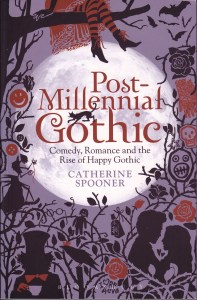
Maybe you’ve noticed it too. While certainly not universal, many forms of Gothic cultural expression (novels, movies, television, etc.) have a playfulness to them. As if taking the genre too seriously might be a misrepresentation. Even Edgar Allan Poe can be caught smirking from time to time. I’ve often wondered about this unusual combination of darkness and light. Catherine Spooner obviously has too. In Post-Millennial Gothic: Comedy, Romance, and the Rise of the Happy Goth she takes on a number of these cultural expressions—both Goth and Gothic—and tries to understand the lighter side that they often present. Sometimes it’s comedy and sometimes it’s irony, but those fascinated by darkness aren’t always as gloomy as they seem.

This book is a real hodgepodge of both British and American explorations of the smiling dismal. It’s a cultural contradiction, maybe, but it certainly feels authentic if you look closely enough. Although Spooner doesn’t discuss it directly, I couldn’t help but think of that great progenitor of the Gothic—the medieval church. Perhaps it was the very real fear of the plague and the nearly constant warfare of the time in Europe, but liturgy, when done right, has a palpable darkness to it. References to ourselves as “miserable sinners” begging God to “have mercy upon us” clearly call to mind some of the deeper elements of the Gothic sensibility. Having attended Anglo-Catholic services for years I came to know many who were compelled by this intensity. A Gothic chasuble is a thing of beauty forever.

Spooner, however, focuses on popular culture. Beginning with the Goth movement of the 1980s, a subculture formed that brought much of this darkness to light. She’s careful to point out that being Goth isn’t the same as being gloomy all the time. It is an expression of creativity, and, as Spooner notes, closely associated with Steampunk. Such things, however, require a recognition on the part of participants that in order to taken seriously, such expressions must become part of daily life. There are risks, however. Even in enlightened cultures we are not yet fully tolerant of those who are different. And really, much of the book is about this—accepting those who are not like ourselves. There is quite a bit going on here that’s beneath the surface. And depth is something the world could use a bit more of. There’s nothing wrong with having some fun while acquiring it, either.


A Dusty Return

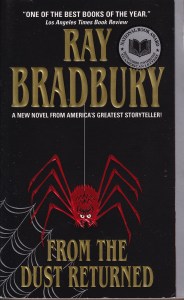
dustreturnedThe fiction author who had the most influence over my formative years was Ray Bradbury. Wait—let me qualify that a bit. I read of number of series aimed at juvenile, male interest (Doc Savage, Dark Shadows, and such) but these weren’t really intended as “literature.” I also read quite a bit of Poe, and his influence may certainly have rivaled Bradbury. The thing was the latter was still alive and producing books, mostly of short stories that tickled my imagination. Despite my reluctance to let books go, there have been several periods in my life where I’ve had to sell off my collection (this is the mindset of the non-affluent) and all of these childhood collections went, except for Poe. Now that I’m a more reflective adult, so I’m told, I have found a renewed interest in some childhood classics, and Ray Bradbury books are seldom expensive. When I found From the Dust Returned in a used book shop for a steal, I said “why not?”

This particular book came from long after I’d sold my Bradbury collection. I had never seen nor heard of it before. As an adult, interestingly, Bradbury doesn’t seem scary at all. From the Dust Returned, like many other Bradbury collections, is a somewhat novelized set of stories. This one is set in a haunted house where, in his usual descriptive style the storyteller offers artful prose and painterly writing, but no real scares. As we are coming upon Banned Book Week, however, I did note one of Bradbury’s common themes—the lack of belief leads to the death of characters. I’d read some of his stories where this took place before. Still, this time he goes a bit further. Tapping into things just ahead of the rest of us, as he had a talent for doing, one of his characters laments the loss of belief in religion as well as creepy, Addams-esque characters. People are no longer believing and it causes ghosts pain.

Part of Bradbury’s appeal is clearly to the young imagination. I’ve promiscuously read hundreds of authors since my last Bradbury book. My tastes have evolved. I find the same is true when I go back to the Dark Shadows books that were so cheaply had at my neighborhood Goodwill. I still go back to these early writers, however, and there is a kind of innocence about them. These were stories I’d read before I’d learned that Poe was certainly not as macabre as real life could be. “Marilyn Ross,” “Kenneth Robeson,” Edgar Allan Poe, and Ray Bradbury may not feature of lists of banned authors. Some of them aren’t even whom they seem to be. They did instill a childlike belief in reading, in my case. Even if they’re now on the bargain shelf they will still receive my admiration for starting a lifetime of reading.


Free Words

Just over a couple of centuries ago on this date, Edgar Allan Poe was born. That auspicious moment is an inspiration for those of us who write, and not just those of us who like scary stories. Poe was one of the first Americans to try to support himself by his writing—an occupation that has remained difficult to replicate and attain, even centuries later. There had, of course, been earlier writers. Mostly they wrote as an avocation to their jobs or they had family wealth, but Poe knew his own talents well enough to believe that writing was his occupation. He still stands out as an icon to those who are hopefully of making some kind of mark in the literary world. The surface is, however, much harder than we anticipate. It is like diamond, which may be marked only by another diamond. It is worth stopping to think of literature today.

DSCN2335

Over the long weekend, celebrating the human spirit in the person of Martin Luther King, Jr., I decided to read William Shakespeare’s King Lear. Probably not the source of as many famous quotes as some of the Bard’s other plays, it was nevertheless fitting as a tribute to writing. King Lear is sometimes cast as Shakespeare’s most thoroughly tragic works. The mood of misfortune hangs over the entire play. And although Lear is likely a fiction from the mind of Geoffrey of Monmouth or his sources, his name recounts the Celtic god of the sea, Llyr. Historians and grammarians tell us that Lear is not directly derived from the god’s name, nevertheless, there is a divine madness about the drama that unfolds as love and power vie for control in ages long past. In the present day the tragedy is that love seems no longer to be part of the equation and raw power is left to mark those who would be kings.

IMG_0969

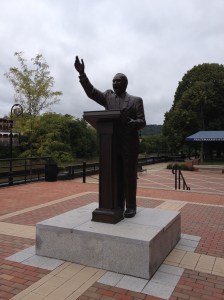
The holiday weekend afforded the opportunity to visit a local bookstore and to ask the owners what to read. It would give Poe, I’m sure, some hope to know that despite the difficulties there are those who still strive to live by their words. Indeed, it is difficult to conceive of a better way of celebrating freedom than to indulge oneself with the written word. Words lead to liberty. Although Poe’s life was short, and often tragic, Martin Luther King, Jr. lived to about the same age, and through his often tragic life, changed the world with his words. In this day of money hunger and electronic stimulation, it is good to set aside some time to reflect on the words that have made us who we are. Words are our ultimate freedom.


A Hollow Man

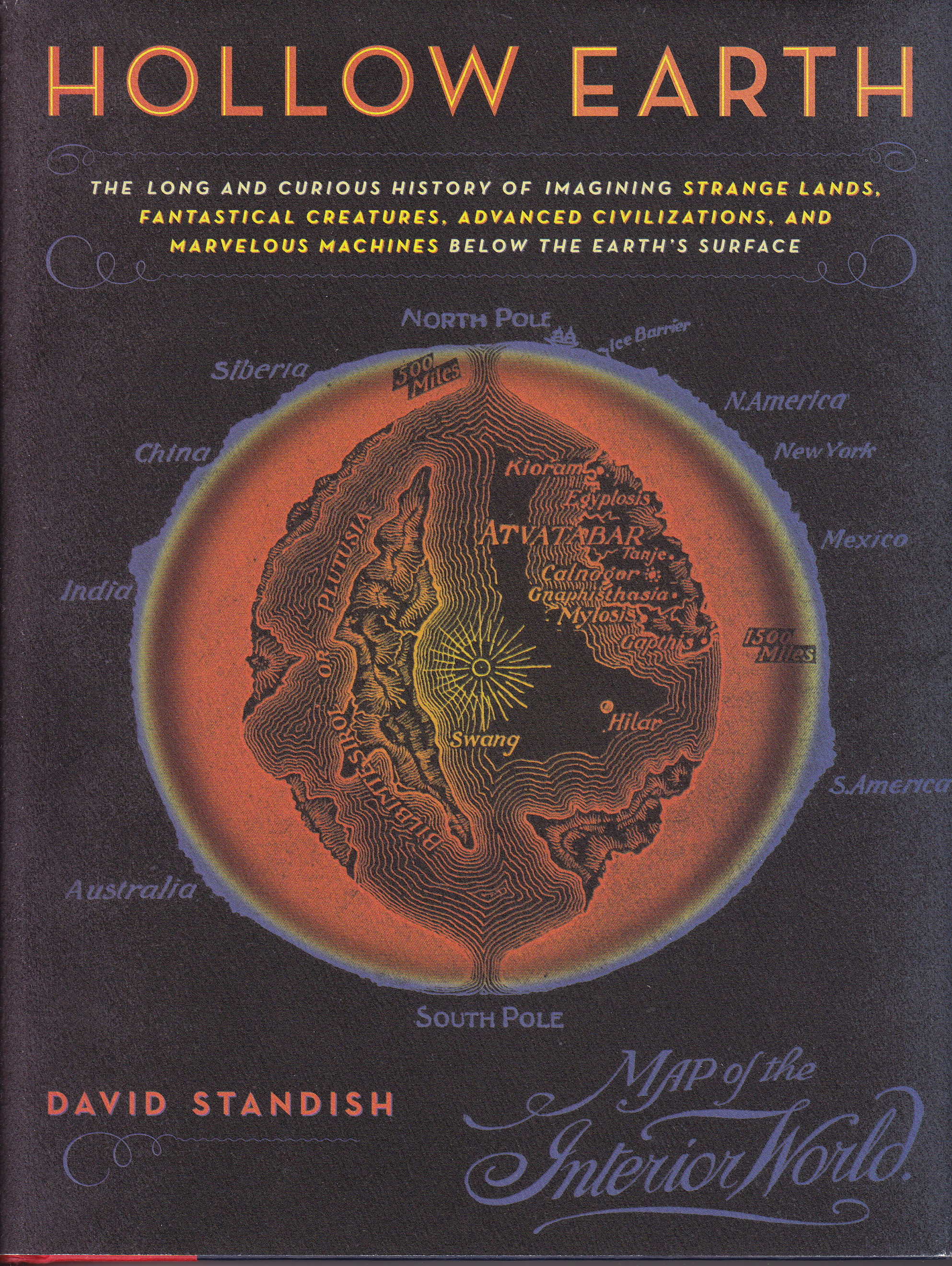
HollowEarthQuirky ideas stimulate the intellect. I’ve always had a fondness for the outré, those ideas slightly beyond the pale of normalcy. Sometimes taken dead seriously by intelligent people, these ideas have cultural staying power. David Standish’s Hollow Earth is a cheeky tribute to those who’ve taken the idea of the underworld to literal and literary depths. Ideas that the world might be hollow have been around for some time. Not everyone, it seems, was convinced by Copernicus and Galileo. Standish traces the more modern exemplars of those who have, with stone-faced sincerity, declared that the earth is hollow. Of course, some, such as Edgar Allan Poe, were hoaxers, but they were building on those who appear to have seriously believed it. The character after whom the mythical polar entrances to the world inside is named is John Cleves Symmes. An otherwise rational fellow, it seems, Symmes decided that the earth was like a globe and that a world much like the outside awaited those intrepid enough to get to the inside. There would be light, plants, oceans—a veritable paradise found within the earth. This strange idea survived Symmes and even the exploration of the poles could not dissuade those who believed large caverns, fed by warm, arctic oceans, awaited those who would patiently explore.

Standish notes the womb-like ideals of many of these thinkers, twisting fictional accounts together with the more deluded factual kind. In popular, and not so popular, fiction the hollow earth had a particular resonance. Jules Verne and Edgar Rice Burroughs were among its most ardent fans, using the literal underworld as a setting of strange realms. Others used the hollow planet as the location of a kind of utopia, unspoiled by humanity. Unspoiled, that is, until people arrive on the scene and do what they inevitably do to paradises. It’s in the news every day. Even Alice in Wonderland gets a nod here, as she does fall an awfully long way down that rabbit hole. Fiction writers have made a boon of this bogus idea.

The most interesting, to me, character in this story is Cyrus Reed Teed. A denizen of the Burnt Over District in New York, Teed restyled himself Koresh (yes, there were others) and made the hollow earth one of the doctrines of his new religion. Distantly related to Joseph Smith, his new faith was not as successful as that of his cousin, but nevertheless, Koresh did manage to gain a following of a few hundred and establish a compound to himself where he influenced local politics to his wishes. The story has a sad ending, however, as local ruffians (including the sheriff, like in a bad western) roughed him up so badly that as an older gentleman he died perhaps as a result of his injuries. His movement fell apart and the world grew solid once again. The world really has no place for dreamers, and yes, at such times it seems to be made of very unyielding stuff indeed.


Christian Horrorshow

Books & Culture is the review organ of Christianity Today. Christianity Today is the evangelical answer to the more liberal Christian Century. Working in publishing, particularly in the field of religion, it is important to keep an eye on what the popular magazines are saying about our books. Well, neither is as popular as it used to be, but still. I’ll grown used to Books & Culture taking a rather wholesome reaction to books that challenge worldviews. In fact, it’s not unusual to find a fairly mild tome castigated as somewhat insidious. Negative reviews tend to sell books as well as positive reviews. Sometimes better.

I was a bit surprised to see a two-page spread in a recent edition of Books & Culture focusing on horror stories. Horror and evangelical generally don’t play well together. Well, maybe I should temper that a little bit. The first article was actually on Shirley Jackson, best known for her excellently moody The Haunting of Hill House. That particular book has spawned or inspired at least five scary movies, two of them versions of the book itself. I have to confess that this is the only Shirley Jackson novel I’ve read. The article, somewhat strangely for an evangelical magazine, had made me want to explore some of her other offerings. Horror doesn’t have to be splatter to be effective.

DSCN0216

The second review in this issue was for an Oxford anthology called Horror Stories. The reviewer, Victor LeValle, also comes out with a positive review of the collection. All of this makes me wonder if I missed something growing up as a conservative Christian who felt distinctively unsavory because his love of monsters and the macabre. I can’t remember ever not liking mild horror stories. They manage to evoke parts of my psyche that most other literature bypasses. I discovered Poe at an early age. That’s not to say that I like being afraid. Fear is not what I’m seeking here. It is a kind of strange redemption. In college many of my evangelical friends couldn’t understand my fascination. “Why don’t you watch something more uplifting?” I’d be asked. I was as surprised as anyone when one of my very few Grove City dates agreed to see Nightmare on Elm Street with me. Not even Shirley Jackson could’ve seen that one coming. I wonder how she’d respond to being written up as an evangelical inspiration?


Washington Irving

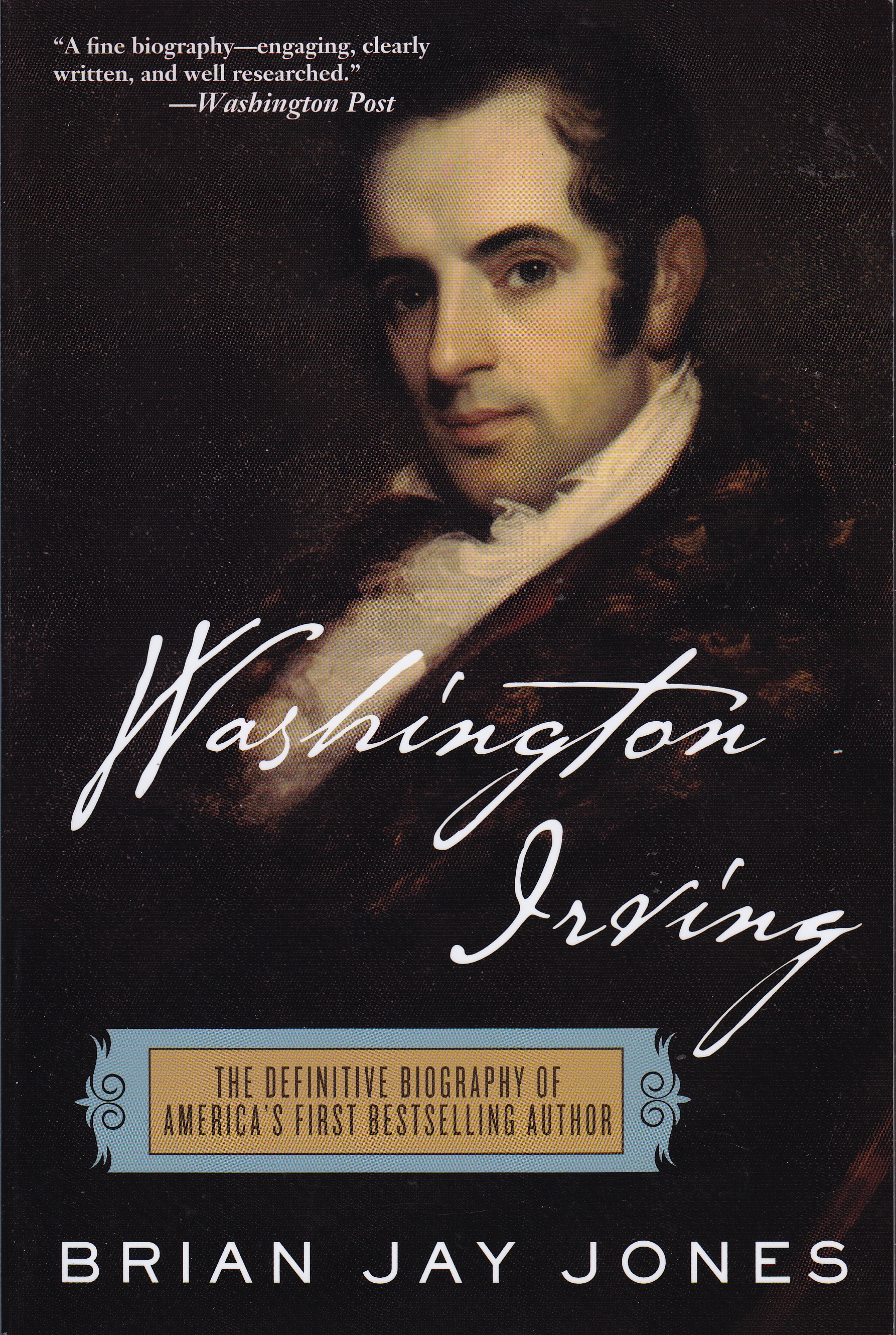
WashingtonIrvingLess known now than he was in his own lifetime, Washington Irving is an odd literary character. Many writers, at least of tomes we now have our children read in school, were not necessarily stars in their time. Some were obscure, their genius only becoming clear when they were safely dead. Washington Irving, however, rocketed to fame fairly early in his life and became what Brian Jay Jones refers to as an icon. He was one of the most famous men in America in his lifetime. Although he was never properly a novelist, he pretty much earned his career by writing. Today he is best remembered for “The Legend of Sleepy Hollow” and “Rip Van Winkle,” two tales from his Sketchbook. Those of us who work in Gotham may not realize that Irving gave New York City its famous nickname. He also coined the sobriquet “knickerbocker” that still describes New Yorkers and their basketball franchise.

Washington Irving: The Definitive Biography of America’s First Bestselling Author, by Jones, is a revealing look at the author. Irving was raised in a strict, religious family with a father known to many simply as “the Deacon.” As Jones makes clear, Irving did not accept the harsh religion of his father, moving on to become skeptical of religion itself. Like his attempt to make writing a profession, in his religious outlook Irving was ahead of his time. Having been raised with a deity who had no respect for humanity, it is no wonder that a mere mortal might turn his back on the divine.

This was during the flowering of the age of reason. Like his younger contemporary Edgar Allan Poe, Irving knew early losses yet did not call out for a supernatural deliverance. Although evangelical sentiment has never been far from the surface in America, it would not bubble through to anything like modern proportions until Irving had been dead for about sixty years. Indeed, he died the same year that Darwin’s Origin of Species was published. Jones does not go into detail concerning Irving’s religious affiliations during life, but he had his funeral among the Episcopalians, and found his final resting place in the cemetery at Sleepy Hollow. Today his legacy in that regard lives on. With a difference, however—in the most recent movie and television versions, religion has been injected in an obvious way into what Irving wrote as a merely secular tale.


Gothic American

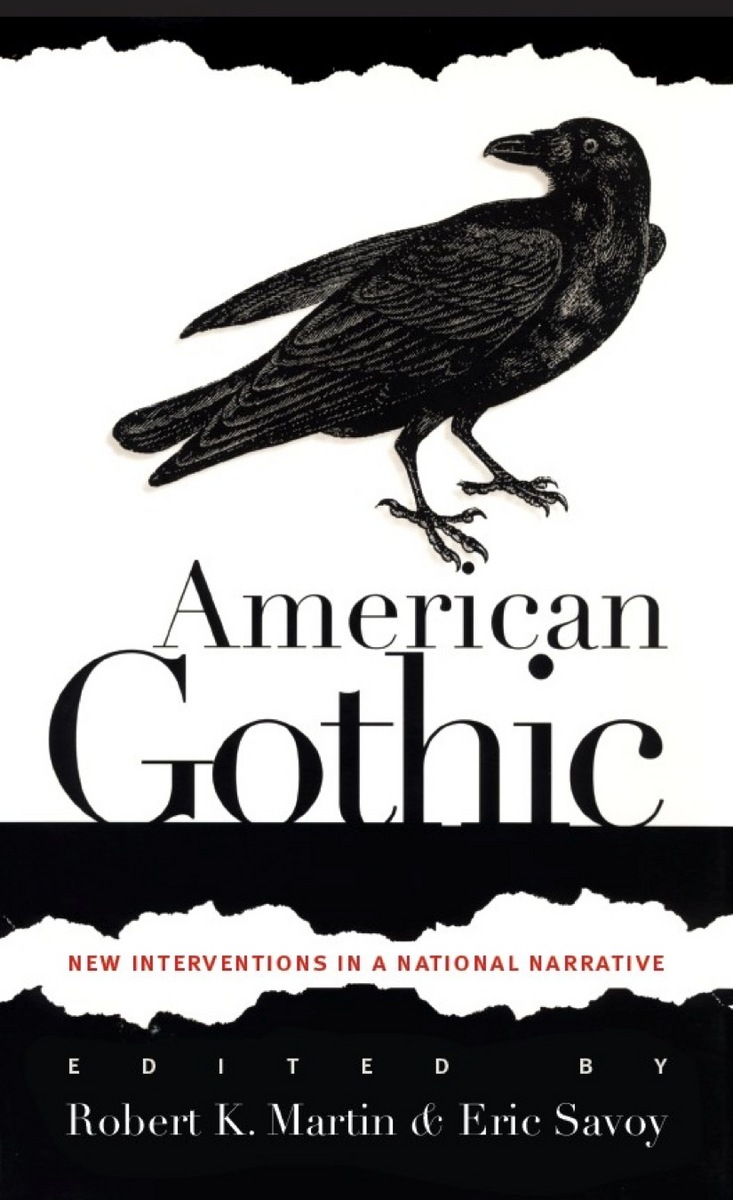
AmericanGothAmerican Gothic, the painting by Grant Wood, caused me trouble at Routledge. An author wanted to use the image on the cover of his book (we eventually managed it) but the choice was contested at every step. Along the way editors, editorial assistants, and marketers all told me what the painting represented and how it was inappropriate. I’ve learned, however, a few things from the post-modernist movement: nobody can say what an artwork means definitively. So when I read American Gothic: New Interventions in a National Narrative by Robert K. Martin and Eric Savoy, I was ready for a combination of po-mo and the macabre. Like post-modernism, Gothic is a difficult term to define. Indeed, the first set of essays in this collection struggle with definitions. Being literary criticism, the book points out that the novel and Gothic more or less developed together. When people read to be entertained, as early as the eighteenth century, they wanted to read Gothic tales.

Being a life-long fan of Poe, I was pleased to see that he made a good showing in the pieces contained in the book. What makes it appropriate to this blog—other than it being October, a comment that requires no explanation in the northern hemisphere—is a notion I found early in the book. People read horror literature for healing. Anthropologically, the wounded healer is a well-recognized figure. In a world where we expect opposites to go together health comes from disease and healing from being wounded. The gothic is a wounding of the mind to lend it healing. To be sure, many of us who read gothic literature do not relish scenes of violence or hurt. We do, however, find a kind of therapy within such darkness. In the darkness light is best appreciated. Who uses a flashlight outdoors on a sunny day?

As with most books from multiple authors, there’s some unevenness to the contributions here, yet more often than not, I found deep insight throughout its pages. Religion makes occasional appearances. Indeed, the figures of the monk and the debased church are stock images for early gothic literature. The sacred, if we’re honest, is a bit creepy. Having spent many nights in churches on retreats or for hospitality when youth groups couldn’t afford a hotel, I know that fewer places are scarier at night than an unlit, empty sanctuary. The gothic, following culture, has tended to move away from monasteries and churches into the more scientific spaces of the twenty-first century. Nevertheless, ravens and haunted houses still evoke the age-old fears of a coming period of darkness, the Halloween of the soul. And for those who want to know how a post-modern crowd scans the darkness, this book will not disappoint.


An Odyssey

Jorge_Luis_Borges_1951,_by_Grete_Stern

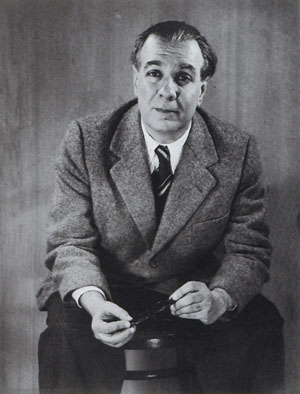
I learned of Jorge Luis Borges through the recommendation of a friend some years back. Of course, knowing about a writer is never quite the same thing as reading what s/he has written. So it was that I recently picked up an edition of Borges’ short stories entitled, biblically enough, “The Aleph.” I find that these stories require slow reading, chewing over rather than swift gobbling down, like so much of what ends up on the mass market shelf. In lives squeezed for time between the incessant demands of cell phones, social media, and plan old television (satellite or cable), spending unrushed minutes with a thoughtful story can seem a waste of time. I suppose that’s the sole benefit to a long commute on public transit—reading is always an option (although, sadly, not one frequently utilized, to guess from all the electronic farts emitted by computerized devices all the way home).

The first tale in my volume is “The Immortal.” Perhaps it is the hand of the translator, but the sensibilities of Borges are not unlike H. P. Lovecraft. Borge was influenced by Poe as well, and as the narrator of this tale encounters Homer in the land of the immortals, it is only fitting that the question of mortality should arise. Joseph Cartaphilus, the narrator, notes that the three western religions all claim to offer immortality, but in reality focus on the only part we intimately know, the part we call being alive. Often this idea has come to me as well when encountering one so sure of an afterlife but so fearful of death. If immortality does not banish terror of the grave, what use is it?

Indeed, as Cartaphilus realizes that he has drunk from the river of immorality, even the company of a devolved Homer can not entice him to live forever. Off he rides in search of death, a solace that comes only once he has sold his story in the form of a used book dealer, within the back cover of the Iliad. Once the story takes on the life of the teller, he is free to die. There is so much going on in this brief tale that two readings have only begun to scratch the surface. Borges lays religion’s follies at its feet, but shows that there is still much more to fear. I can see the draw, and as a new year dawns, I can see myself becoming more acquainted with Borges and gaining the insight that only thoughtful fiction can bring.


Writing the Cosmos

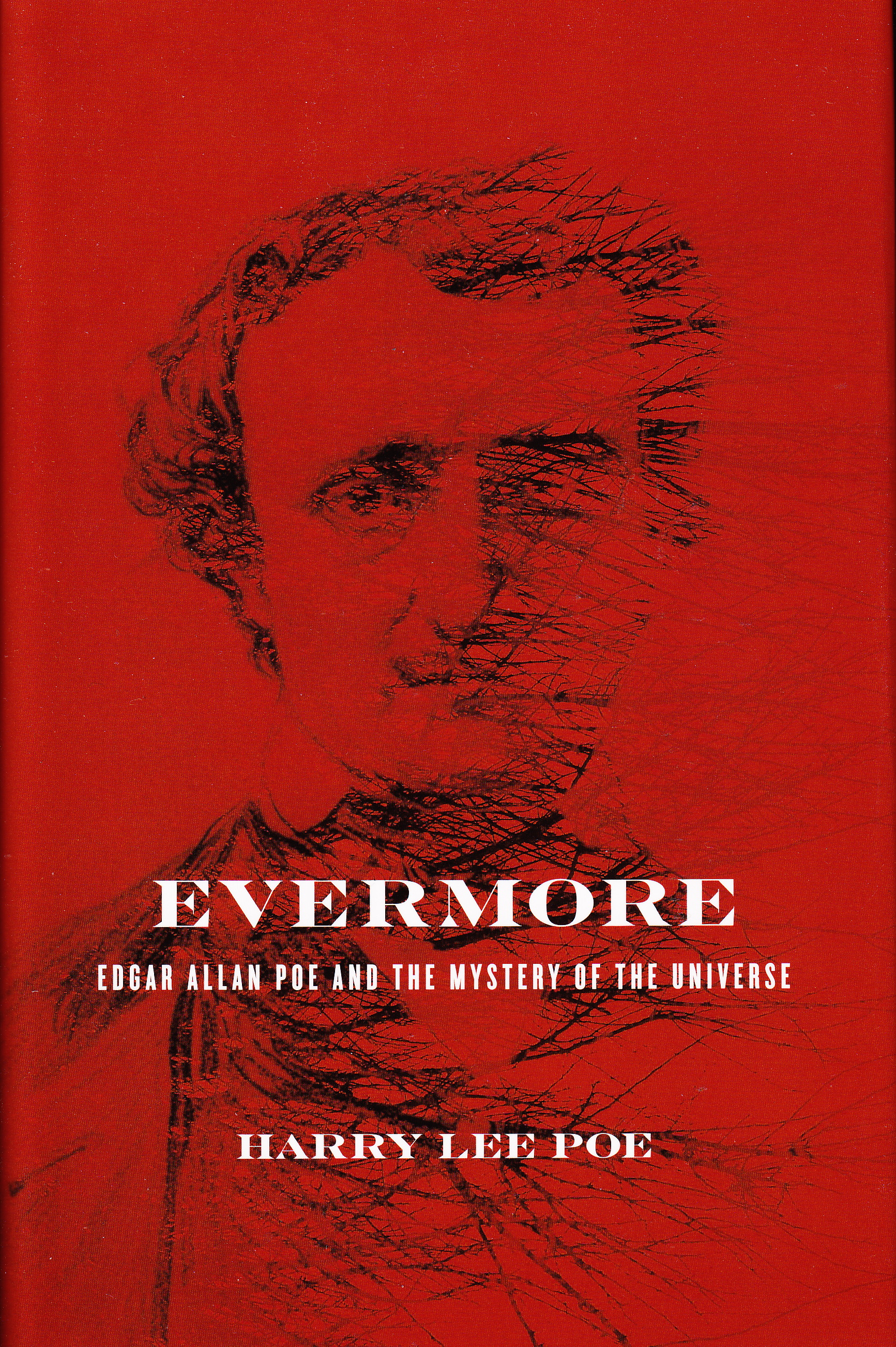
EvermoreOn occasion those with great wealth try to give something back to society. One such gift takes the form of libraries. The J. P. Morgan Library on Madison Avenue in New York is a touch pricey for those who live in humbler domiciles, but the Edgar Allan Poe display proved too immense a draw to ignore. Standing inches away from manuscripts written in Poe’s fine hand was a kind of communion. It wasn’t too difficult to believe he might have somehow been there. In Baltimore last month I didn’t have the opportunity to revisit his grave, but I picked up a book by one of his modern cousins, Harry Lee Poe. This Poe has theological training and an interest in seeing that his famous cousin isn’t theologically shortchanged. Evermore: Edgar Allan Poe and the Mystery of the Universe is a rare look at Poe and religion. Treatments of the theology of writers are hardly rare, but since Poe wasn’t openly religious, he was typecast a little too readily into the putatively godless camp of those of us with a taste for the macabre.

Evermore may not convince everyone that Poe was a profound religious thinker, but Harry Lee Poe marshals substantial evidence from both Poe’s published writings and letters that he was often caught in that crux between science and religion. Indeed, there is no evidence that Poe was an atheist. He wrote on what were considered lowbrow topics because those were the kinds of pieces that would sell. Since Poe was perhaps the first American to attempt to make a living solely by his pen, he had to pay attention to what people wanted to read. Evermore, while not a biography in the usual sense, does point out that Poe wrote across genres and that his life, while often tragic, had many spells of happiness and some contentment. Poe was a victim of character assassination after his death by a second-tier clergyman, Rufus Griswold. Much of the book is spent dispelling myths.

Perhaps above all, Edgar Allan Poe had a clear mind that could keep imagination alive in the religion and science debate that was to explode shortly after his death with Darwin’s Origin of Species. For Poe, the universe was a story being crafted by God. Creativity was essential to beauty, a concept that haunted Poe. A writer must be introspective, and this will often leave him or her open to criticism by those who prefer simpler answers. Great beauty can be found in complexity, however, and the practice of ratiocination requires a healthy dose of imagination to help make sense of a world that often seems to make no sense any other way. And standing here, my face inches from a handwritten copy of “The Bells,” I can almost hear them ringing.


The Write Place

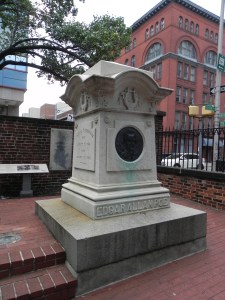
In my mind, Baltimore is inextricably bound to Edgar Allan Poe. From the accounts of Poe’s life, it is clear that he sensed nowhere as a welcoming home. Indeed, he was barely mourned at his passing and the memorial gravestone in this city was only added decades later when his works had attracted serious attention. Many of the eastern cities now like to claim him: Boston (although with Bostonian diffidence), New York, Philadelphia, Baltimore, and Richmond. All have various mementoes of his transient existence in those places, although he was not made to feel at home there when he was actually alive. The writing life is a difficult and often lonely one. Poe knew that better than many. It is so lonely that nobody is even sure why he was in Baltimore when he died, or what the cause of death was. He has become an icon to many that write.

Ironically, my career has repeatedly shoved me back to the publishing industry. That doesn’t mean that it is any easier to get published, however. The world is full of words, and those who hold the key to publishing respectability have so little time (a fact I know well, as a sometime editor). Some of us resort to blogs and pseudonyms while others die young in Baltimore. The world loves a self-promoter. Those with something intelligent to say are often discovered only in retrospect. And soon their work enters the public domain and can be claimed by all.

Other writers have called Baltimore home. Not many have football franchises named after their literary works, whether here in Maryland or elsewhere. And Baltimore, like many of the major cities of the United States, has great swaths of the neglected, the poverty-bound, and the hopeless. As I drive through the city it is clear that many have been left to face the cruelties of a self-promoters’ economy. They live with little—overlooked and forgotten. But there’s a party in town for those who can afford it. As I settle down with a cask of Amontillado and my notebook, I know that I have only just begun to get to know Baltimore. Maybe I will meet the ghost of Poe here, amid the brightest lights of scholarship and the darker shadows beneath.

Poe in New York

Poe in New York