Locating Yourself

How do you come to where you spend your life?  It could be where you’re born.  I was born in Franklin, Pennsylvania.  Neither of my parents were.  On my mother’s side we had a tradition of wandering.  We eventually moved to Rouseville, a refinery town not too many miles from where I grew up initially, but very different in character.  I knew I wanted to get away.  I lived in Grove City next, only as a student.  For a short while I resided with some friends in the South Hills of Pittsburgh before moving to Boston to attend seminary.  Like many who go to Boston for school, I wanted to settle there.  I did so for about a year after graduation, making a living, such as it was, selling cameras.  My next move was precipitated by love.  I moved to Ann Arbor, Michigan to be with my fiancée, but I’d already been accepted to Edinburgh University, so an international move was imminent.

Roseville

Edinburgh, like Boston, is a spiderweb.  We would’ve stayed if we legally could have, but with a job market for academics already tanking, we headed back over the Atlantic.  My wife was a grad student at the University of Illinois, so we moved first to Tuscola (family there), then Savoy (on the outskirts of Champagne-Urbana).  Meanwhile I commuted to Delafield, Wisconsin, home of Nashotah House.  We eventually moved to Delafield and stayed until I was no longer wanted.  Our move to Oconomowoc was necessary to keep our daughter in the same school.  The possibility of full-time employment drew me to Somerville, New Jersey.  We would stay there until my daughter had a chance to graduate.  Depression convinced me that I’d run out the clock in that apartment, but a financial advisor suggested Pennsylvania, where I was born.  Thus we ended up in the Lehigh Valley.

I’ve liked every place I’ve lived.  If I had my druthers, however, I would’ve ended up teaching at a small college in Maine.  Several friends have moved to Maine as I’ve jealously watched.  The places we spend our lives, at least in my case, are determined by a measure of fate.  Nashotah House was the only job I was offered from Edinburgh.  Gorgias Press was the only job I was offered after the seminary.  Moving to my home state was volitional, of course.  As a couple we’d have been content in Massachusetts, Michigan, Wisconsin, or New Jersey.  Economics, of course, has a heavy hand in all of this.  I sometimes think that, if I could ever retire, moving to Franklin again would be a way of coming full circle.  But then, life is change and we end up, it seems, where we’re meant to be.  Perhaps Canada?

In Praise of Lecture

As I look at our world and see divisions that certain politicians only make worse for their own gain, I wonder where we’ve jumped the rails.  I was just reading about science lectures in the early part of the last century.  This reminded me of a public lecture on dinosaurs that we attended in Edinburgh with some friends.  Yes, we were graduate students looking for stimulating, and inexpensive, entertainment.  I’ve always considered entertainment a learning opportunity.  Having grown up both poor and curious, I feel a fascination regarding most new things and I began to wonder why we don’t have more public science lectures these days.  We really enjoyed the dinosaur talk.  I think the lecturer was Jack Horner, but what really stuck with me was not his name, but the good feeling the talk left behind.

At Nashotah House, Milwaukee and Madison were both a little too far to venture for an evening lecture.  We had to be in chapel early the next morning, and besides, I had already started waking up early (around five in those days) to do my research and writing.  When we came out of Nashotah, the internet had taken over the world.  Let’s face it, when you reach, say, middle age, you don’t want to have to go out much in the evenings any more.  At least if you’re an introvert like me.  Particularly when it’s cold out.  And how do you even find public lectures these days?  We live near several colleges and universities in the Lehigh Valley, and I get occasional notices, but the lecture in Edinburgh was actually in a public venue, not a university site.  You see, I think that’s what we need to get people back on the side of science and critical thinking.

The internet favors your biases.  Algorithms send your way more of what you’ve already seen.  Each click brings someone some income.  (I hasten to add that I get no income from this blog; I pay for the privilege to post on it.)  Wouldn’t it be better if towns had lecture halls and scientists (and others) had the name draw to bring people in?  While at a small venue in the Easton Book Festival a couple years back, a university guy from New Jersey talked to me after my presentation.  “We don’t have many opportunities for smart entertainment,” he told me.  I’m no scientist and there’s a real debate about the “smart” part, but I took his point.  You used to be able to find public lectures that were cheap or free.  And everyone left feeling like they’d received a gift.


Moving Hope

We were young and recently engaged.  I had to move from Boston to Ann Arbor, and all my worldly possessions fit into the trunk and back seat of a rental car.  I don’t remember the model, but I know it was white.  It wasn’t a large car.  Details have escaped into the ether, but I was driven by the soul purpose to be with my fiancée, soon to be wife.  In those days sleep and food deprivation of an almost Lindberghian degree seemed negligible.  Google maps tells me it’s a twelve-hour drive, but back then the speed limit in Pennsylvania was still 55 so it had to’ve been more than that.  By myself, with little money (how did I pay for that rental car?  Probably credit card, borrowing against the future) I drove all day—or was it night?  I seem to recall arriving in the afternoon.

People are capable of great endurance feats, but they get a bit trickier as you age.  I like to think they’re compensated for by increased mental powers.  It takes time—many years—to learn how to be in the world.  To learn, as Morpheus indicates, which rules can be bent, and which broken.  If you pay attention you can see that there are events, incidents, not easily explained.  We influence the world as the world influences us.  And our minds influence our bodies just as our bodies influence our minds.  We seem to enjoy drawing sharp distinctions where fuzzy lines are more natural.  As I think back on my move to the Midwest, it seems to me that courage and conviction ran strong, despite the unlikeliness of success.

From Ann Arbor my wife and I moved to Edinburgh with, again, very little money and nothing but hopes to keep us going.  You see, when you grow up in a poor family there are no buffers.  Yet Edinburgh became a reality and after the Ph.D., still with little money, we managed a transAtlantic move to a job that proved as unreliable as the usual support systems for the poor.  Once again we found ourselves making yet another low-budget move across the miles.  We move to find our futures.  Wisconsin became our home for a decade and a half before the search for work brought us back east again.  Moves are filled with hope.  If we were convinced things would always be the way they are, why would we bother to move on?  Moving shows just how optimistic we can be.  Without hope, why would we ever move?


Ode to Auld Reekie

Edinburgh is a sizable city, although not large like New York, more like Boston, but smaller.  Like Boston, it has had an outsized influence globally, even apart from its world-class research university.  I think of the creatives that are from, or spent considerable time there (J. K. Rowling, take a bow) and the many great thinkers who’ve called it home.  Our three years there went by too quickly, but money being what it was (and is) and laws dictating how long we could linger, we had to leave it in 1992.  If you’d have asked us when we were there we’d have told you we’d’ve stay if we could’ve.  We had no money, no car, no television, but we had Edinburgh.  Somehow that seemed to be enough.

Places have great significance to people, but it’s not reciprocal.  I occasionally find out a famous person was from Edinburgh and say “I didn’t know that.”  Having spent three years and the cost of a doctorate there, I was a mere drop in the Firth of Forth.  I’m frequently in contact with faculty members at the Divinity School for work.  None know that I studied there—I suspect most university folk don’t sit around talking about long-ago post-grads.  Indeed, there may be no faculty left from the time I was there.  New names, new faces, new research agendas appear.  Indeed, you wouldn’t choose Edinburgh as a place to study Ugaritic now, even though there was once an “Edinburgh school” of thought in the discipline (and I can footnote that).

Still, when I hear “Edinburgh” my ears prick up like those of a dog who’s been called.  It is a part of me.  I’ve only been able to return once since our original stint there.  It was a strange sort of homecoming.  Familiar and foreign all at the same time.  Some shops were right where we’d left them, others now merely ghosts in our memories.  Fortunately Edinburgh hasn’t had the building mania that often causes old cities to try to reinvent themselves.  It was already great to begin with.  More and more I hear about the Edinburgh Festival, and the Fringe.  People are starting to notice this jewel in the crown of the United Kingdom.  On a molecular level there may still be a little bit of me there.  We’re constantly shedding, I suppose.  And someday perhaps we’ll be able to return.  It may not remember me, but I can’t forget her.


Misremembered

There may be a name for it, but if there is I don’t know it.  Like the more well-known Mandela Effect, it’s a strange memory issue, only it affects the individual.  The Mandela Effect is a collective false memory, often involving the death of someone famous.  Many people—sometime very many—think, for example, that someone famous has died.  The death, or other false memory, is posted in the past and people who don’t know each other all agree that it happened, only it hasn’t.  Instead, what I’m talking about happens to me once in a while and perhaps it happens to others.  Most recently I was listening to The Proclaimers’ song “I’m Gonna Be,” also known as “500 Miles.”  It’s got a catchy chorus and I was thinking it was an oldie, so I looked it up.

First of all, I didn’t know The Proclaimers were a set of twins from Edinburgh.  Second of all, I didn’t know they were (only) my age.  Third of all, I was sure I knew and heard the song from when I was growing up, but it came out in 1988, the year my wife and I moved to Scotland.  I was just stunned by this.  I was sure I’d heard the song, for instance, when I was in college and that it was an oldie even then.  I didn’t and it wasn’t.  In fact, the very year I could’ve first heard it I was busy making plans for an international move, getting married, and starting a doctorate.  This kind of time distortion can be very disorienting, and it says something about memory.

1988

Our lives are the stories we tell about ourselves.  Memory, in an evolutionary way, serves some basic functions such as recalling which other people you can trust, where good food sources are, and where the saber-tooths tend to hang out.  Those with better memories survive longer and procreate more and over time the trait becomes common.  Memory isn’t intended to recall specific dates.  I often wonder if something like the Mandela Effect isn’t behind Trump’s unaccountable popularity.  A kind of memory that refuses to believe the song came out in 1988 although clearly it did.  Believing false memories is the stuff of drama, of course.  That drama can take in whole societies because we misremember that we knew all about propaganda because we learned that in high school, but now we fall for it.  Or it may be a lonely moment when a song comes to mind and we think we’ve known it far longer than we have.


That Time Again

Where’d it go?  I could swear I left an hour sitting right here on the table, and now it’s gone.  That’s the feeling of waking up the day of Daylight Saving Time.  Sure, it’ll stay light later now, but the mornings, when hope is most necessary, are once again dark.  It’s funny how we play with time.  I’ve known many people who love the end of Daylight Saving Time because of the illusion that they’ve gained another hour of sleep.  In fact, it’s just a deferred payment.  The great time-keeper in the sky won’t be cheated.  So—pardon my yawn—we’re adjusting again.  One of the great mysteries of this is that keeping Daylight Saving Time permanent has strong bi-partisan support in the US government.  It never becomes law, however, because riders are constantly attached to it, making one side or the other back out.  And so we all spend a couple weeks trying to get our circadian rhythms to adjust.  Again.

I’ve often wondered about the timing for this change.  Why Sunday morning?  In this nation that likes to pretend to be Christian, it’s a regular joke that folks in pre-pandemic times would miss church, having forgot to set their clocks ahead.  One incredibly busy Sunday in Edinburgh, my wife and I had missed church altogether.  I’m thinking it must’ve been in the final throes of getting my dissertation finished.  When supper-time rolled around we found we were out of some ingredients and we went to the local grocery to find, of all things, it was closed early.  It was only then that we had to stop and laugh at ourselves.  We’d just spent an entire day out of joint with time and didn’t even know it.  In pre-internet days it was possible for that to happen.

Most of our clocks now set themselves automatically.  I still wear an old-fashioned analogue watch.  I need to set it manually, which keeps me on my toes when Daylight Saving Time approaches.  O yes, and the clocks in the cars are off—they’re not wired in that way, being older models.  And the one on the microwave.  I can always use my phone for the accurately predetermined time on which we all agree to operate.  Even if the morning skies, which were starting to be light at six now stay dark until seven.  In another month we’ll catch up again.  And Daylight Saving Time, instead of being a strange intrusion, like most unwanted guests, will begin to feel like normal.


Roll out the Memories

That takes me back a bit.  It’s also a great idea.  The Epic of Gilgamesh tablet 5 rolling pin, that is.  A friend shared Farrell Monaco’s blog with me and the Gilgamesh cuneiform rolling pin took me back to a seasonal event in Edinburgh.  The Scots love to socialize.  My doctoral training involved lots of seasonal gatherings—something that we’ve missed since returning to the United States.  On one such occasion with my fellow Ugaritic students, we said we’d bring cookies.  Now the correct term for such things is “biscuits,” I know, but we had a recipe that really didn’t fit the biscuit description.  It was for chocolate cookies.  The dough was the consistency of a clay tablet.  I taught my wife enough Ugaritic so that, using toothpicks, we inscribed a good part of the Baal Cycle on the desert.  Alas, the tablets are no long extant.

Photo by Egor Myznik on Unsplash

Of all writing materials, clay and stone are the most durable.  Our cuneiform cookies were in the days before cell phones, however, and film wasn’t cheap.  We didn’t bother to make a photographic record, and, alas, such tablets are edible.  They were a little difficult to read when baked and even more so when eaten.  The use of culinary cuneiform makes me think that its design potential has gone under-utilized.  Also back in Scotland for a while Coke was running a promotion with cuneiform on its labels.  The problem with cuneiform is that even for someone who reads it an isolated character or two, without context, is difficult to decipher.  I never did figure out what Coke was trying to say. 

The Gilgamesh rolling pin apparently exists in the real world and can be purchased by antiquarians with university-salary-level jobs (somewhat over the pay scale of the mere editor).  Tavola Mediterranea is listed as “The Home of Culinary Archaeology on the Web.”  Although publishers and others doubt there is any interest in my erstwhile area of expertise, I feel vindicated by Monaco’s website.  There is a real hunger for things ancient, but universities tend not to support that interest.  I often wonder at how great centers of learning have evolved into upscale job training centers.  Then again, I’m the kind of person who reads the Epic of Gilgamesh for fun.  I even have an illustrated children’s edition of the story.  Now I’m waiting for Ugaritic tablets to show up on cookware.  Given the slow death of the field of Ugaritology, I suspect the day of making Baal Cycle cookies is long gone, and unless a new recipe for encouraging public interest can be found, we’ll all starve for knowledge of it.


Memories of Scotland

I admire those who follow their dreams.  I have been writing fiction for over forty years now, and although I’ve had some success placing short pieces my novels haven’t found much interest.  So when I see the published work of someone who obviously loves writing as much as Ailish Sinclair does, it warms my heart.  Her debut novel, The Mermaid and the Bear, is the kind of historical fiction tinged with a little fantasy, all set in Scotland.  Having spent three happy years in Scotland myself, I like to read native writers.  One of the categories in this year’s Modern Mrs. Darcy’s reading challenge is a debut novel, so all these things came together in this one little book.  There may be a little spoiler info below, so proceed with caution!

Sometimes I read a novel without knowing much about it in advance.  That was the case with this one.  I read Sinclair’s blog posts and appreciate the fact that she doesn’t compose long, rambling essays.  Her posts often make me stop and think.  Her novel follows a love story that turns into a witch-hunt.  Unlike that claimed by those who have the whole world watching them, this was a real one.  The historical notes tell a bit about the characters based on women actually tried in Scotland during those dark times.  In fact, when one of my doctoral advisors gave my wife and me a walking tour of Edinburgh early on in our time there, he pointed out where the witch trials had taken place.  Sinclair captures the rage and frustration of women who had no recourse once such accusations flew.  A religion only too ready to believe the worst about people, women in particular, showed no mercy based on what was only hearsay and jealousy.

It’s difficult to imagine what life would have been like in such times.  Castles and lairds make us think of fairy tales, but reality must’ve been somewhat harsher.  It’s fun to pretend about witches around Halloween, but there’s a sadness that’s difficult to escape as an adult.  That sadness is all the more profound for finding claims of witch-hunts on the lips of abusers and others who do their best to perpetuate inequality.  They dishonor those who actually did die so that men like them could feel smug self-satisfaction in the past.  The Mermaid and the Bear brought a number of these thoughts to mind.  Our society has made some strides towards treating all people as human beings but we’re yet a long way from where we need to be.  Books that remind us of that are always to be welcomed; dreams are worth pursuing.


In Middle Earth

I try to make the best of business travel.  I had all-day obligations this time around, but fortunately my hotel was next to a place of some renown.  The house where J. R. R. Tolkien lived was practically right next door.  This is the place where the Lord of the Rings came into the world.  I have always tried to visit sites of literary significance when in new places.  When we were more able to do so, my family would take such literary pilgrimages annually, especially in the autumn.  Being a believer in the confluence of science and spirit, I can’t help but think there’s something sacred about the place where great literature was born.  Of course, in Oxford you can find sites for Lewis Carroll and C. S. Lewis, as well, among many others.  These days everyone seems to associate the place with Harry Potter, although J. K. Rowling started that particular series in Edinburgh.

Tolkien has become a deity in his own right, I suspect, for creating an entire world to which millions of fantasy fans come.  His actual house, however, is privately owned.  Besides, I’m here on business.  Still, falling asleep so close to where Tolkien dreamed his Middle Earth dreams is akin to inspiration.  Writing as an avocation makes such encounters almost worshipful.  I read the Ring trilogy and The Hobbit many years ago.  I haven’t seen any of the movies, however, since my own imagination seems sufficient for me.  Tolkien took me, for many hours, into another world.  Somewhat like work has done this week, I guess.  Were it not for business, Oxford could be a magical place.  Living in a location where imagination is valued and encouraged makes a huge difference, I expect.

Years ago, Edinburgh was an inspirational place to reside.  Although my main writing output at the time was a 300-page doctoral dissertation, it was a place that has inspired much of my fiction.  Tolkien, in truth, was just as human as the rest of us.  His work was largely based on ancient Germanic traditions that were also reflected in Wagner’s Ring cycle.  We are all borrowers, in some sense.  Adapters.  Oxford is one of those places with a long sense of continuity with the past, in a singular tradition.  It has become modern in parts, but with medieval streets.  There are cars parked along Northmoor Road, and nobody else seems to be here for a pilgrimage today.  Perhaps it’s for the best; how could the workaday world possibly improve for the use of imagination?


The Heart of Publishing

My heart goes out to academic authors.  It really does.  They labor over a book important to their field and see it come out costing near triple digits and wonder why it’s not in the local bookstore.  There is, however, a very wide gap between academic and trade publishing.  It is bridged here and there by authors who value readers over reputation, but unless you deliberately try to learn how all of this works, it is bewildering.  Academics, you see, are area specialists by and large.  You don’t write a dissertation on the Bible, for example, but on a specific part of the Bible (New Testament or Hebrew Bible).  And within that section your specialization is not a single book, but often a small part of a book, or a theme.  I’ve seen dissertations written on a single Hebrew word.  Specialization.

With all of this tight focus, it’s easy to forget what browsing in a bookstore’s like.  Even with some of the incredible brick and mortar stores in Edinburgh, technical books had to be ordered—this was before Amazon.  When you check the books of colleagues out of libraries it doesn’t always occur that you do this because libraries are the only places that buy such books.  And with the explosion of doctoral degrees in shrinking areas of studies (there are no jobs here, folks!) the number of published dissertations has skyrocketed.  Even advanced scholars forget the average reading public would find their work impenetrable.  It’s not going to be in the local bookstore, and it costs so much because it sells so few copies.  I do feel for academic authors.

In addition to all the area specialization, it would make sense to research the academic publishing industry.  Yes, it is an industry—it has to try to turn a profit when sales are minimal.  And with so many books being published, libraries can’t keep up.  The end result is high prices.  I’m as guilty as the next academic at wishing economics would just go away and leave me alone.  I want to believe in the pursuit of knowledge for knowledge’s sake.   That’s not the way the world works, however.  At least not the publishing world in a capitalistic context.  The internet itself has become competition.  Much of the information’s out there for free.  So your academic book, when it comes out, will be priced out of your comfort range (been there, done that).  It’s not that your publisher doesn’t believe in you, but that they have to try to turn a profit.  All it takes to understand why is a bit of research.

Not that kind of book.


Relatively Unknown

The Edinburgh Festival draws people from around the world to experience culture and fun in one of Europe’s most beautiful cities.  The festival also attracts the fringe—artists not associated directly with the festival, but who get included in what used to be a huge, thick catalogue that would keep us busy for hours, considering what a student and spouse could afford, and what you could not afford to miss.  One year a group called Outback was performing at an area church.  It featured Graham Wiggins on the didgeridoo—an Oceanic aboriginal instrument that is essentially a tree branch hollowed out by termites.  It’s so long ago now that I can’t recall if I knew ahead of time, but the leader of the group, the didgeridooist, was Graham Wiggins.  While not exactly a rare surname, Wiggins isn’t common either and when I saw him a strong family resemblance was immediately obvious.  So much so that after the concert we went to meet him only to find out his Wiggins side was from Oxfordshire.  Mine was from South Carolina.

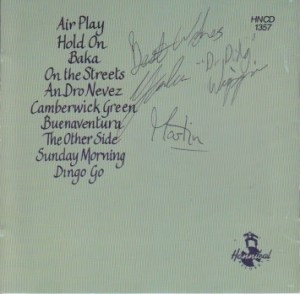
Graham Wiggins, who was a month younger than me, was known as “Dr. Didg” because he held a D.Phil. in solid-state physics from Oxford University.  While an American, he had decided to stay in the UK to make a living from his music.  Some months later, on a Christmas break, we saw him busking in Bath on a chilly night.  We bought the band’s second CD from him that evening.  When my wife put on our Baka disc the other day, I grew curious whatever became of him.  I was surprised and saddened to learn that Graham Wiggins had died three years ago.  I knew we shared a surname and a family resemblance, as well as UK doctorates, but I learned he went to the British Isles from Boston University, which is where I had studied before attending Edinburgh.  He left the year I arrived.

Websites are reluctant to say of what Wiggins died.  I learned of this just days after finding out that a high school classmate had passed away, so mortality has been on my mind.  Wiggins, unlike this Wiggins, was a talented musician with a brilliant mind.  We saw him interviewed on television about the physics of didgeridoo playing.  I never did find out if we were distantly related.  The US Wiggins clan from South Carolina doesn’t have strong genealogical interests, although we know they started out in North Carolina many years ago.  It stands to reason they had come from England at some point, since it’s an English surname.  I only met Graham of the clan twice, but now I can’t get the fading didgeridoo sounds from my mind.


Excavating above Ground

It’s like a horror movie. You’re about to enter a place where the dead were laid to rest. You’re out in the remote Orkney Islands, and nobody knows you’re here. This cairn, although it has a modern entryway, is prehistoric, and to get to the burial chamber you have to descend the stone stairs into total darkness. There’s no towns anywhere nearby. The guidebook advices bringing a trustworthy flashlight. At the bottom of the stairs, as the daylight from the door fades, you face a tunnel lined with stone. You have to stoop to walk through it until you come to the burial chamber itself. Completely isolated from the rest of the world. It makes you stop and think.

While I was a student at Edinburgh, my wife and I made two trips to the Orkney Islands to explore the antiquities. The expense of getting to the islands north of the mainland is the most prohibitive part of such a journey. Once on the islands you find things relatively inexpensive, and safe. As the local at the car hire asked us, “It’s an island—where would a criminal go?” Nobody locked their doors. But the tombs. Orkney, being relatively unpopulated, hosts more available antiquities per square mile than just about anywhere else in Europe. Tramping through barren grasslands where you might encounter a few sheep, you can hike to a burial chamber that was built thousands of years ago and, after archaeologists tidied it up, has been left for you to explore on your own.

My wife sent me a link to Historic Environment Scotland’s Sketchfab page. Using photogrammetry, the site offers three-dimensional, manipulable images of the various cairns and soutterrains you can find on Orkney. You don’t need to crawl through the damp chambers on your hands and knees, or even bring a flashlight. The technology brings back memories, but I do wonder if something hasn’t been lost here. There was a reckless sense of discovery being a young couple in an isolated, underground chamber where no one, not even my doctoral advisor, knew where we were. No smartphones, this was off-the-grid living. Not once did we encounter anyone else in these Neolithic chambers. Gray skies and windswept cliffs. Puffins cowering in the lee of a North Sea gale. None of this can be experienced on this armchair odyssey, but it can certainly be recalled. And after exploring the exotic underground chambers, I know I have to make my way to a similarly windowless cubicle above the ground and have the audacity to state that this is the world of the living.


Remembering Catherine

Literature has been on my mind lately. Although I’ve not read all of Charles Dickens’ oeuvre, he’s been in my consciousness what with the new movie and somewhat older book, The Man Who Invented Christmas. Those who analyze literature sometimes claim Dickens invented the modern novel. In my unprofessional opinion, however, the roots go back a bit further than Boz. Still, it’s an enviable position to hold, even if it’s just in the minds of admirers. Dickens came back to me yesterday in one of those apparently random emails from WikiTree. WikiTree is a genealogy website to which I’ve contributed from time to time. I have no famous ancestors, so WikiTree sometimes helps me borrow them. Turns out I’m 28-degrees separated from Charles Dickens.

Perhaps their algorithms are getting better, or perhaps one of their robots is reading my blog (goodness knows few actual people do!) but the connections are getting closer. I posted earlier that I’m 37-degrees separated from Bob Dylan and 43-degrees from J. R. R. Tolkien. I’m closer to Dickens than to either of these famous individuals. This is the beguiling aspect of genealogy—it shows how unexpected connections can be part of our unknown background. The maze back to Dickens is through my grandmother on the Tauberschmidt line. This is the one of the four grandparental lines for which I have the least information. Nobody in my family even knows my great-grandmother’s name. She died young and, as with women in that era, was known in census records only by her husband’s surname. I may never learn who she was.

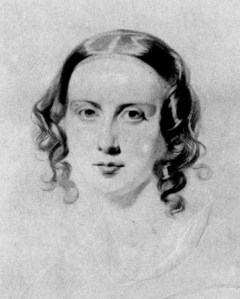
Although the reason for women changing surnames makes sense in its historical context, it is one of the great injustices of both gender equality and history. Signs are indicating that society is finally waking up on this point: women are half of the human story. As a dabbler in fiction writing, knowing that half the story is untold is a troubling phenomenon. Reading about Dickens I learned that he left the wife of his youth for a younger woman. Although such things are common, my reaction was to wonder who Catherine Thomson Hogarth might’ve become, had women had the opportunities they’re starting to have today. She was, after all, from Edinburgh. She has biographies, but not nearly as many as her feted husband. And if my math’s correct, I’m only 29-degrees separated from her. And this may well be the more important connection; the story untold.


Sacred Places

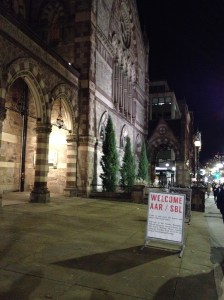
Boston Brahmins, lock up your doctrines—AAR/SBL’s come to town. Boston always has special associations for me. My first home away from home. Where I met my wife. Where I learned what you can only learn at seminary. Coming back is like coming home. Of course, I’m here to work. As I was getting ready for this trip I recalled that the conference met in Boston when I was studying for my Master’s degree at Boston University. Unlike many graduate schools these days, no overtures were made for students to attend. In fact, I didn’t know what all the in-joking among the faculty was all about. I relearned the existence of the conference as a grad student in Edinburgh a few years later. Few traveled across the Atlantic for it, at that point. In fact, none of the Edinburgh faculty who’d eventually become regulars had ever considered going. My first meeting was in Kansas City.

The meeting has grown since those days. Now regularly expecting about 10,000 scholars (can one help but think of 10,000 maniacs?) a year, the venues are limited. Atlanta, Boston, San Antonio, San Diego. Chicago and Denver once in a while. Personally, I’m glad it’s close enough for a train ride. New York City and Boston, two peas in a pod. My only regret is that I won’t be able to get out to my old stomping grounds. Some colleagues (few read this blog) contact me at the last minute asking if we can get together. My schedule’s booked from breakfast through supper each day. Those who attend as participant-observers have no idea. These are the longest working days of my entire year. Still, they’re in Boston.

I often muse about place on this blog. We’re attached to the place where we’re born—it’s our personal sacred space. In life we grow attached to other places, whether we can settle there permanently or not. I wanted to live in Boston. I did so for a year after attending seminary here, making a living doing this and that. Having a master’s degree in religion doesn’t get you far in life. In those heady days of sleeping on the floor and finding out what life was really like for the unconnected, I learned an awful lot. And when the woman I wanted to marry came back for a visit, I proposed. I’ve only ever visited Boston since. But whenever I manage to do so, even if it’s just for work, it’s like coming home.


Keystones

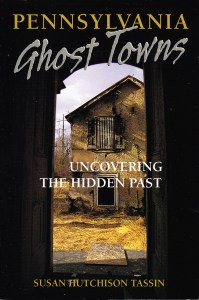
It was one of the very few parties to which I’d been invited in Edinburgh. “When a Scotsman asks you where you’re from,” one of the guests said to me, “he means where you were born.” Although we have no control or say over where we come into the world, we do feel that the place has a claim on us. Combined with my undying interest in local history, that means I like to read books about my native Pennsylvania. I was a first generation Pennsylvanian, to be sure, but to keep a nearly forgotten Scotsman happy, that’s where I’m from. Sarah Hutchison Tassin’s Pennsylvania Ghost Towns: Uncovering the Hidden Past is that familiar kind of book considered light reading, geared largely to the tourist and nostalgic past visitor or homebody crowd. Still, these kinds of quick studies often inspire the imagination. Lots of people lived here before you did.

A couple of factors stood out to me about Pennsylvania’s elder communities. One obvious feature is that a number of them began as intentional religious communities. Often breakaway sects from some major denomination, they established settlements to pursue spirituality in their own way, generally with strict rules, such as celibacy, that would spell their ultimate demise. Pennsylvania is well known for its separatist Anabaptist sects—Amish, Mennonites, and others who’ve been around for centuries and have integrated into the cultural mix of the state. I had no idea that a few ghost towns remain where some less successful spiritual seekers had broken ground. The second feature that stood out is how many communities were intentionally founded for commercial purposes. Often these were mining or lumber-processing towns. Some wealthy individual would buy a natural resource, build houses and a communal store, and permit workers to purchase goods only there. This meant individuals could never save money and never really afford to leave the mine or mill.

These are two very different conceptions of what it means to live in community. One is overly idealistic the other overly exploitative. At one end, the basic necessities of life—food, shelter, clothing—were kept from those who found themselves, like most of us, in need of a job. Or, at the other extreme, being held back from eternal life by failure to keep to the rules of a newly revealed religion. I never really thought of towns intentionally founded in these ways before. My naive view was more eclectic. But then, what do I know? I was born in a small Pennsylvania town and never thought to question why it was there. Where are you from? It’s a matter of perspective.