Religious Studies Project

Edinburgh University is often the overlooked gem in the academic crown of the British Isles. I have to confess that that declaration is in part based on the natural pride of an alum, but it also arises from seeing the various projects the university has in some way sponsored or spawned. The study of religion is still taken quite seriously at my alma mater, and among the more recent incarnations is a website called The Religious Studies Project. (It at first reminded me of the Edinburgh Ras Shamra Project, with nearly the same initials, initiated by a couple of talented chaps just after I left town.) Founded by a couple of post-graduate students in religious studies, the RSP offers weekly podcasts and various articles on topics of interest in the realm of my erstwhile and eternal profession.

The Internet has forever changed the way that people learn about religion. This democratization of knowledge is generally a good thing, especially for those who test what they read (or hear) against other sources. This is the heart of the academic enterprise. Many people think that higher education is all about getting the answers. This may be true in some fields, but the disciplines known as the humanities—the things that make us human—find education in the perennial raising of questions. Religions should be the source of questions, not the monolithic bastions of all-answers. You can always tell when you meet someone truly educated in religion—s/he will be the one admitting that s/he doesn’t know.

In our cost-effective society we live under a prevailing myth that when you pay for something you should get a certain commodity in return. In fact, education often works just the opposite way, robbing the learner of easy certitudes, leaving him or her wondering more deeply. So I’m pleased to give my colleagues a shout-out.
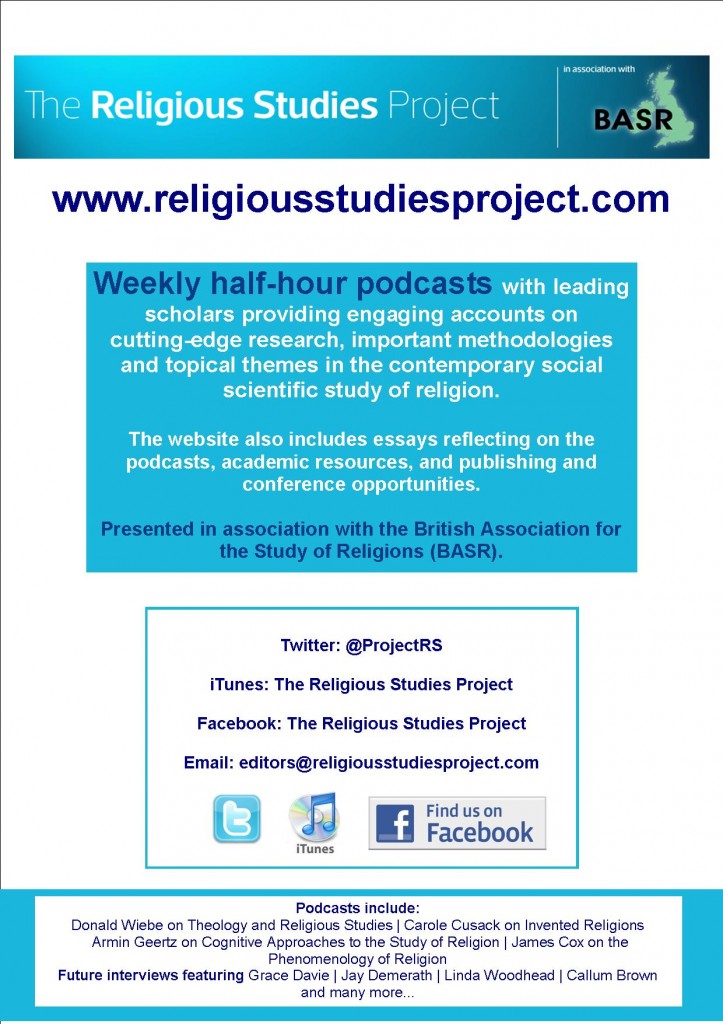
If you’ve found this blog you likely have some passing interest in religion. Having been trained in Edinburgh I laud the method I learned: ask questions. Seek answers. Ask more questions. This is the tradition of religious studies. Even if it doesn’t lead to jobs, we hopefully emerge from it a little bit wiser.

Who Knows?

While I have nothing less than respect (and just slightly less than utter awe) for my alma mater of Edinburgh, I cannot help being bemused at times by the alumni magazine. Between my wife and I, when we fail to cover our tracks adequately, we receive almost as many alumni magazines as exclusive credit card offers. Anybody intelligent enough to graduate realizes that these magazines are attempts to raise money, but they maintain the illusion of giving actual news. Thus it was I found myself facing a pithy piece stating in no uncertain terms that “Near-death events are ‘tricks of mind.’” The rationale given is that psychologists at both Edinburgh and Cambridge have decided it is so.

Now, I’ve never had a near-death experience, nor do I really ever want to. I don’t know what to make of the stories of those who claim to have “crossed over.” The problem is, there can be no winner to the argument of authentic experience versus mind trick. Those who know, by definition, can’t tell. Each side has good points to make. Some religions, particularly those of western orientation, tend to offer an afterlife anyway, so when someone appears to have slipped over the edge and claims they saw a great light, well, why not? Scientists often make the equally valid point that the rapid images that occur in the brain may seem to stretch on into minutes or hours and may incorporate images that our culture lends us of what to expect when the darkness falls. The near-death experience is, they say, final jolts of electrical “noise” just before brain activity ceases.

Some things we just can’t know, even if we attended Edinburgh. “Near-death experiences are not paranormal but are triggered by a change in normal brain function, according to researchers.” So the article says. There seems nothing paranormal about death—it is as natural an event as exists. It is common to us all, including pets and pests. The “paranormal” is the idea that something continues after death. If that something includes a deity or two, it becomes “religious” rather than “paranormal.” Whether religious, psychological, or paranormal, intelligent people continue to debate what is actually happening to those who have been briefly dead and have the medical records to prove it. For my part, if there’s something on the other side, I hope it’s a lot like Edinburgh. Maybe with a few less alumni magazines, however.

Life, and then this.


Scooped!

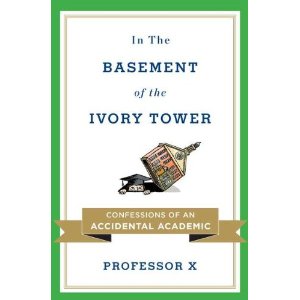
A book by a disgruntled adjunct instructor revealing the seedy underside of academia. This was a book project I had planned to write for some time; in fact I have over a chapter already written. My wife brought home a New York Times on Wednesday and I saw that I’d been scooped. Professor X’s book In the Basement of the Ivory Tower is reviewed in the Times. Curiously, his subtitle – Confessions of an Accidental Academic – was suspiciously close to my own proposed title. I guess I was just a little too busy teaching 11 courses this year to get around to writing the tome. In any case, I wish Professor X well. He has managed, however, to capture the attention of Viking so my insignificant wishes likely matter little.

Misery loves company, as the saying goes, and it is a strange and profound comfort to know I am not the only one consistently suffering at the hands of academe. University life has become a caste system of privileged professors and administrators and their minions while those of us who’ve had to try to earn our own respectability end up wallowing in it. Well-meaning professors suggested a doctorate from Edinburgh would make my resume stand out. I’m sure it is one of the more exotic ones in the waste-can. Meanwhile I have students coming to me asking questions about the department because none of the full-timers are ever in their offices.

I raise a glass to Professor X. Somebody needs to tell it like it is. Those who are heavily invested in the system cannot be expected to speak out against it. Courage is not the hallmark of the average academic. Those of us who dare challenge the abuses we see above us will most definitely live to pay for it; I know others who’ve shared my fate in this regard. It is the paradigm of education in the United States: we promote it until somebody has to pay. At that point those who’ve spent years after high school becoming specialists are asked not to crowd the others in the bread-line. Professor X, I salute you.