
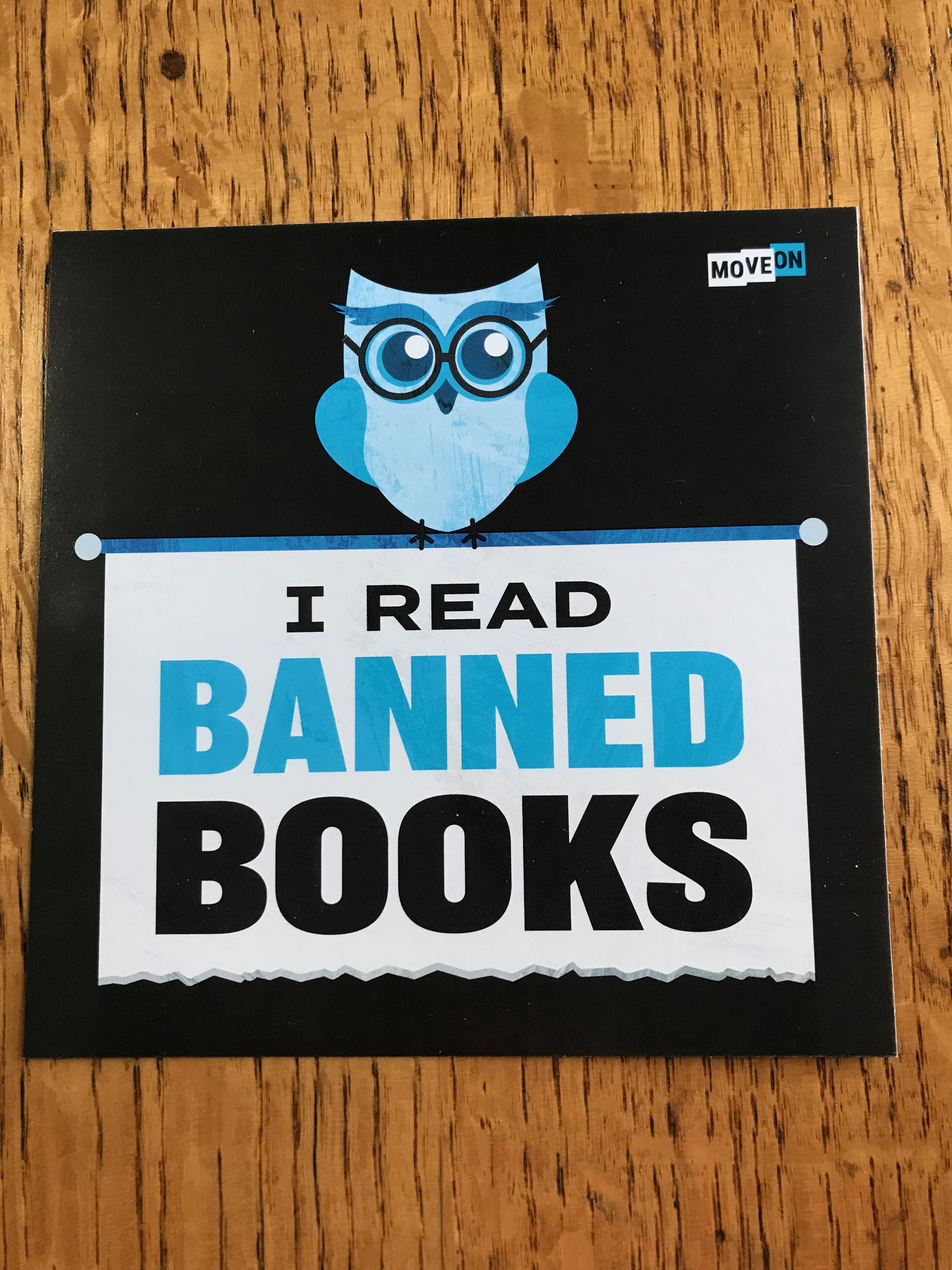
Banned Book Week starts today. As the political situation in this country continues to deteriorate into a Republican fascination with fascism, we find books challenged and banned for suggesting real fascists were anything other than nice, white boys misunderstood. It will take decades, if not another World War to undo the damage Trump unleashed. Instead of sitting in my corner worrying about the future, I read. Banned books make up quite a bit of my reading, but I do try to read one every September intentionally in honor of the occasion of Banned Book Week. It’s misguided to suggest children shouldn’t grow up. A deep-seated fear of education reveals the hypocrisy at the very heart of book banning. Adults should know better. They should read.
I love America, but nationalism is poison. Just like those who believe that only their religion can be right, many believe only their nation can. Divide that up among the almost 200 nations of the world, with individuals in each thinking this way, and conflict logically arises. Those who look at other cultures—read about them—and try to understand them, realize we each have our own way. One of the major problems is that capitalism insists all must trade and barter the way that we do. We think of people in terms of their “net worth”—which is, in reality, infinite—and want to know who owns more and is therefore more powerful. Lackeys will always follow the wealthy, kissing posteriors and professing loyalty until they have enough of their own to challenge the more wealthy. It’s enough to send any Bible-reader back to Ecclesiastes.
Books have stirred up ideas ever since they were invented. The Bible wasn’t the first book, but it too appears on Banned Book lists. Many of those who thump it read it with the acumen of a kindergartener. That’s not why it’s sometimes banned, however. It is full of sex and violence. The bits about love and hope are far outweighed by it. Books contain ideas and ideas will get out. There’s a reason I surround myself with books. They are a strange sort of castle that invites others in even as it protects. It’s not comfortable to challenge the way that you think, but nothing fascinates like a new idea taking root and growing. One of the best ways to meet people far distant and explore the way they think is to read. Banning reflects our small-mindedness, and even worse, our desire to keep that small-mindedness intact.

 Steve A. Wiggins