Cinematic Reality

monstersmadEven without the results of the recent presidential election, I would be reading about horror movies. One of the reasons is that I wonder what the appeal might be—why do I put myself in a dark room with an uncertain future? Until recently academics had thought this was something only unreflective, uneducated people did. As is often the case, such as with the electoral college, the numbers tell a different story. Andrew Tudor’s Monsters and Mad Scientists: A Cultural History of the Horror Movie is an example of what happens when a sociologically oriented film critic explores the genre. Although not overwhelming, there are plenty of tables and charts, showing the various trends of horror films from the 1930s up through the mid 1980s. Tudor analyzes what makes us afraid and the main sources of that fear: science, supernatural, and psyche. Since these are all day-to-day things it seems that movies express the basic human condition.

Reading a book published in the ‘80s, however, makes you wonder what might have been missed. We’ve had more than three decades of further horror movies and although categories may be useful, and perhaps even stable, recent events unlock further fears. I suspect there will be a comeback of Nazis in scary movies over the next few years. Horror is, after all, a reflection of those who are willing to be honest about what scares them. There’s plenty of subject matter lying about the headlines of the past weeks.

What I found especially interesting is, at least in the 1980s, statistically the great majority of films featured a supernatural threat. Of these, Tudor notes, the vampire is by far the most popular. We’ve had a dalliance with zombies since then. And I’ve seen plenty of examples where extraterrestrials form the threat. Even ghosts have staged a somewhat unexpected comeback. And movies of demons have proliferated. The supernatural does indeed scare us. I’m not sure that we can quantify it as easily as we used to. Unlike earlier generations of scholars, I’m beginning to see the horror inherent in much of society. We’ve created a scary world with even more scary possibilities. The thing about monsters is they have no sympathy. They are cold, calculating, and all about meeting their own unnatural needs. All the rest of us are just, not to put too fine a point on it, their food. I have a feeling that we’ll be seeing much more of this in days to come.

By Their Love

One of my high school teachers—I don’t have to say who; if you attended my high school you’ll already know and if you didn’t you won’t know him anyway—wrote in my yearbook, “I hope you get what you deserve.” I wasn’t very good in this teacher’s class, but he explained to me, “I sign everyone’s yearbook the same way. If you do well, I hope you get rewarded. If you don’t do well, I still hope you’ll get what you deserve.” This teacher had a reputation for being somewhat of a philosopher, and his words have struck me as particularly appropriate for this moment. We, in the cosmic scheme of things, get what we deserve. As a nation I guess we deserve a First Lady, in an example to young women everywhere, has appeared naked on the internet. Her husband married her after two previous women and has made his views on gender perfectly clear. My conservative friends went to the polls knowing that. I hope they get what they deserve.

The problem is the rest of us are stuck with him too. I’ve lived through bitter, spiteful campaigns before. The genteel art of campaigning is thoroughly deceased. 2016, however, is the first year that I saw pure hatred as a political platform. And it wasn’t on both sides. Trump made of virtue of hating one’s neighbor and claimed the election was rigged until he won—then it was, of course, impossible that it would’ve been rigged. Former First Lady Hillary Clinton, who kept her dignity throughout, never stooped to inciting hatred of fellow Americans. It likely cost her the election. To the people now saying this is just politics and stop complaining I say we have all been victimized and we all ought to feel very ashamed. This election wasn’t about money. Or financial positions. Or foreign policy. It was about hate.

DSCN4694

Hate can only be counteracted by love. I have seen many women responding to a man who considers them mere sexual object by reaching out in kindness to strangers. Women organizing to try to make this country a more positive place. Meanwhile, I hear men I know saying at last we have a strong leader who will bring them prosperity. If money is what you care for, you have my pity. This country is about freedom, equality, and fairness. All of that was jettisoned last Tuesday. Even those saying “get over it” are doing so with a smugness that is a thin veil over intolerance. I’ve never carried on with frustration so long after an election before. That’s because never before has an election—no matter which party triumphed—been won by a platform of evil intent. My grandmother, a Teutonic matron of occasional Valkyrie disposition, used to sum it up well when we boys were getting out of hand. “Schäme dich!” she used to scold. I know a country that could use her words right now.


Throwin’ Away My Shot

In what sense can someone claim to win when they failed to get the majority vote? A crooked one, by definition. Some might say “rigged,” to use language that has mysteriously disappeared once one party “won.” The definition of crooked is “not straight; bending; curved.” We cast our votes, and depending on which imaginary lines we live within, those votes are diverted to a party of electors. That means that the person who actually wins the majority vote might not win. When it happens—not often—it always benefits the Republican Party. So it has been in my lifetime. And the “winner” never mentions that the majority voted against him. It’s always a “him.” By a recent count Hillary Clinton had over 400,000 more votes than Donald Trump. That final figure may be closer to a million. Whose votes didn’t count? Compare that conservative 400,000 to the 2,000 votes that “won” Pennsylvania. Go ahead, Trumpetters, you like numbers. Isn’t that an order of magnitude or two out of whack? Doubled? Crooked.

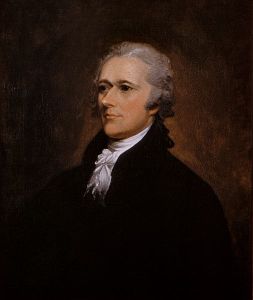
The point of the electoral college is that it has now become a game. Games, as we know from each time George W. Bush was elected, can be cheated. “Hanging chad” is engraved on the tombstone of democracy. Was my vote one of the 400,000 that didn’t count? Most assuredly so. If you know how to read, chances are so was yours. Gaming a system hardly seems to be the basis for the will of the people. The people have spoken and they have been, once again, ignored. W didn’t endorse Trump. I wonder what he thinks of the electoral college now. How does it feel, Mr. President, to have thrown away your shot?

506px-alexander_hamilton_portrait_by_john_trumbull_1806

Some who claim that Republicans know what it feels like to lose need to stop and think. When has their opponent never won both the popular vote and the electoral college? It hasn’t happened in their lifetime. The electoral college may have made sense once, but it no longer does. When we try to tell young people that their vote counts, then put the candidate in office who decisively lost the popular vote, we’re really telling them “throw away your shot.” Still, Republicans are gloating even as the Democrats play by the rules (they’re nice people) and politely throw away their shots. It’s time we stood up for ourselves. When the most contentious candidates (the mind reels at where the GOP can go from Trump), not backed by any previous presidents of their own party, can win based on a technicality, we all need to stand in Weehawken and contemplate what this country has come to.


At the Crossroads

flood_album_cover

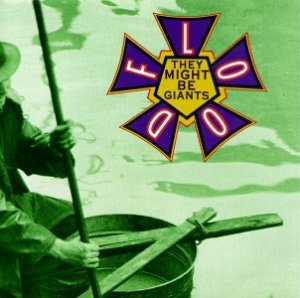
Back before there was iTunes—before Napster was even a thing—I heard a song on the radio. It was by a relatively new band, They Might Be Giants. We lived in Illinois at the time and I was being paid so poorly that we couldn’t afford luxuries like CDs. When I called the local radio station to ask them to play the song (“Birdhouse in Your Soul”) they apologized—they didn’t have the album. “We really should,” the receptionist told me. Although I was only earning a part-time salary—the fate of many a doctorate holder—and my wife was still in school, we eventually bought Flood. It quickly became one of our favorites. One of the songs that immediately struck us both was “Your Racist Friend.” It’s been going through my head lately, for some reason. “I know politics bore you, but I feel like a hypocrite talking to you and your racist friend,” the duo sings. I could quote the entire song, but let me highlight one of my favorite lines: “Can’t shake the devil’s hand and say you’re only kidding.”

I’ve been reading online that some people are saying, “Just get over it. You lost. Deal with it.” Auf Deutsch, “Komm damit klar.” After so many rounds of Kübler-Ross that Elisabeth is getting dizzy in her grave, I’ve begun to realize something. This was no ordinary loss. I’ve been alive long enough to be disappointed with election results several times. The psychological trauma from Tuesday rates somewhere between 9/11 and the Challenger explosion. To put this is perspective, when Reagan won I was depressed for a while, about as much as when the Steelers lost Super Bowl XL, and I’m not a sports fan. I’ve never spent the hours after an election glancing at the faces of others to see if they looked as damaged as I felt. “Just get over it” people?—it’s called shock. “Can’t shake the devil’s hand and say you’re only kidding.”

This was no ordinary election. Yes, I was born in the Kennedy administration. I was too young to understand Camelot, but I’m now old enough to read the writing on the wall. I saw our nation put a man on the moon. I felt the unending frustration of Vietnam. I watched Nixon resign after Watergate. God help us, I even survived two terms of W. I’ve never felt that we were bargaining our soul before. I was at the crossroads at midnight. I know what I saw. Can a man who has openly treated women as objects, insulted people for their race, and advocated thug violence to win lead a unified country? I don’t know. “If anything was broken I’m sure it could be mended,” the song says. Let’s hope so, but let me contemplate the ghost of democracy past. It’s my right.


Final Frontiers

img_0610

Is there such a thing as an existential illness? Answer that if you want to, but it’s rhetorical. I’ve been voting since 1980 and I’ve taken my fair share of bruises in the process, but this time my soul feels as if God has hung his “gone fishin’” sign on the pearly gates for good. I am ill. Maybe it was the ebullience that came from having eight years of progress where, although things weren’t perfect, they were sort of holding steady. I’ve always considered myself a populist. I don’t know how a billionaire can convince millions of people he’s one. To be populist you’ve got to be one of hoi polloi. Growing up poor, I took my licks then and I’m still taking them now. No, this wound goes deeper than the bone. Deeper than the viscera. It’s an existential illness.

All things considered, I don’t write too much about politics on this blog. All my adult years I’ve been an unapologetic Democrat. I confess to having grown up Republican. But I believe in the fair treatment of others. I know not everyone will or can be happy. I also know that it’s wrong to denigrate anyone because of their gender, race, orientation, or physical ability. Seems to me that our country was sort of the final frontier where you could go if you believed this kind of thing. Where can you go from the final frontier? There are no other land masses to discover. Maybe if I put on enough layers, Antarctica might not be so bad. Beyond that, where can one go to be a liberal in a world that desperately need some heart? Where money isn’t the measure of all things. Where Mom is right just as often, if not more than, Dad.

It’s a strange thing, this existential illness. Politicians are already cooing their pleasantries, as if nothing more than a slight upset occurred. It seems to me that whenever there’s an upset the popular vote disagrees with the electoral college. It also seems to me there should be a place where the wealthy aren’t considered better by virtue of their material status. I have this existential illness, but I can still dream. Is there a way forward from here? Sometimes I think I can see that horizon where all people are treated fairly and equally, and sometimes the sun seems to be rising over that horizon. Today I feel motion-sick from being jolted backwards. I’ve been disappointed before, but I don’t remember it hurting this badly. If anyone knows a good existential doctor, please pass along her name.