
Who would’ve thought that publishing could be a scary industry in which to work? Apart from the constant changes, that is. Or maybe the changes are the reason it’s scary. Our society has never been through a revolution quite like the tech revolution. Yes, writing was pretty radical when it was invented, but it took millennia before literacy got to the point where it created widespread change. Tech changes everything, and it does so very quickly. Writing changes everything, but does so over the longue durée. It began in a pretty humble way. Crude drawings, called pictographs, came to represent things that mattered to pre-capitalists. Take an ox head, for example. It could represent the entire animal. While some pictographs can be discerned in cuneiform (just as they can in some Chinese characters), the best example is perhaps Egyptian hieroglyphs.
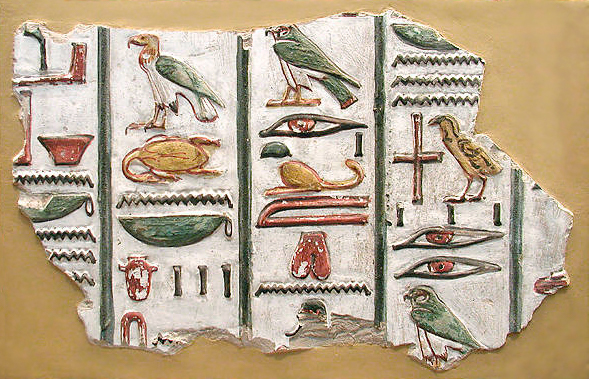
Whether wedge-headed oxen or beautifully stylized hieroglyphs, both writing styles came to be representative for phonemes. Egyptian and Mesopotamian writing tended to be syllabic rather than strictly alphabetic, and indeed, the invention of the alphabet made learning to write simpler. Even after this innovation, however, it still took over a millennium before its practice became widespread. Writing meant that ideas could be preserved beyond a lifetime. Instructions and history could be recorded. When a mistake was known and noted, remaking that error could be avoided. (This seems to be a feature that has been lost to history, judging by recent fascist political parties.) One of the great advantages to writing is the precision with which ideas could be expressed and preserved.
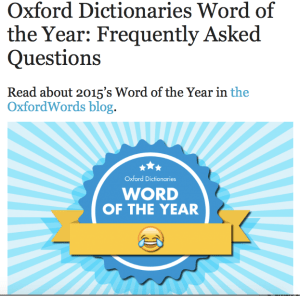
So how does this make publishing scary? Some analysts are now claiming we are in a “post-literary” society. Reading is no longer necessary. We download visual content to gain the information we need. When ideas need to be expressed in writing, we have emojis. What happens, however, to synonyms when emojis take over? Our humble ox head that eventually morphed into the capital A may now be represented by a stylized cow. Or is it a bovine? What does that cow image convey? Books—novelties at the moment—are being written with emojis. Learning to read is difficult. It takes years and changes our brains. Technology is encouraging us to become post-literate. Even blogs are now becoming outdated. Yet, looking at those emojis we see the history of writing moving in reverse. From the precision of clear and accurate description to vague notions that look cool but leave us guessing otherwise. Perhaps those ancient scribes scratching sketches into clay had it right to begin with.
 Steve A. Wiggins