High Places, NJ

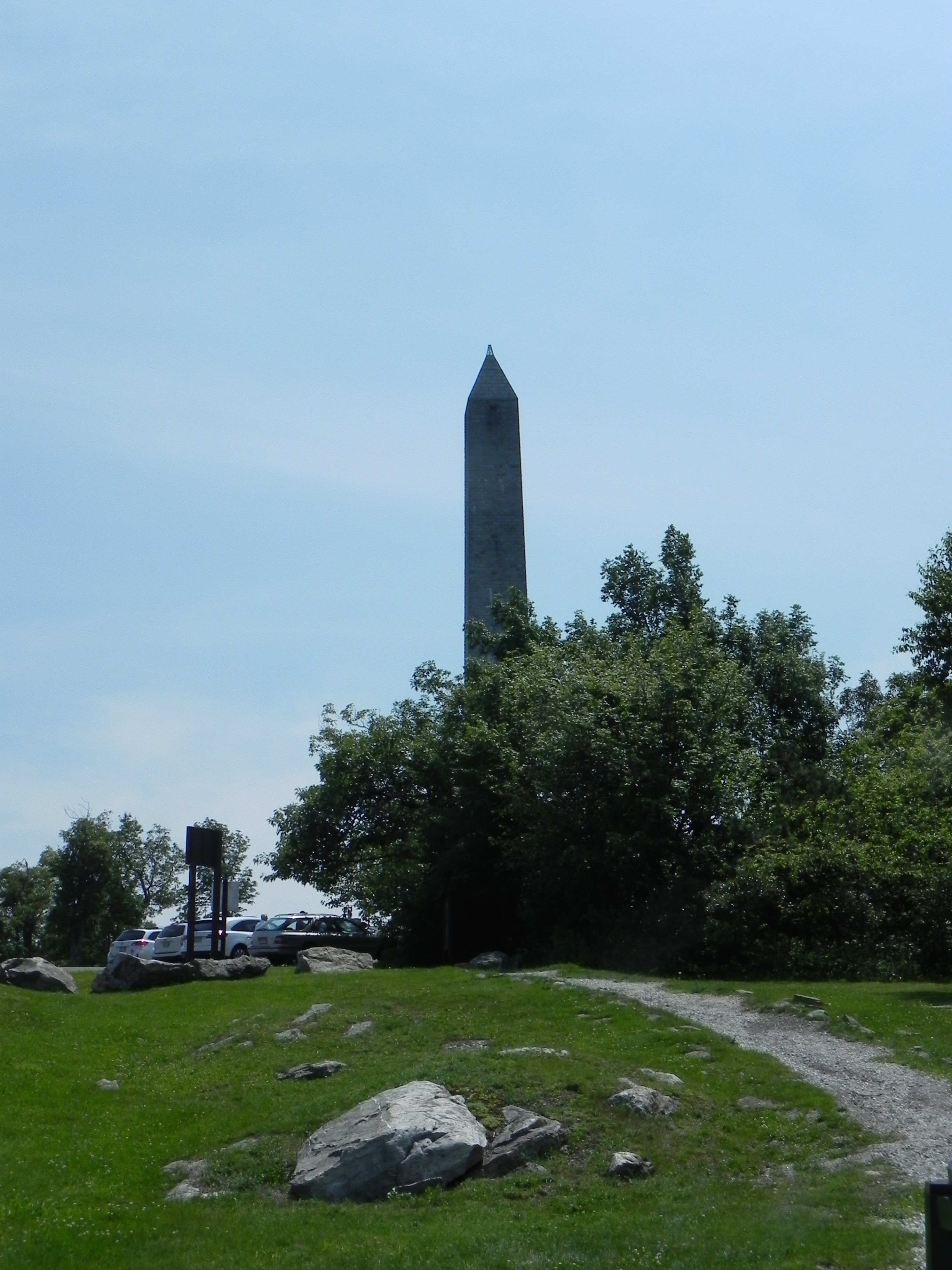
The “high place,” in the Hebrew Bible, was a source of constant vexation to the “orthodox.” Scholars have long puzzled over what was meant by the term, the assumption early on being that they were geographically the highest points around. Although that interpretation no longer holds the sway that it once did, the concept of the high place has remained. I suspect that’s because there’s something mystical about being at the highest point around. July 3 was a rare holiday for everyone in the family, so this year we headed to High Point State Park. High Point is the geographical highest point in the state of New Jersey, up near the New York border. It’s not as high as the mountains you might see in the western part of the country, but at the top there is a panorama that gives unbroken visibility in 360 degrees. Except for the tower.
DSCN5093

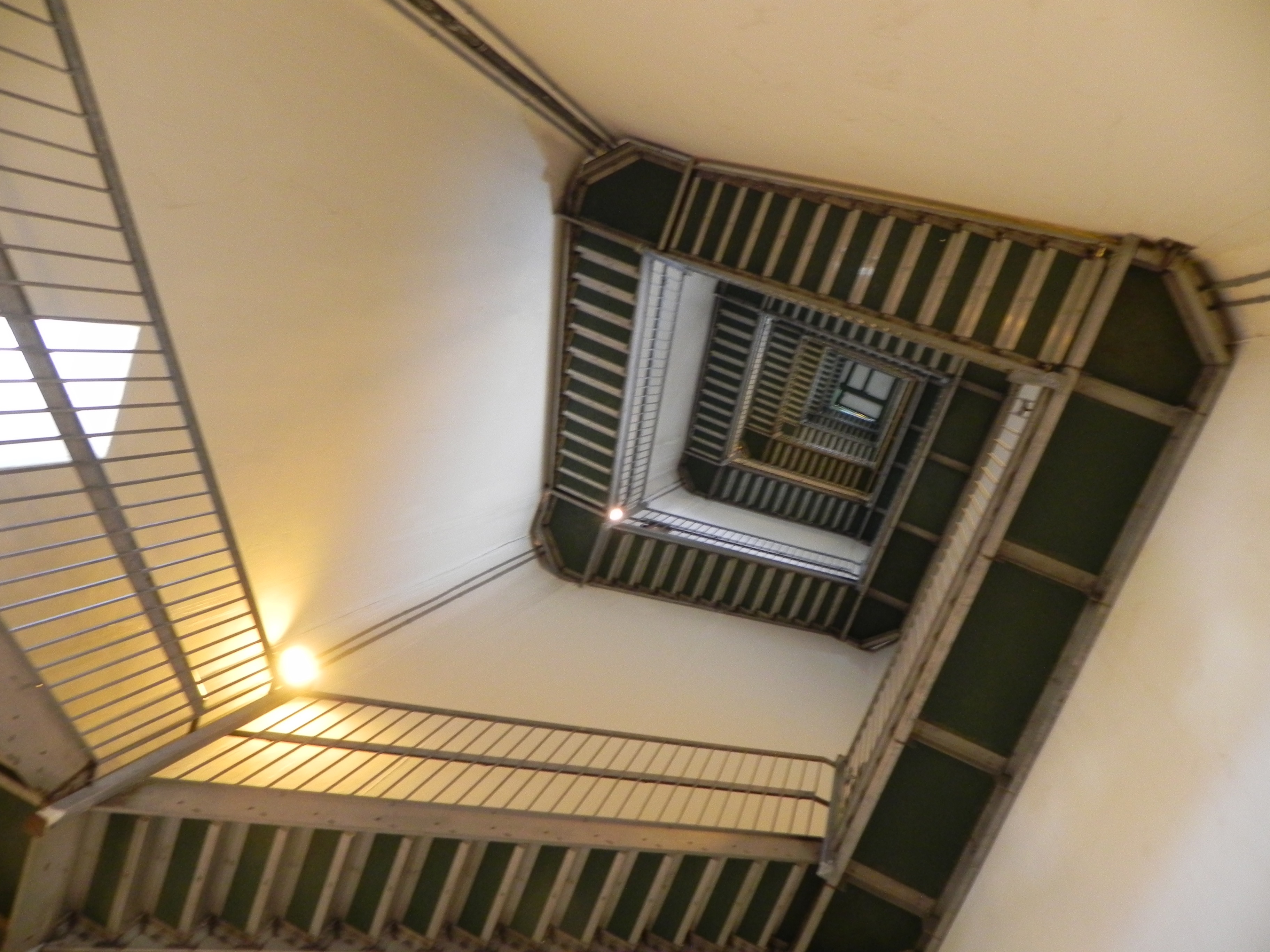
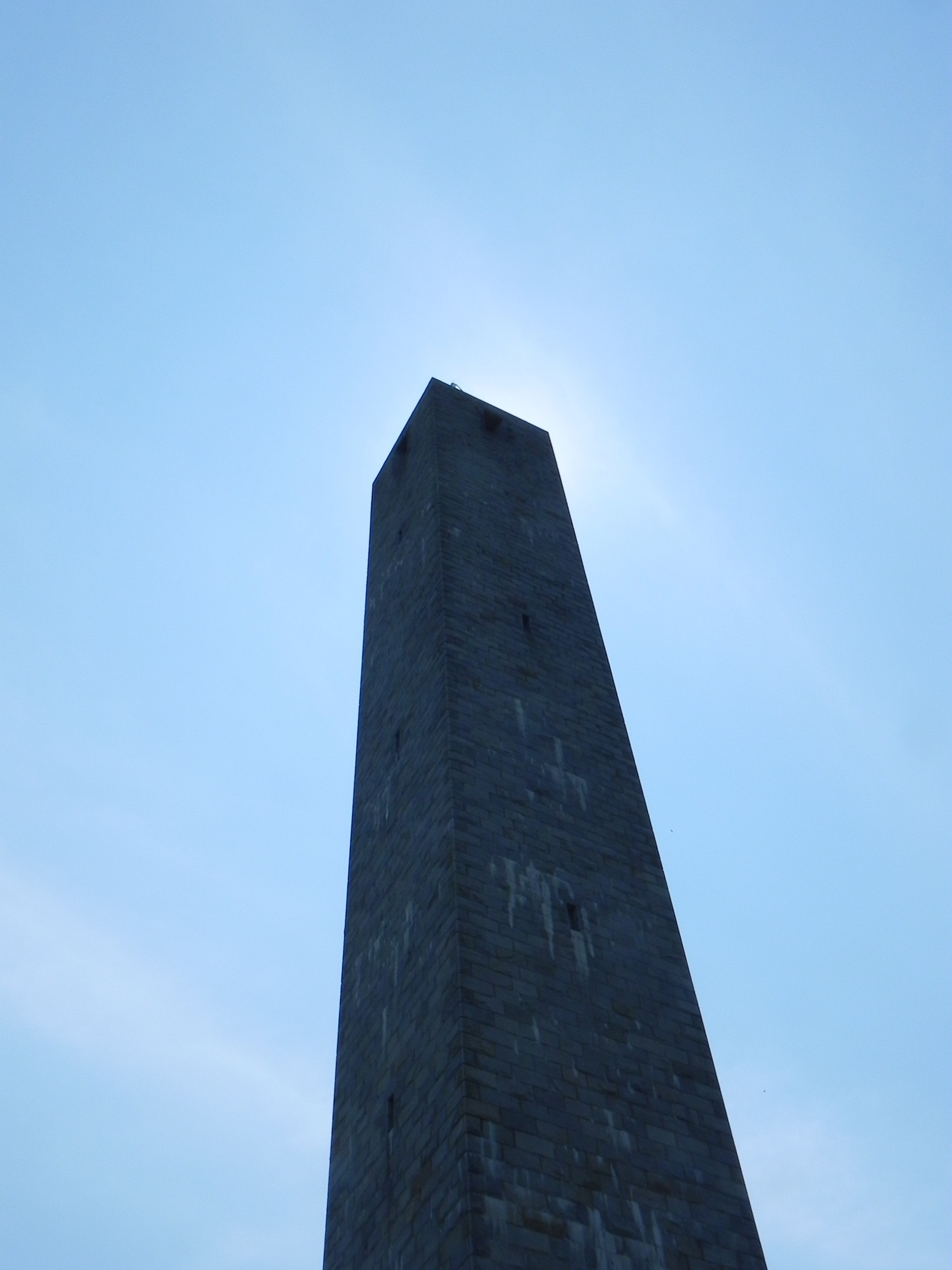
Towers are just as biblical as high places. They are very human and always contain at least a small element of hubris. Nature may have said thus far and no further, but we can go higher. And those of us with the inexorable will to climb, must go up. The view from the top isn’t very good since the windows are steamy and the mildew makes you a little leery of getting too close, but the climb is intensive, even for those used to stairs. Nevertheless, a kind of light-headed giddiness attends standing at a point higher than which you cannot go. I pulled out my altimeter to discover we were 1690 feet above sea level. In New Jersey you can’t get any higher. Were there angels up here? How close to Heaven were we? Towers are irresistible as the mythical builders of mythical Babel knew. And although we couldn’t see Manhattan from here, I knew that just across the river taller towers stand.
DSCN5109

One World Trade Center stands at a symbolic 1776 feet, higher than we were at the moment. It was, after all, the requisite holiday to celebrate independence that brought us here in the first place. The vistas that we could see, however, were relatively undeveloped, a rarity for the state of New Jersey. If we had the time, we might have been able to get out into nature itself instead of these structures that humans build to mask the fact of our own limitations. Maybe that’s what high places were all about in the first place. Every day I walk past the Empire State Building on my way to work. I can see it if I find an office with windows. Over my head up here, on the very top of New Jersey, I see a bird soaring. I think of Melville, and Ahab, and Manhattan. Slowly I begin my walk down to lower places.
DSCN5099


Anatomy of a Neurosis

I’m sitting in a building less than 10 blocks from where a shooter opened fire in New York City this morning outside the Empire State Building.  I can still hear the helicopters buzzing overhead as they’ve been doing since just after 9 a.m.  One week ago I walked with my daughter down that very block after an office outing.  This is the third public, multiple shooting since July in the United States. Twenty are dead, over sixty have physical scars, and the rest of us have psychological trauma.  Gun control?  Only a distant dream.  I have been reading quite a lot about embodiment lately.  The idea is both simple and complex at the same time: we are born with physical bodies and our minds spend our entire lives trying to make sense of them.  Guns have a way of radically interfering with the process.

Stop, children, what’s that sound?


Often I have heard the adage, “guns don’t kill people, people do.”  This may be true, but it is no more so than the fact that we are all embodied creatures and we have a right not to be shot by homicidal maniacs.  At least I think so. There are enough guns to wipe out the population of this nation, and I’m sitting at my desk in a subtle panic since nobody seems to know what happened yet. The beating of the helicopter rotors is loud, petulant, distracting.

As the morning wears on the reports begin to take some order. The shooter wasn’t acting indiscriminately. The nine of the ten (later revised to ten of the eleven) people shot were caught in the crossfire between police and the gunman. The helicopters leave. Perversely I find myself relieved. Natural disasters happen and the lives of countless thousands are taken. The difference is there no motive is involved. As much as some televangelists want to tell us that “God” is punishing mostly innocent people, the fact is tsunamis, hurricanes, wildfires, earthquakes, volcanoes, and tornados are completely natural events. Maybe firearmophilia is natural as well. I can hear the sirens as innocent bystanders are rushed to the hospital. My embodied psyche turns back to my computer. Work won’t wait, and no matter where we are, we are all potentially innocent bystanders in a world where trust in guns has eclipsed trust in gods.


Dissing Mother T.

I pity the fool who challenges a powerful religion. Compelling religion. Tall towers. Tears of regret. The Empire State Building has a famous tower light show. Depending on the occasion, diverse wavelengths of light splash off the iconic skyscraper, and those who have the scorecard can see what’s important. In a city like New York there are countless occasions – holidays, Yankees and Mets games, significant birthdays. New York also houses a significant Catholic population. So it was not a popular decision on the part of the owner of the building to turn down a request to light up the town in honor of Mother Teresa’s centenary. I’m sure it was uttered with the purest of intentions, but the words of Bill Donohue, the president of the Catholic League, made me shiver just a little: “His [the owner’s] decision to double down at this juncture – in the face of massive support for our request – is something he will regret for the rest of his life” (according to the New York Daily News).

Mother Teresa, to many, is the epitome of Christian charity and selflessness. Devoted to helping the poorest members of a cruel world, she lived a life that many religious leaders could stand to emulate. On the front page of the same newspaper carrying this human interest story was the headline of how Seton Hall’s finalist for university president withdrew from the search after requesting a $300 K salary for the job. He is a priest, after all. Beg pardon, a Monsignor. And a professor of Christian ethics. I pity the fool who takes ethics seriously.

Somewhere between a 300,000 dollar salary and abject poverty, many religious believers are boggled by the mixed messages broadcast by their leaders. Most people in western religions are trying hard to avoid hell, complying with the traditions and new demands made by the spiritual CEOs. In a seminary setting someone once said to me that if Mother Teresa had advocated for responsible parenting (that great lumbering demon of birth control) perhaps the roots of the great poverty she daily redressed in Calcutta might have begun to dissipate. But the word from on high had been uttered and was immutable. She would not live to see her name up in lights. From what I’ve read about her, I have a strong feeling that Mother T. is just as happy to stay out of the limelight. I pity the fool who doesn’t understand.

A picture is worth $300,000


Towers of Babel

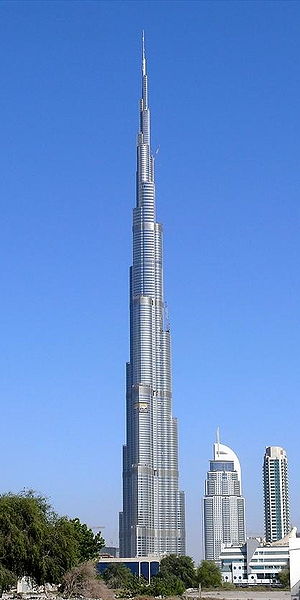
Yesterday I ran across a graphic on the Awilum blog that juxtaposed the tower of Babel with the Burj Dubai, the world’s tallest structure, to be completed next month. Perhaps it is a “guy thing,” but I can’t stop being fascinated by very tall buildings. An inveterate acrophobe, I avoided New York City until I was in my twenties and I was gritting my teeth the entire visit the first time I went to the top of the Empire State Building. Although they frighten me, I can not keep away from them. Driving through Chicago while living in the Midwest, I always kept a wary eye on the Sears Tower, lest it should fall my way. When the Society of Biblical Literature met in Toronto, I braved the CN Tower and even stood on one of the thick glass plates that give a bird’s eye view of the ground far, far below. Now there is an even taller building that fully deserves the name “sky-scraper.” At 818 meters, the Burj Dubai in the United Arab Emirates soars far beyond other efforts at the ultimate masculinity. It will be nearly twice as high as the Empire State Building when it is completed.

Gnu view from Wikipedia

Joseph Campbell, the late mythographer from Sarah Lawrence College, has had an enormous impact on the study of myth. As a specialist in Ugaritic mythology I find many points of disagreement with his assessment of mythic symbiosis, yet he once said something that has stayed with me ever since. In his Power of Myth video, he states that societies show their values by their tallest buildings. This statement is perfectly justifiable — the amount of resources required to erect enormous buildings does show a dedication to a quasi-divine purpose on the part of a society. Campbell’s example was the medieval cathedrals, and for anyone who has visited a medieval town this is easily affirmed. (St. Vitas Cathedral in Prague and St. Andrews Cathedral in Scotland confirmed this for me.)

The Hebrew Bible, however, casts another view on tall structures. Buildings such as the Tower of Babel are the ultimate in a Judaic assessment of hubris. Genesis 11 makes short work of Babel, stating that God has to stoop down to see this great effort, yet he feels threatened by it nevertheless. Our towers today demonstrate our conspicuous consumption, yet I can’t help but be impressed. Where some see only shifting sand atop endless pools of petroleum, other visionaries see the tallest structure on the planet. Just thinking about it, I find myself clenching again. I don’t plan a visit there anytime soon, but it is in the neighborhood of Babel, for those who speak the language.