Long Tail

There’s a truism in academic publishing (how many of these are actually falsisms!) that a book reaches its sales potential in three years.  After that, the received wisdom says, a sale here or there may occur, but the book has reached the end of its commercial life.  One of the problems with this is that sometimes a topic will experience a resurgence, or, perhaps, pick up for the first time.  Some publishers raise their back list prices every year, making those late sales nearly impossible.  McFarland, however, seems to understand that if you lower prices after the front list sales, a book may live on.  I received a royalty statement for Holy Horror this week.  I’m used to sales being low but I was surprised to see that the lifetime total is now up to 246 copies. Still no bestseller, but more than it was six months ago.  Many of those sales have been in the past year, six years after publication.  I was chuffed.

Academic publishers who price books at around $100 and keep them at that level are killing those books.  Nightmares with the Bible is so priced (and the publisher has no taste for paperbacks), meaning that it has sold less than 100 copies.  Surprised?  I’m not.  Academic pricing models are terribly outdated but the extra revenue from hardcovers priced beyond the reach of the interested reader is just too enticing to leave behind.  Libraries are the main market, in their mind.  Libraries, however, are in the crosshairs.  The Make America Dumb Again crowd is even slashing our copyright library—the Library of Congress—where a copy of each book published in America is kept.  Who else will be left to buy expensive books?

Speaking of libraries, I have an embarrassing confession to make.  I’ve seen (but not been in) the largest library in the United Kingdom, the Bodleian.  The Bodleian is the main library of Oxford University.  I’ve been to Oxford a few times but I don’t know the city well.  The embarrassing confession is that I realized I’d seen the Bodleian only by reading a novel that stated Blackwells, the bookstore, is just across the street.  I know right where Blackwells is, of course, and have been there a time or two.  There’s a kind of irony in that I learned a truth about the world by reading a novel about a place I’d been.  I spend more time in bookstores than libraries these days, but since I make purchases I like to think I’m supporting the growth of knowledge, in my own small way.  And I write books, which, pleasingly, still sell a few copies in a year even when they’re old.

Sudden Monoliths

Okay, so I’ve been captivated by the monoliths.  You know, the ones that even make the New York Times.  These artistic pieces show up, unexpectedly, and unexplainedly, around the world.  The trend began in 2020 in Utah, as far as anybody knows.  These shiny pillars are excellently meme-worthy and are darlings of the internet.  And their history goes back before 2020.  Even before Stanley Kubrick.  You see, most news stories point out that Kubrick’s 2001: A Space Odyssey—one of the most influential movies ever made—established the idea of monoliths as being alien beacons (a favorite kind of beacon).   People instantly know what a monolith symbolizes.  Or at least they think they do.  But monoliths have so, so much more to offer.

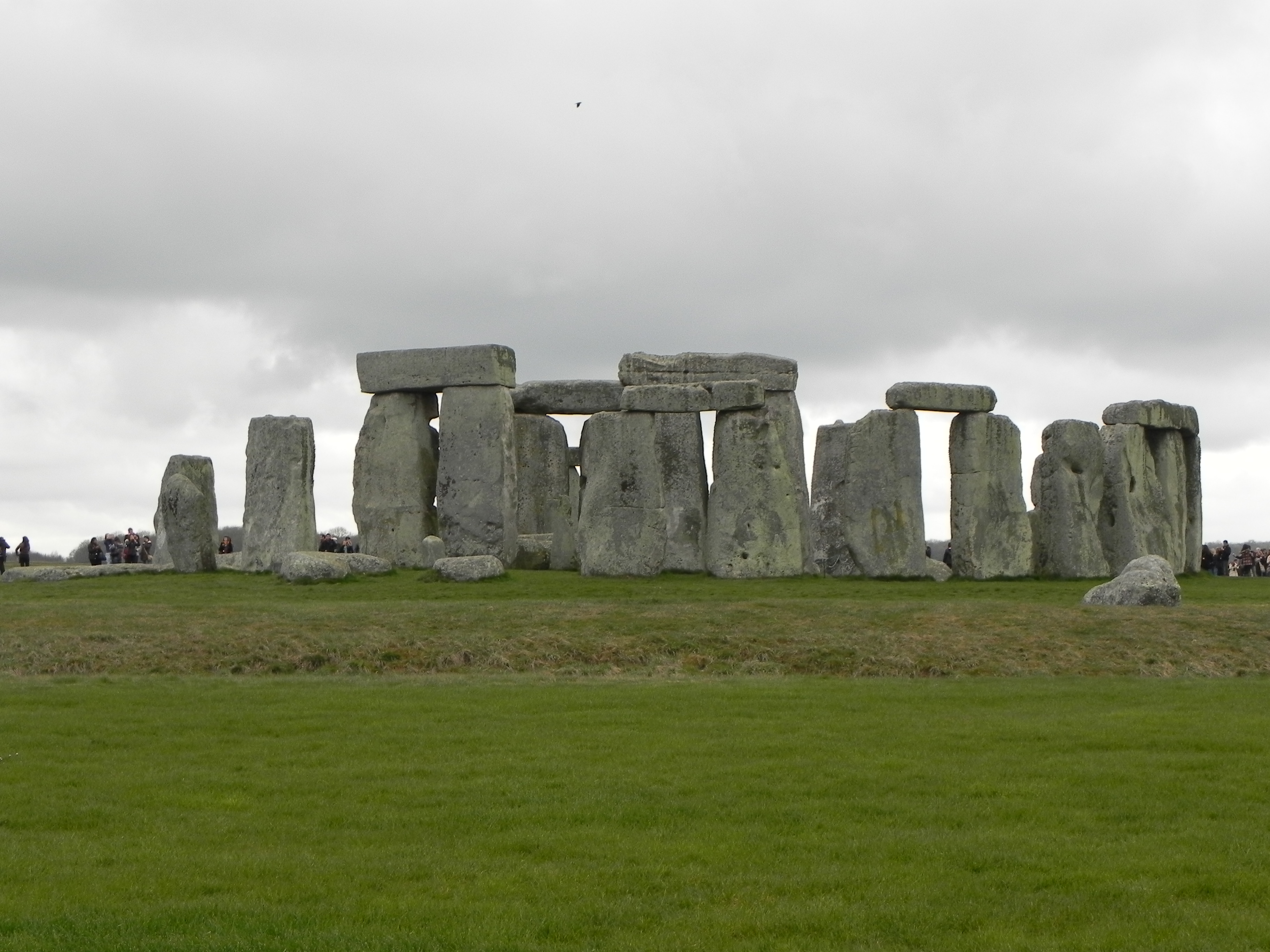
Perhaps the most famous monoliths in the world are found at Stonehenge.  Mysterious and beautiful, this monolithic ring has captured the imagination for generations.  When my wife and I lived in Scotland, we made a point of seeing as many stone circles as we could.  Way up in the Orkney Islands the Ring of Brodgar was probably the most impressive of them, owing to, in large part, its remoteness.  Standing next to these tall monoliths makes you realize how small people are but also what they can achieve when they cooperate.  While the UK may be better known for its monolith circles, even older ones appear elsewhere.  Rujm el-Hiri, for example, in Israel.  Although not a circle, the monolithic pillars at Göbekli Tepe should be rewriting history books.  Why the monolith?

Freudians would point to Tuto Fela in Ethiopia or other phallic architecture, but my mind tends toward Rapa Nui, or Easter Island.  The human being tends to stand taller than wide.  Evolutionary biologists tell us that was to help us see over the tall grass of the savannah.  (And if you doubt grass gets that tall, visit my yard sometime in the summer.)  These monuments seem to symbolize more that the procreative architecture of male human anatomy.  They seem to point to our ability to see over the obstacles in our way.  They seem to say, when people are divided against each other the plains remain barren.  When they decide to work together, Stonehenge emerges.  I don’t know the motivations of these modern artists.  I do admire their ability to put these monoliths into remote locations without leaving evidence of how they did it.  I really appreciate those creatures that stand tall and have a spirit of cooperation, even if others just don’t see the point.


Preserving Culture

When I travel (remember travel?) I try to visit the places of famous writers.  It doesn’t matter much whether I’ve read a lot of their material; I know kindred spirits when I feel them.  Last summer—the one before the pandemic—I had to make a business trip to Oxford.  Now Oxford has a long, long list of literary illuminati, and I didn’t have much free time.  My hotel, however, turned out to be just a couple of blocks from the house of J. R. R. Tolkien.  One patch between meetings, I wandered over to the house.  It’s behind a high wall, so you can’t see much.  Like most European private homes, it isn’t ostentatious—over here we like to make it obvious when we’re wealthy.  In any case, I stood as long as a stranger can comfortably stand outside someone else’s house and tried to commune with the spirit of the former occupant.

Just the other day I noticed a New York Times headline that stated a movement is afoot in merry old England to purchase Tolkien’s house to make it a museum.  Although there’s no scientific way to prove it, people are somehow connected to the places they live.  There’s no other sensation like returning to your home town.  If, for some strange reason, anyone wishes to recall me after I’m gone (perhaps my pen name will take off someday), they’ll find precious little.  Not one of my pre-college homes still stands.  Not that that’s that unusual in the low rent district.  Still, when I visit my hometown, small as it is, almost nothing of me remains but it still feels like I belong.

I can’t say that I felt much other than my own awe at standing outside Tolkien’s house.  It’s on a residential street, and people were driving and walking by.  I was the only one who seemed to be hanging about.  Probably a bit suspicious-looking wearing a tweed jacket and in general appearing like a displaced academic.  Much of the tourism industry, however, is based on the draw of certain locations because someone famous lived there.  We want to be in touch with them.  Show our respects, perhaps.  If visiting Oxford weren’t always a work occasion for me, I could quite enjoy wandering its literary haunts and ending up for a leisurely afternoon spent in Blackwells.  We congregate in such places for a reason.  I’ve lost track of all the authors’ homes I’ve visited over the years.  Each time, I’m compelled to say, I’m glad someone thought to preserve them.


Giving a Hand

A friend sent me a news story that really spoke to me.  A bookstore in England, forced to move because of rent, asked for volunteers to help move their stock to a new storefront.  The response?  They had to start turning people away after 250.  A human chain was formed to pass books down by hand to their new home.  Book people, it seems to me, are like that.  I spent a recent weekend looking at downtown Easton—one of the triplet cities that make up “the Valley” (Allentown and Bethlehem being the other two).  Surprisingly, I found two used book stores within blocks of each other.  The proprietors (especially of the first) were friendly and helpful.  They were book people.

I mentioned to said first proprietor that two of the books I was buying were to replace copies ruined during our move.  The look of alarm and sympathy on her face was genuine.  Book people know that look.  They can feel each other’s pain.  They will freely give of their time to hold knowledge in their hands, if only briefly, to pass it along to others.  Now, like most bookish people, I’m aware that I’m considered odd by the average guy who enjoys sports, mechanical stuff, and money.  I’m content with a book, either reading or writing, and the occasional foray out among the more active and boisterous.  I like to think that if I lived in Southampton I’d have given up a vacation day to help out.  Saving books is saving civilization.

Book people know there’s more to life than themselves.  Ironically, such readers are often quiet and sometimes thought to be stuck up.  If you go to help move books by hand, I suspect that gives the lie to feeling above other people.  Reading is thought of as a passive activity, but it makes the mind more active.  There’s a reason our species have large brains.  It’s not that all books are for everyone—I’ve had plenty of disappointments in my reading life—but the unread book is full of potential energy.  And often that already read rewards us when we turn back to it.  Books, you see, are the ultimate givers.  Those who sell them may make a profit, but the return on investment tends to be quite high for the buyer.  If you have to move and you hire a moving company chances are they’ll complain about your books.  You’re better off asking book people for an unstinting hand.


Not Camelot

In the English imagination the Arthurian legend is deeply connected with the Christian myth of Britain’s founding. This may not be on the surface, of course, but the places associated with King Arthur (as well as the tales themselves, such as the Holy Grail) overlap with sacred locations. I was reminded of this by a recent Guardian article about Tintagel Castle. Back in the day when my wife and I visited Tintagel with friends, I was still shooting film. Slides, no less. Some wonderful images came out, the way that only Ektachrome delivers, but I haven’t been able to convert them to digital. I guess you’ll have to take my word for it. Tintagel is in the news because English Heritage, the owner of the property, is developing it to make it a larger tourist draw. According to Geoffrey of Monmouth King Arthur was conceived at Tintagel. Not in the castle—now in ruins—that was built centuries later, but on the island that is accessed by footbridge over a dramatic cove on the Atlantic Ocean. It’s enough to make you drop your pastie.

Our own little Merlin

Our own little Merlin

Locals, according to The Guardian, protest the dressing up of the historic site. A bas relief of Merlin has been carved into the living rock, and this is hoped to draw the Glastonbury crowd to the southeast. Glastonbury, upon our visit, was already the home of New Age vendors. It too has connections with Arthur. The staff of Joseph of Arimathea can be seen, still growing after all these centuries. The Holy Grail—likely from Celtic mythology of the cauldron—is also associated with Glastonbury. Oh yes, and also King Arthur’s grave. Even apart from Monty Python, the legendary king has captured the imagination of thousands across the centuries. There’s something about Arthur.

The historicity of the king, however, is vigorously debated. The same is true of many religious founders. Those around whom legends grow become more and more inaccessible with the passing of the years. England was Christianized in the seventh century as part of a political expansion. If Arthur ever lived, it was after that period, perhaps in the days before Beowulf. We just don’t know. It is clear, however, that his legend is intertwined with that of those early Christian days. There never was a Holy Grail—of that we can be fairly certain. In the service of myth-making, it is nevertheless indispensable. Staring out over the Ektachrome sea at the ruins of the island castle of Tintagel, it is only too easy to believe. If only I had the pictures to prove it.


Henging Our Bets

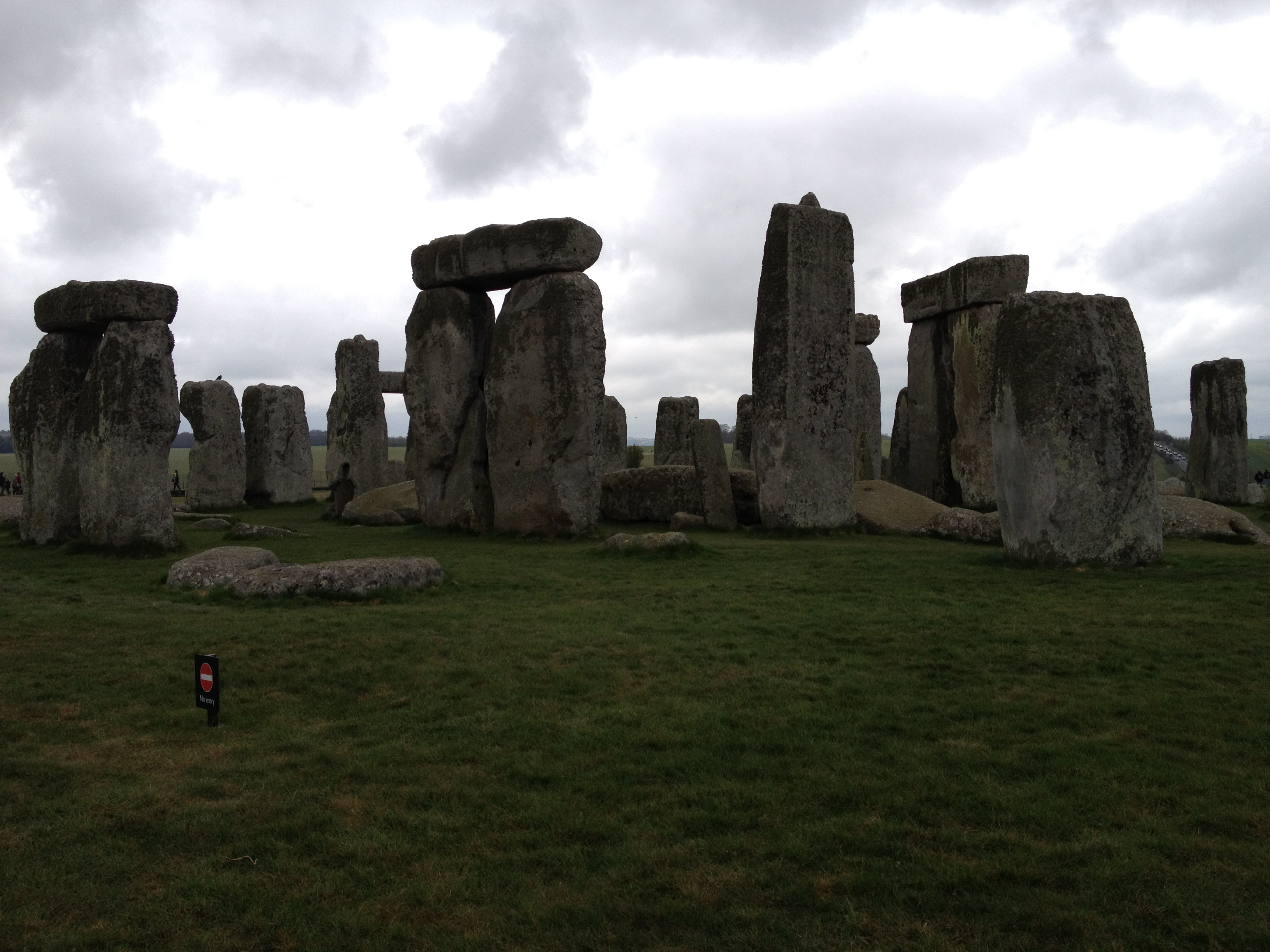
With the discovery of Göbekli Tepe, the history of civilization has received an unexpected prologue. In the view of the archaeologists involved in the excavation, the site can only be religious in nature, indicating that the earliest communal efforts of humans were not for mutual protection or for the benefits of growing crops, but for worship. In an era of angry atheists and nones, this isn’t really welcome news. Many people are ready to flush religion once and for all, claiming that it inspires only terrorists and fanatics to more and more extreme deeds. Well, I suppose Göbekli Tepe can be considered a form of extremism. Massive amounts of energy were required for the building of the site. And it was buried, intentionally, when the builders were finished with it. The news of a new component to the much later Stonehenge complex, the Durrington Walls, has recently been presented. Stonehenge, in England rather than in Turkey, and much closer in time to us than Göbekli Tepe, is a site that has touched the human imagination in a profound way. Still primitive at the time of its construction, Britain was a land already brimming with religious monuments. The new discoveries make it even more intriguing.

IMG_0234

Stonehenge is only a small part of what is now being called the Durrington Walls super-henge. Those who visit Salisbury Plain know that Silbury Hill and West Kennet Long Barrow are both impressive in their own right, and not far from the more famous sarsen stones that appear on everything from coffee mugs to tee-shirts and in movies and television shows of all genres. This part of prehistoric England seems to have been a sacred site many hectares in extent, with various “temples” and monuments dedicated to a religion we simply don’t understand. What is clear is that massive human energies were put into the building, expanding, upkeep, and functioning of this site. People have a deep, and very passionate urge to answer the religious longing that even sophisticated engineering can’t placate.

It could be argued, of course, that we’ve outgrown our childhood need for parents in the sky. Science and rational thought have shown us the way forward and although ancient monuments might be a fun diversion, they really mean nothing. I would disagree. Places like the Durrington Walls super-henge indicate what it is to be human. Clearly, given that even Stonehenge fell into disrepair and lay neglected for centuries, it was not a continuity that stretches, uninterrupted to today. Nevertheless, the effort expended to fill a void we feel should tell us something about what being conscious creatures is all about. Life doesn’t always make sense. The rational cannot explain everything. It would be naive to try to make Stonehenge reveal its secrets, but even standing at a distance (which is the only way you can gain admission any more) you have the sense that you are among those who knew what the human spirit required. Even if pagan and illiterate, they have spoken to us through the ages and we can only continue to wonder at what we’ve lost.


Honest to Good

IMG_2029_2

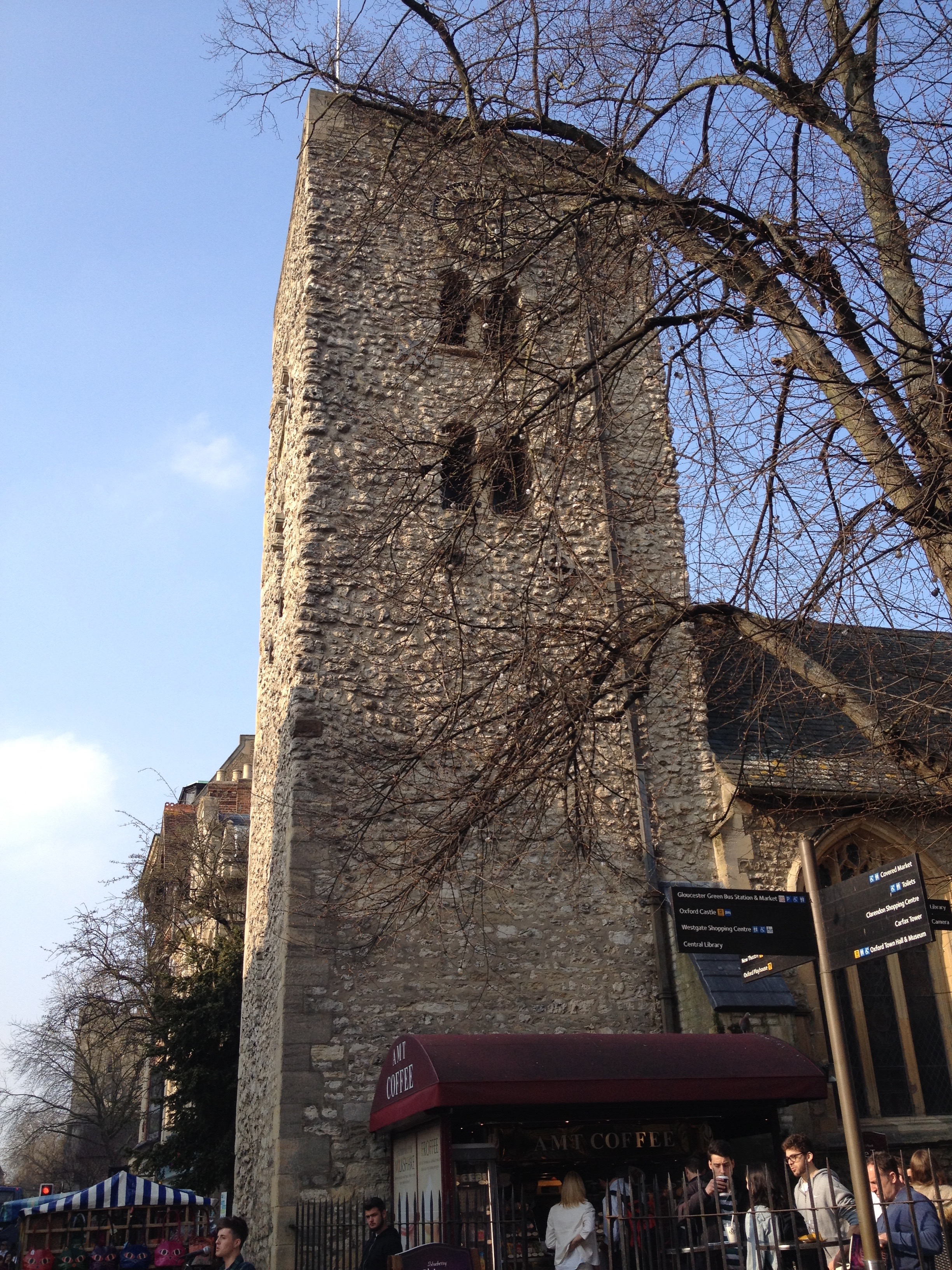
The oldest standing building in Oxford is the Saxon era church tower of St. Michael at the North Gate. Dating from around 1040, it still stands, providing shade to the various buskers who are hoping to earn a bit of cash from their musical talents below. Although there are some modern buildings that harsh the historical sense of the city, you get the impression that the British revere their tradition. A recent article in The Guardian notes that the United Kingdom, seat of the Anglican Church worldwide, is among the least religious countries in the world. Depending on one’s perspective, that is either very good or very bad news. Several analyses exist as to why it is so. The country has gone from an empire on which the sun never set to a strong, yet diminished country. The two World Wars took an enormous toll on the island nation. The population tends to be well educated. They adore their royals, although the monarchy is largely for show. There is a disconnect between the fiction and the fact of life in such a place.

Britain may be leading the direction toward which secular societies will inevitably follow. Still, the survey cited in the article indicates that two-thirds of the world population sees itself as very religious. Surprising and flummoxing atheist advocacy groups everywhere, the young tend to be more religious than the old. Religious belief shows no sign of dying out. It was predicted decades ago that it would be dead by now. We were supposed to have a moon base in 1999, of course, and I’m still waiting to see if we manage the Sea Lab in the next five years. History has a way of disappointing us. Perhaps the silent skies through it all make it difficult to think there’s any direction coming from above. Left to our own devices, what do we see?

The UK hardly qualifies as a hedonistic state. There are social problems, to be sure, but it maintains a fairly safe, cultured atmosphere throughout. Tradition can be fiction and can still be meaningful. We don’t see angry atheists trying to bulldoze an ancient, if phallic, church tower. We don’t see angry crowds taking sledge hammers to the British Museum. The people on public transit are unfailingly polite, and I’ve not been treated like an object as I commonly am on my daily commute to Manhattan. Religion, it seems, is not the motive for civilized behavior. Nor does religion appear to detract from it. Has the holy grail been discovered after all?


Strange Days

The flight from London to New York is eight hours. Although I always travel with books, sometimes the selection made before the actual reality of time on a plane turns out to be too academic. I read academic books on my daily commute from New Jersey to New York and back, but these trips are not so drawn out as the long flight across the Atlantic. Since my flight was departing Terminal 2 at Heathrow, I had trouble finding a bookstore. There are stores that sell books, but having been to Blackwell’s the day before, the selection was not inspiring. I wandered to the magazine section. Magazines can be good travel fodder since they don’t demand the rigors of a monograph, and glossy pictures always add to the appeal. But what to buy?

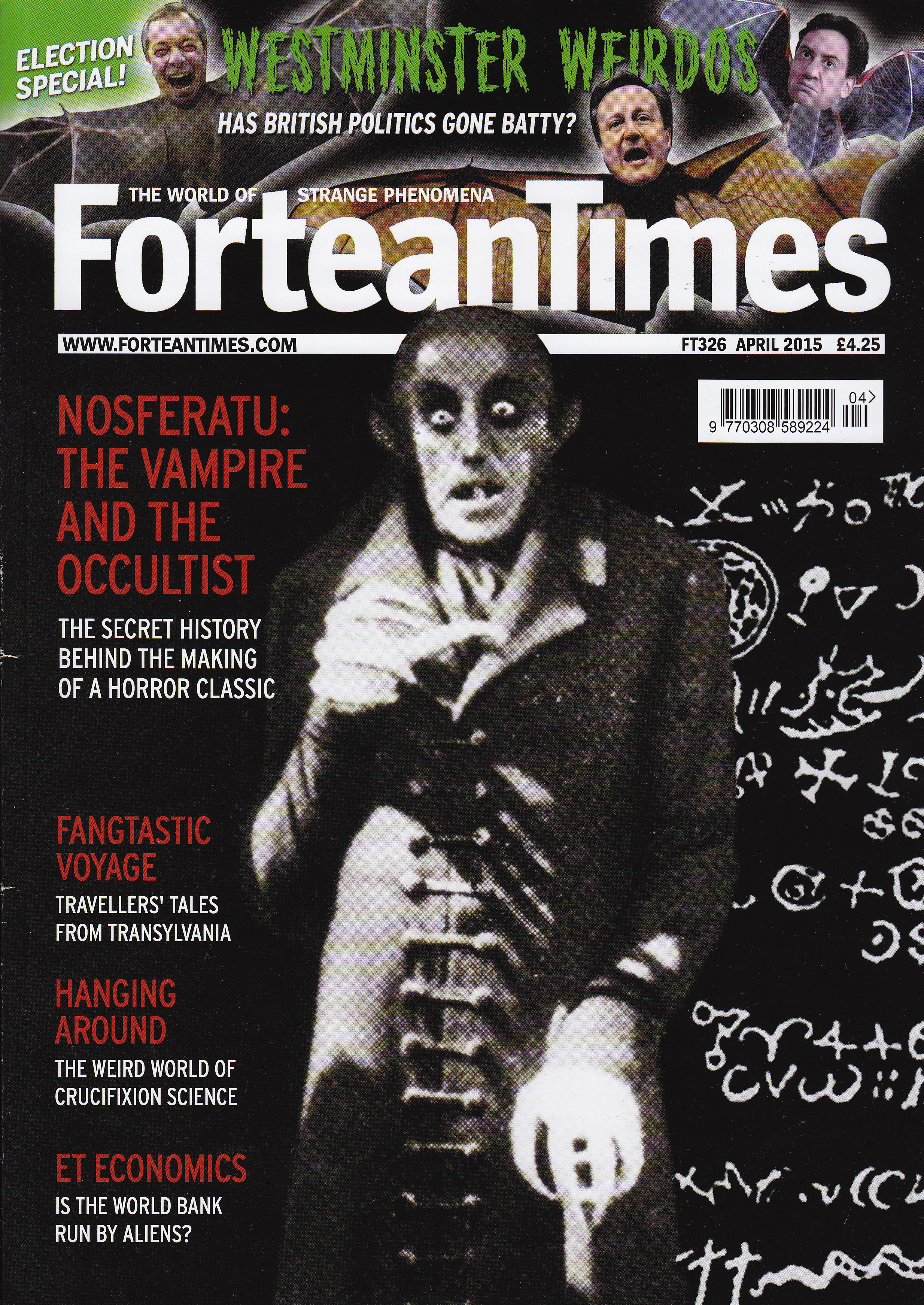
ForteanTimesLooking over the covers, I found one featuring vampires. It turned out to be the Fortean Times, but since I had a row to myself on the plane, I couldn’t see the harm in having a magazine about strange phenomena. I’d never actually read an issue of the Fortean Times before, although I had a general idea of what to expect. While it may seem odd, there is a pretty solid connection between the paranormal and religion. I’ve noticed this for years. Reading through the Fortean Times, it was clear that others have made the connection as well. Many of the articles, including the ones on vampires, touched on obvious religious themes and motifs. This was so much the case that I began to wonder if any kind of solid wall can be erected between the two.

Religion, broadly conceived, tends to be concerned with the non-material world. Its claims tend to defy empirical verification, and its subject matter is often at odds with science (at least in the mainstream). The paranormal is open to scientific investigation in that it tends to be based on secular claims. Like religion, however, it tends to dwell in the non-material realm. After all, vampires coming back from the dead is hardly a phenomenon that is readily recorded with any instrument beyond a Hollywood movie camera. Still, most religions are hostile to the paranormal, and investigators of the paranormal may be unconnected to religion. Both, however, are an engaging recipe for a long flight. Especially if nobody is sitting in the row next to you.


Colorful Gods

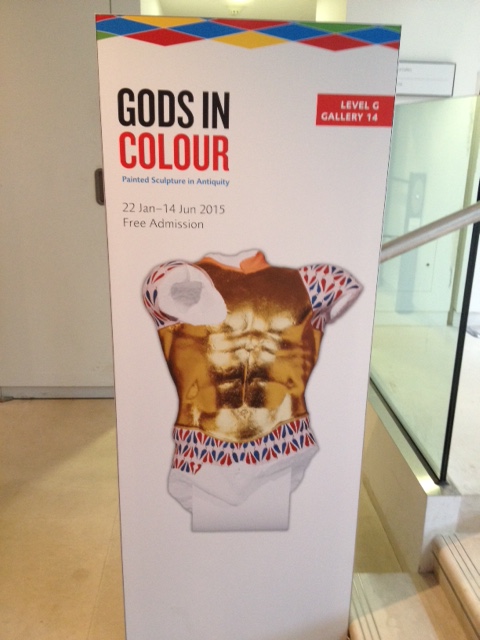
On my last day in Oxford I had enough free time to visit the Ashmolean Museum. The Ashmolean is the earliest public museum in the country, and, although it isn’t nearly the size of the British Museum, it has its share of very important artifacts. While there I came upon the exhibit called “Gods in Colour.” The display was inspired by the fact that ancient Roman statues—and likely those of other ancient cultures as well—were often painted. The elements have worn away much of the decoration, but traces of various chemicals have indicated what hues were likely used to paint these public icons of divinity. We tend to think of classical society as all white marble and stoic formality, but the reality was likely much more colorful. Many god and goddess statues from ancient West Asia also have traces of paint, although in general they were smaller in the various kingdoms of the Levant than the empires of Egypt and Mesopotamia (the latter of which is sadly falling victim to modern day iconoclasts). The Romans weren’t the only ones to see in color.

IMG_2082

Seeing these representations of gods in color reminded me of my first exposure to liturgical Christianity. Having been raised in a Fundamentalist tradition, we certainly didn’t have images about (although one of our churches had a pastoral fresco on one wall). The United Methodist Church, in which I spent my teens and early twenties, had adapted the liturgy of its Anglican parent church, but not the iconographic tradition. When I first saw churches with painted crucifixes and states of Mary, I was taken aback at how powerful they could be. Like most ancients, I realized that these weren’t the gods themselves, but they still conveyed much of what the liturgy was communicating through words and music. One priest explained them as crutches for those who needed help to imagine the divine.

Having seen what images can do, I object to the use of the word “idol.” People are visual animals. We rely heavily on our sense of sight, and our religious sensibilities tell us to look for the gods our minds tell us must be invisible. It is difficult to focus on that which we cannot see. Today we have images both in the natural color of their medium and resplendent with color. We spend hours before the computer screen with its endless array of pixels of all colors. We still think of our gods in full array of saturated hues. In ancient times they tended to be made of stone, but we tend to use another form of silicon, apparently, to get the same effect.


Paper Oxford

PaperTownsIt looks like a brilliant blue morning here in Oxford, yet my body is telling me that it’s the middle of the night. And that’s saying something, since I normally get up around 3:30 anyway. Routine is kind of a religious thing. In fact, it seems to be the root of ritualistic behavior. The passing of time is a matter that affects us all in some way. Jet lag is one of those ways. I’ve got an important meeting to attend in an hour—that’s why I’ve come all this way—and yet my mind will be telling me I should be elsewhere. Perhaps back over the north Atlantic, looking down at icebergs from the air, wondering if climate change is really that far advanced. Are there any polar caps left at all? Didn’t the Titanic hit an iceberg at this time of year, and wasn’t it a great surprise? At least on a ship you don’t get jet lag. There’s nothing like travel to shake you out of the ordinary.

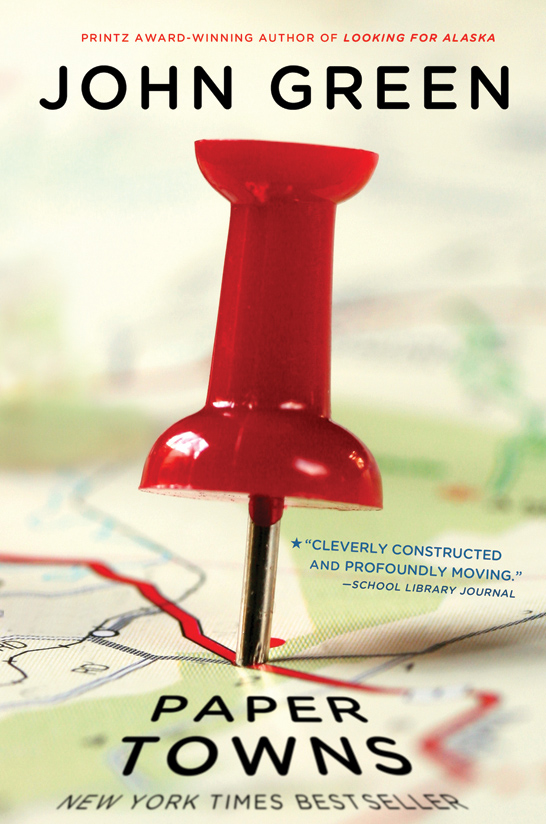
I suppose that’s part of the draw to John Green’s Paper Towns, which I read on the flight over. Although it’s young adult literature, Green has a way of capturing what it was like to be a teen on the cusp of adulthood, and the need to become who we are meant to be. It is a story of leaving home, and of living on the edge. Once a friend said to me that he couldn’t understand someone wanting to leave the place they grew up. I, on the other hand, was only too eager to leave a verbally abusive situation in an industrial town that was slowly dying with no prospects for the young. Needless to say, Paper Towns resonated with me. I can’t remember the last time I read a novel in a single sitting. Although I’ve been an adult for decades, I can still remember the feeling of being young, of falling in love, and wondering what this was all about. High above the north Atlantic, I was sure I still hadn’t figured it out.

There’s nothing religious about Paper Towns. The characters in it assume God to exist, as most Americans do. We make a lot of assumptions. My body is assuming it’s only two in the morning. My clock is telling me that it’s seven. Time is relative, but only one of those placeholders will determine if I am late to work in this place I find myself waking up. I remember being young, and although Oxford has its usual charm, I also know what it feels like to have to leave. The clock tells me that I have to go. The novel in my head tells me the same thing. I’m not sure what time it is. For the moment my paper town is Oxford, and it seems very real indeed.


Happy Disruption

IMG_1567

Last night’s full moon shone brightly, announcing the grounding of the date of Easter, obviously associated with Passover. Unless one has a natural sense of the progressions of the lunar calendar, Easter can always seem a matter of guesswork. It fall on the first Sunday after the first full moon after the vernal equinox. It is one the many transitional season holidays. All holidays are intended to be disruptions from the normal flow of time. Of course, business is the natural enemy of holidays, except for Christmas, and, increasingly, Halloween. The usual business calendar eschews disruption, and there are no days off associated with the Passover-Easter complex. A little thing like death and resurrection shouldn’t stand in the way of turning a solid profit. Still, the point of holidays is their disruption of normal time.

My own time faces disruption this week with a business trip to England. Funny how often these seem to be demanded about this time of year. My usual blog posting patterns will surely be disrupted as time zones zip up across the Atlantic. Disruption will become endemic. Disruption without the celebration. Ritual experts tell us that Passover, the basis for Easter, was a development from an even earlier pre-biblical rite. People have always found a way of marking the more obvious transition of seasons, the planned disruption of daily life.

Routine becomes comfortable, no matter how inherently uncomfortable it may be. I awake before 4 a.m. each day with many others whose lives are dictated by bus schedules and economic necessity. No matter how many years I’ve been doing this my body objects to the early hour that draws me from the comfort of sleep. It is a disruption. Now my disruption is about to be disrupted and I’m wondering what is holy about any of this. Time, which always comes in limited quantities, seems best spent with those we wish to celebrate. Our own private holidays. But business and resurrection don’t sit comfortably together. True religion and money are, it seems, inherently at odds. As I pack my bag and turn to the east, I look at my calendar and wonder when the next true holiday will arrive.


England’s Christian Gift

As much a part of the holiday season as Santa Claus and baby Jesus, the Salvation Army bell-ringers are out in full force. As I drop a quarter in the bucket, I ponder the strange lineage of this denomination. When the cheerful holiday shopper convivially donates spare change, few, I suspect, know that they are supporting a church. The Salvation Army is one of the bewildering number of denominations to spring from English Christianity. The Church of England, small in the United States, but imperial in much of the world, grew amid a religious unrest that spun off countless dissenters. We all know the story of Henry VIII and his not-so-merry wives. His political move to focus the official religion of England on the crown led to the Puritan resistance. Puritans left England for the Netherlands, and then on to America where they flocked to New England to develop into Calvinistic Congregationalists.

Meanwhile back in Amsterdam, some of the English Separatists evolved into Baptists. Baptists were also congregational in polity and also found the religious freedom of America to be appealing. (Now they select our elected officials.) The Puritans had helped develop the Presbyterian movement as well, with dissenters in Switzerland. Still at home in Britain, the Church of England waffled between Catholicism and Protestantism for some time. The evangelical fervor that emerged with the Wesley family led to the Methodist Church, which remained attached to the Church of England until its founder’s death. In America the Methodist Church grew rapidly. During the era of religious revivals the Adventist movement grew out of Methodism, as did the Church of the Nazarene, the Holiness movement, and Pentecostalism. All of them today are major denominations. Even the Anabaptists tip their wide-brimmed hats in the direction of the English dissenters. The Plymouth Brethren, inventors of the Rapture, were another English-derived denomination, as were the Wesleyan Churches.

What does all of this have to do with the Salvation Army? The Salvation Army was founded in London by a Methodist minister, William Booth, and his wife Catherine. The movement adopted quasi-military mythology and ranks, and soon grew into a church of its own that supported what would later become the Social Gospel cause. Known primarily for their charitable works, they are yet one more splinter from the tree of English Christianity. Perhaps the Christmas tree is an appropriate analogy for the Christianities to spring from Henry VIII’s loins. Like the pine’s many branches, each with its ornaments, Christianity in England sent its twigs in all directions. Counted together, the descendants of English Christianity far outnumber any other Protestant grouping. Just a thought to share while waiting for the quarter to drop.