Who’s Counting?

While joking around recently with my daughter, I started counting to ten in Spanish.  I’ve never studied the language, but I can stumble through academic articles in it with a dictionary.  In a senior moment I forgot that “ten” was “diez.”  We had a laugh about it and got back to life.  The next day while doing my sit-ups, I was counting in German, as is my habit.  (The push-ups get counted in English, thank you.)  It struck me that “dreizehn” is where the “teens” start, and I wondered if this was because of some base-six counting.  I decided to check Spanish to see if the pattern holds.  Those of you who know Spanish know that it doesn’t.   In English, which follows German, our teens begin at “thirt” (third).  

Numbers have always fascinated me.  Math not so much.  While I find the base-ten system natural, there is something to be said for base-six.  I’m not sure if that’s where German “zwölfe” comes from, but it does give us our “twelve.”  But those teens are always difficult, aren’t they?  In human life we hit sexual maturity with all of its complications.  Do we project those onto our numbers?  Do other animals do the same?  We now know that some animals have at least the concept of absolute numbers down.  Some birds know exactly how many eggs are in their nests, and bees know what “zero” means.  Their lives tend to be shorter than ours.  Do their ideas of numbers reflect that?
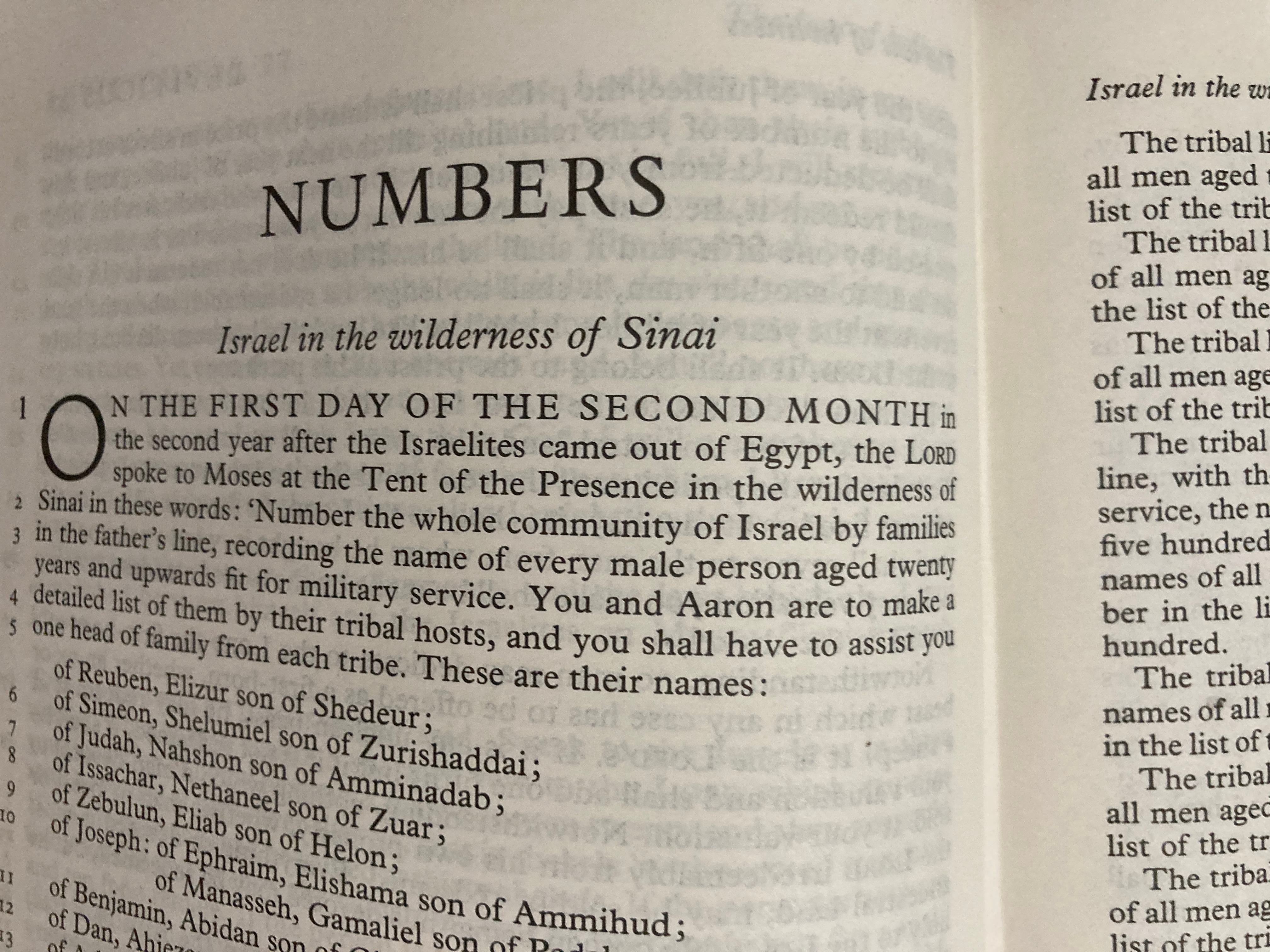
As human beings we know that that good old base-ten number 100 is kind of a life goal.  We know that 100 is “old age,” but we know that it isn’t exactly unusual for a person to live that long.  Of course “ninety” is compatible with either base-six or base-ten, and is a more reasonable goal.  Numbers are used for marking.  They’re so basic to our everyday life that, unless you’re a mathematician, accountant, or scientist, we hardly think about them at all.  Civilization began, however, with gods and numbers.  Kings wanted to know how many people they controlled (some things never change).  In the Bible God punishes David for trying to find out.  There’s even a book called Numbers.  The Mesopotamians used a base-six system that gave us the 360-degree circle.  We still use it even though a 1000-degree circle would give us much greater precision.  I could muse about numbers and counting systems all day, but it’s time to go do some sit-ups, in German.


Learning English

English is a difficult language to learn.  Growing up monolingual, I was able to pick up German, Greek, and Hebrew (and other semitic languages) without too much trouble, through intensive schooling.  I have to wonder if those learning English as a foreign language don’t have a much more difficult task.  The other day I was looking at a document in Icelandic (don’t ask), and marveling how I simply couldn’t penetrate it, although it is Indo-European.  Then I sat down to read an article in English.  The topic was of interest to me but it was clear that the content wasn’t written by native speakers.  Indeed, it turns out the authors were from an Indonesia university.  The journal was published by an Indonesian press.  It’s peer reviewed, but those who run it aren’t native English speakers.

Interestingly enough, although the article wasn’t in the field in which I was technically trained, I was able to follow what the authors were saying.  Partially it was because of my familiarity with the topic, which I’d read about before, but partially it was that you can read English without the direct and indirect articles that are our usual guideposts, and with the wrong verb tenses and declensions.  It is possible.  You wouldn’t want this, I suspect, if you were building a rocket carrying people into space, but it isn’t that much different from trying to read the instructions that come with most devices that are manufactured in nations where English is a foreign—very foreign—form of communication.  I admire their pluck.  I still recall enough German that I can get through some documents without generating more gray hairs, but I wouldn’t dare try to write to someone in it.  Nein.

Languages are fascinating elements of human culture.  Although there was no literal tower of Babel to create them, our species, in isolated areas, learned a variety of different ways to communicate verbally.  It’s only with travel that these isolated groups met and generally they try to talk, unless they simply kill strangers on sight.  We want to understand one another.  We all know that our language learning skills are at their peak during our very youngest years.  Brains get ossified into using one language to think and as you age it’s harder to pick up new ones.  Still, we have that old isolationist tendency hardwired as well.  Us versus them.  And if we can’t understand we quickly distrust.  Language study is probably one of the best ways to ensure peace.  If we can’t do that, at least we can try to read our language through the eyes of someone who’s made the effort, even if it’s difficult for us.


For Love of English

One of my most frequent imaginary dalliances is wondering what I would have done with my life if I hadn’t been raised religious. Like many young boys I found “exciting” jobs enticing—soldier, firefighter, explorer—but scientist also loomed large in my imaginary horizon. By the time I was a teen I was firmly ensconced in books. My upbringing meant that many of these books were religious in nature, and my concern with ultimate consequences meant religion was the only possible career track to make any sense. It certainly never made dollars. As someone who professionally looks backwards, I’ve found myself wondering if I shouldn’t have focused on English rather than Hebrew and Ugaritic as a career. After all, the Bible has been available in English for centuries now. Besides that, the canon is larger—from Beowulf to Bible and beyond. Reading is, after all, fundamental.

Beowulf, from Wikimedia Commons.

Beowulf, from Wikimedia Commons.

I only discovered BookRiot recently, and that through the mediation of my wife. For the writer of a blog I really don’t spend that much time online outside of work. I like real books, and being outdoors. Too much time staring at a screen brings me down. Nevertheless, BookRiot has stories that cause me to question my career choices from time to time. For instance, I have never knowingly heard of The Exeter Book. Dating to the tenth century, this medieval manuscript is among the earliest of English writings. Showing the interests of the monk who likely inscribed it, it has religiously themed material and riddles. As E. H. Kern’s post on BookRiot points out, The Exeter Book has inspired many later writers and has, through them, made its way into mainstream popular culture. Not bad for a book that I suspect many, like myself, have never heard of.

Old English has the same kind of draw as other ancient languages. Not nearly as dusty as ancient Semitic tongues, it contains the roots to the form of expression I find most familiar. I love looking back at the Old English of Beowulf and spotting the points where my native language has remained relatively unchanged over the centuries. Modern English even begrudgingly owes a considerable debt to the Bible of King James. Our language is our spiritual heritage. We have trouble expressing our deepest thoughts without it. Perhaps had BookRiot existed when I was young, I might have made a rather more informed decision about the direction of my career. Or, then again, religion might have found me nevertheless. From some things there is just no hiding.