Planetary Thinking

It’s Monday, and I’m feeling like a holiday.  Good thing it’s Earth Day.  Many businesses (who still don’t consider Earth Day important enough to make it a paid holiday) are emphasizing being green these days.  Really, with global warming proving itself no myth it’s just good business to try to adapt to sustainable practices.  Those of us who are vegan find more and more companies offering animal-free options—our dependence on beef is a major environmental hazard.  It’s still a challenge finding shoes that aren’t leather based, but things are improving.  And more and more hybrids and electric cars are on the roads.  We are making progress.  We still haven’t, however, gone so far as to declare a day dedicated to preserving our home an official holiday.

I’m not jaded or capitalistic enough to think our only hope is to find off-world parking.  To raise the future of humanity elsewhere.  It’s just that people fall in line after bullies and bullies only think of themselves.  And who, thinking that an afternoon on the links can be counted as work, would consider giving mere employees a day off?  A day when we might shut down commuting schedules to save power?  A day to rest from the brutality of constant commerce.  After all, a typical weekend consists of a day for chores and a day for church.  (Still, that is, for many people.)  And then back to the office not really feeling refreshed but knowing that you can’t long survive in a pandemic-ridden world without more cash coming into the coffers.  Inflation may be going down but grocery prices aren’t.
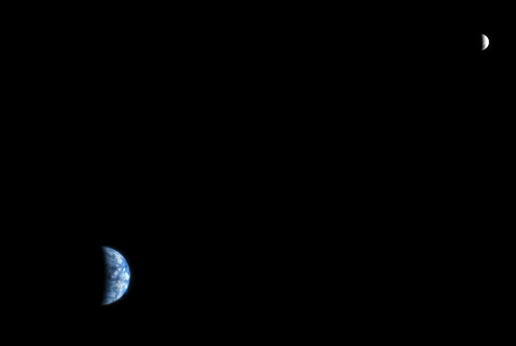
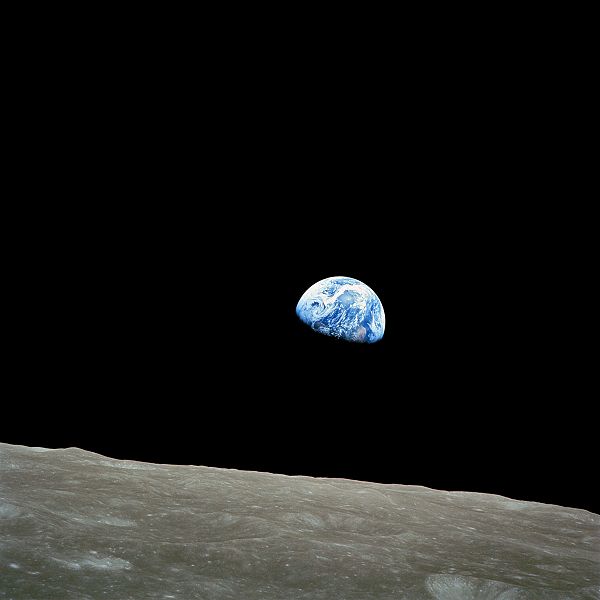
From NASA’s photo library (public domain)

A day to celebrate home seems like a no-brainer.  Especially when it comes on a Monday or Friday.  Ah well, we’ll do our best to celebrate it around work, shall we?  We’re moving late into April.  There’s been a bit of sun mixed in with April showers, as is typical around here on this planet.  Days are growing longer and the trees are leafing out.  Spring welcomes us back to the outdoors (after work, of course) where green now predominates over brown and gray.  While we may not have the day off, we can at least take a moment or two to consider how we might be better to our planet.  How we might drive less, use less electricity, generate less waste, spare a few cows.  Who knows, it might become a habit?  If that were to happen maybe every day would become Earth Day.

Sailing Away

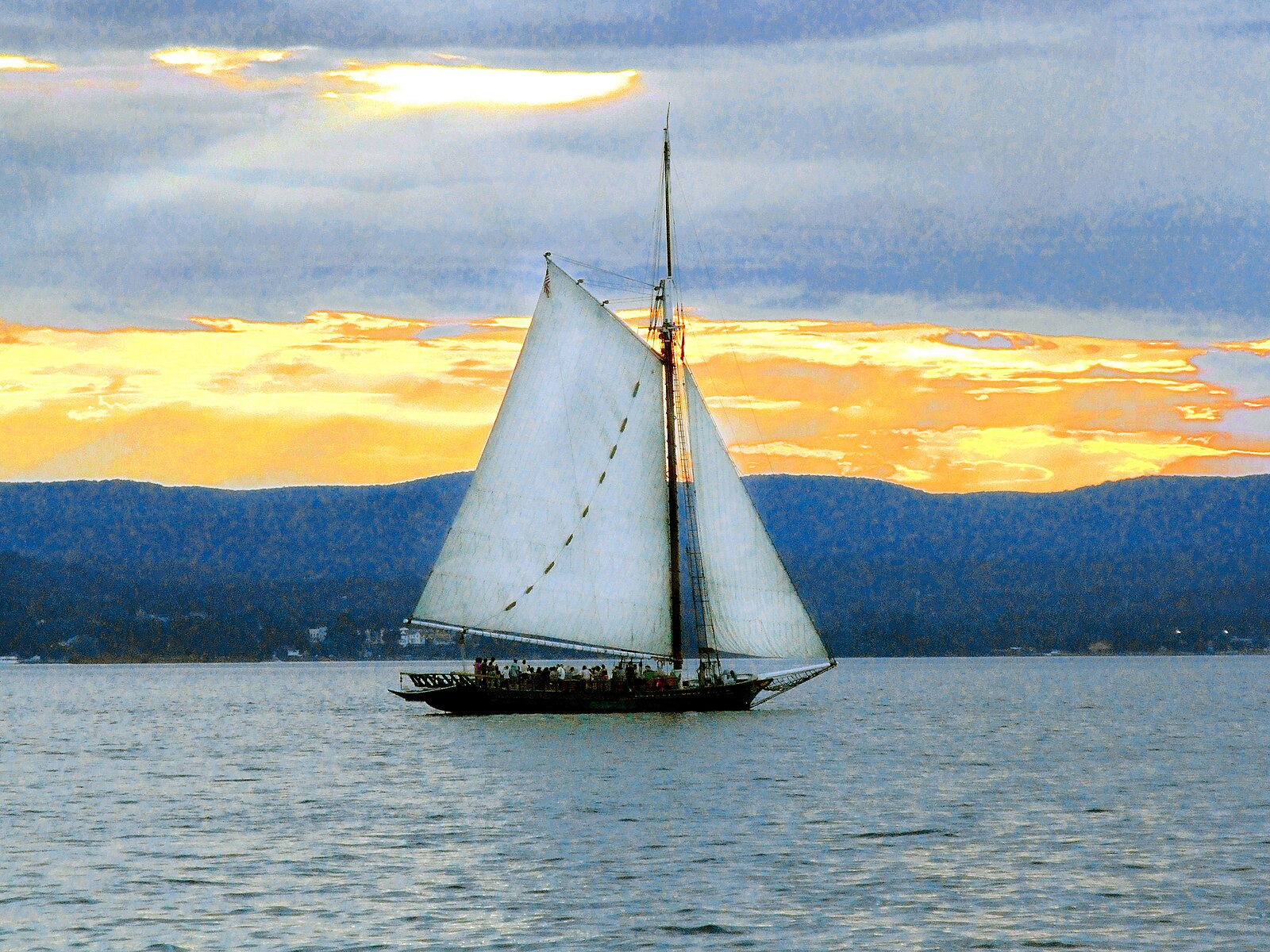
Out on the open water on a sailboat large enough to be categorized as a sloop.  We’re on the Hudson River learning about both sailing and the environment.  I’m here with a a Girl Scout troop, otherwise I wouldn’t have known about the sloop Clearwater at all.  The origins of the Clearwater go back to Pete Seeger, who, apart from being a famous folk artist, was also an environmentalist.  Based in Beacon, New York, the Clearwater is used in educational programs and it represents the only time I’ve been on an actual sailing ship.  Call me Ishmael.  Or not.  You see, I was there as a volunteer.  Specifically, a driver.  My daughter’s troop had scheduled the trip and I was afforded free passage as chauffeur.  I’d pretty much tucked this away into old memory banks until recent reading brought it to the surface.

Photo by by Anthony Pepitone; under the Creative Commons Attribution 3.0 Unported license, via Wikimedia Commons

I support environmental causes in the ways a guy in my position can.  We compost in our back yard.  We recycle anything that we can figure out how to.  We throw away one thirteen-gallon garbage bag every two weeks, and that’s sometimes half-empty.  Being vegan helps.  We don’t have a lot of money to give away, but lifestyle is the biggest way to try to help the planet.  So I’m out here soaking up my Melville vibes on a river wide enough to be a lake.  The Hudson, like all rivers, is worth saving.  I used to cross under it daily through the Lincoln Tunnel, trying not to think of all that water flowing above my head.  There was a reason I read on that long commute.

This blog, I guess, has become a repository for much of my past.  I’m grateful to you indulgent readers who find any of this interesting.  Still, I find human connections to places fascinating.  While I’ve never considered the Hudson home, some of my early relatives likely did (more likely Hessians than Dutch, but I’m told we fought on the right side during the Revolutionary War).  When I’ve had the opportunity to gaze out over the river without being in a rush, I’ve always felt a sense of belonging.  An artwork I made from artifacts I gathered awaiting our turn to board the Clearwater now hangs in our front hall.  Suddenly those twenty-something years feel like so long ago.  Even so, the Hudson suggests something homey to me.  Maybe it’s time to hire out a sloop again, go out on the river, and dream about belonging.


Day of Earth

One of the questions thoughtful and mission-based publishers ask is why books on environmentalism don’t sell.  Since it’s Earth Day (by the way, Happy Earth Day!), I thought I’d ponder it here.  My own amateur sense, as a personal eco-warrior, is that younger people are very focused on fixing environmental issues.  In fact, it is often THE issue for them.  And honestly, reading books about our many, many failures to sustain our environment is downright depressing.  I’ve read several, and seldom do I put the book down without a profound sense of grief and hopelessness.  Many of us do what we can while watching others thoughtlessly carrying on as if our modern lifestyle is normal.  I don’t advocate getting out of the matrix and hunting mammoths with spears, but I do wonder how to get through to those who don’t think about it.

I’ve been on the “Green Committee” at work for many years.  I sense the hopelessness there as well.  Our business has gone about as green as it can but unless you can convince other, less concerned industries to reduce their footprints too, we’re all still walking through the new carboniferous age.  Little things matter.  Some of us may not be able to afford an electric car, but hybrids are somewhat reasonably priced (in as far as car prices are ever reasonable).  LED lightbulbs have dropped from over $10 a pop to two for a buck.  And why are we still using natural gas when electricity can be produced by wind?  My young next-door neighbor has been encouraging us to get solar panels.  We would, but we have to get the garage roof fixed first.  And so it goes.

Caring for the environment is a big job.  These days, however, we also have to keep an eye on politicians who get elected to serve only themselves.  And Supreme Court justices who do things that would get many of us fired for bribery.  Here’s the thing: justice doesn’t work unless it applies to everyone.  We share this planet.  It’s difficult to build forward momentum to save our home when corruption is so deeply entrenched among those who control budgets and who have so many unthinking followers.  Even so, we as individuals can do what we’re able.  We may not be able to afford to repair that garage roof yet to get solar panels installed—it really is in a prime location with uninterrupted southern exposure—but we can compost.  And be conscious of our energy use.  And even, if we’re brave enough, read some books on how to help make things better.  The earth, it seems, is something worth saving.

Image credit: NASA

In Praise of Cardboard

There’s an irony to it.  Using single-use plastic bags to ship books.  Now I know better than to stereotype book lovers, but I suspect it’s safe to say that those of us who order books like paper.  And we are probably well aware that paper recycles more easily than single-use plastics with heavy, preternaturally sticky labels attached to them.  You see, much of the clutter about our house is our reluctance to just throw away things that can be recycled or reused.  There are rules for prep, however.  Labels are supposed to be removed from plastics and judging from my experience, I need to be doing more pushups to do so.  Some are stuck on so well that it stretches and distorts the plastic like the face of a movie monster, still without coming off.  What’s wrong with a box?

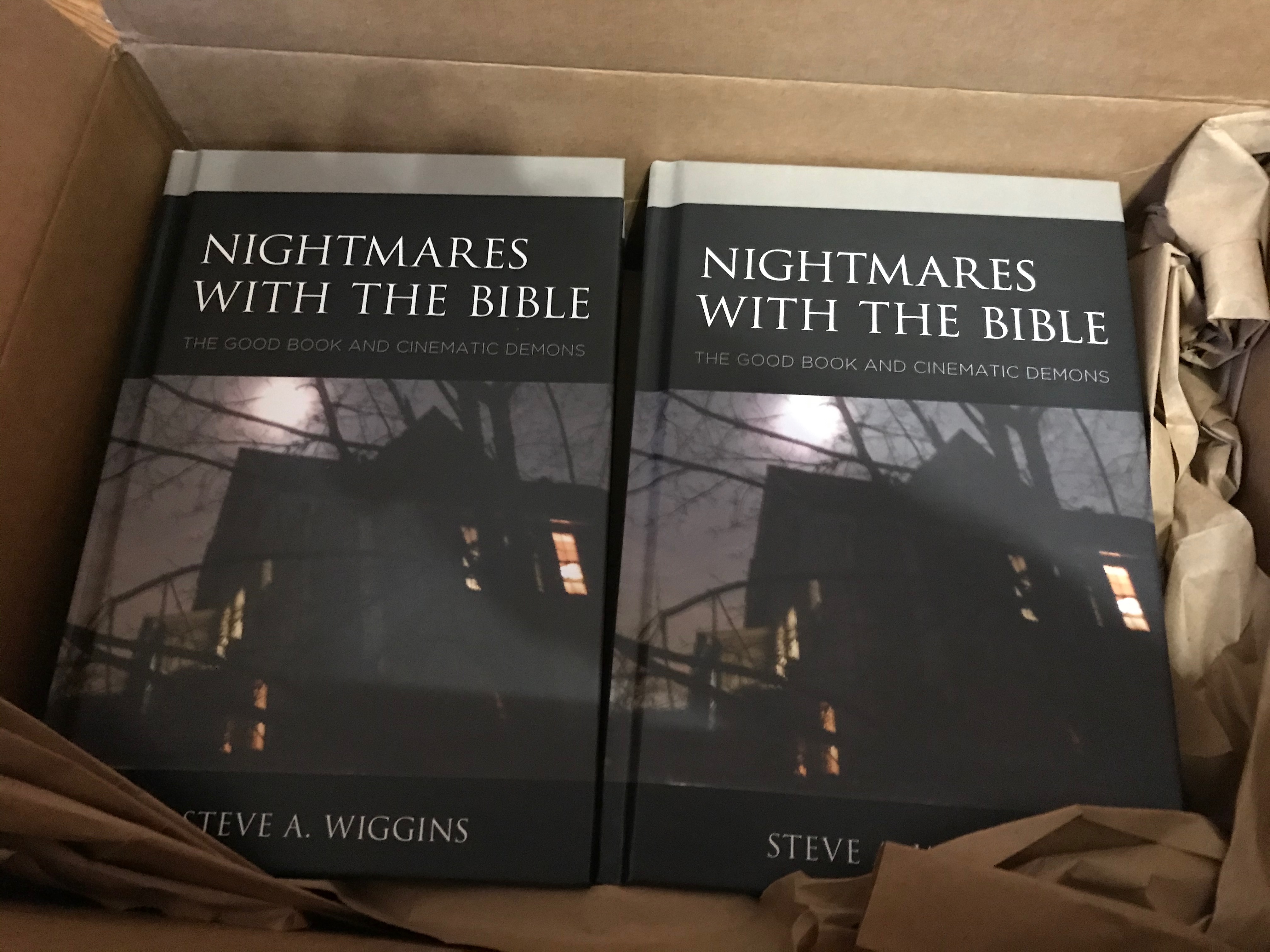
Books arriving, snug in a box

Apart from being easily recycled, boxes prevent books from getting banged up in transit.  I often receive books so tightly cased in plastic that removing them must be like pulling off snug leggings when it’s really humid out.  There’s an almost obscene quality to peeling off something that tight.  And getting the label off?  Forget it.  Boxes are better.  We tend to reuse many of them—they’re good for sending fragile gifts to others.  Or storing other single-use plastic pieces for use in art projects.  (Lids often can’t be recycled.)  As long as the paper’s responsibly sourced, cardboard has environmental benefits.  Besides, I suspect books prefer the feel of paper on their skins.

I’m not a very good consumer, but I do have a soft spot for books.  Even as reasonable grocery chains are phasing out single-use plastics, many book sellers are picking up the slack, it seems.  I know we have developed civilization to such a point that our lifestyle is impossible without plastic.  Indeed, the very keys on which I tap out these thoughts are made of plastic (at least Macs use metal casings for their laptops, or some of them, anyway.)  I have this nightmare that I’ll get something in the mail, or worse, a visitor at the door, telling me that they’ve pieced together, from all the fragments of labels still on plastic bags, that I’m the one who’s been turning them in for recycling without properly removing the sticky paper.  I know that I won’t have any viable defense—I don’t have the time, resources, or tensile strength to do the job properly—and all I’ll be able to say is, “I prefer boxes.”


Tree Owners

I hated to do it.  I always feel guilty afterwards.  I’d never have made it as a lumberjack.  We had a problematic green ash tree that someone might’ve planted long ago, or which may’ve been a volunteer that nobody really paid much attention to.  Prolific, although cultivating the seeds is difficult, in nature they spread rampantly.  This particular tree was in a sheltered corner of the house, in an outdoor nook created by a neighbor’s fence adjoining the one that goes around our yard.  (Fences are a big thing in this neighborhood.)  The branches were overgrowing our neighbor’s fence, getting under the eaves spouts on our house, and providing squirrels with access to the roof, which had previously been denied them.  The roots were getting into the foundations of the house and there are at least seven smaller green ashes that require constant cutting back, in that same corner.

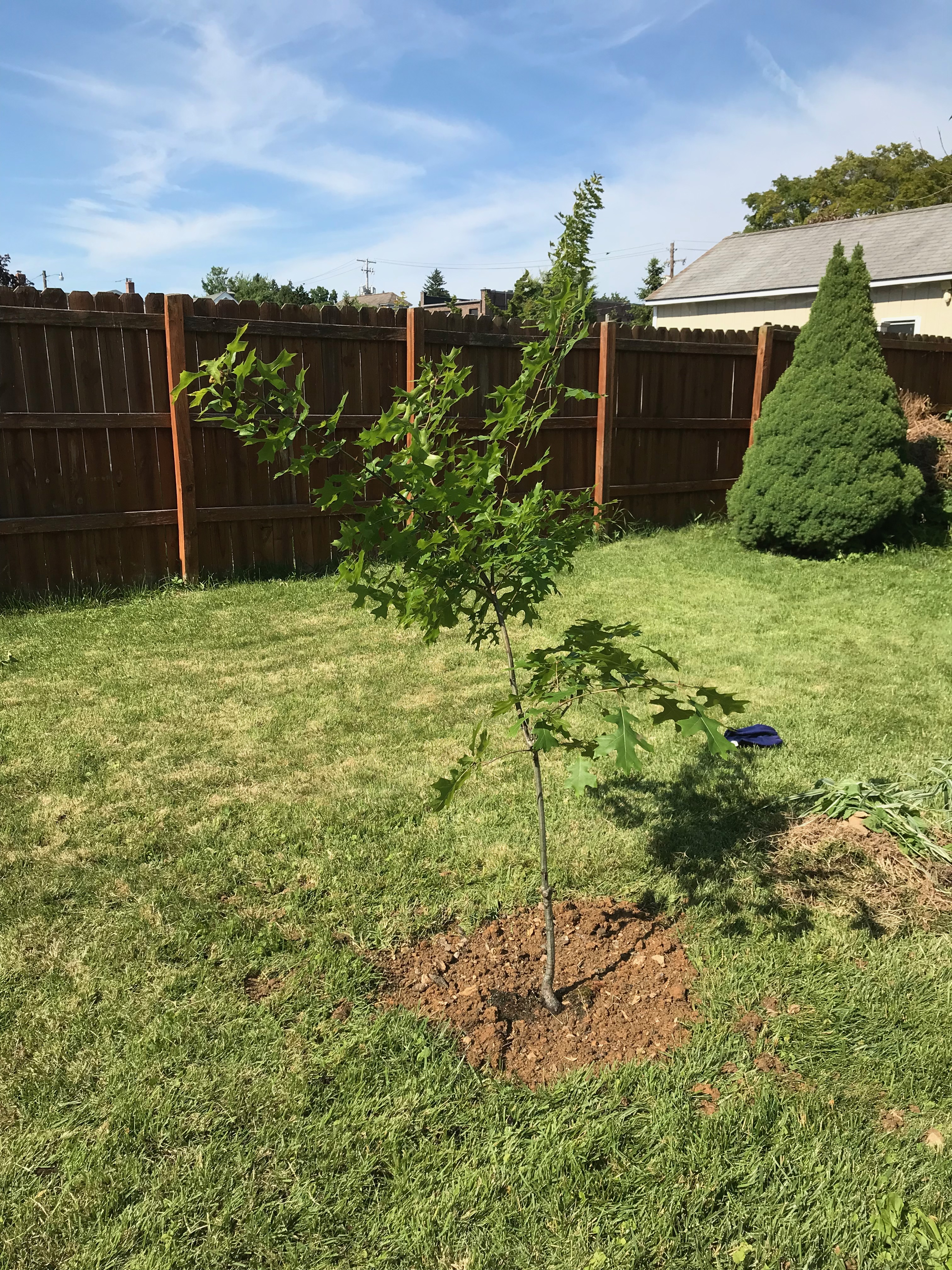
Cutting trees down goes against my principles.  I’ve had to do it a few times and I’ve never felt good about it.  It was yard-waste haul-away, which rarely comes, and the sun was shining like it rarely does.  It was time.  All told, it took a few hours.  The sky looks naked in that corner now.  The green ash is a beautiful, but unruly tree.  We decided to plant a scarlet oak instead.  Edge of the Woods nursery in Allentown sells only native plants.  They recommend oaks for their benefits to the ecosystem.  There’s an optimism about planting a tree that will, hopefully, long outlive you.  It can’t replace that troublesome green ash, but future owners of this house will hopefully appreciate its shade. 

Digging up the yard to transplant this tree made we want to do the same thing again.  And again.  There’s a reason the story of Eden is set in a garden.  It feels natural to be around plants, particularly those that don’t make us itch, or sneeze, and that don’t prickle us with thorns.  A place of trees and cultivated shrubs and flowers.  Yard work dominates my free time for at least half the year, so making it something worth the labor seems a reasonable thing to do.  Trees own the planet in a more righteous sense than humans do.  Many live longer than we do and give back so much to the environment.  I’ll worry about our little tree.  The woman at the nursery said that trees thrive by pushing back against the wind.  It was more than a tree we planted; it was a parable.


Heat Pump

We’re preparing our home to welcome a new resident.  It’s not human.  Those of you who are home owners know how you move from crisis to crisis, paying to repair this just in time to start paying for that.  Our current issue is a dead dryer.  We knew it wasn’t long for this world when we moved in.  The previous owners, as most working class folk do, let things go until a machine forces  the issue by dying.  Being concerned for the environment, we like to replace appliances with more environmentally friendly ones, if we can.  They are, of course, much more expensive.  With the dryer it was also a space issue.  Snuggled together like young lovers in bed, the washer and dryer leave less than an inch clearance total from either wall.  The first issue we faced—modern dryers are bigger.

Small and energy efficient is what we wanted.  I learned about heat-pump dryers.  They don’t require a vent and they’ve been used for decades in Europe because of both space issues and environmental friendliness.  Here they cost more and you’ll have to wait because they’re in demand.  We decided to side with the environment.  Then there’s the problem of the old vent.  I gingerly walked out the old dryer and was amazed at the detritus I found.  Now, I’m an archaeologist at heart, so instead of sweeping it all in the trash, I sorted through it.  I found a dollar bill.  And 32 cents—this helps defray the cost of the new dryer.  Three guitar picks and a heap of cosmetics.  A box of rubber bands for braces.  There was ancient history in this pile!  The lighting’s bad in that corner so I put on a headlamp like a phylactery.  Let there be light.

I had to use most of my tools to tug the old vent out.  You have to stuff the hole with insulation and put some furring strips in place to hold the new drywall.  Cut out the patch to fit the hole and mud the whole thing up.  Why bother painting where nobody will see?  By the end of the weekend we were ready for our new resident.  It still wouldn’t be here for at least a couple of weeks.  The clothesline is strung in the backyard where the even better method of using nature’s dryer is free.  For those days without sun and on which we have time to do a load, we’ll be glad for our heat-pump dryer.  Particularly when the weather starts growing cold again and global warming enacts its chaos.  Hopefully we’ll have a stop-gap solution by then.


Wasting Waste

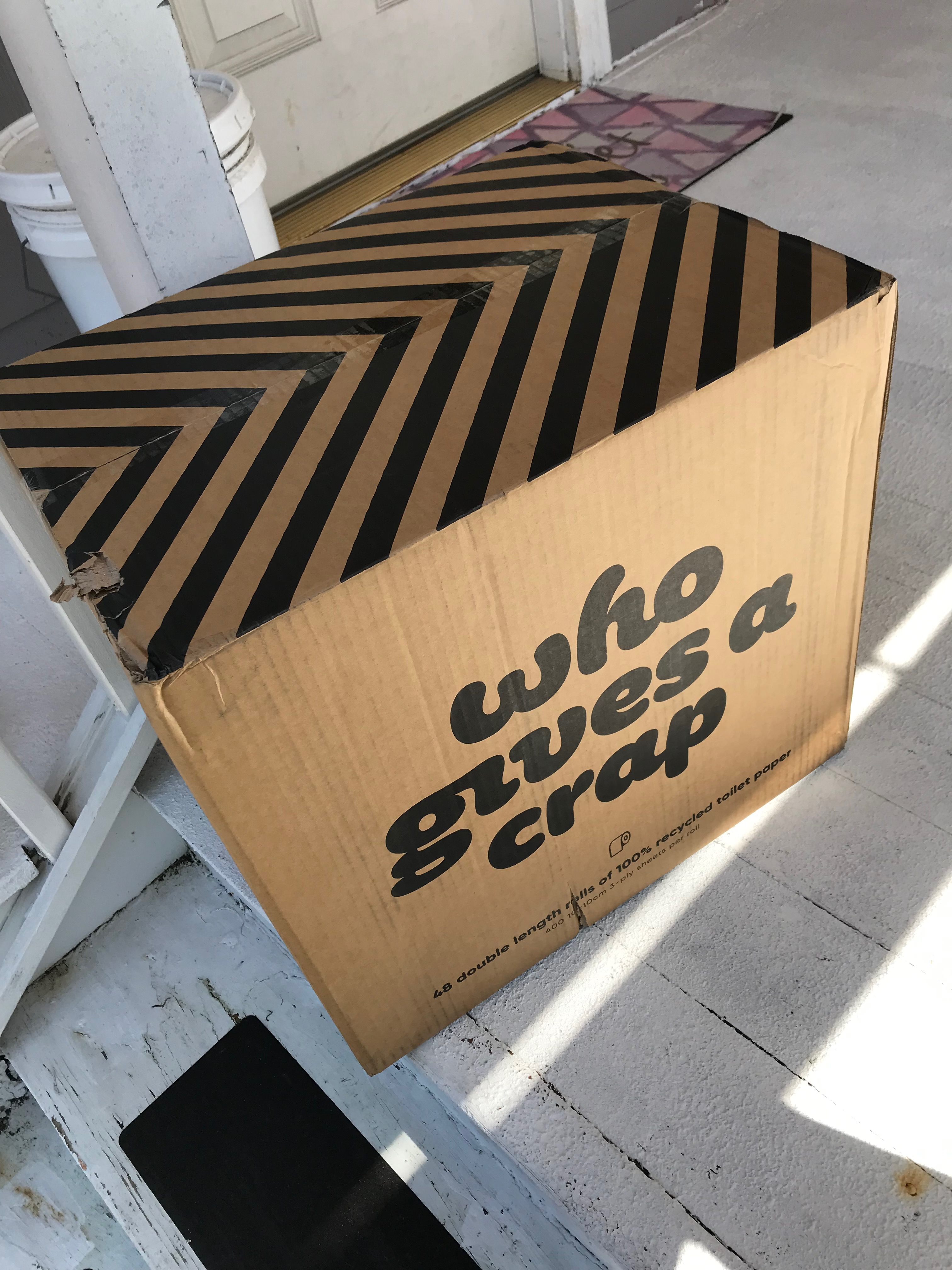
So I’m thinking about toilet paper.  Just two years ago it was a scarce commodity.  If you could find a four-pack you were blessed.  Supply-chains aren’t the boon that economists tell us they are.  Well, now it seems the shelves are well-stocked.  We’re ready for the next major crisis.  So why are my thoughts in the gutter again?  It started with Earth Day.  I was on a website that was advertising for environmentally friendly products.  We try to live as lightly as we can—we compost, we have ordered a heat-pump dryer, we don’t eat meat—but toilet paper is a big waste.  Besides, the name “Who Gives a Crap?” is eye-catching.  Recycled toilet paper, a little less expensive than bamboo, makes sense.

You see, we’ve used Scott for years.  This started back when we lived at Nashotah House and didn’t have to pay rent or utilities.  We used to buy it recycled back in Wisconsin.  Somehow that’d translated in my head to believing that all Scott is recycled, even though they no longer advertise it.  No, I was wrong.  And it’s not just Scott.  Every day 27,000 trees are cut down to make toilet paper.  That’s a lot of trees.  To break a chain it’s best to concentrate on one link.  Recycled toilet paper seems a no-brainer.  I thought we were already doing that.  Hopefully there’s no supply chain breakdowns when another crisis rolls around.  One of the problems with living in a culture disposed to dispose of things is that we end up in a mess like we’ve got now.

The thing about saving the planet is taking small steps.  Our capitalist system works against environmentalism because the former is based on consumption.  And consumption is handled on a matter of scale—the more you can sell the cheaper the unit cost.  Environmentally friendly lifestyles cost a bit more than other lifestyles.  I’ve always looked at this as a moral issue.  We’re not really high-earning people but we can afford a bit extra to try to save the world’s resources.  We can’t quite afford bamboo toilet paper just yet, but we can work our way in that direction.  Saving the planet is the long game.  Up until the 1960s we blithely lived as if we could go on forever wasting and throwing away.  Now we know there are islands made of plastic in the Pacific and our ice caps are melting.  If you decide you’d like to take the plunge—toilet paper gets thrown away, by definition—here’s a link for a discount on your first order.  Let’s let the trees grow.


Normal Paranormal

One of my favorite televisions shows of all time is The X-Files.  I didn’t watch it when it originally aired, but eventually got a hankering to see it on DVD.  There are many reasons to like it, including its originality and the dynamics between Mulder and Scully and the sense that governments really do hide things.  As I rewatch episodes I see how much religion plays into it as well.  This post is actually not about the X-Files proper, but about a place in Bethlehem I recently discovered.  I’m not a preachy vegan, but I do like to support the establishments who make such lifestyles as mine much easier.  It was thus that I discovered Paranormal Pizza in Bethlehem.  I wondered about the name, figuring that it was paranormal that you could have non-dairy, non-meat pizza at all.

To celebrate Earth Day we decided to check it out.  The menu has a set of fixed items, each named after an X-Files character.  I was glad to see that I’m not alone in my appreciation of the show.  The pizza’s very good, and I’m sure the college-age crowd that was there would agree with me.  I did wonder how many of them knew the X-Files.  Is it still a thing?  Maybe recent government disclosures have brought it back into the public eye.  Hey, I’m a Bible editor, about as far from the public eye as you can possibly get.  Vegan pizza on Earth Day, however, just felt right.

Foodiness seems to be trending.  A great many options are available in the land of plenty.  Still, I know that vegetarians and vegans in developing countries exist, and many of them for similar reasons to me.  They know animals think and feel.  We promote the myth that they don’t so that we don’t have to feel guilty about exploiting them.  It seems to me that many of our world-wide problems would start to vanish if we realized we can evolve out of being predators.  Cashews and almonds can become cheese.  Soy beans and wheat can become meat.  And peanuts are about the best food ever, in any form.  Then there’s the natural fruits and veg.  Industrial animal farming is perhaps the largest polluter of our planet.  Yesterday was Earth Day.  I was eating a pizza made from wheat, tomatoes, and cashews.  These ingredients might seem a bit unusual.  Paranormal, even.  But that’s precisely the point.  I won’t be waiting until the next Earth Day to go back for more.


Love Your Mother

It’s not exactly a birthday, for we don’t know when exactly she was born.  We choose April 22 to think of our mother—the mother of us all.  For many of us concerned about the environment, not only is today Earth Day, but April has become Earth Month.  To me one of the saddest aspects of our environmental crisis is that certain sects of Christianity are largely responsible for it.  Religion working against the betterment of humankind.  So it was in the beginning, is now, and hopefully we won’t have to finish the triad.  Granted, religions help us to keep our mind on spiritual matters.  The problem is when such things become dogma and the real needs of real people are ignored so that a fervently desired fantasy can be lived out by destroying our planet.

In response there are what have been called “deep green” religions.  It’s difficult to gain a critical mass, however, when many of those who think deeply about the environment have left religion out of the equation.  It seems to me that we’ve got to make peace with our evolved tendencies toward religion in order to have any meaningful discussion about this.  Meanwhile global warming continues.  It does so with the blessing of a kind of Christianity that sees this world as expendable and exploitable based on an idiosyncratic reading of Genesis.  Even though all the evidence points in the opposite direction, we have networks (here’s looking at you, Fox), owned by billionaires who know you can sway Christianity simply by kissing your hand to the moon.

It’s my hope that this Earth Day we might start to think about how to integrate some deep green theology into the kind that sees no room for green in the red, white, and blue.  The self-convinced have no desire for conversation about this and those already certain that religion is nothing but superstition tend to agree.  Since antiquity, however, the wise have realized that progress comes from the middle ground.  Politicians, in their own self-interest, have stoked the fires of division and hatred, knowing that they get reelected that way.  Mother Earth, I suspect, is rolling her eyes.  She will survive even if we succumb to our own mythologies.  We need to learn to talk to one another.  We need to accept that we evolved to be religious.  We need to look for middle ground while there’s still dry ground on which to stand.  It’s not exactly a birthday, but it is a holiday that should be taken seriously. It’s only right to love your mother.

From NASA’s photo library

Future Ministry

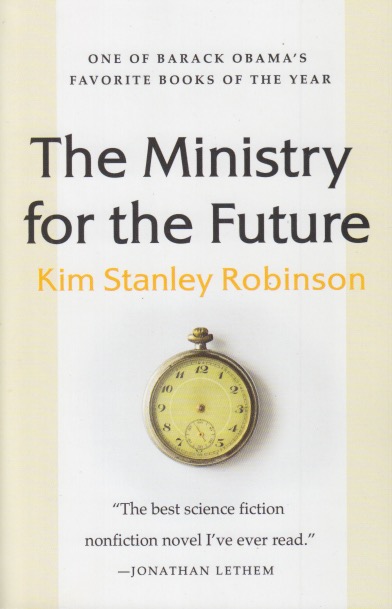
I’ve been on the Green Committee at work almost since I started the job.  Occasionally for Earth Day we’ll have a book discussion.  Usually it revolves around nonfiction books that my press publishes.  This year they selected Kim Stanley Robinson’s The Ministry for the Future.  It’s an environmentalism tale of what global warming may well be like and the political machinations it might take (and the millions of deaths along the way) before we stop burning carbon.  It’s a long and detailed and political story.  Robinson is known as an intellectual science fiction writer and there are sci-fi elements to the book, but its style is realist and its outlook, while ultimately hopeful, is staid.  Even when humans start to move in the right direction.  It’s also a very long book.

Reading it got me to thinking again of a somewhat bewildering truth: environmentalism books tend not to sell overly well and sustained reading, even by supporters, is difficult.  Many of us know that we’re beyond the tipping point for environmental disaster.  The Trump years assured us that it is coming.  One of the elements Robinson makes clear is just how politically entrenched it is.  Perhaps that’s one of the reasons for the despair.  The vast majority of people in the world want a more environmentally conscious government, but plutocracy tends to bring narcissists to the top and the needs of all others are less important.  In Robinson’s version of the story, targeted violence is the only thing that works.  Near the end of the story an interesting idea is raised: the Ministry of the Future (which is a government ministry, not the church kind) concludes a new religion is needed.

The masses of people, you see, are followers.  Religious leaders reinforce the idea that God told their founders—and by extension their followers—the only truth.  Their jobs (and ministries are jobs) include reinforcing those ideas to people who’ve been raised or converted to that particular brand of religion.  A number of New Religious Movements, and even a couple of prescient ancient religions, have been purposely constructed.  The trick is to get followers to accept that the religion is legitimate.  Most western religions around today have been based on the idea that humans can do whatever they want with the planet—even destroy it to force God to return.  I kind of like Robinson’s idea better.  Perhaps that’s why religions form around movies like Avatar.  Not a bad thought, when your job has you reading a sci-fi novel.  A religion saving the earth feels like a novel idea.


A Little Fuzzy

Animals don’t obey the law.  As I observed just a few days ago on this blog, they don’t recognize indoors or outdoors.  And they certainly don’t respect private property.  Conflicts are sure to arise.  Mary Roach turns her impressive writing skills to address this, and related issues in Fuzz: When Nature Breaks the Law.  I’ve read an academic book on this subject as well, and I have to say that one wasn’t as much fun.  Roach has a way of bringing the humor out of even potentially trying subjects such as how do we scare carrion birds away from human corpses?  How do we eliminate pests that we’ve accidentally introduced?  (Think of rabbits in Oceania.)  How do we stop birds from getting sucked into jet engines?

Although the book handles these with a light touch, as with most of Roach’s work, it also raises some serious issues.  Solutions to introduced species can involve poisoning that also kills native species it’s designed to protect.  Genetic engineering may have (likely will have) unforeseen effects.  What is a dominating species to do?  We have laws about ownership, after all, and we expect them to be obeyed.  Squirrels, for example, won’t care that you just had to have a sink replaced at great expense.  They’ll gnaw their way in anyway, creating a new crisis right on top of the old one.  Deer cross highways, their brains not yet evolved enough to interpret what a car is—they’ve only been around for just over a century.  (The cars, not the deer.)  They sometimes cross runways too.  (The deer.)  We like animals well enough in the wild— in fact we long to see them.  When they get into our space, however, our rules don’t apply.

As long ago as the Bible, and perhaps before, the question arose of punishing animals.  If your ox gores someone what should you do with it?  I’m not sure Homo sapiens are the best species to be making such decisions.  We’ve shown colossal poor judgment (think of Trump and try to disagree).  We’re actively destroying our own environment, the terrestrial equivalent of defecating in our own fishbowl.  What gives us the right to punish other creatures who are more in tune with what nature tells them to do?  Perhaps the biggest takeaway from all of this is that we may try to make the rules, but the rest of the planet responds to what we might call a higher power.  I’m glad that writers like Mary Roach can show the fun side of it all.


Carton Thoughts

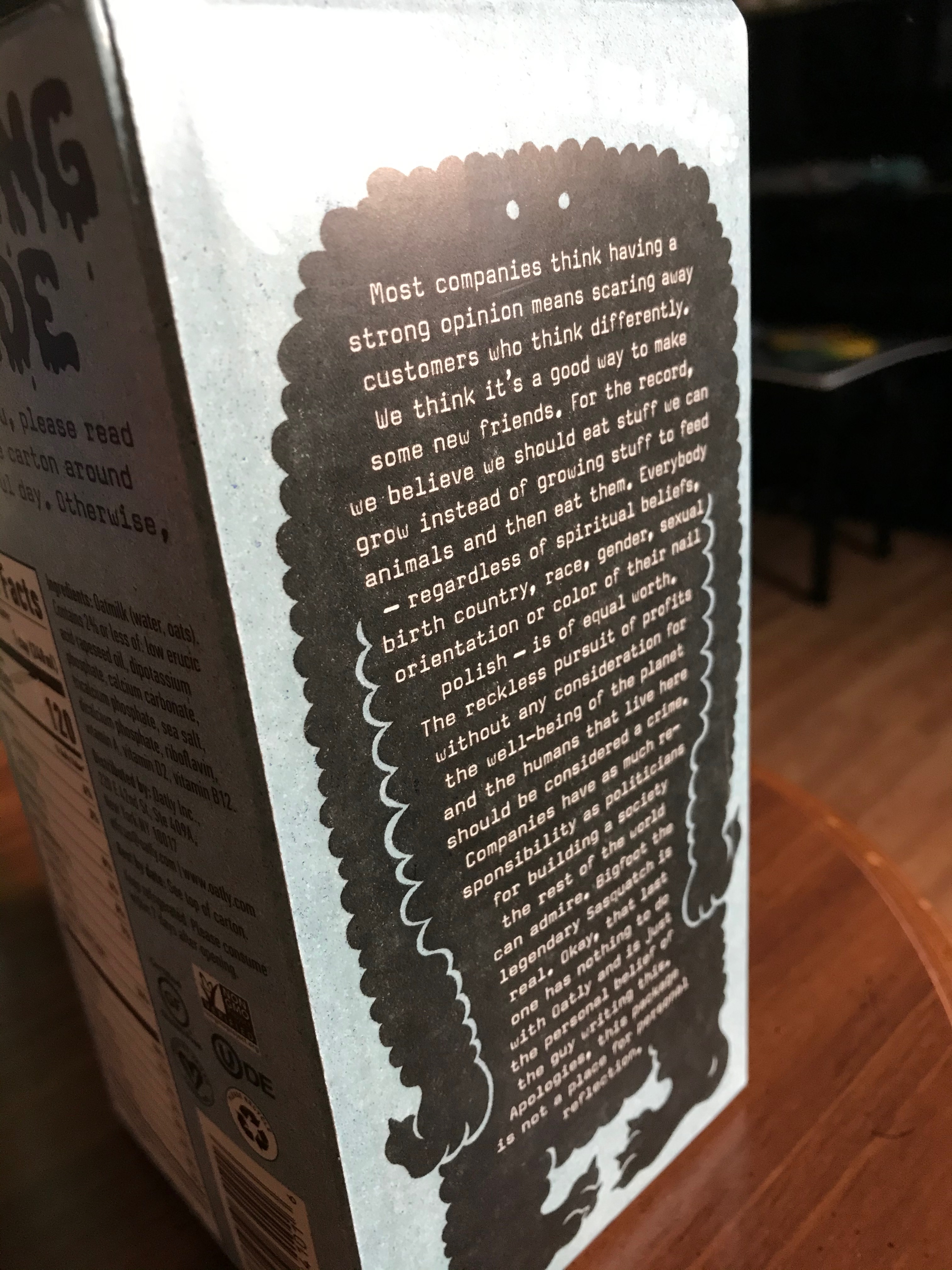
Did you know they’re recyclable?  Milk cartons, that is.  In our vegan efforts we switched to non-dairy milk years ago.  Unfortunately the plant-based milk industry doesn’t use gallon containers, so we buy the 2 quart (sometimes smaller) paper cartons.  Our community has a pretty good recycling program, but it doesn’t include cartons.  They are perfectly recyclable, however.  I’m saving them up to mail to the places Carton Council lists.  We can reduce waste, if we have a will to do so.  I know people who live in states with no recycling programs.  These states tend to lean red.  The world, however, doesn’t belong to anyone.  We need to learn to pick up after ourselves.  Take a look at the Carton Council webpage.  Sign their petition.

A large part of the problem is that we’ve allowed ourselves to be convinced that happiness involves consuming.  Our entire capitalist system is based on consumption.  We over-package what we consume, comestible or not.  There’s the ubiquitous plastic wrap, the box, the inner lining.  Often you can’t find the item you need in a local store so it has to be shipped.  All that wrapping.  All that waste.  One of the things environmentalists know well is that people quickly lose enthusiasm for saving their only planet.  The topic is depressing and overwhelming.  We’ve been living like there’s no tomorrow for at least half a century now.  Small steps can help, however.  Paying to ship recyclables afield isn’t the perfect solution, but it feels better to be doing something.

Economics is called the dismal science for a reason.  At the root of it, it seems, is that we’ve valued money above humanity.  And our environment.  One thing that Christianity got right, before it was sold, is that we should think of others.  Capitalism sees others in terms of assets or liabilities.  If our actions harm others—including the unborn that evangelicals are so concerned for—shouldn’t we be doing something about it instead of sitting around waiting for a miracle?  Some containers simply can’t be recycled.  Some devices can’t be made without rare earth metals.  Some jobs requite on-site workers and the travel they expend.  Not all goods are found where they’re needed.  But we can stop wasting perfectly good recyclable materials.  Clothes returned to online retailers often end up in the trash.  Why can’t what is sold also be given away if returned?  At least the needy could keep warm.  Maybe it’s possible to make that dismal old science smile by taking care of the resources we have.


Love Letter

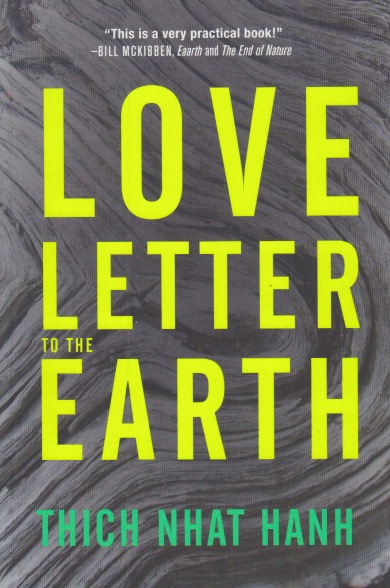
One of the more insidious things about religions is their claim to exclusivity.  The belief than any religion is the “only true religion” is bound to run up against the fact that there are many religions in the world, most of them sincerely believed.  We have much to learn from religions outside the one (if any) we were raised in.  I’ve known about Thich Nhat Hanh for quite a few years now.  One of his books was published (perhaps republished) by Routledge.  As their religion editor I was familiar with it, but as he was not “my author” (that’s the way publishing works), I didn’t contact him.  One of the most famous Buddhist religious teachers, Thich Nhat Hahn strives to transcend religion, which seems like a noble goal.  His Zen approach is simple and important.

This book’s title, Love Letter to the Earth, indicates what it is.  A reflection on environmental sensibility, it includes literal love letters to the planet.  Arguably it is probably a book best read in small batches with time to contemplate between each reading.  Although some aspects are clearly Buddhist, there are also noticeably Christian elements as well.  Christian spiritual leaders, such as Thomas Merton, knew there was no inherent conflict between Christianity and Buddhism.  Thich Nhat Hanh is also remarkably prolific, having written over 150 books.  World religious leaders need to take a lesson here concerning speaking out about environmental justice.  Certainly there are those who will disagree with aspects of his theology, as reasonable and important as it is.  The message is larger than that.

This book is based on the truth that we are all made of this universe and we contain within ourselves that universe.  The earth is our mother, understood by Nhat Hahn in an almost, if not literally, literal way.  While this isn’t news it is nevertheless profound.  When religions are used as excuses to attack the earth they cease to be true in any sense.  Those who don’t buy that perverted outlook are being condemned by those who do.  The earth is our home and it is our responsibility to preserve it not only for our own sake, but that of all creatures.  Thich Nhat Hanh does without being judgmental.  He instead calls for a religion that takes other religions as part of a non-conflictual belief system.  Religion starts wars.  Wars, of course, come at great cost to the planet, quite apart from the human suffering.  There is much wisdom in this slim book which would benefit many to read.


All You Sea

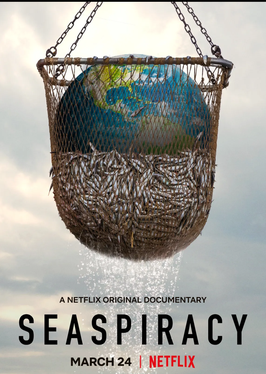
Speaking of large ships, in honor of World Ocean Day, which was June 8, I had planned to watch Seaspiracy.  A Netflix original documentary, this really is a must-see film.  Not to pass the buck, but I’ve long believed it will be the younger generation that will take the initiative to improve conditions on our planet.   I’ve seen my own insanely selfish and aging generation (with even more aged and selfish senators) continue to exploit this planet like there’s no tomorrow.  If you watch Seaspiracy you may see that it’s closer to true than you might think.  There may be no tomorrow if we don’t change our ways right now.  Borrowing its title from Cowspiracy, another important documentary, Seaspiracy looks at the fishing industry and its devastating effects on our oceans.

There’s a lot of sobering stuff here.  It begins with plastics.  Single use plastics, and even recyclable plastics, are everywhere.  They kill sea animals, they break down into micro-particles and infiltrate everything.  Chances are you have lots of plastic in your body just from living in an environment where it’s everywhere.  Ali and Lucy Tabrizi take you on a very disturbing journey where governments keep secrets about their roles in depleting the oceans and where large corporations kill observers at sea where there’s no chance of the truth being discovered.  They take you to the claims behind “dolphin safe” tuna and other fish.  They take you to where the market price on illegally caught blue fins can bring in three million dollars per fish.  And they’re caught in great numbers.

The oceans, according to current projections, could be empty in 27 years.  If current practices don’t change, there could be basically nothing left by 2048.  Why?  Because humans are hooked on consuming.  Some critics complain the date should be 2072, as if that isn’t just kicking the can down the road.  I became a vegetarian many years ago, after leaning that way many years before that.  It took Cowspiracy to make me go vegan. We eat without thinking about where our food comes from.  Our industrial food practices are literally destroying our planet.  Having given up fish along with other meat, I didn’t think much about fishing.  Seaspiracy shows why fishing is everyone’s concern.  It’s largely unregulated, unenforceable laws apply, and companies try to make consumers feel better in their acceptance that some fish is safe for endangered species.  This documentary shows once again how the price of eating animals, and doing so on an industrial scale, is simply not sustainable.  My generation is perhaps too lazy to change its ways.  Our only hope is that the younger generation takes the state of this mess far more seriously than we do. And perhaps thinks before putting things in their mouths.


Ocean Day

Yesterday was World Oceans Day.  It’s probably a measure of how busy I’ve been that I missed it until well into the work day.  Environmental care is one of my major concerns—something that the majority of Americans share but which Republicans block at every chance they get.  The oceans are the largest part of our planet .  Viewed from certain angles, the globe has barely any land on it at all.  And yet, since we live on the dry part, we use the wet part as our dumping ground.  There is an entire island in the Pacific made of plastic refuse.  Big petroleum doesn’t want any alternatives offered even though plastic is one of the most toxic products we produce for other life on this planet.  Shouldn’t governments share the values of their people?

Born in the landlocked western part of Pennsylvania, I first saw the ocean when I moved to Boston.  It was almost so distracting that I couldn’t study.  Here was this seemingly endless expanse of water that we so poorly understand, the symbol of eternity and life itself, right before me.  It was while living on the coast that I came to read Moby-Dick.  I could spend hours on the rocky shoreline, gazing out toward the seas in wonder.  I’m not a sea-farer myself.  I have inner-ear problems and being on a ship for any length of time would likely lead to extreme discomfort.  I can imagine, however.  Eventually I would read Coleridge and Hemingway and understand that I was not the only one who felt this way about the seemingly endless water.

Some of my earliest literary memories involve Rachel Carson’s The Sea Around Us.  It’s another book that opened young, landlocked eyes to what our world really is.  The image of water eternally crashing onto the shore is a comforting one.  As Carson knew, we came from the water and we yearn for it still.  Life as we know it isn’t possible without our oceans.  Yet, having petty human needs for extreme wealth and a sense of power over others, we pollute these seas with oil and plastics and chemicals and figure it’ll be somebody else’s problem.  In reality, the problem belongs to all of us.  Plastic Island, as it’s now being called, is nearly three times the size of France.  It’s composed of 100 percent pollution.  The Great Pacific Garbage Patch is being considered by some the eighth continent.  World Oceans Day should never slip away unnoticed.