Sea Around Us

Re-reading books is something I do somewhat too infrequently. One of the obvious reasons is that I won’t possibly finish everything I want to read in my lifetime as it is, and once something’s in the vault I tend to move on. I keep books, however, because I frequently go back to them to refresh my memory. Wholesale re-reading takes commitment. I just finished re-reading Rachel Carson’s The Sea Around Us. It’s difficult to describe the impact this book had on me when I first read it, years ago. Even though modern editions state that it retains its authority (broadly it does) I couldn’t help but be struck by a number of things this time through. Carson thought of herself as a writer. In her day that meant adhering to the conventions of language, which was, I admit, embarrassingly masculine. The assumptions of the 1940s and ‘50s against which Carson struggled set the very frame for the discussion. I recall being told in school, by female English teachers, that the only proper pronoun to use when the subject was of indeterminate gender was the masculine. I raised my eyebrows, but being good at following rules, I didn’t raise my hand.

Not that this takes away from the poetry and mastery of The Sea Around Us. It is a wonderful book. It also made many people stop and think about the ocean for the first time. Really think. And that’s a second observation about my re-reading. Hearing the recitation of how, historically—or prehistorically—the oceans covered much of North America. Thinking about how my hometown, far, far inland would’ve been underwater for eons really made me ponder. We’ve built our coastal cities rapidly, and with typical human short-sightedness. Even without our generous input, global warming has been ongoing for centuries. Sea-levels have been rising. Our desire for wealth, settling as close as possible to the water to facilitate trade, didn’t take into account what would happen in the perhaps foreseeable future. Even now when the warning is loud and clear the businessmen of the White House are in full denial.

There’s a kind of strange justice to this. You see, one of the other features of The Sea Around Us, and one of the most compelling aspects of the book, is Carson’s narrative of how we came from the sea and our desire is to return to the sea. Our blood evolved from ocean water. We rely constantly and in significant ways on the oceans. They, for example, are the powerhouses and condensation points for almost all of our weather. They separate us and bring us together. The very origin of life itself basks in pelagic profundity. Indeed, the ocean supplies the very concept of “profound.” The deeps. Although it had a beginning, it seems the world ocean will outlive our tribal little race. Damaged and poisoned by our greed, in eons it will recover. And those beings that survive will find their own wisdom beneath the waves.
See Around Us

There aren’t too many people that I consider personal heroes. Those that I do have earned the sobriquet in odd ways, I suppose. That makes them no less deserving. Rachel Carson became a hero because of The Sea Around Us. Published over a decade before I was born, it was a book that I treasured as a teen—or even as a tween, had the word existed then. I was no literary critic, but her style and lyrical writing drew me in and my own love of the ocean I’d never seen was kept alive through her words. Mark Hamilton Lytle, I think, shares my evaluation of Carson as a hero. The Gentle Subversive: Rachel Carson, Silent Spring, and the Rise of the Environmental Movement brought out much of what I admired, and still admire, about her. A woman in a “man’s world,” she became a scientist with a gift for literary finesse. She struggled, she believed, and she died far too young.

Lytle’s book builds up to the publication of Silent Spring, which appeared just two years before Carson’s untimely death. I picked up Silent Spring as a tween as well, but only read it within the last few years. I knew this book had nearly singlehandedly launched the environmental movement, but as the shame of modern life constantly reminds me, I’d been too busy to read it. Born the year it was published, and not terribly far from where Carson herself was born, I had an affinity with the book that strangely kept me from it. It isn’t easy to read, even today. Especially today. With a government ignorantly rolling away all the environmental safeguards that six decades of careful thought have put into place, we need Carson now as much as we did in the 1960s. Her modern critics, as might be expected, tend to be men.

Carson showed that a woman can change the world. Those who disparage her stunning work claim that her following is a religion, not science. Carson was a rare scientist who saw that everything is interconnected. There may be some mysticism to this, but for those willing to admit it, we feel it to be true. On the eve of environmental degradation that will, in a perverse kind of justice, possibly wipe us out, we need to return to the fine words and clear thinking of one woman who took on industrial giants to give a voice to the people. We do have a right to determine what happens to our planet. Lytle makes the point that Carson was like a prophet. For me the comparative preposition can be removed altogether.


Earth vs. the GOP

They used to call her “Mother Earth.” Now she’s simply a commodity to be liquidated into cash at the country club where rich white men play. That’s why I’m spending Earth Day on my third protest march of the year. Of all the things the Republican Party has done to show its true colors the clearest has been to participate in the destruction of the world we all share. There’s only one word that answers the question “why,” and it used to be considered one of the seven deadly sins. Greed. These acts of planetary terrorism are carried out by men who believe lining their own pockets is the highest possible good. Even moderate Republicans have locked in their goose step to keep in the good graces of madmen who want to cram as much lucre into their coffers as they can before they die. When the planet’s a smoldering ruin their grandchildren will surely thank them.

Son, behold thy mother.

Don’t knock tree-hugging unless you’ve tried it. Trees tend to be much better company than Republicans anyway. Never have I had the feeling that I’ve had to celebrate Earth Day with such a blend of angst and anger. That one that your teacher always warned you about—the one who ruins it for everyone—now has control of the country. Immediately he insisted we start dumping coal waste into our streams and rivers. Burn more coal so he can play a few more holes with what passes for a clean conscience in a filthy soul. I march because I must. We can’t sit silently and let the darkness fall. If you can see through the coal dust you’ll understand that the planet weeps. It’s her that we celebrate today.

Matricide used to be considered a heinous crime. Now it’s just good business. If we were an honest species we’d admit it’s been bad business from the beginning. We’d never elect a businessman with inherently conflicting interests to the White House. The goods of the few outweighs the good of the many. The commodification of nature is the worst kind of unnatural selection. Here science and common sense agree—in order to survive we must preserve our planet. I confess that I’m unapologetic in this regard. So, although I’ll be spending this Earth Day in the artificial environment of Manhattan, marching in the cause of science, and if push comes to shove I’ll be the one hugging a tree.


Somewhere out There

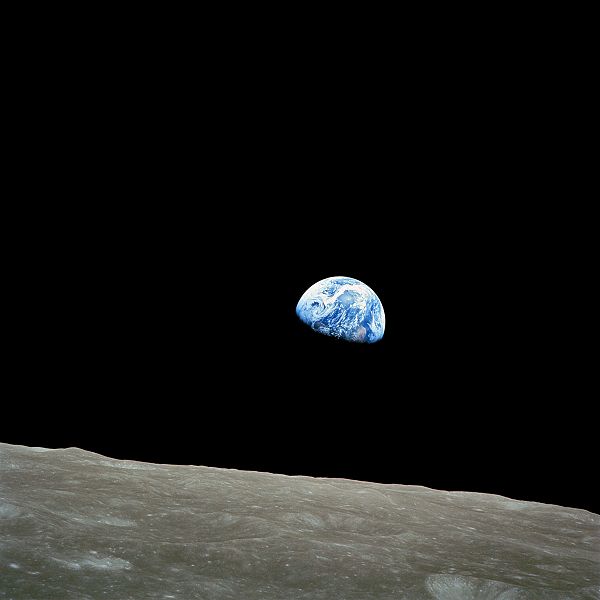
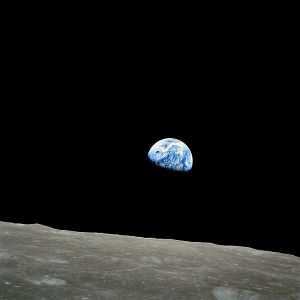
If last month’s election taught us anything it’s that nobody really knows anything. For many years now I’ve been saying that the sign of an educated person is s/he admits how little s/he knows. Socrates may have beat me to that idea, but there are still people whose intellect appears so great that we should pay attention. To my mind, such as it is, Stephen Hawking is one of those people. I don’t understand his formulas, but some of the concepts I can grasp. So when Prof. Hawking says we have approximately 1000 years before we make our planet unfit for human life, I think we should take notice. In just a decade we’ve gone from a Wall-e White House to a Dumb and Dumber one, and old mother earth is due to take a beating. Hawking, according to a story in The Washington Post, advises us to look for another planet to colonize.

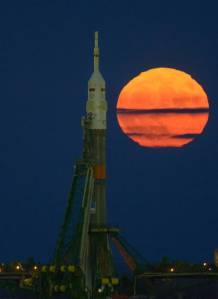
 Photo Credit: (NASA/Bill Ingalls)

Photo Credit: (NASA/Bill Ingalls)

Colonization seldom ends well. I wonder how the rest of the universe feels about us moving into the neighborhood. We dump our waste into anything pristine enough to carry it away so that people can make some of their number wealthy so that they can feel better about themselves. We can’t go one year without a war somewhere in our world and we kill one another just because we look different. We can’t even elect a president who’s smarter than any random undergraduate. Not exactly the kind of invasive species you want living next door. Any system can be gamed—capitalism most of all—and if it were up to me I’d prefer to have thoughtful neighbors. Perhaps the universe is politely saying to Dr. Hawking, “not in my backyard.”

What I find truly amazing here is that religion gave us the entitlement. Believing that the gods are like us, or that one deity made us in his white, male image, we’ve figured out this world’s ours to destroy. Just like entitled kids with too many toys. Daddy can always buy you another. So now we’re in the market for a new planet. One that’s not too hostile, but easily exploitable. A capitalist planet, but one that doesn’t mind a bit of help from former communists. You see, once we’ve figured out how to exploit another planet, there’ll be no stopping us. I have great admiration for Stephen Hawking. It’s just this time I think that we need to set our own house in order before we start inviting ourselves to somebody else’s home.


Life As We Knew It

The government does funny things when your back is turned. Back in January, reading Scott W. Gustafson’s At the Altar of Wall Street, I learned that the government treats corporations as people. It assigns certain rights and privileges to these collectives so that business can thrive without interference. A recent article by Chip Colwell in The Conversation asks, “What if nature, like corporations, had the rights and protections of a person?” This isn’t merely an academic question. As Colwell points out, New Zealand has recently accorded a natural area personhood status to protect it from exploitation. Meanwhile we in the United States live in a country where companies—those nasty people—are chomping to get their teeth into the “natural resources” of our national parks and wilderness areas. Not because it’s best for the planet, but because their corporate person has one of humanity’s greatest evils—greed. Gluttony used to be a deadly sin. Now it’s called economy.

One thing this corporate person doesn’t understand: we have only one planet and it belongs to everyone. Or no one. Our capitalist outlook has given an undue sense of entitlement to those who have the means to take without asking. They can frack the ground under your feet and you’ll never know it. Until the earthquakes or sink holes come. Meanwhile natural areas—as Colwell indicates, considered sacred by many Native Americans—are unprotected from fictional persons that have immensely more power than any individual. We know what happens when the sacred is engaged in battle by the economic. It’s an unfair fight.

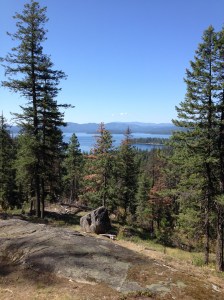
img_2476

When the crush of work stress gets to be too much, nature is our balm. Many times my wife and I will head to the woods on a weekend just to regain the balance that is stolen by what we call civilization. Manhattan has its wonders, to be sure, but they pale next to a simple stretch of “undeveloped” land and a path to walk through it. There’s a reason that corporate executives have their vacation houses far from the towers they build. It’s not a question of whether the sacred forests are valuable, but rather who gets to own them. With the legalization of fiction—corporations are not people, no matter how logic may be distorted—we have doomed fact. The earth is our fact, and, at this moment our only fact. As Colwell suggests, if it were treated like a person we’d have to show it some respect. And with respect true civility can thrive.


Finding Your Way

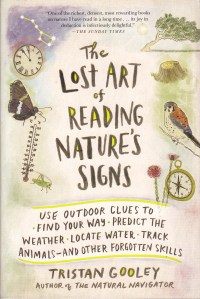
lost-artOnce while visiting the house of a friend, we took a walk in the woods. It was an area I didn’t know and after a few minutes it became clear that we were lost. There can be nearly no other feeling more frightening for a child. We wandered in the trees shouting for help for what seemed far longer than the maybe twenty minutes or so that my friend was disoriented. The message was clear: never go somewhere unless you know how to get where you’re going. I’ve been lost a few times since then and the gut-twisting fear is the same. Where am I? The Lost Art of Reading Nature’s Signs, by Tristan Gooley, is an amazing book for anyone who’s had that experience. We are residents of earth and we should know how to find our way around the place. Instead, most of us live in urban environments and never spend a lot of time outdoors learning that nature provides many, many clues to finding your way. You just have to know what to look for. I found myself wishing I could memorize large sections of this tome, assuring myself I’d never be lost again.

There is an irony about reading such a book during the commute to Manhattan. Apart from his small chapter on navigating in cities, Gooley spends most of his time offering advice on spotting hints in nature. I can’t believe the behavior of the mice, rats, pigeons, and cockroaches I’ve seen in the city is any less neurotic than that of the people. In nature trees, plants, land forms, weather, fungi, and the stars can all be used to guide a person home. There is a touch of quaint Britishness to the book, but the tips included quite often branch out to specifics in the United States, or even elsewhere. What all of this means is that in its own language the earth makes sense. We need to learn this language. Although Gooley doesn’t say it here, when we destroy our environment we’re increasing our ability to get lost.

One of the more interesting sections of the book used churches as a means of orienting oneself in unfamiliar country or a town. Church architecture, at least initially, followed a regular logic with an eastern orientation and opinions about the sacredness of the ground on the north-south axis as well. Knowing this holy geography, along with the ability to read lichens growing on the outside and finding the clues on tombstones, you can often find your way. There’s some poignancy here. There was a time when churches, synagogues, and mosques were natural means of showing people their cardinal points. We’ve come to rely on our devices to show us the way, and it’s a little early to know if that’s been a mistake. And if it weren’t for work today, I’d be outdoors, taking a walk and trying to learn to find my way through nature.


Nature Worship

IMG_2383

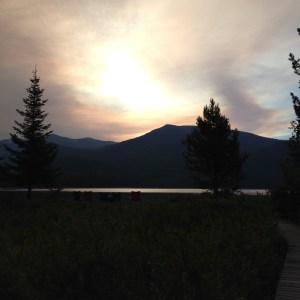
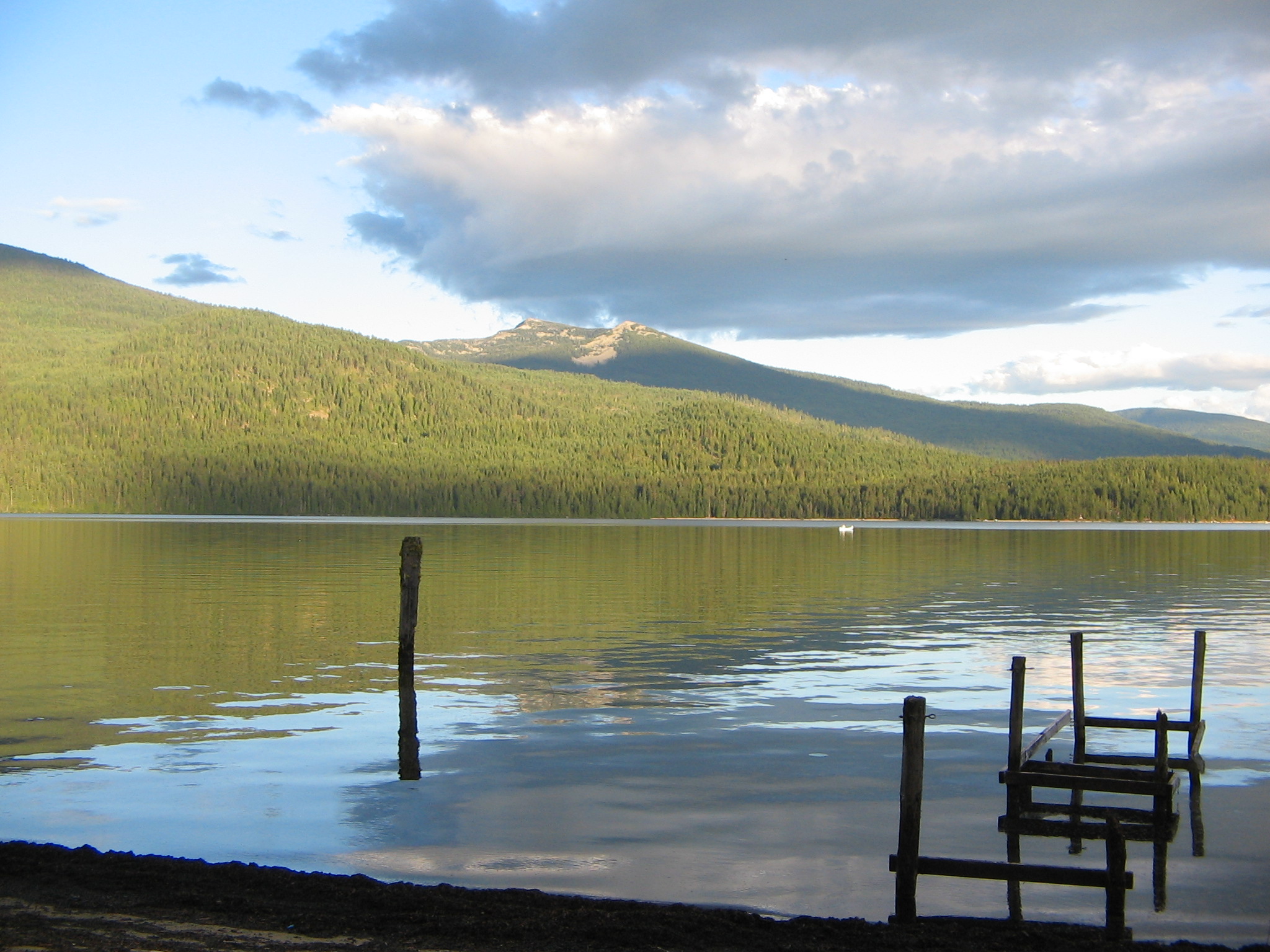
Here I am in a natural setting, with nature close at hand. From these windows I can see mountains, a mercury-smooth lake with fish breaking its silvery sheet, and trees aspiring for the sky. I hear a red squirrel chattering from one of those trees, and the call of a lonely osprey looking for its morning meal. It took a day of arduous travel to get here, and I am staring at a computer screen as nature puts on her show for me. I think, “it’ll still be there when I get done.” Then I think about what I think. Will it be there? This world we’re creating in our own image demands more and more of the planet we inhabit. To which we feel entitled. As I stood at the airport staring at the monitor, I couldn’t believe that my flight had been cancelled. What? I arrived at the airport at 5 a.m., flew countless miles, only to have you tell me my flight has been cancelled? Am I not owed better than this?

This attitude, I reflect, may be what brought us to such a place to begin with. This incredibly beautiful world was never ours to own. We’re guests. Invited perhaps, but guests nevertheless. And we all know that guests are supposed to be gracious and to act as if they wish to be invited back. So why am I rudely sitting here, ignoring my host? We are part of nature, but we tend to think of those closely attuned to nature as “uncivilized.” They don’t dress like city dwellers. Their hair is worn differently. They value things money can’t buy. They don’t play the entrepreneur’s game.

I travel to “get away from it all.” That which I’m getting away from is my life every other day of the year. How did we come to call this “civilized”? There’s no denying the creature comforts of a place to call home and a routine that seldom varies. But sitting here, amid nature, I realize the tremendous cost. Even as soon as it began to warm up in New Jersey we tried to carve out the time to explore local parks. To be outdoors among nature before heading back to the office on Monday. The whole point of worship is to break the flow of everyday time. To stop and think of the good that we have been invited to enjoy. I find myself amid this splendor, and I sit at my computer while nature awakens around me.


Mother Earth

Son, behold thy mother.

Behold thy mother.

As a planet-locked earthling, I’m thinking about Earth today. Such a quotidian planet. While I’ve been to others in my mind, this is the only one on which I’ve ever been or am likely to be. And yet there are no laws protecting it from my own species. Corporations are treated as individuals, legally. Only they’re much, much bigger and have lots more money. They can drill and dig and spew and slew all they wish. I can mutter a feeble, “Hey!” but they legally have to pay no attention. It’s like that guy with a loud device on a quiet bus. Or someone smoking too close to the door. They invade the little space you occupy and there’s nothing you can do about it. We look to our politicians to learn how to be better bullies. Our corporations look past us to the bottom line. When the planet dies, that will indeed be the bottom line.

We tend to make fun of those who believe there’s other life out there. Whether sci-fi nerds or gullible believers in conspiracy theories, we tell them all intelligent life is located right here. In your bank account. Your net worth. The contribution you make to the GNP. It all comes down to numbers. As if there weren’t something magical about walking in the woods. As if all of this is just dress rehearsal for the play of getting rich. The beasts we had to fear used to lurk in the jungle. Now they brazenly drive through our cities in expensive cars with tinted windows. They build towers to defy the spacemen to come down. “Don’t worry,” they seem to say, “our money is great enough that we can come to you.” And yet, we are still left with only one planet. And it seems to be getting quite stuffy down here.

I worry about our throwaway culture, because there’s nowhere else to go. You can’t prevent me from fracking the very ground beneath your feet. Or like Martin Luther, prevent me from flying over your head. You don’t like my loud music? You don’t like my noxious fumes? I can blow my vape into the shared, public airspace if I want. Ownership is a funny concept. Our species has been on this planet for a geologic sneeze and yet we plant our flags and bray our allegiances. It takes treaties and accords for us to act like civilized people. We won’t call it “global warming” because that offends those big people called corporations. If it feels a little warm in here to you, turn on the air conditioner. If we use up this planet, we can always buy another one.


Resurrecting Color

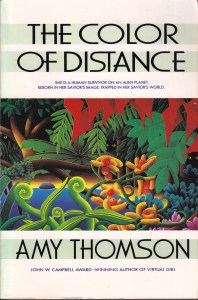
ColorOfDistanceIf you’re one of those people who’s attached to books, you know the frustration of someone who borrows a book and never gives it back. Many years ago I stopped lending out books for that very reason. I do, however, sometimes give them away. A friend recently reciprocated the gift of a book, giving me Amy Thomson’s novel, The Color of Distance. It is a profound story involving, as is common on this blog, themes of resurrection and transformation. A science fiction tale, it is set on another planet where something has gone wrong with an Earth survey team. The humans are dying on this alien world when one of them, Juna, is transformed by the alien into something like one of them. She comes back to life transformed. It wasn’t until I finished the book that I read the cover blurb that reads “Reborn in her savior’s image, trapped in her savior’s world.” Not a bad summary, capturing as it does the deep religious elements in the story.

The religious aspect, however, comes through most clearly in the environmental elements of the novel. Humans, somewhat optimistically, had set in place protocols not to interfere with alien life. So much we know from Star Trek’s prime directive. What makes this so interesting in the case of The Color of Distance is that Thomson knows that any contact is contamination. Two worlds cannot meet. They must collide. There is a gentleness, however, in her narrative. Juna, marooned (long before The Martian) on a foreign planet, has to learn to see things through alien eyes. And every little thing that humans have done has left a footprint on the planet. Protecting our own planet is a profoundly religious undertaking.

It is clear that Thomson has influenced later writers and stories. Not only does The Martian pick up on the stranded aspect, but Avatar clearly presents a world similar in many respects to the planet of the Tendu. The Color of Distance is a book not easily forgotten. The world into which the reader is drawn is indeed one of transformation and resurrection. I suppose spoilers aren’t an issue with a book two decades old, but I will satisfy myself merely with noting that another resurrection takes place as the story winds to its close. Deeply hopeful, and almost prophetic, this novel should be more widely read, for the sake of the world on which it arose.


All’s Fair

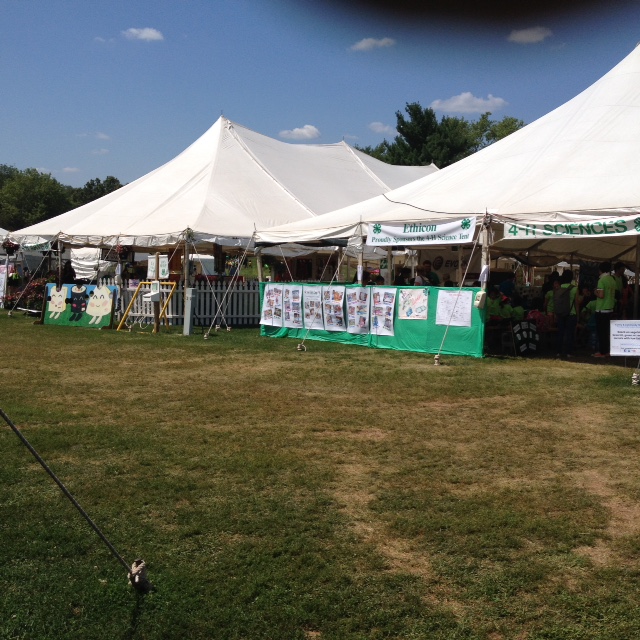
The county fair is an institution that tastes like a real slice of Americana. My family’s been involved with our 4-H Fair for several years now. Long days sitting under tents in the August heat, showcasing to young people that a good time can be had without the usual kinds of diversions that lead to regrets and tattered dreams. For many kids the fair will be as close as they ever get to a cow, goat, or chicken. For the less rurally inclined, there are pets like cats, dogs, and small animals. For others there are model trains, rockets, and airplanes. Increasingly robots and more current forms of art such as steampunk and film-making are appearing. In short, there’s pretty much something for everybody there. I know that my entire family has benefited from the experience. I didn’t know about 4-H as a child, so this has been a pleasant awakening for me.

IMG_2408 copy

As I wondered the fairgrounds, something that I suppose I’ve noticed before hit me with a new clarity. The Arts and Sciences tents are right next to one another, and these represent the classic forms of liberal arts education. Yes, the Gideons and Right-to-Lifers are here, but they’re over in the commercial tent. They’re selling something. Education—true education—is free. Those who grow up on farms can learn an awful lot about science by watching animals. The more formal schooling, however, asks for deeper engagement. Creative writing helps to explore ideas that simply don’t flow in conversation. Photography forces you to look at something from someone else’s point of view. Science teaches close observation and practical extrapolation. This is like a little university set up in a grassy field with a very affordable tuition.

The old hiker’s mantra goes “take nothing but pictures, leave nothing but footprints.” This year there was a real emphasis on footprints. The kinds of footprints that many clubs chose, however, were carbon. Many adults have grown up in a culture of consumption and disposal. Our young are now trying to demonstrate for us the errors of our ways. Sure, there are resources to last for centuries yet, but they will not last forever. Who are we to suppose it is our right to take what we please and leave the mess for our young to clean up? A day at the fair always renews my sense of hope. These are all volunteers here, giving up the latter part of their summer to try to make the world a better place. Perhaps the ethics should come up from the young, rather than descending from generations that have put their own wants ahead of those who might truly make a difference.


Permian Record

GorgonIt looked like an arm bone to me.  Then again, I have no formal training in either anatomy or geology.  The strata of Pennsylvania shale was littered with shell fossils from before the dinosaur era.  Had I found a rare early animal?  You see, I love fossils.  In fact, I was so disappointed the first time I walked into a Fossil store that I’ve never had the heart to go back.  Something about finding the remains of creatures millions of years old is inherently fascinating, and I was fortunate enough to grow up by a river that had plenty of fossils for the taking (a great pass-time for children of humble means).  When I saw Peter D. Ward’s Gorgon at a local book sale, I had to get it.  In addition to my love of fossils, I also have a special interest in Medusa, and the title grabbed two aspects of my attention at once.
 
The gorgon of the title is explained by the subtitle: The Monsters That Ruled the Planet Before Dinosaurs and How They Died in the Greatest Catastrophe in Earth’s History.  As Ward explains, many in the media express surprise that there was anything before the dinosaurs.  Perhaps I grew up with too much Genesis on the mind, but I knew about the Permian Extinction—the most deadly episode in Earth’s biological history.  Over 90 percent of life forms died out, including some of  the cooler species of mammal-like reptiles like the dimetrodon.  I have to confess, however, that I don’t recall ever hearing about gorgons before.  They are a South African species.  Well, they were, long before apartheid and other ridiculous human foibles.  Indeed, one of the charms of Ward’s account is that he doesn’t separate the human element from the paleontological.  His visits to South Africa often demonstrated how the current dominant species of the planet participates in its own extinction.  Valuing personal gain over social justice cannot have long-term payoffs.
 
This is a compelling story of people committed to finding answers in a barren land.  To an inveterate fossil-hunter like me, it was a dreamy sort of read.  I had my fossil “arm bone” assessed by a geologist.  It was actually a trilobite trail.  A trace fossil.  Sometimes things aren’t what they seem.  The answer of why of the Permian Extinction transpired turned out to be the most distressing aspect of the tale.  Climate change, Ward demonstrates, can easily lead to mass extinction through the very act of breathing.  Our evolution has favored the current atmospheric makeup of our planet.  Dinosaurs, who appeared after the Permian Extinction, had evolved lungs for processing air with less oxygen than we’re used to.  Greenhouse gases can shift subtle, invisible balances that are necessary for taking a breath.  And I could extrapolate to a future where technology will again come to the rescue, but only of those who can afford it.  And I wonder what far distant evolved intelligent species will make of a civilization where financial gain was considered the greater good than survival of an entire species?  Humanity itself will have become a fossil by then. But a well-dressed one.


Pope of Deliverance

As I was out jogging just now, a large gasoline truck pulled across the road, stalling my attempt at healthy living. As I waited for the driver to move, I thought of Laudato Si’. In Laudato Si’, Pope Francis’s encyclical letter, the future seems, for the first time in a long time, an optimistic place. I’m not Roman Catholic, but knowing that the head of the largest Christian body in the world has made an ecclesiastical pronouncement about our responsibilities as citizens of the planet is nevertheless authoritative. A world run by blind greed cannot see the signs in plain sight. We have taken what does not belong to us and have left a wasteland behind. I look back over a lifetime of advocating, in the small way my small voice can reach, for responsible tenancy on the Earth, and feel comforted by such a powerful ally. Perhaps it’s because I’ve never been a property “owner,” buying into the myth that the planet may be purchased, but it has never made sense to me that one species has the right to claim it all for itself, leaving it in a state our mothers would’ve never allowed our bedrooms to have been left, and supposing it is somebody else’s problem. If not ours, whose? We’re the ones paying the rent.

Those responsible for industrial level pollution baulk at the idea of economic fairness. Capitalism rewards the greedy and the only thing to trickle down is tears. Those with money can always count on lackeys to follow, thus when the man in white says this is important, those in red, and purple, and black have no choice but to follow. There’s no escaping the planet. We shouldn’t have to feel we need to escape. We need to take—dare I say it—corporate action. Those of us on an individual level sometimes think we can’t make a difference. Habits can be powerful things. A visit to a landfill can be a mystical experience. The visions you have there won’t be beatific, however. You might begin to understand the Inferno, in any case. We consume, and pollute, as if it is our right to do so. As if our brains have misfired into suicidal sociopaths.

Son, behold thy mother.

Son, behold thy mother.

Where, I have often wondered, is the voice of the church in all this? By far the vast majority of the world’s inhabitants are religious. Religious leaders, embroiled in politics that lead to solvency and power, have frequently neglected to turn out the lights when they’ve left the board room. While it may seem to be an abuse that the Catholic Church is extremely wealthy and highly influential, it may be that the humble leader of such an organization is the only person truly capable of getting attention. The Pope’s voice carries farther than that of any other single individual in the Christian tradition. And the media are already buzzing about the long anticipated Laudato Si’. The Pope begins on a positive note, and if those who make any claim to be faithful pay attention to the truly important message—far more important than fighting condoms or ensuring that half the human race is kept out of the club house—there may be a slight glimmer of hope yet. Maybe religion really can deal with ultimate concerns after all.


Finding a Vein

Travel broadens the mind. I always find that it’s a form of education. Sometimes what I learn is disturbing. While driving across Pennsylvania on I-80 recently, I had a chance to study some contrasts. I’ve made this trip many times, but this particular journey revealed two Amish farmers out plowing their fields behind teams of horses. It’s easy to romanticize this view—there is a majesty about it. Once, while driving back to Wisconsin from an interview at Luther College, I saw an Amish farmer and his team in the rain, the horses’ breath could be seen billowing out, but the farmer, implacable in his conviction of what had to be done, stood rigidly behind them, keeping the animals at their task. When you don’t eat if the crops don’t grow, a new kind of urgency is added to this picture. All around us on the highway hi-tech vehicles whizzed, and, gathering from the behavior of the drivers, I couldn’t help but wonder if any of them were very happy.

Then we sped past a billboard. It was facing the opposite direction from our travel, but the words went something like this: “The wind dies, the sun sets, but coal lasts forever.” In much of Pennsylvania, with its spine of Appalachian Mountains, coal is abundant. Growing up some of the highways we drove had exposed coal seams in the road cuts. It’s pretty much everywhere. Coal, however, is a dirty, non-renewable, polluting source of energy that exacts a severe cost on the planet through mining. No doubt it is abundant, but the amount is certainly finite and it makes the world less inhabitable when we use it. The wind blows where it wills. The sun rises on the righteous and wicked alike. Coal is decay left from the life forms that helped ensure that we’d show up here. One of those circle of death kinds of things.

IMG_2176

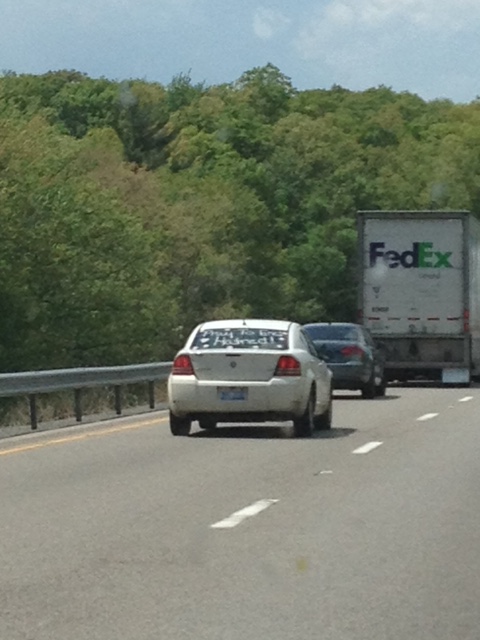
Then a car went by with a communique in paint on its back window. “Pray to end hatred” it read. This is a sentiment with which I could surely live. I recalled driving this same interstate many years ago when I was old enough to read but not enough to comprehend. The pylons of the overpasses on 80 frequently have spray-painted messages reading “Trust Jesus.” Some of them are still visible at highway speeds, faded though they are. The elements seem to have left a negative of the original work of what is technically vandalism. I think back to the Amish farmer. He’s watching, I’m sure, the never-ending flow of sinful vehicles on a highway as he plows. He’s been raised to trust Jesus and to believe in the old way of doing things. I’m behind the wheel praying that the hatred I see played out in these metal coffins will stay far from me until I can exit to some quieter backroads where the pace of life is more to my liking. And I wonder if that sunset I see is influenced by the coal that we’re burning and hoping the wind will simply blow it away.


Recycle This

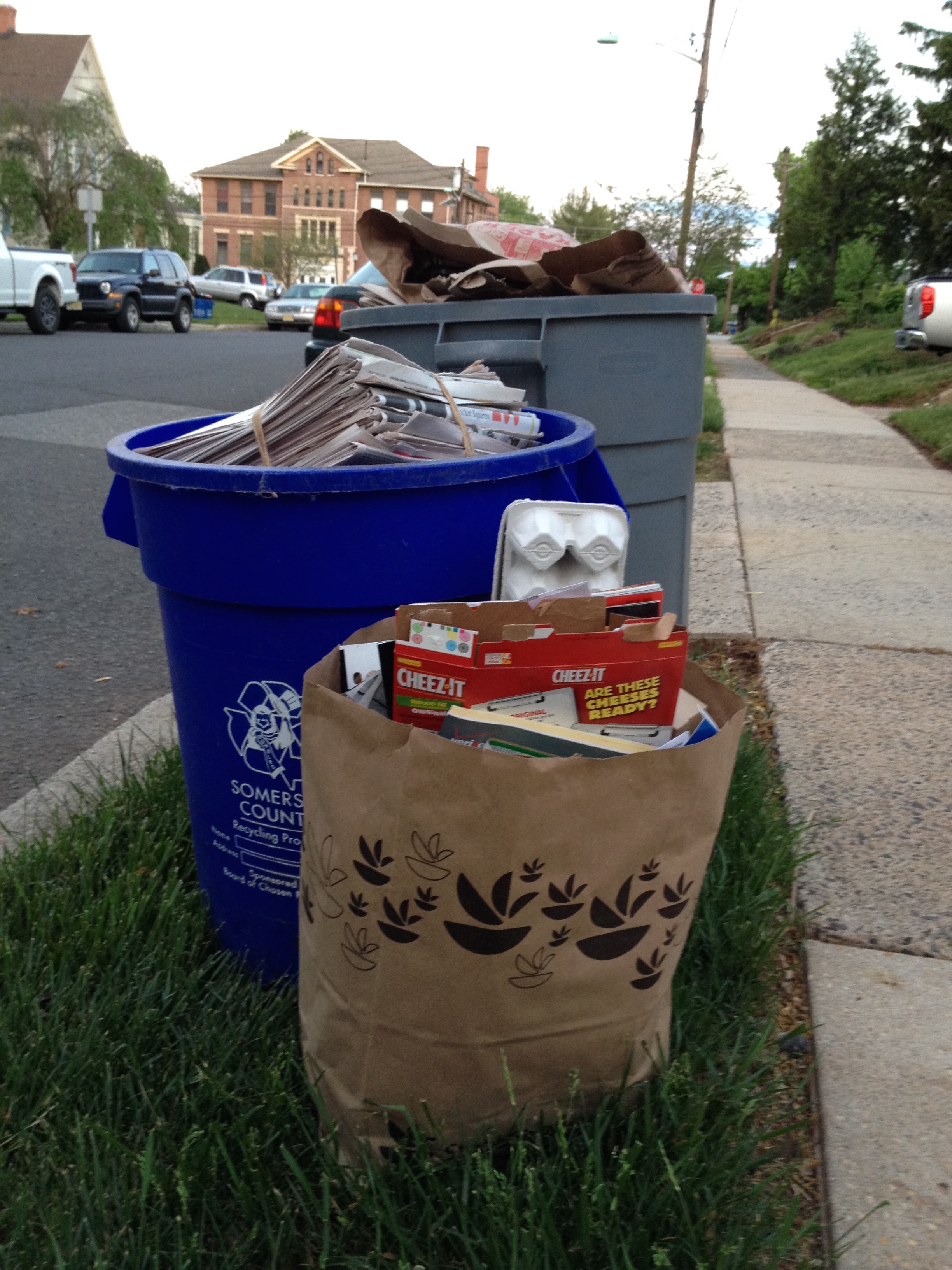
Like nearly all unfortunate white collar workers, the computer provided for me at my job is a PC. I don’t know the brand—that’s not important. When I want to delete a document, I’m asked if I want to move it to the “recycle bin.” Okay, I’ve been an environmentalist since I was a teenager. Growing up in a small town, recycling was a foreign concept, vaguely communistic even, but I could understand that limited resources would run out. Living paycheck to paycheck, that was perfectly clear. The town where I grew up still doesn’t offer recycling, but having a recycling bin on a computer screen? Are the electrons from my documents indeed being recycled, or is this just a way to make me feel good about throwing away something somebody spent hours putting together? It seems such a tautology to me.

This recycled world can be a scary place. I was a victim of identity theft once. Thankfully I hardly have enough to steal that the thief got away with very little before the credit card company found him. It meant having to go a few weeks without purchasing power, and a possible stain on my ratings. One merchant didn’t want to refund the charges, although it was clear that they were illegally made. So we recycle our sensitive material with the greatest care. It has to be shredded first. We had one of those home shredders that took hours of time to feed in “up to six sheets” at a time (two was the actual limit), and before you knew it the weekend was over and you had bags full of bird nesting and you still had to take them to the recycling place. So our local community, we learned, participates in a shredding drive. My wife and I went a few weekends ago and it was so popular that we were turned away at the gate. The line was too long and the trucks were almost full.

This past weekend I tried again. I had to drive to a new location where, I kid you not, the traffic pattern had to be changed to accommodate all the shredders. I was kind of glad in an impatient sort of way. I’d brought a book to read, anticipating such a wait. I was a bit anxious, however, with a police officer watching. I mean I had a book to my face in traffic, after all. At least it wasn’t a cell phone. The line crept along until I was finally admitted. I had six bags of confidential stuff in the trunk, and I was glad to have the chance to have my personal life obliterated by the huge, roaring trucks. As I inched to the front of the line, the check-in lady asked me what town I was from, and in response gave me a handful of papers that I would only have to recycle. I thought of my recycle bin on my desktop at work. There seems to be no end to disposing of the information that defines our lives. Some would call it a tautology.

C58E576D-BA75-4991-AA88-B095BBED4E1C copy


Worth Saving

Once we speed past Easter/Passover, holidays start to fall by the wayside as we try to get back to the serious business of either finishing up school for the year or, in a more pedestrian view, just plain business. Holidays interrupt the flow. Break the continuity. Stop and start. That’s why those of us on the working end of the spectrum appreciate them so much. Nevertheless, what should be the most important sacred day of them all is just another work day. Today is Earth Day. Recognized by no major religion (what religion wants to shake the status quo of business that brings in lucre?), Earth Day is a chance to pause and think about the undermining that we dole out to our long-suffering planet. We are nearing the point, many scientists warn, where climate change will become unreversible. We’ve had years, indeed, decades of lead time, during which the wealthiest nation in the world has been digging the grave the fastest. Even the popular media has been sending its subtle hints: anybody wonder why flood stories predominate in this climate? Think about it.

Reading books about environmental degradation is a depressing exercise. The size of the task is overwhelming and we’ve lost the ability even to reach our own government officials who are nevertheless impotent before big business. We can try to plant a tree, pick up trash, or recycle our plastics, but the destruction is taking place on an industrial scale. Ironically, as we go about making our own planet uninhabitable, scientists are beginning to believe that there is life on other planets. Some of us have suspected that all along. And if they come here that must mean we have something worth preserving. My guess is that it is nothing big business can provide. We can be so much more than consumers.

IMG_3528

Businesses are like all of the selfish motives we’ve had to suppress congealed into an anonymous venture in which none have the ultimate responsibility. Driving at night with the headlights off. I have worked for companies that have wanted to be seen as environmentally friendly. None of them, however, have taken the step of making Earth Day a recognized holiday. A moment of silence. A requiem for a dying planet. The draw of profit is just too strong. The old adage is that if a business is not growing it’s not healthy. Instead of ensuring that the only planet we can reach will be able to sustain us for a few more years, we want to go out with our pockets full. And where, I wonder, to we plan to spend all that money?