Sustain This

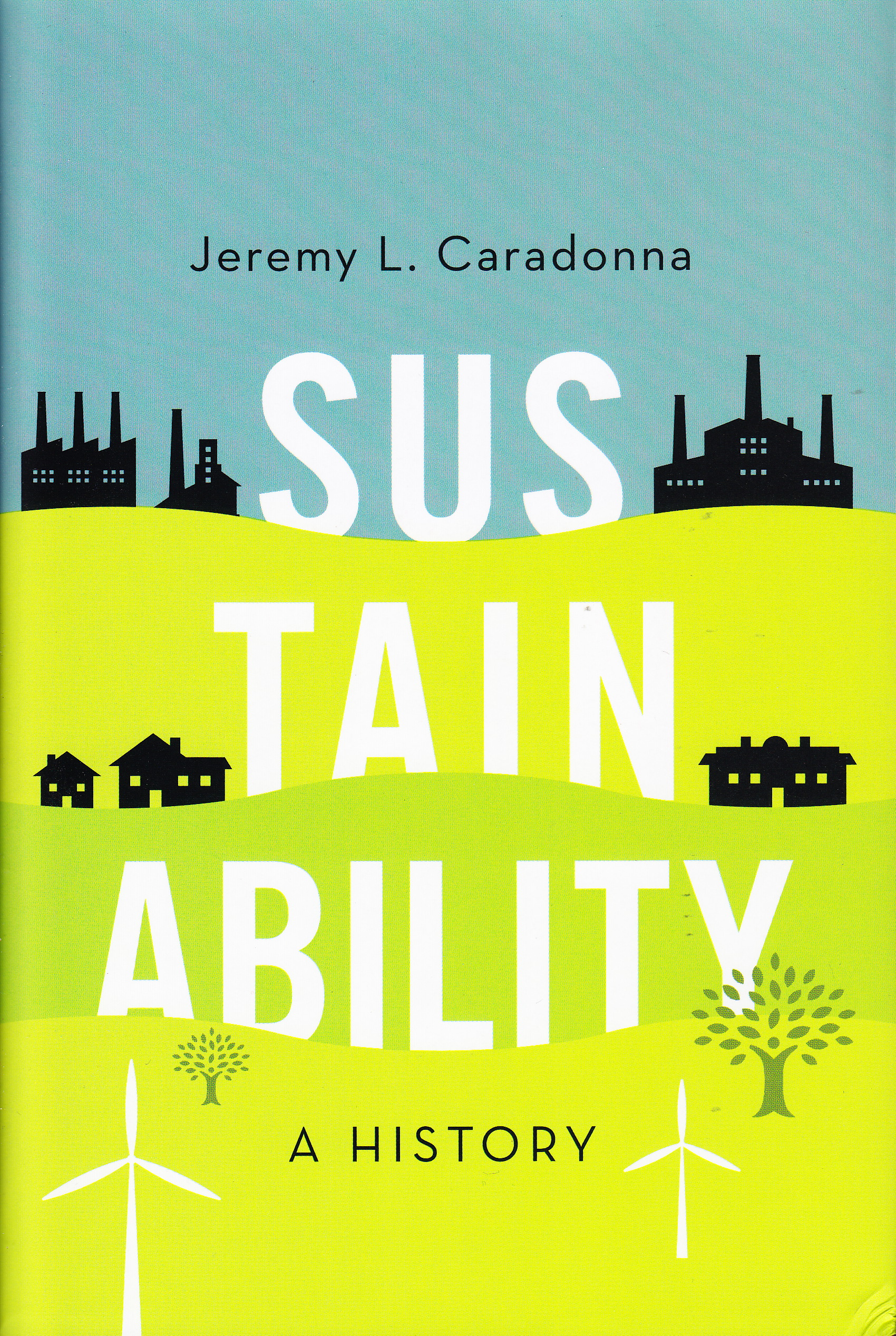
Sustainability“Grant me chastity and continence,” Augustine famously prayed, “but not yet.” That tragicomic scene kept coming to me as I read Jeremy L. Caradonna’s Sustainability: A History. Few ideas can bear the sheer weight of irony than that of a human population destroying their own and only planet. We know we’re doing it, and yet for a few more greenbacks to flash before our fabulously wealthy peers, we don’t mind warming the place up by a few degrees. There’ll be time to throw on the brakes right before the crash. I once took a ride, perhaps unwisely, with a friend who believed nothing could go wrong. Although the car didn’t actually roll, it came awfully close, and I am haunted by what might have happened. The difference between that incident and destruction of the environment is that the latter has already happened.

I’m cynical enough not to believe in simple solutions to complex problems, and reading Caradonna was a sobering finish to a day that had started out optimistically. Such books are not easy to read. Science does not come charging over the hill like the cavalry to save us at the end of the picture. You can’t take your marbles and go home when the marble is home. Sustainability does not set out to be a bleak book. There is a guarded optimism to it, and I was particularly pleased to see that sustainists readily recognize that without some kind of just distribution of goods, no system will ever be sustainable. I had no idea, until I read this book, that some economists advocate for a steady state economic existence instead of the ridiculously illogical constant growth. Constant growth in a world of limited resources is the worst kind of delusion.

We’ve gone pretty far down the road to destroying our planet. Already it will take many decades to repair the damage done. If we can muster the will to address corporate greed with a good old dose of primate ethics. Society, in all honesty, may have to collapse before that happens. If it does, of course, the strong will survive. I have a prediction to make, and it’s one that rationalists won’t like. If we can’t avoid the wall that is right before us, and if society as we know it buckles under its own greed, the survivors will, as sure as gray matter, devise a religion to explain it. As a species we are all about myths. Like fabled saints we believe we can have our fossil fuels and consume them too. Before rising sea levels wash us all away, do yourself a favor and read Sustainability. And when you’re awake for nights afterward, tell everyone else you know to read it too.
Hydrofracking

HydrofrackingGenies can’t be put back into bottles, I’m told. They are one of the many things that once done cannot be undone. I had that sense throughout my reading of Alex Prud’homme’s Hydrofracking: What Everyone Needs to Know. Prud’homme does an admirable job in attempting a dispassionate, fair treatment of a subject that is divisive by nature. And destructive. Fracking, once done, cannot be undone. Those who are already against fracking will probably come away from this little book with a sense that ex cathedra statements are slightly more difficult to sustain. The further you read, however, the darker the palette becomes. Yes, fracking provides domestic, fairly clean fossil fuels, reducing dependency on foreign oil. It also has long-term results that remain unknown, with indicators pointing to the worrisome side of the dial. Enough negative correlations exist to give us pause for rumination. Is fracturing the shale a mile underground really a good idea? What about when we run out of shale? And the tremendous waste of water.

Environmental concerns are, by definition, ethical issues. What we do to the environment effects others, and when we effect others ethics is involved. Or should be. One of the startling facts about fracking is that it has been around for a long time. Since the 1940s. Growing up in fracking-friendly Pennsylvania I had no idea that oil companies could move in, break up the ground under my feet, and siphon out the gas and oil they found. It is an industry without strong federal regulation. In fact, due to Dick Cheney’s influence, oil companies are not required to declare what chemicals they are releasing into the environment. Trade secrets can be deadly. It feels like awaking to find Deepwater Horizon in your back yard, not having been aware that the technology to do such massive operations even existed. Who granted permission? The mighty rex lucre.

Prud’homme points out that fracking is not about to go away. Too much money is at stake. Once we’ve learned how to build atomic bombs, incendiaries will ever after seem quaint. We can’t unlearn how to frack, even as we can’t undo the process once it’s done. We have, however, abundant sources of renewable, sustainable energy, but not the will to harvest them. Our economic thinking embraces the myth of excelsior—ever upward! Fracking may not be as dirty as coal or as scary as nuclear waste, but it does leave scars forever beneath the surface. Its genie has escaped its bottle and it is far too capitalist an idea to be suppressed once it has tasted opportunity. Prud’homme’s book is rightly subtitled What Everyone Needs to Know. That which you don’t know can indeed cause harm on a scale we can’t even calculate.


Gorilla Whale

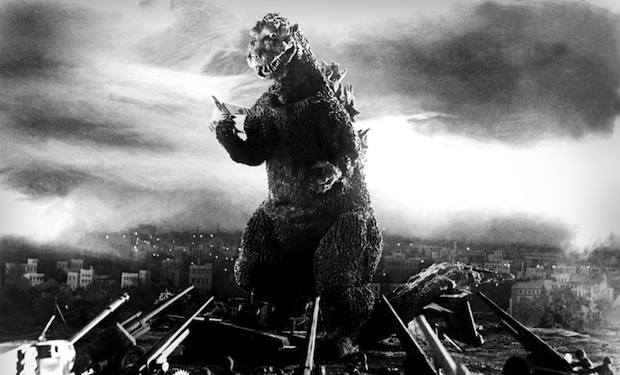
Monster Boomers grew up with Godzilla. Among the many monsters on offer on a Saturday afternoon, Godzilla was one of the most obvious fakes, but also among the most poignant of realities. Even as kids in the 1960s we knew about the atomic bombs that had been dropped on Japan. We knew, at some level, that we had come to a point where one species could destroy its entire habitat and that we had obliterated millions of our own kind in just the past half-century, let alone the millennia prior to that. Godzilla represented not just a man in a rubber suit, but the fear of what we could bring upon ourselves. Radiation, burning, the terror of Japanese citizens, and yet, that odd sympathy for the monster. Metaphors were growing much faster than the half-life was decaying. Godzilla became a lasting symbol of both childhood and adult awareness.

I haven’t seen the Godzilla that opened in theaters this past weekend. Inevitably, I eventually will. The 1998 version came pretty cheaply on DVD at a local video store a decade after its release, and I saw then that the monster had lost its emotional appeal. The original, compelling Godzilla was now just another monster to be destroyed. Instead of representing the environment fighting back, it was the environment waiting to be exploited. A shift had taken place and Godzilla was less godlike than before, but more terrifying. Monsters can be lovable, too.

MCDGODZ EC052

H. R. Giger, Time reports, died this past week. Giger was involved in creature design for the new Godzilla, and the memorial by Richard Corliss notes that he was inspired by H. P. Lovecraft, among others. Lovecraft gave us the old gods, and although the original Godzilla was about the horrors of nuclear war, there is a streak of Lovecraftian righteousness to it. The universe does not care for us. We invent gods, or monsters, or both, for that. Godzilla, as originally conceived, was never really that scary. What people could do to each other, and their planet, was. Sometime in the next decade, I’ll watch the newest Godzilla, and in the meantime, I hope that the message of the original somehow manages to sink in. We Monster Boomers can be quite naive that way.


Inhabit Eden

InhabitingEdenNashotah House, although now a name recognized by only a handful of mostly disgruntled Episcopalians, used to have a name in higher education. Real intellectuals found their way there—scholars who saw that spiritual life did not equal brain-death. Of course, for some that may be the case. While I was on the faculty there, one of the student wives (it is a fully residential campus) was castigated by others for going through the garbage and pulling out discarded recyclables. “How extreme can you get?” they’d say in disbelief. Not extreme enough, I’d say. I just finished reading Patricia K. Tull’s Inhabiting Eden: Christians, the Bible, and the Ecological Crisis. Tull, a retired seminary professor from Louisville Presbyterian, offers a much-needed perspective on the real apocalypse we’re bringing upon ourselves, often justified by the Bible. Many Fundamentalist sects declare the world to be short-lived and for our “domination” because of Genesis. Tull, a biblical scholar, challenges that myopic view of Genesis and suggests that the Bible commends care for our planet. Christians, she indicates, should lead the way in caring for our ailing planet.

Although it is written for the average educated reader, this is not an easy book. It is distressing to read about the many ways that we have blindly (and that’s only putting it in the least culpable language imaginable) set about destroying our environment. Misreading “have dominion over” as “dominate,” Christians have often seen their prerogative as mastery, frequently cruel, over all others. Pollution? The world’s going to end soon, so let’s get the rapture out of here—and throw your waste on those left behind. Economic inequality? You’ll always have the poor, so exploit them. Agri-business? People cannot live by bread alone, so let’s make a huge, exploitative business out of growing crops and processing them to death. Ironically, and not in the good sense, much of this thinking comes from “Christian” entrepreneurs, people who see nothing wrong with making a few extra bucks on the way off the planet. We fry ourselves with our greenhouse gasses and poison ourselves with our drinking water. It’s all gonna burn.

Tull gives the lie to all these misplaced concepts that some claim are biblical. Sure, the Bible is no environmentalist handbook, but then, things weren’t so extreme a couple of millennia ago. We hadn’t yet developed the technology truly to dominate, radiate, and eradicate this planet. Besides, the early Christians figured they’d be long gone a couple hundred centuries ago. It should’ve been clear, even as the Enlightenment lit up, that we were in this for the long haul. And we’ve got only one home. The ethical implications fall thick and fast—those who destroy the environment are worse than war criminals, for it is the entire planet that pays the price for such thoughtless greed. Many turn their noses up at the humble street person collecting bottles and cans for a few pennies. It may not be their motivation to clean up the planet, but then, saints who are willing to dig through the garbage are seldom recognized for what they are.


Gold Digging

To relieve the mangled up snarl of sadness, fear, and loneliness where my internal organs used to be after dropping my daughter off at college, I’ve been watching television. When I can see the screen. Despite this feeling that the world is ending, I just don’t have the tolerance for much of the drivel that passes for entertainment these days. After a night of Amish Mafia on Discovery, I tuned in again for an escapist viewing of Gold Rush: South America. Those who don’t know me personally (and some of those who do) may be surprised to learn that I have panned for gold myself—not religiously or regularly, but with occasional serious hopes of solving my financial woes. Watching Todd and his group of guys setting up sluice boxes in the remote Andes and equatorial jungles has almost a pornographic attraction. The earth gives us what we need. Of course, gold’s main function in antiquity was being used in religious settings—whether making gods or decorating their priests—and that gives capitalism its drive for precious metal even today.

Photo credit: Agnico-Eagle Mines Limited

Photo credit: Agnico-Eagle Mines Limited

Mining is not so simple as it seems. You do have to research claims and find out who has the “rights” to property before you begin prospecting. There is a kind of wild-west feel to it, and claim jumping is still a crime. While watching the Gold Rush guys run into disappointment after disappointment, it still bothered me a bit how quickly the solution seemed to involve destroying the ecosystem to find the shiny rocks. Excavators had to be driven through the jungle, trees knocked over, and when the camera longingly lingers over a huge gash in the ground for an industrial gold operation, all the crew can say is what an impressive sight such a deep hole is. When they mention gaping holes, however, I feel there is something missing deep inside my own soul, and I wish they’d just stick to panning.

After many trials and tribulations, they find gold worth $50 a yard. They locate the claim holder and negotiate a deal. Todd’ll move his operation from the frozen Klondike to the sunnier climes of Guyana. As the camera pulls back, the guys gather into a little knot for a word of prayer. Yes, this crew of tough outdoorsmen bow their heads and ask the Almighty to help them find gold. If only it were so simple. The prosperity gospelers would have us believe that the divine wants us to be wealthy. If it was that easy, though, reality television shows would never last more than one season. And besides, some of us would trade every material thing we have to turn the clock back just a few hours or days to live them all over again just to fill in the great void that follows the inevitability of growing up.


Evil Living

Maybe it was just the lack of rationality that comes with driving 700 miles in two days, or just plain glaikitness, but I watched Evil Dead II a couple nights back. I had read on an Internet site (probably already a warning) that it was very scary, but I’ve been a slave to logic for many years. Supposing this to be a sequel, I was confused when the first few minutes replayed the plot from the first movie with just two characters instead of the original five. Budget cuts (literally, as I later learned) meant leaving out characters and supposing that the viewers would catch on. In the first Evil Dead, the catalyst of the evil spirits in the woods was “Sumerian” spells recorded by an ill-fated professor in the cabin in the forest. Playing the recording (still in the first film), the kids release the evil spirits and one-by-one become possessed until Ash has to kill off all his companions. The campiness in both films tends to ameliorate the over-the-top violence and blood, and you know that the film isn’t taking itself at all seriously.

Once I figured that out (it was, after all, a very long drive), I settled in to watch a familiar story unfold. New characters are added in the form of the professor’s daughter, and traveling company, who show up with more pages from the Book of the Dead that will help to dispel the evil. When the characters encounter a ghost of the dead professor, he says something that may be the point of this blog post. He urges his daughter to seek salvation in the pages of the book. So here was a distinctly Judeo-Christ-Islamic theme playing out: salvation comes through obeying a book. It is an example of what I would have called “the Bible as a magical book” back in my teaching days. Movies, both good and bad, tend to portray “Bibles” as books that have the ability to affect the world around them in beneficial ways. Demons are cast out, illnesses are healed, lives are restored.

My fondness for B movies, in the end, is all that redeemed this domestic cinematic experience. I have spent many nights in the woods and I have read and reread sacred books. The two, however, seem to be worlds apart. Nature often feels like a redemptive experience. After many weeks of experiencing the outdoors only in the guise of New York City, a truth that can only be called sacred occurs—people are creatures of nature and nature can still feel sacred to us. Here is a simple reason that environmental integrity must be maintained against those who would exploit the earth for fossil fuels, timber, or drainage of lakes for irrigation. Nature may be our last chance to find something truly sacred. Once one person, company, or government destroys it, it will be gone for a lifetime or more, for everyone. That, in my book, is evil.


Stormy Weather

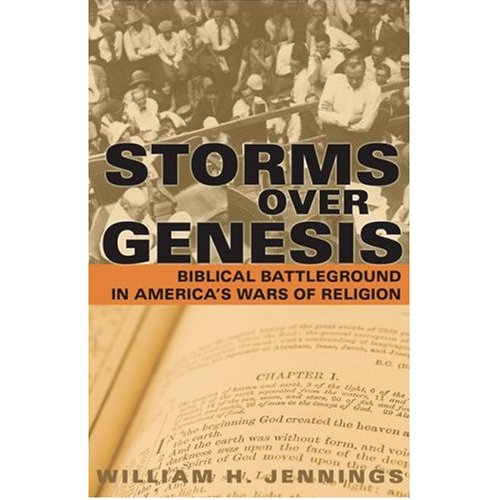
The privileging of one literature over others is problematic. Of course, the entire industry of biblical studies is built around such preferential treatment. And so is a large share of Christianity. I’ve just finished reading William H. Jennings’ Storms over Genesis: Biblical Battleground in America’s Wars of Religion. For someone who has taught Genesis before there wasn’t too much new material in here, but it strikes me as a very good primer for those who wonder about why the issues of gender inequality, global warming, and evolution remain firmly entrenched in evangelical minds, and therefore, our society. Just the first three chapters of Genesis, as Jennings points out, have led to the much of the irrational, at times inane, arguments that just won’t go away. Tea Party kinds of issues.

At the base of it all is the concept that Genesis somehow represents the way the world is supposed to be (rather than the way it actually is). As if seconding my choice of bus reading, The Economist recently published an article on Glen Rose, Texas. I’ve known about Glen Rose since I was a child. There, in a bizarre twist on the Flintstones, locals claim human and dinosaur footprints intermingle in a nearby creek bed. As the article points out, some locals see this as evidence of young earth creationism—seems Fred and Wilma missed the ark along with Dino. For decades paleontologists have tried to explain that the “human” tracks are actually dinosaur tracks as well. Given their size and stride, if they were human Adam must’ve been a giant. Despite the science, the myth persists. Even the article in The Economist doesn’t give the scientific answer.

It would be difficult to find a book more influential than Genesis. It would also be difficult to find one that is less scientific. Anyone who has studied ancient societies knows that they delighted in telling outlandish stories to explain the origin of the world. After all, there were no eyewitnesses. No channel 11 helicopters hovering overhead to bring you the story live. It all comes from mistaking a good story for a good book. In an era when evidence of evolution literally abounds, we still have nearly half the population of this technological nation trying to make room for the Valley of the Gwangi. Jennings may not hold the answers to all the problems Genesis raises, but if people would read Storms over Genesis, we might be able to afford a little more energy to solving global warming rather than running from dinosaurs in Texas.


California State of Mind

California, it is sometimes said, is a state of mind. I leave today after a few days in Santa Barbara with a bag of mixed impressions of one of our nations great schools. My first impression on the University of California Santa Barbara campus was almost a physical one. Literally. I had no idea of the bicycle culture and nearly stepped into a bike lane with the flow of a New Jersey storm drain during a Nor’easter. California is a culture of wheels. I’d never been to a campus before that has four traffic lanes for non-motorized travel: two bike lanes going opposite directions, a skateboard lane, and the humble pedestrian walkway. There are so many skateboards here that the counter-culture has become conformist. Sorry, Bart, it’s true. And concern for the environment is palpable. Reclaimed rainwater feeds the lush plant life, every possible recycled item is sorted and sent to the correct facility, students bicycle instead of drive, smart cars are very evident for the two-wheel impaired, and almost nobody smokes. And as I ate my supper alone in the student union two separate groups of Christian students were having very vocal conversations about their faith. Free spirits not realizing that they’re trapped.

One conversation with a Native American specialist stayed with me. She spoke of how missionary work has damaged indigenous cultures irreparably. I listened in fascination as she told me about the local history. How an historic Spanish mission was publicly adorned with the skull of a murdered Native American and how it took years of persuading to get them to take it down, even in the late twentieth century. Across campus students are praying to Jesus for the courage to continue witnessing. In Newark, I suspect, a couple of guys are still laughing.

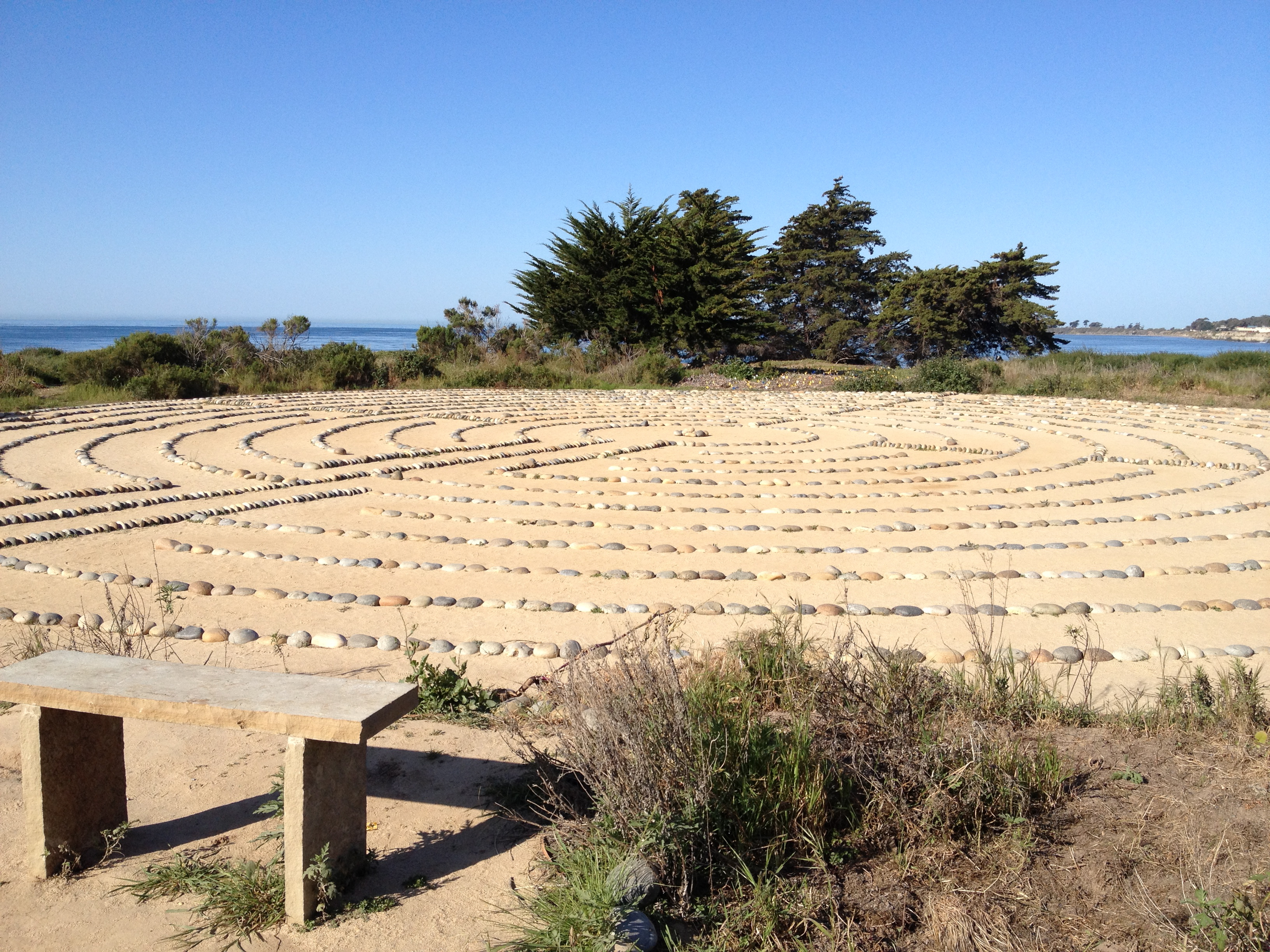
On a brief respite from my busy day of meetings, I walked the Lagoon (sorry, I can never see or say that word without thinking of Gilligan’s Island) Trail. Emphasizing the environmental features of this wetland habitat, the trail leads down to the ocean where flocks of pelicans and egrets fly overhead, unperturbed on the shores of the vast Pacific. In 1969 what had been to date the worst US waters oil spill took place from Platform A, still visible in the distance from the beach. My thoughts turn from Gilligan’s Island to Deepwater Horizon. My laughter to tears. The Lagoon Trail winds through the headland to a labyrinth. In today’s resurgence of interest in the labyrinth, it is viewed as a spiritual journey. Labyrinths appear in churches as early as the Roman Empire, but nobody knows what they mean. I silently stand beside the maze. What does it mean? Platform A leers from the ocean. Christian undergrads look to convert the world. And under the cross is not the skull of Adam, but that of an anonymous Native American. What does it mean?


Frozen Falls

Some weather we’ve been having! New Jersey has just completed its mildest January on record. Weather has always been a favorite mode of resort to the divine since it is one of those things we people just haven’t been able to control yet. And it makes perfect sense. The atmosphere is, by definition, bigger than the planet’s surface itself, and we people are pretty tiny, all things considered. I’ve stood next to some trees in the northwest that give me a flea’s eye view of the world.

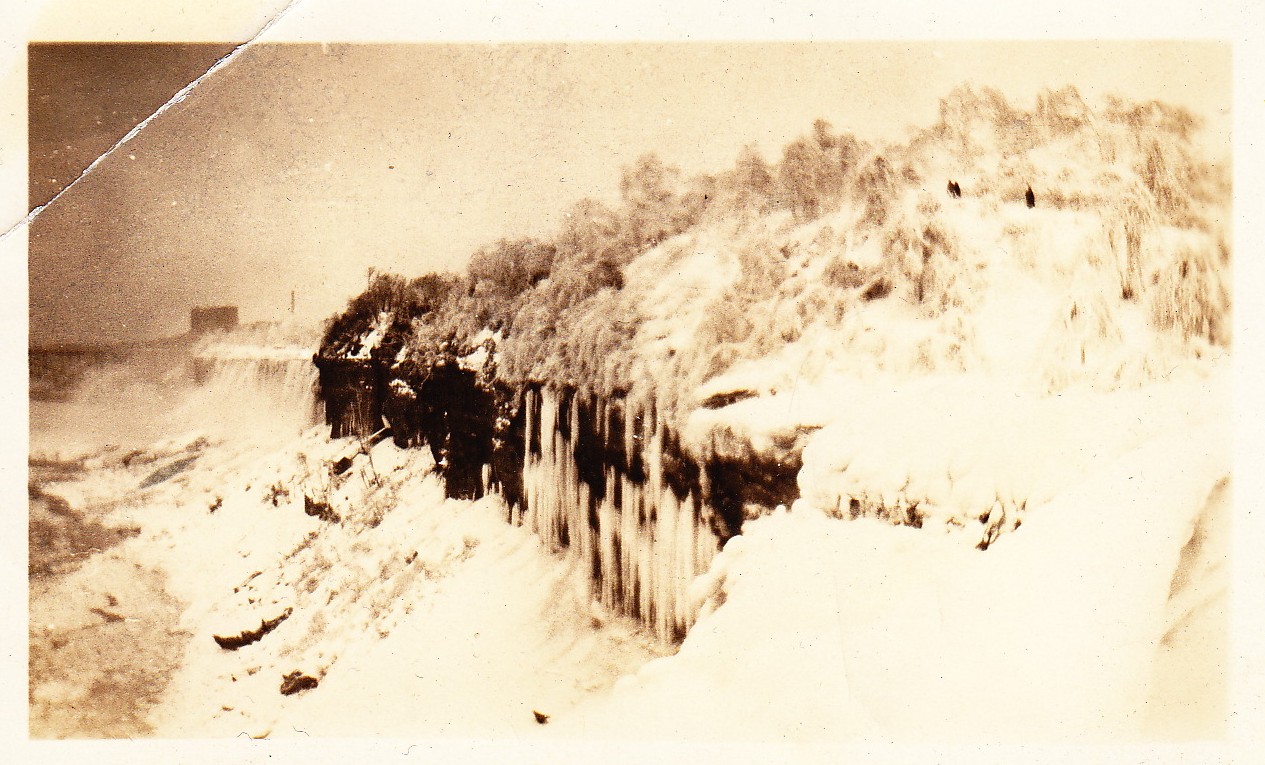
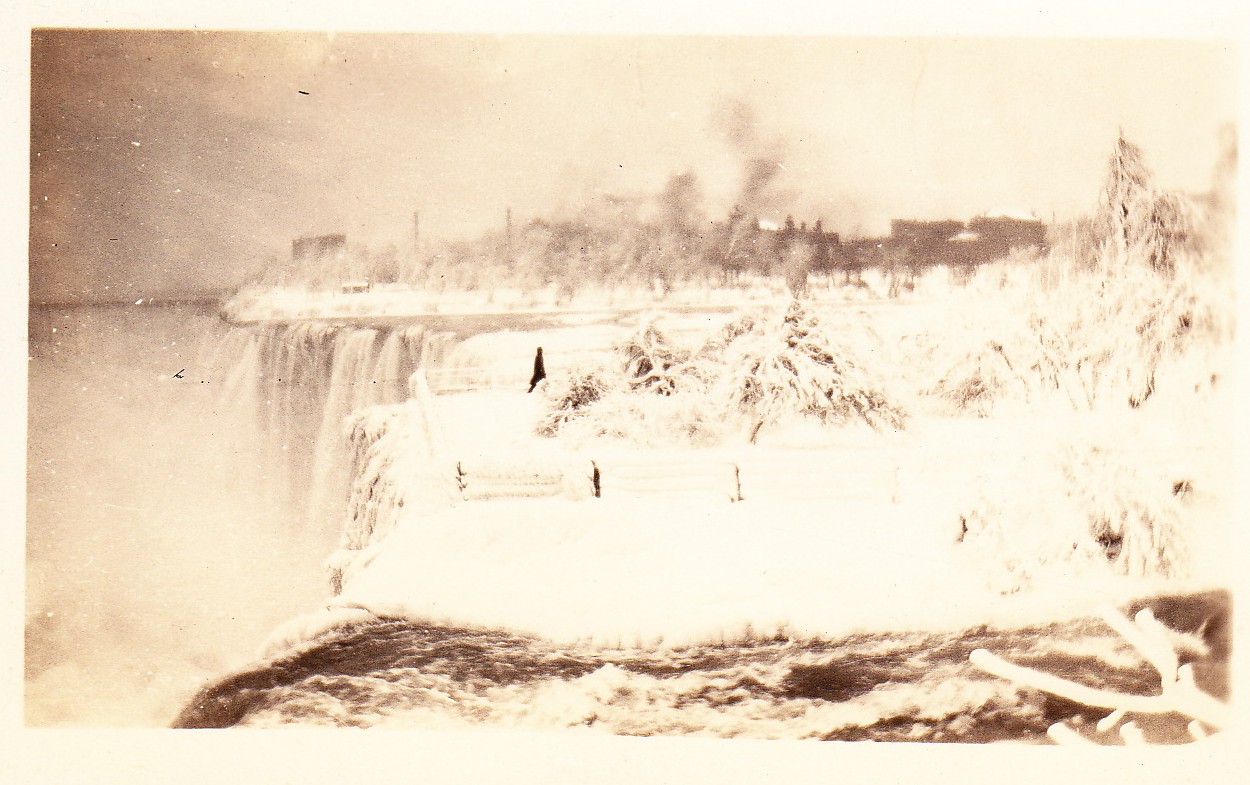
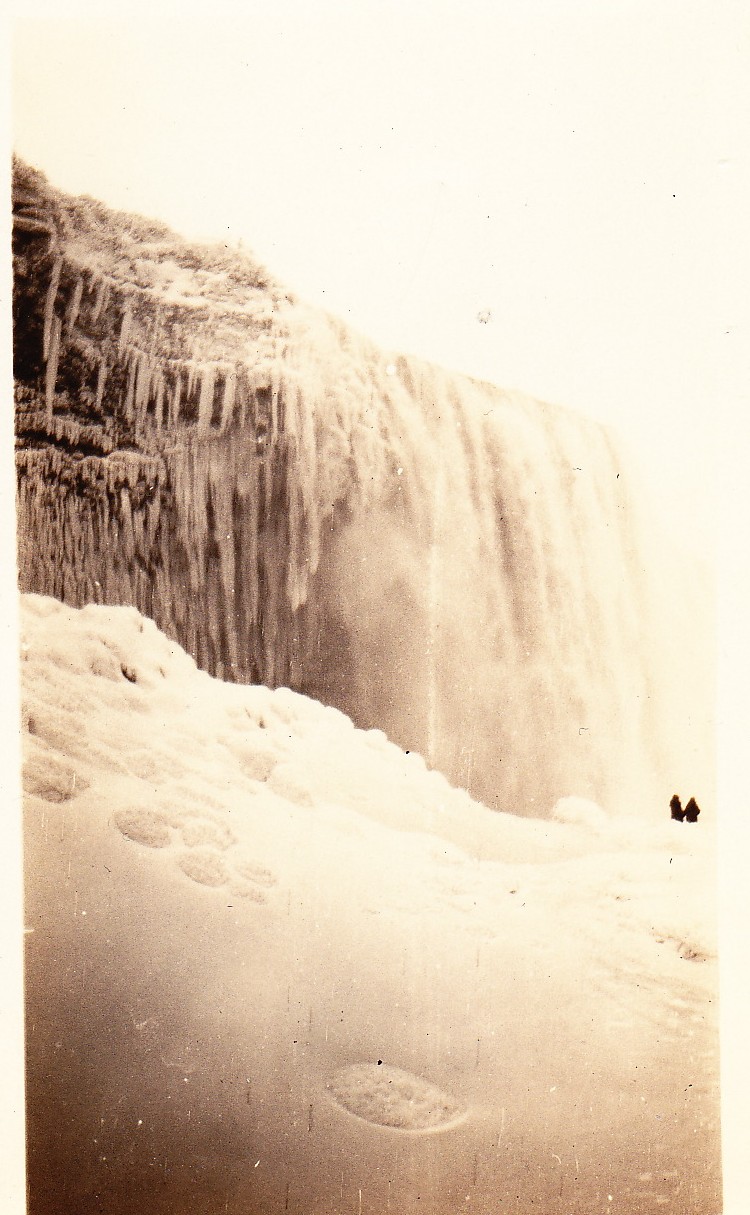
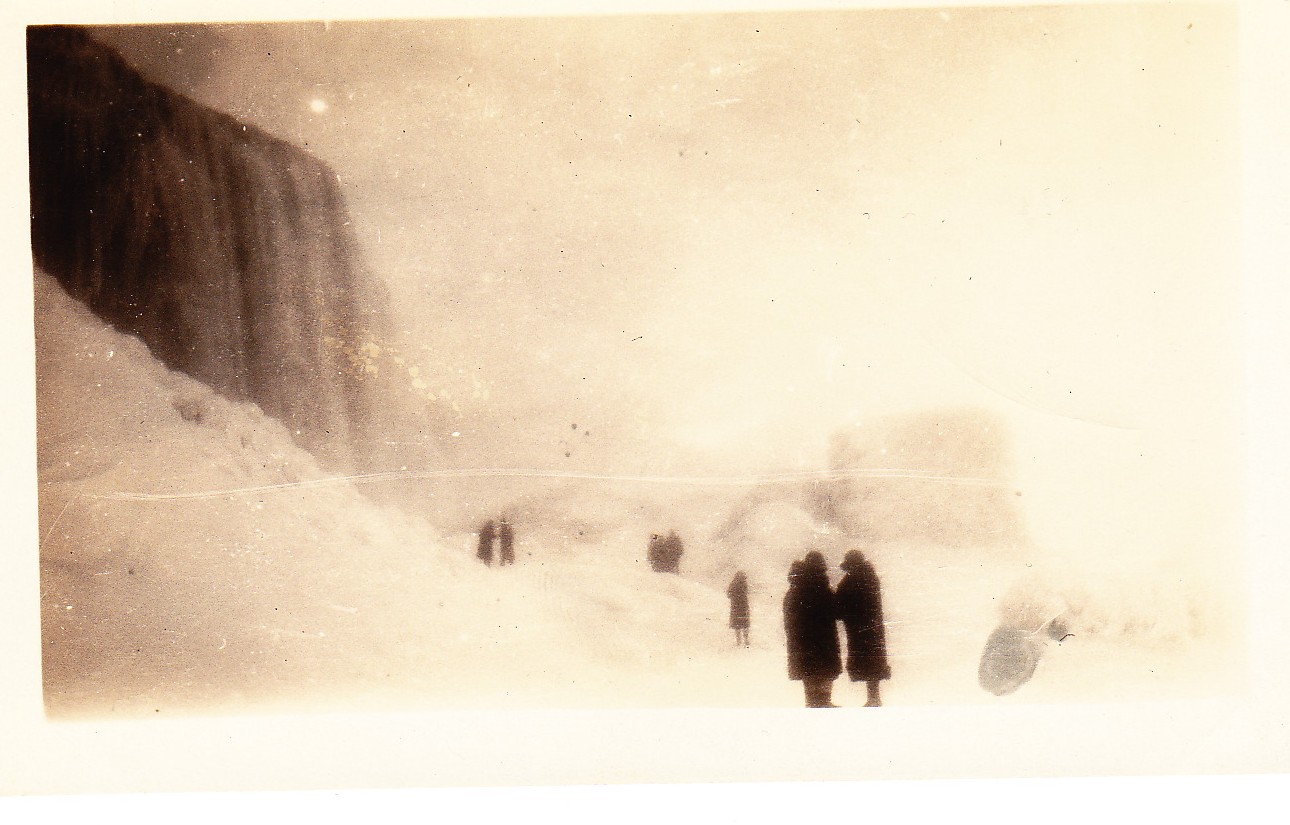
I remember one of my teachers telling us that Niagara Falls doesn’t freeze over. When I told my mother this, her response was to pull out these photos and send them to school with me. Someone in the family back in my grandfather’s younger days owned a photography business. The photos are unfortunately not dated, but they have been iconic images for me ever since that day in grade school. Yes, even Niagara Falls can freeze over. My best guess for the dates here must be sometime around 1920.

Back when we still had television, I was an avid fan of the PBS Naked Planet series. One of the episodes was on Niagara Falls. In the late 1950s and early 60’s the hydro-electric potential of the falls had been tapped to such an extent that now between 50 and 75 percent of the water flow of the thundering falls is diverted upriver. I first visited Niagara Falls as a child, but I have never experienced the falls with the full force that nature intended. Likely no one ever will again, at least as long as we are in charge of planet.

These pictures remind me of the awe of nature. They were taken when the falls were pretty much at full flow, and yet they are frozen solid and people are walking around on a river that boasts class 6 rapids, the highest the whitewater scale goes. Sometimes when people assert too much control on their planet, it is nice to be reminded that our tired orthodoxies aren’t always what they seem to be. It may be an unseasonably mild winter this year, but nature may still have a few tricks up her sleeves.


Slash and Burn

Extinction is an evitable part of life in the universe we’ve inherited. Throughout the eons of our planet mass extinctions have occurred several times, and the new world that emerges is strange and unexpected. We as primates owe our existence to such a natural occurrence at the end of the Cretaceous Period. We evolved religion, which, in some species, bestows the right upon us to alter, or even destroy, our environment. The lame reasoning that generally accompanies such amateur theologies is that a deity is about to sweep down and reclaim those “he” (inevitably) likes. All the rest are just part of a hellish charade to make the righteous feel their entitlement more acutely. So we now find ourselves facing, as scientists warn, another great extinction. This one is of our own making.

The causes are not too difficult to discern. For centuries the dominant religions in the western world have preached messages easily mistaken for selfishness. The perverse aberration called the “prosperity gospel” is one such bastard theology. (I use that term in its literal sense here: the prosperity gospel claims false parentage in declaring that Jesus rewards the affluent with material wealth.) An article in Sunday’s New Jersey Star-Ledger points out that the unprecedented human involvement in extinctions. Using Haiti as a test-case, Faye Flam of the Philadelphia Inquirer notes that 99 percent of that nation’s forests have been wiped out as the poorest people in the western hemisphere seek wood for the basic necessities of life. Just over six hundred miles to the north begins one of the most affluent nations in the world where as long as we get our own, the rest of the world can go extinct. We are so blessed. While the loss of forest barely keeps the people of Haiti alive, it drives unnumbered species to extinction.

Entitlement is an odd phenomenon. Without those further down the food chain, the advantages of privilege disappear. When there are no poor to support the wealthy, the comparison fails. The same is true on a species level. As privileged Homo sapiens, we have climbed to the top of the mountain and made ourselves gods. Other species are counted as chattels to be divided up among the wealthy. The rarer they are, the more valuable. Problem is, once rarity reaches extinction there’s no turning back. Our environment placed us in this position and gave us the grey-matter to figure it out. Instead we liken ourselves to gods who do not need this world that gave us birth. Biology disagrees, as time will tell.

Icon of the prosperity gospel.


Vulcan’s Anvil

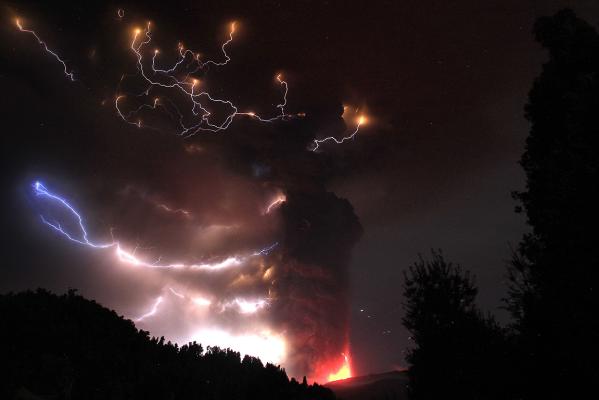
Volcanoes have long been the prerogative of the gods. Saturday’s eruption in the Puyehue-Cordon Caulle volcanic complex in southern Chile joins last month’s outburst from Grimsvotn in Iceland for divine fire-storms. In the days before geology, the only explanation for these impressive explosions was the gods. The concept of Hell was fairly late in the development of ancient Near Eastern religions, otherwise volcanoes might have been labeled as Hell breaking loose, literally. Many historic eruptions have influenced the course of history, most notably Thera and Vesuvius. Ancients would have been hard pressed to see such spectacular—and obviously divine—displays as “natural.” Indeed, the concept of “natural” events was itself slow in evolving since the gods were always lurking in the dark corners of the evolving human psyche.

Fortunately, beyond disrupting some air travel, these two latest outbursts have been fairly benign from a human point of view. This too is an evolved perspective since we tend to see ourselves as the overlords of the natural world. Watching industrialists poke new orifices in the planet’s crust for personal gain even in rare and delicately balanced ecosystems, who can doubt that we are masters of our own domain? Much of the misdirected sense of such entitlement comes from interpreting the Bible as declaring the planet ours from the days of mythical Eden. Some of the more perverse applications of this principle include those who try to force the hand of God into sending the Second Coming due to their creating conditions appropriate to an apocalypse. Others declare that since said Second Coming is nigh, why not trash the environment? We won’t be needing it much longer.

Apart from the obviously failure of logic here, the anthropocentric view is also misguided. The earth was not created for us—we simply evolved on it. The corollary also stands true: long after any human intelligence is here to read these words, our planet will continue on its weary track around the sun until it blossoms into a red giant and consumes our final cinders. There are no horsemen in the clouds, but this planet is all that we have (even the space station depends upon it) and when we grow too arrogant, the planet unconsciously gives us a spectacular display to remind us that we are mere guests upon this globe. We need to treat it with respect.


Good Earth Friday

In a rare superimposition of holidays, today marks both Earth Day and Good Friday. These two special days are a study in contrasts, yet both are holidays that look forward and hope for salvation. Good Friday, the culminating drama of Holy Week, is often paradoxically treated as a day of mourning. If Christian theology be correct, humanity would be Hell-bound without it. Yet many of the faithful weep as if for Tammuz, knowing that resurrection is just two days away. Earth Day, much more recent in origin, is much more ancient in importance. Biology as we know it, whether human or divine, would have no place to call home without Earth. Earth Day began in 1970, but every day is an Earth day for most of us.

Still buzzing with 1960’s activism, on the first Earth Day 20 million demonstrators got involved and helped lead the way to the Clean Air Act, the Clean Water Act, the Endangered Species Act, and the founding of the Environmental Protection Agency. People cared. This was before fashionable complacency set in. Whatever. Today citizens of the United States get stirred up about very little. Good Friday may represent a school holiday for some, others may even go to church although it is not Sunday. But get worked up? Hardly. Legislators in our country drag their feet like spoiled children when it comes to reducing emissions (many politicians positively treasure their emissions) or paying for cleanup of what we’ve done to our planet. Let our children inherit the dearth.

While bully governors seek to slash and burn, it is the responsibility of more reasonable individuals to try to repair the damage their leaders do. This is the spirit of Earth Day. Our leaders make the mess, those of us who care try to do something about it. Good Friday shows what happens when an idealist challenges the imperial status quo. Long-haired liberals get nailed, and guys in expensive suits cut themselves bigger and bigger checks while orphaning those who get in their way. Gaia was never crucified, but that doesn’t stop Neo-Cons from trying to rape her. Just a year on from Deepwater Horizon and oil companies argue they are legally within their bounds not to permanently seal off caps that “meet regulations.” Their friends the politicians politely look the other way. If things are going to get better I suggest that we leave official policy hanging on a cross and do our own best effort to save our mother’s life.

Careful, it's the only one we've got.