Contains Cookies

In the early days of this blog I used to get regular reactions from other bloggers.  This was back before I started the long commute to New York City and when I actually had a little spare time on my hands.  I always enjoyed the interactions, but followers eventually dropped away and I now often get no responses to my posts at all.  That’s why I was thrilled when two recent posts came together with a response one of my faithful readers sent.  I’d written about keeping books neat, along with a piece related to ancient food, when a friend pointed me to the story of a cookie found in a 1529 Cambridge copy of Augustine.  According to the piece on Delish, the cookie was left in the book about half a century ago and had only now just been discovered.
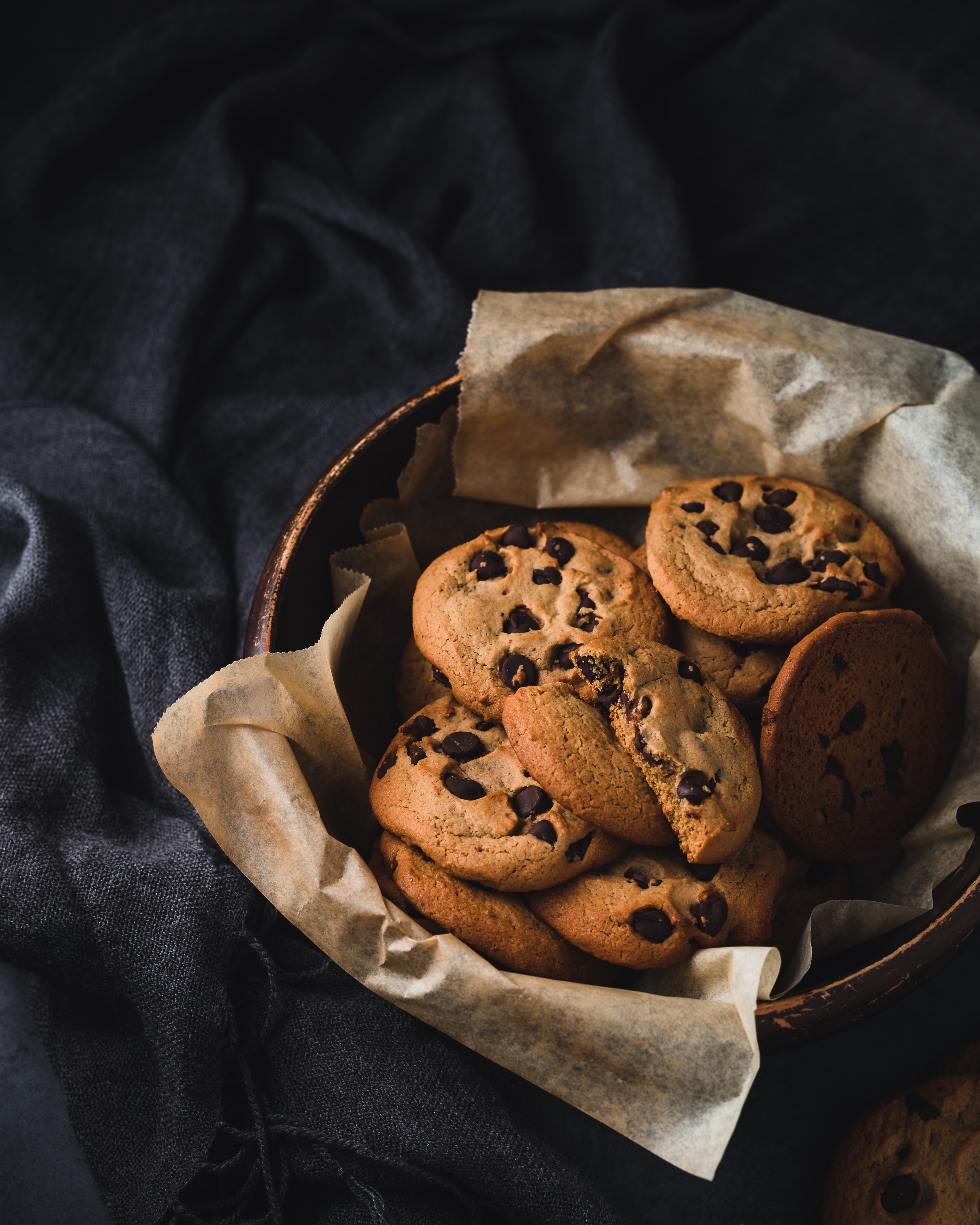
Photo by Mae Mu on Unsplash

Now, like most readers of religious studies, I have opinions about Augustine that aren’t pristine.  Still, I respect books.  I suspect all the bakery jokes necessary have been made about this particular bookmark, but what strikes me as odd is that nobody discovered a cookie placed in a book when I was less than ten years old, until now.  Let that say what you will—Augustine still sells wildly in translation, of course.  Not too many individuals go back to the source, however, at least not reading as far as the cookie.  I don’t know about Cambridge, but Edinburgh used to have books from the seventeenth century on the open stacks in the New College library.  I’m sure the older volumes weren’t frequently consulted.  And I’m not the one to point a finger; I have no catalogue of my own books so I have to remember what I already have.

Books aren’t a great investment, financially.  I remember back when Antiques Roadshow was all the rage.  Every episode I saw where someone brought a really old book led to certain disappointment.  No matter how rare, the value was measured in hundreds of dollars rather than thousands.  Those of us who invest in books do so for different reasons.  Our money is being exchanged for knowledge, learning, and thinking.  Back when Amazon used to give out bookmarks with each purchase one had a quote from Erasmus, “When I have a little money, I buy books; and if I have any left, I buy food and clothes.”  We are kindred spirits it seems.  Buy books and you’ll grow in wisdom, but you may go hungry.  That’s the way the cookie crumbles.


The Danger of Books

Yesterday the Hunterdon County Library booksale began. I did not grow up as a reader. As a child, television was my primary source of information. For reasons unclear to me, I took to books when I started junior high school. Suddenly I couldn’t get enough of them. I lived in a town with no bookstores, so I usually depended on what I could find on our periodic trips to Goodwill to look for clothes. While my mother was looking for apparel for my brothers and me, I hovered over the quarter-a-piece book bin, buying up to a dollar’s worth of used books at a time. I kept my books in a ratty old suitcase under the bed. There were no bookshelves at home, nor any room for them. Besides, I liked to keep my books separate from other aspects of my life. Perhaps it is an illness, but from that day on, I have not been able to resist the draw of books. It is perhaps natural that I would go into higher education (although my field might have been chosen a bit more wisely). In any case, yesterday I drove to Flemington, New Jersey, with, at least to judge by the traffic, three-quarters of the population of the county.

One of the books I purchased had a slip of paper tucked between the leaves. When I got home I read on it, “The naked witches have been regarded either as a jokey press gimmick or as a complete non-event. The truth of the matter is that the witches played a very important role in a whole series of monster invocations.” Intrigued, I wondered what the source of this unusual quote might be. Then I was struck by the religious imagery implicit in the piece: witches, no matter how defined, are a religious subject. Monsters, as I have frequently noted, share intense neural territory with religion. And invocation? It is a liturgical term! I can only wonder what the original context of this quote might have been, but the book in which it was stuck was in no sense religious. I am a very eclectic reader (so it is perhaps unusual that I would go into higher education) and no books I purchased had anything to do with religion. It seems that religion never fails to find me.

My devotion to books often reminds me of the day when Amazon used to include bookmarks when you purchased from them. My favorite bore a quote from Erasmus: “When I get a little money I buy books; and if any is left I buy food and clothes.” It sometimes drives my wife to frustration that I still wear clothes I purchased before we were married some twenty-two years ago. My informal student evaluations on Rate My Professor sometimes comment on my out-of-date fashion sense. The reason is, however, that I buy books before clothes, and yes, even food. And when you buy used books at a library book sale, you may learn that naked witches invoke monsters, and that may be valuable information. And my clothes are never in a condition Goodwill would consider accepting when I’m finally forced to relinquish them for lack of functionality.