Real World Ethics

Do yourself a favor. Spend five minutes watching this video:

(note: the video has been removed and a “family friendly” version is here: Kai)

Although it has a whiff of the apocryphal about it, I choose to believe that Kai is really who he claims to be. I don’t know what actually happened here, but this is ethics divorced from armchair pundits and congressional committees. Sometimes you see something and know it’s just wrong. Most of us wring our hands and await some authority figure to sort it out. When Kai met someone claiming to be Jesus, he was willing to be “the Antichrist” to save innocent people with no regard for himself. I am very impressed.

No, vigilantism is wrong. In fact, I wouldn’t trust a who coven of Republicans to ever arrive at so parsimonious a solution as Kai. He saw evil, he confronted it. I don’t know the backstory here, but I know that I feel a lot less threatened by the street people I see nearly every day than I do by those hiding away in limousines. Ethics is all about figuring out what is right. Kai has his head on straight here. If he could go back in time to stop “Jesus” reincarnated from harming an innocent bystander, he would. No regrets, no questions.

I have watched, and personally experienced, religious leaders intricately plotting how to ruin the life of their neighbors to maximum effect. I have read about politicians who shamelessly increase their earnings while knowing that some of their constituency live in poverty and persistent hunger. I have seen a president declare a war to fulfill a personal vendetta. And I have seen Kai lifting a hatchet to save a person he didn’t know.

There will certainly be those who would condemn such quick thinking and right action as immoral. For those who object from a Christian outlook I would remind them of Dietrich Bonhoeffer, one of the darlings of the Evangelical world. Bonhoeffer was hanged by the Nazis because he did what he knew to be right. Even though his bomb plot failed to kill Hitler, Bonhoeffer knew what Kai knows—those who sit around and watch evil happen as just as guilty as those who perpetrate it. And that’s like trying to surf when the ocean’s at a dead calm.


Neander Valley

Because we can—but should we? This is technological ethics in a nutshell. While we are still debating what it means to be human and the majority of people in the world address that question in religious terms, is it right to play with our own genetics? This is an unavoidable question when considering George Church’s search for a volunteer. Church, currently at the Harvard School of Medicine, would like to grow a Neanderthal baby. With DNA extracted from fossils, it is theoretically possible to clone a Neanderthal with a loving mommy. The usual argument against human cloning is, well, it’s human. Neanderthals are often considered not-quite-human, although our common ancestors hung together in the biological family tree much longer than our chimpanzee cousins. I still recall from my school days that a Neanderthal dressed in a suit and put on the streets of New York City would pass for a large, barrel-chested human. I think I may have seen him on my way to work once or twice, in fact.

Genetics are ethically frightening because they go down to the level of what used to be called essences. Some scientists today dispute that there is anything called an essence; all we have is building blocks. What you make of those blocks contains no essence—you can’t see it in a microscope or cyclotron, or spin it out of DNA. Therefore it must not exist. If there is no human essence, what is the problem with experimenting around a bit? Funnily enough, the question of natural selection enters into this equation. In the arboreal climes of Pleistocene Europe Homo sapiens sapiens bested their big-breasted cousins in the struggle for survival. Would the same be true in our technological era of easy obesity where work is considered tapping on a keyboard all day? After all, Neanderthals had bigger brain capacity—are we ready for that kind of competition? Neanderthal economics might take care of the one percenters even.

I have no insight to offer on such a thorny ethical issue. I do, however, believe in essences. I’ve never seen or measured one, but even concepts like good and evil are meaningless without their essences. What is the essence of a Neanderthal? I suppose it is such a question that leads Dr. Church to seek a volunteer to bring one back into the twenty-first century world. I have to admit I’m a little curious too. Just think of all the opportunities for cute commericals. Still, if natural selection already vetoed the race, maybe we should abide by that decision. This time around we might find ourselves on the losing end—who knows what Neanderthal ethics consist of? Secretly I think their essence might just be trickle down economics and they’ve been among us all along.

Me, on the way to work.

Me, on the way to work.


The Splice of Life

Splice Although not really scary, and although almost attainable with current technology, Dren is a curious monster. Many movies of the horror genre have explicit religious elements, but Splice may be a little too much science fiction for that. Or is it? The story is simple enough: a couple of geneticists have gene-spliced a couple of viable creatures that can be farmed for important chemicals and enzymes to solve diseases. So far, so good. But then the idea occurs to them: if the chemicals that can be used to help cure animal diseases had a human element, couldn’t they be used to cure our own diseases? And here is where the ethical quandaries begin. Adding human DNA to the mix, even when in small portions, suddenly throws open the moral dilemmas. Dren is the somewhat human result of these experiments, but the movie ends with the haunting, unanswered question—what is it to be human?

Although today the field of ethics is largely claimed by philosophers, morality is a measure of beliefs about right and wrong. In many cultures, including our own, religion has quite a lot to say about the issue. Once human DNA is mixed in the creature morphs from a bumpy slug into a creature that looks mostly human. The ethical dilemmas that surround human potential—abortion, stem cell research, cloning, and in past ages eugenics—all focus on the rights of the human person. Once a person is born, however, we almost immediately begin to curtail those rights until most of us become cogs in an unfeeling corporate machine. We are valuable, but for whose purpose? Who, sitting in their cubicle, or on their assembly line, or behind the wheel, says, “For this they defended my right to be born”?

Oddly, we privilege the potential of life without tirelessly working to improve the lot of those who’ve already been born. Perhaps, indeed, this is some form of evolutionary advantage—protect the future of the species at all costs. This idea becomes religious when it is deemed God’s will. In the movie, Dren’s creators ultimately deem her unhuman, a monster who must be destroyed. They, however, nurtured her humanness all along. While not the most profound movie ever filmed, Splice highlights the fact that ethics reflect the values of society. And society sometimes withdraws even humanity from those who’ve lost its favor.


Monkey See, Monkey Do

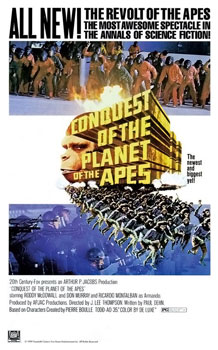
ConquestPlanetApesThe year was 1972. In the continuing saga of the Planet of the Apes, the fourth installment, Conquest of the Planet of the Apes, addressed the civil rights movement directly. Caesar, the son of Cornelius and Zira, is the last speaking ape left in the past to which his parents had escaped. Inexplicably, the other great apes have all suddenly evolved by 1991—the year in which the story is set—into large sized, almost upright creatures whose population matches than of humans (almost). Initially purchased as pets since the cats and dogs had died off in the late 80’s, apes have been imported as slaves. They are given menial tasks and beaten mercilessly if they make errors. A deep fear pervades the establishment that these apes will try to take over. Breck, the governor of California, decides to find and kill Caesar, at any cost, while his deputy MacDonald tries to save him. When Caesar reveals himself to MacDonald, an African-American, he states that he especially should know what it means for a people not to be free.

Martin Luther King Jr. had been assassinated only four years earlier and although civil rights had made progress, there was still a long way to go. Still is a long way to go. As an affluent culture, we remain reluctant to share. We still see disproportionate numbers of African-Americans and Hispanic Americans forced to live in areas that the amorphous “white” population has fled. Xenophobia is one of the less noble traits with which evolution has endowed us. Even so, the classes we devise aren’t always helpful in determining who people really are. “White” can mean anyone from the southern tip of Chile to the tundra of eastern Siberia. On job applications now “Hispanic” is classified as “white.” I get the feeling that there’s a few unresolved issues here. The sense of entitlement did not begin with this generation. Those who have naturally suppose that they deserve. Caesar observes the unfair treatment and, down to the detail of the weapons the apes stockpile, leads a plantation-style revolt that overcomes a heavily armed command post. Gorilla warfare indeed.

In classic 1960s-70s style, Caesar grandstands after his victory. He was about to order Breck’s execution, but stays his hand in the recognition that even humans deserve to live. We do have to wonder where he might have learned about God, being raised by a circus trainer and in what is an otherwise completely secular society in the film. In any case, his final words in the movie place the apes on a higher moral plane than humans. “But now… now we will put away our hatred. Now we will put down our weapons. We have passed through the Night of the Fires. And who were our masters are now our servants. And we, who are not human, can afford to be humane. Destiny is the will of God! And, if it is man’s destiny to be dominated, it is God’s will that he be dominated with compassion and understanding. So, cast out your vengeance. Tonight we have seen the birth of the Planet of the Apes!” Maybe it’s all the dead bodies around, but I’m still having a little trouble with the “Destiny is the will of God” part.


Battle Bots

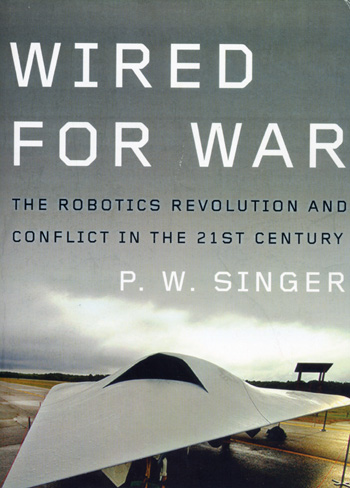
Our local high school robotics meetings start up again this week. Actually, they’ve been going on all summer since robots do not require the rest and mental downtime that we mere creatures of flesh do. Glancing through the headlines of the Chronicle of Higher Education I saw a leading article on a topic I’ve been reading about: the military use of robots. On a college campus visit last semester I came across a robotics display and, since I’ve picked up some of the lingo, I engaged an engineering student sitting nearby. He told me that most of the funding for robotics at the collegiate level (there, anyway) came from the Department of Defense. Earlier this year I had read Wired for War, a book as stunning as it is frightening. In fact, P. W. Singer is cited in the article. What makes this interesting, however, was the role of Ronald Arkin, a Georgia Tech professor of robotics and ethics. Dr. Arkin believes robots to be morally superior to humans at making battlefield decisions. He’s not alone in that assessment.

The more I pondered this the more troubled I became. Morality is not a scientific purview. Ethics that have been quantified always fail to satisfy because life is just a little too messy for that. Who is more morally culpable: the policeman who shot a thief dead when the man was only stealing bread because his family was starving? Hands down the most challenging undergraduate class I took was bio-medical ethics. It was thornier than falling into a greenhouse full of roses. Sick minds and reality cooperated to draw scenario after scenario of morally ambiguous situations. I left class with two more things than I’d taken in: a headache and a conviction that there are no easy answers. Having a robot vacuum your floor or assemble your car is one thing, having one decide who to kill is entirely another.

The article cites the rules of war. The main rule seems to be that no matter what, some people will always kill others. We try to sanitize it by making the inevitable death-dealing follow ethical conventions. While religion often takes a bad rap these days, one of the things that it is capable of doing pretty well is providing an ethical foundation. People may not always live up to the standards, but religions only in very rare situations give people an excuse to hurt others. Nearly all religions discourage it. The rules of a science-based morality would likely fall along a logical algorithm. Unfortunately, there’s more gray than black or white in this equation. Algorithms, in my experience, are not so forgiving. So as I get ready for my first robotics meeting of the year I need to remind myself that the robots are capable of great good as well as great evil. Like with humans, it all depends on who does the programming.


Robo-Stop

I have just read the most disturbing book yet. And for me, that is saying something. The facets of fear that P. W. Singer’s Wired for War manages to cut are sharp and dangerous. That he was able to write the book with a good dose of quirky humor only ameliorated the troubles a minor bit. The subtitle of the book is The Robotics Revolution and Conflict in the 21st Century. I was drawn into robotics by the FIRST Robotics competitions in which my daughter’s school competes. Not an engineer or programmer, I merely sit on the sidelines and cheer along those who understand mechanics, hydraulics, and electronics. Quite often I get the sense that since science works so well there is little room left for serious consideration of the humanities. Particularly religion. By the end of Singer’s book, however, my choices in life were reaffirmed. I would rather spend the limited days left to the human race celebrating our humanity. For, it seems, our days may be numbered indeed.

Considering that Wired for War was published three years ago, the technology must surely now be even more advanced than it was when the book went to press. That such technology as Singer describes exists is not in itself too much cause for worry, but the fact that such technology rests in military hands is decidedly disturbing. One of the few resources able to tap into the tremendous budget of the United States with impunity, the military services have been able to commission robots that are even now deployed in our various conflicts. A strong ethical question run through Singer’s account: we are racing ahead with lethal technology and artificial intelligence—and no one is really driving this machine. Shouldn’t someone be?

One of the more sobering aspects of Singer’s account is how humans are increasingly left “out of the loop” when it comes to lethal decisions being made by robots. Their logic is flawless, as is their aim. Their understanding, however, is purely mythical. As I read this gripping account, several issues spiraled out to be considered on their own. I arrived home disheartened and concerned for a future that seems to be inevitably in the hands of those I fear most: those with excess capital. Military robots do not possess empathy or compassion, just physics and trigonometry. And they already exist. When those powerful enough to wage war discuss the rules, their decisions are tellingly called “the doctrine of war.” Doctrine, whether military or religious, is always a sure sign of danger to come. And the robots aren’t coming. They’re already here.


Being Human

Within the first three pages, if you’re not mortally offended or inexplicably happy, you’re probably not an American.

Growing up with pets, I had a hard time understanding the hard and fast line drawn between animals and people. The failsafe fact used back then is that only people used tools. When we looked closer at animals we found that wasn’t quite true. Well then, only people have language. A large question mark has grown from that assertion too. The final fallback, the sine qua non was souls: only people have souls. It is also the safest of assertions, since it can be tested for neither people nor animals.

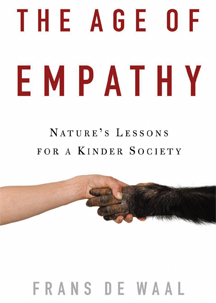
This way of thinking, according to Frans de Waal’s The Age of Empathy, arises from the western religious tradition—a religious tradition that grew up in relative isolation from other primates. Many world religions do not feel the necessity of making people absolutely different from our animal cousins. In Christianity at least, heaven itself rides on it. What are we so afraid of?

I posted, a couple years back, on Frans de Waal’s Our Inner Ape. Having just finished The Age of Empathy, I have reaffirmed my earlier accolades—he is one of the most sensible and important writers alive. Step by slow, evolutionary, cautious step, de Waal illustrates that one of the taboos of science—that animals don’t have emotion—is patently wrong. Not only do they experience emotion, but apes, cetaceans, and dogs at least, know empathy. Even scientists don’t like to admit this because science grew up in the shadow of the Judeo-Christian-Muslim worldview of human superiority.

But there’s even more at stake. As de Waal makes perfectly clear, the unbridled capitalism of the United States goes against nature. The unlimited acquisition of the vast majority of the resources by the few sets our primate sensibilities on end. Empathy, the ability to feel for another and take their perspective, is not only part of animals’ experience of the world, it is also a mandate of our religions. In order for society to survive, we must come to know this truth. Falsely applying Social Darwinism as factual, biological Darwinism, the few have taken more than either biology or religion permits.

The Age of Empathy should be on every school’s mandatory reading list and corporate climbers should learn that even selfishness has a very steep price tag. Not only for themselves, but for all of us.


The Evil Living

Returning home from my campus visits, I needed some brainless relaxation. Since we don’t have any television service at home, this means watching movies. I’d heard quite a bit about The Evil Dead over the years—a movie that was scary back in the 80’s when it appeared. Improvements in special effects and the intensity of engineered sound are capable of drawing a person into an alternate reality for a couple of hours these days, and the endless reiteration of earlier movie effects somehow robs the early thrillers of their impact. The Evil Dead, however, capitalizes on confusion about the menace and teeters on the brink of morality for the entire 85 minutes. Naturally, when looking for a source of fear, it seeks a religious agent. The source of the evil in the woods is narrated in a voice-over of the presumably dead scientist who has discovered Sumerian texts that release demons in the forest (mostly in the form of falling trees).

Sumerian is always a safe bet if you want a language that your viewers will not be able to identify. The earliest known recorded language, Sumerian is still difficult even for experts, and it conveys all the strangeness of long ago. We do know that the Sumerians recorded myths that involve what we might call “demons” today, but the possession of humans was a much later development—probably a pre-scientific way of explaining epilepsy. As our five students seek a weekend getaway in the woods, they become possessed and face the moral question of just when a person ceases to be human. At what stage does someone have the right to kill someone else? Perhaps unintentionally, the movie gives us the answer, “Never.” This kind of morality has a place in America, one of the very few “first world” nations in which the death penalty is still legal. Often promoted by those dead-set against abortion. Where do we draw the line saying a person has crossed over into the unforgivable other?

The Evil Dead has become a cult classic over the years. Its relatively low budget of less than half-a-million dollars brought an astonishing box office return on the investment. The gore, tame by more modern standards, does not mask that what is really at issue here: the question of right versus wrong. What is truly evil? Sumerians aside, what possesses people and drives them to destroy one another? The Evil Dead, like many horror films, reaches for a religious answer. As the supernatural fog begins to clear, however, we might not like what we see in the clear light of day. Religion may be an excuse, but the assaults upon one another are what Nietzsche famously called “human, all too human.” The sooner we clear our vision and pay attention to what is actually happening, the sooner we can combat the horror.


Old Smoky

I don’t mean to hit below the Bible Belt, but I find myself in North Carolina for a round of campus visiting this week. Since I’ve only ever passed through North Carolina on my way elsewhere before, I wasn’t quite sure if I’d experience culture shock. Since I’m visiting multiple schools, I needed to rent a car. As I climbed in, it was clear that I was in tobacco country. The problem with the rich, satisfying taste of tobacco is that it doesn’t translate well. I grew up forced to inhale many cubic meters of second-hand smoke, and I can’t stand the wretched odor. It stands to reason from my previous sentence that I grew up knowing many smokers, and it was entirely obvious to me that they did not realize just what a legacy their habits left behind. I went to school smelling like burnt industrial waste, and when I climbed into my Hertz Nissan Versa in North Carolina all of that came back to me in an instant.

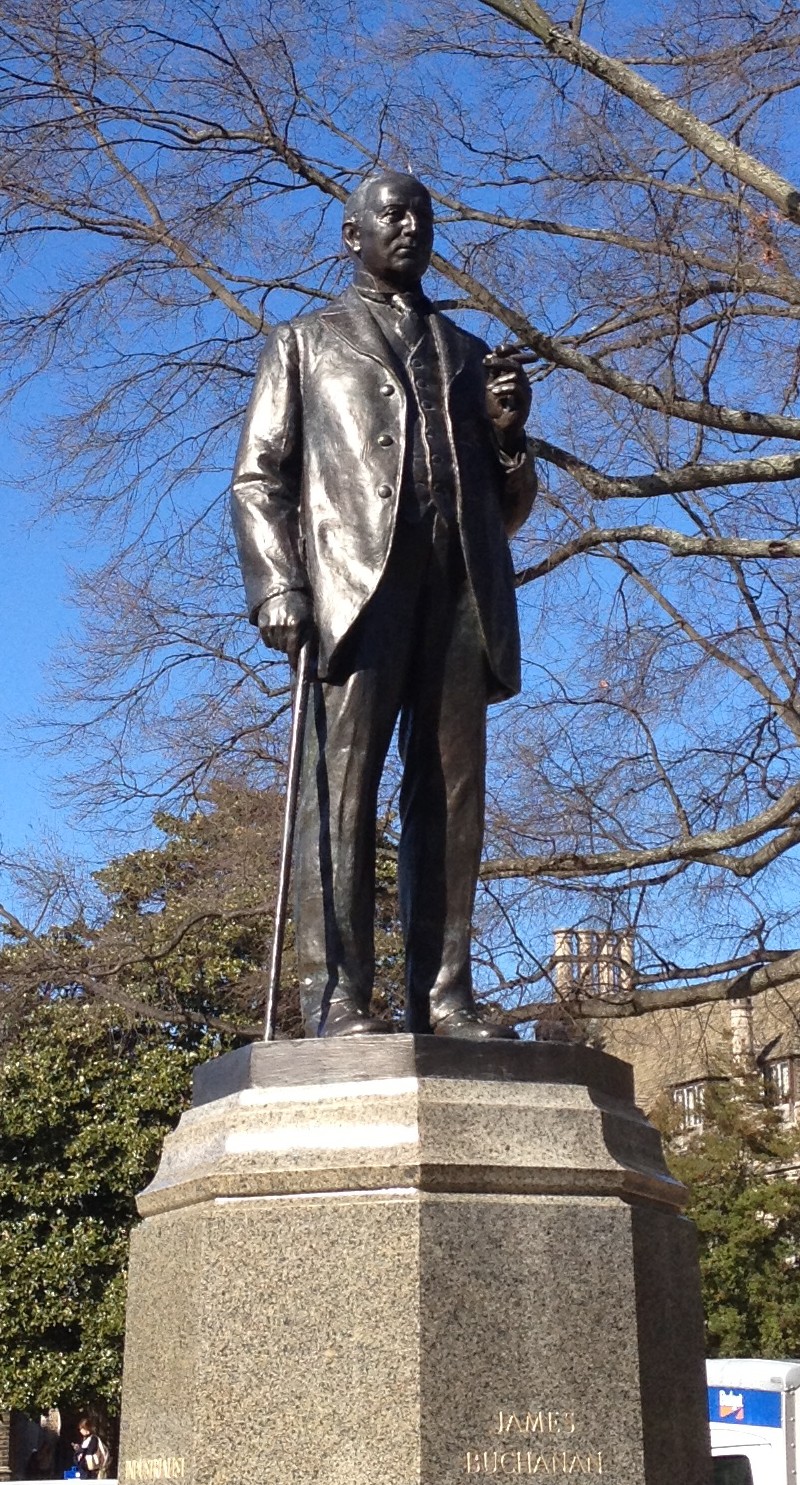
When tobacco was king, or at least Duke.

In my evangelical childhood I was taught that smoking was wrong, although, perhaps understandably, Jesus had little to say on the subject. This highlights one of the thornier aspects of drawing ethics from the Bible. Apart from the obvious damages to health, the Bible gives no guidance either way on the smoking issue. The same may be said for contraception, abortion, drug use and stem cells. For all its laws, the Bible is remarkably non-issue driven. What you choose to do with your body is less important than the impact your actions will have on somebody else’s body. God is the parent who is driving the car shouting at the kids in the backseat, “Keep your hands to yourself!” So, here in the land of tobacco, the teeth of my biblical argument are extracted. I can hear some readers objecting that Paul says your body is a temple of the Lord. Problem is, they used lots of incense in the temple—and that smoke can be even more choking than cigarettes (I write from experience here).

Morals, as ethicists are increasingly realizing, come from custom rather than scripture. Rules are based on what society holds to be of benefit to the greatest number. The Bible has a voice in this debate, but no vote. Rules handed down from on high lack the human touch. We share the planet with our fellow humans, so they must be our focus when it comes to ethics. Some habits, unfortunately, share a little too much. I’m not the kind of person to tell other people what to do, but when I climb out of my rental car smelling like burnt industrial waste I somehow feel slightly wronged here. Maybe one of those rules should be, if you don’t own it, don’t smoke in it. Is that smoke I see rising from atop Mount Sinai?


Robot Ethics

One of the benefits of being affiliated with Rutgers University, if only part-time, is keeping a finger on the pulse of the future. No, I’m not on any admissions committees. Rather, this week, now available on YouTube, the university is advertising its robotics ethics program, geared mainly toward high school students. Perhaps reading Robopocalypse is not the best introduction to robot ethics, but it does raise a very serious issue—how do robots and ethics fit together? We haven’t even figured out human ethics yet! One of the principal concepts behind any ethical system is intention: did a person (or rarely, a higher animal) mean to do what it did? If an action has brought harm to a person, we need to know if it was intentional or not. In a world where artificial intelligence is just around the corner, we need to sort out how this will apply to mechanical minds.

Perhaps—if human minds are just soft computers—when robot minds are created they too will have a god concept. Neurologists and philosophers and theologians debate when the human concept of god originated and no consensus has emerged. It may be a by-product of “mind,” however we define that. If computers are eventually assigned true mind, will they also believe in God? According to Wilson’s fictional construction in Robopocalypse, Archon thinks “he” is “god.” Humans tend to project God out there somewhere. None of us has the power ascribed to God, and even if individuals claim otherwise, we don’t actually believe we are divine. Would a computer know?

Pressing just a little further on this, human ethics are always subject to corruption. It is clearly seen, almost advertised even, in politics. Not only do we find government leaders with their trousers down or with dirty money in their hands, we also find the same in ecclesiastical settings. Would robots become corrupt? Wilson calls the corrupting agent a virus, a real enough phenomenon. According to the Rutgers video, within two generations every home will have robots in it. The question is: what will their ethics be? I probably won’t be around to see it happen, but I do have a profound hope. My hope is that whoever fabricates robot ethics will be well aware of the failure our governments and religious institutions have made of the attempt.

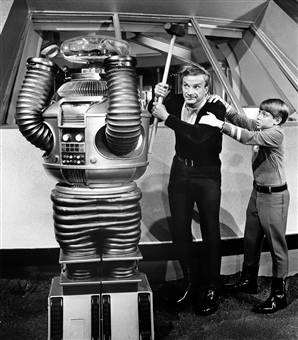
Danger! Danger, Will Robinson!


I Can Haz Edukashun?

Myths are alive and well. One of the most pervasive myths, along with the one that says clergy only work on Sundays, is the concept that educators take the summer off. Undoubtedly some do, but the summer is traditionally the time for professors to conduct research without having to break up their concentration with several classes a day. Those were the halcyon days. This morning’s newspaper slapped me like a fistful of razors as I read the story of Rutgers University’s president’s resignation. I knew about the resignation, but being fumblingly employed part-time by his mighty university, and having to take annual ethics training for the pittance I’m allowed, I blanched as I read these two sentences: “McCormick earns $550,000 a year as president and is eligible for a $100,000 yearly bonus, though he hasn’t taken the money in recent years due to the university’s budget troubles. Ralph Izzo, chairman of the board of governors, said he thought McCormick would be worth his [continued] $334,000 professor’s salary.” A few pages later the headline tells how Chris Christie, New Jersey’s cut and bleed governor, took a state helicopter ride to get to his son’s baseball game. Also, he wants to prevent state employees from making a viable living.

In this twilight zone of an educational nightmare, a guy with professional ethics training just wants to close his eyes and make it all go away. For what are we educating our young if not for greed? What professor is worth more than 100,000 dollars to any university? In the old days, back with ethics had intestinal fortitude, the term for such folks was “sell outs.” Is there really any drive for excellence at such pay scales? It is no wonder we are raising the “entitlement generation.” Actions used to speak louder than words. State-mandated ethics training has now corrected that little oversight. Higher education used to be about ideas; today it’s “show me the money.”

The truly sad part of all this is that we keep pretending. We preach the myth to a public easily pacified and crucify those who beg to differ. Back in my Nashotah House days a trustee once hushed me so that the board might listen to a student with “fire in his belly.” My belly’s a blackened cinder by now. Is anybody listening? Mythology, particularly in the Greek world, revolves around the concept of hubris. It is a concept with which modern university folk are clearly unfamiliar. It goes something like this: like most people I think I am better than others. In order to prove it, I’ll increase my blandishments until there is no longer any doubt. Is that Olympus straight ahead? I might as well take that as well!

I’d love to stay and lecture some more, but I’m apparently entitled to more state ethics training.


Inventing God

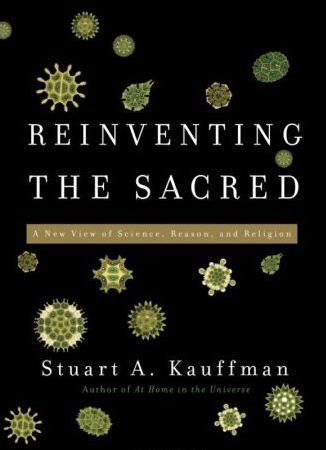
Reductionism has been a hallmark of science for many years with the most extreme forms suggesting a kind of cold determinism in the universe. Having known since my undergraduate days that science is the key to knowing, yet having the experience of believing as well, I wondered how they fit together. If they fit. I have just finished reading a very important book on the topic – Stuart A. Kauffman’s Reinventing the Sacred. A theoretical biologist, Kauffman has come to the conclusion that reductionism cannot account for many aspects of the world we actually experience. Evolution, biologically as well as culturally, demonstrates again and again a creativity that cannot be predicted, no matter how much data is acquired. Kauffman suggests that this non-reducible creativity is what might properly be called “God.” Not a believer in a transcendent creator God, Kauffman does not wish to remove the God meme from our psychological vocabulary, but to reinvent it.

In many ways, I found Kauffman’s work to be some of the most affirming science writing I’ve ever read. He believes there is a place for creativity in the overall human experience of knowing and being. Values are not simply arbitrary points selected by people, nor are they imposed on us from a personified God. Values and beauty are emergent phenomena. As Kauffman argues, they are clearly and blatantly real, but not reducible to physics. He also demonstrates that economics falls into the same category of real but non-reducible. As a researcher in complex systems, Kauffman quickly left me in the dust when he reached the more theoretical material. I am not equipped to assess his scientific conclusions. Overall, however, his book possesses a rare sort of urgency for a scientific exploration, and it values the whole of the human experience.

Demonstrating that ethics emerge not from “on high” but from a human sense of value and “right,” Kauffman suggests that we desperately need a global ethic to realize our full potential. In the ongoing debate between science and religion, Kauffman is a voice of both reason and compassion. Science is the way we know – there is no point in debating that. If you are reading this on a computer, Q.E.D. If you are a human being, then you have also experienced the phenomenon of believing, whether or not it is religious. Kauffman has addressed the question directly and has given both specialists in science and in religion a trenchant analysis of an intractable issue. His irenic approach is to be applauded, and hopefully, widely read.


Reap the Whirlwind

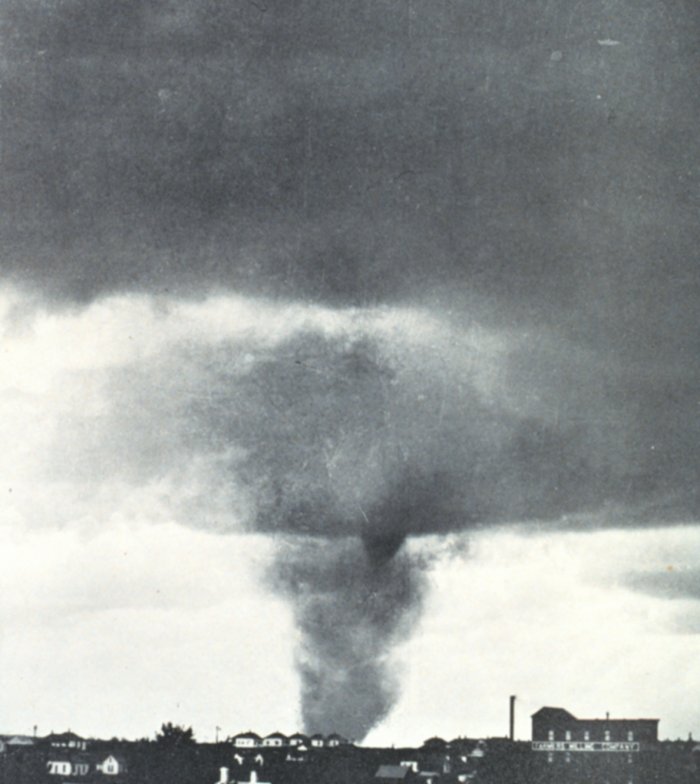
A pillar of cloud by day

Something seems to be absent. The blazing rhetoric of televangelists and others proclaiming the wrath of God on New Orleans when Katrina blew ashore are strangely silent as a massive outbreak of tornadoes has ripped through the Bible Belt. Hundreds have unfortunately died as nature’s most severe weather-weapon has raked the south. In an apoplectic frenzy rivaling the 1974 Super Outbreak, tornadoes are well ahead of seasonal schedules this year as one wholesome Christian location after another vanishes in a whirlwind the envy of Elijah himself. I do not make light of this disaster. Having lived for many years in “Tornado Alley,” I very much feel for those victimized by these severe storms. They are a great tragedy and the loss of life, for Americans, is mind-boggling.

There is, however, a lack of continuity. Katrina, we were repeatedly informed, was the judgment of the Almighty on the sinful city of New Orleans. The tornado, surely the most divine of windstorms, remains a tragic natural phenomenon. “He makes the sun to rise on the just and unjust,” I recall someone once saying. Human tragedy is never easy to explain in any religious system. Even the self-righteous must acknowledge that – on some level – their pristine, exemplary lives deserve a thunderbolt or two. They speak loudest, however, when lifestyles of which they do not approve are decimated. How does the Bible-believing, rural farmer offend God? Were there no Christians in New Orleans?

The problem is forcing all members of one location into a category fit for reaping. It is sowing the wind. Human compassion demands that we not stand in judgment of the unfortunate, we simply help in what ways we can. One of the greatest dangers of any religion is that it validates one group above all others. Either we are all favored or none of us are. Waiting for a divine answer may take centuries, or even millennia. Lifting a hand to help a fellow human being is the only ethical response. Tornadoes are not the finger of God. Katrina was not the Almighty losing his masculine temper. We are all victims of the world into which we are born, and the sooner we refuse religion’s diabolical temptation to claim our special place, the sooner we will find our own way to a just society.


Cheating God

Anyone engaged in education long enough will eventually encounter cheating in one form or another. Social psychologists have suggested that whether one believes in God or not has little bearing on moral behavior. A recent report in the International Journal for the Psychology of Religion demonstrates that belief in God does not effect cheating by undergraduates. Among those that believe in God, however, those that believe in an angry, punishing God cheat less than those who believe in a loving, forgiving God. An explanation of the study may be found at Medicalexpress.com.

Someone's watching you

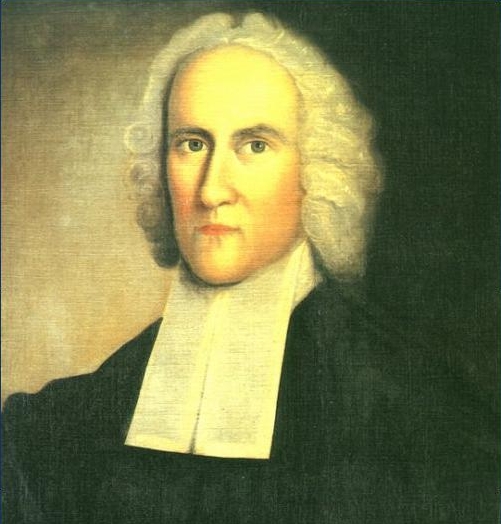
Jonathan Edwards’ famous sermon, “Sinners in the Hands of an Angry God,” it seems, is the bane of cheaters. The Great Awakening chased along the heels of a wrathful deity baying “believe or else!” Those believing in a nicer God are more apt to take liberties. The interesting corollary of this finding is that it does not divide believers along denominational lines but rather along personal outlooks on God’s kindliness. Nobel pagans and fearful believers share a strong moral center.

An informative follow-up would be a study to determine how many believe in a loving versus a wrathful God. From such data we might be able to extrapolate who is more likely to cheat on taxes, spouses, or any other big-ticket items in the economy of our society. Given the number of high profile spouse-cheatings among televangelists and Christian politicians, one thing seems clear: belief in a friendly God willing to look the other way is in no danger of extinction any time soon. Oh, and please keep your eyes on your own paper.


The Ides of March

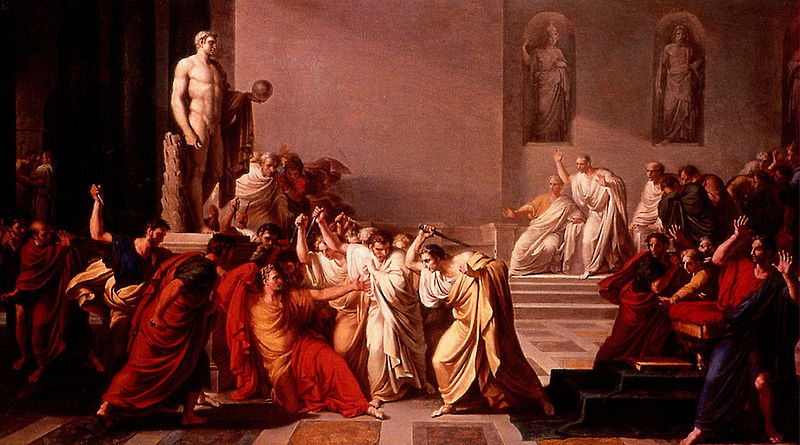
In the days of ancient Rome, politicians as well as plebeians feared the interference of the gods. Auspicious days were ignored, even by emperors, at their own peril. In my Mythology class the concept of hubris frequently emerges. Generally thought to be excessive pride, hubris can take many forms. Whenever a mere mortal strives for godhood, however innocently, it must be punished. Julius Caesar, declaring himself emperor, had to face the wrath of the gods. The ides of March kept in check the ambitions of the powerful. In a world where the political become too powerful, the very phases of the moon step in to restore balance.

The ides seem to have their origin in the date of the full moon. The month of March, named after the god Mars, featured a military parade on the ides. Then, as now, political power is simply the form of government backed by the military. The history of human unrest, especially notable since the American and French revolutions when the common people shouted, “Enough!”, is where might is shown not to equal right. Pontiffs and presidents, enamored of firepower and its blandishments, appear like Caesar before their populaces, confident in their wealth and military backing.

The concept of hubris might once again be meaningful to a culture under siege. As pundits and politicians make bids for places of abusive power, confident that there is no one above them, ethics are reformed in their own images. Have they not become their own gods? We the people bow to their vision of what should be. How many political leaders retire to uncertain futures because their own pensions have been slashed and healthcare diminished? Those who care for them in their dotage are the very children whose educational funds they’ve slashed. Hubris? It behooves all of us to beware the ides of March. Most, like Caesar, will ignore the warning and don the purple. Those who read, however, will not anger the gods.

Et tu, Brutus?