Don’t Stop Moving

Stopmotion is a strangely affecting horror movie.  Body horror as well as Euro-horror, it follows the dream-like world of Ella, a stop motion animator.  She learned the trade from her mother who, suffering from arthritis, has Ella do the work for her.  After her mother has a stroke, Ella continues working on her final film but in a new location.  Tom, her boyfriend, gets her an apartment in a run-down building where Ella meets a precocious and odd little girl who tells her she should film a different movie and proceeds to tell Ella how it should go.  To her chagrin, Ella has to admit that the little girl’s story is better than her mother’s.  With the girl’s help, Ella animates a monster, the Ash Man, who is pursuing a girl lost in the woods.  Then Ella starts receiving visits from the Ash Man, or at least she believes so.  She ends up in the hospital. Spoilers follow.
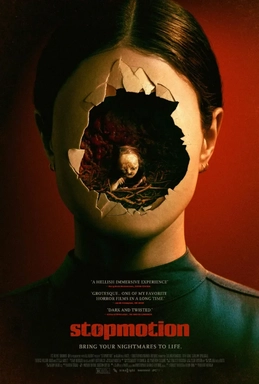
Tom, who visits her there, is worried that Ella has let this go too far.  He threatens to delete the film while she’s immobile in the hospital.  Ella’s mother dies and with the little girl’s help, Ella gets back to her apartment to finish the film.  When Tom, and his plagiarizing sister, come to return Ella to the hospital, she kills them both.  She then, with the girl’s help, finishes the film.  The film results in her own death, or at least that’s the way she sees it.  The film features quite a lot of stop motion animation although the movie itself is live action.  It’s a very artful, if gross, film.  The little girl is never seen by anyone else, nor explained, suggesting that she’s a younger Ella following her own creativity.  And paying the price for it.

I can’t claim to understand everything that happens in this movie.  That doesn’t make it bad, but worth pondering.  Those of us who live creative lives experience dry patches, and often, self-doubt.  I know that when I compare my writing to that of others, I suffer in the very comparison.  When Stopmotion first ended, I felt both confused and intrigued.  Euro-horror of recent years, to generalize, emphasizes the art of the craft.  There was a lot of symbolism in this movie, some of which I couldn’t connect to the action.  I suspect repeated viewing might bring some of this to light.  My family has often told me that with my focus and interests, I would’ve been a good stop motion animator.  I certainly have the creating monsters part down pat.  It’s just a matter of deciding which narrative to follow.

Preying

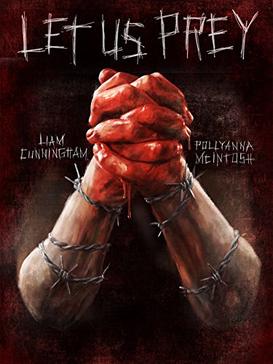
Several aspects of Let Us Prey don’t make a whole lot of sense.  The police in this small Scottish town are all corrupt, at best.  And when push comes to shove, they choose to murder one another.  For some reason the sergeant wraps himself in barbed wire as he tries to bring the wrath of God onto his subordinate officers.  The night starts out with four prisoners being locked up and only one survives.  He’s shown emerging from the sea, with ravens, at the start of the movie and he’s never really explained.  He’s there to collect the souls of sinners and he seems to be able to control other people.  The whole thing turns into a bloodbath before it’s over.  In other words, it lacks the subtlety of much Euro-horror that I’ve watched.  One thing it does have, though, is plenty of use of the Bible.

I suppose with a title like Let Us Prey such a development shouldn’t be unexpected.  Rachel is a new constable in the police station.  The story begins with the stranger, Six—the number of his jail cell—nearly being hit by a car.  Or having been hit.  The teenage driver is arrested and finds a pedophile teacher already in the lock-up.  Two other police officers, after having sex in their patrol car, find the stranger and bring him in.  The local doctor examines him but when the doctor attacks him, he’s arrested as well.  Finally, Six is locked in.  It’s discovered that the doctor had murdered his family earlier in the evening, and the reckless driver had earlier hit and killed a classmate while out driving.  The pedophile kills himself and the two other police officers murder the doctor.  Then the sergeant, who’s a serial killer, comes back to kill everyone left alive.  Six and Rachel survive and Six reveals that he’s collecting wicked souls and invites Rachel to join him.

The Bible quotations (some not accurate) all come in the context of retribution.  The sinners are to be punished.  Rachel, however, escaped a childhood abduction and seems to bear no burden of sin.  The other police—who had all decided Rachel should die—end up dead themselves.  A gritty, supernatural police story, this film suggests a larger backstory without providing a lot for viewers to go on.  The openly Christian sergeant wears a cross, drinks when he drives, and kills his homosexual lovers.  Is there perhaps a message that the movie’s trying to convey?


That’s Odd

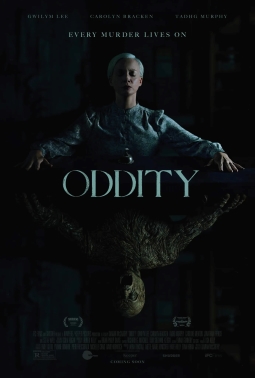
Some vaccines just wipe me out.  The shingles vaccine did it, and so did the pneumonia one.  It was bad enough that I had to take the next day off work.  One benefit of such things is being able to watch movies during the day, when you can stay awake.  The downside, as always, is affording them.  A bit fuzzy-headed, I selected one not on my list (which seems only to consist of expensive movies—I wonder why?) and found a very good one streaming on a subscription service I use.  From Ireland, Oddity is Euro-horror.  And it is distinctly creepy and, perhaps because of my state, made me literally jump once or twice.  (My usual, critical headspace scans for jump-startles on a regular basis, but this one caught me.)  A doctor in an asylum for the criminally insane is on the phone with his wife.  She’s alone at their secluded country house when one of his patients shows up and tells her someone crept into the house while she was at the car.  You don’t know whether to believe him or if someone is locked in with her.  She doesn’t survive the night.

Her identical twin sister, who is blind, runs an antique shop called Oddities.  The doctor has found a new girlfriend and she suspects that his wife’s (her sister’s) death wasn’t accidental.  She sends an oddity in the form of a wooden man, essentially a goy golem, to the house before showing up herself.  Much of the creepiness comes from that life-size figure sitting at the dining table in a shadowy room.  As the plot unfurls, it becomes clear that the husband had met his new girlfriend prior to his wife’s death.  His patient wasn’t her killer, but his orderly was.  Justice only comes when the golem comes to life.  Even so, the doctor gets away with it.  The sister, who is also murdered, sent the doctor another oddity from her shop before expiring.

Much of the movie takes its energy from the utter skepticism of the doctor—he presents himself as completely rational, not believing in anything supernatural—and the clearly paranormal events taking place around the oddities.  Also, the rational doctor is very immoral, preferring murder to telling the truth.  The sister, however, is concerned for justice and the supernatural is on her side.  This makes for a very creepy, compelling film.  I’ve been impressed by much of the Euro-horror that I’ve seen over the last several years.  This one is going into my personal cabinet of curiosities.


Historic Vampires

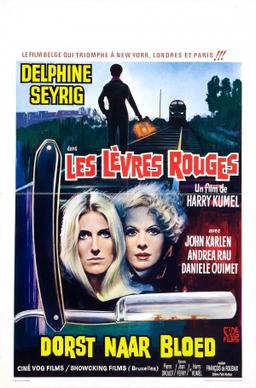
Vampire movies have always been a guilty pleasure.  The thing is, there are so many of them that watching them all would be the task of a lifetime (and a substantial budget).  Those of us who are constantly looking for, shall we say, new blood, can find that our lack of knowledge extends back for years, particularly if a movie didn’t make it big in our home country.  Daughters of Darkness is an early Euro-horror about Elizabeth Báthory.  A stylish, almost art house movie, what particularly struck me about it is that it was very well written.  The use of blood is restrained, given the topic, but verbal descriptions of Báthory’s excesses makes for a particularly gruesome scene.  So, about the story.  (This is from 1971, so I won’t worry about spoilers too much.)

A young couple (his backstory is inadequately explained in the movie, apart from being aristocratic), newlyweds, are headed to introduce her to his family.  Stefan (he) isn’t exactly the ideal husband (played convincingly by John Karlen), but Valerie (she) really wants to meet “mother.”  Stefan stalls the trip, and, in the off season, the couple have a luxury hotel to themselves.  Then Elizabeth Báthory shows up with her “secretary.”  Stefan is a little too interested in violence, as a string of murders make the headlines.  Meanwhile, Elizabeth begins making moves on Valerie.  We come to understand fairly early on that she’s a vampire, but no fangs appear and she’s always impeccably dressed and sophisticated.  Her secretary, who is having second thoughts, is accidentally killed while setting up Stefan as an unfaithful husband—again, the writing here is quite good—and Valerie becomes Elizabeth’s new secretary.

There’s a strong feminist aspect to this film, perhaps because Delphine Seyrig (Báthory) was a prominent feminist and would be attracted to such roles, it would seem.  The daughter of an archaeologist in Beirut, she supported women’s rights and there appear to be elements of this in the movie, although it was written by four men.  I was a bit too young for this movie when it came out, and art movies wouldn’t have stood a chance where I grew up, at least not in circles my family knew, so although Dark Shadows mainstay Karlen took a rare male lead role in the movie I’d been completely unaware of it.  But then, vampires are that way, aren’t they?  They tend to be old and well-hidden in the shadows.  Then they come at you with a bite when you least expect it.


Not the Witch

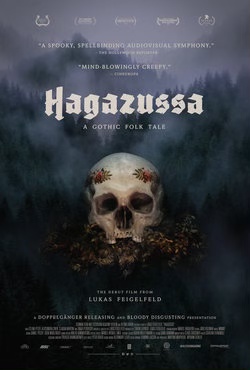
Hagazussa came to my attention from, I believe, the New York Times.  In the autumn normally staid news sources start suggesting horror films to watch.  Subtitled A Heathen’s Curse, this new Euro-horror (filmed in German) immediately reminded me of Robert Egger’s The Witch, but with a lot less plot.  It’s a moody and disturbing story of the life of an outcast young woman in the sixteenth century.  Raised by a poor, goat-herding mother, Albrun watches her mother die of the Black Death, when Albrun’s a tween.  She continues living in her childhood home, with a daughter whose origin, like that of Albrun, is never explained.  The locals shun her as a witch but a seemingly friendly villager befriends her before turning against her and betraying her.  After this neighbor, and then others, die, Albrun drowns her infant daughter after eating a toadstool in the woods.  She then bursts into flames atop a hill in the Alps.

As folk horror, the movie is more about the haunted landscape than about an intricately plotted story.  There’s nevertheless a great deal of symbolism used, including much regarding Eve—apples, serpents, and goddesses all play a part.  Locals fear pagans, and the church interior lined with bones reminded me strongly of St. Stephen’s Cathedral in Vienna, where plague victims’ bones fill the underground vaults.  Seeing such a place reminds you forcefully of your insignificance.  Hagazussa is an art film as well as folk horror, and it appeals to gothic sensibilities.  There’s very little dialogue.  Indeed, the loneliness of Albrun is a major aspect of this moody, atmospheric work.  Such stories always remind me of how difficult life was for those who had to try to scratch a living from the land.  Existence was tenuous at best.  Especially for women alone, as determined by Christian society.

The movie left me reflective.  It also underscored how religion and horror tread the same paths repeatedly.  The village priest tells Albrun that sacrilege must be cleansed, even as he hands her her mother’s skull, polished and decorated.  He wearily admits that he struggles to led the community.  Indeed, Albrun’s new “friend” castigates Jews and heathens, even as she takes part in the robbing of Albrun’s livelihood.  Witches, as “monsters” were invented by the church as fears reached out to point to new sources.  Even if they had to be fabricated at the expense of innocent people.  Fear operates that way still, as anyone who watches political ads knows.  It’s easier to persecute than to educate, it seems.  In the end, Albrun burns up and we realize we’ve just watched a parable.


Singing Darkly

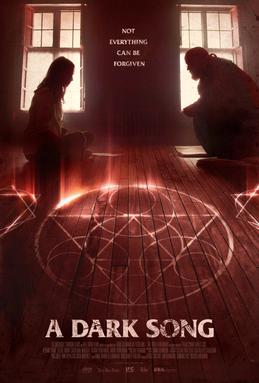
Euro-horror has become one of the more profound sub-genres of film.  I can’t recall who it was that recommended A Dark Song—set in Wales although filmed in Ireland—but it was immediately obvious I was in for a treat.  Dealing with Gnosticism, occult, and demonic manipulation (I wish I had the script!), it takes on the big issues of death, loss, and forgiveness.  The premise begins chillingly enough.  A woman rents an isolated country house for an entire year, paying in advance so there will be no disturbances.  She brings in an accomplished occultist to let her speak to her dead son again.  The two don’t know each other and this ritual will take many months, during which they will not be able to leave the house.  Neither really trusts the other, but Joseph (the occultist) tells Sophia that she must obey everything he says if she wants the ritual to work.  Once they begin they cannot stop until it reaches its conclusion.

Sophia hasn’t revealed the real reason she wants to summon her guardian angel.  She wants revenge on those that used the occult to murder her son.  The truth Sophia kept from Joseph requires them to restart, so he drowns her in the bathtub and then uses CPR to revive her.  As they grow increasingly tense, a fight breaks out where Joseph is accidentally impaled on a kitchen knife.  With only bandages and whiskey to treat the wound, they press on, but Joseph dies leaving the ritual unfinished.  Sophia can’t escape but after being tormented by demons, her guardian angel arrives.  Her request is actually wanting the ability to forgive.

This profound story has many twists along the way, but a scene that I would like to consider is where Joseph tells Sophia “Science describes the least of things… the least of what summat is. Religion, magic… bows to the endless in everything… the mystery.”  The suggestion that science is indeed correct, but limited.  Religion goes beyond science, however, to the world of possibility.  The movie suggests these two worlds intersect.  After Joseph dies Sophia can’t escape that other world until its rules have been met.  And when she does reenter the world of science, what happened in the world of magic has lasting effects on her.  A Dark Song is one of those movies that will haunt you after watching.  The Euro-horror of the last decade or so has been incredibly profound, showing the promise of what horror can be.


One Host

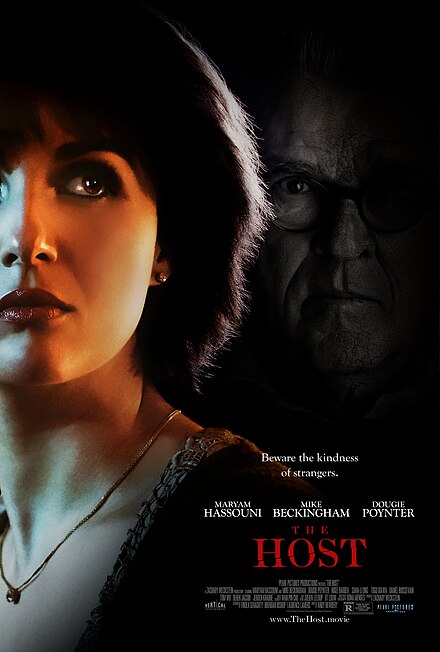
I don’t want to seem an ungracious guest, but I don’t know if I met the right host.  I really need to start keeping track of film dates as well as titles.  I found two versions of The Host and one was free.  (This is the 2020 version.)  Despite what the critics say, I liked it.  It borrows quite a lot from Alfred Hitchcock, and, I’m told, from Hostel (which I’ve never seen).  The plot is complex and, it may be my own naiveté, but it kept me guessing.  It’s the story of how a down-on-his-luck Englishman mistakenly gets involved in a drug smuggling operation.  He travels to Amsterdam where his “hotel” claims they’ve lost the reservation but they can set him up in a stylish house with a local who has extra room.  The local turns out to be a very influential psychotic.  Herein hangs the tale.

For me, I couldn’t guess where this was going.  I thought the drug smugglers were the real scary people but then odd things start happening with the Englishman’s host.  When he doesn’t show up to work on Monday his brother goes looking for him and he too meets “the host.”  The charming murderer is generally a male role, but Vera, the host, plays it well.  It seems to me that those who criticize the movie most strongly have some viewing experiences that I lack.  This is a polished effort and it doesn’t appear to have been cheaply done.  The story has many twists and although it may imitate others, that’s how new filmmakers get started.  Most writers are willing to admit that they borrow.  Doing so with style can make a huge amount of difference.

What remains unclear to me is whether this was The Host I was supposed to watch or not.  There’s a 2013 sci-fi thriller by that title and I also found a 2006 monster film from South Korea.  With a few exceptions, movie titles tend to be short.  You can’t copyright a title.  And sometimes the most appropriate one for your work has already been taken.  Here (the 2020 version) the title maybe gives away who it is you’re intended to watch out for.  The drug dealers aren’t an idle threat, but Vera is a spider waiting in her web.  And the movie has a moral—actions have consequences.  The original apparent protagonist has little to no self control which he blames on an abusive upbringing.  There’s quite a lot of father-relationship analysis going on here as well.  If anything, The Host (2020) may be a little too ambitious, but it’s worth staying a spell.


Nesting Urge

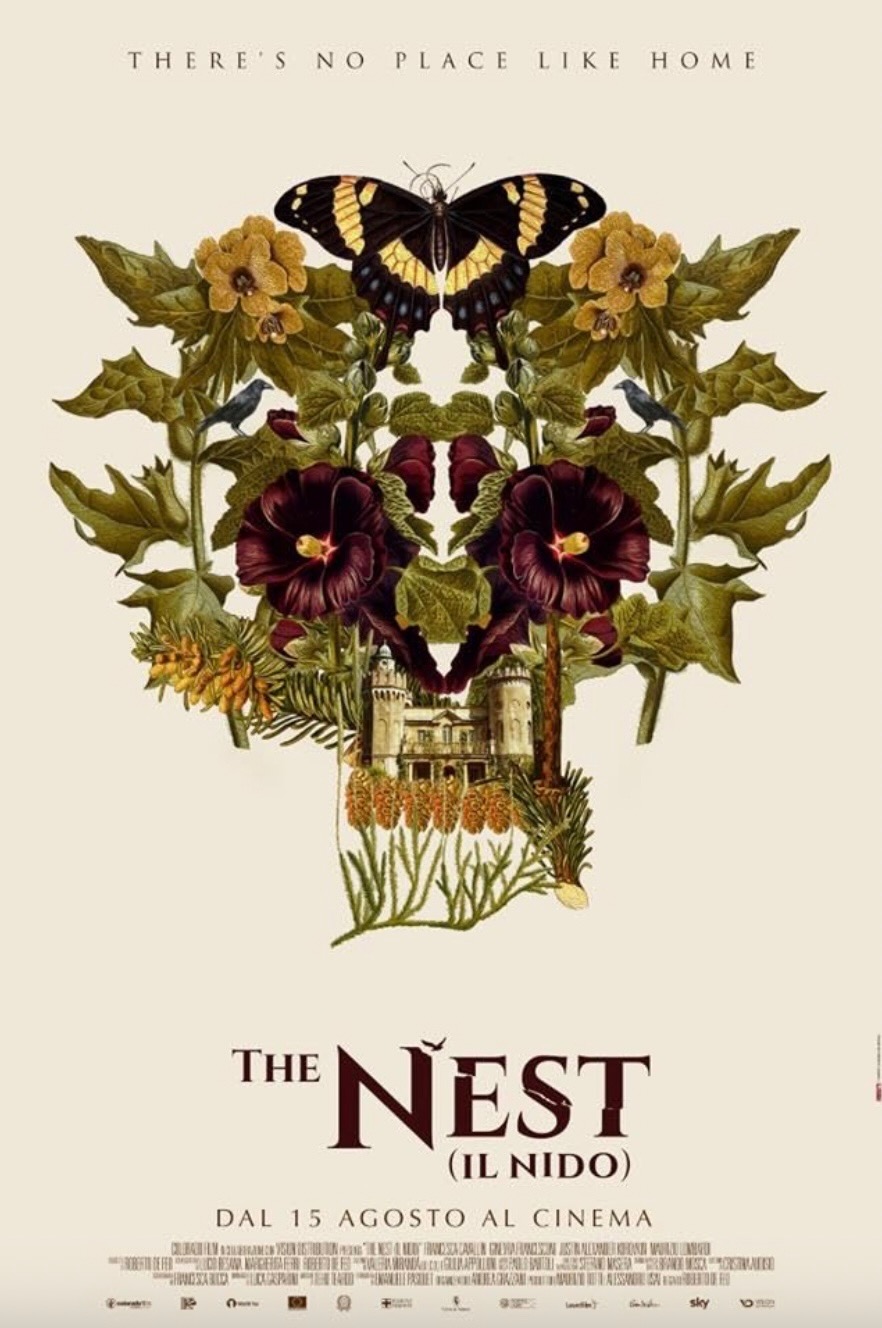
Okay, I’m going to try really hard to do this without spoilers.  There’s a twist ending here that, in my humble opinion, works.  All I’ll say is that the monster may not be what you think it is.  The only problem is that there are at least eight movies titled The Nest, and you’ll need to find one  from 2019 if you want to see what I’m talking about here.  Don’t read any summaries beforehand because you want to let this wash over you and draw you in.  Although distributed by Universal, this Italian Euro-horror remains relatively unknown.  That’s really a shame since this movie delivers.  A woman, an heiress, has a paraplegic son that she never allows to leave the estate.  She’d training him to run things when she can’t and she strictly limits the people he can see.

Teaching him classical culture, she won’t expose him to anything modern.  Then a teenage girl his age comes to live on the estate.  She was being raised by the same man who raised the heiress, but she knows things.  She knows about rock music, and she understand the way the world works.  The heiress, however, wants her son to experience none of this.  Afraid of what might happen, she sends the girl away.  In the meantime, we learn that the heiress kills those who are sick among her staff.  She employs a very creepy doctor who does whatever she orders, noting that she has saved them all.  The question is, is it best to live in such a bubble?  Is life so isolated worth living?  The heiress brings the girl back, but begins, with her doctor, to alter her behavior using electroshock treatment.

The Nest is one of those movies where you spend nearly the entire thing being misdirected.  When it’s over you think back on what you’ve seen and it does make sense.  Along the way, you know something’s not right.  It’s creepy in a way more than old, castle-like houses can account for.  I like gothic films like this.  There are disturbing moments that punctuate what seems like an idyllic lifestyle.  The heiress knows that survival equates to a cultured existence, but she never tells her son why.  This film shares some territory with M. Night Shyamalan’s The Village, in fact, they could be next door neighbors at points.  They both have a similar message, at least in part.  Efforts to build a paradise are beyond human capacity.  We need the outside world even if we fear it.


Cute Monster

Those who make horror films often rely on the cheap and easy tricks to make viewers jump and  scream.  Some of us are more connoisseurs, preferring films that make you think and that don’t show too much, and maybe even too little.  Lamb once again underscores what has impressed me about Euro-horror over the last few years.  Slow, building dread, it’s the kind of story that you know can’t end happily because it’s, well horror.  There are spoilers here but I hope they won’t stop you from seeing this film if you haven’t.  First of all, the film is in Icelandic, and much of the cinematography focuses on the brutally beautiful cold landscape.  Its sense of isolation and the land make this a fine example of folk horror as well.

A couple, sheep farmers, make a reasonable living from the harsh land.  We come to realize that they live in regret for the death of their daughter.  Then, after the unseen visit of an unseen creature during the dark of an Icelandic Christmas, a lamb is born with a human body.  She quickly becomes their ersatz daughter.  This odd situation, we know, cannot last.  They’ve set their happiness on a gentle monster (of the classic description) and such things never end well.  The movie takes its time spelling out the story, knowing full well that viewers know something is about to happen, but are unsure of what.  Since the husband’s brother stops in (after being forcefully ejected from a car), the film only really involves four characters—six if you count the brief appearances of the lamb’s parents.  And that isolated landscape.

Part-human and part-animal generally counts as a monster.  This one is well behaved.  Cute, even.  Dad, it turns out, isn’t so cute or well behaved.  He has his reasons, though.  The film is scary by implication: What happens when the cute little monster grows up?  The movie invites us to consider that question.  Monsters are often cast as evil and dangerous, but maybe they have to grow to become like that.  With loving foster parents, such as the farmer and his wife, who knows?  This is one of those films that makes you ask questions and offers little by way of explanation.  You just have to accept it.  Something led to a monster in the hills, somewhere back along the line.  But even he may have been even-tempered had is kind been treated with civility.  Monsters have something to teach us.  Even, or maybe especially, cute ones.


What You Can’t Show

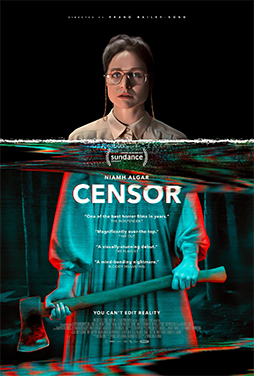
As I spend my life trying to figure out why I do what I do, I take book and movie recommendations.  I really should note who recommends what because it often drives me crazy trying to figure that out after the fact.  A friend recommended Censor, and since this friend told me where it was streaming for free I’m sure I got the right one.  Like several one-word title movies, there are several with the same sobriquet.  This was the 2021 movie and it’s a British horror film which raises the question of why we watch horror.  It does this through the eyes of the eponymous censor (Enid) who’s particularly tough on movies.  Set during the “video nasty” scare of eighties Britain, the question is whether such movies motivate real violence but with the twist that the censor is the one who turns violent.

Enid is haunted by her missing sister and she finds a video nasty star who looks like her sibling and becomes convinced that it’s her.  Enid gets to the set where her movie’s being shot (a remote cabin in the woods) and ends up killing the star and director (after accidentally killing the producer earlier, in self-defense).  She kidnaps her “sister,” and in her imagination—rainbows are everywhere—takes her home.  That’s where the real social commentary comes in because during this imaginary drive the radio announcer says these kinds of movies have stopped, and all crime and violence have ceased, and social harmony has returned to Britain.  This is revealed, of course, as a delusion.

Left to my own devices, I probably wouldn’t have watched this movie.  I don’t like blood and gore—I’m more looking for gothic themes like haunted houses—but it turns out that this is a smart film.  That’s probably why it was recommended to me.  Intelligent but also with tongue in cheek at times.  Still, it’s a movie about reconciling with childhood trauma, which is something that speaks to me personally.  That’s a wound I don’t always like to have poked.  It’s one of those movies on which I’d like to see more analysis, maybe talk to Prano Bailey-Bond, the writer and director.  Horror with female directors is often thoughtful, and movies are really meant to be discussed (just like books are).  The question remains—why do we watch disturbing movies?  I know I’m not the only one who does.  And in this case I remember who recommended it, so perhaps I’ll be able to get some closure.


Fostering Euro-Horror

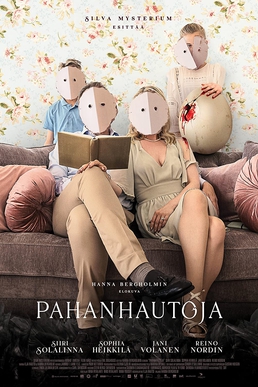
In another example of Euro-Horror, Hatching is a remarkably effective monster movie.  Filmed in Finnish, and set in Finland, it’s a remarkable parable about families and what we reveal to the world.  An affluent family consisting of Mother, Father, Tinja, and her brother Matias, live in a beautiful house in a nice neighborhood and Mother prospers with a blog about the ideal family life.  She videos the family, especially Tinja as she prepares for a gymnastics competition.  Then a crow gets into the house, causing chaos and bringing the true nature of the perfect family to the surface.  When Mother breaks the crow’s neck, reality seeps through the internet myth of perfection.  Tinja, disturbed by what happened to the bird, locates its egg and brings it home to care for it.

Mother, it turns out, has been having an affair.  Father is shown as caring, but ineffectual.  Matias has anger issues.  Meanwhile Mother drills Tinja in gymnastics practice until her daughter’s hands are raw and bleeding.  The egg grows.  Mother confesses to Tinja that she’s in love for the first time and for real.  She begins spending weekends at her lover Tero’s house.  The now huge egg hatches into a Tinja-sized bird-like creature, sparsely feathered.  As Tinja psychologically bonds with the creature, she hides it in the house and it becomes clear that what each feels what the other feels.  Over time the bird begins to become Tinja’s double, doing those things her “perfect daughter” image would never allow her to do.

The story is a parable.  Families uphold facades while the world pays to see perfection that doesn’t really exist.  Tinja isn’t terribly fond of gymnastics, but Mother drives her to compete.  Father knows about Tero, and pretends to be okay with the affair.  Mother spends her love elsewhere while her perfect family crumbles.  The monster in the movie is the revealer of truth.  The truth doesn’t broadcast well on the Internet, which prefers fiction passed off as fact.  Although the story itself could never happen, it is a probing tale that delves into psychology and the price we pay for not being honest about ourselves.  I won’t spoil the ending here, but let’s just say reality seldom works out the way that we hope it will.  Euro-horror has been producing some impressive films the past few years that demonstrate the intellectual side of horror quite well.  This may be offer body horror—without becoming slashers—because they have messages waiting to hatch.


For the Eyes

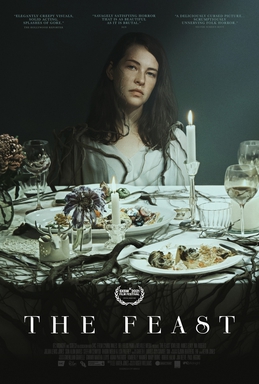
A Welsh horror film?  Lately Euro-horror has caught my attention.  European sensibilities give horror a distinctive flavor, and The Feast doesn’t pull the usual horror tricks.  And reading the subtitles keeps you on your toes.  It’s more a slow build that manages to be unnerving from the start.  A family of four—parents and two boys in their late teens or early twenties—is hosting a feast.  A local girl, Cadi, is hired to help cater the affair.  The family is really seeking to get a neighbor to allow exploratory mineral drilling on her land.  She refuses, horrified when they mention that they’ll only drill on the rise.  The neighbor, aghast, says they know better because they’ll awaken “her.”  The unnamed her is a goddess who is within the rise and who’s been disturbed by the family’s drilling on the land adjacent to their neighbors’ property.

A number of aspects push this beyond Euro-horror.  The goddess, treated as superstition by the family, introduces religion into the horror.  (Cadi, as it turns out, died on her way to the house and the goddess inhabited her body.)  The remote location and role of the countryside also bring this into the folk horror realm.  Having an underlying ecological message, the film is eco-horror as well.  As such it has a positive message, even as all those at the feast, apart from the uncompromising neighbor, die before the evening is out.  Gods will express their wrath.  Although there’s gore, the concept is intelligent and possessed Cady’s unwillingness to speak throughout much of the film adds to the tension.

Horror films with subtitles sometimes don’t work, but The Feast manages pretty well.  Much of the disturbing atmosphere comes from the house.  A modern construction, built over what had formerly been the family’s farm, stands in stark contrast to the natural world all around.  As is often the case in eco-horror, the land is waiting to take its revenge.  It’s a message appropriate for a time when we fail to live up to our own environmental standards, and consider the checks and balances of nature itself as “superstition.”  Maybe a goddess will not awaken and kill everyone at the dinner party, but the wealthy will not be spared, as the movie prophesies.  We share the planet and the earth allows us to survive.  There’s a sense that we deserve to be reminded that living on a finite planet requires careful stewardship of it all.  If you’re going to throw a feast, at least make sure it’s not at the expense of nature.  Some goddesses are best not aroused.