Religion Embraces Science

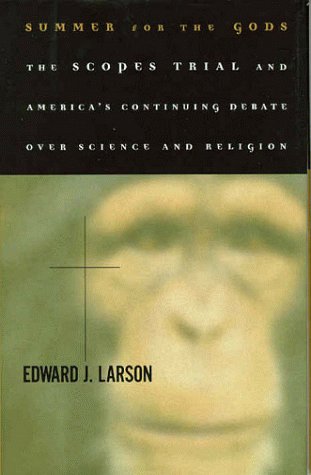
My colleague and one-time dean, Michael Zimmerman of Butler University, has brought his Clergy Letter Project to the Huffington Post. Well, he has written an online piece for the Huffington Post entitled “Redefining the Creation/Evolution Controversy.” His article is clear and to-the-point: the Creation/Evolution debate is not about religion versus science. That has been shown repeatedly for those who care to examine the history of this controversy. Evolution barely caused a ripple among clergy when it was first becoming popular among scientists. Ministers assumed it was just one of God’s mysteries and went about their clerical duties. The issue became a public relations boondoggle with the Scopes Trial of 1925. One of the best books written on that subject is Edward Larson’s Pulitzer Prize-winning Summer for the Gods.
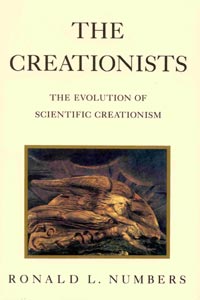
As I have stated in my podcast on this issue, Creationism is a splinter movement within Evangelical Christianity. Over the years it has drawn in members of a wide variety of Christian groups, including Roman Catholics and mainstream Protestant denominations. It has publicized its concerns so well that many people assume that this is the “Christian” viewpoint and that all other views are, by definition, non-Christian. This is the perspective that has driven a wedge between religion and science, creating a false front that has led to many confrontations between Evangelicals and scientists. My favorite history of the Creationist movement is Ronald Numbers’ The Creationists.
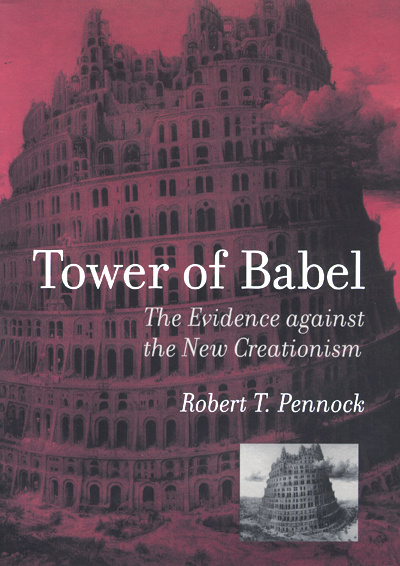
The true motivation of the movement is, without doubt, political. While many sophisticated people scoff at the apparently simplistic machinations of the Creationist movement, what they do not realize is that it is a highly organized and politically savvy alliance of special-interest groups. Robert Pennock’s Tower of Babel was an academic exposé of the inner workings of the Creationist movement. It is perhaps the most important book written on the subject. Published by an academic press, however, it has not found the wide public readership it deserves.
Do yourself a favor: read Dr. Zimmerman’s post. I believe he has framed the dilemma in the correct way: the struggle is one within a specific religion, Christianity, not one between religion and science. The more the public knows about this issue the better off we all will be in the long run.


Harry Potter and the Evangelical Emperor

There’s a chill in the air this morning that warns of impending winter and the visceral melancholy of autumn’s graceful death. As I try to warm up like a lizard awaiting the ascending sun, I think that maybe I’d better write this post before everyone forgets Harry Potter completely. It is the beginning of the witching season as sometime late tonight fall officially begins and people in temperate climes are permitted to show their fears as the barrier between seasons becomes effaced and the darkness slinks in. A few Harry Potter novels ago, a local town in Wisconsin sponsored a downtown release party for the book with a street-fair sporting a feel of general bonhomme. While sauntering down the incongruously sun-lit streets, enjoying the sense of people just having fun, I spotted this man with a placard across the street.

No caption necessary!

No caption necessary!

The truly scary part of this scenario is that I knew exactly where this fellow was coming from: the Bible says it, I believe it, that settles it. Black and white. Right and wrong. Good and evil. Strangely enough, there was no such dividing line for fact and fiction. Yes, I knew that the Bible condemns witchcraft, but I also knew that J. K. Rowling was a fiction writer. I had read the Bible enough times to know that it contains no commandments about what genre of fiction is permissible and to know that some biblical heroes were deeply flawed characters. Jonah and his big fish. David and the giant monkey on his back. Hezekiah and his doubts. I can’t pretend not to know the searing sting of needing a clear answer, and yet I had already discovered the infinite shades of gray that reside between pure white and absolute black. Bible covers should all be gray.

That very year a conservative evangelical administration had axed a highly praised job of over a decade’s duration, believing it to be in the name of righteousness. A conservative evangelical president was unleashing hellish terror on a country that had the misfortune of being the victim of a bloodthirsty dictator. And this man with a placard felt he had to underscore that even a flight of fantasy on a broomstick over a quidditch field of imagination was evil incarnate. Once again my mind turned to Molech, the perhaps fictional Canaanite deity who is never satisfied. In the Bible it was enough simply to believe that people were sacrificing their children to the fiery Molech. “White and black,” I could almost hear the tremulous author whispering as he penned his horrid fiction. History tends to paint a different picture, but then, historians make liberal use of the myriad shades of gray.