Nothing Unusual

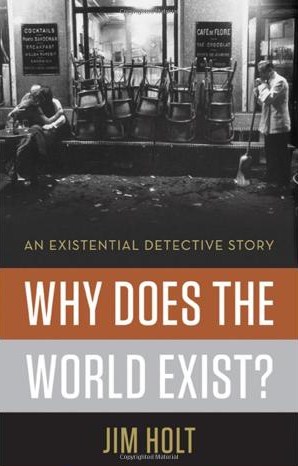
WhyDoestheWorldExist“Is this a world?” Ranger Tom asks seriously, “And if it is, am I in it?” On the lips—or fingertips—of some, this set of questions appears profound. Although I’m not technically a philosopher, I find it impossible to walk by a book with the title Why Does the World Exist? and not pick it up. I am not familiar with Jim Holt’s other work—I engage a little too heavily with books to spend much time with magazines—but the question of the title is one I’ve often pondered. It is right up there with “Why can some people get published and others can’t?” Holt is, however, on a serious quest. Not surprisingly, religion features prominently in the discussion. For the usual existential reasons, including a couple of significant deaths in the family, Holt asks perhaps the most basic of all questions and engages a number of prominent philosophers on the issue. Why is there something rather than nothing? For some in the western world such a question appears a non-starter, because our culture is biblically suffused. Whether we want to admit it or not, our social ocean veritably bobs with the basic belief that God created the world, end of story. We don’t need to ponder it, we just have to accept it. For those who look deeper, however, the answers aren’t that easy.

Holt goes through some serious computation in various forms of logic to try to arrive at a schematic demonstrating that the world is a surprising place. Not trained in such rigorous logic, I was interested to notice how the language occasionally slipped from “world” or “universe” to “reality.” Reality is perhaps the slipperiest concept of them all. Many simply accept their own experience as real, a position known as “naive realism.” Others probe somewhat deeper, seeking to verify reality. How do we know what is really real? It is, however, a different question than the existence of the world. Reality has the distinct ability to haunt with its half-answered questions and surfeit of ambiguity. Every time I wake from a dream I ask myself what is really real.

Once the divine is removed from the equation, why the world is here becomes a much more complex issue. Holt engages the new atheists as well as the neo-orthodox. It turns out that God may not help as much as we generally assume: whence God? Or, in its more childlike version, where did God come from? Once brute fact is ruled out, this becomes a tangled problem indeed. Faced with an endless regression, logic quails. Perhaps, however, we have reached the limits of rationality—even Einsteinian physics breaks down at the Big Bang. No matter what scientists or philosophers may tell us, we will always wonder, “and before that, what?” I put Holt’s book down with a sense that I’d spent a few pleasant hours considering the possibilities, but I still wonder, with Ranger Tom, if this is a world. And if it is, am I in it?


Grendel’s Gods

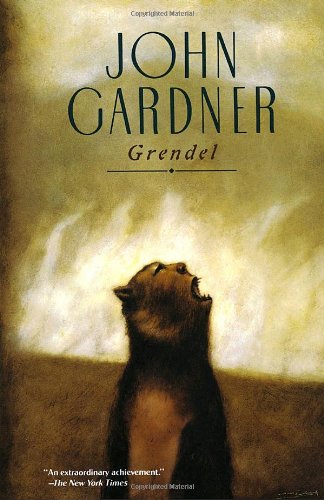
GrendelGardnerSometimes I think that if I had to do it all over again, I might’ve chosen Beowulf instead of the Bible. Let me define “it” here: if I had to pick a vocation that would lead to personal fulfillment and personal penury, that is. Beowulf is the earliest written story in English and, it’s a monster story. What’s not to like? In honor of Banned Book Week, I decided retroactively to read a banned title, John Gardner’s Grendel. An early parallel novel narrated from Grendel’s point of view, we are introduced to the introspective, existentialist monster who is really just wondering, like the rest of us, what the point of it all is. Not surprisingly, the protagonist often addresses the question of religion—indeed, it might even be at the heart of the story.

In chapter nine, Grendel sits in the darkness in the ring of wooden gods of the Danes when Ork, the great, blind priest stumbles in and believes the monster is the Destroyer god. As Grendel toys with his theology, the old priest understands this all as a revelation, and although Grendel gives him no answers, the words are taken as divine utterances. The other priests, finding their leader out on a winter’s night, insist that he has gone senile, that gods do not reveal themselves like that. The old man, however, is unshakeable in his faith. As in much of the novel, there is more going on here than meets the eye. The deluded priest believes a monster is his god.

The question of theodicy (literally, the judging, or justification of God) is never-ending for theists. The world is a problematic place (made so, I must note, by human consciousness) for the creation of an omnipotent deity who is good. Too much suffering, Grendel, too many failed expectations. Clergy and theologians have, for centuries, tried to frame a convincing answer to the dilemma. The tack they all studiously avoid is that God is a monster, although some posit that as a straw hypothesis quickly to be knocked down. Gardner, although not a theologian, was the son of a lay preacher and farmer. One suspects that elements of that childhood crawled out through the pond with Grendel. One of the truly tragic characters, a “son of Cain,” Grendel still has an immense power on the imagination. And that power, at times, might even appear godlike.


Metamorphoses

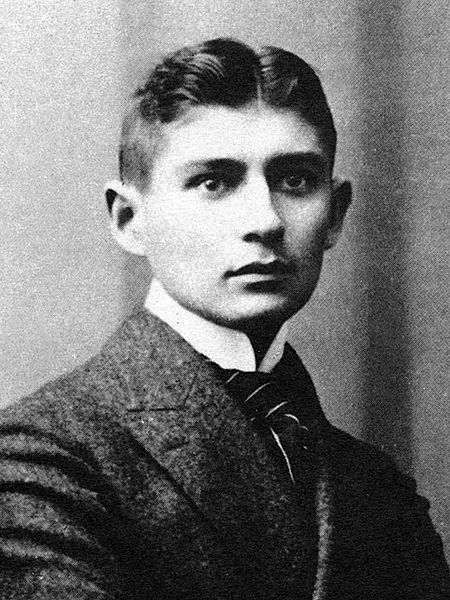
“When Gregor Samsa woke up one morning from unsettling dreams, he found himself changed in his bed into a monstrous vermin.” I borrow the opening words from Franz Kafka’s The Metamorphosis since upon rereading it yesterday I found it consonant with much of mythology. Even the title chosen by Kafka resonates with Publius Ovidius Naso’s (Ovid’s) Metamorphoses. Transformation at the hands of the gods. The idea lives on in the concept of conversion, the religious experience of profound change at the behest of God; some claim a willful hand in their conversion while others simply give God the whole credit. Kafka, one of the great existentialist writers of the twentieth century, considers the transformation without the gods and the terrifying results.

Having discovered the existentialists in high school, I was immediately taken by their writings. Characters find themselves cast into a world devoid of meaning, a world that they can’t understand and in which they often suffer unusual consequences. Little did I know that I was in training for my own experience in the academic world. Academia involves a major metamorphosis, one from which the victim cannot return, and after which she or he will find him or herself ineligible for employment. Reading The Metamorphosis as an often displaced instructor who’s only ever received positive evaluations, I saw much in the novel this time that I could not appreciate last time I read it. In short, I had metamorphosized.

Gregor Samsa, discovering he is now a bug, immediately worries about how to get to work. The painful description of his financial worries and ultimate rejection resonated a little too clearly. Is conversion a positive phenomenon? It is difficult to evaluate. In my experience, those who’ve converted tended to have been pretty decent people in the first place. As Ovid notes over and over again in his lengthy epic poem, when the gods make you into something else a sadness will pervade this new existence. If you survive. As Gregor slowly starves to death (in a fate hauntingly similar to Kafka himself) he finds no divine consolation. The situation is absurd—best just come to terms with that. Kafka could have been a struggling academic in the century after his death and he would have found the same situation applies.