American Possession

the_exorcism_of_emily_rose

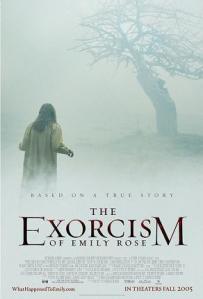
Exorcism seems an especially appropriate trope these days. Embedded evil has to be faced squarely and forced out before it kills its host. I recently rewatched The Exorcism of Emily Rose. This is a most unusual horror film in that the story is born by a courtroom drama over whether the priest overseeing the ritual was responsible for the death of Emily Rose. Famously based on a true story, the movie raises a more basic question than whether it “really happened”—what is the viewpoint through which we view the world? We see from the very beginning that the case is actually a contest between two powerful law firms. Each wants a lawyer that can shred the case of the other. The prosecutors engage Ethan Thomas, a very religious Methodist, against the defense’s Erin Bruner, an agnostic. Believing Emily’s case to be purely medical, Thomas asserts that had she stayed on her medication Emily would’ve remained alive with the prospects of a healthy life. Fearing a complete loss, Bruner takes a risky counter-approach: what is Emily really was possessed?

The obligatory scary scenes are shown, of course. They are flashbacks inserted into the course of the trial, but nevertheless disturbing for all their calm, rational framing. The real question, as the story plays out, is can a supernatural worldview be allowed in a court of law. Ironically, such a worldview is already present when a witness swears on the Bible. This particular movie doesn’t show those scenes, but it would’ve been a fair point for Ms. Bruner to make. Clearly the court can’t decide if demons are real, but it can allow that possibility. It’s a classic case of science versus religion. Nevertheless, both sides make use of science. The anthropologist on the stand is dismissed by the religious Mr. Thomas. He has no time for Catholic, or any other religions’, superstition.

Many strange choices were made for this particular cinematic piece, but the story works nevertheless. Those who believe in spiritual realities are allowed to live them out only to a point. The legal system decides if a religion has gone too far. I couldn’t help but wonder if, in a post-truth world, any clear standard of rationality can possibly hold. But questioning universally accepted truths and subverting them to personal preferences its almost if we’ve actually reached the stage of “all those in favor of general relativity say ‘aye.’” As I say, the film was more timely than anticipated. Demons, after all, often appear in the guise of an angel of light. Especially for those motivated by fear.
Nightmare Behind Holidays

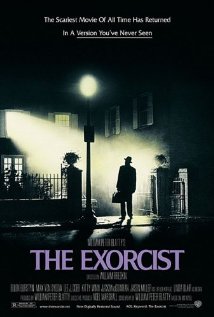
Among the first mythical creatures to go extinct when the early rays of the Enlightenment began to filter through the blinds of superstitious antiquity, were demons. It was recognized that the activities attributed to demonic possession closely resembled epilepsy and psychological illness and that Occam’s Razor would remove any unseen entities with its no-nonsense straight-edge in one deft pass. And yet they remain. Among the ghost hunting crowd, demons have been recategorized from fallen angels to entities that have never been human. Their reality is assumed, and results of investigations, not surprisingly, support that assumption. It was, however, a Dirt Devil advertisement that created a desire to watch The Exorcist now when darkness comes early and the leaves have fallen from the naked branches and a chill has permeated the air.

As I watched the still disturbing film, I realized that I had also watched the Exorcism of Emily Rose and The Last Exorcism within the past few months as well. I am no fan of demon movies; even with no demonic forces out there, inevitably young women are tormented by what ultimately turns out to be a male establishment. My threshold for watching the suffering of others, even if only acted, is minimal. Movie makers—and often horror writers—know and exploit this, bringing us to face the real demons, the shadowy regions of our own minds. The Exorcist is particularly effective in this since it is Fr. Karras’s demon that ultimately wins out. Having never read the novel, I’m not sure whose idea it was to make the demon Pazuzu, but once again the origins of demons does not fit modern media’s expectations.

Pazuzu was a Mesopotamian “demon.” Akkadian doesn’t have a proper word for what the Judeo-Christian tradition would introduce as a fallen angel. Demons were simply a way of explaining profound misfortunes such as droughts, pestilence, or the Bush administration. Eventually such misfortunes became personified and took on the ability to possess a human being. Here is where psychology and neurology have come to banish demons. Part of the terror of The Exorcist is that such scientific explanations are laid flat in the face of real supernatural power. The lessons of over-consumerism, as evidenced in Black Friday eclipsing Thanksgiving for many (the lines were formed in many locations well before midnight, cutting into family time in order to get first crack at the bargains) show the demon more clearly. Holidays are measured in importance by the amount of money spent. Perhaps it is no wonder that Halloween’s demons have lingered through November and even to the end of the year.


Gods and Demons

In ancient times people were sometimes possessed by gods. They were called “prophets” and they gained a breed of knowledge hidden from most other people. Demons were believed to exist, but they did not possess people. Instead, demons were used as explanations for misfortune, whether malevolently premeditated or not. Demons reflect, in today’s society, the concept of pure evil. Fr. Vincent Lampert, one of America’s 24 official exorcists, visited Montclair State last night to discuss evil, and according to the New Jersey Star-Ledger, he believes evil is a reflex of how people treat one another more often than a “figure with the hooves and horns.” No doubt there is a public fascination with demons, but few people understand their religious pedigree or what other explanations may be used to categorize them. According to the paper, Italy claims 300 exorcists – demonstrating that demons show culturally determined characteristics.

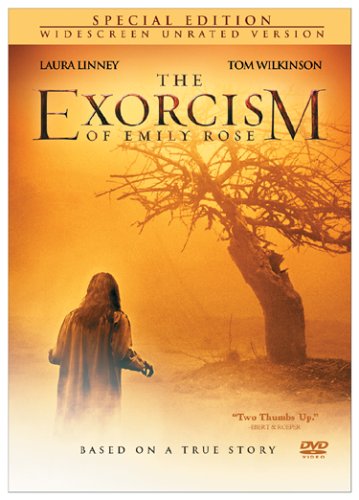
The 2005 movie The Exorcism of Emily Rose, lays out how science and religion differ on the issue of the demonic. Anneliese Michel, a young German woman, died in 1976 after being subjected to a prolonged treatment of exorcism. Her story was the “inspiration” for the film, and it raises the question of the reality of the demonic in the physical world. Fr. Lampert is more circumspect, noting that real life exorcisms are not as dramatic as those shown in the movies. He does, however, recall having seen a person levitate, but not during an exorcism. The human behavior he’s seen while on duty may all be readily explained by mundane physical and mental phenomena.

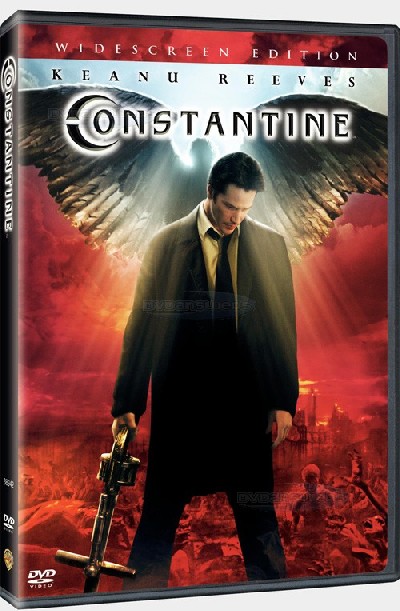
What does seem certain in all of this is that demons are not the behooved and behorned antagonists of films like Constantine or countless other graphic-novelesque portrayals of evil. Their Pan-based characteristics hearken back to the days when Christianity had to make plain its dismissal of foreign gods. In the ancient world hooves and horns were symbols of strength generally associated with powerful, if sometimes capricious, deities. In other words, what were one culture’s gods have become another culture’s demons. Movie makers understand the simultaneous revulsion and draw of the demonic character, but it seems that Fr. Lampert strives for a more balanced perspective. Evil has many faces, and most of them do not conform to Hollywood standards. Perhaps if all religions were respected demons would lose their power to torment and people would learn to get along with each other.


Zoroastrian Odyssey

Clinton's Red Mill

Clinton’s Red Mill is a popular New Jersey attraction, but numerous reports of paranormal activity have thrown an additional lifeline to the museum in the form of much-needed revenue in the form of seasonal ghost tours. Last year about this time my family and I participated in one. Touring the old grounds at night can certainly lead to spooky experiences, even for those of us who sit on the fence about ghosts. We discovered that The Atlantic Paranormal Society, the “TAPS” of Ghost Hunters fame, had investigated the Mill the previous year. We watched several episodes of the popular show, and for a lark, my wife bought me a subscription to TAPS Paramagazine for my birthday. All in good fun. I always thumb through when it arrives, but it is hard to take much of it seriously.

The last issue (volume vi, issue 2), however, contained an article about Demonology. Now, I thought I had graduated from The Exorcist and the Exorcism of Emily Rose to a healthy skepticism, but I could not resist reading this article. The first statement declares, “A demon is a fallen Angel that rebelled against God along with Satan, refusing to be humble before, and serve, God” (Adam Blai). While I never make light of things I don’t understand, I did consider the fact that the concept of demons, which derives from a Judeo-Christian mythology, presupposes a mythic war between the powers of good and evil. At the same time, I have been reading up on the Zoroastrians, one of the oldest continuously practiced religions in the world. There can be no serious doubt that the Judeo-Christian tradition borrowed the concept of the demonic from their Iranian neighbors of the ancient Persian Empire.

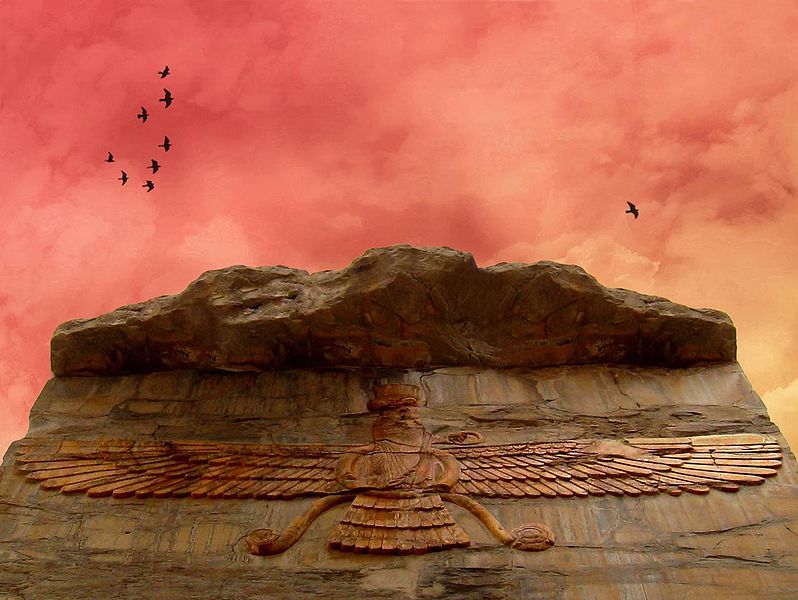
A Zoroastrian fravashi

The implications of the Zoroastrian connection are profound. If the ancient sage and Afghani priest Zarathustra was correct about the dualistic conflict of good and evil, was he not also right about Mithra and the Amesha Spentas as well? Zoroastrianism gave the Judeo-Christian tradition its base concept of Heaven and Hell, but the divinity of fire they did not accept. By picking and choosing what fit best into its experience, Judaism developed into a religion that allowed for Christian demons and angels and all the invisible hosts of the ethereal realms. Today many Christians accept demons as literal beings (less so jinns, although Clash of the Titans (2010) allowed for them). What does this say about the remainder of Zoroastrianism? Perhaps Ghost Hunters should begin with the Gathas and move on to the Avesta? As for me, I’ll be over here, sitting on the fence.