Critical Snow

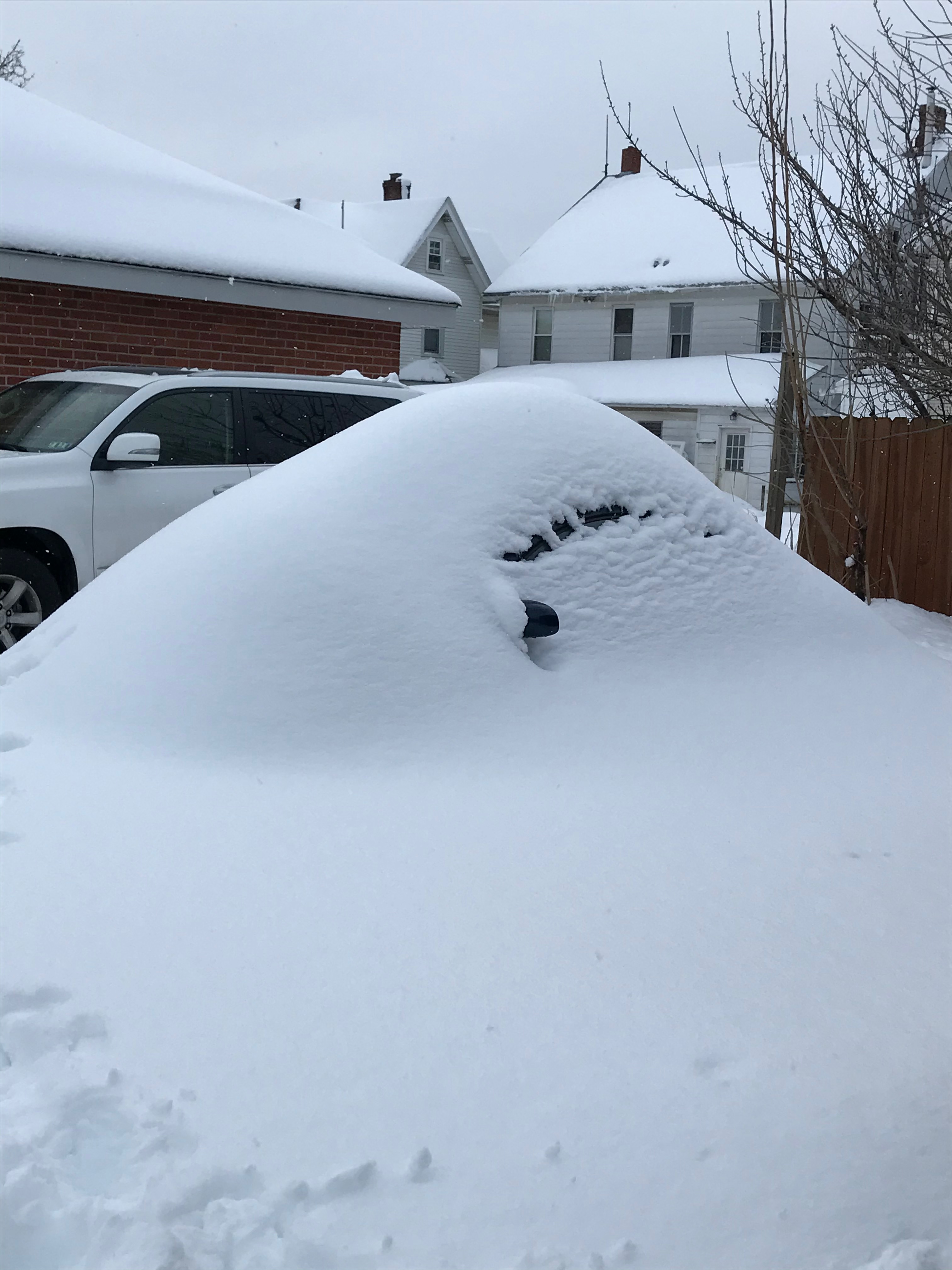
No two snowflakes, I’ve always been told, are the same.  Far be it from me to question the collective wisdom of our species, but I wonder how this fact is ever confirmed.  I suppose I’ve personally swallowed a good deal of the evidence over time.  Snowflakes melt and we can’t get them all under the microscope, can we?  This year has been a winter of more than usual snow around here.  During our most recent storm I stared out the window and tried to count.  Billions of snowflakes collected in my yard alone, and no microscope-bearing statistician was anywhere to be seen.  I like the idea of each flake being unique, but I know it’s a theory impossible to falsify, and I wonder if it’s accurate.
I’ve been thinking a lot about critical thinking.  At its base, critical thinking is about asking questions and learning reputable places to find answers.  Not “fake news” or “alternative facts”—these are tools in the Devil’s workbox—but evidence-based information.  Primary education, it seems, is about learning to read, and write, and handle numbers.  It is about learning who we are  and who we’ve been.  About the way that science helps us understand this old world.  Higher education, as it’s generally conceived, used to be about learning critical thinking.  That was before colleges became mere trade schools, catering mainly to careers with high earning potential so that alumni would give more money back to the college.  Where will we learn critical thinking?  No two are the same, right?

Instead, knowledge and hearsay become very similar things.  I used to tell my students not to take my word for it.  Just because I can legitimately put the word “doctor” in front of my name doesn’t mean I know everything.  Yes, I am an expert but even experts aren’t exempt from the test.  So, as more snow starts to fall, I think about all the many, many places I’ve heard that no two flakes are the same.  I think of the astronomical number of snowflakes that have fallen this year alone.  The number of years before we ever evolved on this planet.  In ice ages and even during human-initiated global warming.  And I realize nobody’s done the actual work of comparing every single snowflake to every other one.  Tradition is like that accumulating snow, building on past layers until great glaciers form.  And who, I wonder, would argue with a glacier?

Mother of Life

Homeostasis is, if I recall correctly, the state of equilibrium that entities and systems seek.  When we’re too warm we seek someplace cooler and when we’re hungry we look for something to eat.  It’s a great process of evening things out because we live in a world of extremes.  Well, relative extremes for a planet that suited to life.  Autumn came in with a chill this year, at least around here.  We had a couple of nights with frost before apple-picking season even began.  Over in Denver they went from a heat wave to inches of snow overnight.  I often wonder, if our species manages to survive long enough, what life will be like once everything evens out.  Until then, because of human climate degradation, we’ll be facing more extremes.  That’s the way the GOP likes it.

Meanwhile, there may be evidence that life exists on Venus.  Or at least in the atmosphere of the hottest planet in the solar system.  Up through my college years I toyed with the idea of being an astronomer.  I’d learned in high school (for we were a Sputnik-era school in rural Pennsylvania that had a working planetarium) that it was mostly about math.  I’m afraid I have no head for such things.  Still, I remain fascinated by other planets and their potential.  I’m in the market, you might say.  Venus had captured my young imagination not only because Ray Bradbury and C. S. Lewis wrote stories about living there, but because of the images from the Russian Venera (blush, giggle) probe program.  I knew in high school (planetarium, remember?) that Russia had landed probes on the rocky surface of Venus that had only functioned for a couple of hours at most before breaking down in the extreme conditions.  Extremes, again.

Venus could, it was thought, never have supported life.  The new evidence, however, stands to show us just how little we understand life.  It exists in the most inhospitable environments on our planet.  When life was found near black smokers on the ocean floor it was considered a fluke.  Maybe life is the norm instead of the rarity our exaggerated sense of self-importance suggests.  Venus, after the sun and moon, is the brightest natural object regularly visible in our skies.  Both the morning and evening star, it beckons to us.  Although not definitive, we’ve found evidence of life on both Venus and Mars.  And yet many of us prefer science deniers to lead our nation.  So I think of homeostasis as I look at Venus out my early morning window.