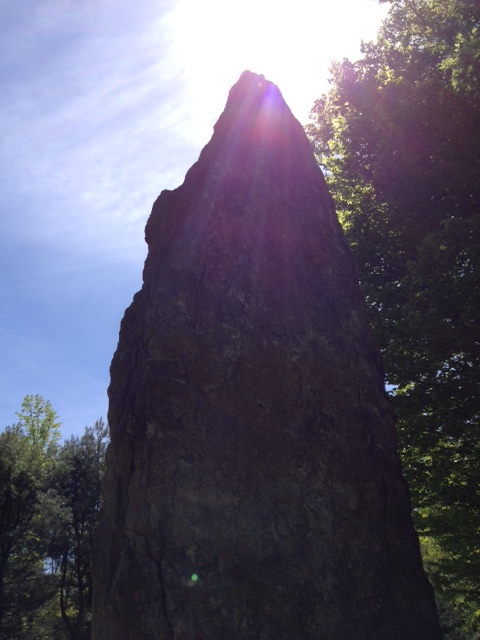
Solstice Wonders

It’s difficult to tell where summer begins and spring ends.  Transitions are like that.  Today’s the summer solstice.  Since I’m an early riser I keep track of when the sun comes up so that I can go for a jog.  Actually, I tend to get out just before sunrise when twilight is enough to see by.  You see, the solstice is a day of hope.  My jogging path is on the edge of town and it borders some woods that, all things considered, are quite shallow.  There’s development on the other side of the river, although you can’t see it from here.  As I’m out before most other crepuscular exercisers I often see critters along the trail.  I’m not sure I can catalogue all the animals I’ve seen but a partial list includes fox, coyote, raccoon, bald eagle, raven, ducks, herons, and the ubiquitous rabbits, squirrels, and deer.  Last month I saw a doe giving birth as I jogged by, something I felt it inappropriate to watch beyond a passing glance.

At times when it’s too dark to go before work I have occasionally gone on a slightly later schedule.  Then I’ve seen groundhogs, a snapping turtle, and red efts (newts).  The thing is these woods are rather thin and they support (along with the towns, I’m sure) a variety of creatures, many of which I don’t see.  Appearances can be deceptive.  Things that appear certain are often wrong.  Those who wake later and don’t spend their evenings on the trail (and animals, I expect, are shy after people have been out all day) may not believe there is so much fauna in the area.  I know there’s even more: opossum, bear, and frogs among them.  I believe they are there.  And believing is just as important as knowing.

Summer is thought of as a more relaxed time, but that’s really only an appearance as well.  It’s actually quite a busy time—what’s relaxed is our capitalistic drive for work.  We realize the warmer days (hopefully not too rainy) afford us the opportunity to do the things the long, dark, cold months prevent.  And those of us in northern latitudes tend to think of it as a magical time.  Shakespeare’s A Midsummer Night’s Dream captures the traditions of fairy activity during this short night with long, sunny days either side of it.  A family member recently reminded me of this connection, and it seems to me that we should be reminded once in a while of the miracles that surround us.  The solstice is one of them.  It’s a matter of believing and a cause for hope.

Are You Fey?

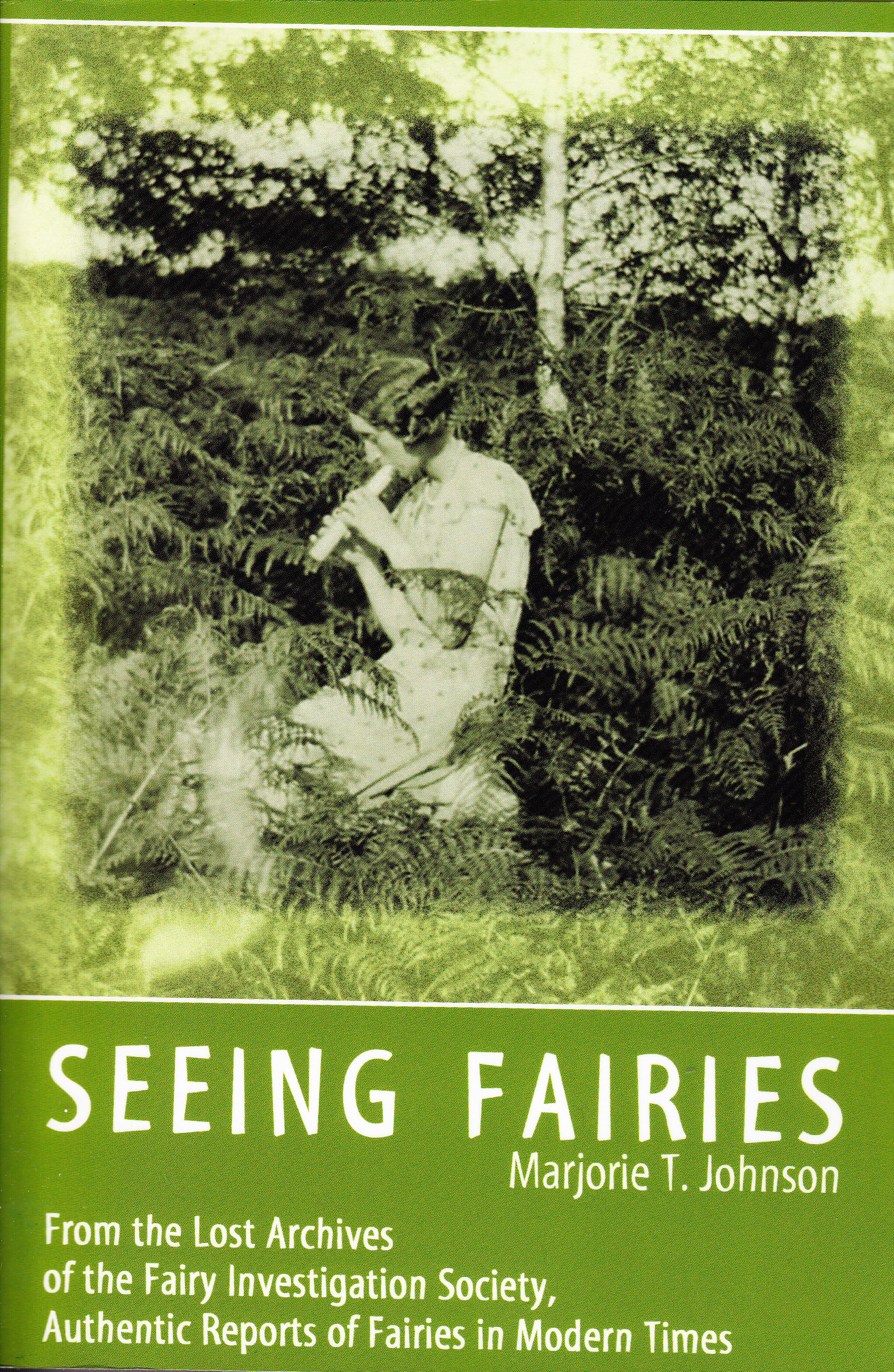
SeeingFairies‘Tis is the time of year that one might make inquiry into elves and the wee folk without being thought too strange. Santa has his cadre of mythic diminutive helpers and even the shepherds have their angels. The two, it seems, are not unrelated. Marjorie T. Johnson’s Seeing Fairies is, in many respects, a charming book. Compiled by the author during a lifetime of corresponding with people who claim to have seen fairies, elves, pixies, sprites, brownies, gnomes, and even angels, the stories—as parsimonious as any sermon—do create an aura of mystery. It is clear that Johnson believed (the book is posthumous) sincerely in the unseen world. As the preface makes clear, she was influenced by Theosophy, and the majority of the material dates from the 1950s and earlier. There is an almost childlike credulousness to the accounts, with Johnson not questioning psychic dreams or astral projection, placing them side-by-side with eyewitness accounts. This is a good example of what an editor might have done for the book.

Many people assume a doctorate in the humanities is a soft thing—pliable in a way that the hard sciences are not. The point of advanced study, however, is to ingrain habits of critical thinking. Nothing is taken at face value. For those of us who study folklore’s first cousin, religion, the task is often to set aside belief in the light of evidence. What can we know about the unknowable? Of course, psychologists and sociologists and anthropologists are now supposed to be better equipped to answer religious questions. Religion, after all, is something people think and do, and what can we really learn from studying it per se? We need an interpretative device—an hermeneutic filter (or pneumatic hammer)—to guide us toward the reality of the thing. And yet science itself is based on observation. Accounting for what our senses reveal about the world around us.

Some people, it is clear, find the world around them filled with wee people. Recently a major road construction was halted in Iceland out of fear of disturbing the elfin habitat. And Icelanders are some of the most literate people on the planet. Johnson’s accounts (some clearly hard to swallow) range across the earth, but center in the British Isles and Celtic lands. Perhaps the light is somewhat different there. Perhaps nearing the North Pole things really do change. What becomes clear from Seeing Fairies is that some highly credible and educated people see, from time to time, what they allow their eyes to see. Believing is, after all, seeing. Johnson ends her book with a chapter on angels, beings she clearly views in continuity with fairies. The difference is that the monotheistic religions allow for, and perhaps even demand, angels. When they become travel-sized, however, the only evidence is that of those with very keen eyesight.