Books and Mormons

Some time ago we went to see Book of Mormon on tour.  I really knew very little about it other than it was consistently praised as being very funny.  I’m always a little concerned about poking fun at anyone else’s religion because I know people take their beliefs very seriously.  As I reflect on the show (which was quite funny) it seems that it wasn’t so much poking fun at the Latter-day Saints so much as it was poking fun at religion itself.  That’s less problematic as it’s not singling anyone out for ridicule.  It’s a system that’s being made light of.  Or at least any religion that is an effort to convert others.  There’s a kind of violence to it.  And if Book of Mormon is about anything, it’s about missionaries.  Amid the laughs it makes some valid points—trying to convert people without first trying to understand their culture is a fraught activity.

People want religious specialists who thoroughly understand their tradition.  I can say from experience, both as an erstwhile seminary student and a seminary professor, that the time given to become an expert is insufficient.  The older I’ve grown the wider the perspective I’ve tried to step back to see.  To be an expert on a religion really requires some facility with understanding other religions.  To understand, say, Methodism, you need to understand Anglicanism.  To understand Anglicanism, you need to understand Catholicism.  To understand Catholicism, you need to understand early Christianities.  To understand early Christianities, you need to understand Judaism.  And so the widening concentric circles go.  Nobody can be an expert in all of them, and each of these religions mentioned has, in its own right, sub-specializations that have their own experts.  Who has time to learn the religion of those they intend to convert?

Any religion that makes supernatural claims (and many of them do; it’s their nature) makes extraordinary allegations.  Those allegations, when examined closely, reveal some improbable elements.  Trey Parker and Matt Stone, two of the authors (most famous for South Park) apparently said that they had no intention of making fun of anyone’s religion and a spokesperson for the Latter-day Saints indicated that no real offense was taken, acknowledging that it’s parody and parody is only offensive if it’s taken seriously.  Many religions have thin skin when it comes to parody or satire.  The serious part is that some religions, in real life, take conversion of all others with a zeal that could (and does) become dangerous.  Still, this musical is very funny, as long as it’s not taken too seriously.


Who Owns It?

Who owns the Bible?  No, you can put your hands down.  I mean who owns the concept of the Bible?  This question occurred to me while thinking about the Apocrypha.  Does the Apocrypha belong or does it not?  This became a polarizing issue with the Reformation and subsequent Protestant ownership of the concept of the Bible.  The Apocrypha was mostly written by Jews, but has never been part of the Hebrew Bible.  The process of narrowing down the books to include wasn’t straightforward and since God hasn’t spoken on the topic, has never really been settled.  The books of the Apocrypha circulated with the Bible, as did a few other books.  Sometimes they were even bound together inside one cover with the standard Protestant 66 books.  Obviously I’m discussing the Christian canon here.

I’m sure you’ve known someone this has happened to, if it hasn’t happened to you personally.  This person is an actual expert on a topic.  S/he goes to a place where an unexpected discussion on their specialization breaks out but nobody asks them to speak to it.  This person then becomes offended, sometimes even speaking out, loudly, that this is their area, they have expert knowledge of it and should be consulted, at the very least.  More likely than not, their opinion should be considered definitive.  This is the image I have in my head with Protestants and the Bible.  Sure, the Catholics had it long before, but they didn’t encourage individual study.  In fact, they discouraged laity from reading it.  Only when they, the Protestants, came along did anyone really pay attention to the Bible, and, it must be admitted, they do have a point.  All the Bible study that goes on today, no matter what faith tradition (if any) would not have happened without the extreme Protestant reverence for the Good Book.

But still, there are other branches of Christianity that disagree.  There are more Catholics than any single sect of Protestants.  And a great many Orthodox Christians as well.  Some of the latter include the books of 1 Enoch and Jubilees in their Bibles.  Even so, any publisher that wishes to make inroads on selling the Bible must defer to the Protestant canon.  This is the case even though the King James Bible included the Apocrypha.  So as I ponder who it is that owns the image of the Bible, my mind keeps coming back to the same place.  Those who make the loudest, and most prolonged claim are the Protestants.  They own the Bible, in the public eye.


Angles on Angels

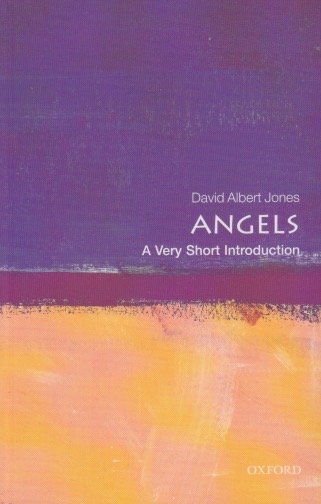
Angels and I go back a long ways.  They were mentally part of my childhood, as I suspect is true for many.  When I reached upper-level undergraduate work, I did an independent study on angels with a professor who didn’t provide much guidance.  About the only thing I recall from that class was reading Billy Graham’s book on angels.  Not exactly an academic authority.  In these times of modern Thomas Aquinases, plenty of scholars look at angels from various angles.  I suspect the task of writing a Very Short Introduction on them was taxing.  Although the word count was about 10,000 higher, I had trouble reining myself in on The Wicker Man.  There was so much more to say!  Of course, many academics are preferring shorter books these days.  In any case, angels.

After a brief history of angels, attempting to define them, considering the main ones individually, then looking at the collective as a hierarchy and according to various roles—messengers, guardians, warriors, David Albert Jones then looks at fallen angels.  Having written on this myself in the tragically overpriced Nightmares with the Bible, I found Jones’ approach here to be of interest.  Throughout Jones tries to give equal time to Judaism, Christianity, and Islam.  All three traditions have angels, but Muslims approach demons very differently.  Djinn aren’t fallen angels.  But then it’s time to move on to the conclusion.  Brief books like this are good for making a reader hungry.  Some decades after angels had a resurgence in pop culture, academics arose to explore them.

I enjoy getting a different perspective, or angle, on angels.  It’s so easy to assume that our parents taught us correctly about the layout of the spiritual world.  Culturally, unquestioning acceptance is rewarded (it’s clear that even demons know that).  But looking closely at things, even if just for a brief time, offers a chance to learn something new.  Personally I learned new things about Dionysius the Areopagite, Joan of Arc, and Hells Angels.  I also couldn’t help but think that such a little book written by anybody else would’ve had different nuggets included.  That’s one of the problems with picking up a short book on whose subject you’ve already done quite a bit of reading.  I do it for information, but beyond that, for finding new angles.  I can’t imagine ever learning everything there could possibly be to know about angels.  And we go back a long way.


Non-Saints

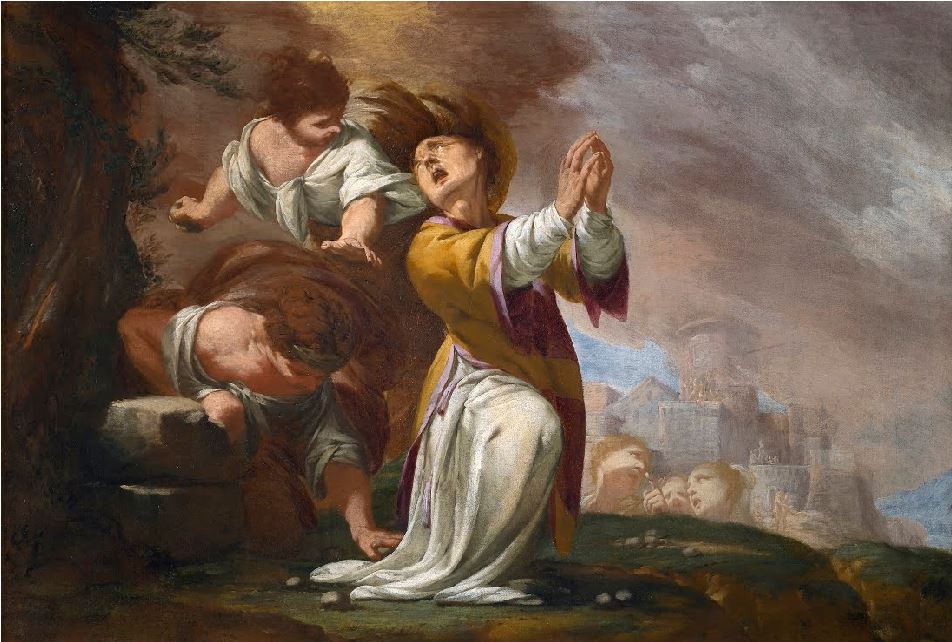
It was an epiphany.  My wife has, on more than one occasion, accused me of playing the martyr.  I know very well that I let other people step all over me.  The epiphany came when I was reading about Stephen’s martyrdom in the Acts of the Apostles (in the New Testament).  Unbidden by me, a memory—more of a distinct impression, a deeply planted feeling—arose.  I started reading the Bible at a young age.  The story of Stephen is disturbing to a child.  The thought of being stoned to death for saying what you believe is a species of horror.  The memory, or impression, was of my mother pointing out how good it would be to be like Stephen.  He is not technically my namesake, but since there were no male role models in my family, I subconsciously made the connection: Stephen the martyr, Steve the martyr.

Giovanni Battista Lucini – Martyrdom of St. Stephen, public domain. Source: https://artsandculture.google.com/asset/martyrdom-of-st-stephen/twGNCf3waLKDvA via Wikimedia Commons

It’s strange to realize this suddenly after half a century of not consciously recollecting it.  What we teach our children stays with them.  If we tell them that it’s good to die for your beliefs, well, we shouldn’t be surprised when they grow up with strong convictions.  (My brother tells me that Virgos think they’re always right and that’s why we’re stubborn; is it the stars or is it the Good Book?)  The Bible puts a positive spin on Stephen’s death.  Formal sainthood isn’t a biblical concept, but he dies forgiving his murderers.  It struck me there in the middle of a working day.  Some of my subconscious personality traits floated to the surface.

My deep desire to avoid Hell also formed my young outlook.  Although my beliefs have to be held accountable to what I’ve learned over decades of study, that fear never departs.  This too was planted in me before I had any real concept to absorb it.  When I grew old enough, the horror became academic, but nonetheless real for it.  I’d studied the history of Hell and I knew New Testament secrets.  To avoid the bad place, be like Stephen.  The dilemma is that as life goes on, we continue to learn.  Young parents don’t know as much as old ones do.  And since we have to teach our children not to run out into the street, or not eat that thing they found, we cast ourselves as The authority.  And that includes things religious.  If we live an examined life, we see shades of nuance where once there was only certainty.  And sometimes we have epiphanies.


Eschew Stupidity

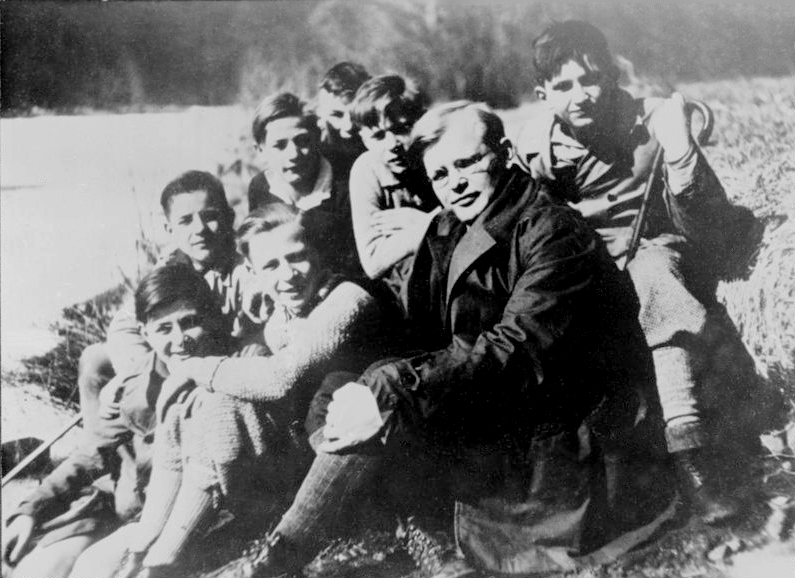
Dietrich Bonhoeffer was a certified evangelical Christian.  His theology often feels a bit pat to some of us who work in religious studies, but there’s no doubt that Bonhoeffer was a brilliant man.   Bonhoeffer believed in Jesus but resisted Hitler.  In fact, that resistance cost him his life.  My brother recently sent me a Facebook Reels video on Bonhoeffer’s observations about stupidity, which Bonhoeffer believed was far more dangerous than evil.  I shared that video in my feed on Facebook yesterday, and it is well worth listening to.  Stupidity isn’t a badge most people would wear proudly.  We all do wear it from time to time since we’re only human.  The real problem, according to Bonhoeffer, is when crowds start becoming stupid.  We’ve seen it time and again.  We’re living in such a time right now.  The antics coming out of DC right now have thinking people everywhere wondering how this is even possible.  Listen to Bonhoeffer.

Photo source: Bundesarchiv, Bild 183-R0211-316 / CC-BY-SA 3.0, Wikimedia Commons

I don’t take Bonhoeffer uncritically.  Some of us—generally without tons of friends—think critically by default.  (The women in college all broke up with me because “You’re too intense.”  I credit my wife with sticking with me, although she tells me they were right.)  Anyone can learn critical thinking.  The problem is, keeping the skill is hard work.  And the internet doesn’t help.  Whenever anyone makes a claim, personally, my default response is “How do they know?”  Yes, I do look up references.  With my particular brand of neurodivergence, I seldom trust other people to know something unless they’re experts.  (This is something the current administration is a bit shy on.)  I even question experts if their conclusions look suspect.  “Nullius in verba” is written in my academic notebooks.  Something, however, is obviously clear.  Bonhoeffer was right about stupidity.

I’m not sure what an unfluencer like myself hopes to gain by discussing this.  I do hope that folks will listen to Bonhoeffer if they have concerns about my thought process.  My deeper concern is that the church often encourages stupidity.  Unquestioning adherence to something the facts expose as untrue is often lauded.  It makes some people saints.  Churches require followers and often distrust critical thinkers.  That once cost me my job, sending my career into a tailspin.  This was well pre-Trump, but some in authority didn’t appreciate critical thinking on the part of faculty.  (Ahem, that’s what we’re paid to do).  I’m not anti-belief.  Anyone who really knows me knows that I believe very deeply in the immaterial world.  And I know that Bonhoeffer did too, right up to the gallows.


The Sin of Syncretism

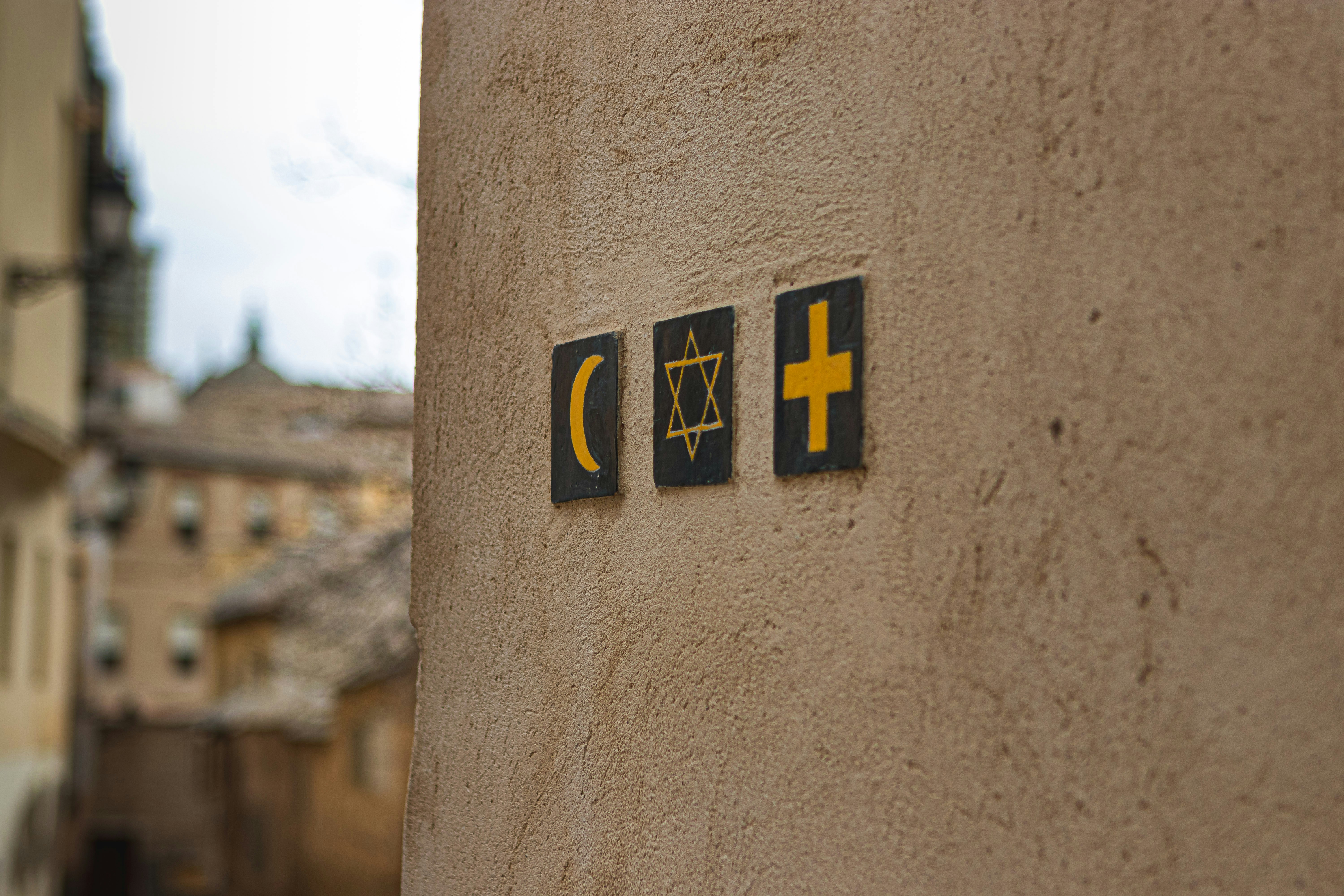
Syncretism may not be dead, but it should be.  What is it?  Well, in my field it means a religion that has been “corrupted” by the adoption of some element(s) of another religion.  The term was all the rage while I was working on my doctorate which involved, of course, comparative religions.  By the time I was being edged out of academia, there was a recognition afoot that the concept of syncretism was itself corrupt.  It depends on the idea that there is a “pure” form of a religion and that foreign elements debase it.  There is no pure form of any religion, and the more we learn of the history of religions the more obvious it is that religions influence each other, and have always done so.

What prompts this post is that I increasingly see clergy using the term “syncretism.”  Now, clergy tend to run behind scholars by a fair pace.  Those of us out there trying to figure out what religion is and how it works have a daily duty to analyze and reassess and theorize.  Clergy have many other things to do and read scholarly tomes as time permits.  Syncretism is now only used by conservative scholars who believe a religion (usually the form of their religion that they personally happen to believe) is pure.  Other religions are corruptions.  Ironically, I once heard a Unitarian Universalist minister use the term.  For a religion that accepts all other religions as valid, it struck me as odd.

Photo by Noah Holm on Unsplash

As I used to tell my students, nobody knowingly believes “the wrong religion.”  By far the majority of people accept the religion that their parents taught them.  Often without question.  I know I did.  Then I studied religion.  I began to realize things weren’t as simple as “that old time religion” pretended they were.  Fundamentalism borrows from other religions just as much as any other tradition does.  Religions don’t have sharp boundaries.  There are fuzzy edges between them.  Those edges are permeable and quite wide.  Syncretism was a concept that religion scholars used, often in the context of monotheistic religions, to show where impurities entered.  The thing is, impurities were there from the conception on.  If one religion were born fully grown from the head of Yahweh, it would be obvious, wouldn’t it?  The Bible describes the religion of Israel and how it borrowed and adapted from other traditions.  Thus it was in the beginning, is now, and ever shall be.  The world would be a much better place if we made our peace with this and buried syncretism in the graveyard of obsolete ideas.


What You Believe

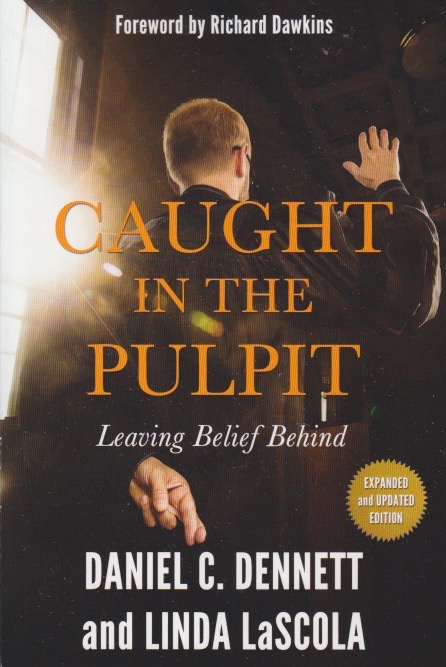
This is an important and frustrating book.  I just can’t figure out if the black-and-white thinking is disingenuous or if it was really believed.  I don’t mean about the subjects of Daniel Dennett and Lisa LeScola’s Caught in the Pulpit.  I wonder that about the near-arrogance of the model they propose while exploring the very real problem of, as their subtitle says Leafing Belief Behind (for clergy).  You see, I’ve read, and even walked a little way with the “new atheists” (my private beliefs are private but one thing I will say is that beliefs constantly change for anyone who seriously seeks the truth.  If you want to know them, get to know me).  This book, which explores clergy and other religious folk who’ve lost their faith, addresses something very real and very important.  It’s just that the framing feels wrong.  I appreciate that the authors exhibit such sympathy for their subjects—it is difficult to change the religion in which you were raised.  But it it’s not black-and-white.

Apart from the “either/or” outlook, there’s also the fact that what many people interviewed lost was not so much a belief in God as it was a belief in the Bible.  These are different things.  No doubt, our love of Bible has caused quite a lot of damage.  Since many believe the Bible to be a magic book, losing that particular lens can make things blurry.  I guess that’s what I missed in this book—a sense of blurriness.  Scientism is a belief system just as fundamentalism is.  Interestingly, I keep coming back to something that should be obvious to scientists—our brains did not evolve to learn “the truth.”  Our brains evolved to help us survive.  There is much we still don’t know.  What’s wrong with being humble about it?  Perhaps it’s sour grapes since I was ousted from a religious career just when this study was taking place, but I didn’t qualify because I believed.  Not that they’d have found me, in any case.

Many clergy, I know, do not believe what their congregations think they believe.  As you go into theological education some things are revealed that it is in nobody’s best interest to broadcast.  It might be good, however, if it weren’t atheists trying to lead the charge.  I was pleased to see Dennett himself suggest this in the book.  I was also glad to see him admit that “the new atheists” do not struggle with the very real issues raised by theological education (whether in formal settings, or through private reading).  There is a very real disconnect here, and this book serves a valuable function in bringing it to public attention.  What’s missing is a solution.


Consciousness Conscience

Not so long ago—remember, I read old books—living to 60 was considered a full life.  I’ve passed that and while I’m in no hurry to shuffle off this mortal coil, I often think of how improved medical practice has prolonged many lives.  This is a good thing, but it does make death a more difficult fact to deal with.  If there is any good that came from my Fundamentalist upbringing, it was that it taught me early on to think about death with some frequency.  I’m not a particularly morbid person, but since we all have to face this, avoidance seems to lead to grief, shock, and acute mental pain.  I tend to consider watching horror movies a spiritual practice.  Little reminders, in case I forget to consider my own mortality today.

Our faith in science is a little bit misplaced.  Sure, it helps enormous numbers of people live longer, healthier lives.  But it may also detract from the necessity of attending to our spiritual lives.  I don’t care if you call it consciousness, your soul, psyche, or mind, but we have a life we’re accountable to, and it’s not all physical.  Since consciousness feels neutral enough, let’s go with that.  We don’t know what happens to our consciousness after death.  There are plenty of theories and ideas about it, but no certain knowledge.  There may be faith, and there may even be some evidence, but it is always disputed.  It does seem to me that facing death squarely on may help take care of at least some of the anxiety.  Fear of the unknown is probably the greatest fear our species possesses, so pondering it may take the edge off a bit.

Some people claim to remember past lives.  Sometimes I wonder if they might be tapping into the great unknown: consciousness.  Perhaps consciousness survives without a physical body.  Perhaps it’s large—expansive—and encompasses far more than we can imagine.  Maybe some people can access part of that consciousness that includes the past lives of others.  We have no way of knowing, but it seems worth thinking about on this All Souls Day.  Of course, I have the advantage of having lived what used to be considered a full life.  In it I have set aside at least a little time each day to consider what happens after this.  Do I have a definitive answer?  No.  I do have faith and I do have beliefs.  And I’m always reflective on All Souls Day.

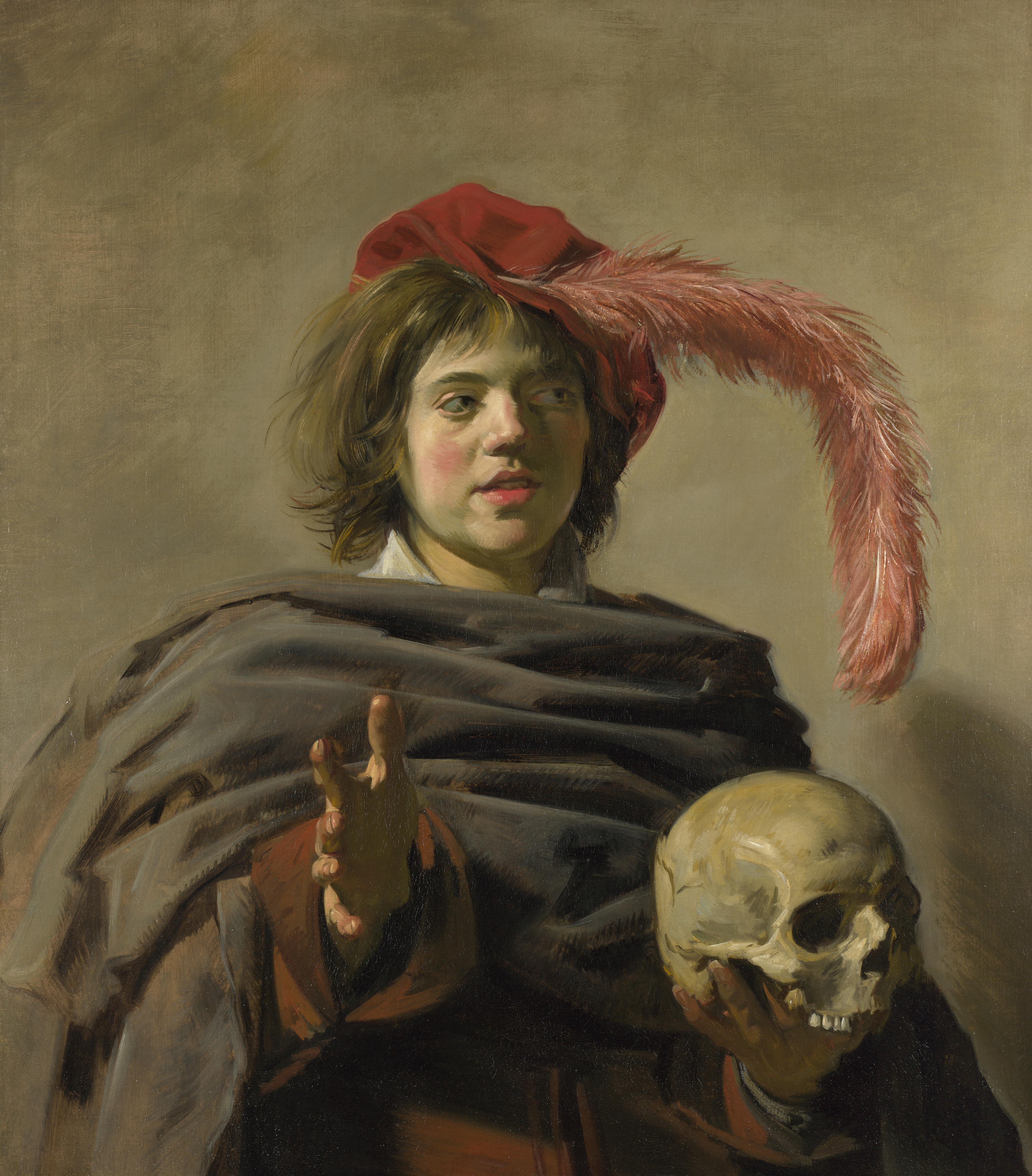
Frans Hals, Young Man holding a Skull (Vanitas), public domain via Wikimedia Commons


Spirit Storm

Some time ago, we experienced quite a windstorm.  More than wind, there was a dump of rain, thunder, hail, and all that.  My wife and I were attending a Tibetan singing bowls sound-bath with some others in the cancer support community.  I’ve described this practice before, here.  In any case, the meditation is held in a large room with a tin roof—the kind of place you don’t want to be during a tornado.  We’d just got inside when the gust front hit and knocked out the power.  The instructor still went through the meditation, but the storm sounds blended with those of the singing bowls.  Afterwards my wife asked about Job.  Specifically, God speaking from the whirlwind.  I told her that was God on a bad day, but I understood what she was getting at—there’s a spirituality to the weather.  (I was going to suggest Elijah instead, but “but the Lord was not in the wind.”  Alas.

I thought of Weathering the Psalms.  My contribution to biblical studies, had I been allowed to remain in academia, would’ve been further explorations of weather terminology in the Bible.  But the Lord was not in the wind.  I wrote that book because I noticed the juxtaposition of severe weather with daily chapel at Nashotah House.  We were required to attend, no matter what the weather.  (Such is life on a fully residential campus.)  We were reciting the Psalms one day when a storm blew the power out.  It may have happened more than once, since we’re getting on past two decades hence my memory’s a touch imprecise on the point.  In any case, the spirituality of the power of the storm fascinated me.

It still does.  The next morning, out for my jog, I marveled at the number of branches down.  Thousands in the Lehigh Valley were without power.  This is probably why the ancients considered the storm god chief of the rest.  The violence of nature is something that suggests divinity.  Other primates have been observed screeching back at the sky during thunderstorms.  It’s deep in our DNA.  That doesn’t make it any less spiritual.  There’s a lot of weather in the Bible.  I only explored a tiny piece of it by trying to tackle the Psalms.  The Good Book, however, doesn’t say much about the spirituality of weather.  It’s there nevertheless.  Anything that can snap a tree a foot in diameter like a toothpick has a spiritual message for us.  I mused on the way home—we had to take a detour because of downed trees—that had the storm claimed us as victims, dying while meditating is probably not the worst way to go.  Now I wonder, what might God’s nice words from the whirlwind be?


Powerful Belief

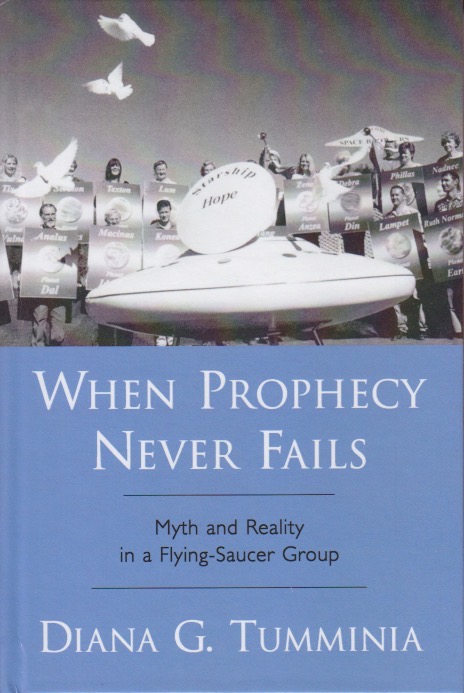
Even someone who’s spent a lifetime studying religion can’t know every single sect.  People are far too creative in that regard, and some belief groups are fairly small.  I had never heard of Unarius, for example, before reading this book.  If I had, it simply washed over me, getting lost in the noise.  Part of the trouble with defining Unarius is that it calls itself a science.  Words can be slippery, and Christian Scientists also use that designation in a similar way.  The word “science,” etymologically speaking, denotes “knowledge.”  In our materialist culture we often suppose that means the physical sciences, grudgingly allowing it to be borrowed by the “social sciences.”  There is a science of religion, but this leads to its own set of discussion points.  Let’s look at Diana Tumminia’s title: When Prophecy Never Fails: Myth and Reality in a Flying Saucer Group.  That give you an idea. 

The “prophecy” part concerns a “failed” prediction, or two, of when the spaceships would land.  Being a sociologist, Tumminia’s real interest is what happens then.  And here’s where things get interesting.  Failed predictions generally don’t lead to true believers giving up their convictions.  History has played and replayed this for us—it’s happening around us this very second—and yet “rationality” supposes that when the ships don’t land, people simply move on.  The Millerites outlived “the Great Disappointment,” after all, when the world didn’t end as predicted.  Their heirs include a sizable Christian denomination.  All this talk of AI has muddled our thinking about what it means to be human.  We are emotional.  More than that, we are believing creatures.  Our society is living proof.

Perhaps the most important, and ill-studied facet of being human, is belief.  Belief (no matter what in) is a religious phenomenon.  This study of a fairly small group shows that convinced people cannot be dissuaded, no matter how many facts are presented to them.  One need not look far to find the same phenomenon surrounding Trump.  (I do not condone violence, but history can inform us if we allow it.)  Make no mistake—he is the center of a new religion.  Unarians have absolute belief that their system is right.  Mistaken predictions—even very public ones—will not convince true believers otherwise.  It seems to me that our society, our democracy, cannot survive without intensive study of belief and how it affects the way otherwise completely rational people think.  My study is full of books exploring various aspects of belief, but we are still no closer to any kind of definitive answer.  And voters, at least a great many of them, follow their beliefs.


Have It All

You can’t have it all.  I know, I know.  People are all the time saying, “I want it all.”  But you can’t have it.  This is where my Buddhist side kicks in, I guess.  It’s the constant desire that makes people unhappy.  And you don’t have to take my word for it.  About having it all, I mean.  The Catholic Church backs me up on this.  There are seven sacraments.  If you follow the rules most strictly, no one can receive all seven.  Holy orders and marriage, at least for much of church history, have been mutually exclusive.  As Paul was rattling on about spiritual gifts in one of his letters, he makes the point that nobody gets them all.  And you don’t even get to choose.  

Humans are acquisitive.  It’s probably an evolved trait.  Think of squirrels hoarding more acorns than they can ever eat.  (By the way, squirrels are the real heroes when it comes to planting trees, and they don’t even mean to do it.  It just comes naturally.)   Life gives us what we need for as long as we have time on this earth.  If you’re reading this you’re living proof.  We fear for the future, however.  What if tomorrow something I need goes away?  I’ve lost jobs and I know the desperation that immediately sets in.  So we want to store up more than we need.  But those sacraments.  Those spiritual gifts.  They remind us of something important.  Something a carpenter from Galilee once said.  It’s essentially the same as therapists have told me: be in the moment.  You have what you need right now.  As a coda: tomorrow will take care of itself.

Those of us who can’t stand incompletion (don’t show me a series of books with one missing!  Please don’t.) suffer from this quite a lot.  Here’s where we need to nod to Siddhartha again and take a deep breath.  Center yourself.  When I was a seminarian discovering Roman Catholicism for the first time, really, and that mostly through the Episcopal Church, I wondered about the sacraments and why, if they were things we should strive for, we couldn’t have them all.  By seminary I was pretty sure I wanted the matrimony route.  As my wife can attest, however, I still crave a monastic existence from time to time.  Torn between two sacraments and I’m not even a Catholic.  I guess I’ve known all along that you can’t have it all.  Those who try for it, if they’re lucky, end up under the Bodhi tree.

Photo by Mattia Faloretti on Unsplash

Saint Material

Miracles don’t often make the New York Times.  The Gray Lady was reluctant to release stories about verified UFO cases, for crying out loud.  But the story about a twenty-first century saint made me pause.  Well, Carlo Acutis isn’t technically a saint yet (at least he wasn’t at the time of the story), but you can’t become a saint without miracles.  Miracles are difficult situations for which to set up a control group.  Often they involve human beings and we really don’t understand ourselves well enough to say what might be supernatural from time to time.  All we know, at least from the “educated” establishment, is that materialism accounts for everything so miracles don’t happen.  QED.  That’s why I found the account of Carlo Acutis so interesting.  A story about a young person dying from leukemia is always sad, but this report doesn’t end there.

In his brief life, Acutis tried to bring good into the world via the internet.  In this shadowy realm where trolls and hatred thrive, here was a young man trying to spread positive things through this collective of anybody who can afford connectivity.  That does make a remarkable news story in and of itself, but that miracle.  Two, in fact.  Catholic practice is not to assign sainthood without out two very carefully studied miracles.  The Vatican has been involved with science for many decades.  The idea of the Big Bang, after all, derived from Georges Lemaître, a Catholic priest and physicist.  Controls are set up for miracles, and the church even used to use Devil’s advocates to try to disprove miracles in such cases.  Skepticism was an essential part of the process.  In its own way this is the scientific study of miracles.

The miracle that may put Acutis over the top, according to the Times, is a spontaneous remission of a brain hemorrhage after a prayer was made to the young man.  Such things happen and doctors can’t explain them.  We as human beings have no way to determine what actually causes such unconventional healings—miracles—often deemed impossible by medical science.  A saint is as good an explanation as any other.  What’s fascinating here is that this miraculous recovery in all likelihood would’ve been overlooked by the New York Times, had it not been for this pending sainthood case.  Such cases as this aren’t everyday occurrences, but they reflect realities that modern people may be very slow to acknowledge.  They still do happen, whether they make the papers or not.  Perhaps our world would be a bit better if they did get reported a little more often.


Politicking

It was weird seeing my face on a 27 x 40 poster.  When I went to give my campaign speech I was wearing dress clothes that I’d bought at Goodwill.  My “campaign manager” said I did a great job, being witty and somehow confident.  I didn’t win.  Still, my stint in politics was not yet over.  The next year one of the presidential candidates asked me to be his campaign manager.  I took on the job with gusto, and, claiming no credit, I would note that he won.  So where was all of this politicking going on?  At the United Methodist Church Conference Youth Council.  I ran for council secretary one year, and lost.  I kept the poster with my face on it for a few years but the ink faded and the paper was cheap, and besides, I’ve never considered myself much to look at.

Thinking about the resources allocations (I didn’t pay for the poster—couldn’t have if I’d wanted to), I have to wonder about the priorities of the church.  Of course, it was only much later, after I’d gained significant seminary experience myself, that I realized just how political a job “ministry” is.  Yes, I had students while I taught in seminary, already strategizing on how to become bishop.  It was a political game.  Such games are no fun without power.  And money is power.  So maybe the Western Pennsylvania Conference was funding some learning experiences on the impressionable minds of the young.  It just took me a few extra years to catch on.  (Some things never change.)

I dislike politics.  Even now I wouldn’t feel compelled to do anything beyond voting my conscience were it not the clear and obvious danger that we’re in, courtesy of what used to be a conservative political party.  Any party that can’t keep a demagogue from receiving its nomination has embraced fascism and that’s a perilous road to travel as Germany and Italy discovered about a century ago.  My dislike of ecclesiastical politics certainly played a large role in my decision not to pursue ordination.  I’ve been a church insider, and what happens at board meetings?  Politics.  The person in the pew often doesn’t realize just how political religion is.  I learned Robert’s Rules of Order from church meetings.  My nomination to elected office in the organization led nowhere.  I was left wondering if there’s anywhere left that politics don’t apply.  The print on the poster faded.  The very last time I unrolled it, it was completely blank.


Wachet auf

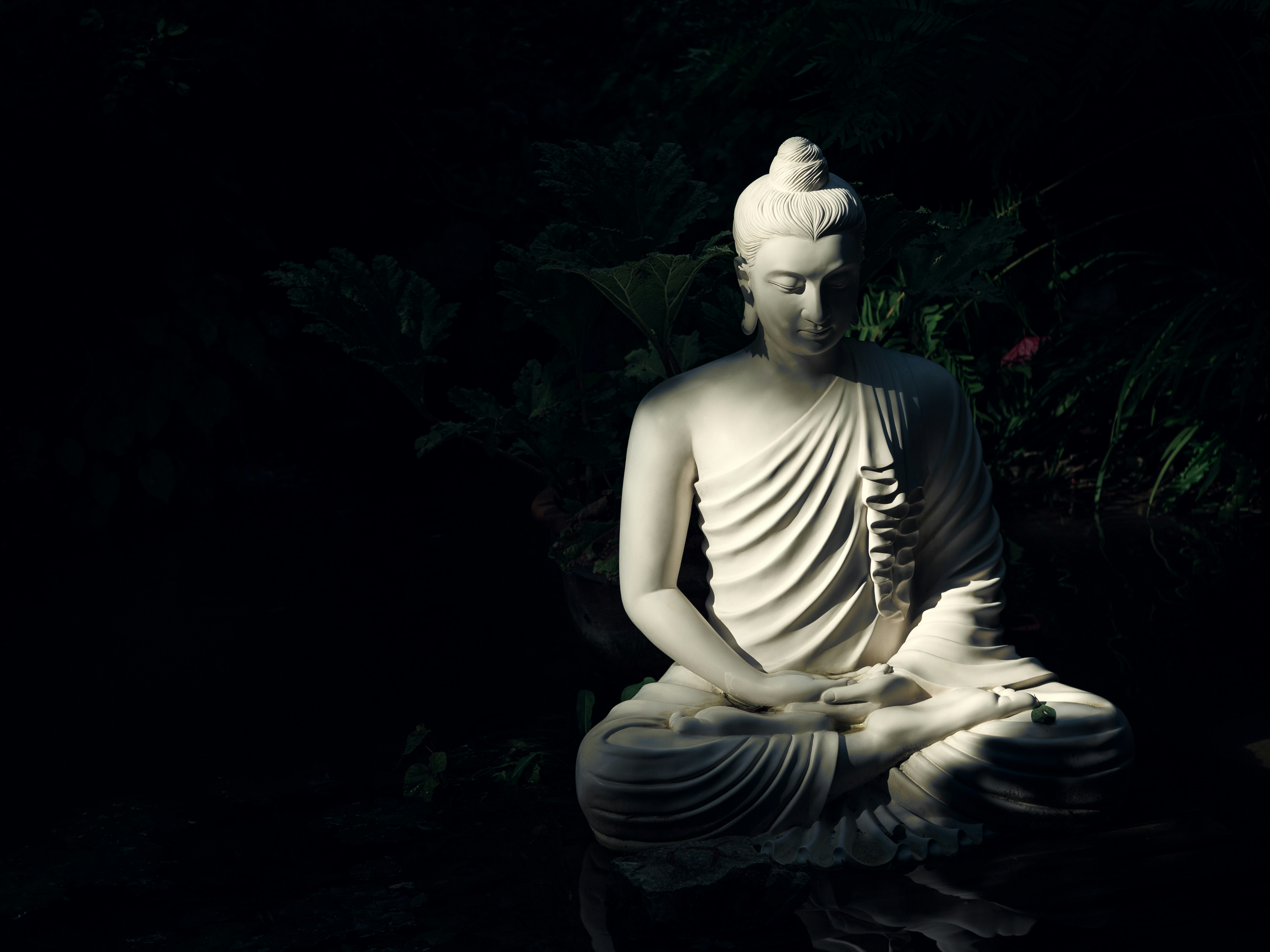
I have a proposition.  Some folks in town have a big “Anti-Woke” (aka, “asleep”) flag on their house, along with various Trump paraphernalia.  Since the Republican Party has largely become reactionary and would, admittedly, still prefer to be asleep, perhaps Democrats should adopt Buddha as a symbol.  I know this would be dangerous in a nation that prides itself as being the city set on a hill, but “buddha” means “awoken one.”  I’m not a Buddhist but I have no problem with it.  The Eightfold Path makes a lot of sense to me.  In any case, a good symbol is something to be cherished.  I think of Gordon Deitrich having a Qur’an in his house, even as a gay man, in V for Vendetta.  Symbols are important.  The anti-woke seem to have forgotten Matthew 24.42 “Watch therefore: for ye know not what hour your Lord doth come.”  The Bible generally advocates wakefulness.

Photo by Mattia Faloretti on Unsplash

Trump-branded Christianity is a strange beast.  Certainly the use of a Buddha symbol would become a cudgel.  Ironically so, for a faith that promotes nonviolence.  The “foreignness” or “not-Christianness” outweighs the positive outlook it entails.  Any religion that advocates violence should reassess its principles.  Buddhism isn’t perfect—no religion is.  The basic ideas of right view, right intention, right speech, right action, right livelihood, right effort, right mindfulness, and right concentration work well enough with Christianity, as Thomas Merton discovered.  For some, however, the Asian outlook (overlooking that Christianity began in Asia) is a deal-breaker.  Strange for a global religion.  Not so unusual for those who prefer to be asleep because Fox News sings them a lullaby.

One of the most stirring Christian hymns is “Wachet auf, ruft uns die Stimme,” based on a Bach cantata.  Perhaps better known as “Sleepers Awake,” the words take their origin from Matthew 25, the parable of the ten virgins.  If I recall correctly, the virgins ready to be woke are those who fare better in this tale.  They’re less concerned with condemning other religions and more interested in being able to wake and trim their lamps swiftly when the time comes.  As I told a friend the other day, I’m an unrepentant idealist.  I do believe that we have it within ourselves to treat all people as having inherent worth and dignity.  The real draw to having Buddha is a symbol would be the introspection.  Instead of telling other people how to live, the principles are applied at home.  Of course, a person has to want to wake up for any of this to work.


Hopeful History

We could all use a little hope.  Given the rate of change in the world it often feels impossible to catch your breath.  And not only that, but the change often feels decidedly negative.  Few would opine, for instance, that we live in the golden age of politics.  And while it has its supporters, AI seems bent on our destruction.  So why not eat, drink, and be merry?  Scott Edwin Williams, whose last book Lightbulb Moments in Human History I reviewed here, has been at it again.  His basic idea is that our “lightbulb moments” give us hope for a better future.  Lightbulb Moments in Human History II: from Peasants to Periwigs, keeps the same general idea afloat, but barely.  As history progresses it’s harder and harder to say that the lot of humanity, tout court, has improved.  True, we live in relative comfort in “the developed world,” but we still have looming Trumps and other nightmares in the wings.

This book tries to cover large swaths of history, and that’s a difficult task.  Williams tries to keep it lighthearted but even he struggles to do so when discussing the rise of big business.  The chapter “Takin’ Care of Business” really showcases the negative traits that humans are too often willing to display when they form companies.  Capitalism may have been a lightbulb moment, but the untold misery it has introduced into the world gives the reader pause.  For example, the East India Company’s business decision to addict as many Chinese to opium as possible, seems quite strange in the context of a “war on drugs” being used as a means of incarcerating “undesirables” because, well, drugs are bad.

There are some signs of hope, and some lighthearted moments in the book.  It does, at times, seem to work against its own thesis.  It makes me glad for living in an age of anesthesia, and of general agreement that people should respect each other’s boundaries (unless you live next to Russia).  Even the lightbulb moments of Mesoamerican/South American history demonstrate the kind of cruelty humans often perpetrate against “outsiders.”  Williams notes here that two more books are in the works (authors know that a series isn’t a bad thing) but it does make me wonder if light and dark don’t balance each other out.  I know from my own family history that some of my ancestors died of things quite curable today, and they lived not all that long ago.  And that I can write these words and publish them instantaneously (whether or not anyone reads them).  And I can buy most necessities of life (apart from toilet paper during a pandemic) fairly easily.  And I do appreciate books that give me hope.  But balance isn’t such a bad thing either.