Eve of Winter

“You must live like a monk!”  These were the words of one of my bosses.  I really couldn’t deny it.  I try to lead a quiet life of reading and writing and I do try to avoid extravagances.  My contemplative life suits me.  Every now and again, however, busy stretches come and distort my perspective.  Thinking back over this autumn on the eve of December, that season has been one of those times.  So much so that I haven’t been able to watch much horror, which is one of my usual seasonal avocations.  I suppose it started when a scammer emptied out our bank account in early September.  That entire month is a blur of fear, depression, and anxiety.  Those emotions have settled down, but the trauma and financial loss have remained.  

Toward the end of the month, my daughter moved.  Thankfully not too far away, but parents often feel the need to help when their only child is not yet well established in a new area.  October grew so busy that we had no time to decorate for Halloween.  We did manage to carve some pumpkins, but the weekends—the only time anything for real life actually gets done—were all eaten up and I entered November with that crowded head space that accompanies a monk lost in the secular world.  Looking back, I finished fewer books than usual and I’ve already mentioned about the movies.  This year I was pretty sure I’d be attending the American Academy of Religion and Society of Biblical Literature annual meeting in November.  I had missed the past two years, not really mourning the loss, but preparing for the trip occupied part of October.  Halloween came and went, taking the first weekend of November with it.

In November we had guests come and the second weekend disappeared.  The next weekend I had to get into high gear for my trip to Boston.  That was when I had the flu shot that wiped out a weekend.  I awoke groggily on Monday realizing that Friday I’d be on Amtrak’s Northeast Regional.  I’d never been to Metropark before and the conference itself ate up the fourth weekend in November.  After that, we turned around and spent Thanksgiving with some longtime friends in New Jersey.  Then we learned a Pennsylvania friend had spent the holiday alone and decided to make a celebration for them yesterday.  So here I find myself on the eve of winter with a fall that somehow disappeared.  Busy spells can be refreshing, even for the monkish.  But tomorrow is back to work as usual as December sets in.


Thanksgiving Reentry

One of the facets of attending AAR/SBL that I’d forgotten is how international attendees marvel at American Thanksgiving.  While it is far too focused on food for my liking, it is nevertheless an oddity among late capitalism’s sops.  I’m slowly becoming acclimated to the 9-2-5 environment I so desperately wanted to avoid in my career, but I’ve noticed that, at least in my case, the three publishers for which I’ve worked have this in common.  What is “this”?  The only four-day weekend in the entire year is Thanksgiving.  Probably that stems back to the fact that it falls on a Thursday and employers probably don’t want bloated, food-comatose employees trying to keep awake on Friday, and failing.  Perhaps there’s also the kinder motivation in realizing that by this point people have been working hard for many months and the US has comparatively few paid holidays.

I’m thankful for being home after the conference.  My trip to Boston underscored how much of a hermit I’ve become.  Afraid of crowds because of Covid, and not having ready cash as a result of being scammed, staying home has become a comfortable idea.  Being with others, I was glad to find, provided stimulation.  There are colleagues, both in publishing and in academia, that I look forward to seeing.  I’ve been slow to admit, I suppose, that my ouster from the latter is indeed permanent.  It’s wonderful to see friends who remember me when.  Looking back, I was very naive, even as a professor.  And I see many who, pardon my saying so, still are.  Unless you’ve been in the business world where a four-day weekend is a big deal, living in the ivory tower shelters you from much.

So I’m still in the “reentry phase” of conference recovery.  Although I was thankful to have been able to travel to Boston by train, getting home on a rainy night with heavy New Jersey traffic was a test of endurance.  In my hermit’s life I drink a lot of water and even rehydrating after shorting myself for five days takes an effort.  I’m thankful for the opportunity to have been in New England again.  And for friends on both ends of the trip who appear to welcome me for what I am.  What I’ve become.  Even though sleeping in a luxury hotel where the thermostat isn’t kept quite as chilly as we can afford to keep it at home, I’m thankful to sleep once again in my own bed knowing that there is a wider world out there and I can still function in it.


Boston Bound

Honestly, I’ve reached a stage where travel seems quite a burden.  I’m a creature of habit and I haven’t had to interrupt that habit for three years now.  I missed the last two years of the AAR/SBL conference due to a variety of issues.  I’m pleased that this meeting is in Boston, a city of which I have fond memories.  Still, getting there from here isn’t as easy as you might think.  It’s simple enough to catch a direct train from New York or Philadelphia, but I don’t live in either.  To be there in time for my meetings later today I have to catch a fairly early train.  That’s not a problem; I’m an early riser.  To get to a station where a car might safely be left for four nights is a bit more difficult.  It involves an hour’s drive no matter where you end up going.  I’ve driven in Philly enough to know that I don’t like driving in Philly.

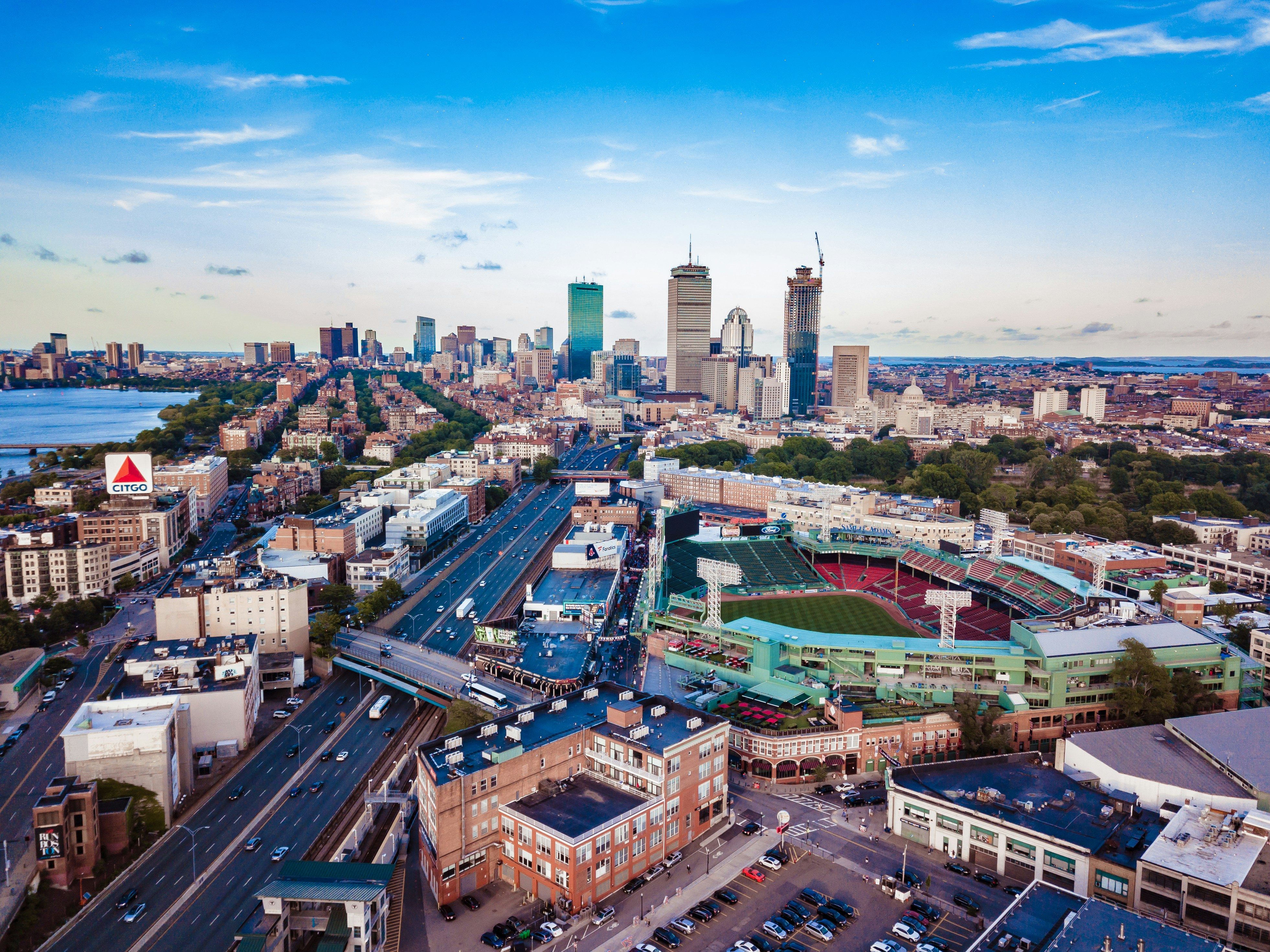
Although Allentown is the third largest city in the state, there is no train service from it to the Amtrak lines that lead up and down the coast.  So I’ll be driving a while.  Once on the train at least I won’t have to worry about traffic.  At least for a few days.  In Boston I wasn’t able to get into one of the close hotels.  In warmer months that wouldn’t be much of an issue, but November in Massachusetts can be chilly.  I remember that from living there.  There are shuttles from my hotel to the conference center, but I like walking Boston.  It brings back memories.  Beantown is one of those places that many people fall in love with and want to stay after they get there.  Although I lingered three years that didn’t seem enough.

Photo by todd kent on Unsplash

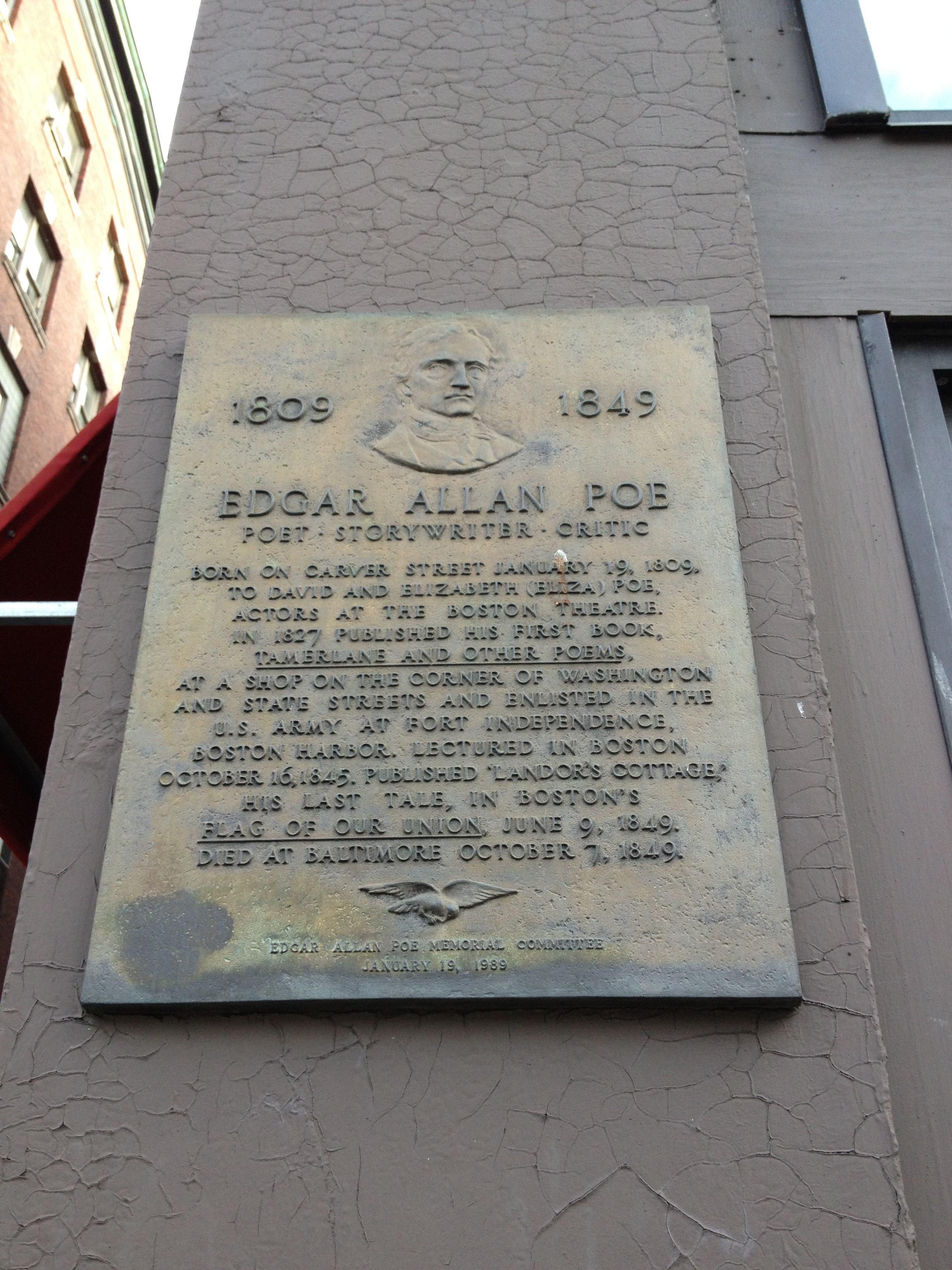
I was a young man when I moved to Boston.  Looking back, I knew so very little.  Almost as little as I know now.  For this conference, I’ve stayed in this same distant hotel in the past.  It’s in a part of town I’d never explored as a student.  It isn’t far, however, from Edgar Allan Poe Square.  I’m hoping the weather allows for some photographic opportunities around there.  The conference itself, in my more familiar Back Bay, is work.  Not much time to relax and see the sights.  Still, I know that once I get there I’ll again feel the old attraction.  It happens every time I go.  Even it means a drive and a train ride into late November.


Migration

Since the American Academy of Religion and Society of Biblical Literature annual meeting (AAR/SBL) is coming up soon, I got to thinking about my experience of the event.  I went to some memorable meetings and missed a few for various reasons.  I’m at the point where I don’t really crave attending anymore, but when I should go, I do.  My first experience was in 1991, in Kansas City.  I flew back from Edinburgh for that one.  It was the last time it met in Kansas City.  It was obvious, however, that this would become an annual pilgrimage for me if I ever landed in academia.  My first couple of years teaching were part-time with a full-time load of courses but Nashotah House had some faculty development funds to help pay my way.  My wife would go and we’d stay with friends whenever possible.  It became an academic addiction.

I skipped the year my daughter was born, but when AAR/SBL met in New Orleans we drove down from Wisconsin.  In 1998 I attended the infamous meeting at Disney in Orlando.  Then in 2000 we met in Opryland in Nashville.  This was an experimental phase, I’m guessing, but themed locations weren’t popular with serious scholars and soon we were back to major cities without theme-park vibes.  Having lost my toehold in academia, I missed the 2005 meeting in Philadelphia, but was back for the Washington meeting, representing Gorgias Press.  The three-year separation that started in 2008 I missed, except for the first lonely year in Boston.  I was back for San Francisco in 2011, working for Routledge.  Two years later I was in Baltimore, staying off site, with my current employer. I drove down for that one.

In 2018 I missed the Denver meeting because of a snowstorm panic in Newark, after sleeping the night on the airport floor.  Then the pandemic kept me away for a couple of years, but one of those was virtual anyway.  The last one I attended was 2022 in Denver.  This year I’m scheduled to be in Boston.  Even when my career has slipped off the academic rails, this meeting has been a rather constant touch-stone for November.  Now that I no longer give papers—the last one was on Sleepy Hollow in Atlanta, I believe, ten years ago—the spark has gone out of it for me.  I am glad to be heading back to Boston, however, on somebody else’s dime.  I’ve got some Poe sights to see in my off hours there.  And some 33 years of history to recollect.


Naming the Dead

It probably just goes with the territory, but I’ve noticed something.  A big part of my job is searching for people on the internet.  (Academics, of course.)  Mostly these are folks I don’t know, some of them with very common names.  This presents special challenges, of course.  Every once in a while, though, you search for a name and pretty much every entry you find is an obituary.  I’m not talking about someone prominent who has died, but rather several people with the same name who’ve passed away.  The other day, after four or five pages of Google I found nobody alive.  That particular name wasn’t an “old fashioned” name either.  It could be (perhaps is) still a very common name.  It does get me pondering whether some names are “safer” than others.  Is anyone by this name still alive?

We place a lot of stock in our names.  Being the way that others get our attention, and identify us, they do have importance.  And many names are common—parents aren’t always the creative sort.  And the internet is a source of frustration when trying to narrow down a common name and attach it to someone you don’t already know.  Growing up, kids want to be like everyone else—no standing out in the herd.  “Wiggins,” where I grew up, was an unusual name.  We got teased for it quite a lot.  When my mother remarried, my brothers and I went by our stepfather’s common last name for a few years.  In seminary I decided to revert to my birth name—Wiggins.  I was wanting to do two things: reclaim my heritage, and stand out a little.  Even so, a web-search for Steve Wiggins will bring up at least four or five individuals not me, including an obituary or two.

Before the web, when trying to find a scholar you had to use letters.  (Or maybe the phone, but cold calls weren’t really professional). You’d send them a letter.  In a way, the web is a great equalizer.  But it favors those with names that are somewhat less common.  Some people change their names—performers and some authors do this to make their persona more to their liking—but this is a fraught activity.  I know from switching back to my birth name that the process is complex and if you try it after you’ve started to publish things it adds whole new layers of complications.  So I spend quite a bit of time searching for people who aren’t easily found.  Not infrequently I seem to be naming the dead.


House Spiders

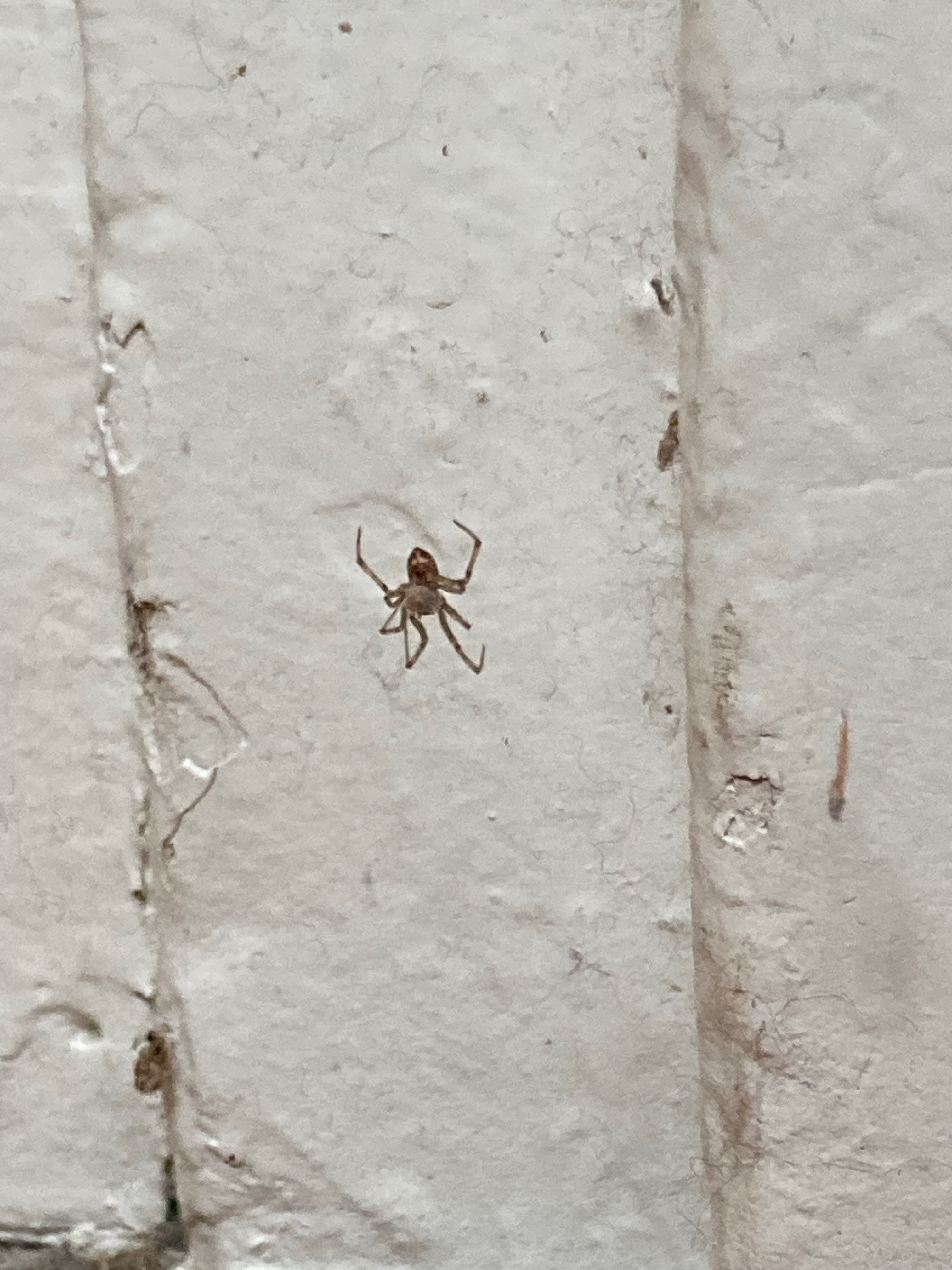
I give them names, the spiders who choose to live in our house.  That’s how I named Henry, shown in the photo.  I grew up with an almost debilitating arachnophobia, and as with most of my fears, worked hard to overcome it.  So when a spider moves in, I let them stay.  Unless they’re too big.  Here’s where it becomes interesting.  Like quantum mechanics, there seems to be an arbitrary point when something is “too big” for the rules to apply.  What is that tipping point?  The other day I bumbled into the kitchen early to get some water, having given up coffee years ago.  There was a spider that I could see from across the room.  It was very large.  It’s a sign of how much I’ve overcome my phobia that I was able to walk around the counter and to the sink to fill up.  I kept a wary eye across the room, however, in case Octavian made any funny moves.

The spider held very still, as arachnids often do when they know they’ve been spotted.  I sometimes wonder if they know how scary they are to other creatures.  I searched around for a jar large enough to catch and release, without pinching any legs, and crept over.  Turns out Octavian was faster than I am first thing in the morning.  And, honestly, I was still recovering from a vaccine that had knocked me out the day before.  At least I can blame that.  I wonder if that’s one of the reasons fear of spiders is so widespread—they’re fast.  Or is it something inherently menacing about those eight legs?  I’ve never experienced any kind of octopus phobia, so I can’t think that it’s merely the number.  The jointed legs?  That seem disproportionate to the body size?  Whatever it is, days later I’m still cautious in the kitchen.

I have a great appreciation for spiders.  I don’t like to be startled by them, but otherwise, if they keep their distance, I’m fine with them.  I do wonder what they think, living in a world of giants.  Some insects, in the same size range as arachnids, seem ignorant of the human threat.  It’s not unusual for an ant to find its way inside and walk right up your foot and leg, oblivious to the danger.  They seem to have no fear.  Spiders, however, do.  They’re very good at running and hiding.  I like to think they know our house is generally a safe space, until the vacuum cleaner comes out.  When I’m behind it, I always try to give Henry and his friends a chance to get out of the way.


Decide

Decisions we make when we’re young influence our entire lives.  It’s not that you can’t change course—I’ve seen it happen and it can be a thing of true beauty—but the fact is our young lives become our old lives, if we survive.  I’m now in my sixties.  I reflect a lot about my youth and the fact that I grew up in an uneducated, blue-collar family.  I had no idea what college was, and had not a minister convinced me that I might have the right stuff, I would probably never have gone.  It was foolish in a way.  My family contributed nothing financially—they couldn’t afford to.  I started with optimistic scholarships that eventually became less sanguine and I had to borrow more and more.  Once I’d begun on that path, however, turning back looked to be nothing but disastrous.

The internet allows us glimpses, only glimpses, into the lives of those we knew in our younger years.  Many of my surviving high school friends (and that number decreases every year now) have followed paths to their current situations.  I didn’t know them well, perhaps, but they too seemed set to follow in the courses of their lives.  I really hope they’re happy.  I hate to see anyone sad.  Still, there’s a melancholy captured well by a rabbi, who it is I can’t remember, who once said “You can either be wise or be happy.”  There’s an almost kabbalistic truth nestled in that sentiment, it seems.  Your rudder is small and the ocean is very, very big.  As a penurious boy living in an economically depressed refinery town, I never dreamed I’d have the privilege of living in Edinburgh for three years, with a wonderful wife, no less.  And yet, and yet.

The course of my life is not over yet (I hope).  Every day I make hundreds of decisions but none of them seem as momentous as the ones I made before I had seen much beyond rural western Pennsylvania.  I know this is true of others as well, reacting to the pain and angst of the moment, they turn to whatever gives them comfort.  For me it was books.  And church.  The course of a life.  And in a way that will only make sense of those who knew me in high school (none, or very few of whom ever read this blog), when I do my daily exercises, they always include twenty-two push-ups.  A number that, mystically, corresponds to the number of letters in the Hebrew alphabet.  Way stations along a curriculum vita.


Peace

Mother’s Day should be a time for peace.  In these days when misogyny is in style, it’s an especially important holiday.  The one holiday to explicitly honor women, it’s always been an occasion for reflection for me.  We have 364 days of warring and hatred, and one dedicated to the givers of unconditional love.  I can imagine a different world.  One in which women don’t have to become alt-right to gain positions of authority.  Where compassion and humane treatment would be world priorities.  I can imagine.  Although fathers are necessary too, we have no shortage of men pushing forward their personal agendas.  None of them would be where they are without mothers.  And women are the ones who give us care.  I can imagine a world where Mother’s Day wouldn’t have to feel so politicized, almost polemical.

With all eyes on Pope Leo, I can’t help but think how many treat Mother’s Day like an indulgence.  You know you want to get back to your vices, so why not pay for them in advance?  Celebrate mothers today so we can get back to business as usual tomorrow.  I don’t believe that we’ve lost the ability for transformation.  We can make the world a better place.  Think what it would be like if, before undertaking some cruel action, a person stopped to imagine their mother watching them do it.  Would not the world start to improve?  It is a world where we seem to prefer guns to roses, but it’s also a world with an unwritten future.  Pay attention to your mother.  Maybe things will start to get better.

I believe in the transformative potential of holidays.  We have to take their lessons seriously.  I’m sure I’m not the only working stiff who lives life anticipating the next holiday when things might change for the better.  We have to remember, however, what the holidays teach us.  Not treat them as simply facile days of obligation.  Think of Mom and then get back to the grind.  It doesn’t need to be a grind.  We can learn to cooperate and get along, just like Mom told us to.  Instead of isolating such thoughts to a single day, we could repeat them like a mantra.  I don’t know about you, but looking at the headlines, I could do with a bit of peace and love.  And I still believe that things can, and likely will get better.  And I give the credit to our mothers.


Mired

For someone who grew up with an Oscar Mayer jingle forever lodged his his brain, it took decades before I became curious about the surname.  I had always supposed it was a Germanic word for “mayor” but then, if so, mayors had to be very busy in the boudoir to make so many.  The reason I grew curious was that there are so many ways to spell it.  I’ve had people complain to me about having to spell their name every time, but I’ve run across “Meyer” spelled “Maier,” “Meyers,” “Mayer,” “Myers,” and many more.  Yes, I’m afraid you have to spell it.  (My wife’s surname is Stephenson and she has to spell it every single time.  For that matter, so do I.)  Why so many Mayers?  A little (very little) research turned up that it comes from old German for “manager”—thus possibly related to “mayor” and maybe even “major”—but that over time it came to mean “tenant,” basically a freeman farmer.  That’s why so many.

Photo by Erik 🖐 on Unsplash

Growing up in a small town, the very common surnames I encountered were “Smith,” “Jones,” and “Miller.”  My mother even married one of the Miller clan eventually.  “Smith” and its variants, derive from craftsmen of various sorts, such as “blacksmith.”  “Miller” is someone who works a mill.  The odd one out here is “Jones,” which derives from a prolific “John” somewhere way back when.  I’ve written before about how common (and widely variable) the name John is.  All these names share a “non-noble” background, it seems.  People of occupations that keep us going.  It made sense that “Meyer” was a name for farmers.

I grew up with a different, but not that uncommon (as the internet has taught me), surname.  Interestingly, all of my grandparental surnames were unusual, although one is compounded with “Schmidt,” or “Smith.”  I find names fascinating.  With so many of our species running around, unique forenames weren’t in large enough supply for us to stop there.  Which John are you?  John Johnson?  Okay, now I can place you.  I tend to struggle with transposed letters from time to time, making the variants of “Meyer” particularly difficult for me.  And that “y” acts like a vowel and sometimes becomes an “i.”  Or a “j” in German.  Cheeky.  We identify closely with our names.  They say something about us.  Thankfully we have other ways of distinguishing ourselves, otherwise we’d all just be lost in the crowd.  


Four-leaf Clover

It was recently my late mother’s birthday.  I didn’t post about it on that that day since it might become a security question some day.  In any case, it was a somber day for me.  It’d been raining on and off for several days straight and I was wanting a picture of her for my bulletin board.  I remembered that I had inherited one of her photo albums.  This was the old kind with black paper onto which you had to lick and stick corners to hold the pictures.  Many of the photos had fallen out even back when she asked me to hold onto it, but there were some still there of her as a young woman.  As I was looking through them, something inside the front cover caught my attention—the crumbly brown remains of three four-leaf clovers that she’d glued there.

Since this isn’t likely to be a security question, I can say that her home life wasn’t ideal.  The page with the young photos of her were obviously from a day that she and my father were taking pictures of each other as young lovers.  They were outside a house on a summery-looking day.  Smiling and looking for a better future.  Four-leaf clovers.  My father was an alcoholic, and my mother knew that, but hoped that she might change him.  I don’t know the dates of the photos so I’m not sure if they yet knew they’d be parents.  One of the oddities of life is that about the time the questions occur to you, your parents might already be gone.  I wanted to ask about that happy day.  Those clover leaves.  The sunshine.

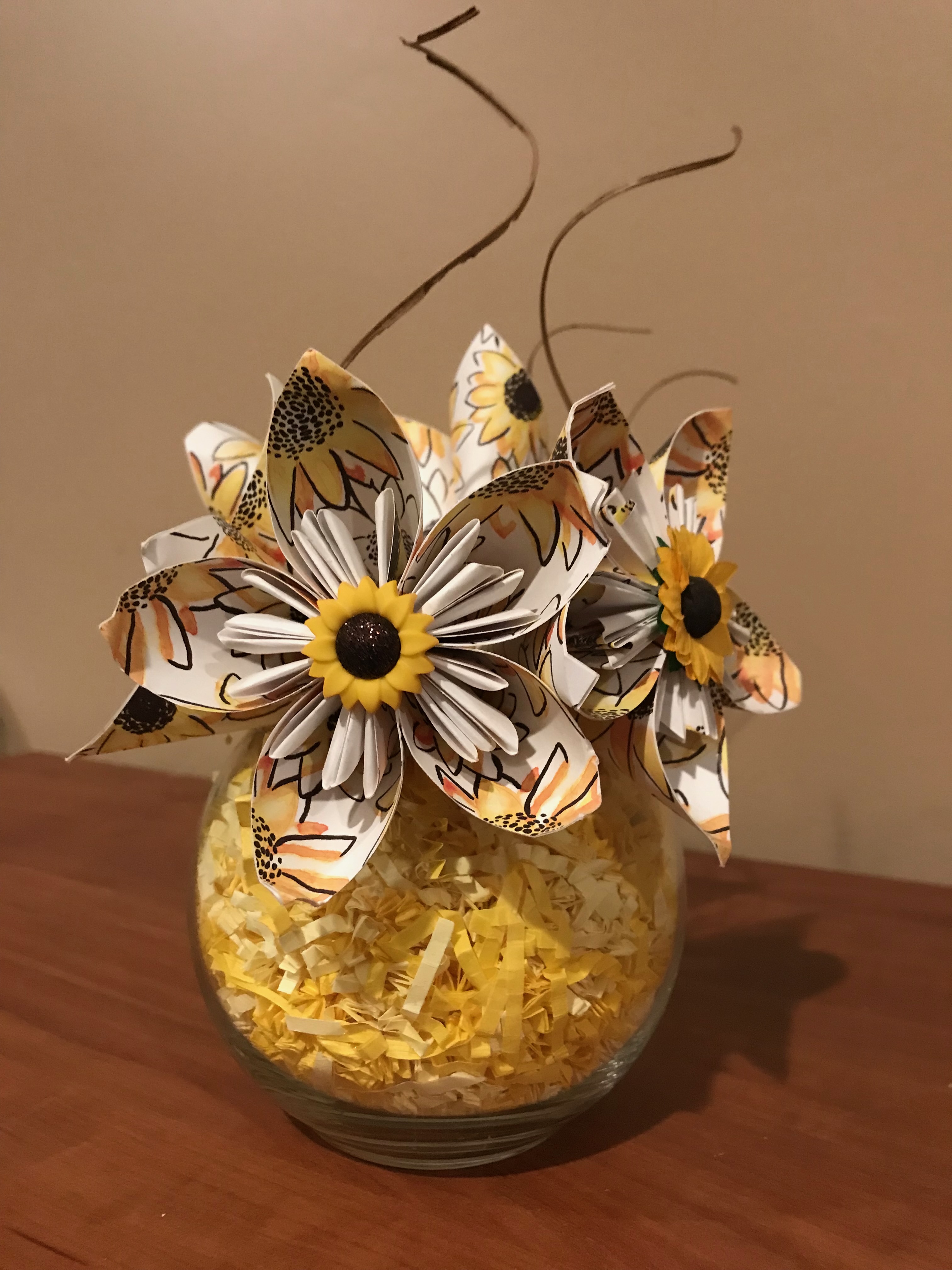
Rain and gray clouds persisted.  That particular day I had little human interaction, and I felt her presence with me.  I’m not a minister, as she always hoped I would be.  I could never find a job closer to home, as she wished time and again.  I didn’t even get to see her before she died.  Instead I had a photo album on my lap and rain falling.  And work for the day looming.  Her birthday is an engrained date in my mind.  Those last years we tried to find appropriate gifts for a woman who always said, “I don’t need anything.”  A few of those gifts are scattered around our house now.  One that gives me hope is a vase with flowers made from colorful paper that we purchased at a craft show for her.  I look at it and think of crumbled four-leaf clovers.


Learning Bunnies

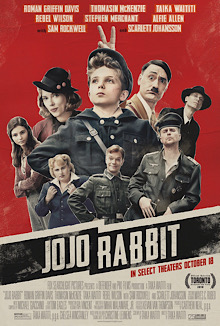
Although it was released during the first Trump administration, Jojo Rabbit was written before he was sharp bit of dust in the GOP’s eye.  Still, in the second debacle, it seemed like a good time to watch it.  Its message is appropriate for any time, but especially now.  Jojo is a ten-year-old boy who’s an enthusiastic member of the Hitler Youth.  So enthusiastic that he has Hitler as his imaginary friend.  He buys the party line without even thinking (he who has ears to hear, let him hear).  Jews are evil, according to the rhetoric.  Monsters even.  Jojo’s mother tries to help her son, missing his father, understand that love is the better way.  Then Jojo discovers something.  A girl his deceased sister’s age has been living in the walls of his sister’s room.  He quickly deduces that she is a Jew.  Were it not for her threats to implicate him and his mother, he would turn her in.

An unusual coming of age story, we see Jojo do something rare—he matures.  Getting to know Elsa he can’t reconcile what he sees with what he was taught.  She’s not evil.  She has no horns.  She’s not rich.  She fell in love with a guy and wants the same thing anyone wants.  The conflict faces Jojo every day as he decides he must learn about Jews to report this intelligence to the authorities.  The authorities, however, know Germany is losing the war.  It’s only a matter of days.  When Hitler dies by suicide, Jojo fully realizes that he has been simply following along instead of following the evidence.  His mother was hanged for not being loyal to the party and his father, he learns, was also helping the Jews.  In a moment of singular hope, Jojo grows up.

Movies can teach lessons.  Some are widely enough viewed to make a major impact on society.  Can any of us imagine a world without Darth Vader and Luke Skywalker?  In this era when sensible people seem to have forgotten that fascism is evil in its nature, films like Jojo Rabbit are important.  Thinking is not a crime.  Learning is not a crime.  Even if they’re being touted that way by the wealthy in order to protect their privilege.  We watched the movie for entertainment on a Friday night, but I received an education instead.  I wonder just when the message of love fell out of Christianity.  But then, I think it becomes clear when you think about particular movies and how we’ve come to be where we are.


Eves and Holidays

If you stop in to this blog for reading about horror movies, don’t worry, there’ll be plenty of that to come.  One thing everyone who knows me knows is that I believe in holidays.  Capitalism has been killing us for centuries, but since I began having to do a 9-2-5 job, I feel the grim reaper’s approach more steadily.  Day after day after day being eaten up by work and leaving so little time to be who I really am.  I invest a lot in holidays because they break, if only temporarily, capitalism’s death-grip around our throats.  And today is Christmas Eve.  Not technically a holiday, I’ve worked for employers who, Scrooge-like, don’t consider this a paid day off.  You want to mentally prepare for Christmas (the only paid holiday in the season), you cash in a vacation day.

Image credit: Sol Eytinge, Jr., The Ghost of Christmas Past. Public domain via Wikimedia Commons

As influential as Charles Dickens’ A Christmas Carol is, late capitalism simply doesn’t get  the message.  Studies show, consistently, that work in this era is more efficient when workers have more time off.  Now, I’m not so naive as to realize that some professions require work on holidays.  After all, I trained for ministry for many years, and Christmas is always a work day in that profession (even if nobody comes to church).  Emergency workers of all sorts have to be at least on call for holidays.  Police can’t assume citizens will behave just because it’s a holiday.  But such professions, I profoundly hope, have other payoffs.  I entered a profession (professoring) partially because of the division of time.  (And it is one of the few things I’m very good at.)  People should have fallow periods.  Why is Christmas Eve still a work day?

Scrooge is clearly still in charge.  I, for one, will not shed a tear when capitalism dies.  I’ll predecease it, I’m pretty sure, but even so, I welcome a world where people’s needs come before the plutocrats’ profits.  A friend of mine always insists on saying that we don’t live in a democracy but a plutocracy.  Seeing the election results last month only confirms that he’s right.  As I recently wrote here on this blog, the howling is most fierce before the new dawn.  And lasting change must take place slowly.  Sudden shifts only lead to more sudden shifts.  Stable growth is slow.  I’m sure influential people don’t read this blog, the humble musings of an unfluencer, but if they do, there’s a simple plea here.  Consider the holidays.  Read Dickens, and have the courage of your convictions afterwards.  And yes, a blog post (unpaid) will appear on Christmas.


Being Somebody

I am deeply honored, and a little puzzled, to have been recently selected to appear in Marquis Who’s Who.  It came out of nowhere. (Actually, LinkedIn.) As far as I can determine, inductees are chosen for having an impact.  In my case that means having stuck with it for so long—about 15 years of being a professor, 15 years of being an editor, and 15 years as a blogger (with some overlaps).  I’ve not seen the bio that will appear, but I suspect it will say little of my fiction writing, but it may mention the nonfiction books I’ve had published.  From my perspective—and I told the interviewer this—my life has been a long series of struggles and not giving up.  When you’re raised in difficult circumstances the temptation to give up is all around.  But I would be disingenuous if I didn’t point out that my siblings also pushed through as well, and I’m proud of who they’ve become. Three of them are over sixty.  Maybe Who’s Who should be a family thing.

All of us depend on those around us.  Although I tend to work alone—my blog, my books, most of my YouTube videos, these things I do largely by myself—I have the support of my family, both birth and marriage branches.  I have friends, the vast majority of them remote and seldom seen.  They support me in quieter ways and if you’re one of them, you know who you are.  Nashotah House, it is true, discarded me like a used diaper.  They also, however, gave me my professional start.  I was also tossed aside by the University of Wisconsin Oshkosh, Gorgias Press, Rutgers University, and Routledge, all in their own ways and for their own reasons.  I would not be who I am, however, were it not for all of them.

I don’t mean for this post to sound like I’ve just received an Emmy or anything, but the situation has made me quite reflective. And humbled.  I work hard, and I have worked and struggled for many decades now.  I’ve received very few awards along the way, so this is like a bolt from the blue.  I doubt it will make any difference in my day-to-day existence.  I still work 9-2-5, struggle to meet unexpected expenses, and write.  Always write.  But being chosen is a rare feeling for me.  I suspect that’s true for most people who are, like me, just trying to get by with what they’ve got. We get by.  We face four rough years ahead, but we’ll get through them, because we’re all in this together.  Everybody’s somebody who deserves the notice of others.


Embracing October

I try not to dwell on family here on this blog, but mothers are special.  Today marks the one year anniversary of my mother’s passing.  October brings this to mind naturally.  Her mother, who lived an unhappy life, was born in October.  Although she (grandma) only lived to 75, my mother made it to 88.  That’s a good long life.  The pandemic, and actual mileage and financial constraints, kept me from visiting Mom as often as I would’ve liked.  We talked on the phone nearly every other day, and we had done so for years.  One topic that had come up in conversation the last three or so years of her life was that Mom had been seeing her mother.  Or feeling her presence.  This wasn’t a ghost scenario, at least according to Mom.  It was simply seeing her mother there.

Although my grandmother lived with us from the time her husband (my grandfather) had died, she and my mother didn’t really get along.  Family dynamics fascinate me, and since I was two when grandpa died, pretty much from my earliest memories grandma was living with us.  She didn’t approve of my father, and wasn’t shy about saying so.  It probably didn’t help the relationship with my mother much, especially when we had to move to a new place and nobody told Dad we were going.  He wasn’t invited along.  Grandma wasn’t in good health.  I still remember when the dining room in our small apartment was converted to her sick room as she was slowly dying and couldn’t manage the stairs anymore.  Until her final decline, grandma could be quite querulous, but Mom took care of her, because that’s what family does.  Grandma died shortly after Mom remarried.

I never said so to Mom, but I think she’d come to this conclusion herself, that seeing her mother was a sign of approaching death.  Mom often felt that her mother was wanting to reconcile with her.  I didn’t write these things down at the time, because life was, and is, too busy.  Thinking back on Mom, I wish I had.  She knew of my interest in the inexplicable aspects of life.  In fact, she sometimes got frustrated by my persistent questions about such things as a child.  I remember one day she snapped at me for following her around all day because we’d been talking about ghosts.  (That apartment was haunted, I’m almost certain.)  Mom wasn’t a particularly mystical woman.  Someone in the family must’ve been, because I inherited those genes.  She was, however, aware of mortality and all it entails.  I’m sure she knows her family is thinking of her today.


Ordinary Heroes

Mothers sacrifice to give us life.  Sacrifice lies at the heart of much of religion, so it may be that women resonate with this theme naturally.  Without mothers none of us would be here to read this right now.  Mothers are mortals, however, like most heroes.  Naturally I’m thinking of my mother today and how much like a hero she was.  Like many heroes, she was prepared to die.  Her love, however, lives on.  It’s difficult, if not impossible, to count all the ways a mother influences our lives.  Not all are gifted at it.  It’s a difficult job, and one for which there’s no “economic” benefit—you don’t get paid for supplying the world with future contributors to this human experiment.  So we pause to think of how we might show our respect today.

I try not to involve family or friends on this blog—I don’t like giving the internet everything—but the other mother in my daily life, my wife, has said it’s okay.  This week we received the news that her cancer is in remission.  This joyous news came just in time for Mother’s Day and gives us yet another reason to celebrate.  Mother’s Day keeps on taking new shades of meaning as life unfolds.  Nature both takes and gives.  Sometimes in rapid succession.  We need to appreciate all that mothers, women, contribute to our lives and society.  I’ve never been able to figure out why this is such a difficult thing to figure out.  Some men seem to think it’s not as important as things like making money and making war.  We couldn’t do anything, however, without mothers to put us here.

My thoughts are just a touch scattered today, being pulled this way and that.  Since my mother’s death last year we’ve passed Christmas, Easter, her birthday, and now Mother’s Day.  There have been plenty of occasions to stop and remember.  I know that my choices in life have been profoundly influenced by her guidance.  Her wisdom.  She always said that she wasn’t smart, but intelligence doesn’t come only from finishing high school.  Life is a teacher for all who are capable of learning.  Having come through a dysfunctional home life herself, and two difficult marriages, she managed to show how to exist in the world with grace.  And she taught the value of sacrifice through her own example.  We honor our mothers by treating women more equitably everywhere.  And guys, there are lessons to be learned here.