Half-Way Holy

I’ve been reading about Ruth lately. Ruth doesn’t have a last name. She’s a character in the Bible. The book named after her is one of the shortest in the longest, Hebrew section of the Good Book. It’s a fairly gentle story, although it has a body count. Ruth, a Moabite, marries the son of an expatriate Israelite. This was in the days before the West Bank, but there was still some distrust there. Widowed Ruth moved to Israel with her equally widowed mother-in-law, and supported this non-traditional family by gleaning. Unlike modern civilization, shop-lifting (or field-lifting) by the poor was not a misdemeanor. In fact, the Bible insisted that it be allowed. It turns out that the field she’s been gleaning from belongs to a relative who eventually marries her via a tradition known as levirate law. Again, this is something current family values oppose, although it is commanded by the Almighty. Levirate law stated that if a man died childless, his younger brother had to take his wife until they had a child in the name of the dead brother. Creepy, but practical. A widow, in those days, had to have a child to support her.
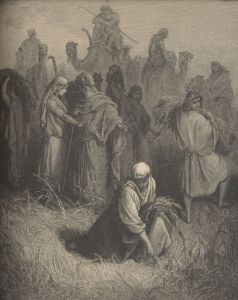
Dore Ruth

I can’t recall when I learned this was called levirate law. I started reading the Bible before I was a teen, so I knew the story, although I didn’t understand the finer details. It was probably in the heading of some Bible translation that used the word “levirate” that I first encountered the term. I assumed it had something to do with the Levites. I mean, the words share the same first four letters, and Levites were all over the place in the Bible, even if they cross to the other side of the road. So it was that I went for decades with the idea that marrying your brother’s wife, at least temporarily, was because of the Levites. Nothing in the Bible said that Levites did this, and other than the jeans, I didn’t know any other Levi words.

Recently I learned that this is a false etymology. Levirate comes from a Latin root for “brother-in-law” and not from a Semitic root meaning “half-priest.” It may sound strange, but this was a genuine shock to me. I’d never told students that the word came from Levi, but I assumed that anyone could figure it out. After all, things that sound so very similar must belong together, right? Well, I admit to having been wrong here. The story of Ruth, however, is one of the true gems of the canon. Men play a minor role, and it is a woman who shows the way. It is a tale for our time. Family values, according to the Bible, aren’t always what they seem.

Disco Duck

From the Roman Empire, Holy or otherwise, to the British Empire upon which the sun once never set, human endeavors are inevitably temporary. We like to think we’re making lasting contributions. Not so long ago Phil Robertson could make claims on vast amounts of media attention for his homiletical, gun-toting brand of family values. Despite not being a television watcher, even I was drawn into the drama as Happy! Happy! Happy! became a bestseller. Perhaps because my pursuit of religion has never earned me three such exclamation points, I read the book to find the secret of success. It is a combination of unquestioning belief and a willingness to blow the heads off of ducks in flight. Not that I would know about such things. The Dynasty made its way into Time magazine and other media outlets as the most interesting thing reality television, which is anything but, could throw at us.

Then Phil made a statement that set many viewers off. Mistaking intolerance for true religion—rather a constant in the algebra of faith—Robertson expressed his views on homosexuality and the ratings began to slip. Last year as I walked into a department store, I found Duck Dynasty bobble-head dolls and even fake Dynasty beards for those with no gumption to grow their own. Golf balls and beer glasses and all sorts of merchandise. Yes, you could partake of the good life without even cocking or pumping your shotgun. Other members of the family wrote books. (I have friends who produce quality literature who can’t find publishers.) We love the self-made genius of a simple guy and his make-believe world. Happy. Happy. Happy.

IMG_1503

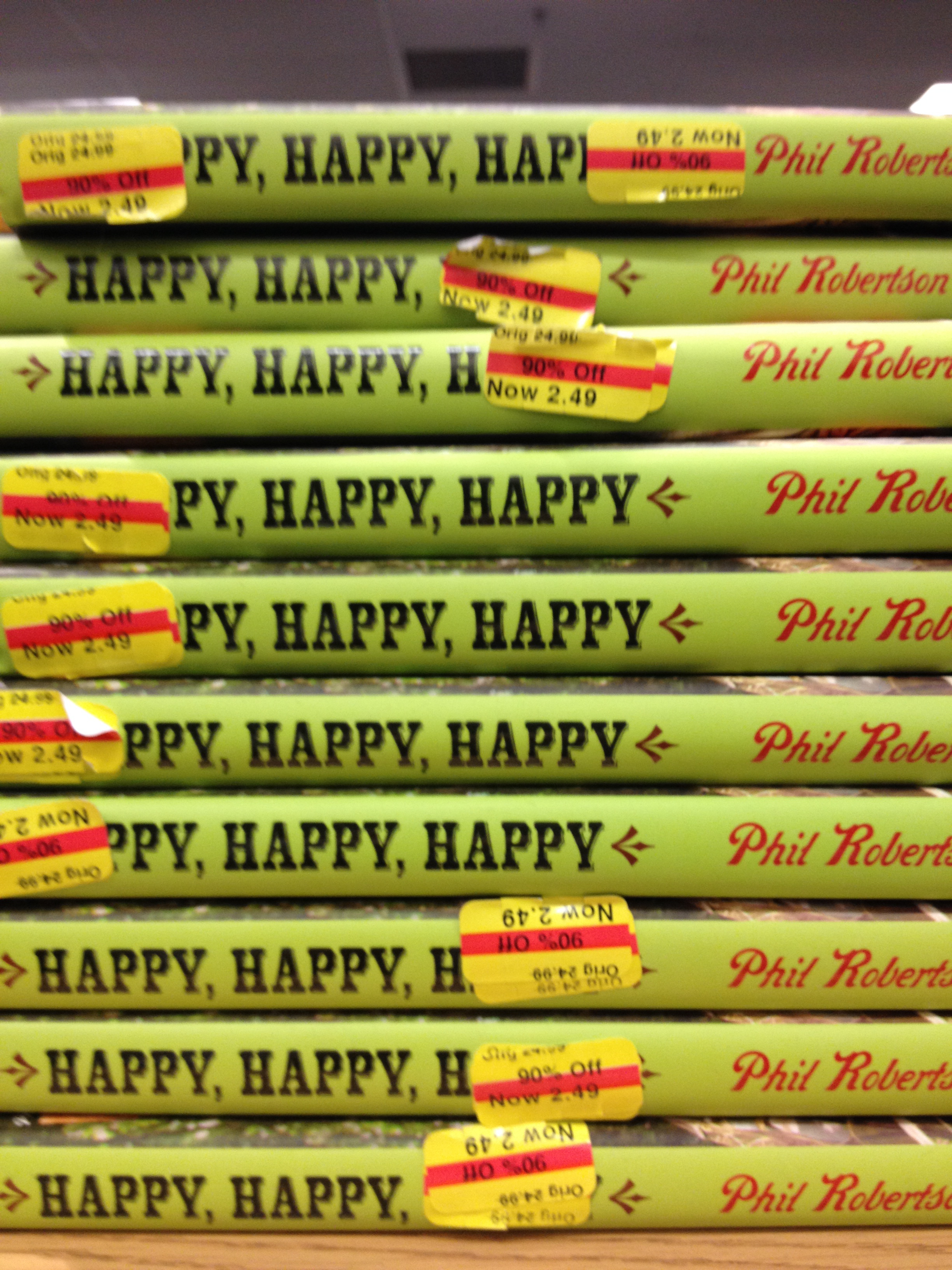
It has been some time since I’ve seen Duck Dynasty mentioned in the media. I wandered into the same department store this year to find stacks of Dynasty merchandise drastically reduced. You could buy Phil Robertson’s memoirs for even less than Amazon prices. In bulk, if you desired. My historically inclined mind turned to the great empires of antiquity. Did Alexander, I wonder, really know what he wanted? What about when you finally reach the ocean? What is off on the other side? Once you’re out of sight of land, you’ve lost your control back home. Next thing you know, Diadochi have fractured everything. The gods of empire, it seems, don’t have it all together after all. Happy? Happy? Happy?


Here’s the Church, Here’s the Steeple

Americans seldom seem to fuss much about religion unless they perceive that it is under threat. We’re real believers in religious liberty that way. The threat angle is a vector worth measuring every once in a while. What gets our collective goat? A story on CNN last week about the National Cathedral caught some attention. Those who think about freedom of religion, liberty of conscience, and all that, might find the implications of a national cathedral itself a tad troubling. Of course, it really isn’t a cathedral for all of the United States, but it is used for many displays of civil religion including several presidential funerals and inaugural prayer services. The cathedral, historically and ironically, is of the Episcopalian brand. Episcopalians boast perhaps the smallest number of mainline protestants in the country, and since they are the remains of the “established church” of England in the States, it is not just a little odd that such an edifice should be associated, however informally, with government in its former colony. The reason that CNN ran the story related to a perceived threat to American religion: same-sex marriages.

Now that same-sex marriages have been approved in three states, some couples desire the symbolism of a wedding in the National Cathedral. It is a victory of social justice that highlights one of the deepest and most persistent of religious concerns—human sexuality. Although many religious denominations have made their peace with evolution by natural selection, few have really considered the implications of reproduction and its discontents. Formally ever since the Enlightenment (and certainly informally for all of human history) sexuality has been a subject of scientific scrutiny. And not just for humans either. As naturalists observe the world of our fellow creatures, we find all kinds of sexual behaviors labelled “unnatural” in humans are quite normal in nature. The reason is the religion that is invested in reproduction. People, many religions teach, are somehow different. Besides, in the days before scientific interest in animal reproduction, few bothered to consider what other animals did, far from human eyes.

For those willing to admit that nature can teach us something about ourselves, same-sex couplings are not limited to humans. They are a part of nature. As Martha McCaughey suggested in The Caveman Mystique, reproduction is only one of a variety of reasons that humans and other animals mate. For us, however, it is a strangely sacral act. All religions have something to say about sexuality, and many express strong feelings about what marriage means. So the Cathedral Church of St. Peter and St. Paul (two men, one might note) is in the news because of what marriages symbolize for many. Marriage is about commitment, not just sex. In a nation where commitment is only fair-to-middling, shouldn’t we applaud the use of the National Cathedral to reinforce such family values? Unfortunately, for many gender differentiation trumps love in what is understood as a legitimate religious outlook.

Carol M. Highsmith's National Cathedral

Carol M. Highsmith’s National Cathedral


Ultimate God

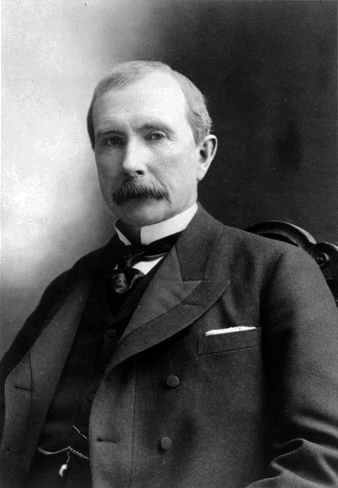
In a recent op-ed piece in the New Jersey Star-Ledger, Ben Krull published a satirical piece entitled “Strategizing God’s election campaign.” While some, no doubt, took offense at the piece, it is less an indictment of God (Krull is a lawyer) than it is a broadside against those who use God to get elected. As portrayed in the Bible, God is not always a likeable character. As Krull points out in so many words, God is a guy with “issues.” Would he ever be elected on a family values platform? What is happening here is that God is being recast as those who most vociferously claim him an ally want him (always him) to be. Using Yahweh as a springboard, they vault over the compassionate Jesus and land firmly at the disapproving God of Jonathan Edwards, who, along with the God of John Rockefeller, wants them to be rich. It’s not as much an election as it is a catalogue where you can order just the deity you want. The God they claim America follows is a god of their own making.

Paul Tillich, a theologian, once famously declared that God is a person’s ultimate concern. While other theologians instantly and continuously disputed this, the idea still has some currency. The distorted versions of Christianity that we constantly see in the political and sports scenes today is a god that adores the free market and loves football, especially when the Broncos are playing. Somehow, incredibly, he couldn’t get tickets for the Super Bowl. If you listen closely you’ll see this god resembles nobody so much as Mitt Romney, Rick Santorum, Newt Gingrich, Herman Cain, Sarah Palin, Michele Bachmann—wait a minute… has god packed up and gone home? Since undisputed God sightings are as rare as undisputed UFO sightings (maybe even rarer) we are free to fill in the enormous lacunae with our ultimate concerns. Ourselves.

At least in the world of polytheism you had a choice of gods and a ready source on which to blame unpleasantness. If Baal’s not answering your prayer, maybe Anat is standing in the way. Ancient folk were not conscious of the fact that they were making gods in their own image, after their own ultimate concerns. But modern Christians, trapped with the God of the Bible, feel that they can at least give the big guy a makeover. This is God on-demand. The beauty of this deity is that he is a poseable action figure who is a picture-perfect image of one’s personal ultimate concerns. A God so malleable, so fluid, and so idiosyncratic should have no trouble getting elected. To find the God of popular politics, just look in the mirror.

Who does your God look like?


Silver Scream

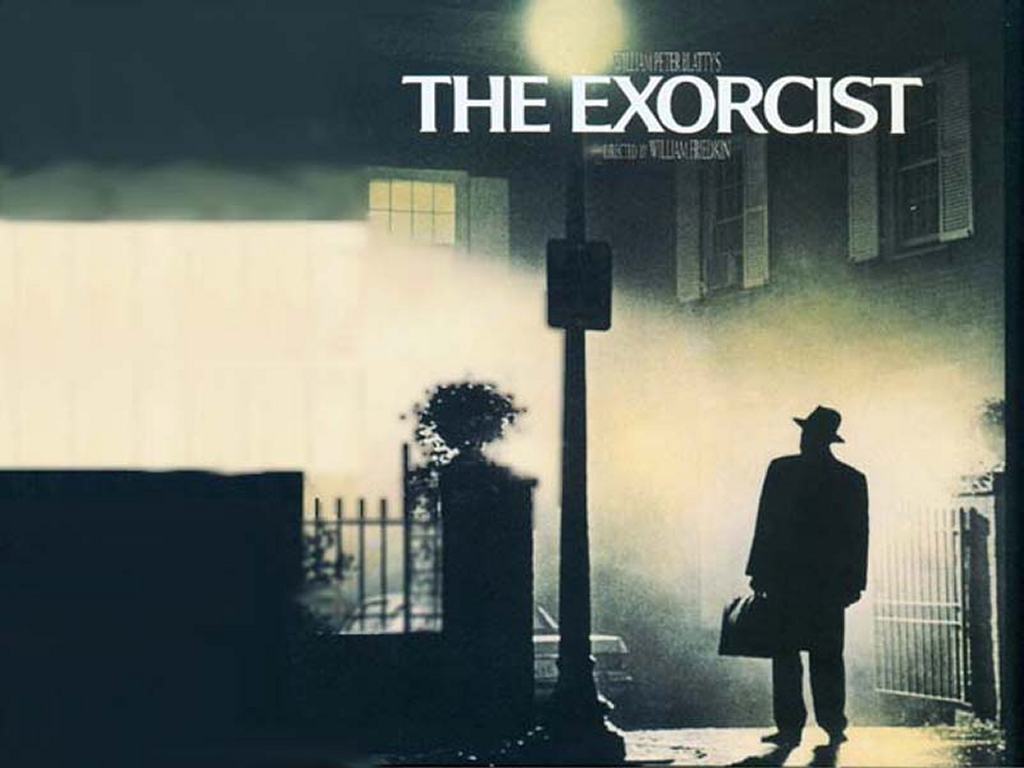
Only within the last couple of decades have movies begun to be taken seriously as expressions of the Zeitgeist. An art form not even 150 years old, commercial movies have been seen primarily as an entrepreneurial exercise—money-making ventures with little serious thought. Now students of society recognize that where our wallets are, there our hearts are also. Even in the depths of recession the entertainment industry maintained its draw. The unemployed could at least watch movies cheaply at home. Yesterday’s newspaper contained an insightful entertainment piece on horror movies by film critic Stephen Whitty. Noting that the film industry began when the Production Code largely mirrored pre-1950’s American cultural values, Whitty observes that clergy were left out of movies, or when they appeared they were strong role-model characters. Then, beginning with The Exorcist, the demonic became a huge theme in movies. As Whitty concludes, “Certainly it’s partly a reflection of a growing fundamentalism” that indicates why such movies are now so popular. Many Americans believe in angels and demons and turn to them to explain the serendipitous or contretemps.

Scary, but not necessary.

Social attitudes help to explain what we see on the big screen. Almost from the beginning religious leaders have castigated the entertainment industry as an unholy counterpart to sanctified living. Theater was earthy and evil, movies immoral, and even the desire to be entertained took away from the struggle for salvation. Ironically, however, movies tend to reflect conservative values. At least when it comes to demons. In the current glut of demonic films—which most Americans rate as the scariest kind of horror movie—the church-sanctioned hero is often the only effective tool against evil. A mythology of a Manichean dimension reigns: good struggles against evil and good will prevail. Unfortunately, this Hollywood scenario falls on the side of simplistic solutions to complex problems. Evil is our own doing—we need no demons to tell us how to be bad. Likewise, help often fails to come from on high.

Over the weekend I watched Dogma once again. Severely criticized as immoral and trashy, the overall message is, however, one of faith and hope. No fundamentalist, Kevin Smith certainly takes his pot-shots at Christianity, particularly Roman Catholicism, but in the end God and angels are real, and demons are defeated. Yes, this comedy is intended to be entertainment, but the audience that views it probably agrees with its core values. As Whitty demonstrates, the past decade has flooded the market with Hell-born foes, and there seems to be no imminent slacking of the pace. People are afraid. Our efforts at free-market Heaven have turned out to benefit too few while too many are still without work or adequate security. No, we need no demons to instruct us in the ways of evil. We are fully capable of initiating our own.


P*ss Says Elijah

As celebrations of the four-hundredth year of the King James Version continue this month, it is time to reflect on how its language has influenced modern-day English. I recently finished my course on the Prophets, and as I was reading the wonderful stories of Elijah, I remembered the shock I first experienced when reading 1 Kings 21.21 as a child. In the words of Elijah: “Behold, I will bring evil upon thee, and will take away thy posterity, and will cut off from Ahab him that pisseth against the wall, and him that is shut up and left in Israel.” I had been raised with the certain knowledge that the “p-word” was cussing, if not downright swearing. What was it doing in the mouth of a righteous prophet? Then I realized even Saint Peter, according to Mark 14.71, “began to curse and to swear, saying, I know not this man of whom ye speak” just before the cock crowed.

The Bible defies expectations. Today it has become a highly politicized document. The “Family Values” camp loves to cite select passages of the Bible but tends to ignore those juicy bits that contradict their 1950’s outlook. The Bible is a book of surprises. It suffers at the hands of its own apotheosis. I know biblical scholars who argue that the Bible should no longer be singled out as a special book, but we do owe it a debt of gratitude. If modern-day people want to revere the Bible, they should do so with an awareness of its context.

Recently a friend posted a comment on Revelation online, wondering why people found it so scary. In the many replies, several worried commenters noted how signs for the apocalypse are beyond ripe and the fruit is ready to fall from the tree. When I interjected that Revelation was a response to first-century Christian persecution couched in the language of apocalyptic literature, I was quickly corrected by others who noted that since Revelation is coming true right now, it must, ipso facto, be a future prediction. We revere the Bible without hearing it. Until we learn to actually read and appreciate the Bible in its context, I’ll have to take my side with the prophets of old. After all, p*ss says Elijah.

Be careful little mouth what you say...