
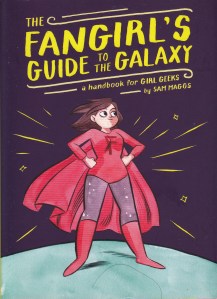
 It’s not hard to feel that you’re from another planet. If you were born in the sixties and had kind of a rough transition to this whole internet thing, you know what I mean. Still, I want to be part of it—it’s kind of like New York City, only bigger. And faster. The commute doesn’t take nearly as long, now that dial-up’s a thing of the past. So I bought someone who was into fandom Sam Muggs’ The Fangirl’s Guide to the Galaxy: A Handbook for Geek Girls. This particular fandom, well, fan, gave me the book to read. I’m a feminist, so I don’t have any issues with reading a book intended for girls. What became clear to me, however, is that I don’t understand the internet nearly as well as I thought I did, and that girls find they’re oppressed there too. What is it with men and control?
It is an ethical issue. I don’t blame people in the past for not thinking like we do, but today there’s no excuse whatsoever for considering somebody a lesser person because of their gender. Women and girls have just as much right to “guy things” like geekdom as do males of the species. Fandom is all about fun. Enjoying the fantasy of living, for a little while, in other worlds. From the way many men treat women it’s no wonder that they feel that need just as much as my own self-identified gender. Religion, unfortunately, bears much of the blame for this. In the largest religious bodies in the world women are still excluded from leadership roles. Religion is kind of like fandom in that way, I suppose. It can be all about exclusion. We exclude others to make ourselves feel special. Why not celebrate difference and find a place for everyone?
It’s difficult to read The Fangirl’s Guide as a man simply because you’re constantly reminded (and not intentionally, because it’s written for girls) at how inhospitable men have made much of the world for their female earthling compatriots. I was reminded at several points in this book of how films like Wonder Woman and the recent Ghostbusters stand out in their sympathetic portrayal of women heroes. And equally how men find reasons to criticize them. Then I consider the White House and shudder. When a nation elects an open and avowed patriarchalist as president we all could use a fantasy world in which to hide. This little book didn’t make me into a fangirl, but I do hope it makes me a better man.

 Steve A. Wiggins