For Better Information

Government by Twitter is such a trendy thing. I’ve got a Twitter account and I can’t keep up with it most of the time. I wonder how anyone has time to get off the golf course long enough to let the thumbs fly these days. I got an article in my inbox stating that James Comey, the director of the FBI, has a hidden Twitter account. Well, you’d expect it to be hidden. This is the FBI, after all. The purpose of Twitter, however, is provide a steady flow of information—a stock ticker, if you will, of the radicalized normal. None of this is why I’m addressing the Hon. Comey today. It’s because those who suspect they’ve found his account believe he’s being using the name “Reinhold Niebuhr.” Those of us in religious studies with an interest in American religion can’t help but do a double-take.

Reinhold Niebuhr, along with his brother H. Richard, were prominent theologians. Reinhold was perhaps the last theologian, along with Martin Luther King, Jr., to whom anybody paid any attention. In fact, he was the rare academic who’d attained the sobriquet of “public intellectual.” He even taught in a seminary. Reinhold Niebuhr’s thought has influenced countless government officials who knew how to read, back in the days when being literate was a requirement for government office. Perhaps a little too Neo-Orthodox for today’s Nones, Niebuhr was nonetheless a pacifist and, dare I scrawl the word, a socialist. What’s more, Presidents in the days when the office had some dignity cited him as a source of political thought and contemplation. As much as they try to make us forget, I remember the days before a red hat was all you needed to dictate policy. The days of Reinhold Niebuhr.

Now, nobody really knows if this mysterious Reinhold Niebuhr account really does belong to James Comey. The FBI hasn’t been terribly friendly to the cause of freedom as of late. In fact, it may be the one government agency with timing even worse than mine. There’s a fair consensus that had the bureau not revived the passé email server scandal when it did we might still be living in a democracy. I have to try to be careful not to get too worked up. It’s easy to be anxious these days. When things start to get too oppressive, however, we can think of Reinhold Niebuhr, the last theologian. The man who gave the world the serenity prayer. We’re gonna need it.

Across the street from the J. Edgar Hoover building, Washington, DC

The Call of the Apocalypse

In discussing various polemics against religion, such as those by Christopher Hitchens and Bill Maher, I have frequently stated that they have a point, but they have ignored the good that religion hath wrought. It is like an Anti-Julius Caesar – the good is oft interred with the bones. Then the news goes and validates their polemic. The arrests yesterday of the leadership of the Christian militia calling themselves the Hutaree (I’m sorry, but it sounds like a happy Boy Scout gathering) highlights once more the danger that religion poses to an already unstable society. I’d not heard of the Hutaree before, and chances are I would never have heard of them had they not plotted an apocalyptic war against the United States’ government that landed them on the front page.

Few people are willing to admit just how dangerous apocalyptic thought is, or how deeply rooted it is in American politics. Tracing the roots of this form of belief is not difficult – apocalyptic first appears in the Bible when revelation through prophecy met and mated with Zoroastrianism’s dualism. The offspring of this union was the belief that a new, and better (!), age was about to dawn. God would usher in an era of peace, but it had to be precipitated by an era of war. Presidents drawn from the Religious Right have held this belief. Some have even eagerly begun wars in hopes that this ancient Afghanistanian religion would lead to the Christian apocalypse. At least the Hutaree were up-front about it: they believed that armed conflict with the government would flush out the Antichrist and usher in the end.

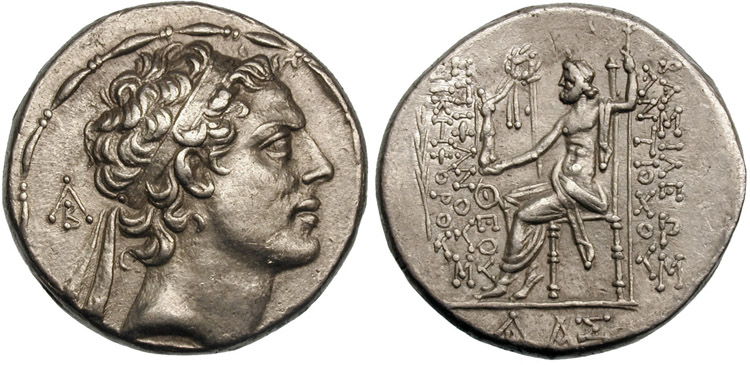
Last night in my Prophets class student questions indicated just how much interest there is in apocalyptic. We live in an era when information is all-too-easy to find, and yet many otherwise intelligent people believe that a hidden knowledge about the future is available in the Bible. It is not. For those who have ears to hear, Daniel was written about Antiochus IV Epiphanes. Revelation was written about a Roman emperor (perhaps Nero or Domitian) who threatened nascent Christianity. The apocalyptic battle was already underway. The future they longed for was peace. Modern apocalypticists see all of this as future prediction and believe that they must start the war. All of this makes me feel strangely vindicated. The FBI and other government officials are starting to demonstrate an awareness that to prevent religious extremism you must understand it. Now if only universities would catch on and realize that the study of religion is vital to national security I might end up with a full-time teaching post after all.

The original Antichrist