A Father’s Day

Some thoughts I hope I’m allowed to share on Father’s Day: I recently saw a review of The Wicker Man that pointed out (rightly) that my treatment of gender was outdated.  Similarly, the (few) readers of Nightmares with the Bible make a not dissimilar observation about my use of Poe’s formulation of women in danger.  I am very much aware that gender studies (which wasn’t even a potential major when I was in college) have done much needed work in clarifying just how complex a phenomenon it is.  I have posted several times on this blog about precisely that.  Still, we all write from a position.  My training is not in horror studies, and it’s not in gender studies.  My writing, despite the price, is intended for non-academic readers, but I too may be between categories here.  I’m trying to escape the academy that has already exiled me, but the framing of my questions is too academic.  I get that.

I also write from the perspective of a man. There’s no denying that I write as a straight, white male.  This is how I experience the world.  And how I experience horror.  Returning to Nightmares, I think my point might’ve been better expressed as noting that writers, directors, producers, and others in the film industry understand that viewers of their particular films may be more moved by a female possession than a male.  Or, in Wicker, that publicly expressed concerns about rape and sexual violence are more commonly expressed by women.  Statements can always be qualified, but that happens at the expense of readability.  There’s no such thing as a free lunch after all.

Academics can’t be blamed for doing what they do.  They critique, poke, and probe.  My books since Holy Horror have been intended as conversation starters.  But they’re conversation starters from the perspective of a man who watches horror and tries to understand why he reacts to it the way he does.  There is an incipient ageism, I fear, that sometimes discounts how people raised to use “man” when referring to mixed or indeterminate genders—taught so earnestly by women who were our teachers—sometimes take our earliest learning for granted.  Those early lessons are often the most difficult to displace.  I try.  Really I do.  I’ve had over six decades looking at the world through a straight man’s eyes.  I welcome comment/conversation from all.  Of course, my intended readership has never been reached, and they, perhaps would have fewer concerns about my view.  Romance (hardly a feminist-friendly genre), after all, is one of the best selling fiction categories, even today.  And many of the writers—generally women—express the gender-expected point of view. That’s a genre, however, outside my (very limited) male gaze.


Horror Adjacent

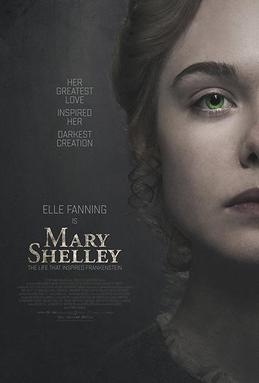
We have the basic facts, but still, it takes a good bit of imagination.  We simply don’t know what the life of Mary Shelley was like, as experienced by the woman herself.  The movie Mary Shelley isn’t a horror film but it’s horror adjacent.  How could a movie about the woman who invented Frankenstein be anything but?  The handling of Haifaa al-Mansour’s film is generally as a drama, or a romance.  The story takes the angle that it was her stormy relationship with both Percy Shelley and her own father that led Mary to express her feelings of abandonment in her novel.  And while we have to acknowledge the liberties all movie-makers take, it does seem interested in keeping fairly near the known details of Mary Shelley’s life.  Although other women were also writing then, it was still a “man’s world” she tried to break into.

I confess that one of my reasons for wanting to see this film was that Ken Russell’s Gothic had a powerful impact on my younger mind.  That movie, which is over-the-top, being the first I’d seen telling the tale, had become canonical in my mind.  I know the dangers of literalism, and I wanted to see someone else’s take on the story.  Al-Mansour’s treatment takes a female perspective to the narrative.  It seems that Percy Shelley and Lord Byron were both advocates of what might now be termed a playboy lifestyle, and that Mary, daughter of forward thinking Mary Wollstonecraft and William Godwin, was fairly liberal herself.  Although Percy Shelley, like Lord Byron, was quite famous in his time, that didn’t always equate to financial solvency.  I could relate to parts of that quite well—full of creative ideas and shy on cash flow.

Mary Shelley didn’t rock the critics, but many felt it was a thoughtful treatment.  It is dark and gothic, but with no real monsters.  It did explain a bit of inside baseball about Ken Russell’s film.  Both movies make use of Henry Fuseli’s painting The Nightmare to explore the famous meeting of Byron and the Shelleys that led to the writing of Frankenstein.  Indeed, Gothic makes a good deal of it.  Mary Shelley explains that Mary’s mother, Mary Wollstonecraft, had an affair with Fuseli.  I was unaware of that connection.  Something was clearly circulating among the Romantics, many of whom knew each other and, in their own ways, became formative of culture centuries down the road.  And although many critics weren’t impressed, I think it’s about time that a woman’s point of view was brought to Mary Shelley’s life in a world not kind to women.  Even if a woman gave the world one of the most influential books of the nineteenth century.


Dark Smile

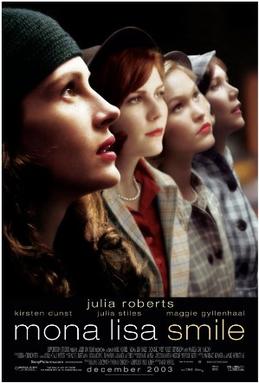
Romance.  It’s not the same thing as Romanticism, but it’s often part of drama.  It can, and often does, feature in horror.  Tender feelings toward someone we really love seem to be a human universal, even if social structures don’t always support such feelings.  Maybe I’m trying to make excuses for why I watched Mona Lisa Smile, but there is an underlying reason.  More than one expert considers it an example of dark academia.  I was curious, and honestly, it’s easier to get my wife to watch dark academia than it is horror (for that I’m on my own).  This was a film I’d heard about many times, but hadn’t watched any trailers for, so I wondered what it was all about.  In short, Wellesley.  One of the seven sisters.  But more than that—women struggling for equality in the 1950s.

A fictional Katherine Ann Watson takes up a post teaching art history at Wellesley, back in the day when a doctorate wasn’t required.  In order to demonstrate her expertise to her very well prepared students (I never, in nearly 20 years teaching, had students show that level of eagerness for any subject) she introduces them to modern art.  Traditional Wellesley isn’t prepared for that.  Moreover, she encourages them to develop careers of their own in a period when the MRS degree was still a main reason for women to attend college.  Watson’s own life isn’t without romance; a boyfriend back home in California and another professor at Wellesley both vie for her affections.  Some powerful students, however, make her life difficult and despite her popularity as a teacher, the administration allows her to remain, but with severely clipped wings.  She decides to fly instead.

Amid all the social commentary, a darkness remains.  A large part of it is patriarchy, but academic politics—driven by money—is the main culprit.  As Watson is essentially forced out, her students see her off with a display of camaraderie, making this, in some ways, quite similar to Dead Poets Society.  There were a few triggers for me.  Years ago I was indeed called into the Dean’s office and handed a letter to read.  While not nearly as dramatic as either Dead Poets Society or Mona Lisa Smile, I had students demonstrate their support for me as I was forced out.  Katherine Ann Watson seems to have had better prospects than John Keating, but both movies remind us that academic politics are dark indeed.  Even if it’s couched in the genre of romance.


Another Frankenstein

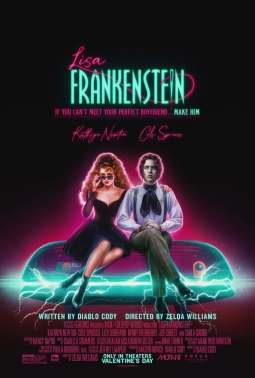
It’s a persistent bias.  Hollywood and the general public (at least critics) still downgrade the work of female directors.  I watched Lisa Frankenstein and loved it.  It’s a movie that was recommended both by a friend and the New York Times.  Okay, so it’s a comedy horror, but it’s well done and again, told from a female point of view.  It reminded me quite a lot of Edward Scissorhands and a bit of Frankenweenie.  But let’s step back a second.  Lisa is a high school senior whose mother was murdered by a maniac with an axe.  She lives with her father, step mother, and step sister in a new town and she’s got Goth sensibilities.  She hangs out in the overgrown cemetery, particularly at the grave of a Frankenstein.  A lightning strike brings the Victorian-era corpse back to life and since Lisa had said she wanted to be with him, he comes to her.

Missing some body parts, including his tongue, he begs Lisa for help restoring them.  This they do through murders (at first, accidental) so fresh parts can be sewn on.  After each addition an electric shock revitalizes the organ and makes the creature more human.  Of course, Lisa goes through the usual high school difficulties and her relationship with her bubbly, cheerleader step-sister keeps her going.  Especially since the step-mother is wicked.  With plenty of nods to classic horror, and an innovative story arc, I found it quite enjoyable.  It isn’t a perfect movie, but it is a very good one.  It shares a writer with Jennifer’s Body, which I discussed not long ago.  The movies have a bit in common, but are distinctly different while dealing with issues of girls becoming women.

I have a soft spot for gothic tales, as regular readers know.  Lisa Frankenstein manages to be gothic while also being funny.  Like Stranger Things, it revels in the culture of the 1980s and the sound track is quite good.  Written and directed by women, it falls into that category of movies that should’ve received more advertising.  I wouldn’t have known about it had not a friend recommended it.  While comedy horrors may be an acquired taste (I still prefer straight-up gothic tales), they often work well.  Another tie-in is clearly Corpse Bride.  There’s a healthy dose of Tim Burton aesthetic here.  Mixed with that pathos we all remember as high school.  The period when our chrysalis begins to crack painfully and we start to take our first steps as adults.  No matter what the cultural bias says, women’s experiences are just as valid as men’s.  And Lisa Frankenstein understands that.


Empowerment

Recommended as a worthwhile contemporary gothic novel, Alix E. Harrow’s The Once and Future Witches is a feminist tour de force.  Set in a world similar, or perhaps parallel, to ours, it follows three witch sisters in 1893.  The sisters are estranged, having been raised by an abusive father, and each has found her own way to New Salem.  The old Salem had been destroyed after the witch trials.  The three find their lives drawn together, not even knowing the others are there.  But there are also still witch hunters.  None worse than Gideon Hill, the leading candidate for mayor.  I’ve long known that books written after Trump are often fairly obvious for the hatred that oozes from political leaders.  This is one such case.  The story is one of female empowerment in the face of constant male opposition.  It goes fairly quickly for a book its size.

It’s an enjoyable read but it grows, well, harrowing towards the end.  You come to like these three very different sisters and appreciate the gifts they offer to their world.  Men, however, make the rules and often they feel that women have no place in making decisions for the public good.  I’m amazed at the number of people who still believe this.  It makes novels such as this so important.  Women with power are crucial examples to present.  The three sisters may cause mayhem, but it is generally good for the city.  When men are in charge, things tend to get repressive.  Sound familiar?

Conveying the gist of a 500-page novel isn’t a simple task so I’ll simply say that this isn’t a conventional witch story.  There’s never a question that witches are good, but capable of doing bad things.  In other words, they are pretty much like all of us.  That’s not to deny that some people become evil and that such people will gain ardent, blind followers.  The characters are memorable and likable in their very humanness.  As far as genre goes, this is a magical realism novel.  As you get drawn into Harrow’s world it becomes believable.  It’s a book that should be widely read and its plea for tolerance must be heard.  I can think of other comparisons—others have also conveyed that an unquestioning religion may become evil unintentionally.  Such conversions aren’t the kind publicly discussed, but they do fit with human experience.  I’ve intentionally left out spoilers since I want to encourage readers.  It certainly has left me thoughtful.


Ordinary Heroes

Mothers sacrifice to give us life.  Sacrifice lies at the heart of much of religion, so it may be that women resonate with this theme naturally.  Without mothers none of us would be here to read this right now.  Mothers are mortals, however, like most heroes.  Naturally I’m thinking of my mother today and how much like a hero she was.  Like many heroes, she was prepared to die.  Her love, however, lives on.  It’s difficult, if not impossible, to count all the ways a mother influences our lives.  Not all are gifted at it.  It’s a difficult job, and one for which there’s no “economic” benefit—you don’t get paid for supplying the world with future contributors to this human experiment.  So we pause to think of how we might show our respect today.

I try not to involve family or friends on this blog—I don’t like giving the internet everything—but the other mother in my daily life, my wife, has said it’s okay.  This week we received the news that her cancer is in remission.  This joyous news came just in time for Mother’s Day and gives us yet another reason to celebrate.  Mother’s Day keeps on taking new shades of meaning as life unfolds.  Nature both takes and gives.  Sometimes in rapid succession.  We need to appreciate all that mothers, women, contribute to our lives and society.  I’ve never been able to figure out why this is such a difficult thing to figure out.  Some men seem to think it’s not as important as things like making money and making war.  We couldn’t do anything, however, without mothers to put us here.

My thoughts are just a touch scattered today, being pulled this way and that.  Since my mother’s death last year we’ve passed Christmas, Easter, her birthday, and now Mother’s Day.  There have been plenty of occasions to stop and remember.  I know that my choices in life have been profoundly influenced by her guidance.  Her wisdom.  She always said that she wasn’t smart, but intelligence doesn’t come only from finishing high school.  Life is a teacher for all who are capable of learning.  Having come through a dysfunctional home life herself, and two difficult marriages, she managed to show how to exist in the world with grace.  And she taught the value of sacrifice through her own example.  We honor our mothers by treating women more equitably everywhere.  And guys, there are lessons to be learned here.


Why Not Love?

I learned a new word the other day: incel.  I’m not too proud to say that I had to look it up.  Although I’m on the internet quite a bit, I’m not really part of “internet culture.”  Incel is a shortened form of “involuntary celibate.”  It refers to an internet culture of mainly white, heterosexual males who consider themselves unable to find (generally) female companionship.  They often lash out at women, and sometimes at any sexually active person.  In general it seems to be a self-pitying, hateful crowd.  They tend towards misogyny and racism and, one suspects, conspiracy theories.  They apparently suffer what a friend of mine called “DSB” (deadly sperm buildup).  But the thing is, love would seem to be the cure.

Certainly women aren’t to blame.  Look, if I managed to find a woman willing to marry me there must be hope for the rest of my gender.  I’m no catch.  And why is it frustrated men take it out on women?   And underplay the achievements of women?  The Women’s March in January 2017 was the largest single-day protest in history.  Accurate numbers are difficult to attain, but it has always struck me that the U.S. Park service agents, with feet on the ground, estimated a million and a half in D.C. alone.  So we were told.  It’s almost as if nobody bothered to count because it was women.  Why is this still an issue?  How incelular are we?  Is it so difficult to give credit where credit is due?

I wonder if anybody foresaw that the internet would develop such subcultures.  Yes, Neal Stephenson’s Snow Crash gave us a metaverse where individuals lived virtually online, but did we fully realize then that sexually frustrated guys would eventually merit their own title and that some of them would perform acts of real life violence based on their own rhetoric?  Rogue males have been part of human culture all along, but the internet has offered a place to band together and become radicalized.  I, for one, had no idea that such subcultures existed.  It took reading an academic work about female leadership to learn about them.  And it makes the world a less comfortable place knowing they’re there.  Learning love is our only hope.  There are people who sublimate their frustration to hate.  What if we tried to make the internet a place where love, with or without physical entanglements, became the dominant meme?  Even those of us who work largely in isolation can see the hope in that.

Photo by Mayur Gala on Unsplash

Perhaps Unexpected

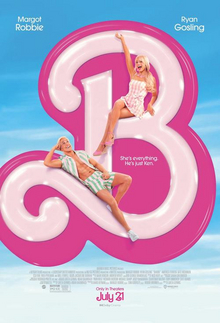
Of course I’d heard about it, but I hadn’t envisioned myself seeing it.  My family, however, wanted to get in on the Barbie conversation and, I justified to myself, at least we’d be in air conditioning for a couple of hours.  Besides, I now get “senior” rates at matinees!  I knew very little of what to expect, and I was pleasantly surprised by what I found.  In fact, I can’t remember the last time I saw a movie that was so full of social commentary.  And I actually learned quite a bit.  If you’re one of the maybe a dozen people who hasn’t seen it, the plot is more complex than you might think.  And the writing is smart.  And it’s funny.  I was hooked from the opening parody of 2001: A Space Odyssey.  The scene based on The Matrix made me realize that I was watching something unusual and important.

I’ll try to be careful with spoilers here, but basically, stereotypical Barbie experiences an existential crisis that leads her to the real world to find out what’s going on.  Ken tags along, uninvited, and Barbie is distressed to find that the real world hasn’t been equalized between the genders the way that she was intended to help it become.  While in the real world Ken gets a taste of patriarchy and decides to take it back to Barbie Land.  When Barbie returns she finds her once perfect world upside down.  But that’s not quite right.  She comes to realize that the world run by women wasn’t exactly perfect because men and women need to cooperate and share some responsibility.

There’s a lot more to it than that, of course.  How we’ve gone for centuries maintaining male dominance (might makes right philosophy), even while claiming to be “enlightened” is a mystery. Gender inequality is one of the biggest social concerns we experience.  Almost nowhere in the world are societies truly equal and Barbie offers a funny, yet poignant way of thinking about that.  I wouldn’t bother writing about it if the message wasn’t important.  The movie isn’t a feminist screed.  Nor is it simplistic drivel.  It’s a surprisingly sophisticated consideration of a society out of balance.  I’ve been in favor of equal treatment of women for as long as I’ve been conscious of the difference.  Raised by a capable single mother, I noticed in my formative years that she was doing what two-parent families did, with less than half the resources.  While Barbie won’t solve all our social ills, it is getting the conversation going.  From my point of view, it’s about time.


Learning from Mother’s Day

Looking back over the past year, I see that we’ve still got a lot of progress to make.  It’s only been about five millennia of “civilization,” but we still haven’t figured our that women are just as important as men.  Probably more.  This Mother’s Day we stop to think of our moms and many of us wish we were closer to home so that being there this day were possible.  Even the spineless men who degrade women are probably on the phone to their moms today, or maybe sending flowers.  The real truth emerges tomorrow.  Did we learn the lesson?  Are women to be accorded the same rights as men?  And who, really, has the right to decide who’s more human than anyone else?

Born as human beings, we need our mothers to survive.  They nurture and comfort and provide for us, even if fathers step out of the picture.  I’m reminded of an experiment that I learned about in some science class along the way.  A baby monkey (I can’t recall the species) was given a choice of two artificial “mothers.”  One, made of wire, monkey shaped, had a bottle where the baby could feed.  The other had no bottle, but was covered in fur.  The picture of that poor monkey clinging to the bottle-less but “comforting” fur-covered mother has haunted me ever since.  The look of desperation on its face makes me want to weep.  Why can’t we treat all people equitably?  We require no experiments to reveal the truth here. I look forward to the day when such messages will no longer be needed.

Too often we allow our holidays to assuage our guilt over poor treatment for the rest of the year.  Churches used to be plagued with those living sinful lives making it to Sunday’s absolution only to start it all over again.  If only we would learn the lessons Mother’s Day has to teach us.  People depend on one another to survive.  We like to think of ourselves as independent and not requiring help from anyone.  That’s a lie on a Trumpian scale.  We need each other.  Every live deserves fair treatment.  The same wage for the same work.  The right to protect their bodies and their health.  The right to show us a better way of being in the world.  It’s Mother’s Day, and if you’re reading this you have a mother to thank for this very modest possibility.  When a new sun arises tomorrow, let’s remember what we learned today.  Thank you, Mom!


Female Future

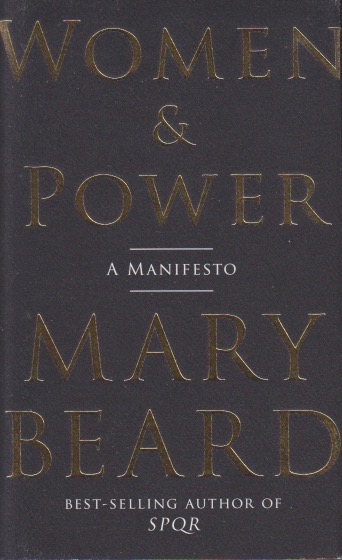
One thing we repeatedly heard during the early days of the pandemic is that people couldn’t wait for things to get back to business as usual (BAU, in corporate speak).  I told others then that we shouldn’t strive for “as usual,” but we should try for something better.  I got that same sense from Mary Beard’s Women and Power: A Manifesto.  Beard is a classicist.  She’s studied ancient Rome and earned her reputation in that area.  Women and Power is the publication of two public lectures on, broadly speaking, why women aren’t ever truly allowed to share power.  The first essay focuses on how women’s voices are routinely silenced, as they have been since classical times.  The second essay, more akin to what I was hoping about the rebuilding of society, is that we need to redefine power and how it is ascribed.

You see, as a society we have the opportunity—mandate even—to decide what’s truly important.  Electing angry old men like Trump only served to set back our progress by refusing to address the problem.  The idea, and this has been true throughout history, is that what men value is more important than what women value.  And we can’t assume all women value the same thing.  In other words, some serious thinking has to be done.  It doesn’t surprise me that some of this thinking has been undertaken by a classicist.  Those of us interested in how ideas began can have insights into why things are the way they are.  That won’t hand us the answer to the dilemma—as Beard says, hard thinking must be done—but it does show that we can begin to understand.  Beginning to understand is the first step to coming up with a solution.

Biology, and the history of biology, has something to do with the dilemma.  Childcare is a necessity and although we might be able to train brains, it does seem that women tend to have more empathy than men.  History tells us that prior to the invention of baby bottles women had to be available to unweaned children to meet their nutritional needs.  Meanwhile, men had to provide  the social structure that made the agricultural revolution possible.  As far as we can tell, hunter-gatherers (and there’s no going back to that) were more egalitarian.  Beard is right—we haven’t hit an impenetrable wall.  There are ways forward.  Equitable ways.  Different ways.  We need to stop longing for “business as usual” and imagine a better future.


Expiration Date

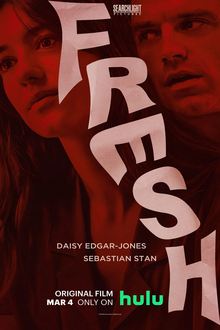
One of the perils of trying to understand others—something that is vitally necessary for a humane and civil world—is facing difficult truths.  Sometimes horror makes you do that.  I’ve recently been trying to watch horror directed by women, as this gives another perspective on what’s scary.  Directed by Mimi Cave and written by Lauryn Kahn, Fresh is very disturbing.  Noa is a young professional who’s not having much luck dating.  He best friend Mollie, who is African American, is the voice of reason in the film.  Noa finds internet dating services inadequate, matching her up with losers, but then she meets a handsome, funny guy in the grocery store.  She agrees to a date and they hit it off.  So far, so good.  Then he takes her to his place and abducts her.  He explains that he’s a supplier of human meat for an ultra-wealthy circle and she is to be consumed.

I won’t say much more about the plot since you may want to disturb yourself some day, but I will say that the movie reinforces something I get from reading Carmen Maria Machado:  women have to deal with men’s assumptions about their bodies.  Even the institution of marriage is all about ownership; men don’t want to pay (the key word) for supporting someone else’s child.  The nuclear family is intended to keep that at a minimum.  Just a glimpse at social standards reveals that men are held less accountable for cheating than women are, largely because there’s never a question of who someone’s mother is.  Noa’s captor is charming and nice.  He’s also a (as later revealed) Satanic psychopath.  He’s also also married, with children.

The film is disturbing on so many levels as it reflects on how a man feels he has the right, literally, to take women’s bodies.  Habeas corpus indeed.  It feels like being invited to dinner at Hannibal Lector’s house.  The religion element—for there often is one—is only revealed in two short glimpses.  One is the plate of one of the cannibals which has a Satanic symbol printed on it, and the other is a mid-credit shot of the butcher’s customers where the Satanic symbol reappears.  This theme isn’t really explored in the movie, but it is equated with “the one percent of the one percent.”  The clients are those who can afford anything and who crave the one thing they can’t have.  This is a movie to keep you up at night but it’s also one with a very strong social commentary.  That commentary is as disturbing as the entire premise of the film.


Carter’s Creations

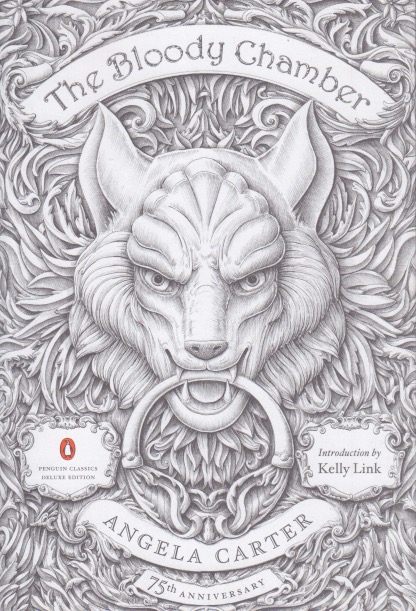
Angela Carter was a novelist whose best known work is her short story collection, The Bloody Chamber.  Often acclaimed as both gothic and feminist, these repurposed folktales and fairytales leave the reader in a thoughtful state.  I have to admit to having not known of Carter or her work until quite recently.  I’d seen a biography about her, but there are so many writers and my time seems always so limited.  Then I saw The Bloody Chamber mentioned on a list of best gothic fiction.  I had to find out what this was all about.  The stories are indeed unlike much of the feminist literature of the seventies.  The stories are focused on women, often young, and how they deal with being treated as the property of men.

The first, and lengthiest story, “The Bloody Chamber,” is a retelling of Bluebeard from the point of view of his last wife.  It’s an extended reflection on feeling owned and boxed in—literally trapped—by men’s economic rules of property.  Carter keeps readers on edge, even if they know the base story.  This isn’t a simple retelling.  Nor is it a lament about the natural, biological unfairness of sexuality.  There’s an ambivalence here, an enjoyment tinged with melancholy that gives the story a gothic sensibility.  The women in the different stories here prefigure more recent Disney heroines that take charge of their circumstances.  And there’s also ambivalence about the setting of the stories.  There are contemporary appurtenances but still castles and baronial mansions.  You’re lost in time.

The collection has some stories, such as beauty and the beast, retold twice and ends with three versions of werewolf stories that play, to an extent, on little red riding hood.  Some were tales with which I had no familiarity.  The effect of the whole is thoughtful contemplation of the human condition.  Much of the world, it seems, has been unduly influenced by a kind of literalism—a story, whether biblical or traditional, is supposed to go like this—that has not only robbed great texts of their depth, but has entrapped human beings in a stone-chiseled certainty.  A self-righteousness, if you will.  Even writing a text in stone doesn’t prevent others from interpreting it, however.  Since none of us have all the answers, we are each interpreters.  There was no historical Bluebeard.  There have, unfortunately, been many men who embody his attitude towards women.  Carter’s genius is to remind us that every story has at least two sides.  And the woman’s side may well be the truer of the two.


New Monster

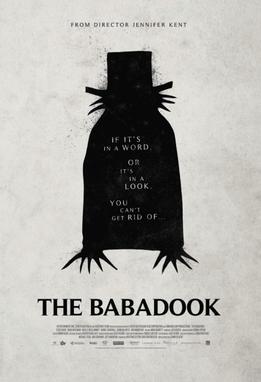
The Babadook is a horror film about loneliness.  Written and directed by Jennifer Kent, it has an arthouse cinema feel to it.  I missed it when it came out in 2014—it didn’t receive major billing and publicity in the United States—but it gained critical acclaim as intelligent horror.  It follows the small family of Amelia and her son Samuel, who has special needs.  I’ll try to avoid too many spoilers here because I think you should see it if you haven’t already.  Amelia’s husband died in a car crash taking her to the hospital to have their first child.  That haunting tragedy drives the film.  And when you throw a monster called the Babadook into the mix, loneliness and sleeplessness make the dark something to fear again.

With wonderful acting, the story of childhood monsters highlights the continuing plight of single mothers.  How are you supposed to survive when you have a child that requires constant supervision and yet you need to make ends meet?  And if sleeplessness begins to distort your sense of reality all kinds of things seem possible.  

Hollywood hasn’t been a friendly place for female directors.  This film was shot in Australia.  I’m not sure that sexual parity is better there, but this movie is a great example of what can happen when a woman shows what horror means to her.  Not too many horror movies have female directors, yet.  It seems to me that women have many things to fear and have much to show us about what horror can be.  It seems to me that loneliness, although often part of horror, isn’t often the focus.  We would rather look away than to see it because it’s too painful.  Horror compels us to look at what we’d rather not see.

Aside from all of this, the film gives us a new monster.  The Babadook was invented for this film and although we don’t have to worry about whether it’s real or not, the issues it brings to the fore certainly are.  There is darkness inside people.  Even those of us who try to do what is right struggle against it.  Often it takes quite a lot even to admit as much.  This movie lets the dark out and finds a new narrative path through which it might flow.  Although a box office success—earning more than it cost—The Babadook is still little known.  It should be discussed more because intelligent horror has some important lessons to teach us.


Women and Mothers

This is our first Mother’s Day with a female Vice President.  After four years of a female-groping administration, it feels like we’ve made a turn in the right direction.  Ironically, it’s often religions that keep women oppressed, even while women are often more faithful to them.  Religions like to claim to have the answers, and for the monotheistic traditions an origin myth with Eve—the first mother—as the first picker of forbidden fruit, has suggested one answer that has held women down for centuries.  Taking origin stories too literally can cause so much suffering in the world that we’re confronted with the question of their morality.  Religions are for people.  If they exclude half the human race we need to pause to ask if we got something wrong.  It’s Mother’s Day, always on a Sunday.  It’s a chance to think about such things.

Many churches will have sermons honoring mothers today.  Will they work for the wellbeing of women for the remaining 364 days of the year?  Our society, purely on the basis of biology, routinely puts women at risk and underplays the need to help them when that happens.  I’ve seen this firsthand.  We’re finally starting to get some female representation in Congress, yet less than a quarter of the seats are held by women.  Isn’t government supposed to represent its constituents?  Why has half of humanity had to struggle for so long to be treated as equal?  Mother’s Day cannot be a salve to ease our consciences about mistreating women for the rest of the year.  Equity should not be a goal, it should be reality.

We’ll be thinking about our mothers today.  Still under a pandemic, we’ll be Zooming them or calling them.  Those fortunate enough to live close may even get to see them in person.  These mothers sacrificed a lot to take on that role.  Our society could not continue without them.  We’re starting to come to the realization, I hope, that it is male-devised forms of government and business that are the problem.  They protect the wealth and power of a few.  They jealously guard against letting men offer the true justice of equity.  Some religions have begun to address the obvious injustice they have largely originated.  The story of the Garden of Eden was meant to teach a lesson.  That lesson has been abused for centuries as a way of making women seem somehow less than men.  It’s Mother’s Day.  Let’s see if we can’t learn to read more deeply and apply what we have learned.


Lessons from Mars

It’s a parable.  This week, on a planet weeks away, earthlings achieved heavier than air flight.  Considering that we flew for the first time on our own planet only 118 years ago (within feasible limits of a very successful human lifetime), the achievement is remarkable.  What I found most fascinating about the live stream provided by NASA, however, was the human element in the control room.  Not only did all the engineers look young enough to have been my children, I was cheered almost to tears to see several women among them.  We’ve come a long way.  And I don’t mean just to get to Mars.  There’s a lot of work yet to be done on the planet on which we evolved, but it does me good to see scientists recognizing the contributions women make to progress.

While many cultures worldwide still consider women the property of men, that scene showed that with women in leadership roles we can achieve remarkable things.  Only with the priorities of diversifying the workplace could we realize a dream that began long before Kitty Hawk.  People of all genders and all ethnicities have much to offer our growing sense of accomplishment.  Mars is millions of miles away.  Perseverance and Ingenuity are being controlled across this godlike distance by a group of humans that consists not just of angry white men who want to rule this world.  Although the palpable  excitement in the room was for what was happening far away, my spirits were buoyed by what was happening here.

Our biology defines us, but it becomes a sin when it confines us.  We are capable of more.  We’ve flown on another planet, and yet we still need to learn that on this planet all people deserve fair and equitable treatment.  It boggles my mind that on that reddish speck I can see on a clear night, a speck so small that my pinkie held at arm’s length can obliterate it, we have landed a car-sized rover and a helicopter.  The math involved staggers this old mind, but the imagination inspires it.  We come to moments like these when women and men of various backgrounds come together and dream.  Double-masked and socially distant, young people have shown us a world far beyond what angry white men could even imagine.  Watching the video of a helicopter taking off, hovering, and landing on another planet, looking at the people in the room, I realize there is a parable here.