Steering

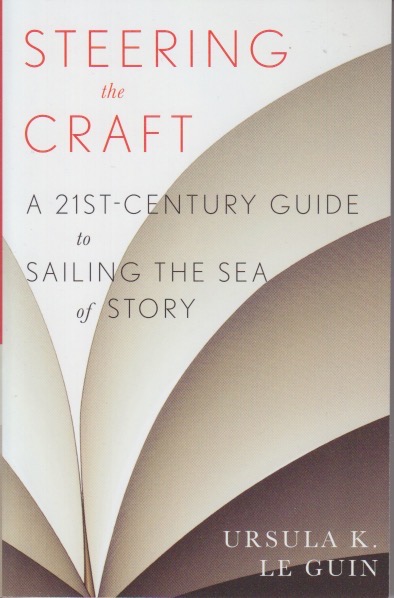
I’ve always been self-critical.  Often when someone points out something I’ve done wrong I’ve already figured out that I’ve made the mistake and the reminder is painful.  I can’t help but think that my childhood made me this way.  In any case, since I haven’t ever found much success is writing, I figure I must need help with it.  Recently I’ve read books on various aspects of writing by Stephen King and H. P. Lovecraft (published posthumously).  I’ve read quite a few more over the years.  I recently saw Steering the Craft: A 21st-Century Guide to Sailing the Sea of Story by Ursula K. Le Guin.  I confess that I haven’t read a ton of Le Guin’s fiction, but she is treated with a great deal of reverence in literary circles that I figured a bit of advice from a master couldn’t hurt.  Besides, it isn’t a long book.

Books about writing aren’t volumes that you fly through, though.  Steering the Craft has ten relatively short chapters and ten writing exercises, some in multiple parts.  As I read through I stopped and did each of the exercises.  I really didn’t want to cheat myself of the experience of learning from a departed sage.  The experience was refreshing.  As will surprise none of my regular readers, I’m in the midst of another writing project.  The thing about steering is that you’re constantly doing it.  And if the captain is someone who’s been through these waters, it’s best to listen.  At the same time—and Le Guin was very aware of this—hard and fast rules tend to be neither.  What spells success for one author becomes abject failure for another.  Some of us write because we must, whether anybody reads us or not.

But the exercises.  Exercise is good for your health.  Even writers with native talent need to stay in shape.  I’ve been doing creative writing, in one form or another, constantly, since at least the Nixon Administration.  Publication began in the academic realm when I was working on my doctorate.  I had my first fiction piece published in 2009.  Keen eyed readers will notice that is the same year I began this blog.  I’d been pretty much booted from academia by then, but I’d been writing in the meantime.  Essays, novels, short stories.  Then I tried a nonfiction book or two.  There is a great gulf between writing and publication.  An ocean, in fact.  And if you hope to cross an ocean, it is always helpful to learn how to steer.  I’m still trying to learn why my boat seems to be leaking, though.


Mad, Bad

Although epic poetry holds an important place in literary history, I tend to read prose more.  Like most wordsmiths, I do write poetry—more like dabble in it.  Unlike my fiction writing, the poems aren’t intended for publication.  They are too deeply personal for that.  Still, my recent post about Gothic (the movie) had me thinking about Percy Shelley and Lord Byron.  They were known for their poetry, of course.  I can’t pretend to have read a ton of it, but their free-spirited personalities are intriguing.  Back in 2012 I read Edward Trelawny’s account of Shelley and Byron’s last days—neither lived more than six years after the summer when Frankenstein was born, both dying before forty.  I was recently reading about Byron in another context and was reminded (I’d read it before) that an acquaintance once described him as “mad, bad, and dangerous to know.”

Authors, I suspect, are often neurodiverse.  There’s a reason I think this.  The size of the population that reads for pleasure is depressingly small.  It stands to reason that writers are a subset of that small population.  The writers I know tend to have some quirks.  They function just fine in society, but they do seem to operate on a different level.  I’m naturally drawn to them.  I have been trying to get to know writers locally—there are quite a few here in the Lehigh Valley—and sometimes they will let you in.  Often not.  It’s tricky to befriend writers, in my experience.  I suspect I might be one myself.  In the published side of things, I’ve produced six non-fiction books, but I also publish short fiction (and have completed six unpublished novels).  Still, I’m not part of the “mad, bad, and dangerous to know” club yet.  If there is a club.

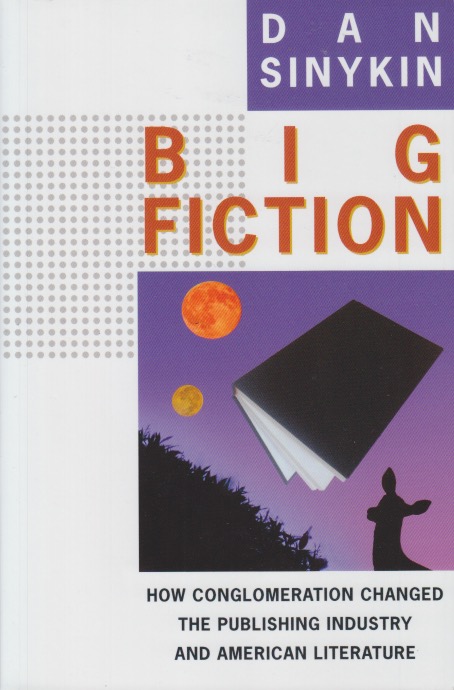
Over the years I’ve joined three different writing groups.  Their meetings are interesting since many of us are introverts.  One thing we all have in common is that we love to talk about writing.  Perhaps it’s because mainstream success is so difficult to come by.  Publishing houses have consolidated and the “Big Five” are responsible for by far the majority of books the reading public—that most rare group—buys.  One thing that’s true among the writers I know is that most would keep writing even if publication, or hope of publication, was off the table.  It is what we do.  For many years, perhaps too many, my writing was academic.  What nobody knew in my teaching days, however, was that I never stopped writing fiction.  It was there I put my thoughts that I’d classify as “mad, bad, and dangerous to know.”


Learning to Write

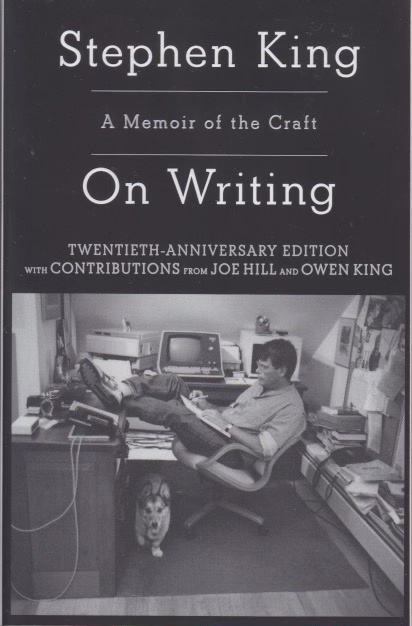
If you’re not famous as a writer, nobody asks you for advice on improving their game.  Part of that is simply having a writer’s outlook.  We all have our own ideas about how it’s done.  I admire the work of Stephen King.  He’s a gifted storyteller and his books often deal with the kinds of things I think about.  I had his book On Writing on my reading list for years.  What finally got me to read it was finding it in a local independent bookstore and wanting to support said venue.  I found it both helpful and a little scary to read.  This is part memoir and part instruction manual by someone who isn’t full of ego, despite his success.  Egoism isn’t uncommon among writers, but King realizes that many people have talent, but not all know how to bring it to any kind of success, no matter how modest.

I really enjoyed reading the memoir parts.  Indeed, I wish I could’ve read them when I was, say, in college.  My own trajectory as a writer might’ve turned out differently.  His instructive sections are also helpful, but the part about finding an agent is hopelessly out of date.  The internet has made doing so both easier and more difficult.  Too many people now flood agents’ offices with pitches that you practically need an agent to get you an agent.  I know this from experience.  Nevertheless, King’s advice generally feels quite solid.  And it’s encouraging to hear of the commonalities we share in our upbringing.  Writers often begin in less-than-ideal situations.  If we can struggle out of them, some can find success in writing while others manage to do it on the side (this isn’t my day job).  But write we do.

As with most of King’s books that I’ve read, this one went fairly quickly.  Not every book that I read makes me feel eager for reading time, but King always does.  In part, at least with On Writing, it’s because I can’t help but wonder if I’m doing this right.  During the course of reading his book, two more rejection letters came for my fiction projects.  Any writer knows that you have to deal with lots and lots of these.  King started earlier, but, like me, he kept his rejection slips.  Eventually I ditched mine because they’re too discouraging.  And I still submit to what has become, since this book was written, a very, very crowded fiction market place.  Still, this is an encouraging book, offering advice from someone who knows what he’s doing.  It’s a shame I waited so long to read it.


The Original

A dozen years ago, I had a novel under contract.  I write my fiction under a pseudonym, of course.  I was thrilled because I had never seen the conceit (in the sense of “concept”) anywhere before.  For once, I was going to be first in line.  But then the editor who’d responded “Loved it!” left the press.  After dithering for about a year, the publisher decided not to publish it.  This was a small, independent press—I wasn’t anticipating it would be a New York Times bestseller.  Then I saw a weekend add in the New York Times—just recently—touting a novel with the exact same concept as mine as “original” and worthy of being read.  Ironically, just the day before I had once again submitted my novel to an independent publisher.  I can’t blame the author, of course, but the system doesn’t work for everyone.

After the killing of my darling, I naturally tried to find another publisher.  I have been trying for twelve years.  I’ve been pushing the idea as original and of general interest.  Editors and agents disagreed about the “of general interest” part.  In fact, I’ve had rejections from nearly 100 literary agents over the years, one of them responding that I was a good writer but they couldn’t see where the story was going.  Maybe I didn’t handle it as well as this new book, with its glittering endorsements, but a guy likes to get credit for his work.  Now if it ever does get published I’ll be considered a copycat.  You see, my main driving force as a writer is originality.  My published stories are unlike others I’ve read and most of them go through multiple rounds of rejection before some editor “gets it.”

The publishing industry, however, is a strange one.  Most publishing houses want work that imitates bestsellers since they’re a known quantity.  Money in the bank (or what banks used to be).  The internet has changed that a bit, but not completely.  It does mean those skilled at such things as self-publishing can sometimes challenge the hegemony of the big five.  It also means a lot of sub-standard fare is out there as well.  I’m a little late establishing a literary reputation it seems.  Although being raised poor does qualify me as “diverse” it’s not in any way visible.  It is obvious if people get to know me because the poverty mentality never goes away.  So my novel has been waiting while the same idea occurred to someone else (not straight white male) and has received notice.  So I follow and hope to learn.


Shatner’s Space

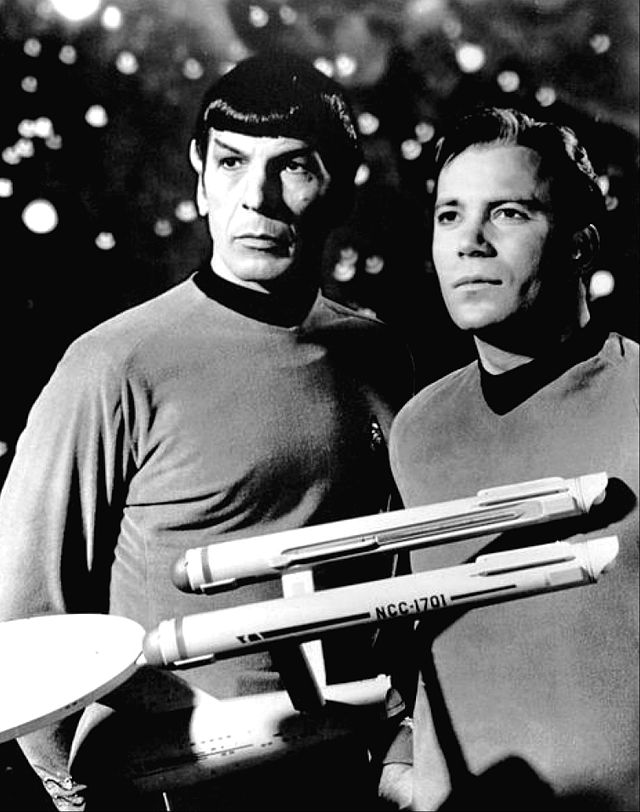
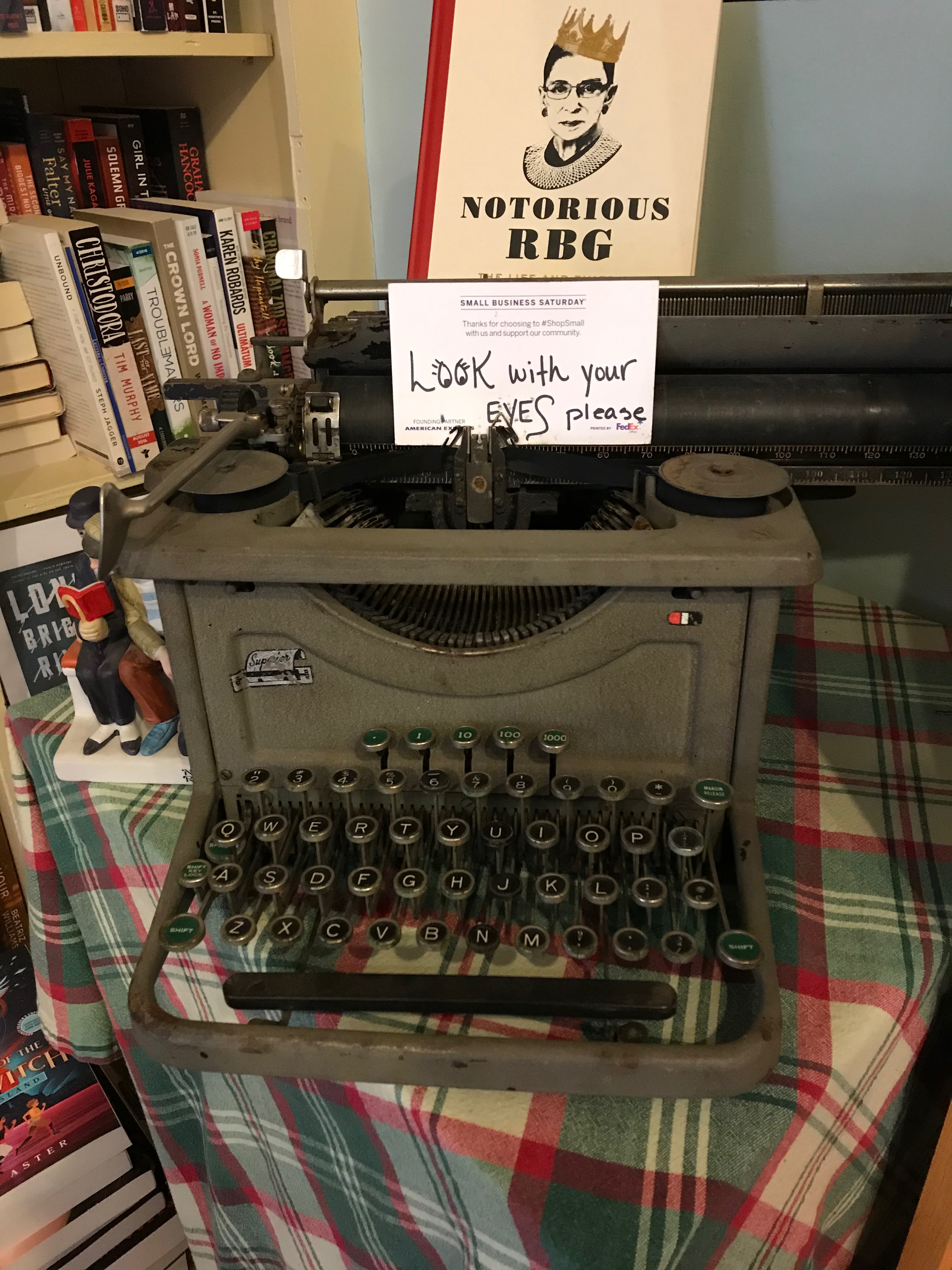
We constantly underestimate the power of fiction.  It’s difficult to break into getting fiction published.  It wasn’t always that way.  When the pulps were still a thing often it took a thimble of talent and a handful of persistence.  Publishers were looking for content and those with typewriters were clacking away as fast as they could.  Ding!  Carriage return.  These days it’s harder.  This came to mind in thinking about William Shatner’s trip to space and his subsequent reaction.  As several news outlets said in anticipation of Shatner’s new book, the experience made him feel profoundly sad and not a little cold.  So much empty space and we still haven’t figured out how to travel fast enough to reach our nearest neighbors.  We don’t even know if we’ll like them when we meet them.

Others, in defense of space exploration, were quick to counter Shatner.  He’s not a real astronaut, after all, having spent nine decades earth-bound.  Or so they said.  But I think I understand, as a fellow land-lubber, where he’s coming from.  We’ve only really got one chance on this planet, being the only creatures evolved enough to type, to capture our thoughts—our essence—in words that can be preserved.  And wildlife statistics are showing an alarming decrease in other animals since the 1970s.  If we’re all that’s left and we can do no better than to elect fascists, well, stand me with Captain Kirk.  We look to the skies and see, well, empty space.  And besides, we need to get home because it’s supper time.

Image credit: NBC Television, public domain via Wikimedia Commons

The reason Shatner got a free ride to space was, of course, fiction.  Star Trek captured the imagination of my generation and those with actual science ability started to put that kind of future together.  Today we can talk to computers and they still mishear us, often with laughable results.  But if writers of fiction hadn’t been available the show would never have succeeded and what would a Canadian actor have had to do?  Maybe a crime drama or two?  And even those require writers.  It seems to me that we should be encouraging fiction writers with talent.  Believe me, I’ve read plenty who really haven’t got it (often in the self-published aisle) but I know firsthand how difficult it is to get fiction noticed.  It’s like, to borrow an image, being blasted off into a dark, cold, empty space and looking at the blue orb below and wanting to be home for supper.


Blog Writing

From time to time someone will ask me about my personal writing process.  Those who know that I write at all, primarily, I suspect, think I do mostly blog posts.  I have, however, written five nonfiction books and have completed seven unpublished novels.  Thirty of my short stories, also fiction, have been published.  I also have a few novels and at least four nonfiction books currently underway.  Like other writers, I require quite a lot of alone time.  From at least seminary on, I have carved that out of the early morning hours.  I’ve gone through phases when I slept normal hours like a civilized human being, but when at Nashotah House, where morning chapel was a daily requirement, I began awaking early to write.  When I began commuting into New York City, that writing time got pushed back to 3 a.m., and that is mostly still true today.

It is said that Isaac Asimov had three typewriters in his study, each loaded with a different writing project.  That way he could work on the one he felt like writing when the mood struck.  Yes, we writers use our emotions extensively.  What I work on in the morning depends on which me gets out of bed that day.  Is it the long fiction me?  Is it the nonfiction me?  Is it the short story me?  Is it the academic article me?  Is it the blog post me?  Ah, the blog posts.  They take a lot of time.  And, like most writing, they are driven by my moods.  Sometimes I write about current events, often posted after the fact.  Why?  Because I have other posts that have been waiting to be presented.

There’s a bit of illusion involved in writing.  Apart from the fact that all of my blog posts are written in the early morning, it isn’t evident from the post itself when it was written.  (Unless I refer to something as having happened “yesterday” or “last week.”)  I don’t follow current events closely.  I can get depressed just fine on my own, thank you.  I don’t start out the day with the newspaper.  Writers often live in their own worlds.  Reality intrudes too much, most of the time.  I may never become a bestselling author.  I may never be able to court an agent—believe me, I’ve tried.  I may never have more than a few followers on this blog, but one thing I will do is continue writing.  It wouldn’t surprise me, and in fact I think it would be entirely within character, if I died with my fingers on the keyboard.


Perhaps You’d Like…

Back in the early days of the internet I recall wondering how it could be used for research.  I was teaching at Nashotah House at the time and knew of no online resources that couldn’t be had in print.  All of that has changed, of course, with the web becoming the collective brain of humanity.  I tend to use it for research for my fictional tales.  Need to remember a detail about some obscure location you once visited in Scotland?  Check—either Ecosia or Google will take you right there.  Memory problem solved.  For some kinds of facts, however, it’s still a struggle.  There’s the infamous paywall, for example.  Your search brings you right to the info, but you have to pay for the privilege of reading it.  Commercial sites require a subscription that, although it has a cancellation policy, you know you’ll end up paying for forever.  University library websites are even more jealous of guarding their secret knowledge.

Fiction research often involves trying to find general information.  What some specific object is called, for example, or whether there was actually a Burger King in the location about which you’re writing, at the time your story is set.  Fiction writing is an exercise of the imagination, but verisimilitude can make all the difference.  Just because it’s fiction doesn’t mean it can’t be factual.  Here’s where another limitation arises.  If your query can be commodified, it will.  You’ll find yourself wading through pages and pages of vendors trying to sell you stuff, as if knowledge for knowledge’s sake is moribund.  Even WordPress gets into the act.  If your Premium plan fills up, you’re only option is to  “upgrade” to Business or E-Commerce, where you make money on your account.  (This blog remains free.)

I don’t make any money off this blog.  I use it to share the little I’ve figured out by looking deeply at the world—quite often involving observations about religion or books—over half-a-century.  Like many academics I believe knowledge should be free (ah, but they get paid for keeping it within the walls of the university with the occasional free cookie outside.  Or better yet, a paying engagement).  I don’t go to websites to be sold anything.  I maybe want to remember what a Quisp box looked like in 1969 without wanting to special order a box.  For sure, the web is a great place to buy the things you need.  At times, however, all you’re looking for is information.  At that point your price will be the time it takes to scroll through countless pages that assume you’re here to buy, not just to browse.

Photo by Sharon McCutcheon on Unsplash

Live Long and

Neither Edgar Allan Poe nor H. P. Lovecraft lived to see fifty.  I began the task of trying to publish fiction when I was a year beyond Lovecraft’s demise.  I’ve kept up a more or less steady trickle since then, and I wonder, from my perspective of advanced age from either of their perspectives, what their stories would’ve been like had they lived to tell the tale.  Many of us grow up with grim imaginations.  Perhaps because we no longer have to flee predators (apart from the occasional bear in the neighborhood) our minds periodically revisit that unfinished business of natural terror.  As we get older, however, life begins to wear on you.  It wore pretty heavily on both Poe and Lovecraft, of course, without getting to advanced age.  But what if they had?

Lovecraft was born just five years before my grandfather.  Had he lived to my grandfather’s age, with that additional five years, we would’ve overlapped.  I probably still wouldn’t have discovered him then, however, unless one of those weird tricks of life occurred when someone messes with the space-time continuum.  I wonder what kinds of tales an older Poe or Lovecraft would’ve written.  I know this is mere speculation, but considering the impact of their respective oeuvres, it is worth wondering.  Of course, it could have been some kind of personal hidden knowledge that they wouldn’t live long that led to their performance.  I wouldn’t make bold to compare myself to either of them, but I know the pressures of limited time before the daily commute often produced some good work for me.  Knowing time is limited seems to be the key.

The traditional advice for writers is to put your protagonists on the edge of a cliff.  Then throw rocks at them.  Perhaps this is because human experience so often feels like a challenge.  Most of us have been living under extreme stress since 2016.  The coronavirus has added to that stress, and the senseless killing of African-Americans just for being people has raised the tension even more.  I would hope that, apart from a truer sense of justice, that some good writing will have emerged from all of this.  None of it will be from Poe or Lovecraft, of course, but they may have shown us the way regardless.  I am curious how they would have responded to this internet-tied world filled with showy, inept politicians and the heartless treatment of human beings in the midst of a pandemic.  It sounds like a world from which they might’ve produced some strange fiction indeed.


For Illustration Purposes

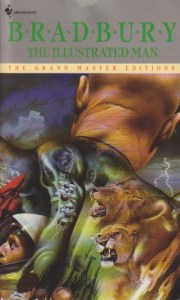
With the non-essential stores closed, my daughter asked me the other day “does that mean bookstores?”  Sadly, yes.  More weekends than not I spend some time in a bookstore.  Fortunately we are well stocked for an apocalypse, book wise.  Lately I’ve been on a kick of reading short stories.  I’ve certainly written enough of them to fill a book or two, and it’s nice to start something you can finish in one sitting.  I just finished reading, or perhaps re-reading Ray Bradbury’s The Illustrated Man.  I say “perhaps re-reading” because I know I read many of the stories in the edition of the book I bought as a tween.  Some of the tales I didn’t recall at all, making me think I was reading selectively in those days.  That’s the nice thing about story collections: you don’t have to worry about continuity.

That having been said, the conceit of the illustrated man himself is that of a framing device.  His tattooed body is the canvas on which all of these tales are painted.  A surprising number of them are religious in theme.  Many of them take place on Mars.  Rockets are ubiquitous.  As a child I hadn’t realized that many of Bradbury’s stories were published in the late forties and in the fifties.  They still felt futuristic to me, having grown up in a small town with very little exposure to technological developments.  Reading many of the tales as an adult, I was surprised at how much they influenced my own fiction writing style.  I must’ve read a lot more of them when I was younger than I recall.

My tweenage years were long enough ago now that memories slip into one another.  I can’t remember when this or that happened, especially as regards reading.  When did I first read about the incessant rain on Venus?  Or about the writers living on Mars dying out as their books are destroyed?  Looking back over my own fictional work I see Bradbury’s fingerprints everywhere.  Bradbury couldn’t afford to attend college, so he did what he knew—he wrote.  Of course, back in those days publishers and agents weren’t dealing with the volume they face these days.  The internet has made writers of us all.  And I have to admit that some of the stories in The Illustrated Man disappointed me.  They didn’t reach the level of either depth or insight that I had recalled.  Overall, however, the impression was good, if nostalgic.  As the days become a long series of interconnected hours of sitting in the house, it’s a real gift to have short stories to punctuate the days.