See Monsters

I have a soft spot for seventies movies, but I can’t decide if The Sailor Who Fell from Grace with the Sea is horror or not.  I found it on a horror list, and an oblique reference to Lord of the Flies got me interested.  It reminded me, in some ways, of The Wicker Man.  Although based on a Japanese novel, the movie’s set in England.  Two subplots seem unrelated except they happen to the same widowed mother and son.  The son is part of a group of five boys in a private school who have a secret society (echoes of dark academia here).  The leader, although not yet at puberty, is a sociopath who’s very bright and the others follow him.  He declares that a perfect balance (a very East Asian religious outlook) exists that adults simply cannot realize it.  Indeed, adults are bad.

At the same time, the boy’s mother meets and falls in love with a second-mate on a merchant ship.  The boy likes the mate too and feels that they have found a perfect balance.  Thus the two plots come together.  The boys in the club feel that the son has gone soft on their principles, and so to prove he hasn’t they arrange the vivisection of an anesthetized cat.  When the sailor returns, unexpectedly, to try to marry the widow, her son objects.  The perfect balance has been distorted.  The boys decide that the sailor must be treated “like the cat.”  They take him to a distant overlook on a pretense, and drug him.  In a long shot at the end, the boys gather around his unconscious body.  Now, the similarities to The Wicker Man may seem passing, but the idea of human sacrifice is there.

Is this horror or not?  Hard to say.  Most of the movie revolves around the mother’s relationship with the sailor (which the son watches, voyeuristically, through a knothole in his bedroom cupboard.  The secret society is always there, however, and when the plots come together you realize that the sailor will have to be killed.  Like Wicker Man, there’s nothing really explicit here, although Wicker Man does have a horrific ending.  The Sailor only has one by implication.  The leader of the secret society of boys is pretty scary and apart from the widow, parents are pretty scarce in the movie.  I was left wondering what it was that I’d just seen.  I can see why someone would list it as horror, but it had other echoes that I felt might fit better.  It was, however, free for the streaming.

Eye Eye

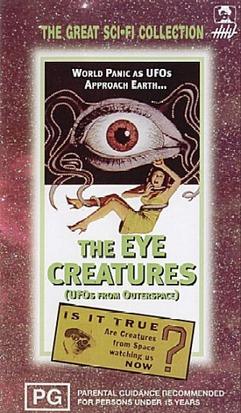
When trying to be conscientious about not spending too much money on movies there’s always the risk of seeing something cheap.  In the case of The Eye Creatures, not only was it cheap, but it was also a throw-back to childhood.  I remember seeing this one in my younger years, and, not yet old enough to be critical, loving the costumes.  Rewatching it as an adult, where some critical faculties remain, reveals it to be a bad movie.  Poorly written, poorly acted, and poorly financed, it ticks all the boxes.  It’s actually a remake of an earlier American International Pictures film, and AIP wasn’t known for its lush budgets.  To be fair, the film is supposed to be a sci-fi horror comedy, but the comedy isn’t that good.  The unintentional gaffs are.

So, the Air Force is concerned about keeping flying saucers secret.  When an “unfriendly” one lands where the teens all go parking, the Air Force investigates while the eponymous eye creatures terrorize the local kids.  Specifically, they seem bent on revenge against Stan Keyton and his girl, because they ran over one of the creatures.  Keyton gets arrested for manslaughter because the creatures substitute the body of a drifter they killed for the corpse of their own comrade.  The police don’t believe in aliens, of course, and the Air Force denies everything.  Keyton and gal decide, after discovering the the eye creatures explode when exposed to light, to round up the necking kids and wipe out the aliens with their headlights.  They figure nobody will believe them anyway.

Some movie monsters stick with you for decades.  The eye creatures are one example of this.  Simply seeing the movie title reminded me of them, although the only plot point I could remember was that they exploded in the light.  I didn’t recall all the voyeuristic watching of teens making out that the Air Force officers did.  Or the tedious revisiting of the Old Man Bailey character.  One of schlockmeister Larry Buchanan’s films, it was released the same year as his other cheap childhood favorite, Zontar, Thing from Venus.  As much as people like to make fun of makers of such cheap movies, Buchanan gained recognition in the New York Times (as have other makers of schlock such as Roger Corman and William Castle), so there is something to these movies.  For one thing, those of us who grew up in the sixties remember them.  And, if we also remain cheap, we can see them again as adults, and relive a bit of cinematic history.


Good Hearts

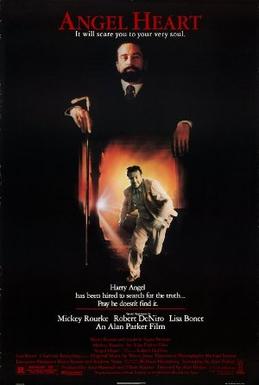
If you’re looking for more religion-based horror, you might try the 1987 film Angel Heart.  As I’m discovering quite a bit lately, I could’ve used this one in Holy Horror as well.  The religious elements are pretty hard to miss, beginning with the protagonist’s name, Harold Angel.  (Hark the, any one?)  A private detective, Angel is hired to find a missing person for a Louis Cyphre.  His search takes him from New York (where a guy keeps a pistol in a Bible (there’s maybe an entire book in this trope), down to New Orleans.  First he meets Cyphre in the back room of a black church but soon he starts getting chased out when he starts to uncover any clues.  Time to head to the Big Easy.

In New Orleans he finds all kinds of occult practices taking place.  And the folks are none-too-friendly when he starts making mention of the guy he’s after.  He ends up witnessing a voodoo ritual and complains about the bad religion he encounters.  The big reveal indicates that there’s been a case of mistaken identity.  Louis Cyphre (Lucifer) has actually been setting an elaborate trap all along.  The portrayal of the Devil as a sophisticated gentleman isn’t new, of course.  There is a scene where Angel and the Devil are in a church and Angel, being a detective, uses inappropriate language.  Lucifer (not yet revealed as such) has to remind him a couple of times to watch his tongue while in a sacred place.  Satan is more pious than Angel.

The movie has multiple issues, but it has become a cult film over the years.  Like many others that I’ve discussed on this blog, the entire plot draws its horror from religion.  Angel has a difficult time with the non-Christian worship he witnesses.  But really, it is the Christian Devil that’s the antagonist here.  Quite often in movies like this, fear of other religions is based on the supposition that Christianity is correct.  That’s been a broad American trait for centuries, and it gives horror room to run.  The idea of a generic Christianity (which is probably what most Christians hold to) overlooks the doctrinal differences, often quite significant, between denominations.  This particular avenue isn’t much pursued in horror films, at least in my experience.  Interestingly, like Cat People (1982), it places this religion-based horror in New Orleans.  There’s plenty to explore in that connection as well.  Angel Heart is not a great movie, but it can lead in some interesting directions; a holy sequel may be necessary.


Remembering Winter

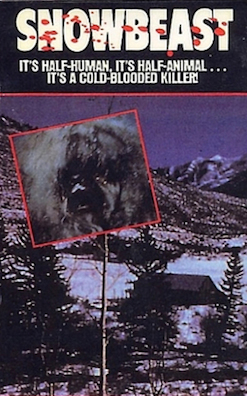
There’s a deep satisfaction at attaining a goal, no matter how low the bar.  Having rediscovered the “Beast Collection” after looking to see if Snowbeast was on it—it was missing from another DVD collection I have—I determined to watch my way through.  It took two or three months, maybe four, but I finally finished it out with Snowbeast itself.  One of a spate of Bigfoot films from the seventies, this was a made-for-television movie.  Many retrospectives show a movie going up in critical estimation over the years, but this one seems to have sunk down into the “bad movie” category.  But still, of the seven (!) Sasquatch films in the pack, it is clearly the best.  A low bar, as I say, but still, it has the advantage of being relatively well written.  Joseph Stefano, who wrote the screenplay, was one of the minds responsible for The Outer Limits.  He also had credit for writing the screenplay for Psycho

Decent writing can help redeem bad movies.  But more than that, you can actually care for the characters.  In some bad movies you have a difficult time raising any feeling for the people portrayed—that’s true for more than one of the other films in this collection.  Here are people that doubt themselves, but have good hearts.  The story isn’t complex (one of the reason modern critics scorn it).  A ski resort in Colorado—much of the movie shows people either skiing or snowmobiling—a young woman is killed by the eponymous snowbeast.  When the owner of the lodge insists on keeping it open for a festival, the current manager (her grandson) is reluctant to kill something that’s so human.  There’s a bit of a moral quandary here, which provides some traction on a slippery slope.

The beast then kills a member of the search and rescue team, and they know they have to destroy it.  The principal characters track it down, and after the beast gets the sheriff, they shoot it.  As I say, not much of a plot, but the characters have some depth.  It’s not a great movie by any stretch, but it doesn’t leave you feeling as if you’d have more enjoyed doing your taxes.  And that’s saying something for a collection of movies that cost less than most single DVDs.  Now if that makes me sound old, keep in mind that this movie was from the seventies.  And even if most re-appraisers think it has grown worse over time, I’m willing to disagree.  After all, I just accomplished something by watching it.


Father of Yeti

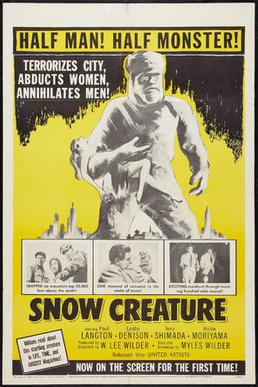
“Always steals women.”  So Subra mutters high in the Himalayas.  Perhaps one of the most unintentionally funny bad movies, The Snow Creature does hold a place in history.  It was the first abominable snowman, or yeti, movie made.  It’s also incredibly cheaply made with a costume that most twelve-year-olds could’ve fabricated better.  As the antepenultimate movie in the “Beast Collection,” I felt obligated to watch it one snowy weekend.  Spouting colonialist and sexist values like a Republican, the story is tedious even at eighty minutes.  But funny at times also.  So a botanist travels to the Himalayas to study plants at 10,000 feet.  His fun is interrupted when a yeti kidnaps the head sherpa’s wife, causing the sherpa to take charge and start to hunt the beast.

The American scientist decides to capture the yeti instead so that he’ll have something to give the foundation sponsoring the expedition.  Leaving behind a female and baby yeti, both killed, he drugs the snowman until a special refrigerated container can be built—gee whiz, Americans can do anything!—to bring the beast back.  And they fly west from Bombay to California, where, when they land the beast is held up in customs (I kid you not).  There’s a debate about whether he’s human or animal and while the debate goes on, the creature escapes.  The hapless police can’t find a seven-foot tall yeti wandering around Los Angeles at night, harassing the women.  Finally they figure he’s using the storm sewers.  They trap him but, alas, have to shoot him.  At this point they completely lose interest in the corpse and exchange meaningless banter as they drive off.

This movie seems to be what the Trump administration wants America to revert to.  Bossing around BIPOC people in their own countries, women being helpless without men to rescue them, and corporations buying what is arguably a human being.  Sounds like a playbook to me.  Also, it was extremely cheap.  What amazed me is that United Artists distributed it.  People must’ve been pretty hungry for entertainment back in 1954.  Having said that, it is worth watching for a laugh.  Now that streaming exists, you can find this free on various services.  If you like very wooden acting, and superior Americans having their way in Asia just because they’re, well, Americans, you might find this a passable way to spend a snowy weekend (wait til winter to watch it; it’ll keep).  Only a word of advice: be sure to lock up your women before you do, because the beast always steals women.


Watching Watching

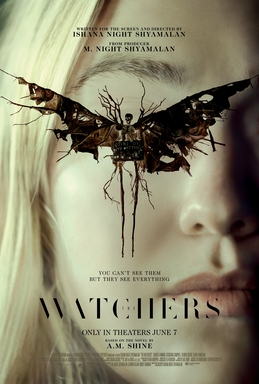
Dynasties exist in many professions.  Some of us grow up where there’s no succession, but for those who do the results can be good or bad.  I’m thinking in the case of Ishana Night Shyamalan it will be good.  I have not seen all of her father’s (M. Night Shyamalan) movies, but I have seen enough to know that he has considerable talent but also sometimes misses the mark.  That’s how I felt after watching The Watchers.  I didn’t know anything about it (including the director or producer) before watching it, but it only took a few minutes before I began thinking that it was like an M. Night Shyamalan movie.  Like his work, it is intelligent and intriguing.  And, in this case, slightly off the mark.  The story is a little too involved, and it may remind you, at points, of The Village (one of my “old movies” that I still go back to now and again).

Mina, an American living in Ireland (never explained), gets trapped in a forest from which no one ever escapes.  Now, this part was scary if you’ve ever been lost in the woods.  (I have been and it still terrifies me.)  These woods are inhabited by watchers—in lore known as fairies, among other things.  A professor had built an observation deck where he could observe them.  The only way a human can survive in the woods is to stay inside the shelter at night.  Mina’s car breaks down in the woods and she comes across three survivors.  They’ve been in the shelter for months and since it is in the middle of the woods, there’s no way to get out before sunset, when the watchers will kill you.  Now, were the premise of the film to have stopped there, it might well have been believable.  The story gets deeper (but I won’t give it away), straining credibility a bit.  There’s a little too much stuffed in.

Does it work as a gentle horror movie, in the Night Shyamalan vein?  Yes.  It satisfies an itch on a rainy or snowy weekend.  Too many unanswered questions remain.  The setting in Ireland makes sense, given the fey plot, but why is Mina American?  Why is her sister Lucy also in Ireland (or is that just a visit at the end)?  Why didn’t [redacted: spoiler] watch the video long ago and leave?  Other questions also haunt.  Why did the professor shoot twice?  And more.  Still, having a source of Night Shyamalan movies for more than one generation seems like a good thing to me.  And I really want to know where, exactly that forest is located in real life, with or without the fairies.


First Visit

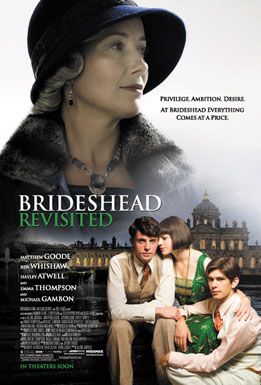
Dark academia prompted me to do it.  I have never read an Evelyn Waugh novel, but the title Brideshead Revisited is fairly ubiquitous.  I’d heard it many times but knew nothing about the story.  With tastes that tend toward horror, selecting a Friday-night movie that my wife will watch with me is sometimes tricky.  I’ve been discovering that films listed as dark academia often appeal to her taste, and Brideshead was one of them.  Interestingly, although we’d both heard the title many times, neither of us knew anything about the actual story.  So we found out.  The novel had been adapted into a successful television mini-series, and eventually became a cinematic version.  That’s the one we saw.  At the start it reminded me of E. M. Forster’s Maurice.  Two young men meet at Oxbridge and fall in love.  Only Charles Ryder is middle class, not aristocracy.  Lord Sebastian Flyte is.

Lord Flyte lives at Brideshead, a country house that any gothic dreamer would be glad to own.  While there, Charles meets Lady Julia, Sebastian’s sister.  Like Maurice’s Clive, he eventually prefers her company to his.  She’s already engaged to be married—you get the picture.  What I wasn’t expecting was just how much of this movie was about Catholicism.  The Flytes are Catholic, the mother demandingly so.  Charles is an atheist.  Agog at being welcomed into high society, he is nevertheless firm in his atheism.  This sets up the tension between the mother and Charles, but both Sebastian and Julia are okay with it.  Charles eventually becomes a successful painter with a society wife himself (the movie kind of just drops her), but still in love with Julia.  When her dying, atheist father accepts the last rites and crosses himself at his dying moment, Julia knows her Catholicism means she can’t run off with Charles.

The dark academia part derives from the Oxford part of the story, but also from aristocratic society.  It operates by its own rules and there are secrets and power struggles.  In the end, Brideshead is abandoned during the Second World War and is billeting soldiers.  Charles is now a captain in the army, in charge of the operation at Brideshead.  He has no wife or girlfriend, and Julia has left.  He goes into their private chapel and is about to extinguish the single burning candle, but decides not to.  Apparently Waugh himself converted to Catholicism, but movies adapted after successful mini-series based on the novel might distort things.  Overall, the film is a good reflection of that age-old English struggle with religion.  And dark academia.


Belting Beltane

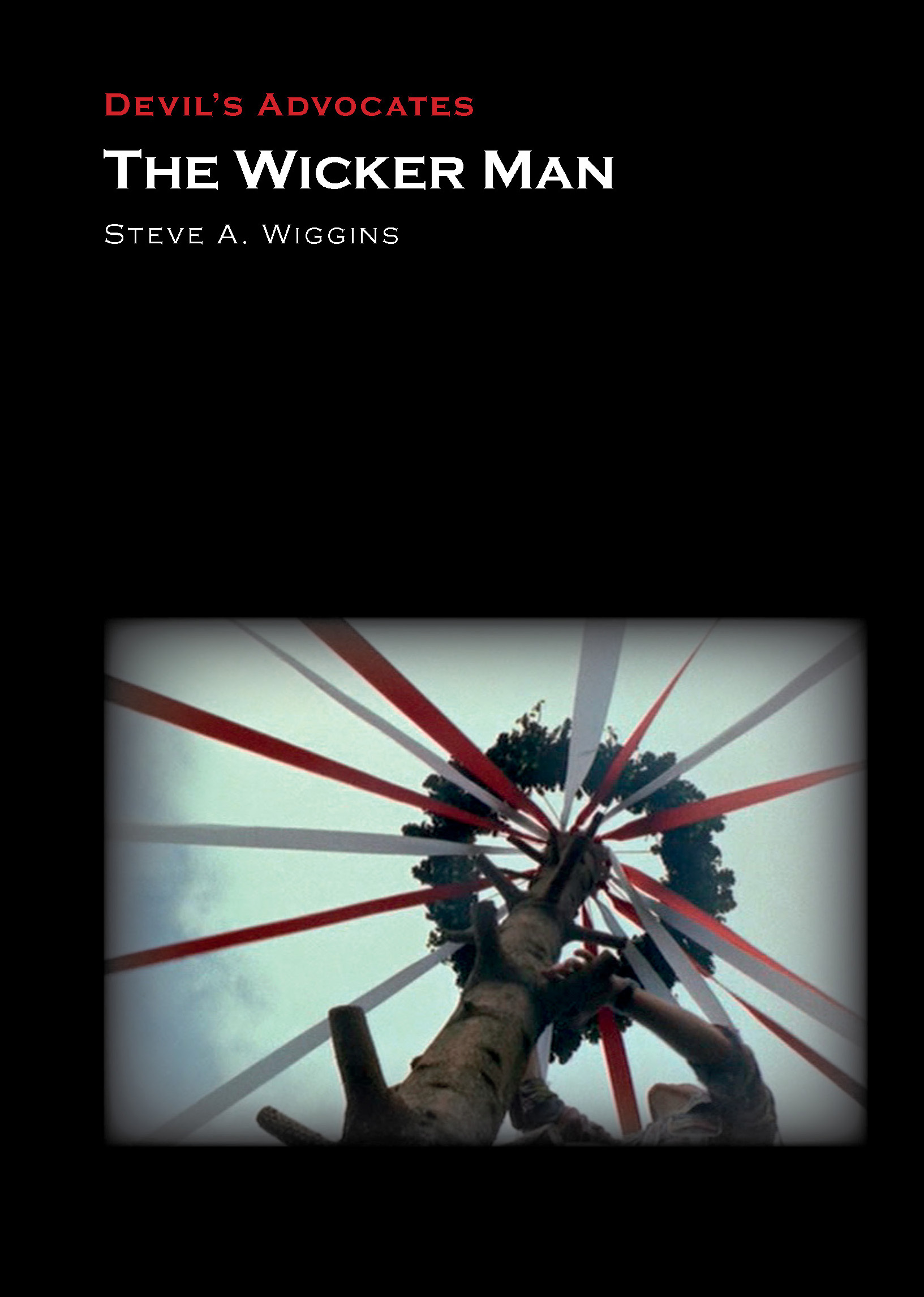
Things have been so busy that I forgot that today is Beltane.  That’s all the more ironic because yesterday I’d been on a panel to address the British Association of Film, Television and Screen Studies special interest group on Horror Studies, about The Wicker Man.  Lest you get the wrong idea, BAFTSS did not approach me to talk about my book (which has largely disappeared, as far as I can tell), but another recent Devil’s Advocate author approached them about having a panel featuring recent titles.  This special interest group has a program called Weekday Night Bites where they gather virtually to have speakers talk about horror.  Yesterday there were seven of us, discussing five books, one of which was The Wicker Man.

The theme of the panel was No Safe Space, about place and space in horror.  This meant I spoke briefly about The Wicker Man as folk horror.  As I told the assembled group, I actually interpret Wicker Man as holiday horror—it’s based on May Day, and I didn’t even think to mention that it was today—instead of folk horror.  One of the the hallmarks of the Devil’s Advocates series is that it tries to approach horror films from unexpected angles.  When I first contacted the editor who started the series at Auteur (who has, unfortunately left), he told me that they didn’t have a Wicker Man volume because everyone was pitching it as folk horror.  He wanted to see a different interpretation.  I’d been writing a book about folk horror and decided to give that a try.  The critics liked it, and thus my book was born.  And here it is, May Day, and I’d forgotten all about it.

There was a reasonably sized group present for the discussion and it was a lot of fun.  It reminded me of my Miskatonic Institute for Horror Studies course on Sleepy Hollow two years ago.  Both of these were efforts to stir some interest in my books.  Horror and religion is a new avenue of approach and there are a handful of us working in this area.  The others, it seems, have a knack for getting their books published in places where you don’t have to take out a mortgage to afford them.  I’m more in the group whose books are relegated to the Summerisle of sales.  Either that, or I’m actually Sergeant Howie, unwittingly flying there to help someone I think is in trouble. Who knows?  Anything’s possible on Beltane. 


Capture and Release

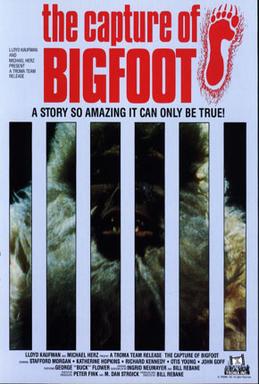
Waste not, want not.  I place some stock in old sayings.  With the way things are going, prices are sure to rise and so saving a penny or two may be wise.  So I turned back to my boxed set of “The Beast” for my horror fix.  As I’ve explained before, I bought this DVD set before streaming was a thing, and I was feeling nostalgic for Zontar: the Thing from Venus.  Being a fan of bad movies, it was worth every cent.  The set is actually (mostly) themed around Bigfoot.  I’ve talked about a few of these movies before, and trying to be frugal, I’ve determined to watch the whole set, no matter the cost.  Besides, there’s an aesthetic to bad movies.  The Capture of Bigfoot, no doubt, is a bad movie.  Knowing this before I slipped the disc in, I have no business acting outraged at the poor acting, directing, writing, or any cinematic sins.  Except one: a horror movie can’t be boring.  And Capture is b-o-r-i-n-g.  If you like movies about people slogging through knee-deep snow, this may be for  you.  

What really amazes me is the talent the compilers of such collections have at locating truly obscure bad films.  Now, I have a soft spot for 1970s horror.  Nostalgia carried me through, floating on those seventies’ vibes.  The clothing, especially.  And more particularly, the winter coats.  Although set and filmed in Wisconsin, the winter coats the kids wear in this movie are just like those everybody was wearing in Pennsylvania at the time.  And yes, I trudged through knee-deep snow my fair share of times.  That part just opened the flood gates of memory.  So, the story goes like this…

An evil businessman (I lost track of how many people he killed, or tried to), wants to capture Bigfoot (shown early, in winter white) to put the town on the map.  Paying stooges to go get the beast, he finally builds an elaborate trap that succeeds.  The local game warden, with his girlfriend/wife and her little brother, decide the creature isn’t evil.  Using Batman-style tying skills, bad guy’s henchmen assure that most of his enemies escape to trudge through the snow some more.  A mysterious Indian character tells the game warden that the creature must be set free, which it is.  The evil businessman dies in a fire inside his wicked mine where he’s keeping the beast.  In the end, two families—the warden and the Bigfoot—pay mutual respect.  I do wonder about the mentality of someone making a movie like this.  But then, some forty years later, here I am writing about it.  Win-win. 


From the Grave

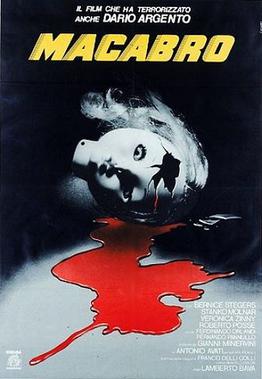
“Macabre” is a word of uncertain etymological origin.  One of the most convincing arguments that I’ve read is that it derives from Hebrew qbr, a root associated with graves.  The “m” prefix would be the preposition “from,” making the phrase miqqeber, or “from the grave.”  It has been decades so I don’t remember where I read that, but it made sense to me.  In any case, this is a fairly common word for titles, it would seem.  I recalled Stephen King noting Macabre among the scariest films up to 1980, so I thought I’d try to find it.  A simple IMDb search showed it streaming for free on a couple of platforms, so I clicked on one of them.  At about halfway through, I paused the movie to see if maybe I’d got the wrong one (I had).  But I decided to finish it out in any case.  There will be spoilers below.

What I’d found was the 1980 Lamberto Bava movie.  Bava’s name was familiar to me from his famous father, Mario Bava, an Italian horror movie innovator.  There was a family resemblance.  So, what’s it about?  A woman with two children is having an affair.  Her somewhat unstable daughter decides to drown her brother to get her mother to come home.  On the way, her paramour, who is driving, runs into a guardrail and is decapitated.  After being released from the mental hospital, the woman moves into the apartment where the affair had been taking place.  The house is owned by a blind man who knew about the affair.  It sounds like, however, the affair is still continuing although said man is dead.  

When the daughter, who is trying to get her parents back together, confesses that she drowned her brother, the woman drowns her—echoes of Medea here—but the blind man kills the woman when he tries to save the daughter.  What makes this even more macabre, is that both the blind man and the daughter had learned that the woman was keeping the head of her lover in the freezer—echoes of Alice Cooper as well—to stimulate her as she continues the affair without her former lover.  It’s not a horror classic.  Titles can’t be copyrighted, so some repetition is bound to occur.  The Macabre I should’ve watched was the one from either 1958 or 1969.  Apparently this is a popular film title, as there was another released in 2009.  I can rule out the last one, but to find out what I should be looking out for, I’ll need to dig out my copy of, well, Danse Macabre.


Unusual Autopsy

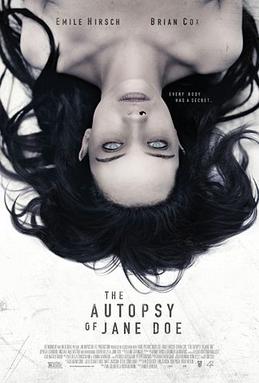
I avoided The Autopsy of Jane Doe for some time because, well, autopsy movies just aren’t my thing.  Besides, I thought it might be a “true crime” sort of movie and those aren’t my favs either.  That didn’t stop the recommendations, so I gave in.  I’m glad I did.  It’s a cut above a lot of what’s out there, and although it does rely on a few more jump-scares than I like, it isn’t all about them.  And it turns out that it’s Holy Sequel material.  Here’s how the story goes: a father and son mortician team, who have the morgue in their basement, specialize in determining cause of death for the local sheriff.  When four bodies are found in one house and none of it makes sense, the sheriff brings the most suspicious body, Jane Doe, to the morticians for their assessment.  Externally the body has no marks, so what killed her?

The majority of the movie is the attempt to solve this mystery.  The father and son find impossible things—evidence that the woman had been tortured, but there were markings on internal organs without any damage to the skin.  They soon determine this is bad juju and when lights begin shattering and corpses get up and walk around they know they were right.  They’re trapped, however, in their basement.  It’s clear that this Jane Doe isn’t quite through with them.  I’ll try not to spoil the ending here, but I did mention that the Bible comes into it.  How so?  Well, it turns out that one of the impossible things in the body is a charm that has Leviticus 20.27 written on it (the passage about not allowing witches to live).  And although it invokes Salem, it does so in a way that suggests the witch hunters were to blame.

This movie was actually out before Holy Horror was finished, but as I point out in that book, there is no website or repository listing horror films that use the Bible.  To write a book like that, you have to do a lot of watching.  I love watching movies, but it takes both time and money, items in constant short supply in my life.  When I do watch, I try to make connections.  It would also be interesting to write a book on how Salem is portrayed in horror movies.  What with the work-a-day world in which I live, I’m not sure how many more books I can crank out.  Especially when they don’t sell.  The important thing is not to let the title of a movie put you off, for autopsies can reveal much.


More Rats

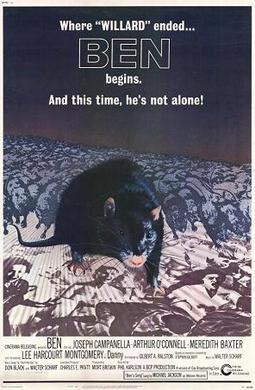
I’ve asked other survivors of the 1970s if they knew that the Michael Jackson hit “Ben” (his first solo number one recording) was written about a rat.  Most had no idea.  The song is the theme for the sequel to Willard, namely, Ben.  Now, I have a soft spot for seventies horror movies.  Before the days of streaming I repeatedly looked for Willard in DVD stores and never did find it.  I eventually found it on a streaming service and even wrote a Horror Homeroom piece on it.  One winter’s weekend with not much going on, I finally got around to seeing Ben.  Neither are great movies, but I’ll give them this—people in my small hometown knew about them.  Everyone I grew up around knew that “Ben” was a song from a horror movie.  In case you’re part of the majority, Ben is the chief of the intelligent rats who turns on Willard at the end of his movie.

An incompetent police department and other civil authorities can’t seem to figure out how to exterminate rats when they begin attacking people.  A little boy, Danny, has no friends.  He is apparently from an upper-middle class family, and he has a heart condition.  Ben finds him and the two become friends.  Danny tries to get Ben to lead his “millions” of rats away from a coming onslaught, but for some reason Ben decides to stick around and nearly get killed.  In the end, badly injured, Ben finds his way back to Danny.  Cue Michael Jackson.  It really isn’t that great of a movie—the number of scenes reused during the tedious combat scene alone belies the pacing of a good horror flick.  I felt that I should see it for the sake of completion.  Check that box off.

It’s a strange movie that ends up with viewers feeling bad for the rats.  They’re not evil, just hungry.  They do kill a few people (poor actors, mostly) but it’s often in self defense.  The best part is really the song, and the premise behind it—boy meets rat, boy falls in love with rat; you know how it goes.  Michael Jackson famously loved horror movies, and as many of us have come to realize there’s not much not to like.  This movie is pretty cheesy (with the rats attacking a cheese shop, but only after an unintentionally hilarious spa scene) but it has heart.  And it has a fair bit of nostalgia for those of us who grew up in the seventies.


Not Yet Illegal

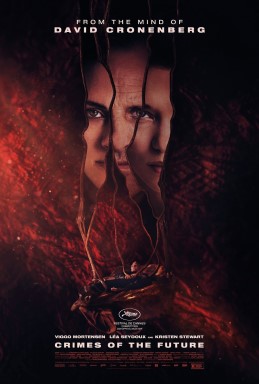
David Cronenberg’s name suggests a certain kind of body horror as unique as it is unsettling.  Crimes of the Future (2022) immediately reminded me of Existenz, which I watched many years ago.  Crimes of the Future is more difficult to understand, however, in part because it is shot dark and quite a lot of the dialogue is indistinct.  I happen to be reading a hard-to-follow book and my overwhelmed brain was hoping for a more straightforward narrative.  In any case, in the eponymous future, human evolution is such that it has to be regulated.  A performance artist couple puts on shows of surgery since he (Tenser) is constantly growing new organs.  They’re harvested as part of the performance.  Humans have evolved out of pain by this point, so surgery is done as art.

Meanwhile, a group has evolved to the point that they can eat plastic and toxic waste.  They demonstrate that physical modifications can be inherited, which puts them on the government’s wanted list.  Tenser and his partner, Caprice, own an automated autopsy table (who doesn’t?) that performs the autopsy while letting others watch.  The radical group wants to use this device to autopsy, as art, the child born with the ability to eat plastic (he’s killed at the beginning of the movie).  Also in the mix are a couple of crooked bureaucrats and a detective who seems sincere, but who has been working with an insider among the criminal group.  Eventually the autopsy occurs but it seems the boy’s insides had been surgically altered.  The leader of the radical group is assassinated and Tenser eats a toxic waste bar and dies.

If you’re saying “How’s that make sense?” you’re not alone.  Body horror isn’t my favorite.  Many of Cronenberg’s favorite themes are present here, but the film lacks a strong narrative.  Or at least one that I could follow.  Art house cinema often requires quite a bit of work from the viewer.  The atmosphere of this film, like Existenz, isn’t really horror, but it breezes into that territory.  Just when the horror—the surgeries—appears the social commentary kicks in.  That’s often true of body horror, a genre Cronenberg is credited with developing.  But I watch for the story as well as the mood.  Some movies are more about the images, I know.  And the future orientation makes some classify the film as science fiction.  It has more of a Blade Runner, dystopian feeling atmosphere, but without replicants.  Crimes of the Future, it seems, may require a better detective than yours truly to solve them.


Dark Smile

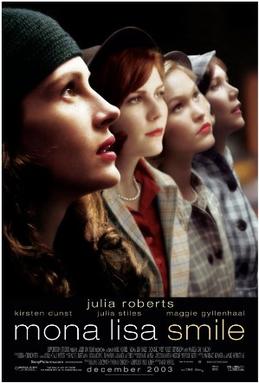
Romance.  It’s not the same thing as Romanticism, but it’s often part of drama.  It can, and often does, feature in horror.  Tender feelings toward someone we really love seem to be a human universal, even if social structures don’t always support such feelings.  Maybe I’m trying to make excuses for why I watched Mona Lisa Smile, but there is an underlying reason.  More than one expert considers it an example of dark academia.  I was curious, and honestly, it’s easier to get my wife to watch dark academia than it is horror (for that I’m on my own).  This was a film I’d heard about many times, but hadn’t watched any trailers for, so I wondered what it was all about.  In short, Wellesley.  One of the seven sisters.  But more than that—women struggling for equality in the 1950s.

A fictional Katherine Ann Watson takes up a post teaching art history at Wellesley, back in the day when a doctorate wasn’t required.  In order to demonstrate her expertise to her very well prepared students (I never, in nearly 20 years teaching, had students show that level of eagerness for any subject) she introduces them to modern art.  Traditional Wellesley isn’t prepared for that.  Moreover, she encourages them to develop careers of their own in a period when the MRS degree was still a main reason for women to attend college.  Watson’s own life isn’t without romance; a boyfriend back home in California and another professor at Wellesley both vie for her affections.  Some powerful students, however, make her life difficult and despite her popularity as a teacher, the administration allows her to remain, but with severely clipped wings.  She decides to fly instead.

Amid all the social commentary, a darkness remains.  A large part of it is patriarchy, but academic politics—driven by money—is the main culprit.  As Watson is essentially forced out, her students see her off with a display of camaraderie, making this, in some ways, quite similar to Dead Poets Society.  There were a few triggers for me.  Years ago I was indeed called into the Dean’s office and handed a letter to read.  While not nearly as dramatic as either Dead Poets Society or Mona Lisa Smile, I had students demonstrate their support for me as I was forced out.  Katherine Ann Watson seems to have had better prospects than John Keating, but both movies remind us that academic politics are dark indeed.  Even if it’s couched in the genre of romance.


Unholy Conception

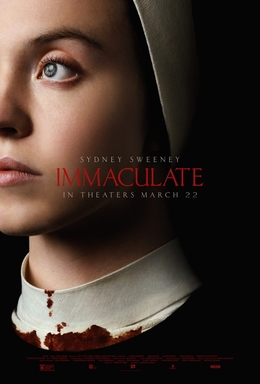
Religious horror is difficult to get right.  Immaculate received reasonably positive reviews, and did well enough at the box office.  Its message of women being forced into reproductive roles unwillingly is certainly timely.  Viewers with religious training, as well as experience viewing quite a lot of horror, might be less impressed.  The basic premise isn’t bad: a convent in Italy, which has one of the nails from Jesus’ crucifixion, is using the biological material on the nail to genetically engineer a new messiah.  The movie follows the novice/nun Sister Cecilia, a virgin, as she joins the convent and discovers that she’s pregnant.  The entire community—apart from a jealous nun and a friend trying to warn Cecilia—welcomes the news, presenting Cecilia as the new Mary.

The convent, which has a history of torture, realizes that Cecilia might be reluctant.  Past sisters have, and she isn’t the first immaculate conception the resident priest (a former biologist) has engineered.  Realizing, by the second trimester, that something sinister is going on, Cecilia tries to escape but is caught and confined, and her soles are branded to prevent her from running away.  After killing the Mother Superior, a Cardinal, and the resident priest, she does escape, gives birth, and kills the baby.  It’s not difficult to see the social commentary involved, but this is body horror and it’s not about gross outs.  It is pretty tense and has several scary moments, but the plot leaves some rather large holes that might following it difficult.  It’s never explained, for example, how the genetic material ends up inside Cecilia without her knowing it.  For those who’ve spent years reading about Marian devotion, this is not an unexpected question.

Although this would be a candidate for Holy Sequel, there’s just something off about the religious elements of the film.  Having never been a nun, I can’t say for sure, but the convent life (apart from the engineering a messiah) seems inaccurate.  And although the Bible is quoted, it’s presented in an almost Protestant way.  The underlying religious imagery feels slightly askew.  Judging from what critics have said, that doesn’t seem to bother many viewers.  If you’re going to make a religious horror movie, it is possible to get away without doing your homework.  In the end, however, it shows.  The acting is quite good and the theological message is worth arguing over, but like many other religious horror films, it has been weighed in the scales and found wanting.