Almost Ancestors

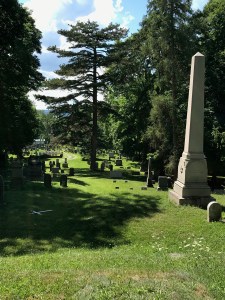
During the Covid-19 crisis, cemeteries seem to be safe places.  Not too many people are in them, at least not people that can spread the virus, and they always provide grounds for rumination.  Besides, being outdoor spaces they can get you someplace outside the same four walls you see all the time.  My wife and I both have an interest in genealogy.  We’ve worked on our family trees and even try to keep our Reunion software up-to-date.  This past weekend we visited a family burial plot in upstate New York.  My wife’s family has a more accomplished pedigree than mine does, and one of her ancestors here actually merited an obelisk and was written up in local histories as a noteworthy member of the community.  I also have ancestry in upstate, and we’ve traveled to some of their sites in the past, although their markers are usually harder to find.

Being in a cemetery, the logic of ancestor worship suggests itself.  Without these people history as we know it would’ve been different.  Without those who are our direct ancestors we wouldn’t even be here pondering our own insignificance.  We wish these headstones could talk, saying more than the names, vital dates, and perhaps a quote from the Bible.  We listen, hoping to gain knowledge of who they were.  It seems to me that cemetery histories would be a boon to genealogists.  For those of us whose predecessors were buried in small towns, such guides could be a real boon.  As it is, Find A Grave dot com is often a helpful resource, but who wouldn’t like to be written up in an actual book?  Network reception often isn’t great out here in rural America.

Graveyards are gateways to the past.  In a world that feels like it’s changing way too fast, it seems right to have these places—these sanctuaries—to stop and reflect.  They represent lives lived.  Peaceful after the trauma of day-to-day angst and struggle.  Unfortunately the pandemic is daily adding to the number of those who’ll be buried in cemeteries across the nation and around the world.  Although somewhat preventable, we have no national will to stop the tragedy.  So it is I find myself staring at a monument erected to someone I never knew, but without whom my life would’ve been vastly different.  It’s a sunny day and I’m outside amid a crowd that can cause me no harm, but who, at times like this, inspire me. 

Frankenstein’s Family

The story of Frankenstein has many unexpected twists and turns.  I’m currently reading a book about the writing of the novel—something I’ve done a number of times before.  There was an aspect of this story that hadn’t really caught my attention too much, but then, circumstances changed.  Suddenly old information became new.  It all started with a missed opportunity from childhood. 

It was a real puzzle.  Although my grandmother lived with us her last years, I never knew the name of her mother.  There had been hints.  My grandfather’s book with birthdays in it listed the first name, so I had a Christian moniker and birthdate only.  She’d died young, I knew, somewhere in the Washington, DC area.  This had been the state of my knowledge for many years.  My grandmother died before I was a teen, and before I took any interest in the family story.  I knew her heritage was Germanic, her father having been a first-generation American.

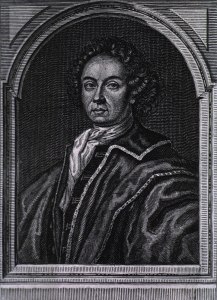
So young Mary Shelley (technically Godwin) was on a tour of Europe with her lover Percy.  Although they both came from distinguished backgrounds, they were cash poor.  Running out of money they made their way back to England as cheaply as they could.  They passed near Castle Frankenstein along the way, although there is no record that they actually visited it.  The name seems to have stuck, as does the story that they potentially learned about a mad scientist who’d lived in that castle.  This scientist was a theologian who dabbled in alchemy and experiments with dead bodies.  I know what you’re thinking—it’s like a puzzle piece we desperately want to go in this place but its fit’s ambiguous.  We’re not sure how much of this Mary Shelley knew.  The alchemist’s name was Johann Konrad Dippel.  I’d read about him before.

I’d spent nearly an entire summer some years back working on my grandmother’s family, finding little.  Just two years ago I did a casual search on “Find a Grave,” and to my surprise, I found my great-grandfather.  I knew it was him because his second wife’s name matched information from all the family records.  The cemetery record, in Maryland rather than DC, had his first wife’s name.  It was that easy.  After decades of searching, a few keystrokes revealed the mystery.  When it also listed her parents, the significance of her mother’s maiden name—Dippel—escaped me.  Now I have no way of knowing if this is the same Dippel family of Castle Frankenstein, but it put flesh on the bones of my long-standing interest in monsters.  Seeking them out may be the same as learning family secrets.  Perhaps it always is.