
Speaking of large ships, in honor of World Ocean Day, which was June 8, I had planned to watch Seaspiracy. A Netflix original documentary, this really is a must-see film. Not to pass the buck, but I’ve long believed it will be the younger generation that will take the initiative to improve conditions on our planet. I’ve seen my own insanely selfish and aging generation (with even more aged and selfish senators) continue to exploit this planet like there’s no tomorrow. If you watch Seaspiracy you may see that it’s closer to true than you might think. There may be no tomorrow if we don’t change our ways right now. Borrowing its title from Cowspiracy, another important documentary, Seaspiracy looks at the fishing industry and its devastating effects on our oceans.
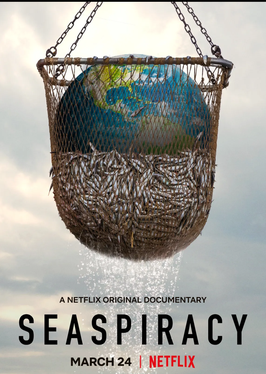
There’s a lot of sobering stuff here. It begins with plastics. Single use plastics, and even recyclable plastics, are everywhere. They kill sea animals, they break down into micro-particles and infiltrate everything. Chances are you have lots of plastic in your body just from living in an environment where it’s everywhere. Ali and Lucy Tabrizi take you on a very disturbing journey where governments keep secrets about their roles in depleting the oceans and where large corporations kill observers at sea where there’s no chance of the truth being discovered. They take you to the claims behind “dolphin safe” tuna and other fish. They take you to where the market price on illegally caught blue fins can bring in three million dollars per fish. And they’re caught in great numbers.
The oceans, according to current projections, could be empty in 27 years. If current practices don’t change, there could be basically nothing left by 2048. Why? Because humans are hooked on consuming. Some critics complain the date should be 2072, as if that isn’t just kicking the can down the road. I became a vegetarian many years ago, after leaning that way many years before that. It took Cowspiracy to make me go vegan. We eat without thinking about where our food comes from. Our industrial food practices are literally destroying our planet. Having given up fish along with other meat, I didn’t think much about fishing. Seaspiracy shows why fishing is everyone’s concern. It’s largely unregulated, unenforceable laws apply, and companies try to make consumers feel better in their acceptance that some fish is safe for endangered species. This documentary shows once again how the price of eating animals, and doing so on an industrial scale, is simply not sustainable. My generation is perhaps too lazy to change its ways. Our only hope is that the younger generation takes the state of this mess far more seriously than we do. And perhaps thinks before putting things in their mouths.

 Steve A. Wiggins