Disputing Tradition

I respect tradition.  Normally.  Once in a while tradition should be disputed.  The other day I was reminded of the seventeenth-century aphorism, “The early bird gets the worm.”  As a lifelong struggler against literalism, I had to get over the bird and worm part, and was thinking early meant, well, early.  This, combined with even earlier saying “Early to bed and early to rise makes a man [sic] healthy, wealthy, and wise,” convinced me that early did reference waking.  And these saying require some revision.  I’m an early riser.  I don’t get many worms and although I seem to be mostly healthy, I’m certainly not wealthy, and many would question my wisdom.  So why do we encourage people to wake up early?  The fact is most people stay awake late.
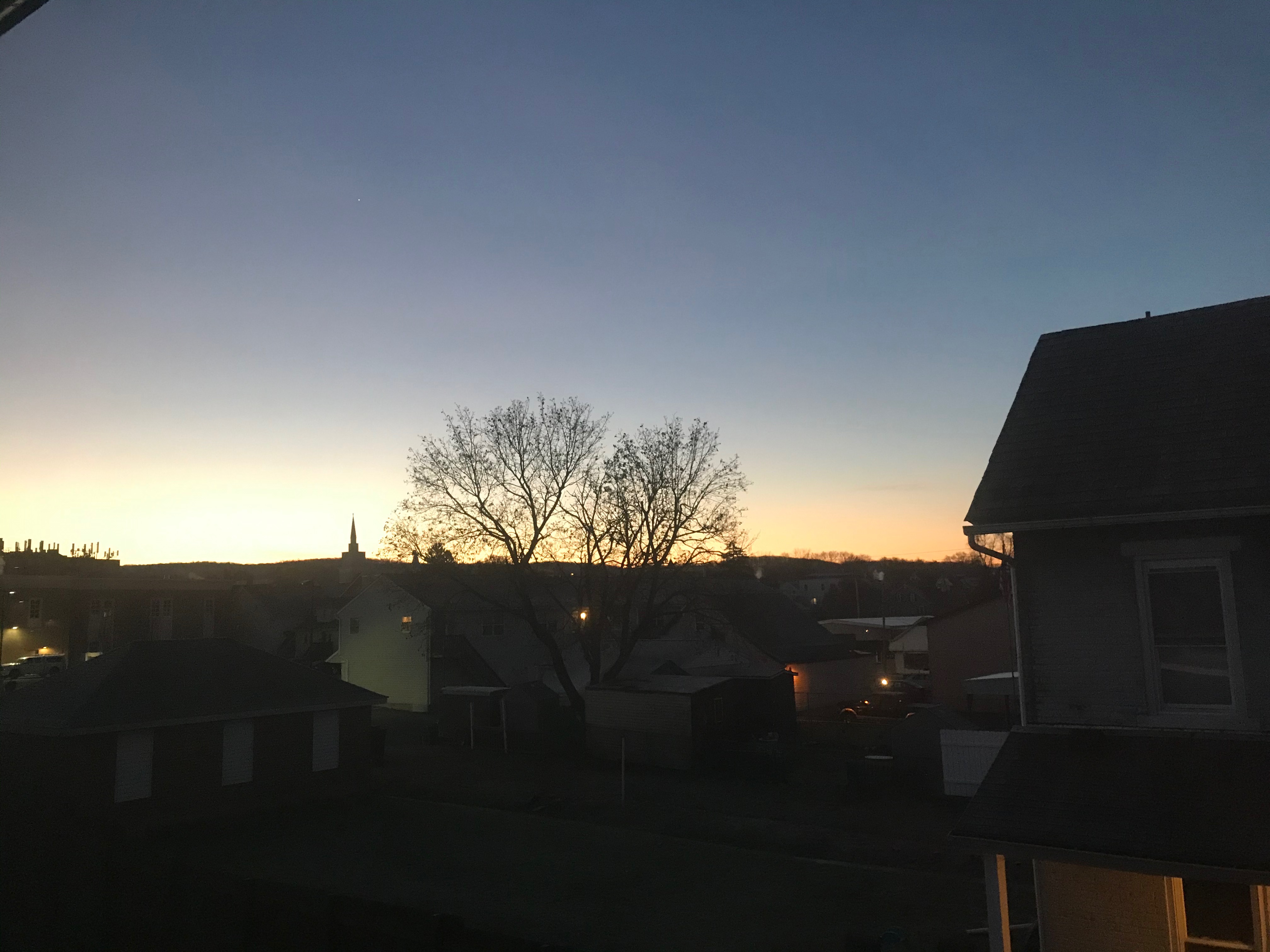
I’ve noticed a few things about early rising.  One is that I can get a lot of creative work done with no interruptions.  My last three books were mostly written between three and five in the morning.  (The royalties, however, never even approach the cost of the materials required to write them, so strike the “wealthy” part of the equation.)  I’m ready for early meetings at work.  I can think of six impossible things before breakfast.  But.  (There’s always a but.)  Afternoons are my evening hours.  I lose my focus and dread late (i.e., after 3 p.m.) meetings.  As my family is beginning their fun part of the day, I’m heading to bed.  I can’t do evening meetings, clubs, or hobbies.

So why do I do it?  For one thing, I can’t not do it.  I awake early as a matter of biology.  Over the years it’s slipped back from about 5 a.m. to 3:00.  I remember being a child at sleepovers at a friend’s house and waking early, watching the sun stream through the blinds, wondering when somebody else might wake up to play.  In college it was an advantage to get to the showers first.  As I professor I did my research before the duties of the day took over, preventing any real progress.  None of this, however, has made me wealthy.  I do have to admit that I could probably get worms, if that were something I desired.  I see animals out and about when I’m jogging during morning twilight.  There are likely worms about too.  I’m usually awake before the birds.  And this has made me question traditional wisdom.  Of course, I don’t claim to be wise, either.


What’s Class Got to Do with It?

As an editor you get to read synopses of nascent books across a wide variety of disciplines.  A live topic in sociology and poli-sci is class.  As in “the hidden injuries of.”  So I’ve been grinding class in the machinery of my mind and the product always seems to be a question mark.  Neither of my parents finished high school.  My father worked, when he did, as a house painter.  With three children and no money for childcare (and not even a GED), my mother was of the stay-at-home variety.  I saw neither parent, and this would include my step-father, sit down to read a book for enjoyment.  My mother read the Bible for consolation, and read us children’s books before bed, but literature wasn’t really part of our lives.  I still think of myself as working class because that’s what I learned growing up.  Working class with books.

I recently posted about a contract for my fifth book.  The previous four have earned total royalties of well under four figures (combined).  I’ve been asked why I do it.  It’s not an expectation of my job.  It takes up most of my time outside an unrelenting nine-to-five.  Where does it get me?  None of my books (so far) have sold more than 300 copies.  I can see why—they’re either expensive or obscure (perhaps both).  But I love books and reading and I want to give back.  The truth is I don’t know why I do it.  Working class folk wind down from work in different ways.  Some of us do it by writing, I guess.

Learning, for me, works best if someone shows me how to do it.  I expect that’s why I did so well as a teacher.  Explaining things works for me.  I still run into this all the time—people come at you in media res and suppose you’ll know what they’re talking about.  At work, in extra-curricular organizations, just about everywhere.  My working class response is “whoa, back up!”  There’s no better place to start than the beginning.  It’s folk wisdom, I suppose.  In this world where everyone middle class is too busy, they don’t like to stop and tell you what you need to know to get started.  I don’t know how to be middle class.  One of my early jobs involved using a sledge-hammer.  I’d never done it before and I learned by watching others.  I’m not qualified to theorize about class, but I do know that by the end of the day that blisters will accompany any new task.


Stay Curious

Needle felting.  I’d never heard of it.  I’d got along some five-plus decades without knowing a thing about it.  My daughter received a needle felting kit as a Christmas gift and, being the kind of person I am, I had to research the history of felt.  I always knew felt was different from other fabrics, but I couldn’t say precisely how.  I came to learn it is perhaps the oldest textile in the world, known by the Sumerians.  Felting is a process for making non-woven cloth.  The natural fibers of some wools are scaled, like human hair is, and when compressed and worked with moisture (wet felting), becomes cloth.  Finding out how things work is one of the great joys of life.  It also made me think again of how anyone could possibly be arrogant.

The longer I’m alive the more I’m learning what I don’t know.  Granted, felt has appeared in my life at numerous junctures—how many crafts do kids make of felt?  And I have a felt hat—but I had never thought much about it.  My wife likes to read about pioneer women who had to make pretty much everything by hand.  We call such people “rusticated” these days, but they know far more than most urbanites, simply by dint of having to do things for themselves.  Modern conveniences are great, but I often wonder how many of us might survive if we had to make it on our own.  Just the last couple of weeks we worried about losing power with the storms that blew through.  What do you do when the thermostat no longer works in winter?  Something as simple as that vexed me for days (I had to work rather than worry, so it couldn’t properly use my brain power).

I’ve known many people impressed with their own knowledge.  I can’t imagine how actually learning new things doesn’t make someone humble.  The universe is a vast and mostly uncharted space.  Down here on our somewhat small planet we have so much yet to learn.  I’ve studied the beginnings of agriculture, metallurgy, writing, and religion.  There’s still so much I don’t know.  I wouldn’t do well on Jeopardy—I second-guess myself too much.  Staying curious about the world is a good way, it seems, to keep humble.  I entered into this holiday season thinking I knew a fair bit about various crafting options.  As a family we cover the creative spectrum fairly well.  Then a small, soft thing such as felt made me realize just how little I really understand.  Any invitation to learn is one that should be accepted.


Go Down, Moses

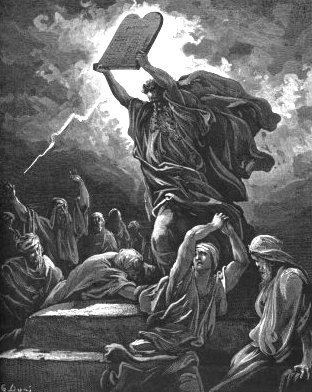
For a time, I tried to write down family tradition. My family was somewhat unusual in that regard. Family saying came generally from my maternal grandparents—my father wasn’t around for my childhood years—and since my grandparents died when I was relatively young, I didn’t hear much of their wisdom firsthand. Still, my mother told me various things her parents used to say and I tried to keep a record. Kind of like I wanted to be an anthropologist for raw folk sayings among the, non-elites. One thing my grandmother used to say, so I was told, was “Where was Moses when the lights went out?” I was always intrigued by this since I supposed it had something to do with Moses the miracle-worker. I guess I imagined Moses waving his rod and the lights coming back on. That single question is all I ever heard of this particular family treasure. I forgot about it until recently, though the miracle of the world-wide web, I learned that the query comes from a song.

Moses gets down

Moses gets down

The song, it turns out, exists in multiple versions. The Library of Congress has a recording dating to 1901 available on the web. According to this version, written by Harry von Tilzer, Moses was not “the” Moses, but a preacher condemning gambling. Also, “lights” is rendered in the singular. So much for the canonicity of family tradition. Duke University library has an undated, but clearly old, version of another song by the same title. This one does reference the biblical Moses, also the name of the song’s narrator. A child afraid in bed at night falls in love with and marries his nurse girl who used to ask him the question “Where was Moses when the light went out?” as he was falling asleep.

Yet another version, dating from 1965, has the question “Where was Moses when the lights (plural) went out?” followed by the answer, “He’s in the dark.” With all of this instant information from the internet, I’m still not certain what was being conveyed by my grandmother with this cryptic question. My mother said she used to say it when someone walked into the room too late to help with something, a kind of sarcastic “Where were you when I needed you?” What is clear is that the song was about as old as my grandmother and she found it somehow appropriate in an unconventional situation. I have to wonder how much of sacred tradition, including the Bible, might have come from misunderstood original instruction. We will, of course, never know. I don’t know what the original lyrics were, but I have learned that even family wisdom has a backstory, like any Scripture, for those who look hard enough.