Wag the Tail

Among the most respected of intellectual endeavors is political science. Analysts who read and reason beyond national borders, finding implications in countries many of us have never heard of, they can be an intimidating lot. Experts in economy and psychology, they tell us what the big picture looks like—why we do what we do. And almost universally they disdain religion. We’re talking politics here, why don’t you go sit at the kid’s table? Religion is the stuff and nonsense of make-believe. What politics is about is who has the biggest bombs and bank accounts. Those who impact the world in real ways. And yet.

I would never claim to be up-to-date on current events. I don’t have time to read newspapers and if my friends didn’t send me pertinent articles now and again I might still believe that social justice is more important than the color of an anonymous dress. When no less than an authority than the New York Times speaks, however, I do have to pause a minute or two to consider the implications. Frank Bruni has recently been writing on the Opinion Pages about those ultimate strange bedfellows, religion and politics. I may have got the order wrong, but that’s for political scientists to determine.

Many people don’t consider that religion can be, in some respects, scientifically analyzed. As a deeply divided nation, one factor that even political scientists should note is that yes, religion does count. No matter how naively conceived, people vote with their faith behind that polling curtain. The Republican Party realized this in the 1980s. If you take just one or two religious issues and make them the platform on which you stand, you can garner a disproportionate amount of the conservative evangelical vote. A new study from the Public Religion Research Institute, according to Bruni, demonstrates just how disproportionate the outcome can be. Surveys may not be precise, but less than 20 percent of Americans are white evangelical Protestants. Yet their issues are the ones that make or break elections.

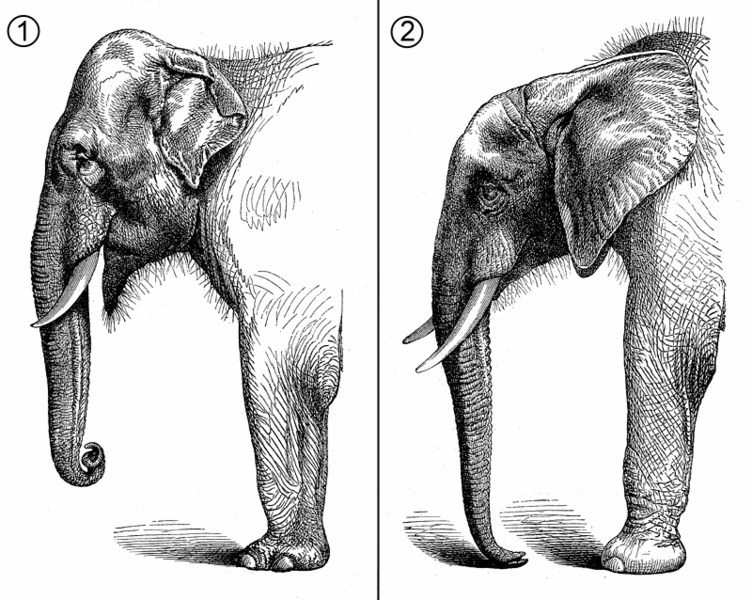
Life has a way of making one cynical. I grew up a white evangelical Protestant. Although my viewpoint has evolved with my education, I can’t shake two of those qualifiers even if I want to. I read political scientists dismissing religion as a bogus topic, mere twaddle to fill the daub of inert minds walled in by primitive thinking. And I read the occasional news story that demonstrates that the facts don’t fit the premise. Do we need to understand religion? Absolutely not, I’m told. But in the end, even the analysts of the political beast will have to realize that tails wag dogs just as surely as raising hackles will make any mammal appear larger than it really is.
Not a tail to be seen...

Not a tail to be seen…


Incitatus Redux

What more is there to say about God and politics? Far too much, I fear. In a Sunday Review in the New York Times, Frank Bruni lays out a catalogue of what, in a rational universe, would be considered violations of the United States constitution by politicians who insist their (conservative) Christianity is the faith of the nation. This is, however, one of the philosophical conundrums of religious freedom. Religious believers are free to use their faith to try to change the system from within. And the fact that the media is telling us that religion has become irrelevant doesn’t help. Who should be afraid of what’s irrelevant? Can irrelevant substances harm you? Can irrelevant bullets kill you? Why, yes, they can! And so being told repeatedly by the media that religion is something we can safely lock into a box marked “Medievalisms Outdated” we step out the door to see politicians using a religion poorly understood to gain power. A recipe for an apocalypse, it sounds like to me.

Academics too readily fall prey to the media hype. University presidents and deans suppose that religion really is dead and shouldn’t be studied. Who’s going to help us through the morass of the upcoming election if people who understand religion are made indigent and put out on the streets? Good luck to the rest of society! We must, if we are to survive, understand religion. Its death, following shortly on that of God, was proclaimed early last century. And yet it’s showing no signs of dying. In fact, it’s just waking up. Who are we going to ask? Scientists? Accountants? Economists? What will you really learn about our laws being God’s laws in the minds of the wealthy and powerful? Don’t ask me—I’ve only spent some thirty-five years studying religion. What do I know?

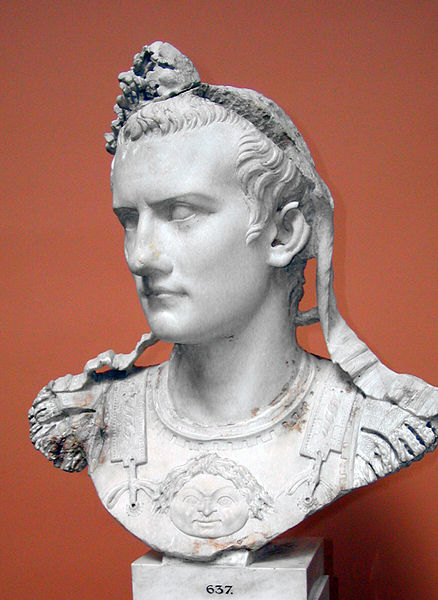
I sometimes wonder what it must’ve been like to live in Rome as Alaric was whetting his sword among his Visigothic horde. Insane—literally insane—emperors wielded unchallenged power and lived lives of opulence amid the slaves and poor. Religion was front and center on the agenda, of course, because emperors were gods. You don’t have to listen too deeply to hear the same message even today. Those who proclaim God as the justification for their political ambitions know that God is the ultimate malleable deity. In fact, God can even be in the Oval Office. Lead can line your aqueducts and your horse can be made a senator. Lord knows an ass can be. And all the while let’s shut down the voices of those who’ve looked at religion, beginning in the Stone Age and up to now. If we want to grab power it’s vital that we keep it from public view that self-deification is as old as kingship and in a post-religious world, we have only to pretend.

Photo credit: Louis le Grand, Wikimedia Commons

Photo credit: Louis le Grand, Wikimedia Commons