Making More Monsters

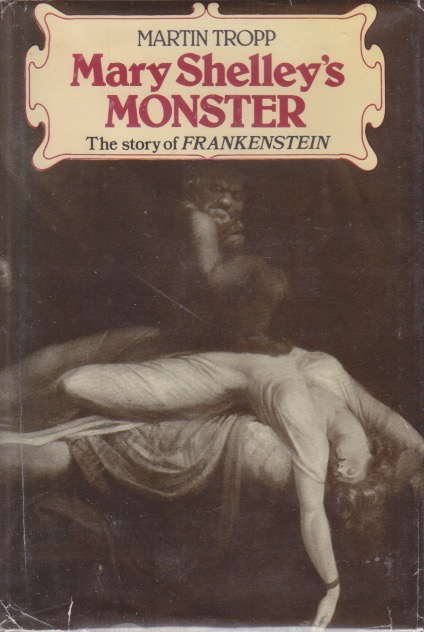
It’s endlessly frustrating, being a big picture thinker.  This runs in families, so there may be something genetic about it.  Those who say, “Let’s step back a minute and think about this” are considered drags on progress (from both left and right), but would, perhaps, help avoid disaster.  In my working life of nearly half-a-century I’ve never had an employer who appreciated this.  That’s because small-picture thinkers often control the wealth and therefore have greater influence.  They can do what they want, consequences be damned.  These thoughts came to me reading Martin Tropp’s Mary Shelley’s Monster: The Story of Frankenstein.  I picked this up at a book sale once upon a time and reading it, have discovered that he was doing what I’m trying with “The Legend of Sleepy Hollow” in my most recent book.  Tropp traces some of the history and characters, but then the afterlives of Frankenstein’s monster.  (He had a publisher with more influence, so his book will be more widely known.)

This book, although dated, has a great deal of insight into the story of Frankenstein and his creature.  But also, insight into Mary Shelley.  Her tale has an organic connection to its creator as well.  Tropp quite frequently points out the warning of those who have more confidence than real intelligence, and how they forge ahead even when they know failure can have catastrophic consequences for all.  I couldn’t help but to think how the current development of AI is the telling of a story we’ve all heard before.  And how those who insist on running for office to stoke their egos also play into this same sad tale.  Perhaps a bit too Freudian for some, Tropp nevertheless anticipates much of what I’ve read in other books about Frankenstein, written in more recent days.

Some scientists are now at last admitting that there are limits to human knowledge.  (That should’ve been obvious.)  Meanwhile those with the smaller picture in mind forge ahead with AI, not really caring about the very real dangers it poses to a world happily wedded to its screens.  Cozying up to politicians who think only of themselves, well, we need a big picture thinker like Mary Shelley to guide us.  I can’t help but think big picture thinking has something to do with neurodivergence.  Those who think this way recognize, often from childhood, that other people don’t think like they do.  And that, lest they end up like Frankenstein’s monster, hounded to death by angry mobs, it’s better simply to address the smaller picture.  Or at least pretend to.


Horror Adjacent

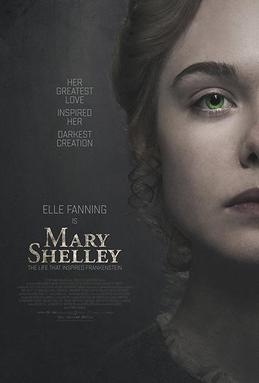
We have the basic facts, but still, it takes a good bit of imagination.  We simply don’t know what the life of Mary Shelley was like, as experienced by the woman herself.  The movie Mary Shelley isn’t a horror film but it’s horror adjacent.  How could a movie about the woman who invented Frankenstein be anything but?  The handling of Haifaa al-Mansour’s film is generally as a drama, or a romance.  The story takes the angle that it was her stormy relationship with both Percy Shelley and her own father that led Mary to express her feelings of abandonment in her novel.  And while we have to acknowledge the liberties all movie-makers take, it does seem interested in keeping fairly near the known details of Mary Shelley’s life.  Although other women were also writing then, it was still a “man’s world” she tried to break into.

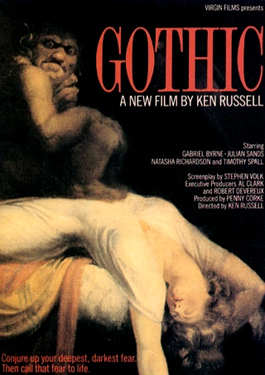
I confess that one of my reasons for wanting to see this film was that Ken Russell’s Gothic had a powerful impact on my younger mind.  That movie, which is over-the-top, being the first I’d seen telling the tale, had become canonical in my mind.  I know the dangers of literalism, and I wanted to see someone else’s take on the story.  Al-Mansour’s treatment takes a female perspective to the narrative.  It seems that Percy Shelley and Lord Byron were both advocates of what might now be termed a playboy lifestyle, and that Mary, daughter of forward thinking Mary Wollstonecraft and William Godwin, was fairly liberal herself.  Although Percy Shelley, like Lord Byron, was quite famous in his time, that didn’t always equate to financial solvency.  I could relate to parts of that quite well—full of creative ideas and shy on cash flow.

Mary Shelley didn’t rock the critics, but many felt it was a thoughtful treatment.  It is dark and gothic, but with no real monsters.  It did explain a bit of inside baseball about Ken Russell’s film.  Both movies make use of Henry Fuseli’s painting The Nightmare to explore the famous meeting of Byron and the Shelleys that led to the writing of Frankenstein.  Indeed, Gothic makes a good deal of it.  Mary Shelley explains that Mary’s mother, Mary Wollstonecraft, had an affair with Fuseli.  I was unaware of that connection.  Something was clearly circulating among the Romantics, many of whom knew each other and, in their own ways, became formative of culture centuries down the road.  And although many critics weren’t impressed, I think it’s about time that a woman’s point of view was brought to Mary Shelley’s life in a world not kind to women.  Even if a woman gave the world one of the most influential books of the nineteenth century.


Feeling Gothic

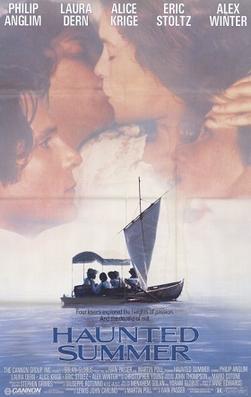
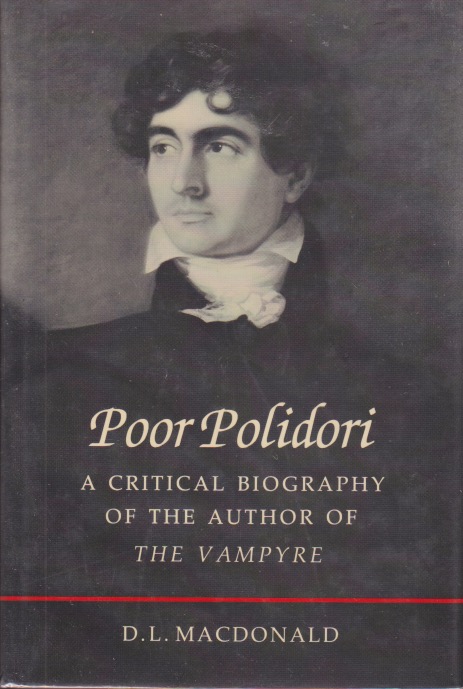
Gothic is an odd movie.  I first saw it while in seminary and have come back to it now and again.  I had been thinking of Frankenstein, so I decided to refresh my memory.  A pastiche of opium-fueled images and hedonism it nevertheless brings some religion into the horror.  In case you aren’t familiar with this Ken Russell piece, it’s a movie version of the stay of the Shelleys with Lord Byron, his physician John Polidori, and Mary’s stepsister Claire, in the summer of 1816.  During that visit, the basic ideas for Frankenstein emerged, and Polidori wrote an early vampire story that later inspired Dracula.  The religion comes in the form of Polidori’s Catholicism and his fear of condemnation for being a homosexual.  At one point, when the friends are about to read ghost stories, Percy Shelley says they’re more fun than any Bible.

Of course, in actual life Shelley and Byron were atheists, but the movie portrays the five raising some kind of entity during a seance.  They then spend the remainder of that stormy night trying to drive the entity back into their minds from the physical reality they gave it.  It’s a weird movie with lots of incongruous shots and some gross-out moments.  Ken Russell was known for his flamboyant style, and this movie is a good example of that.  It’s not great but it is moody and I come back to it when I want something, well, gothic.  The year 1816 was called “the year without a summer,” because of the volcanic winter caused by an eruption of Mount Tambora, and some have speculated that the bad weather of that year may have led to the creation of Frankenstein.

Every time I watch it, I wonder what the appeal is.  There’s a lot of God and Devil talk, and Byron was a fascinating character.  Julian Sands’ overacting in every scene makes me wonder what Shelley was like in real life.  I’ve occasionally read about his relationship with Byron and each seems to have had at least a supporting role in the iconic pair of monsters, Frankenstein and Dracula.  The two would be forever associated with the Universal release of movies named after them in 1931.  Gothic never made it big—I only found out about it because a seminary friend invited me over to watch it on VHS one weekend.  Still, it made enough of an impression to bring me back when the mood is right.  Even if it’s strange.


Why Weenie?

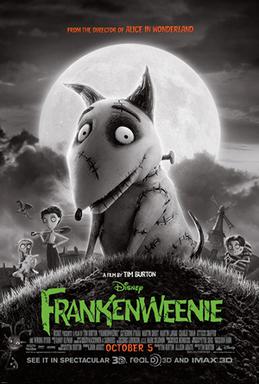
Often I ponder how incredibly influential Frankenstein has been.  Even those who don’t care for horror instantly recognize the creature and what he represents.  (At least partially.)  Tim Burton thought of tying Mary Shelley’s story to a pet dog in Frankenweenie.  This was a black-and-white, live-action short released in 1984.  It wasn’t aired much before being locked in Disney’s famous vault.  It wasn’t really what Disney was known for.  Ironically, then, in 2012 Disney released a feature-length version, also black-and-white.  This one was stop-motion animation, however, inspired by Burton’s Corpse Bride characters, at least to a point.  At its core the story of a bereft boy bringing his dog back to life, the original showed the mayhem introduced by crossing the border between life and death.  Not too different from what Shelley was intimating some century-and-a-half before.

The remake, or reboot, was feature length and had to develop the plot a bit.  Along the way there are numerous nods to other horror films.  Critics have noted that horror is an amazingly self-referential genre.  Comedy horror delights in parody.  So, as a Vincent Price-like science teacher inspires Victor with the concept of reanimation via electricity, the boy decides to resurrect his pet.  Other school children find out about the undead Sparky and decide to make their science fair projects reanimated pets.  Or sea monkeys, in a clever take-off on Gremlins.  Naturally, the other pets lack Sparky’s good will, not raised out of love, but out of a desire to win a competition.  One student’s resurrected turtle becomes a Godzilla-like kaiju, allowing for winks at Jurassic Park.  The cat-bat reminded me, anyway, of Gremlins 2.

Ultimately, the story comes to the same resolution as the original short.  Of course, this isn’t scary horror.  Comedy horror is an odd genre.  It permits darker-themed elements to play against fun and fantasy.  Frankenweenie isn’t really laugh-out-loud material, and if you’ve seen the previous version the story arc is already known.  Still, it’s an effective movie.  Although it made millions at the box office, it wasn’t as many millions as Disney has come to expect.  But it is quintessential Burton.  It also has a moral attached—that even scientists need to pay attention to love and the motivation for learning.  The parents at the PTA meeting are scandalized by what science does, in a bit of real-life parody as well.  So Frankenweenie came across as pretty good to me.  I like monster movies.  It did lack, however, the emotional impact of the original.  Of course, the tale of a boy and his dog is its own kind of archetype, I suppose.


Jewish and Christian Frankenstein

Among my many potential book projects already started (I tend to work on several at any given time) is one on Frankenstein.  I’ve read several studies of Mary Shelley’s novel and its afterlives, and I have at least three awaiting my attention on my “to read” shelf.  One of the ideas regarding Frankenstein’s monster, about which I’ve written for Horror Homeroom, is whether it might’ve been influenced by legends of the golem.  The golem was a Jewish monster that was animated clay or mud, brought to life to protect Jews from persecution.  The golem, however, is soulless.  As such, he (and he’s generally male) eventually goes berserk, killing indiscriminately.  The tale has been around for centuries and one of the questions asked by Seth Rogovoy in “The Secret Jewish History of Frankenstein,” is whether Shelley could’ve known of the legend.

Frankenstein’s monster and the golem have quite a bit in common, so the question makes a lot of sense.  Shelley and family friend Lord Byron were certainly well read.  The article points out something I hadn’t realized—one of the Grimm brothers (Jacob, according to the piece on Forward) published a version of the golem story a decade before Frankenstein. Whether Shelley knew of it or not is the question.  The two tales might well have been a case of convergent evolution.  Frankenstein’s creature wasn’t intended as a protector.  He was made of body parts, not mud.  The main thing the two stories have in common is the god-like power to animate inanimate matter and the lack of ability to control what one has created.

Over time Frankenstein’s creature has become a classic monster.  The golem, until about a century after Shelley’s novel and its endless adaptations, remained fairly obscure. A silent film series on the golem appeared in the 1920a.  The golem has, however, more recently come into the light.  Several novels feature a golem and two of my favorite monster-of-the-week shows (The X-Files and Sleepy Hollow) had episodes featuring one.  Frankenstein, it seems to me, has a Christian worldview behind it.  The horror, as noted by Shelley—herself leaning heavily atheistic—was in animating something that nature had declared dead.  Victor Frankenstein, as the subtitle indicated, was a modern Prometheus—a human standing in for a Greek god.  The poetic justice here is that this atheistic, yet Christian context, monster ends up doing the same thing as the Jewish golem.  Both throw society into chaos.  Both warn that creating can be a real problem for those who don’t think through the implications of what they’re doing.  This is a message all people could still stand to learn.


Time for Golem

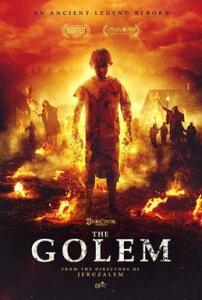
I don’t claim to understand how the film industry works.  My two books on horror and religion deal with interpreting the movies, not their native cinematic environment.  I say this because I limited my treatments in them to films with a theatrical release.  Mainly this was so that readers would have had easy access to them.  Some films, of course, never go to theaters and it seems that happened, in the United States, to the Israeli movie The Golem.  I saw a trailer for it last year and patiently waited for it to arrive.  I recently found it on an online streaming service and finally had a chance to watch it.  Golems, as original Jewish monsters, have shown up in a variety of popular media including The X-Files and Sleepy Hollow.  Film treatments have been rare, and this one makes for a fascinating monster movie.

What makes the golem so compelling is that it is an explicitly religious monster.  To create a golem (according to the film) the maker must use Kabbalah, Jewish mystical texts, to learn how to bring it to life.  Hanna (Hani Furstenberg), the female protagonist, is the only one in her seventeenth-century village willing to try.  The real hook, for me, is that the golem she creates is a little boy.  The role must’ve been fun to play.  Golems cannot speak, so there are no lines to learn.  Kirill Cernyakov nails the part with an ability to portray emotionless menace.  The problem with a golem, you see, is that it goes on rampages, killing even those it’s conjured to protect.  Since the movie is intended to be a retelling of the classic story (involving the golem of Prague), it doesn’t have too many surprises.  It is, however, a thoughtful movie.

Write-ups on it call it “the Jewish Frankenstein,” but scholars who research Frankenstein often go the other way, seeing Frankenstein’s monster as a form of golem.  The basic idea is taking something inert and bringing it to life.  Afterward the creator is unable to control it.  It’s too bad that The Golem didn’t get a wide theatrical release.  I’ve seen far worse horror films that did.  Perhaps the focus on religion was too blatant?  One of the points I make in Holy Horror and Nightmares with the Bible is that religion and horror belong together.  Some Jewish viewers will undoubtedly spot inaccuracies (even this goy did) but the movie isn’t a religious text.  It is an appropriate rebuff to Trumpian “politics” and even features a plague.  It is a movie for our time.


Electricity

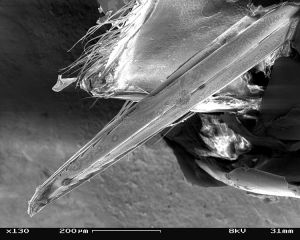
After the oven incident (see last Monday’s post), I took some time to examine the burned out bake element from the range.  Clearly a break in the piece led to some arcing like you might get in Frankenstein’s laboratory.  By the time I’d arrived on the scene (I always seem to be behind my time), the fire was snaking along the element itself and now that the piece is cooled and removed I was fascinated by the damage it caused.  I suspect this is why I leave any electrical repairs to experts.  This is dangerous stuff.  Interestingly, in the realm of monsters electricity is most frequently associated (in my mind, anyway) with Frankenstein’s creature.  Mary Shelley’s novel isn’t explicit about how galvanism resurrected the patchwork human, but it was clearly part of the tale.

Electricity retains a certain element of mystery for some of us.  If we stop and reflect on how recent our understanding and harnessing of it is, that further adds to the drama.  People have been thinking about and trying to understand religion for thousands of years.  Like early electricity, religion involves invisible forces.  Of course, lightning and sparks and arcing oven elements can be seen, but seeing isn’t the same as comprehending.  We are a curious species and we want to understand.  Being inside the situation, however, our understanding will never be complete.  We can get a pretty good grasp, a functional one even, but our brains will always limit just how much we can understand.

It should come as no surprise that those of us who chose to study religion are intrigued by mysteries.  The divine, the transcendent—no matter what you want to call it—can never be fully understood.  Thus the impatience with evangelicals and others who pretend they’ve got all the answers.  No, we’re all still attempting to get to the bottom (or top) of this mystery.  Like electricity, religion can do an enormous amount of damage.  Motivating those who have only a cursory understanding how it works has historically led to debacle after debacle.  It has generated wars and perpetuated human misery.  Like electricity, when used properly religion has done a tremendous amount of good in the world as well.  The thing is, as my bake element shows, we have all come to learn that electricity should be handled by those who know what they’re doing.  Ironically, religion has never gathered the same level of respect for the specialists.


Buzzy Headed

If you’re like me, and I sincerely hope you’re not, you spent your childhood worrying about killer bees.  You see, I was stung a lot as a child, having stepped on a yellow-jacket nest hidden in an old tree stump.  That event was one of the most formative of my life.  Oh, I act brave, shooing wasps and carpenter bees away, but that’s all a front.  I was repairing a piece of furniture out in the garage over the weekend and a big old bee got in and started buzzing around.  It drove me to distraction.  I once had a bee land on my back and sting me for no apparent reason.  Alone in the garage I had no one to watch my back.  I decided to do some repairs back in the house instead.  Let it have the garage.

During this pandemic, then, the last thing I needed to hear was that “murder hornets” have made it to the United States.  And Republicans are bad enough!  The murder hornet is responsible for double-digit deaths in its native land, and now my childhood nightmares of killer bees have reemerged.  We had a warming trend over the weekend.  There were so many wasps and bees around outside that I could even hear their buzzing with the windows safely closed.  Insects are the future, of course.  They adapt better and more quickly than we do, and there are many, many more of them.  The Bible often uses insects as vehicles of divine wrath.  No wonder horror movies often make use of them!

Image credit: SecretDisc, via Wikimedia Commons

More rational minds soothe us, saying that murder hornets seldom attack people or pets.  If provoked, however, they can do so fatally.  Perhaps it’s the anger of stinging insects that bothers me the most.  The yellow-jackets that attacked me certainly seemed angry.  My stepping on their home was an innocent accident.  It was also a learning experience.  I don’t step on old stumps any more.  I haven’t since the incident.  Such early traumas can stay with you all your life, and the buzzing co-inhabitants of the earth, I have to remind myself, have as much right to be here as we do.  In cases like killer bees, we invented them.  When we play Doctor Frankenstein nature responds in kind.  The monster was angry.  Bees, wasps, and hornets may be intelligent but they can’t reason out the motives of bumbling humans who accidentally disturb them.  And now a bigger variety has moved in.  It’s probably best to keep calm and not get anybody angry.


Making Frankenstein

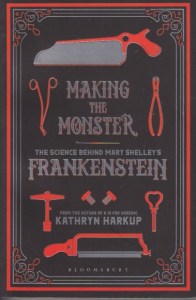
Some days ago I mentioned reading a book about Frankenstein.  This was Making the Monster: The Science behind Mary Shelley’s Frankenstein, by Kathryn Harkup.  I’ve read several books like this, many of them written about on this blog (search “Frankenstein”—there is a search box out there!), about the context of Frankenstein.  The base story is all the more compelling for having been written by a teenager who’d eloped with a married man who would eclipse her literarily.  Mary Shelley never got rich off Frankenstein, but it is one of the best known novels of the nineteenth century.  It had an impact during the author’s lifetime and has continued to have one these centuries later.  Harkup, however, is a scientist.  Her specific interest, apart from being a female writer herself, is in the science of the story.

Arranged thematically, Making the Monster covers several of the developments which would’ve been “in the air” at the time.  Mary and Percy Shelley both read science also, and knew many of these things.  There was the question of reanimating the dead that coincided with the early dissections of humans that made the modern study of anatomy possible.  There were medical breakthroughs—some of the more difficult parts of this book to read—and there were experiments with electricity.  There were cases of children raised in the wild that had been found and their subsequent stories documented.  There was evolution (in the form known to Charles Darwin’s grandfather Erasmus), there was revolution.  It was a time with so much happening that Frankenstein became a cathartic outpouring of the human soul amid the science that both Shelleys atheistically accepted.

Much of this book is fascinating, even after reading other similar accounts to the background of the novel.  What really brought it all together for me, however, was reading through the chronology at the end.  It takes me several days to read books.  What with the monster of daily work I often forget some of what I’ve read along the way from introduction to conclusion.  Having a chronology at the end reminded me of just how much information is packed in between these covers.  The narrative covers about a century (longer, if you include the alchemists), and shows how Mary was using fiction to address some very real science.  Harkup never loses track of Mary Shelley’s personal experience, however.  Estranged from her father, constantly on the move, widowed fairly young, losing several children, treated poorly by aristocratic in-laws, hers was a story of perseverance and ultimately influencing the western canon.  It shows that science and art can assist one another to make us all more human.  And the monsters left behind endure.


Frankenstein’s Family

The story of Frankenstein has many unexpected twists and turns.  I’m currently reading a book about the writing of the novel—something I’ve done a number of times before.  There was an aspect of this story that hadn’t really caught my attention too much, but then, circumstances changed.  Suddenly old information became new.  It all started with a missed opportunity from childhood. 

It was a real puzzle.  Although my grandmother lived with us her last years, I never knew the name of her mother.  There had been hints.  My grandfather’s book with birthdays in it listed the first name, so I had a Christian moniker and birthdate only.  She’d died young, I knew, somewhere in the Washington, DC area.  This had been the state of my knowledge for many years.  My grandmother died before I was a teen, and before I took any interest in the family story.  I knew her heritage was Germanic, her father having been a first-generation American.

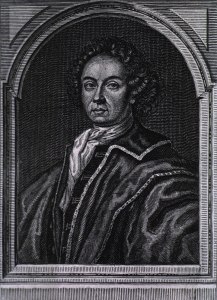
So young Mary Shelley (technically Godwin) was on a tour of Europe with her lover Percy.  Although they both came from distinguished backgrounds, they were cash poor.  Running out of money they made their way back to England as cheaply as they could.  They passed near Castle Frankenstein along the way, although there is no record that they actually visited it.  The name seems to have stuck, as does the story that they potentially learned about a mad scientist who’d lived in that castle.  This scientist was a theologian who dabbled in alchemy and experiments with dead bodies.  I know what you’re thinking—it’s like a puzzle piece we desperately want to go in this place but its fit’s ambiguous.  We’re not sure how much of this Mary Shelley knew.  The alchemist’s name was Johann Konrad Dippel.  I’d read about him before.

I’d spent nearly an entire summer some years back working on my grandmother’s family, finding little.  Just two years ago I did a casual search on “Find a Grave,” and to my surprise, I found my great-grandfather.  I knew it was him because his second wife’s name matched information from all the family records.  The cemetery record, in Maryland rather than DC, had his first wife’s name.  It was that easy.  After decades of searching, a few keystrokes revealed the mystery.  When it also listed her parents, the significance of her mother’s maiden name—Dippel—escaped me.  Now I have no way of knowing if this is the same Dippel family of Castle Frankenstein, but it put flesh on the bones of my long-standing interest in monsters.  Seeking them out may be the same as learning family secrets.  Perhaps it always is.


Frankenstein, Frankly

The classics.  No matter how much I read more contemporary fiction, the classics keep me coming back.  Mary Shelley’s Frankenstein is a classic in more than a single sense.  It was a novel that had tremendous influence in the nineteenth century and has continued its impact to the present.  Chris Baldick’s In Frankenstein’s Shadow can be considered a classic in its own right.  Although it only dates from the 1980s, it contains exhilarating analysis of Frankenstein in a number of authors and genres of the nineteenth century.  And I’m a fan of literary scholars who write accessibly.  I’ve read modern literary studies that I simply don’t understand and they leave me feeling alienated and cold, as if they were written for a private audience.  One that didn’t include me.  Baldick’s treatment is wide-ranging and full of moments of blinding insight and is open to all.

Often I put the book down thinking that I’d had my world changed.  Baldick’s no hero-worshipper.  He notes the weaknesses in Shelley’s writing (and they are admittedly there), but he does so respectfully.  The astonishing part of this study is the sheer breadth of the influence Baldick finds for Frankenstein.  A word or phrase, a theme here or there, and yet he makes an excellent case that these can be traced back to their monstrous forebear.  His section on Melville made me want to stand up and cheer.  (I have to admit to being more of a hero-worshipper than the author.)  This is literary criticism done right.  It makes you want to read the books you haven’t.

Since the book deals with literature, it doesn’t really address how the creature morphed into something completely different in the twentieth century.  I know I grew up thinking Frankenstein’s monster was part robot.  I suppose it was the bolts in his neck, according to the Universal script, that convinced me.  That, and his stiff-jointed lumbering about.  Shelley’s story is, however, very much a human one.  In many respects the monster is more humane than his creator.  Various aspects of this tale, including that one, are taken up in other classics and turned over, examined, and reapplied.  Suddenly quite a bit of what I’d read elsewhere made immediate sense.  Interestingly, although I grew up not so much a fan of this particular monster, books on him have become among my favorites as an adult, if I am such.  I think Baldick may have had his fingers on that revivified wrist when he wrote this book.  It certainly did for me what literary criticism always should.  At least for the classics.


Universals

It was on television that I met them.  The Universal monsters.  The entire run of films from Dracula to The Creature Walks among Us had been shot, printed, and screened before I was born.  In other words, I’m a late monster boomer.  By the time I was old enough to handle monster movies, they were on television and my early memories of them are tinged with the nostalgia that accompanies what seemed like better times, although each era is about equally difficult.  When I saw James L. Neibaur’s The Monster Movies of Universal Studios I knew I had to read it.  Neibaur goes through all the films in the series, chronologically, encapsulating the Draculas, Frankenstein’s monsters, mummies, invisible men and women, wolf-men, and the gill-man.  As I child I never watched them systematically, being subject to television schedules, among other things.

Not understanding studios or business, and certainly not copyright, I never understood why other favorites such as Jekyll and Hyde, the phantom of the opera, and various assorted ghosts and ghouls weren’t part of the collection.  Nevertheless, this study in discrete, brief chapters, treats the official canon reasonably well.  The line between religion and monsters is sometimes crossed in these movies, which gets at an underlying theme of my own interest—how horror and religion interact—but that’s not Neibaur’s purpose.  That dynamic is, however, the driving force behind my two most recent books.  A tie-in to the paranormal may also be found there.

As I dropped off some promotional material for Holy Horror at an area bookstore recently, the events manager revealed her interest in the paranormal.  In my mental schematic, it’s wedged in there between monsters—which are fictional—and religion, the antithesis of fiction for most people.  What do we do with ghosts and others that don’t fit into the neat lines of a theology that draw a stark line between the supernatural and human?  Universal’s monsters sometimes ran into problems with the Production Code for stepping over that line.  Of course, the Universal monsters are pretty tame in comparison with today’s fare.  Still, they were the monsters who showed, in many ways, what it was to be human.  Neibaur isn’t going for an in-depth analysis here, and his treatment is readily readable by anyone interested in revisiting the monsters of yesteryear.  Some of the descriptions reminded me of movies from my childhood that I’d forgotten.  It is pleasant to relive them for a few moments while the real monsters in the real world lurk not far from my door.


Frankly

Even in the 1960s, if I recall, Dracula and Frankenstein really weren’t that scary.  I mean this in the sense of the 1931 Universal movies that began the entire trend of “horror” films.  They were, nevertheless, monarchs among those of us who claim the sobriquet “monster boomers.”  (I’ve never considered myself as part of any generation, but there’s so many people that you’ve got to sort us somehow.)  Recently I talked my wife into watching/re-watching these two films with me.   The pacing makes it seem like everything in the 1930s was stuck in slow motion.  The frights are difficult to feel, given what we’ve seen in movies since then.  And they are both, it occurs upon reflection, movies in which religion is the norm against which we measure monsters.  God is assumed.

Dracula, of course, fears the crucifix.  His chosen home in England is a ruined abbey.  Although the source of his monstrosity is never discussed, he is intended to be an embodiment of evil, draining the life of innocents.  Renfield craves flies and spiders in order to ingest their life.  Christianity can’t tolerate such evil and Dracula must be staked (off screen).  Frankenstein’s monster is much more obviously theological.  Opening with a warning to the audience that the film may shock due not only to its frights, but also because of Henry’s desire to create life, the film has philosophical discussions between Henry and his associates, and ends with the moral dilemma of what to do with an evil created by human hands, yet clearly alive like other people.

Metaphorically speaking, these first two horror films set the stage for later developments in the genre.  It isn’t so much fear and startles that define the genre as it is a deep dread of offending the powers that be.  Childhood was so long ago that I can no longer recall just which movies I saw on Saturday afternoons, but these two were among them.  Even as I was beginning the spiritual journey that would assure my job was never far from the Bible, I recalled with fondness the frissons of watching Dracula and Frankenstein—and then the host of other Universal monsters such as The Wolf-Man, The Invisible Man, and The Creature from the Black Lagoon (the last being scary in the classical sense).  The world in which they operated was deeply religious, for even the gill-man was an implicit condemnation of evolution.  These monsters were informing a religious outlook that would last a lifetime.  Going back to Dracula and Frankenstein is like turning back to the first page of Genesis and beginning again.


Classic Education

A few months ago now, just after moving, our garage flooded.  Our books, unpacked, were stored there at the time, resulting in many casualties.  As I sorted through what was destroyed—a process still ongoing—I decided that if I replaced books I would re-read them as I did so.  Emily Brontë’s Wuthering Heights was the first replaced, and therefore re-read, volume.  For those who never had the opportunity to attend seminary, I would note that it is the ideal time for reading.  One of my professors, Harrell Beck, although he taught Old Testament, encouraged wide reading.  The Bible, he suggested, didn’t stop at the last verse of Revelation.  It was in seminary that I discovered the Brontë sisters and their remarkable literary achievements.

Wuthering Heights is fine autumnal literature and Heathcliff one of the greatest protagonist villains of literature.  An interloper among the privileged classes, Heathcliff finds delight in making others share in his suffering.  One of the more memorable characters is Joseph, the Bible-toting, Bible-quoting caretaker who sees nothing good in the younger generation.  Even Emily Brontë, the daughter of a clergyman herself, spies the hypocrisy so clear in the lives of literalists.  Joseph enjoys scolding as much as reading Scripture, and even the other servants find him tiresome.  Born in the year Frankenstein was published, Emily had Gothic sensibilities.  With the protracted death scenes and atmosphere  of loss and mourning, this classic can be a restorative in an era such as ours.  In more than one way.

Since Wuthering Heights is a classic, there’s no need to recount the story of lost love and damaged human beings.  What is important is to realize that we continue to support a social structure that repeats the sins of nineteenth-century England.  And like that setting, we do it firmly believing we are a “Christian” nation.  Joseph would surely nod in agreement.  Stripping the safety nets from the vulnerable so that the privileged classes might enjoy more of their ill-gotten gain, we live the hypocrisy of the self-righteous.  It the era of the Brontë sisters, women were not encouraged to write.  They, like the servants of the wealthy, were believed to exist for the comfort and pleasure of the master.  Not paying attention to the classics, we’ve come back to that era, claiming that wealthy white men are the true victims in all of this.  The denizens of the swamp will find their place in history next to Josef Stalin, Mao Zedong, and Benito Mussolini.  Wuthering Heights, like 1984, will, however, remain a classic that sees through hypocrisy.


Horrible Delays

It’s not that the delay is actually horrible.  Horror movies, after all, come into their own with the darkening days of fall.  Nevertheless it occurred to me that now August is about to exit stage left, some may be wondering where Holy Horror is.  After all, the website originally said “August.”  The truth is nobody really understands the mysteries of the publishing industry.  Like so many human enterprises, it is larger than any single person can control or even comprehend.  I work in publishing, but if I were to subdivide that I’d have to say I work in academic publishing.  Further subdivided, non-textbook academic publishing.  Even further, humanities non-textbook academic publishing.  Even even further, religion—you get the picture.  I only know the presses I know.

It suits me fine if Holy Horror gets an autumn release.  I don’t know, however, when that might be.  I haven’t seen the proofs yet, so it’s hard to guess.  Appropriate in its own way for horror.  The genre deals with the unexpected.  Things happen that the protagonists didn’t see coming.  In that respect, it’s quite a bit like life.  My work on Nightmares with the Bible is well underway.  When you don’t have an academic post your research style necessarily changes, but I’m pleased to find that books can still be written even with the prison walls of nine-to-five surrounding one.  It may be a bit like Frankenstein’s monster (happy birthday, by the way!), but it will get there eventually.

Of my published books so far, Holy Horror was the most fun to write.  It wasn’t intended as an academic book, but without an internet platform you won’t get an agent, so academic it is.  It’s quite readable, believe me.  I sometimes felt like Victor Frankenstein in the process.  Pulling bits and pieces from here and there, sewing them together with personal experience and many hours watching movies in the dark, it was horrorshow, if you’ll pardon my Nadsat.  We’re all droogs, here, right?  I do hope Holy Horror gets published this year.  Frankenstein hit the shelves two centuries ago in 1818.  Horror has been maturing ever since.  So, there’s been a delay.  Frankenstein wasn’t stitched up in a day, as they say.  And like that creature, once the creator is done with it, she or he loses control.  It takes on a life of its own.  We’ll have to wait to see what’s lurking in the darkening days ahead.