An Explanation

Those of you who read daily might’ve noticed Friday, Saturday, and Sunday went by with no posts.  You may also remember I recently wrote about Job months.  There are also Job years.  This is an embarrassing and vulnerable thing to write, but my wife and I have been scammed for almost all of the money we had.  My computer had to be scrubbed (thus the silence of Job) and the last three days have been filled with filing incident reports, trying to remember what’s on autopay, and visiting the police and banks, making endless phone calls.  I have been a little distracted.  As my regular readers know, writing is therapy for me and I beg your indulgence as this blog, which has been pretty much daily for over fifteen years, might become a bit more sporadic.

I’m never been a great fan of the capitalistic system, but born into it, I have a general idea how it works.  One of the most difficult parts for me is when I think, “We’ll just…” and then realizing that we no longer have the financial safety net to do what ever “just” might’ve been.  This is not a welcome thing at 63.  I grew up poor, so I know what this feels like.  Retirement I don’t know what feels like, and it’s pretty clear that I never will now.  My books don’t sell well enough to provide more than an occasional book purchase of my own now and again.  That, of course, has been curtailed.

I do not understand the criminal mind.  I cannot comprehend how someone would knowingly target those of us who are aging and try to take everything we have.  At least one of the scammers was a young man.  My hope for him is that he may grow old and may, through some miracle, come to regret what he has spent his young life doing to complete strangers and try to help others instead.  I have my doubts that this will happen.  In any case, I know I have a couple of regular readers and I owe you an explanation.  Posts may become more regular again—I sincerely hope they will.  I do have some written in reserve.  But please know, as you read them, that they came from a different time and place.

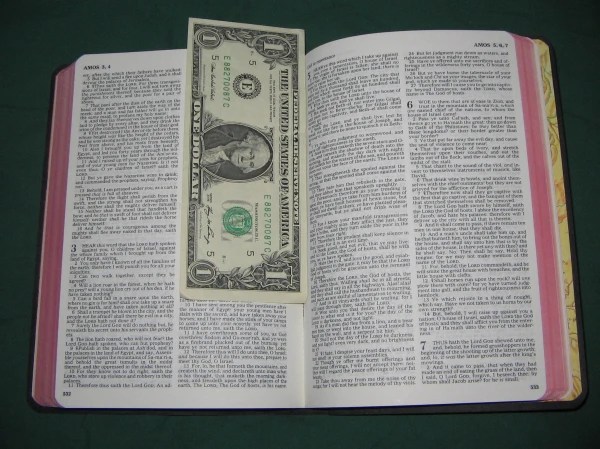
Photo by K. Mitch Hodge on Unsplash

Capital Idea?

One of the most difficult parables in the New Testament is the one where Jesus praises the fraudster (in Luke 16).  In case you’re a little rusty it goes like this: a steward of the king learned he was losing his job.  Knowing his employment prospects were like those of a mid-career religion professor, he called in his masters’ debtors and slashed the amounts they owed so that they’d think kindly of him.  When the king finds out, instead of growing more angry, he praises the steward for his shrewdness.  The parable seems to not condemn deceit and his left both scholars and laity scratching their heads ever since.  I’ve never, in my long church going career, heard a sermon extolling fraud.  The good book can be tricky some times.

The parable came to mind because I’ve been the victim of the fraudulent use of one of my few credit cards.  I only have two.  One of the reasons for this is that it’s difficult to keep track of everything as it is.  Life is busy.  I have most of my bills set to autopay so that I don’t forget to do it when an email reminder comes.  I don’t remember the last time I used actual money.  Writing a check is a rarity.  How my credit card was hacked I don’t know.  I didn’t notice right away because the charges were always small and spaced out.  I caught on when I hadn’t been using the card in that lull after Christmas and the exact same amount was charged two months in a row.  I called the company and they confirmed that similar small charges had been going on since December.

Now I picture in my head a scene where the criminal is caught and in court they use the Bible in their defense.  I’m sure it wouldn’t happen that way, but it’s an interesting idea.  Who’s going to argue against the Bible?  Heck, most courts can’t get those who know Trump’s many crimes to get their cases ever heard!  What do we do when the Bible distorts the moral narrative?  The fraudster, after all, is breaking at least one of the ten commandments.  Of course, those are negotiable these days.  The right wing’s endorsement of violence to maintain power shows that.  So it seems a prudent time to consider the parable of the fraudster.  We might still have something to learn from the Good Book after all.