The Least of These

Despite criticisms to the contrary, the pre-Reformation church did have concerns about the average person. About the poor. In those days church offices commanded a good deal more esteem than they currently do among the populace, and being a priest was a position of power. The concern for the quotidian human—at least of the Christian variety—was demonstrated in All Souls’ Day. Although the date migrated around the calendar before settling on November 2, it came part of one of the very serious (days of obligation) annual celebrations along with All Saints’ Day, November 1. It was recognized that not everybody could be a saint, and all the faithful departed deserved a special day of commemoration. Through a complicated history this two-day celebration came to be associated with Celtic beliefs about the crossover day between worlds, samhain, giving birth to Halloween. It seems appropriate on All Souls’ Day to think about the poor.

An article in the Washington Post reports on findings that poor children, in their words, “that do everything right don’t do as well as rich kids who do everything wrong.” There are indeed deficits that attend the poor all their lives. Those of us who began in such circumstances can sometimes break through in a system that favors the upper classes, but it is rare. Good paying jobs are reserved for friends of the wealthy or to those who might pay them back in some way. The poor have little to offer beyond their souls. Our system, the so-called “free market” deals in souls. The poor are, make no mistake, chattels. Even in higher education, where we’d like to think thinkers think, positions are granted based on privilege. The loftier music and liturgy is, after all, reserved for All Saints’ Day.
dorothealangemigrantworkerschildren

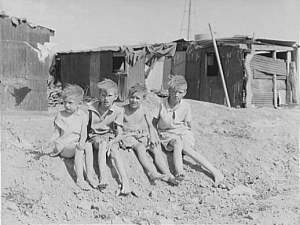
Like many raised in humble circumstances, I grew up hearing about the American dream. If you work hard you can succeed. But that really depends on who you know and how much they’re willing to help out. Stats are now beginning to back up what those of us who have lived experience in the lower register already knew. Having faced it throughout my career, I know I’m not alone. Just the other day I met someone else who grew up poor who’d hit the bullet-proof ceiling carefully installed by children of privilege. Not ambitious beyond desiring the basic comforts of a job that covers the bills and allows for some reasonable amount of surplus against lean times is, it seems, more than the wealthy are willing to grant. After all, All Saints’ must come before All Souls’, for even Heaven has its hierarchies.
Universal Universities

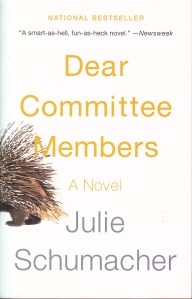
DearCommitteeHaving been in academia for nearly two decades, and having watched from the sidelines ever since being benched, I found Dear Committee Members a little too true to life. This novel by Julie Schumacher is presented as a series of letters of recommendation by an embattled English professor at Payne University. Set over the course of an academic year, the reader watches as the fictional university eviscerates the humanities to make the life of more “practical” departments like Economics much more comfortable. Sarcastic, bitter, and full of pathos, the novel is frequently funny, but it runs so true to life that it would be difficult to say whether it is indeed fiction or not. The book was a national bestseller, but universities continue down this very road, with all seriousness.

I have said before: it is time for those of us who really believe in education to take on, challenge, and overthrow this paradigm. Education is not about making money. There is more to life than that. My reading, which coalesces somewhat coincidentally around these themes (Dear Committee Members was recommended to me by a bookseller that I don’t know personally), paints a larger picture that is disturbing. The capitalist economy is growing out of control, its own dictates now excluding human decision (see my post on At the Altar of Wall Street earlier this week), and one of its strongest investors is higher education. It is a business, you see. The utter and complete devotion to the economy cannot take place without new generations of students indoctrinated into money as the meaning of life. Some of us—many of us—disagree, but we are not organized and we have no funding. We are the human resistance.

Setting out to make money was never my goal in entering the professorate. Motivated by finding authentic meaning in life, I have found that those departments where such a search resides—religion, philosophy, English, music, the arts—are under siege and constantly have to justify their existence to the administration. Dear Committee Members is funny in its overstatement, and in having a protagonist actually say what many of us think. And thinking is what it is all about. Education is about learning to think. Not earning a mint. We are in need of an altar call. The only ones with power to take back education from corporations are people. Who’s willing to join the cause with me? At this point I’d even be willing to consider sympathetic robots.


Class-less Society

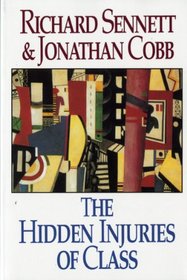
HiddenInjuries Dated, yet still relevant, The Hidden Injuries of Class by Richard Sennett and Jonathan Cobb brings to the limelight that which much of the world wishes to ignore. At least the affluent world. The very concept of “class” has a dangerously tilting effect on human society. That which is “valuable” is only so by common consent, and those who have more of it inevitably raise themselves above those deprived. In a world where food is scarce, bread becomes currency. The trick to any unequal society is declare an arbitrary standard of value that some may horde while others strive to attain it. We are largely content today to work for money we seldom physically see. We are employed at professions assessed by their value to the “owners” of companies who frequently misunderstand that ownership to include the lives of their employees. And that’s just the middle class!

No doubt, living standards for most people have improved in the decades since Sennett and Cobb produced their study, but the base root of the problem still projects out far enough to be tripped over repeatedly—lack of a sense of personal worth. The working poor have always striven for dignity, a sense of worth. I found much in this book that rang true for my personal circumstances. The Hidden Injuries of Class is based on interviews with workers, some of whom “changed classes,” working from blue collar to white collar positions. Validating my experience, the sense of self-worth among those who’d thus advanced did not keep pace with their class expectations. Those of us raised in the working-class world know our place. Yes, we may learn to act like those middle class, and sometimes privileged workers around us, but we know deep down that we came from humble stock. We sit at desks in offices, knowing that we belong behind a broom or holding a shovel. Not a day elapses when I don’t ponder that I’m a drone a little too deep into the hive.

Any society requires those who are willing to do the less-than-desirable jobs. It will take more than reality TV to add dignity to the personal assessment of such workers, however. Although I’m not a TV watcher, the times I view reality programs that highlight the “ordinary people” we come off looking like the unsophisticated rubes of the affluent imagination. Duck hunters may laugh all the way to the bank, but when you’re off camera a different reality, I’m sure, takes hold. We are entertained by the antics of those who don’t know how society folk behave. In my limited experience I went from janitor to academic dean of an Episcopal seminary where Archbishops of Canterbury were not rare visitors. Literal lords of the realm sat at the same dining table that now holds the peanut butter that comprises my lunch each day. I can act polished with the best of them, but I know once they leave I’ll again become the kid who grew up among junk cars and working-class prospects. And I know which is the more authentic life.


Eat, Love, Eat

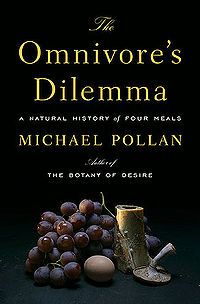
Michael Pollan’s The Omnivore’s Dilemma has been on my “to read” pile for some time. I finally finished with it this week. As a vegetarian, I really didn’t need convincing that raising other beings with feelings and some intelligence for the purpose of eating them involves dilemmas. Pollan is not a vegetarian and makes the best case I’ve ever read for justifying his position. Still, I personally can’t face being the reason animals must die for my own gain. I know this is a stance fraught with difficulties. I’ve often mused that if I could get by without even eating plants, I would. I just hate to inconvenience anyone, or anything, else. But that’s not what I want to discuss. Pollan spends the first part of his book discussing corn, or maize. I hadn’t realized what a versatile crop it is, nor how prolific. The difficulty is that it is so good at what it does that it is bankrupting the farming industry. Government subsidies make corn growing the only way that big farmers can get ahead while nearly driving them broke at the same time. (It takes Pollan chapters to explain this, so I’ll need to refer you to the source on this one.) His conclusion: the free market simply does not work for food production.

I’ve long believed that the problems with our economy come from a decidedly “one size fits all” mentality. The free market rewards those who climb over others without that gnawing sense of guilt that prevents me from eating meat. Once you have lots, you only want more. No one ends up satisfied. Okay, so we’ll let Wall Street play its game. Higher education is in crisis because, like farming, the free market model simply does not apply. Guys like me (and plenty of gals too) do not spend years of our lives earning doctorates under the delusion that we’ll get rich. Many of us are idealists who just won’t grow up. All we want is to contribute to the collective knowledge of the human race and make a reasonable living doing it. Then the free market comes and whispers into university presidents’ ears that they should be making six or seven figure salaries. They should have limitless expense accounts. Universities should be all about “branding” with corporate style logos and money-sieves called sports teams. Somewhere along the way they forgot that they need teachers too. Some very prominent universities in the United States now have 70 percent of their classes taught by adjuncts. The system is simply not working.

One of the strangest anomalies out of all of this is that Christianity, the religion started by a guy who said the rich could not enter heaven unless they gave everything away, has crawled into bed with the free market. Enthusiastically. For many people to vote with conscience is to vote for an inherently unfair system that must, by its very design, consume all others. Survival of the fattest. I’m no economist, but I am certain that many other industries have gone the way of the T-rex because they simply didn’t fit the model of unbridled gain. Education is one, and the asteroid is already about to hit. What bothers me the most is that agriculture is another. Pollan ended up scaring me more than any horror flick. Our farming industry, right here in the best fed country on earth, is very, very frail. As long as we’re converting everything to the greed-based system, we should make money edible. After the asteroid strikes, during that long, dim winter, it will be the only thing left on the planet in abundance.


Feeding the Multitudes (on a Budget)

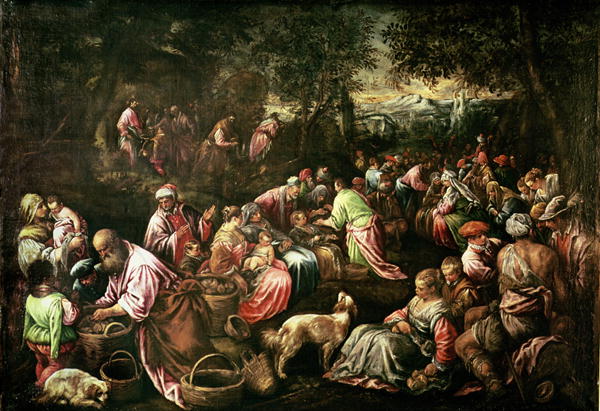
Commuting to New York City by bus can be an epiphany. When an hour-and-a-half scheduled ride stretches into two-and-a-half (I spent three-quarters as much time commuting as I did actually at work yesterday) you have plenty of time to look at the scenery. In New Jersey this translates into several towns and cities of differing socio-economic viability. The bus is a great leveler of people: corporate, business types sitting next to those who can’t afford a car or bicycle. As we trundled through Plainfield yesterday I spied a restaurant called Two Fishes & Five Loaves taglined Soul Food for all occasions. The name, of course, is borrowed from the story of the miraculous multiplication of food from the Gospels. This story fits particularly well in this setting.

According to the Gospel writers—this is the only miracle to appear in all four of the Gospels—a crowd following Jesus in a lonely place grew hungry. Instead of sending the crowds away, Jesus took the five loaves of bread and two fish they had with them and fed the crowd of 5,000 with that little morsel. When I was a student it was customary to interpret this story as one of a human-dimension miracle. The crowd, seeing Jesus sharing the food he had, each offered to share with their neighbors. Once the idea caught on, those without food had enough and those who’d brought extra had the right amount. They even had leftovers. This naturalized version of the story illustrates the message of Jesus quite nicely, although those who prefer supernatural intervention naturally reject it.

Plainfield is a town with stunning wealth and abject poverty. This situation is not unique to this location; indeed, it is a hallmark of capitalism. Those who have do not willingly give it up for the sake of those less fortunate. The free market is not really free. Today most readers like to see the story of the feeding of the five thousand as divine intervention. That matches our bail out mentality. When our circumstances make us too selfish, God comes to the rescue with conjured seafood and crumpets—or Tea Partiers—and the rest of us look on hungrily. By the end of the day, enduring that long bus ride home, I too was hoping for a miracle. Instead, as we crawled by Two Fishes & Five Loaves, loaded with people of every status, I was living in a Gospel story.


Thoughts Off de Waal

Although Frans de Waal’s Our Inner Ape was published half a decade ago, the monograph remains terribly relevant. I gave some primary impressions of the book last week, but one section has remained firmly in my head and has mingled with all the harsh rhetoric in the news about health care reform in the United States. Asking the question of whether Homo sapiens are still evolving biologically, de Waal withholds his final opinion on the matter, but he points out that statistics indicate Americans are falling behind much of the rest of the developed world in terms of general health. This he ascribes to the competition inherent in a free market economy that favors the best health care only to the wealthy while the average citizen is offered substandard options. The numbers bear him out on this – he notes that on the standards utilized to measure general health, the United States is not even in the top 25 industrial nations.

With the conviction of a true prophet, de Waal notes that privatization of health care has led to a precarious imbalance in medical care in the United States, where the top 1 percent of citizens has more income to spend than the bottom 40 percent combined. This, he believes, is because we have lost sight of the altruism inherent in apedom. Although the great apes are endangered (ironically, by their overly greedy genetic cousins) their societies show no such disparity. An ape family will assist a weakened or feeble member and give it extra care to ensure that it is offered a life as comfortable as possible. They do not discard the fragile and “expendable” members. Republicans, however, wave placards trying to shout down basic health coverage for the poor.

Does biological evolution continue among the human species? Have we stopped natural selection’s eternally ticking clock? Only time will tell. It does seem, however, that the very Bible pounded by the Religious Right (health care reform’s greatest opponent) would argue that the apes got it right. We should care for the poor, disadvantaged, and underrepresented. While the Tea Party belles are busy trying to rewrite history with America founded as a Christian nation they daintily wipe their mouths on the pages of the very book they treasure so deeply and claim as their authentic heritage.