Final Thoughts

You feel kind of special running stop signs and red lights.  I’ve never driven in a funeral cortege before but this one is somehow taking place on an obligingly rainy October afternoon.  Although I was in that kind of emotional shock that you feel at the death of a close family member (it isn’t my first), I couldn’t help but consider all those behind the scenes who work in the death industry.  From the mortician at the Gardinier-Warren Funeral Home—where my grandmother’s funeral was also held—to the undertaker getting soaked in the chilly rain, everyone was friendly and kind.  I also reflected that watching horror movies is homework in a world where death is inevitable.  As a child I already knew about death, and although I’m not afraid to die, I’m not eager to have that particular experience just yet.

Horror movies are all about learning to cope.  Not so different from the book of Job, they’re reflections on why “the good life” doesn’t continue as it sometimes does for various stretches of a human life.  And as we age, death more and more naturally comes to mind.  I’ve written before about the therapeutic aspect of my odd avocation.  One of the realities of growing up religious is that my mother—may she rest in peace—taught me early on that this would be my bodily fate.  I found it disturbing seeing my grandmother in her casket.  I remember distinctly Mom telling me, “this is just her shell,” that her soul had moved on.  That didn’t prevent nightmares of that shell rising and walking again.  Is it any wonder I grew up watching horror films?

Reflecting afterwards with my brothers on our physical ailments—we aren’t young any more—my thoughts wandered back from time to time to horror movies that had made this just a little easier for me.  Life is full of opportunities to do our homework.  As I grew up reading the Bible and watching horror, I didn’t think of it as studying, but it was.  Many kids with whom I went to high school have died over the years.  I tend to look at the alumni magazine necrologies even as medical science improves our chances of surviving some of nature’s more dreaded diseases.  Life comes with no guarantees and horror films reinforce that it’s not a bad idea to think of some of these things ahead of time.  Afterwards, at one of my mother’s favorite local overlooks, I reflected on how I have a lot yet to process.  Homework never ends.


Natufia to Say

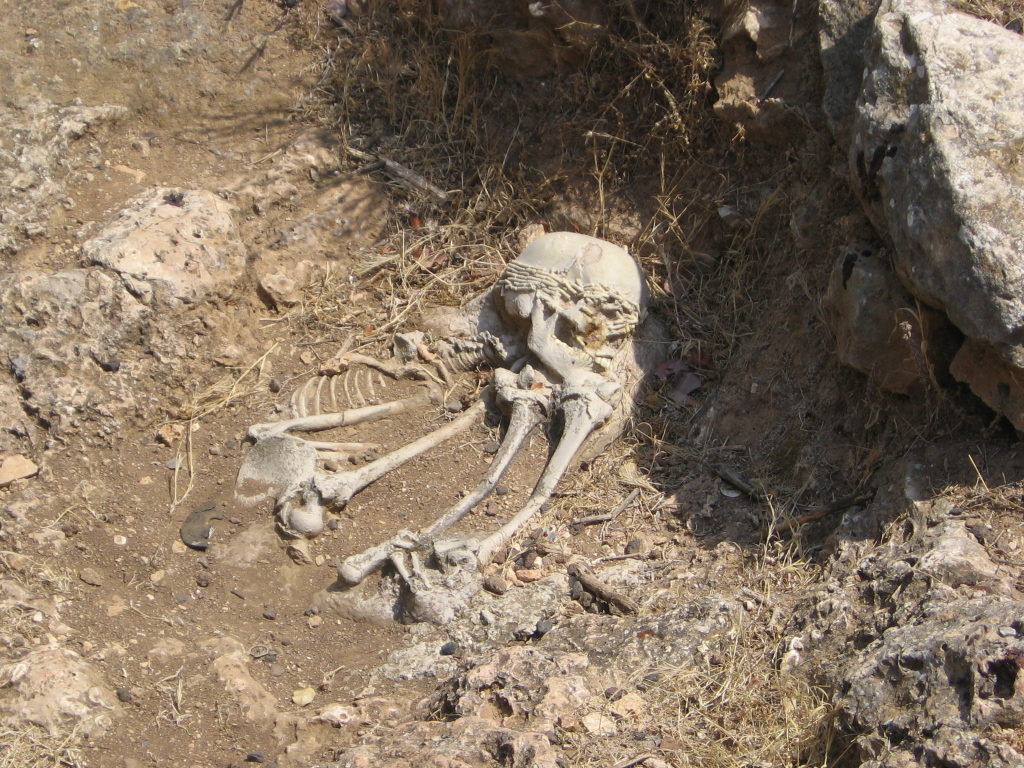
The Natufian culture predated the Israelites by millennia. They were gone by at least 7000 years by the time Israel appeared. The Natufians seem to have been the first permanent residents of a hotly disputed piece of real estate: Israel/Palestine. On Monday MSNBC reported on the archaeological find of a feasting hall among the Natufians. The story reminded my wife of similar stone-age sites that we visited in the Orkney Islands several years ago. What the story reminded me of, however, was the marzeah. The Natufian site features two activities: feasting and burial. The article notes the coincidence of 28 human burials, including one shaman, and the unmistakable signs of feasting. Bring them together and its sounds like marzeah time to me!

Natufian burial, from Wikipedia Commons

The marzeah is an imperfectly understood social institution from the ancient Levant. It is mentioned in the Bible as well as in the Ugaritic texts. Although plausibly reconstructed by modern theorists, we simply do not have a complete record of what the marzeah entailed. Two of the key elements seem to have been feasting and a funerary nature. Monotheistic religions tend to downplay the role of the dead as influential entities since they interfere with a monistic view of the divine. The two Hebrew Bible references (Amos 6.7 and Jeremiah 16.5) do not speak highly of the practice. The Ugaritic material suggests drinking may have been involved as well, further problematizing the ritual.

Now here is where the ambiguity of archaeology is thrown into sharp relief. The fact is we do not know what the Natufians were doing when they buried or feasted at this site. The Hilazon Tachtit Cave does not seem to have been a regular occupation site, and we do not have any reason to connect the burials with the feasting. Beyond a hunch. The hunch is the incredible urge to bring like things together. People excel at pattern-recognition. When I read of funerals and feasting my mind leapt to the marzeah. There seems to be no organic connection between the Natufians and Israelites (or Ugaritians), but the continuity of cultural concepts seems to strong to dismiss. Were ancient people toasting their dead with feasts that were remembered down into the Late Bronze and Iron Ages?


Older than Stonehenge

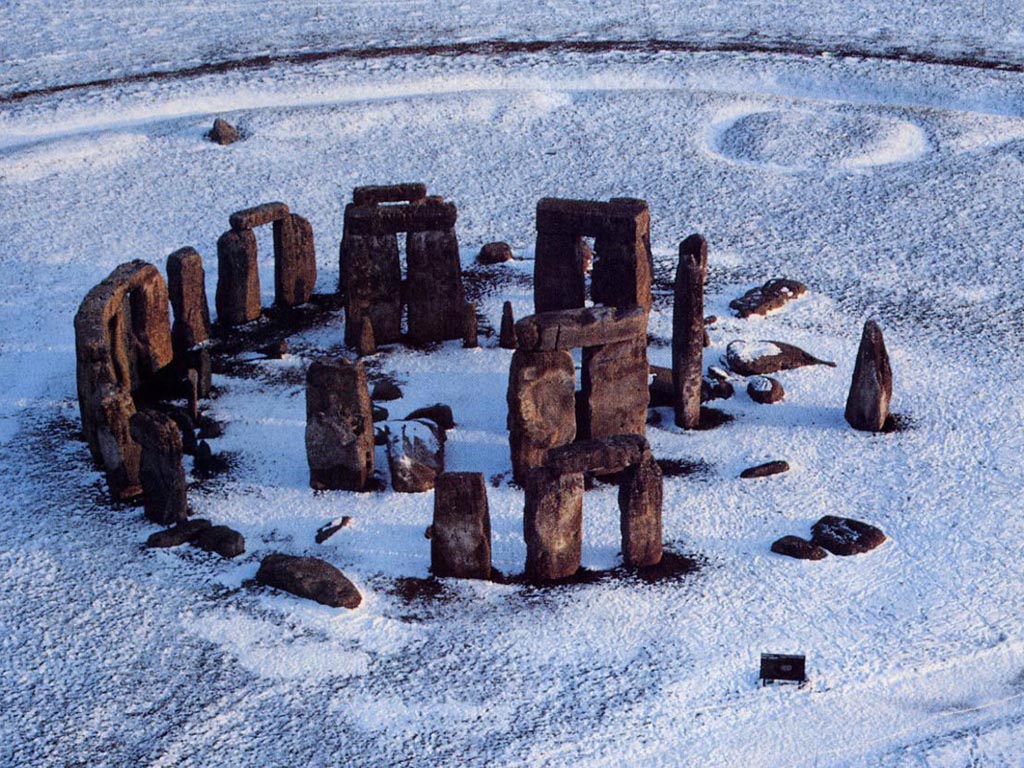
MSNBC ran a story yesterday concerning a little-known henge in Dartmoor, England. Images of these remote Dartmoor megaliths transported me back to my years in the British Isles when my wife and I spent every available tuppence traveling around to see antiquities so old that the Roman fortifications along Hadrian’s Wall seemed like throwbacks to the 1950s. With some English friends we met in Edinburgh we drove through the bleak moors of Dartmoor and Exeter, down into the forgotten curiosities of Cornwall, and back to Salisbury Plain to see Stonehenge. One year for my birthday we flew to the Orkneys (on a plane designed like a shoebox with wings) to explore the islands with the highest concentration of preserved prehistoric sites in Europe. Suffering from a killer head-cold, I accompanied my wife on hands and knees into tombs constructed thousands of years before William turned his conquering eye onto the British mainland. Colossal stone rings larger than Stonehenge, but less bulky and lacking capstones, stood out in the middle of a field where the locals barely threw a glance; such monuments had become part of the daily backdrop.

Archaeologists constantly attempt to discern the function of these silent remains. The MSNBC story suggests, based on the remains of porcine bones, that the Dartmoor site may have been associated with funerary rites. Carbon dated to 3500 BCE, they predate Noah’s putative ark (dated precisely to 1657, thank you Bishop Ussher) by more than a millennium. That they may have been associated with death is no surprise – the great feats and structures of humankind seem to be exactly that, efforts to cheat death. To leave reminders that we were here and we had something to say. What exactly they had to say, however, is muffled by the eons of lost communication.

A phenomenon I have noticed for many decades now is that when an unexplained structure or artifact is recovered, first recourse among many archaeologists is to attribute religious significance to it. Religion is the default fall-back when we can’t explain why people were expending tremendous resources to articulate a primal, deep concern in stone or clay. In many respects, the same is true today. Religious leaders still raise funds like no other class of professionals, simply by suggesting that death itself may be cheated of its due. All that money, however, can’t stop the inevitable. Instead of running away, I side with the archaeologists as I poke my head into some dank, dark space no other person has explored for many a month or year. Sitting quietly in an empty tomb left by an ancient society rendered completely mute by high antiquity, you are nevertheless in touch with what it means to be truly human.