Re-Ruins

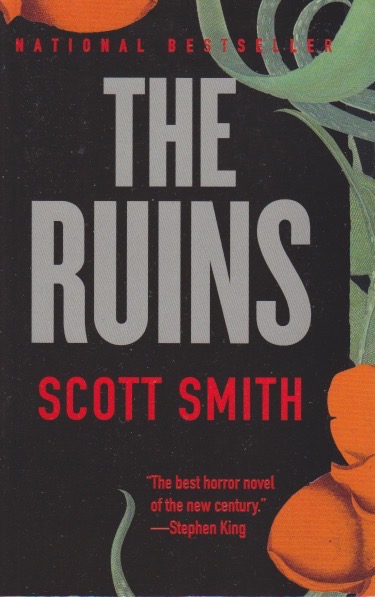
I discovered Scott B. Smith’s The Ruins after having seen the movie version.  The film is scary but the book is scarier.  I wrote about the movie last year, so I won’t worry about spoilers here.  I will say that even with its bleak ending the film has a happier resolution.  If you read my post, and remember it, the following summary may not be necessary, but here goes: two couples and two friends vacationing in Mexico set off in search of one of the friends’ missing brother.  They travel to a very remote location and discover that the missing brother is dead.  Worse, that he was killed by the natives for trying to escape a vine-covered ruin.  The vine is carnivorous, and, unlike in the movie, clearly intelligent, and sentient.  It tricks the young people into harming themselves and then it begins to eat them.  It especially preys on open wounds, but it can smother a person if it so desires.

The book is full of tension.  Although a couple of injuries take place early on, it’s over halfway through before someone actually dies.  And the others don’t follow quickly.  The narrative asks probing questions about ethics and mercy.  When (if ever) is it okay to kill someone who clearly has zero chance of survival?  Is it still murder?  Complicating things, for me, was the fact that I couldn’t remember clearly how the movie ended.  Eventually it came back to me, but this is one of those cases where the film and book, although with the same writer, diverge a bit.  The characters are clearly sketched here but defy expectations and stereotypes.  And it is sometimes the case that you aren’t sure who might be telling the truth and who might be trying to protect themselves through prevarication.

An effectively written novel, it had me looking askance at plants from time to time.  We have a quite aggressive vine in our yard that seems determined to be the Trump of all the plants.  I suspect someone planted it long before we moved in, unless it’s simply a successful exploiter of happy happenstance.  I’ve tried uprooting it every year, but I can’t seem to get to the brain of the operation.  It’s easy to believe that if plants were sentient, and could move a bit faster than they tend to, that such a scenario as in The Ruins might unfold.  The question remains whether the local Mayans simply can’t eradicate it or if they might indeed have some worshipful regard for it.  The two may end up being nearly the same thing as human power is unable to tell nature what to do.
Remembering Holidays

Memorial Day is an important stepping stone to get through the capitalistic year.  Not only does it mark the unofficial beginning of summer, it’s also the first holiday after the long, long drought of March, April, and nearly the whole month of May.  That’s a long stretch of unbroken work.  My ideal holiday may be one where I could hole up in my study with books and endless time to write, but that kind of situation isn’t really realistic.  There’s a lot to do.  Around these parts, however, getting outdoors to take care of those weeds has proven difficult.  Every day since last Tuesday (nearly a full week, as of today) it has rained at least a little.  Sometimes a lot.  And the temperatures dropped on Wednesday, back to early April levels, as if May were vying for the title of the cruelest month this year.

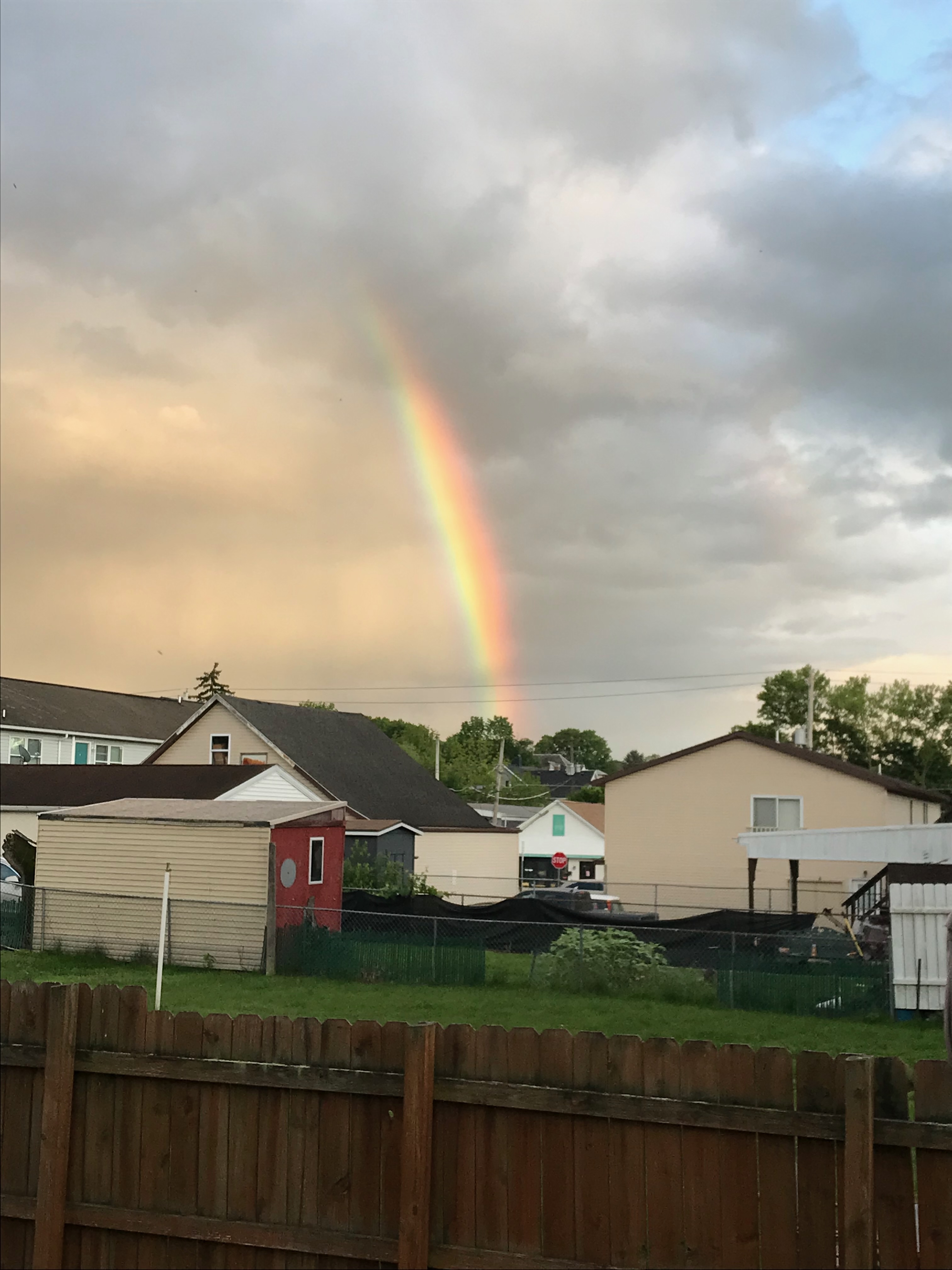
We’ve been making the best of it, getting out to see local attractions while dodging raindrops.  The weeds, I’ve noticed, love this kind of weather.  And I have a visceral reaction to putting on a heavy jacket to go out pulling weeds while watching each passing cloud for a potential downpour.  On the plus side, we have rainbows.  In fact, two nights in a row, about the exact same time, near sunset, we had a rainbow in the exact same spot in the sky.  That’s a sign of hope.  And indeed, the summer takes on a more relaxed atmosphere at work and a few holidays start creeping back in.  Until the stretch of September-October, the second annual drought.  But by then, however, off in the distance I can see the holiday season that starts in November and I know I can make it through to December.

It’s an odd way to live, isn’t it?  Experts talk about how work will be different in the future, but I have a mortgage due in the present, so I step from holiday to holiday, grateful for the time to recover.  With a government trying its best to eliminate benefits to seniors I may have chosen a bad time to reach my sixties.  At least I’m young enough to still pull weeds and push a mower.  (Once the grass dries, that is.)  The main point is not to waste this rare gift of a holiday.  There’s no rain in today’s forecast (but there is for Wednesday, every day through next weekend).  Seeing the sun buoys me up.  And if I can’t have that I can always hope that at least I can have rainbows.


Ever Hopeful

Plants are some of the most hopeful entities on the Earth.  As much as I’ve had trouble with houseplants, outside they seem to do fine.  Great, in fact.  Long-time readers will know that I struggle with lawn care.  It really didn’t enter my calculus of house buying—I was rather focused on the actual house, strangely.  We ended up with more yard than we required.  Thus, plants.  I’m not a fan of paving over greenery, but there’s a small strip of land between the sidewalk and the street—technically a “verge”—that’s difficult to mow.  Weed-eating it is also tricky because neighbors park their cars there practically 24/7 and some people don’t want a weed-eater that close to their showroom finish.  A couple years back I hauled some paving stones from our backyard out to the verge.  It decreased the grass by maybe 50 percent, but it still has to be whacked regularly.

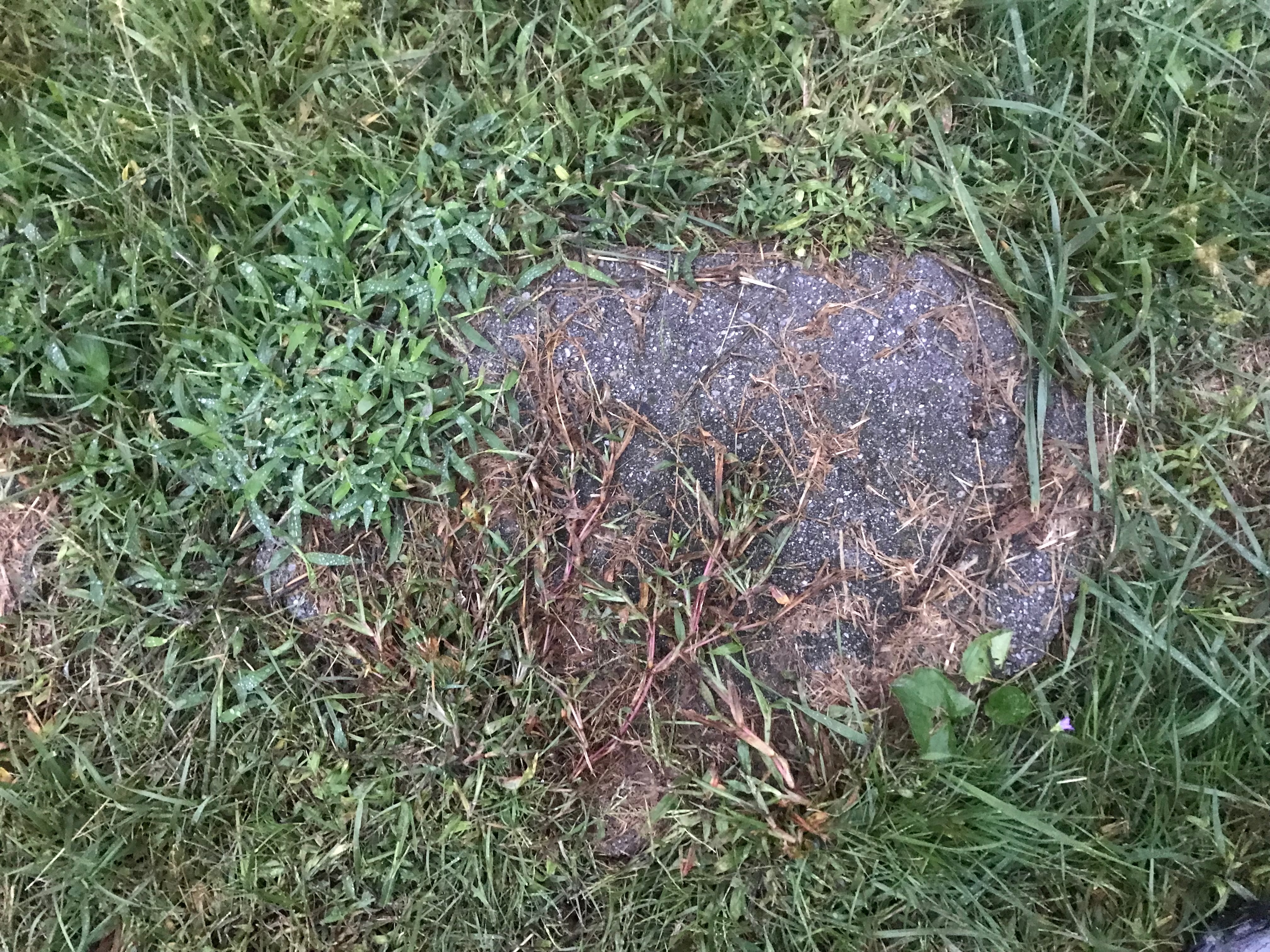
I’ve been noticing over the summer into the fall that grass with a strong will to survive had begun growing roots over the top of the paving stones, intent on breaking them down.  That’s what plants do.  They work slowly, steadily, to achieve more room to grow.  This is always amazing to me.  Life is persistent.  Many animals see a stone as an obstacle—something to be stepped on or over.  Some plants see them as opportunities.  Our human obsession with allowing only certain kinds of plants close to our habitations, and those trimmed just so, seems an exercise in futility.  Of course, yard work isn’t my favorite activity, thus the paving stones in the first place.

After our species is done making a mess of the planet, plants will quietly take over again.  Especially anyplace near where someone once planted ivy.  We’ve got some very aggressive ivy in the back yard that I pull down year after year, and no matter how often I do it comes back with renewed vigor the next year.  And crabgrass.  That stuff won’t take no for an answer.  I can tell some former owners were trying to do some landscaping with, well, landscaping fabric and decorative gravel.  If you turn your back for a few weeks, the crabgrass gets in and its roots begin breaking the gravel down into soil.  I wonder how there’s any exposed rock in the world, or maybe my yard is a paranormal plant paradise.  I can imagine that without people here to “maintain” things, paradise (which is a garden) would return.  Perhaps there’s a parable of hope among the plants.