The Past of Education

Meanwhile on earth, I have been checking up on my colleagues at General Seminary. While I’m limited in what I’m allowed to say, an article last week on Inside Higher Ed indicated that a provisional readmission of seven of eight of General’s faculty is now in place. There will be mediation. People are especially good at recognizing patterns. Some years ago, a naive and overly trusting individual, I also participated in mediation. The faculty at a certain seminary had been turned over to Conflict Management Incorporated to learn that you need to make the pie larger before slicing it up. Everyone can get enough to be satisfied. Of course, that doesn’t mean you’ll still have a job after the dessert course. Power structures being what they are, no one willingly lets go. And we’ll do just about anything to get the media off our backs.

Seminaries are probably more important to higher education than anyone would like to admit or acknowledge. The impetus to gather and educate individuals began as a religious enterprise. The earliest universities were often founded for that very purpose, and even the great intellectual powerhouses of Harvard, Yale, and Princeton were originally established to train clergy. Religion and education have been inextricably tied together since the Middle Ages and even before. Ironically, these days clergy are often cast as backward and superstitious. When’s the last time a seminary faculty landed a robot on a comet? If you ever venture to a church door, however, often the denizen of the pulpit is seminary bred. And there is power here. The collective collections can support such splendor as the Vatican. The faithful, we know, are willing to give. With a little pressure.

The Protestant traditions, despite their power structures, never officially developed a doctrine of ex cathedra truth. It is actually a difficult concept to pull off when there are over 40,000 different denominations of Christianity, and many other religions besides. But we can insist that our clergy attend special schooling. We can pay close attention to those we hire to teach them. Not everyone can read a dead language. Anyone, however, can quote scripture (or at least look it up on the internet). Seminary professors must have advanced degrees and faithful hearts. A combination that may be rarer than a comet. And we will put those individuals into a power structure that dates from the Middle Ages and wonder why it no longer works. Somewhere out past Jupiter a human device sits on a comet. Meanwhile in New York City we’re just not sure we can trust these people with our future priests. People are, however, especially good at recognizing patterns.

IMG_1275


Theological Cemetery

Implosion is a word frequently associated with demolition. Implosions are episodes where buildings collapse in upon themselves, in theory, harming no one on the outside. In 1992, as a starry-eyed, fresh Ph.D., I was hired by one of the then eleven Episcopal seminaries in the United States. Each had been around so long as to acquire a feel of almost biblical antiquity—something their governance models appear to reflect. Just over two decades later, the mythically wealthy Episcopal Church is watching its seminary structure implode. It’s not for want of funds, but from lack of will. With shrinking demand for clergy, some had to merge to maintain even their historic names. Others are effacing by degrees. The Nashotah House I was asked to leave was not the Nashotah House where I began my academic career.

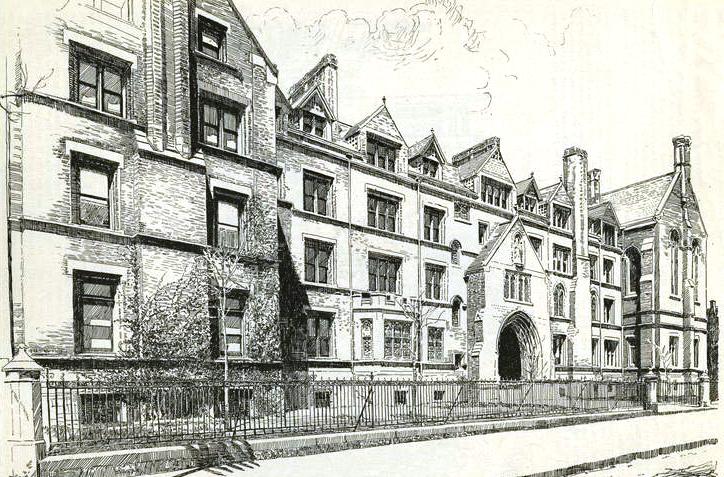
General_Theological_Seminary_1890_crop

Within hours of hearing rumors of a mass firing of the faculty of the General Seminary—The General Seminary!—I received confirmations both personal and from the Huffington Post. Eight faculty who had concerns over the Dean committed the (in the Anglican world) unpardonable sin of requesting a meeting with the board of trustees. At Nashotah, I served two stints as a faculty representative to the board of trustees and my nightmares have taken on a different quality since. In the Episcopal system the Dean is also President. Not a whiff of democracy taints these hallowed halls. They claim the title Very Reverend, no matter how appropriate, and some, if they’ve ever read Acton, did it for instruction. There must be incredible power knowing that higher education is in crisis and that faculty with legitimate complaints are only setting themselves up for protracted purgatories of joblessness, should they question you. Trustees don’t want to be bothered with the “formation” that is happening within. O Captain! My Captain!

I am heartsick. This is how Christians treat their most highly educated and dedicated—no one takes a job at a seminary without knowing the risk it poses to a career. A more protracted dismissal of faculty, including yours truly, took place in Wisconsin almost a decade ago. I knew those who lost their jobs—fine scholars and decent human beings—as apocopated visions of a fictional future flashed before the credulous eyes of true believers. Where do discarded seminary faculty go? Back into the arms of Judas? I could not. I admire those wounded healers who returned to the cure of souls. We started, did we not?, with the best of intentions. The church, it seems, forgets that even faculty are human beings. “Enlighten,” the collect for education reads, “those who teach and those who learn, that, rejoicing in the knowledge of your truth, they may worship you and serve you from generation to generation.” Or, barring that, speak the truth, and lose their vocations.