Priests, Queens, Goddesses and Fruit

“And when the woman saw that the tree was good for food, and that it was pleasant to the eyes, and a tree to be desired to make one wise, she took of the fruit thereof, and did eat, and gave also unto her husband with her; and he did eat.” So Genesis 3.6 summarizes the most expensive meal in the history of eating out. For centuries the literally minded have wondered what the exact species of fruit might have been. The apple was long favored because its Latin name sounded suspiciously like the word for evil. In the Bible the fruit with the most theological freight, however, was the pomegranate. The high priest’s robes were designed with dangling pomegranates alternating with silver bells along the hem. Some have speculated—and it can only be speculation—that the tree of life, rather than the tree of the knowledge of good and evil (the latter better abbreviated Totkogae) was a pomegranate. For the Greeks, however, the self-same fruit led to Persephone’s entrapment in the Underworld for half the year.

Although the Bible doesn’t specify this, the apparent reason for the pomegranate’s privileged religious meaning seems to have been its numerous edible seed casings, or arils. Over time it acquired the association with fertility—not surprising with its numerous seeds. Indeed, my first experience of pomegranate was in seminary, which, like its name implies, is a place of great fertility. It is one of the more labor-intensive fruits, however, having a tough skin and plenty of inedible membrane. Even with Christianity’s inimical disdain for all things reproductive, the pomegranate survived in Christian art and symbolism, becoming a symbol of—what else?—resurrection.

Today, POM Wonderful has claimed the life-giving qualities of the pomegranate as its signature for good health and long life. This California company even has a history lesson on its website, tracing the pomegranate back to the Early Bronze Age. Interestingly, the initial picture used to illustrate this early period is a goddess, Kubaba, who was perhaps an historical remembrance of the queen by that name. The Sumerian King List gives Kubaba, the only queen on this list, a reign of a century. Well-chosen for advocating the fruit! In a relief of her eponymous goddess from Carchemish, Kubaba is shown with a pomegranate in her right hand. POM Wonderful’s website does not show, nor even mention the pomegranate on the relief. Perhaps like the pomegranate itself, this is worthy of digging in a bit deeper. Any food website that draws attention to ancient Near Eastern goddesses is doing its job exceptionally well. Who would suppose that one fruit could unite an ancient queen, an obscure goddess, and an Israelite high priest shuffling around the temple? And of course, our mother, Eve.

IMG_0540


2012 + 1

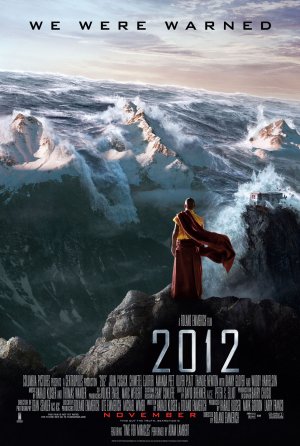
2012I just watched 2012. The conceit that the world will end last year must be getting tired by now, but I’d been curious about the movie since it came out three years back. As I suspected, there was plenty of religious banter as the putative version of us prepared for the end of the world. I noted that the little boy of the average family that managed to make it all the way to China to seek rescue bore the name of Noah. When the animals were being airlifted to the rescue station with its titanic boats meant to float out the world wide flood, it was clear that the myth of the ark was alive and well. (As I hope all of you reading this in the future are.) So this disaster movie turned out to be a bit of harmless fun, but I nevertheless shuddered at the implications. Those chosen to survive were, naturally, those who could afford to find a place onboard the secretly constructed arks. As even some of the film’s characters recognized, those who had money could buy a place on the ark, and of course they did. I do wonder what their brave new world would have been like. The whole idea of wealth has to do with the perceived value of specific commodities, and apart from our last minute stowaways, you can bet that everyone on board wanted their assets valued highest. Once the waters receded, if I recall the story at all, sacrifices would be made. Even the opening of the decks and the buzzing of helicopters like doves and ravens did Genesis proud.

The end of the world is a funny concept. Those of us who experience the world as mortals can’t really image the place without us, so I suppose it is natural enough. Nevertheless, the tone of the last four apocalypses I remember has been distinctly religious. There was a serious scare (perhaps local, because no internet existed) when I was in tenth grade. The next one I recall was Y2K, a silly episode where even priests I knew were seriously worried. With the Camping and Mayan “predictions” coming so close together, some no doubt supposed the Big Guy had it in for us all. When Christians tell the story it’s always the version with God glaring at us, belt in hand. Remember what Homer Simpson says of the song he wrote: “I’ve come to hate my own creation. Now I know how God feels.” Our cultural sense of disapprobation could be better addressed by helping those in need rather than building arks (or tax write-offs) for those who require no more to live like petty emperors. Emphasis on petty.

The world didn’t end and I wasn’t really worried that it would. The fact is we don’t need God to design an apocalypse for us because we’re very good about engineering our own. Unequal distribution of goods and services throughout a world where means exist for alleviating the suffering of countless numbers of the poor and disadvantaged has already created a purgatory on earth. We don’t need a Mayan calendar, or a New Testament whose message of compassion is overlooked in favor of its putative apocalypse, to show us the end of time. But since we made it to 2013, perhaps we should consider this a stay of execution. Let’s use our post-apocalyptic future wisely and hope humanity will live up to its name. And maybe it’s time for a new calendar.


Biblical New Brunswick

One of the true sadnesses of my life is that New Brunswick’s biggest institution, Rutgers University, couldn’t find a full-time place for a dreamer like me. Ever hopeful, I taught there for four years, counting on a miracle. Although I’ve got many good memories of my time at Rutgers, one of the side-benefits was getting to know New Brunswick a little bit. Probably not topping too many vacation must-see lists, New Brunswick, New Jersey nestles in the shadow of New York City and its train station is a place I’ve spent a bit of time. Last night I had occasion to stop in to get my bus pass so that I can start off the new year by going to work. As I climbed the stairs to the ticket window, I heard a street preacher holding forth. There he was, a young man, open Bible in hand, explaining to a mostly disinterested commuter crowd why they needed salvation. (If their experience on New Jersey Transit has been anything like mine, believe me, they already know.) Many of those in the waiting room are the homeless trying to get out of the cold for a while. New Brunswick has never struck me as a particularly religious town, although many of my students in my Rutgers days brought their religion to university with them. I didn’t have time for another conversion last night, however, as my family had another purpose for being in town.

A friend had kindly given my family tickets to Joseph and the Amazing Technicolor Dreamcoat at the State Theater. Although put on by Plays-in-the-Park of Middlesex County, being in the shadow of New York City sets a very high bar for public performances. The show was excellent and energetic and I couldn’t help connecting the dots on how the Bible had played into the evening. Andrew Lloyd Webber long ago realized that even a very secular Britain had a hunger for biblical stories. Although I am biased, given my failed choice of profession, the story of Joseph is one of the great tales of all time. Although likely half the audience couldn’t say that the story occurs in Genesis, the rags-to-riches plot of betrayal and forgiveness is so deeply embedded in human dreams that even assigning it to the wrong testament would make no difference. As Lloyd Webber knows, we all want our dreams to come true. Joseph, certainly a flawed hero, does finally see himself as the second most powerful man in the fictional world of Moses’ Egypt. It’s difficult not to root for the guy.

Outside the temperature hasn’t managed to reach 40 degrees today. A few blocks away at the train station, some of those being force-fed the Gospel were almost certainly refugees from the cold. I’ve seen this every time I have to catch a train in Newark as well. The homeless know that at least they won’t freeze in the depot, even if they are chased off the seats by security. Moving from Joseph to James a moment, we hear “And one of you say unto them, Depart in peace, be ye warmed and filled; notwithstanding ye give them not those things which are needful to the body; what doth it profit?” In other words, if you are offering the homeless words only, you’re not getting the point of the gospel at all. The homeless would benefit more from having a dream come true, I’m certain, than from having a message of salvation before being turned out to the cold for the night. The real salvation in New Brunswick is being offered at the State Theater tonight, but you do need a ticket to get inside.

Any dream will do

Any dream will do


Hallowed be thy Kane

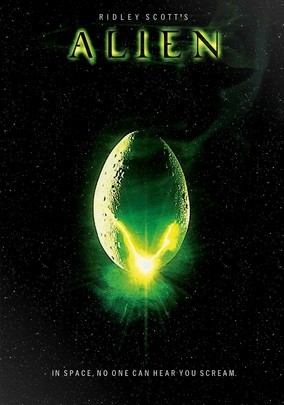
Watching the alien burst from Kane’s distended abdomen as he appeared to have eaten too much seemed somehow appropriate on Thanksgiving. I’m well aware that my taste in movies does not always match expectations and few bother to comment on my idiosyncratic observations. Nevertheless, it had been years since I’d watched Alien and on this particular holiday it felt like synchronicity. I’ve seen the film a few times before, but this is the first time since starting this blog. Not surprisingly, some biblical allusions popped out at me as I watched the crew of the Nostromo struggle with alien life. And I’d just read of NASA’s “exciting discovery” on Mars, a discovery whose official announcement for which, like Christmas, we’ll have to wait until December. Learning that the gut-busting alien was modeled on Three Studies for Figures at the Base of a Crucifixion by Francis Bacon (a contemporary one) only sweetened the analogy.

Character names hide aspects of personality and intention. Sometimes the writers may not even be aware of all the shades of gray. The alien’s first victim is Kane. On paper he seems an ordinary citizen, but on the screen the euphony with the first human child, Cain, is obvious. As Parker is lamenting how large the alien has grown in just a short time, science officer Ash whispers, “Kane’s son.” Or is it Cain’s son? Cain, the infamous ancestor of the sinful Grendel and any number of other villains of literature and cinema. Cain is, significantly, the first child born in Genesis, himself the genesis of sin in the world since his murder of his brother is the first act that the Bible declares a “sin.” The alien, born worlds away, conforms to biblical expectations.

Since Ash is actually an android and has no real feelings, he admits the alien to the ship and protects it until he is destroyed by his shipmates. He represents unfeeling science amid the horror of human bodies being invaded and rent apart. When accused of admiring the alien, the resurrected (!) science officer states, “I admire its purity. A survivor… unclouded by conscience, remorse, or delusions of morality.” Is he not really describing science itself? Religion is running rampant on the Nostromo. As Ripley sets the detonation charges and finds her escape blocked, she races back to the console and cancels the self-destruct order which the HAL-like Mother ignores. In a secular prayer Ripley calls out to Mother who, like any deity, does not answer all human pleas. And even as she escapes the detonating ship, Ripley will find that Cain’s son is still lurking in the corner of the emergency shuttle, for the science can never truly escape from Genesis.


Dracula’s Dinosaur

It must be October when a dinosaur with a parrot’s head, porcupine quills, and fangs is announced. Yesterday’s issue of Time online featured a drawing of the creature and a nifty animation of reconstructing the aptly named Heterodontosaurus. Well, that’s actually the genus name. The species goes by the delightful name Pegomastax africanus. Last I checked, however, space on the ark was filling up. Dinosaurs create a unique embarrassment to Creationists. One suspects that if they didn’t have kids they’d dismiss dinosaurs all together, but the troublesome fossils just won’t go away. What’s more, although they’ve been extinct for 65 million years, they keep producing new species for us to recover, describe, and name. When I was growing up (and I have it on good authority that the argument is still used) Creationists told us that no transitional forms had ever been found. Therefore evolution simply could not have occurred. This was generally followed up by a reference to Genesis. Excuse me, a fanged porcupine-parrot? If that doesn’t count as a transition, what does?

Religion loses nothing by admitting to an ancient earth. Nothing but literalness. One of the joys of reading is the exploration of metaphors, similes, and hyperboles—writing delights us with its constant surprises. Even those who claim to read a text literally are engaging in a form of interpretation even earlier than the first wedge mark pushed into clay. Written texts give us something to ponder, to think about, and occasionally, to obey. Just when it looks like the cover has slammed shut on the black book we find a new set of dinosaur tracks running across our clay tablet. The literal-minded might not see these as being a message from God, but surely the endless variety of creatures that have walked this planet more than make up for it.

We used to have a pet parrot. His name was Archie, named after Archaeopteryx, the feathered dinosaur. Although Archie was cut off by disease in the prime of life, he was a curious bird and when I reached into his cage to try to get him on my finger he would dole out what he meant as a painful bite. I always took it as a sign of affection. Had our little friend had the fangs of Pegomastax africanus, I would’ve thought long and hard before risking the finger-perching trick. I like to think it would have reaffirmed my fascination with the amazing adaptability of nature. Evolution, unlike God, has no purpose. An endless tinkerer, it gives us thousands of differing dinosaurs that had been gone many, many millennia before Moses ever even thought of Noah. Pegomastax is safely extinct now, and the only ones who have to worry about this perfect Halloween dinosaur are those who think that one particular view of one particular book is the only way to find truth.

We still miss you, Archie.


Last Genesis

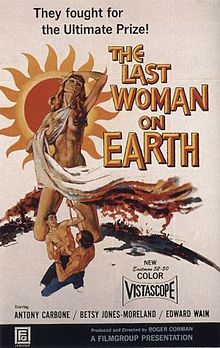
Roger Corman was famous for saving a buck on his movies. When it came to low-budget sci-fi and horror, he could be counted on to stretch pennies into dollars. The B quality with which this impresses most of his films makes them all the more addictive. I watched my share growing up, but I’m still discovering ever more as an adult. The Last Woman on Earth is one I recently found and the religious implications of the film were so obvious that they seemed worthy of a little exegesis. The plot is simple enough, three skin-divers, a man, his wife, and his lawyer friend, are the only survivors of an anoxic episode. When Harold Gern (the man) wonders what happened his friend Martin says, “A new and better bomb, act of God, it doesn’t really matter.” The destruction of humanity is a time-honored divine pass-time, so no one considers the statement blasphemous.

Naturally enough, within a short time Martin starts to feel that Harold’s claim on his wife Evelyn (clearly, by choice of name, an Eve figure) is a bit unreasonable under the circumstances. Biology is, in this instance, the misogynic element as the men increasingly step up their hostilities. Evelyn eventually decides to run away with Martin, but Harold is in hot pursuit. The entire episode takes place on Puerto Rico, and so there are a limited number of places to hide. Martin tells Evelyn to await him in the church, which she dutifully does. Harold catches up with Martin and blinds him. Martin finds his way to the church and when Harold comes in Martin provides a final homily (including some lines from Alice Cooper’s “School’s Out”) declaring that there is no more God. He then dies on the church floor.

The movie ends with Harold and Evelyn leaving the church to try to learn what life is all about. Reading up on the movie, I learned that Corman wanted to keep the costs down so that the writer of the script was cast as Martin for the film. The script wasn’t finished before they started shooting. Nevertheless Robert Towne’s story brings the overall trajectory back to an updated Garden of Eden story. Puerto Rico, a tropical paradise, where the one woman is Eve, is the scene of the first sin—the murder of Martin by Harold. Throughout the movie, Martin is clearly the Abel character while Harold is selfish, unsympathetic, and emotionally absent. Cain wins the epic struggle and God, we are told, is no more. Not the most profound of story-telling, but the themes and concepts are very much biblical. And when the final couple leave the church the remainder of world history is set to begin. I’d gladly give this one a B.


Seedtime and Harvest

With the drought deepening over about half the United States, it is with not inconsiderable irony that I am reading the story of Noah’s flood. I have been tweeting the Bible for some months now and am just reaching the end of the fascinating account of the deluge. The difference in the case of the drought is obvious, but similar. Having spent some time in the Midwest, I came to know how intimately and intensely many of the citizens trust God’s providential care (this is true elsewhere, of course, but I noticed it more in that region). When disasters come, however, just like an animist would suggest, answers will be sought in the divine world. “While the earth remaineth, seedtime and harvest, and cold and heat, and summer and winter, and day and night shall not cease.” Genesis 8.22 rounds out God’s plan for the perpetuity of nature’s cycles, stating in just the previous verse that he knows people to be wicked and will never punish them for it again, as he did in the flood. Such biblical assurances, however, do little to allay fears when crops are dying in the field.

The problem in looking for answers in nature is their ambiguity. Just consider the record number of church picnics that haven’t been rained out this year—the number of prayers I’ve heard for the staying of rain for human convenience is surely a reflection of how intimate divine interaction with the workings of nature is supposed to be. One of the benefits of science has been its ability to straighten out all the cards in the deck, tapping them on the table-top and squeezing them into line. How would God weigh prayers for no rain so that an outdoor wedding of a devout couple could take place versus the prayers of a backslidden farmer for much needed precipitation (without hail)? Are decisions made by majority request? Wouldn’t that be excessively dangerous, given humanity’s track record of deciding what is good for itself?

The drought is a serious concern, and I do not mean to suggest otherwise or make light of the situation. What concerns me is the human tendency to look for a divine bailout. Many politicians of certain persuasion (usually the greenback kind) tell us that the climate is just fine. Our greenhouse gasses are not unduly affecting it. Now that a drought is upon us—and even a child can understand that all weather is related—the focus shifts to God. This dancing around the elephant in the room is tiring and dizzying. We can spend billions of dollars making bombers that are almost invisible to radar and so oddly shaped that they get reported as UFOs and yet we can’t get politicians to consider our impact on the very skies they fly in on their bombing missions. The atmosphere is larger than us all and it is warming up. And when we bake ourselves out of existence isn’t it a comforting thought that seedtime and harvest will continue, at least until our sun burns out?


Heat Wave

Stewing in the heat of the wave washing over much of the east, my thoughts sometimes turn to the cool, refreshing flood of Genesis. I’ve been Tweeting the Bible for some months now, and I am in the midst of the stories of the flood. Noting the many contradictions and discrepancies, it is a wonder to me how many of the religious are able to overlook or harmonize infelicities for the sake of a consistent faith. Most famously the story states that Noah took one pair of the clean animals, but also seven pairs of clean animals. The rain came down forty days. Or was it 150? One of the reasons that people continue to believe this story may be its specificity. No approximations or guesses, the numbers are precise, as if written down by an eyewitness at the scene. In actual fact, the story is among the oldest of recorded civilization and has its origins at least as far back as ancient Sumer. For as long as people told stories about the gods, they told stories about world-wide floods.

As a species that is able to think ahead, we have long been concerned with the fate that might befall us. Consider the amount of hype about the end of the world that has accompanied the random calendrical dates we’ve assigned to the cosmos: the world has been expected to end nearly every year since 2000, and that is only the most recent incarnation of this foreboding. If there are gods out there, they must have it in for us. The very fact of our being human seems to anger the deities. Even after God promises the world will never again be destroyed, he adds a caveat—not by flood, anyway. By the time we reach the letters near the end of the Christian Scriptures the future torment has turned to fire. There’s always something out there looming on the horizon.

“Prometheus teacher in every art brought the fire that hath proved to mortals a means to mighty ends,” so reads the quote from Aeschylus behind Paul Manship’s statue of Prometheus. Prometheus was the Greek god (Titan, actually) favorably disposed toward humanity. His name means “forethought.” When humanity cowered and shivered in the dark, Prometheus brought the light and warmth of fire. It is easy to suppose the Greeks to have been more enlightened than earlier or contemporary civilizations, but Prometheus had offended Zeus and was subject to eternal torment for his thoughtful gift. Perhaps it is just the divine way—gods are jealous of us although they hold all the power. As I continue to tweet the good news of an angry god, I am starting to understand the power deities will always have over their vulnerable creatures.


Problematizing Noah

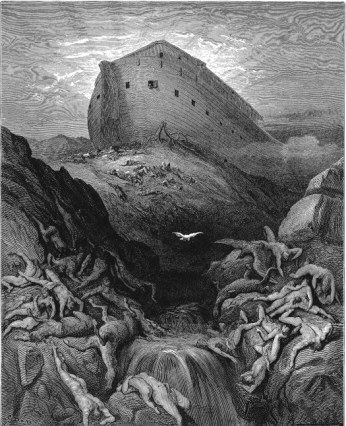
As I continue to Tweet the Bible, I’ve been working through the story of Noah. Considering the number of children’s items imprinted with the friendly, smiling Noah and Mrs., and the cute, predatory animals they’re taking aboard their private yacht, the utter belligerence of the story is frequently lost. There is one seriously peeved God behind this. “And it repented the Lord that he had made man on the earth, and it grieved him at his heart,” Genesis 6.6 states. And it only gets worse from there: “I will destroy man whom I have created from the face of the earth… for it repenteth me that I have made them.” Indeed, the wrath of God is emphasized more than the wickedness of the humans that have spawned it. No matter what is done, it seems, God will still be in a rage.

The truly striking aspect of this account comes, however, when Noah is instructed on whom to save. “Thou shalt come into the ark, thou, and thy sons, and thy wife,” verse 18 dictates. Men first. Now, we cannot judge a product of the past against standards of the present day, but it is quite clear why many women find the biblical text less-than-friendly. Even the animals are explicitly paired from the start do not receive the radical disjointing that the women receive from the men. If the purpose is to procure a new generation, arguably pregnant women could have done that with the men treading water above the remains of Eden. If survival is the point of the story, as the saying goes, ladies first.

The flood story is a complex account of a deity with anger management issues and a preference for the company of men. Although theologians may say with a wink that God has no gender, clearly the Bible begs to differ.

Humans and animals alike are victims of the divine wrath, and even though humanity survives the flood can the relationship with deity ever be the same again? How do humans face a creator turned destroyer, knowing that they will never really please him again? The weight of such divine displeasure is surely greater than all that water pressing our ancient cousins into fossils on the primeval sea bed. I think back to all the children’s toys with the happy little animals and a smiling Noah and I know they resemble the biblical version only in the most fleeting of fashions. Yet the myth lives on.

What shape is your ark?


Gods Will Be Gods

“And it came to pass, when men began to multiply on the face of the earth, and daughters were born unto them, That the sons of God saw the daughters of men that they were fair; and they took them wives of all which they chose.” Genesis 6 begins with one of the most unusual stories in the entire Bible. And that’s saying something! The sons of God mating with the daughters of men? A couple verses on we hear about giants roaming the earth in those days, presumably the children of this divine-human miscegenation. What is this stuff straight from pagan mythology doing in the pages of Holy Writ? Over the centuries, translators have tried to tidy up the boldly direct language of the King James here, making the sons of God into angels or some lesser beings. It is too hard to accept that sacred scripture admits of polytheism.

Monotheism, it is clear, came to the Israelites somewhat late in their history. The Bible is full of bold clues that other gods exist, and, worse yet, they are sometimes as powerful as Yahweh. In the light of later theological development, translators often bow to popular pressure and clean up the Bible’s language a bit. Fact is, Israelites, like most ancients, lived in a world populated with mythical creatures. Gods galore, monsters, demons, angels, witches, giants—they all haunt the pages of the western world’s sacred book. But that’s not what we expect the Good Book to say. The Hebrew text here is unequivocal, these are the “sons of God” we are talking about. Either that, or worse, “the sons of the gods.” More and more deities.

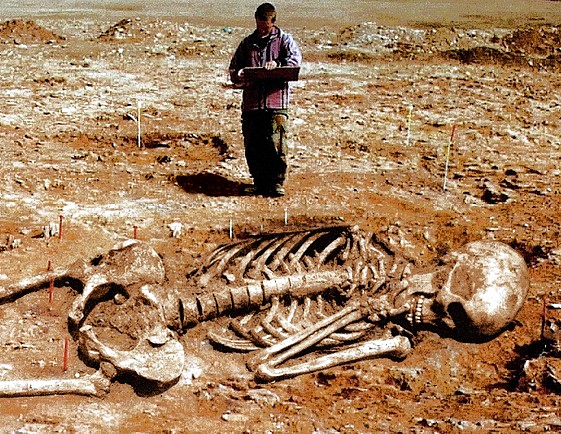
We can’t be sure why the ancient believed in monsters and giants, but it seems likely that such creatures had explanatory value for their world. Lacking science—paleontology was millennia in the future—they had to explain the huge bones found in the earth. We do know that dinosaur bones had been discovered in the Mediterranean basin in antiquity. These big bones often look human to a non-specialist. Heads are frequently missing. It has been suggested that these give rise to our biblical giants. Yet another response has been the recent trend of fundamentalists with Photoshop skills to post photos of archaeologists actually discovering giants on the Internet. Some of these doctored images are very impressive. It is an effort to save the Bible from the truth. A Bible that requires saving, however, should give even the most fervent believer pause for thought. Isn’t it just easier to suggest the sons of God were typical guys and that little has changed since the world was young?


Enoch’s Dilemma

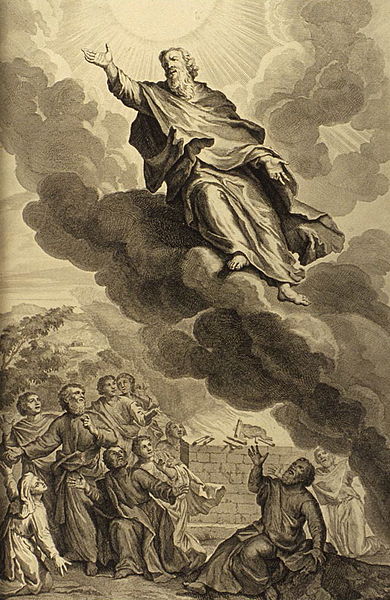
“And all the days of Enoch were three hundred sixty and five years: And Enoch walked with God: and he was not; for God took him.” These two verses from Genesis 5 convey just about all we know of Enoch. That, and he was the father of the oldest man ever, Methuselah. With this intriguing introduction, however, the religious mind insists on a backstory. Over the centuries of antiquity, books grew about this mysterious character as he became the prototype of the person who never died. The Bible doesn’t state that Enoch didn’t die. Nor does it state that he did. Plenty of wiggle room for the mythic imagination. In what appears to be an unrelated story, the Chronicle of Higher Education this past week reported on technology that builds on the strange but natural idea of phantom limbs.

When a person loses a limb, sometimes they report still feeling it. Their brains grew in a body that possessed the limb, and once it is gone the brain still has memory of it. The term used for this is a phantom limb. Knowing that mind does control matter to some extent, robotics experts have figured out ways to wire a robotic limb to the brain of a paralyzed person that responds to brain signals sent to the phantom limb. As much like science fiction as it sounds, this is already happening. The robotic limb responds just like a biological limb. This technology is just developing, of course, and is very expensive. It also implies that cyborgs, once the fodder of futuristic fiction, are becoming reality. Some theorists, such as Raymond Kurzweil, suggest that the brain itself can be converted to electronic signal and transferred into mechanical storage. Once that is achieved, we will have Enoch without any God to take him.

The world that we’ve been engineering bears a strange resemblance to the world of the Bible. For the people of ancient Israel death was the final word, and with rare exception (the only unquestioned case of the undying man was Elijah) people simply accepted the inevitable with no concept of an afterlife. Contact with the Zoroastrians convinced some Jews of the possibility of life beyond death and the quest for immortality was on. It has been a desideratum of human aspirations ever since. We invented machines to help us do what nature has not equipped us to attain. Finer and finer lines have been drawn between the biological and the mechanical. While it make look like immortality to some, to others it seems that we have been kidnapped—taken, if you will—by technology. What really happened to Enoch? The Bible doesn’t say, but it seems that we are getting very close to finding out on our own.


Stormy Weather

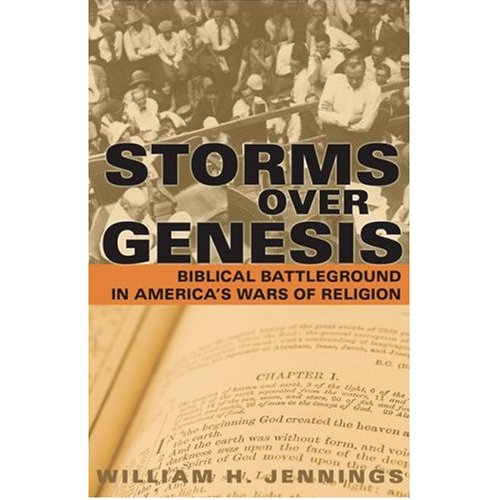
The privileging of one literature over others is problematic. Of course, the entire industry of biblical studies is built around such preferential treatment. And so is a large share of Christianity. I’ve just finished reading William H. Jennings’ Storms over Genesis: Biblical Battleground in America’s Wars of Religion. For someone who has taught Genesis before there wasn’t too much new material in here, but it strikes me as a very good primer for those who wonder about why the issues of gender inequality, global warming, and evolution remain firmly entrenched in evangelical minds, and therefore, our society. Just the first three chapters of Genesis, as Jennings points out, have led to the much of the irrational, at times inane, arguments that just won’t go away. Tea Party kinds of issues.

At the base of it all is the concept that Genesis somehow represents the way the world is supposed to be (rather than the way it actually is). As if seconding my choice of bus reading, The Economist recently published an article on Glen Rose, Texas. I’ve known about Glen Rose since I was a child. There, in a bizarre twist on the Flintstones, locals claim human and dinosaur footprints intermingle in a nearby creek bed. As the article points out, some locals see this as evidence of young earth creationism—seems Fred and Wilma missed the ark along with Dino. For decades paleontologists have tried to explain that the “human” tracks are actually dinosaur tracks as well. Given their size and stride, if they were human Adam must’ve been a giant. Despite the science, the myth persists. Even the article in The Economist doesn’t give the scientific answer.

It would be difficult to find a book more influential than Genesis. It would also be difficult to find one that is less scientific. Anyone who has studied ancient societies knows that they delighted in telling outlandish stories to explain the origin of the world. After all, there were no eyewitnesses. No channel 11 helicopters hovering overhead to bring you the story live. It all comes from mistaking a good story for a good book. In an era when evidence of evolution literally abounds, we still have nearly half the population of this technological nation trying to make room for the Valley of the Gwangi. Jennings may not hold the answers to all the problems Genesis raises, but if people would read Storms over Genesis, we might be able to afford a little more energy to solving global warming rather than running from dinosaurs in Texas.


Genesis Gender-Bender

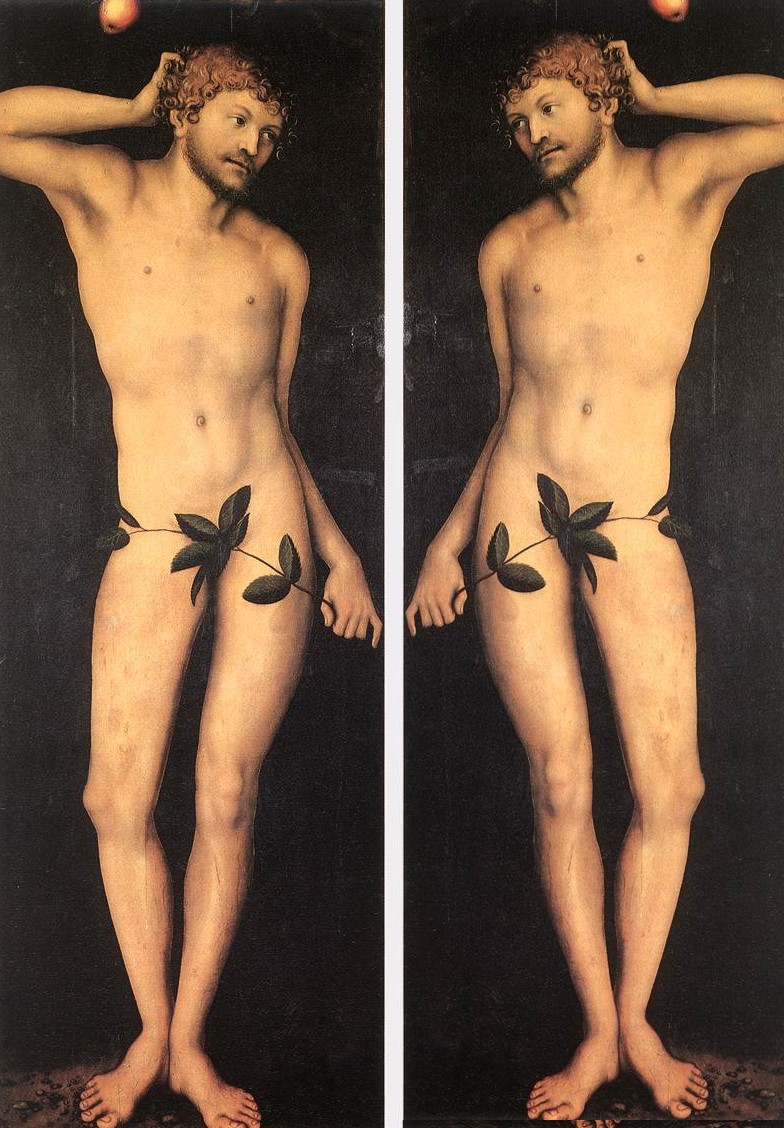
“Male and female created he them; and blessed them, and called their name Adam,” so reads Genesis 5.2 (5.2a, for those sticklers among the crowd). Long ago I lost track of how many times I’d read Genesis. It has a privileged place in the Bible partially because of our modern method of reading books. We assume that the beginning should be read first and that it should lay the groundwork for what follows. The Bible, however, was compiled over centuries and the story may begin at Genesis, but not all that follows is in agreement with it. “Called their name Adam” sent me scurrying back to dust off my Hebrew of the Bible. The King James Version, after all, was translated from manuscripts that are sometimes inferior to many that have been discovered since then, including the Dead Sea Scrolls. Maybe this was one of those strange Elizabethan passages, for after all, Queen Elizabeth I did have a bit of a reputation. To my surprise, however, “their name” remains plainly in the Hebrew, suggesting that the first couple were both Adam.

Since just a verse later Adam and Adam have a son called Seth (and since the genealogies seldom mention their women at all), presumably Adam here means Eve. Literalists beware! The creation story in Genesis 1, as opposed to Genesis 2.4b, pictures the genders created simultaneously. Women and men together are humanity. The second creation story offers Adam a generous dollop of primacy; he gets to be first and even gets to name the animals and the wife; he is the lord and master of his domain. And people refer to eating the fruit as a fall! Now at Genesis 5 we have humanity reunited in the person of Adam, the bi-gendered representation of humanity.

Of course Adam is a play on words. The Bible begins with humanity as a joke. Adam is just one syllable short of the word for “ground” (adamah), and so Adam is the original groundling, or earthling. Yet Adam is never given as a proper name until Eve appears. It is only with the creation of woman that man becomes man. I suspect that may be the underlying of logic (if it is even right to call it such) of the plural, “their name Adam.” It might be easier just to recognize that the Bible doesn’t give us the endpoint of the discussion of human nature, but the starting point. There are those who insist that the Bible has all the answers. In my experience it is primarily full of questions. And the questions require both female and male to answer them. Otherwise, humanity is indeed a joke.

“Adam, I’m Adam”


Razzing Cain

Generations of literalists who’ve had their eyes opened by reading what the Bible actually says have stumbled over Cain. His murder of Abel is fine—predictable even. The problem is what happens after that. Since he has murdered his brother, the only other human born so far, Cain seems prematurely concerned about “every one that findeth” him killing him. Seems unlikely that Eve, or even Adam, would like to kill the only surviving child they have. Yet God puts a mark on Cain. Presumably his parents would recognize him, so why is Cain literally a marked man? Rather than Omega Man survival techniques, Cain focuses his attention on kick-starting his love life.

Cain’s wife immediately raises the issue of where the girl comes from. Those who like to call themselves literalists have to back-peddle a little and suggest that since, according to Genesis 5 Adam and Eve had other children, this must be where she derives. Of course, she would in such a scenario, be his sister. Extraordinary circumstances call for extreme measures, but even so, literally, there are no other people yet. Cain is old enough to kill his brother and the next child born, according to the narrative, is Seth. Seth is explicitly a replacement for Abel, and really he doesn’t do Cain any favors in finding a wife. The story here simply slips out of character and gives us a world already partially populated.

As I was tweeting Genesis 4, it occurred to me that immediately after marrying, Cain builds a city. Cities only sprang into existence to allow for mutual protection with the diversification of labor, following on from the agricultural revolution. One of the main characteristics of cities is population. Genesis 4 has only Adam, Eve, Cain, his wife, and Enoch. It may be the smallest city in history since the entire human race could have easily fit into one modest house.

The stories of Genesis are etiologies—tales of origins that have no ties to historical incidents. Cain represents the urbanites, the city dwellers who will always somehow find ways of irritating God. In our urban culture where most people are born in towns or cities, we have lost touch with the life of the nomadic pastoralist. We are, however, merely following the literal path that the Bible lays out for us. As we shall shortly see, the children of Cain and Seth are the same.

Cain just can't figure it out


Honor Thy Mother

Earth Day should be an international holiday. Perhaps the most disturbing attribute of some varieties of Evangelicalism is their tendency to read the “Be fruitful, and multiply, and replenish the earth, and subdue it” of Genesis 1 to be a mandate not tempered by a literal reading of Genesis 4. As I noticed when tweeting the text yesterday, Genesis 4.11 has God say to Cain, literally, “And now art thou cursed from the earth, which hath opened her mouth to receive thy brother’s blood from thy hand.” Her mouth? What is this if not a biblical affirmation of Gaia? The earth, according to Genesis 2, is literally the mother of Adam. Yahweh is the male element, the fingers molding the dirt (those who have ears, let them hear), while the womb of this bizarre conception is the earth itself. She has a mouth to receive the blood of Abel. The planet beneath our feet, according to the Bible, has not only a mouth, but also hands (Psalm 89, for those who doubt). It is our duty to grasp these hands and save our mother from ourselves.

In the spirit of the day, I decided to fix that pesky leak in the bathroom sink yesterday. We rent, of course, and our landlord—the nicest I’ve ever known—can be a bit slow when it comes to non-emergencies. I fixed the kitchen sink a year or two back, so I stuck my head under the cast-iron monster, baptized by the drips that continued to appear above my head from pipes far older than Methuselah, to see what I could do. After trips to every hardware store in the area, watching bemused DIY experts scratch their heads at photos on my phone of the Byzantine arrangement under my sink, I finally had to admit defeat and reassemble the old faucets again. The drips that fall are Gaia’s tears.

When I was in college I learned of Pascal’s wager. A philosopher who liked to hedge his bets, Pascal deduced that if God exists then our eternal fate relies on our obeying him (always him). If God does not exist, we have lost nothing by behaving ourselves, Pascal concluded. While many Evangelicals find that reasoning attractive, they do not apply it to their mother planet. If God is not coming back any day now, we’d better take care of the planet that sustains us. If God does show up, against all odds, what have we lost? Watching the plants burst back into life after a gray and dank winter, who can help but wonder at it all? Literal or not, the earth is so maternal that we should all pay her the reverence she is owed. Even if it means being a literalist for a day.

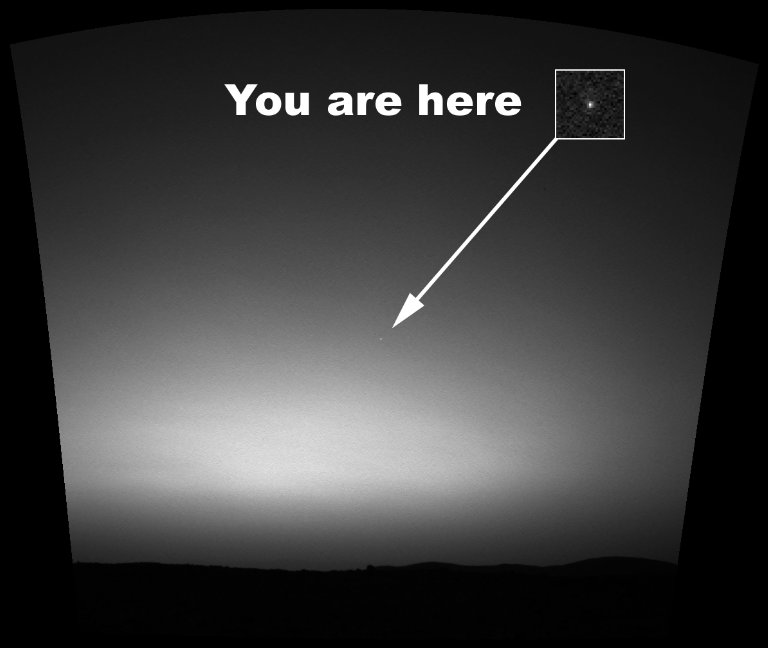
NASA's picture of our mother.