More Than Zombies

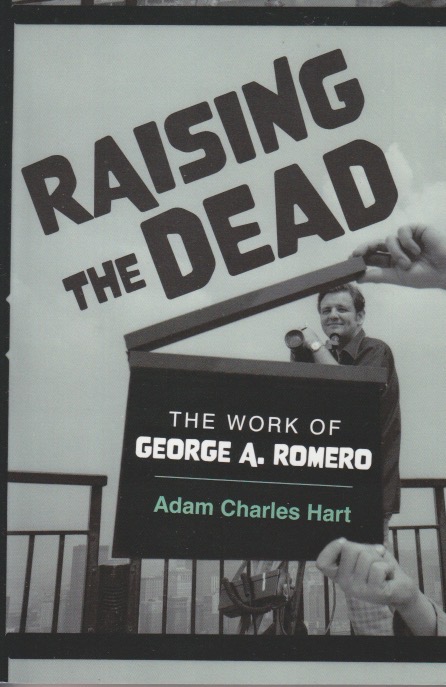
I was near fifty, if I hadn’t already passed that threshold, before I saw Night of the Living Dead.  Whispered about in my high school as one of the scariest movies ever, I had avoided it.  When I saw it, I immediately recognized its draw.  I’ve watched several George Romero movies since then, appreciating his devotion to Pittsburgh, and to monsters.  Adam Charles Hart’s Raising the Dead: The Work of George A. Romero, showed me much more than I’d ever watched.  For one thing, Hart had access to the Romero archives.  Although the book does spend time on the movies that Romero actually got made, it fleshes out the picture with those that remained unfilmed.  Or were filmed and disappeared.  And Hart also discusses the fact that Romero didn’t really think of himself as a horror auteur.  He had other ideas, other projects he wanted to shoot.  But he’s remembered for zombies.

Some of this is to be expected.  Although zombies had been around before, Night of the Living Dead made them into modern monsters.  As much as Romero hoped the cred from that film would get him noticed, as will predictably happen in capitalism, funders wanted more of the same from him when it was noticed.  Zombies went on to become a major worldwide craze.  Tons of movies, long-lasting television series, zombie walks in major cities—zombies rivaled vampires for dominance among the undead.  For those holding the purse strings, they were a sure thing.  And those wanting to gain more lucre love a sure thing.  Romero had other stories he wanted to tell, but the funders wanted more zombies.

Writers tend to have wide interests.  Stephen King doesn’t only write horror.  One of the more intriguing facts in this book is that Romero had even considered a remake of “The Legend of Sleepy Hollow.”  Given my particular interest in that tale, I wondered what that might’ve been like, had it ever been made.  Interestingly, Hart notes that it was in a folder from 1998, the year before the Burton film Sleepy Hollow was released.  (I could’ve used this information before Sleepy Hollow as American Myth went to press!)  In any case, this is a fitting tribute to a guy with principles who, although he never became a director with household name recognition, managed to help change the horror genre forever.  He avoided the big studios and paid the price for doing so.  But he left behind a legacy, and that’s about the best that can be hoped for a writer.

Dead Trilogy

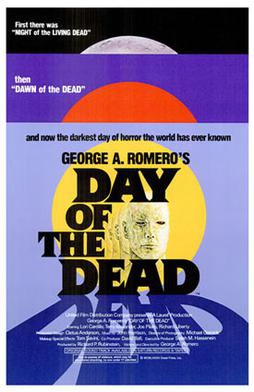
When we lived in New Jersey our internet wasn’t fast enough for streaming.  I’d watched George Romero’s Night of the Living Dead and Dawn of the Dead, but I was never able to find a DVD of Day of the Dead.  Well, it finally came around to streaming (thanks, Freevee), so I was able to complete the trilogy.  It doesn’t get discussed as much as the previous two, and it’s clear that it doesn’t come up to their level.  Still, the discussions of larger issues—God, civilization, and military power—are worth pondering.  There are a few jump startles but less intensive gore than the previous two, until well into it.  So, here’s the story: a base of operations has been set up in Florida where the military is overseeing civilian scientific experiments on the animated dead.  The military guy in charge is a real jerk and threatens to shoot those who don’t comply.  Also, there’s just one woman among them (who made that decision?).

As might be expected, things go haywire.  The head scientist, “Frankenstein” to this crew, is trying to teach the dead not to eat the living—to coexist.  The living are hopelessly outnumbered, and despite the Jamaican civilian, John, suggesting they go to a deserted island and start all over, everyone seems content to hang out and fight each other.  In the end, military overreach leads to everyone being killed except John, Sarah (the woman scientist), and Bill, who seems to be Irish.  In the end the three of them fly to a deserted island and you kind of get the idea that this will be a bit more of an R-rated Gilligan situation.  The film is campy and there is a comic tone throughout despite the serious issues raised and the actual horror elements (blood and zombies lurching out of the dark).

It actually also attempts to explain how the dead continue to move and why they eat with no internal organs.  The brain, down to its reptilian base, retains the eating instinct.  Frankenstein, before being killed by the military, is training the promising dead, especially Bub.  In the end, Bub kills the military guy.  As far as the story goes, it seems to send mixed messages.  The good guys do prevail and the dead, at least Bub, is more righteous than the fascist military that holds sway via constant threat.  One does get the sense that Romero was having fun with his zombie movies and some of the special effects were quite good.  I’m glad to have finished the trilogy, but I don’t think I’ll bother watching the remake, which was, back in the day, fairly easy to find on DVD.  They’re never as good as the dead they try to reanimate.


Vampire or Not?

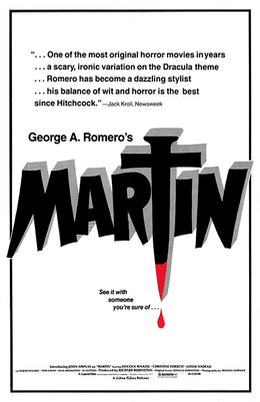
I’d heard that Martin was a depressing movie but I felt I should watch a Romero film that wasn’t about zombies.  I’d read bits and snatches of what happens, but I didn’t know the storyline in total.  Now that I’ve seen it, I’m still not sure what to make of it.  Martin is a young man who believes himself to be a vampire.  He does drink blood, murdering his victims, but there are no fangs, no “magic stuff” as Martin himself calls it.  It seems pretty clear that he’s mentally unbalanced, but he’s brought into his older cousin’s house in Braddock, Pennsylvania.  Cuda, his cousin, believes him to be a vampire, calling him “Nosferatu.”  He has protected his house with garlic and crucifixes, but Martin demonstrates that such things (magic stuff) doesn’t work.  

Daylight and eating regular food don’t bother him.  His cousin gives him a job at the grocery store he runs, while constantly warning Martin about looking for victims in Braddock.  Shy around women, he only has sex with his victims, after he has drugged them.  (This is a pretty violent movie, and the tone is downbeat throughout.)  Since he has no friends, he calls into a radio talk show to discuss the problems of being a vampire, and people love listening to him.  Meanwhile, Cuda arranges for an exorcism on Martin, which doesn’t work.  There are black-and-white sequences that aren’t really explained—either as fantasies or as past memories for a real vampire.  After his cousin becomes too suspicious, he stakes Martin to death and buries him in his back yard.

There are many unanswered questions about this movie.  If Martin is a vampire just about everything in traditions about them is wrong, apart from needing to drink human blood.  When Martin begins an affair with a troubled housewife, his bloodlust lessens, but he still gets “shaky” and has to find victims.  For those of us who tend to find ambiguity both beguiling and confusing, this is a vexing movie.  It makes you wonder what a vampire really is, and, as with most of Romero’s work, there’s a fair bit of social commentary—intentional or not.  Life itself has its fair share, perhaps more than its fair share, of ambiguity.  The only real certainty that Martin gives is that his victims die and he himself dies in the end.  Is his cousin correct?  Is Martin himself correct?  He may be mentally ill, but society is too.  And the working-class people of Braddock should know who the real vampires are.


How Many Zombies?

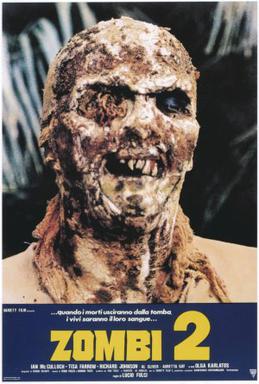
The first thing to note about Zombi 2 is that there’s no Zombi 1.  Except that in Italy George Romero’s Dawn of the Dead was released under the title Zombi.  And Zombi 2 is also called Zombie.  It’s kind of a 1970s classic, but instead of a spaghetti western, it’s an Italian movie filmed in America.  This is one of those movies that has grown in reputation over the years and when revisited by critics is considered better than it was initially assessed.  All that discussion of the title clued you in that it’s about zombies, but what, specifically?  Well, it does take the concept back to its Caribbean roots.  A woman accompanied by a reporter, is trying to learn what happened to her father on the mysterious island of Matul.  Another couple who own a yacht reluctantly agree to take them to the island.

Meanwhile Matul is increasingly facing reanimated dead (one of whom escaped to New York City).  The local doctor can’t accept that voodoo is actually involved and has stubbornly remained to try to find the “actual” cause.  The two couples from the yacht learn from the doctor that the woman’s father had become a zombie.  The doctor knows to shoot zombies in the head, but the new-comers haven’t quite figured that out yet.  The zombie infection is passed on by a bite, but anyone who has died can come back.  And return they do.  They storm the hospital where doctor is trying to hold out.  In the end, everyone but the original couple has been bitten or killed, and the zombies have taken over the streets in New York City.

This isn’t bad for a zombie movie, but it’s not up to Romero standards.  Of course, few are.  I had only recently learned about it from a friend, and it was old enough to be free on a commercial streaming platform.  Zombies have some inherent contradictions, of course, and unless they’re handled well they can look a little silly.  That’s my overall assessment, not bad but a little silly.  Part of the draw of zombie movies is that they deal with inherent contradictions.  Bodies that lack the intricate biological structures required for walking, digesting, indeed, for doing what living people do, simply can’t walk around eating people.  And yet here we are.  George Romero gave the cinematic world the modern zombie, and his superior efforts have led to many attempts at bringing believable undead back to life.  If, like me, you overlooked this one, it’s worth catching, especially for free.


Funny Scares

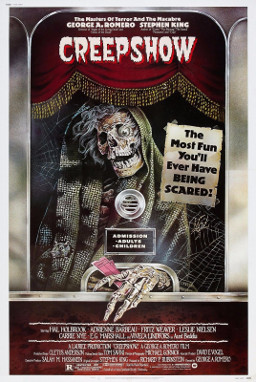
Camp has its own aesthetic.  I’m not talking about the kind with tents and sleeping bags, but that has its own aesthetic too.  No, I mean campiness in pop culture.  Creepshow, which was released in 1982, has maintained its value as camp and you pretty much still have to pay to see it (at least it’s free not on any streaming services I use).  For an episodic film it’s not bad, and since it’s comedy horror it won’t keep anyone up at night.  And of course both Stephen King (who wrote the script) and his son Joe (future horror writer as well), appear in the movie.  The elder King in a charmingly overacted segment based on one of his short stories clearly influenced by H. P. Lovecraft.  Put this all together with direction by George Romero and a cast including Leslie Nielsen and you’re in for a fun afternoon or evening.  (Or morning.  I won’t judge.)

It’s definitely a period piece.  The attitudes are those of the late seventies and early eighties.  That fact underscores, for me, how media affects everything.  Cultural outlooks change periodically and the more we know about what other people think, the more quickly they change.  Of course, since this is camp you can’t take it seriously.  And yet you somehow do.  The first vignette is, appropriately, holiday horror.  It has to do with Father’s Day which is, I suspect, a holiday to which most men acquiesce rather than anticipate.  This story is about a dad who takes it too seriously and a daughter who takes it too far.  Until…

The plots of all the stories are comic booky, and they contain many of King’s early themes.  “Something to Tide You over” is probably the most disturbing of the tales, at least by implication.  It reflects some of King’s fears as presented in some of his short stories but the method of execution is particularly distressing.  The comic book ending, however, shows it’s all for fun.  The prologue/epilogue reflects, I expect, the experience of many of us growing up.  I remember having comic books to which my mother objected because they were “too scary” for young boys (in our context).  I even recall her trying, and perhaps succeeding, to take them away and put them in the trash.  This is a situation as old as media for children.  The brothers Grimm knew just as well as King does that kids like scary stories.  Some grow out of that.  And others of us find a couple hours to watch Creepshow as an adult.  At least those of us who enjoy camp.


People of Slime

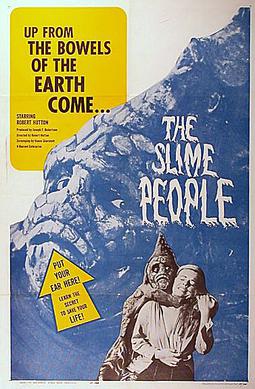
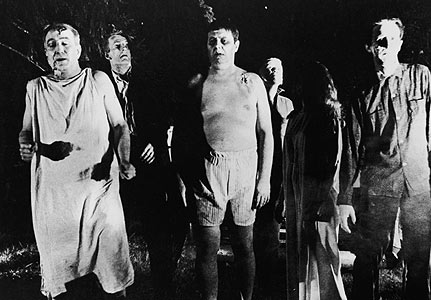
An old saying advises not to speak ill of the dead.  And I suspect this also applies to the living dead.  Night of the Living Dead (1968) is a classic horror film that represents the maturing of the genre.  Of course, it’s not the only horror film of the sixties, and I don’t mean to speak ill of it by suggesting that George Romero—who was used to working with a small budget—had seen The Slime People.  But I wonder if he had.  Directed by and starring Robert Hutton, The Slime People was released in 1963 and although it’s really bad, some of the scenes from this black-and-white groaner seem to have been borrowed five years later by the more able director.  The interviews by the newscasters and the driving country roads, and even the chasing of the angry mob could’ve served as direct inspirations.

The slime people are from subterranean earth, forced into action by underground nuclear testing.  Building a solid fog wall around Los Angeles, they take over the city while a pilot, a scientist and his two lovely daughters, and a marine, save the day.  Although the military had been fighting the monsters, they just couldn’t win.  The scientist really doesn’t help solve the issue but the pilot (Hutton) finds the creatures’ wall machine and the scientist is able to blow it up with a spear, saving the day.  This is one of those films so bad that it’s good.  The writing is poor and the plot makes little sense overall.  It doesn’t quite have the style of an Ed Wood film, but it participates in the aesthetic of watching bad movies.

Hutton isn’t a bad actor.  Hampered by a too-low budget (one of the signs that a movie might be one of the good bad ones), he couldn’t film the story he envisioned.  Much of the budget was reputedly spent on the slime people costumes, ensuring that Hutton drew no salary for his own role in his movie.  A couple of the other stars were veteran actors, and this prevents the movie from being a mere hack job.  I take some hope from the fact that many films like this eventually become cult classics.  Yes, sometimes it’s so that we can laugh at them, but I think there may be something deeper involved.  Those of us who watch bad movies might recognize something of ourselves in them.  We too struggle to tell our story, without big budgets and without studio support.  And yet we persist.


Night of the Living

The New Yorker view of the world, so the joke goes, sees the five boroughs in great details, then a very thin New Jersey across the Hudson with a vague California somewhere out west.  Having worked in New York City for nearly a decade now, I know that such a view is exaggerated, but has a small glimmer of the truth.  We can only pay attention to so much and things are constantly coming at you in Gotham.  I sometimes forget, now that I’m in Pennsylvania again, just how diverse my home state is.  I’m not from old Pennsylvania stock—neither of my parents were born here and neither of my mother’s parents were born in the same state she was.  Still, when you’re born in a place it’s natural to feel that’s where you belong.  You inherit the outlook.  I inherited Pennsylvania.

Pennsylvania is a bit unusual in being a commonwealth divided in two by a mountain range.  Laid out with an horizontal orientation, it’s about 280 miles across, and once you’re over the Appalachians, you’re into a different subculture.  On our way into Pittsburgh, signs for Evans City reminded me that among its many contributions to American culture, the Steel City also gave us zombies.  Now from a history of religions point of view, zombies came from Caribbean religions that fused indigenous African beliefs with Catholicism.  A religion that arose among people commodified as slaves.  A zombie was a body with no will.  It took George Romero, living in Pittsburgh, to give us the movie zombie with The Night of the Living Dead.  Pittsburgh, among some, is glad to claim the title of zombie capital of the world.  Its zombie walk is a thing of legend.

Ironically, the western end of the state, beyond the mountains, tends to be more conservative than the side closer to the seaboard.  (Pennsylvania is the only of the original thirteen colonies not to have direct Atlantic Ocean water frontage.)  Yet it has adopted the most egalitarian of monsters—the living dead.  Romero tapped into the universal fear of unsettled death to make what were later to appear as “zombies” the unnamed monsters of his most famous film.  Everyone has to die, and no matter our religious outlook (or lack thereof) the question of what comes after is asked on both sides of the Appalachians.  And even by those across the Hudson in New York City.  There may be even something between the two.


Zombie Wars

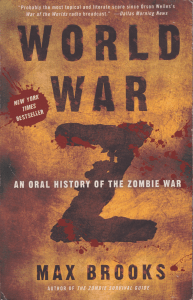
I suppose, rationally considered, most monsters can’t possibly exist. Maybe that’s the psychological relief required to enjoy the movies made about them. We can imagine the thrill, but we know we’re safe once we leave the theater. Culturally, monsters fight for supremacy. The early 2000s belonged to the vampire. They were everywhere. I once heard a literary agent advise wannabe authors to write on vampires since the publishing industry was showing no signs of slowing down on them. Then came the zombies. They’re still with us. World War Z came to my attention as a movie, but as one I never saw. I’ve watched many zombie films and none has lived up to the status of the spectacle that launched the genre, George Romero’s Night of the Living Dead. It remains a classic to this day. Still, I was curious and so I read Max Brooks’ World War Z: An Oral History of the Zombie War.

Let alone the chapter after chapter of tough-talking, cool-sounding reminiscers, I have trouble buying zombies. Yes, I get the scare factor, but maybe I’ve read too much science even to visualize myself into a fantasy world where a creature with no digestive system would be driven to eat. It just makes no sense. Human bodies can function with missing parts, of course, but without the integration of muscles, ligaments, digestion, and brain, it seems difficult to accept that they’d keep coming after you when they’ve been decaying for years. It’s all I can do to get out of bed most mornings, even as a healthy, living body. Analysts, I know, talk about zombies as metaphors, but with over 300 pages of stories in no way believable, I had to wonder about the limits of credulity. Maybe Carl Sagan was right after all.

I hope I’m not unsophisticated enough not to realize that the real point in Brooks’ novel is how the surviving humans treat each other. There is a moral to the story. We develop new and “better” weapons to kill one another. We’re smart enough to have world peace and prosperity, but wars are constantly erupting. We have a nation with many brilliant people and yet we elect a Trump. Self-destruction, it seems, is written into our genes. We consume one another. Even when the enemy is completely imaginary we find ways of believing. So I read World War Z, appreciating the irony. I still can’t get over, however, the trope that all you need is a human brain to want to destroy others.


The Unliving

Western Pennsylvania, from which I hail, has few claims to fame. One, still largely forgotten, is that it was the birthplace of the petroleum industry. Remains of the early exploitation of the fossil fuel still lie scattered carelessly in the woods. Another claim to fame is that the region was the adopted home of George Romero and served as the setting for his groundbreaking film, Night of the Living Dead. Unintentionally, Romero created what continues to shamble on in the form of the modern zombie. Although the movie doesn’t call the living dead “zombies,” it established the trope of their endless hunger for human flesh and their rabid bite. So it was with sadness that I read of Romero’s death a couple of days ago. Although he wasn’t from Pittsburgh, he established the city as zombie central. It’s nice that he gave something back.

Zombies have, due to their protean nature, become a fixture among the monster constellations. They represent the worst of what people can be—selfish and brainless, without empathy, their own cravings being the only matters of importance to them. Sounds kind of like the Republican Party. The rest of the world calls them monsters. Night of the Living Dead shocked audiences of the late 1960s with its graphic portrayal of cannibalism and thoughtless destruction. Interestingly, the choice of a strong African American lead for the movie was, according to interviews with Romero, simply a matter of his being the best actor, not an intentional racial statement. (That too reminded me of western Pennsylvania; there were racial tensions where I grew up, but many of us befriended those who were “different” without any clue that it should matter at all.) Duane Jones carried off the role of Ben with conviction and energy. He died young but he never became a zombie.

To make an impact intention need not be present. While Romero denied for the rest of his life that the movie was “about” the Vietnam War, and that his choice of a black lead was a racial statement, both of these factors became facts about the film. Concepts, in other words, like zombies, may rise from the dead. Beyond the shock and gore, the movie made a powerful, if unintentional, statement. It helped to define Romero’s future career. A success in a difficult industry may indeed decide one’s fate. George Romero would go on to make many other monster movies. Western Pennsylvania would become a zombie haven. You never know what you might find scattered about in those forgotten woods of your childhood home.


Unconventional Resurrection

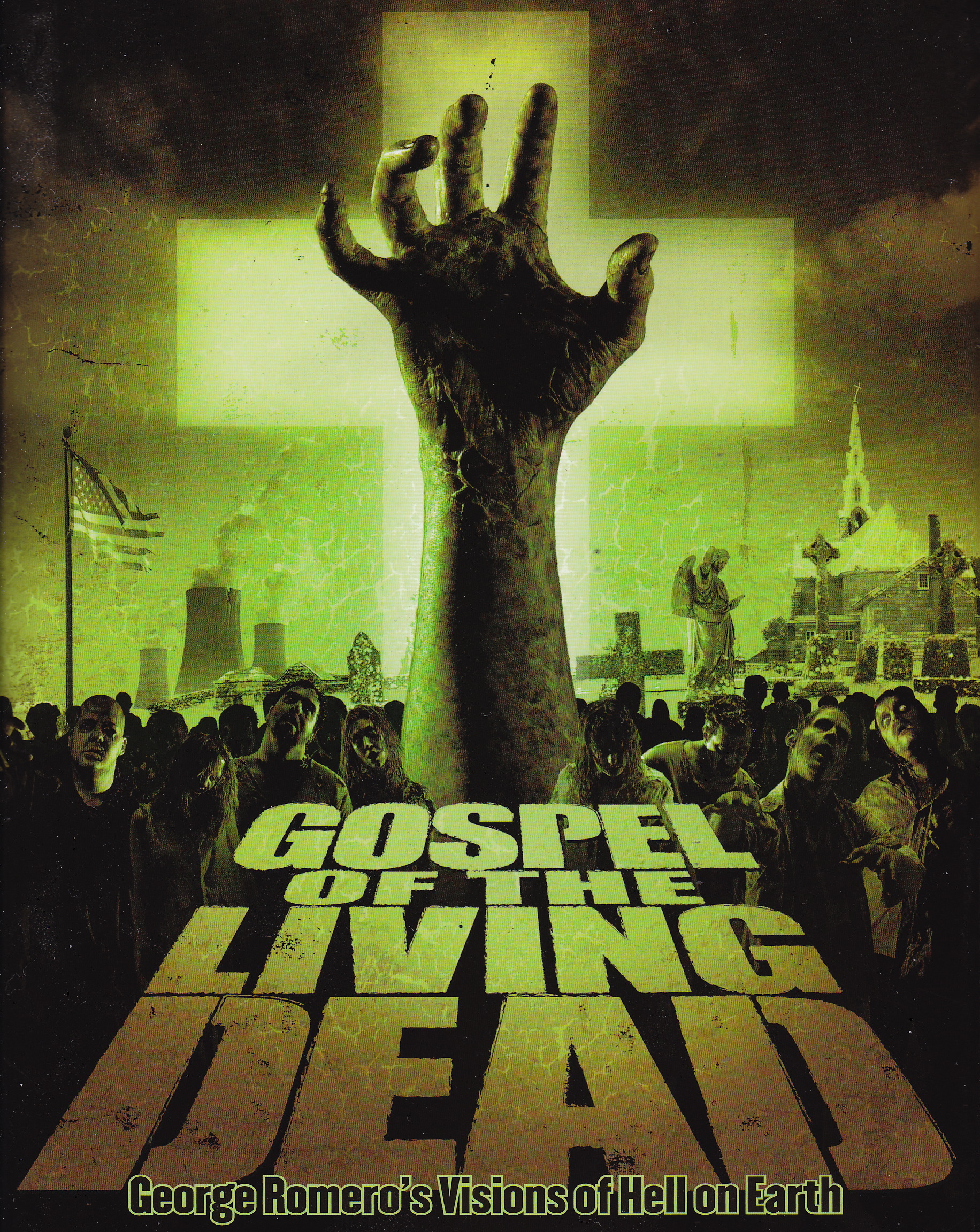
GospelLivingDeadWith talk of resurrection in the air, it seems natural to turn to zombies. In this internet age the monster of choice seems to change from day to day, but since the turn of the millennium zombies have been a contender for popular favorites. In a world where many of us feel zombified by our work, this is no surprise. Late capitalist power structures drain the life, leaving only the shell. In a situation where zombies appear so frequently, it is difficult to keep current. I bought Kim Paffenroth’s Gospel of the Living Dead shortly after it was published. Subtitled George Romero’s Visions of Hell on Earth, it saves itself from too my obsolescence by taking the narrative from Romero’s movies, and one remake, thus leaving room for the many other zombie movies to come and go. While it does make reference to 28 Days Later and Shaun of the Dead, most of the discussion stays pretty close to Romero, taking the reader through his quaternity of movies in the genre.

Roughly paralleling Romero’s oeuvre with Dante’s Inferno, Paffenroth treats the movies theologically. Not surprisingly, sin and ethics play a large part in his analysis. The undead, after all, are not un-spiritual. As I read along, however, I often thought how a western Pennsylvania connection gives some insight into what Romero is trying to do. Perhaps we are in danger of over-reading without the context (what biblical scholars call isogesis, but which post-modernists call simply reading). For example, some of the place names are given a theological significance in Gospel of the Living Dead that some of us who grew up in the area recognize as just another town. This always comes home to me when watching Night of the Living Dead. The posse out to hunt zombies always reminds me of people I knew in high school. After all, the first day of buck season was a local holiday.

Still, I have trouble seeing Romero agreeing with the dialogue revolving around sin. Yes, his first two movies were as much social criticism as they were horror. The Vietnam War and consumerism were true evils to be cast in parables and shown to the public. Zombies were prophets. Paffenroth suggests that zombies will never become mainstream commodities, but time has shown that even zombies can be bought out. World War Z was a Hollywood extravaganza. The Walking Dead is hardly the domain of outcasts and pariahs. Romero’s monsters were, alas, not more powerful than capitalism. Even zombies can be purchased. Zombies and vampires can indeed earn money, and resurrection itself comes with a price.


Thinking Zombies

Religion seldom makes as big an impression as when it concerns itself with the undead. Popular culture has gone after zombies to such a degree that they have engaged academic discourse well beyond the field of African-Caribbean religions. In fact, religious specialists tend to shy away from the topic in a kind of first-date embarrassment. Perhaps it’s because zombies in popular culture are so much cooler than their Vodou forebears. Within the past several months, however, zombies have shown up in Time, on the Center for Disease Control website, and now in the Chronicle of Higher Education. An article this week explores the academic implications of a paper by neuroscientists Bradley Voytek and Timothy Verstynen on the zombie brain. The two took on the project as a lark at the behest of the Zombie Research Society. Science fiction writer and head of ZRS, Matt Mogk gave an interesting take on zombies. He’s quoted in the Chronicle as saying, “Zombies are rooted in science, not superstition and myth.”

At the risk of sounding extremely uncool (one that I take rather frequently, I fear), I would point out that exactly the opposite is the case. Zombies are rooted in superstition and myth, i.e., religion. The entire idea that a person can be made to rise from the dead—originally to be made a slave—comes from that heady blend of Christianity and African religion that developed as part of slave culture. Slavers were notorious in not wanting slaves to accept Christianity because that might make slaves think that they were equal with their owners. By suppressing Christianity among slaves, the African religions in which many were raised came to blend with the Christianity that they’d garnered. One of the bi-products was the zombie. The zombie partakes of the Christian concept of resurrection, but in a twisted way. Once the new vision of the zombie presented by George Romero took off, yes, they did move into the realm of science fiction, often the forerunner of science.

A very serious issue underlies the zombie myth—the very religious concern about death. While not all religions comfort with an afterlife, they all in some way deal with ultimate issues. The end of life is about as ultimate, from our limited experience, as they come. Science loudly and repeatedly insists that death is the final frontier. We don’t cross back this way again, according to the available evidence. Scientists do not study ghosts or souls, and are very cagey about near-death experiences. The zombie, who is now threatening the careers of young scientists, is a most religious monster. Everything about the zombie points to its origin as a religious trope. Voytek and Verstynen wanted to interest people in science by taking a comic look at zombie brains. The problem is that zombie brains are brains on religion, not science.


Cabin Fervor

It’s a sure sign that work is growing overwhelming when I’m too tired to watch my weekend horror movies. Well, I decided to fight back the yawns and pull out Cabin Fever this past Saturday night. I’d seen the movie before, and I’m not really a fan of excessive gore. The acting isn’t great and the characters aren’t sympathetic, yet something about the story keeps me coming back. In short, a group of five teenagers (it always seems to be five) are renting a cabin for a week when they get exposed to a flesh-eating virus. They end up infecting just about everyone in the unnamed southern town before they all end up dead. It doesn’t leave much room for a sequel, but that hasn’t stopped one from being made. One of the unfortunate victims of the virus is torn apart by a mad dog. The locals, fearing their safety, decide to hunt down the surviving youths.

On the way to the now gore-smattered cabin, one of the locals mutters that they’ve been sacrificing someone—a natural enough conclusion when body-parts are scattered around, I suppose. He says, “it ain’t Christian.” Well, yes and no. Sacrifice is at the putative heart of Christianity, although human sacrifice (beyond infidels and women) was never part of the picture. As is often the case with horror film tropes, the victim who has been dismembered is a woman. The guys whose deaths are shown are all shot. Now, I have no wish to attribute profundity where it clearly is not intended, but there does seem to be a metaphor here. Our society and its staid religion tolerate the victimization of some over others.

One of the hidden treasures of the best of horror movies is the social commentary. George Romero made an art form of it in Night of the Living Dead and its follow up Dawn of the Dead. Many other writer/directors have managed to do it quite effectively. We can critique our world when hidden behind the mask of the improbable. While the commentary for Cabin Fever may be entirely accidental, I still find a little redemptive value in it. That, I suppose, is the ultimate benefit of social commentary—it is true whether intentional or not. Is there a larger message here? I wonder if the fact that when women are victimized no one survives is pushing the metaphor a little too far. It’s hard to say; I’ve been working a little too much lately.


Zombies, Golems, and Robots – Oh My!

A truly great metaphor is hard to kill. Despite detractors and naysayers, the zombie has clawed its way into the modern psyche as a denizen of the living death of a world we’ve created for ourselves. Joblessness, environmental disasters, tea parties – just when you thought it couldn’t get any worse, the dead refuse to stay dead. Elsewhere on this blog I’ve written about the origin of zombies in Voodoo, and I mentioned in passing the connection with the golem. The golem is a mythical Jewish creature that serves the role of protector of the oppressed (one can’t help but think of the Democratic Party). It is strong, dedicated to its task, brainless and soulless (one can’t help but think of the Religious Right). Like the zombie, the golem has no inherent ability to think for itself, and it must be animated by a magical word written on its forehead.

Golem around the corner

One of the most famous golem stories involves the Golem of Prague, defender of the oppressed Jews in that city in the Middle Ages. The Prague connection also forever ties the golem together with robots in Karel Capek’s 1921 play, R.U.R. (Rossum’s Universal Robots), the very origin of the word “robot.” Like the golem the robot putatively has no soul. It too is controlled by a code written precisely for it. Unfortunately on my one trip to Prague back in 1991, I didn’t know to look for the golem – I did find the statue of Jan Hus, however. Right around the corner the golem lurked, standing guard over the oppressed. It is a powerful image when the world is in such a state.

We need a hero

With the recent release of George Romero’s Survival of the Dead, the zombie has been given renewed life. Watching the Republican Party gearing up for a major thrust at the very soul of America, lining up the local BP station to support big oil, spouting false rhetoric about what the Bible says, I think I’d rather take my chances with the zombies. Does anyone out there happen to have a golem for sale, just in case?